Barn Record Farmington
RETURN TO ‘FIND BARNS’- Building Name (Common)
- Haylon/duPuis barn
- Building Name (Historic)
- n/a
- Address
- 319 Mountain Spring Road, Farmington
- Typology
- Overview
-
Designations
n/a
Historic Significance
Architectural description:
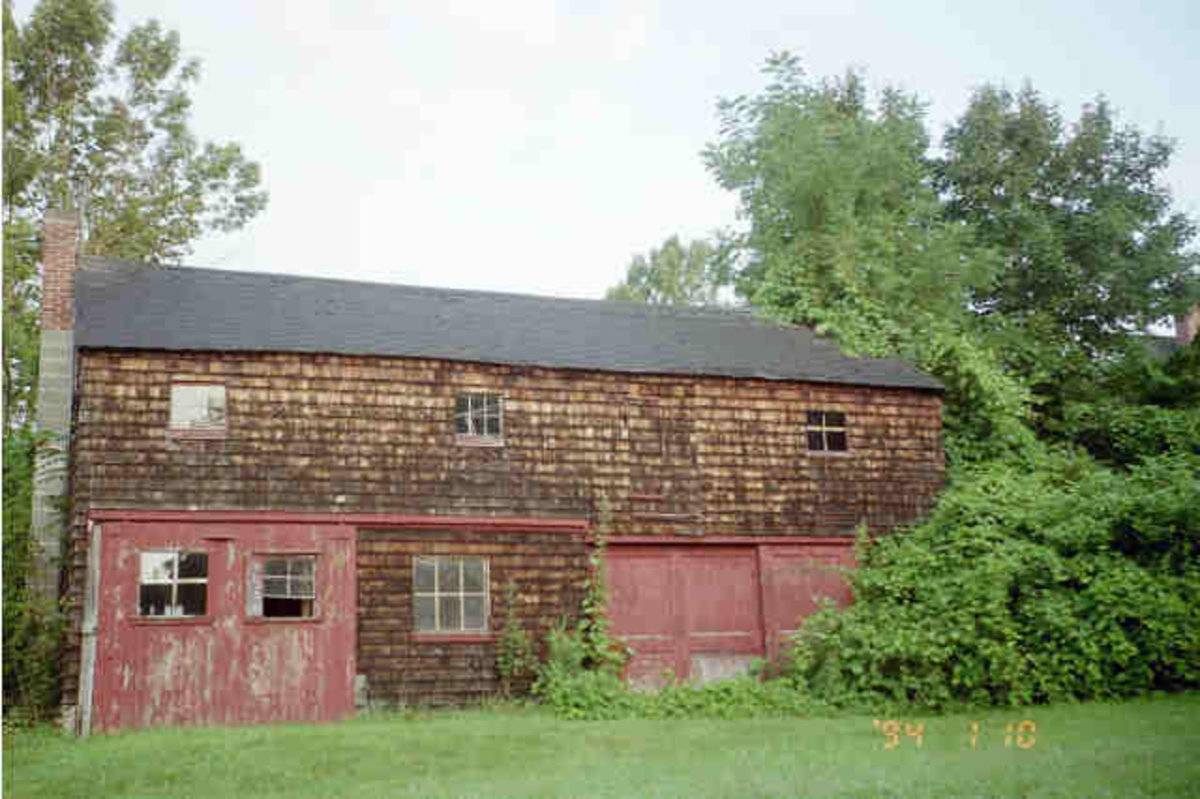
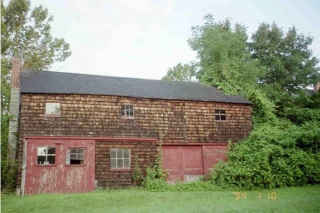
This is a 2-story four-bay barn with a saltbox gabled roof and parallel orientation to Mountain Spring Road. Mountain Spring Road passes this property at a generally north-to-south alignment.
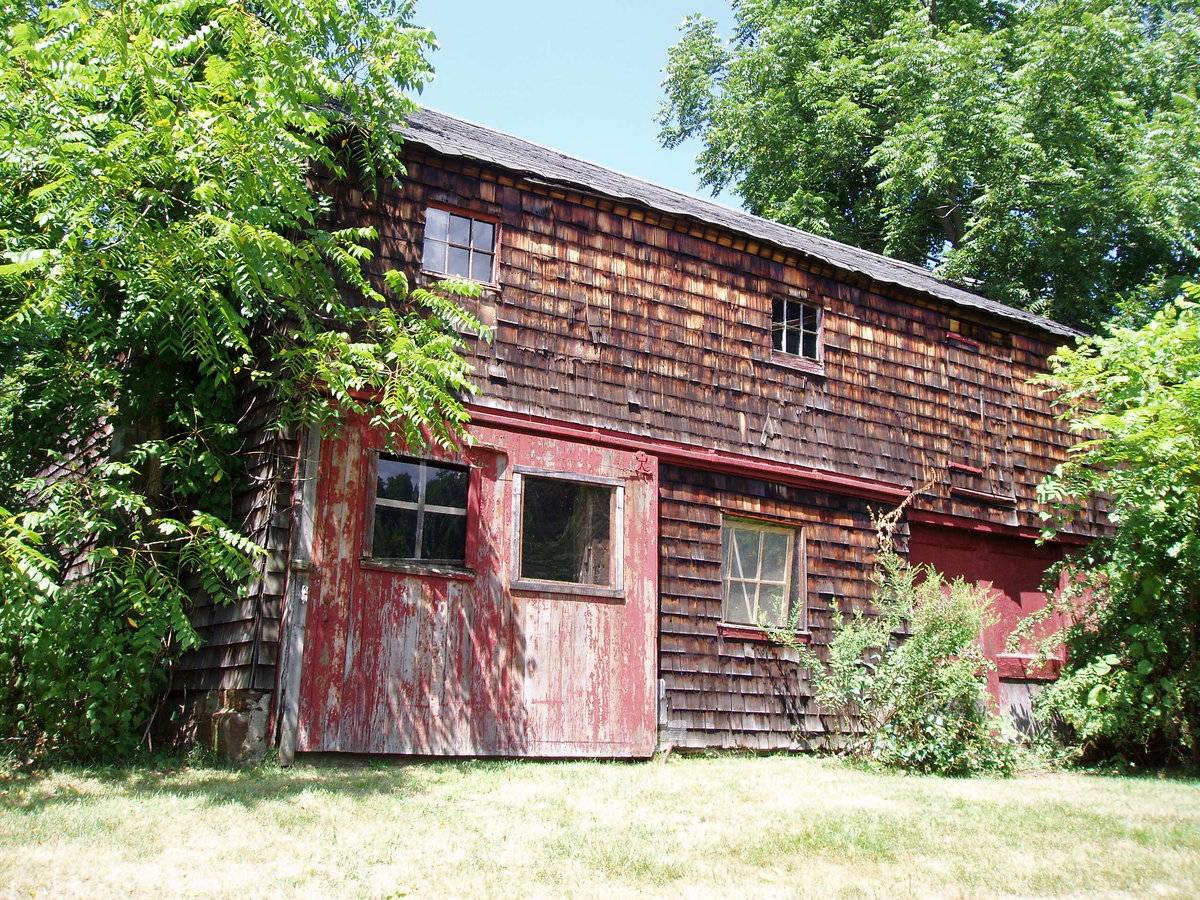
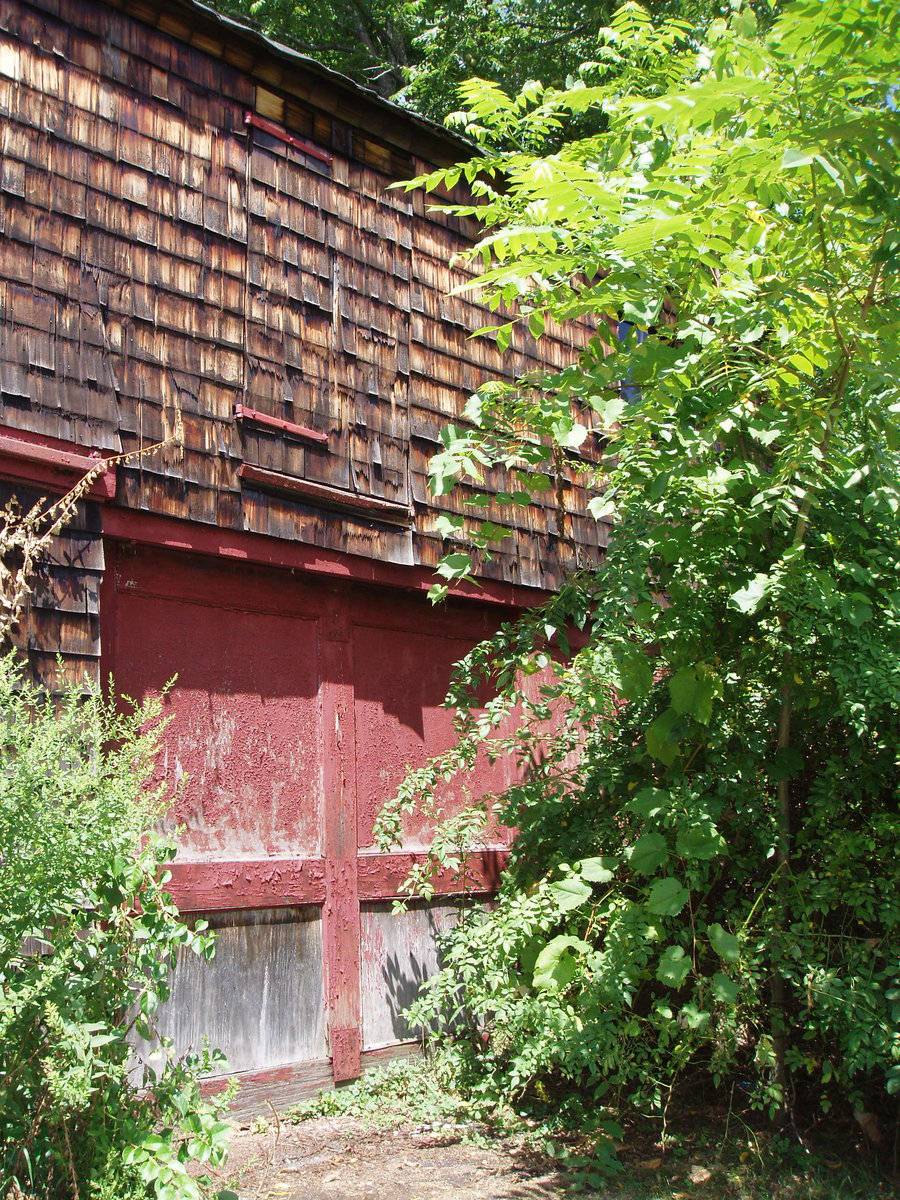
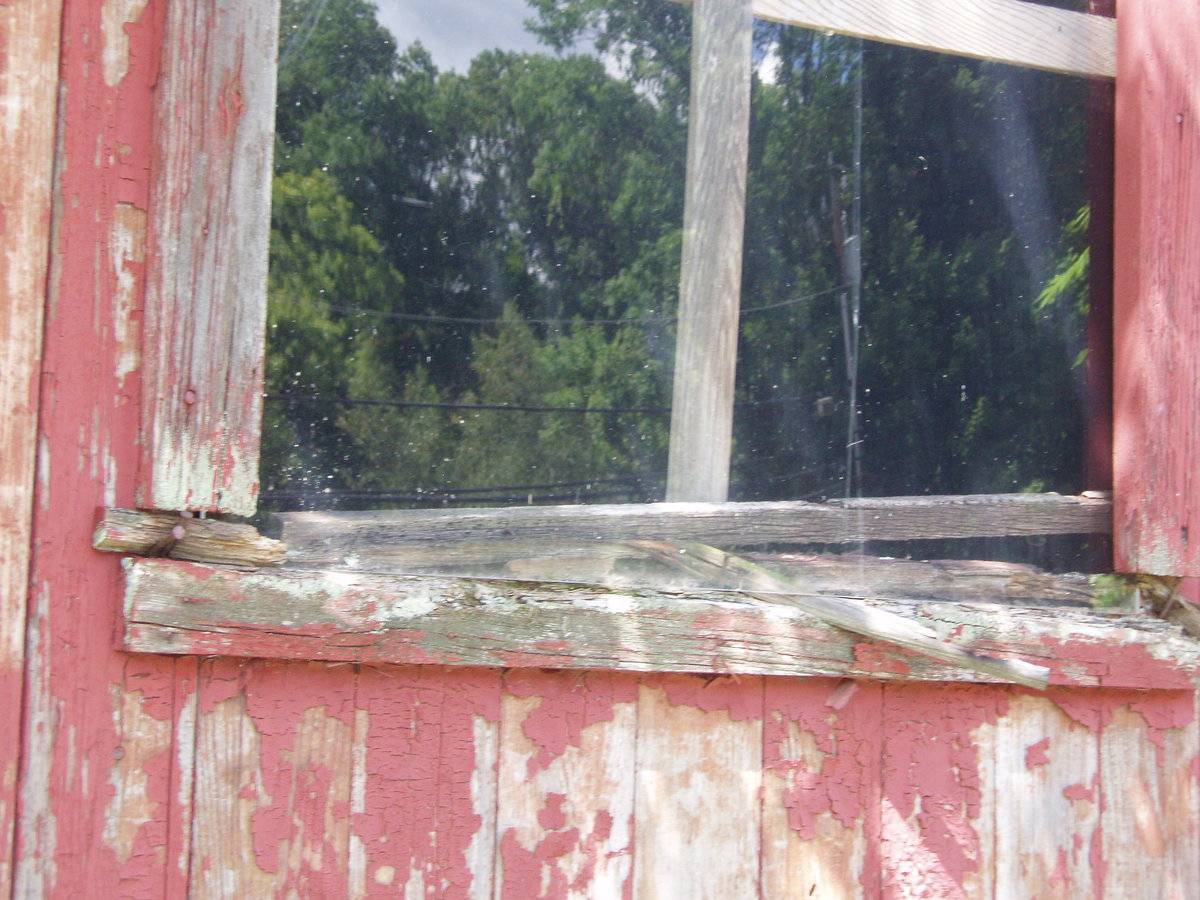
The primary façade of this barn is the east eave-side, facing Mountain Spring Road. This façade features two prominent entries on the first story. At the southeast corner is an over-size sliding door of wood plank construction running on an upper horizontal track. This door contains two window openings within it, each with a single pane of glass. The other entry is a pair of sliding over-size wooden panel doors occupying the northern half of this façade. These have no window openings. Between the two entries in the second-from-south bay is a six-pane window. The second story on the east-eave side features one opening in each bay. The south, south-center, and north bays each feature a single six-pane window within. The north-central bay features a hinged wooden pass-through door clad with wooden shingles.
The south gable-end of the barn features an external chimney which is located in line with the roof ridgeline. On the second story, one window to each side appears to be present on this end. Another external chimney is present near the southwest corner. Likewise, a similar chimney is present at the northwest corner, on the north gable-end. Dense vegetation precludes a further description of the west eave-side and north gable-end for the purposes of an Historic Resource Inventory.
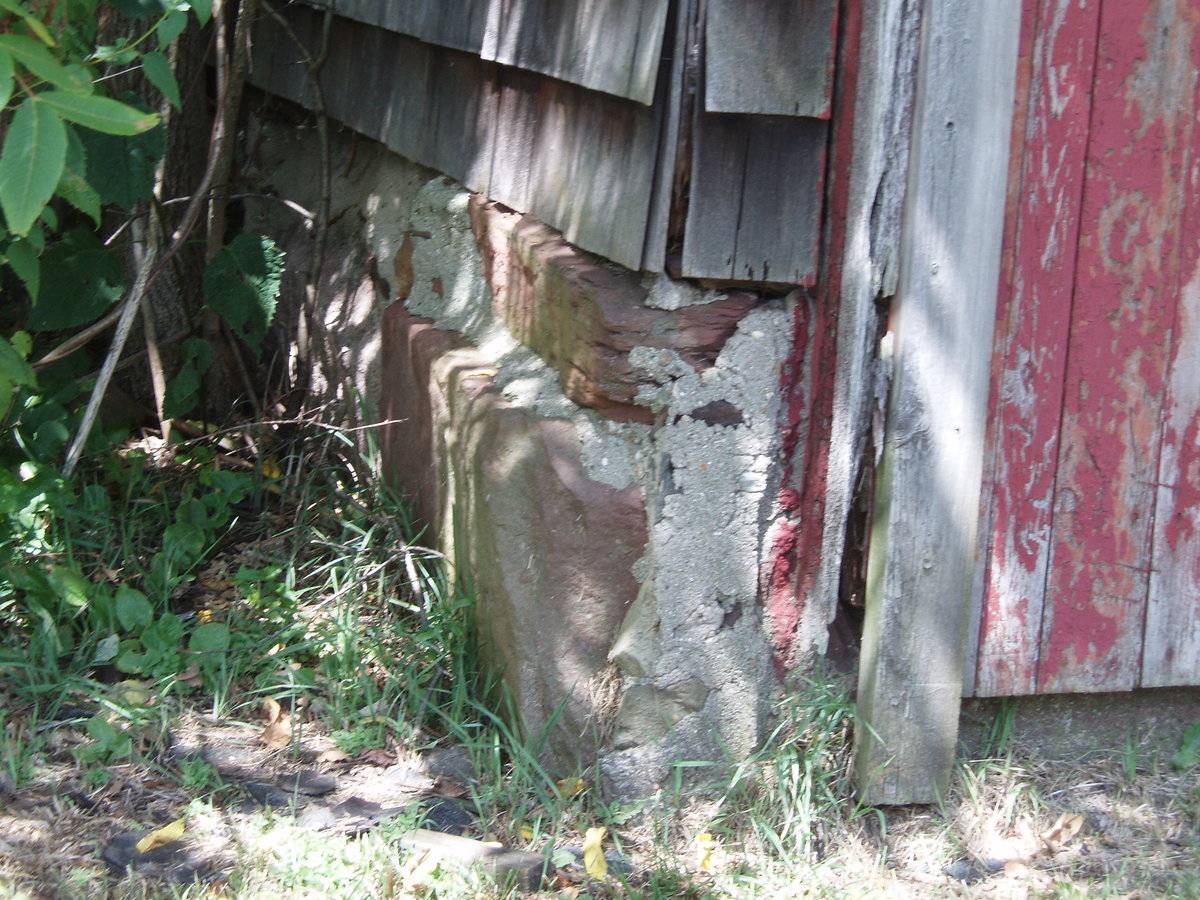
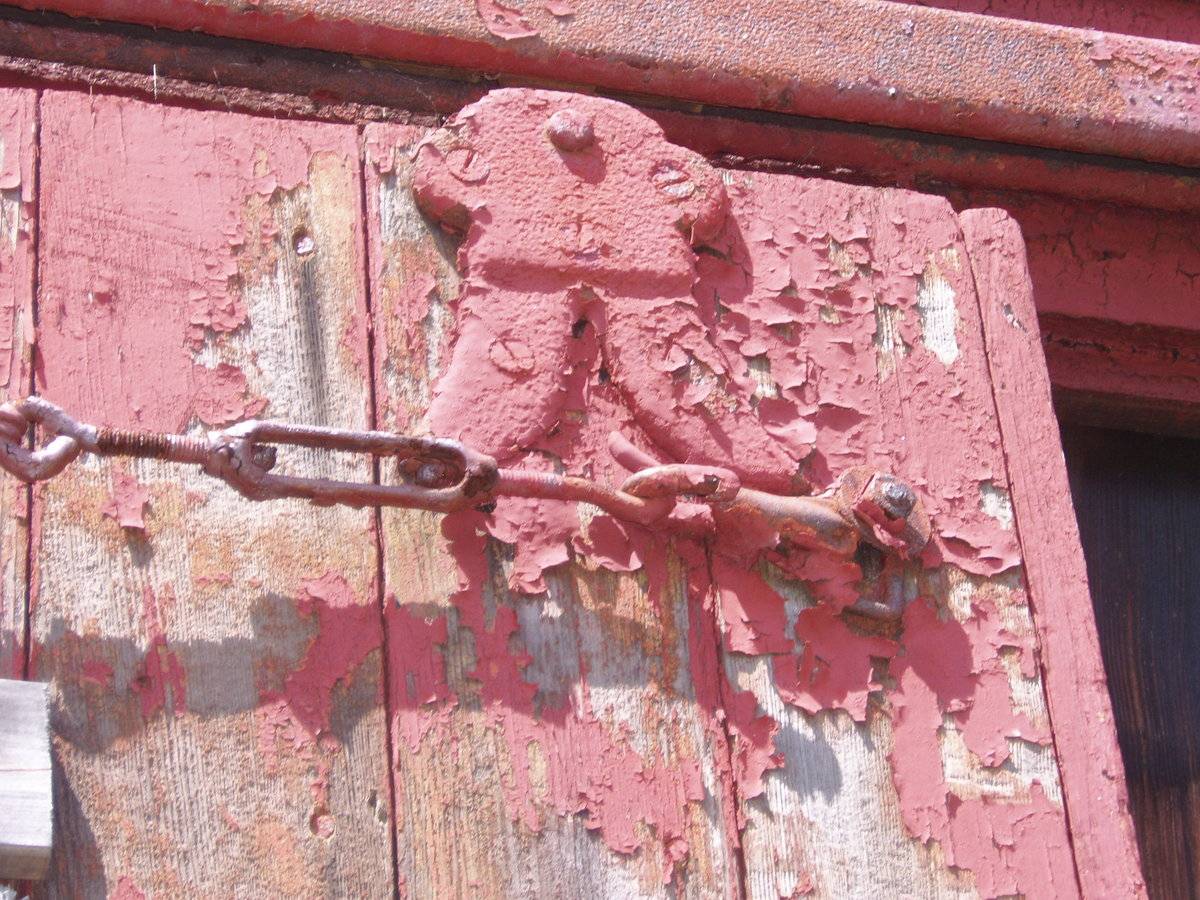
The exterior of this barn is clad in wooden shingles. The first floor sliding doors are of wooden plank construction, and at one time were painted red. The façade second story pass-through door is clad in the same wooden shingles as the wall. The foundation is mortared fieldstone. The roof is covered in dark gray asphalt shingles.
Historical significance:
The oldest barns still found in the state are called the “English Barn,” “side-entry barn,” “eave entry,” or a 30 x 40. They are simple buildings with rectangular plan, pitched gable roof, and a door or doors located on one or both of the eave sides of the building based on the grain warehouses of
the English colonists’ homeland. The name “30 by 40” originates from its size (in feet), which was large enough for 1 family and could service about 100 acres. The multi-purpose use of the English barn is reflected by the building’s construction in three distinct bays - one for each use. The middle
bay was used for threshing, which is separating the seed from the stalk in wheat and oat by beating the stalks with a flail. The flanking bays would be for animals and hay storage.A saltbox roofed barn is a wood framed building with a short roof pitch on one side and a long roof pitch, sweeping close to the ground, on the other side.
Field Notes
Owners had JUST bought this property; only lived in the 1980s house 2 days; no phone yet! Knew nothing about the barn except their realtor told them they were crazy to consider repairing the barn - "too costly & too much to be done to it." Barn is older than the house - Detached, situated well below the house on the rural, residential road. Siding is wood shingle, doors clapboard, foundation fieldstone, gable roof covered with rolled roofing. Guess is: it was a carriage & horse barn with apartment upstairs...although owner claimed "there is a loft" and a hay door can be distinguished. Surrounded by pasture land, and a few well-spaced houses.
- Use & Accessibility
Use (Historic)
Use (Present)
Exterior Visible from Public Road?
Yes
Demolished
n/a
Location Integrity
Unknown
- Environment
Related features
n/a
Environment features
Relationship to surroundings
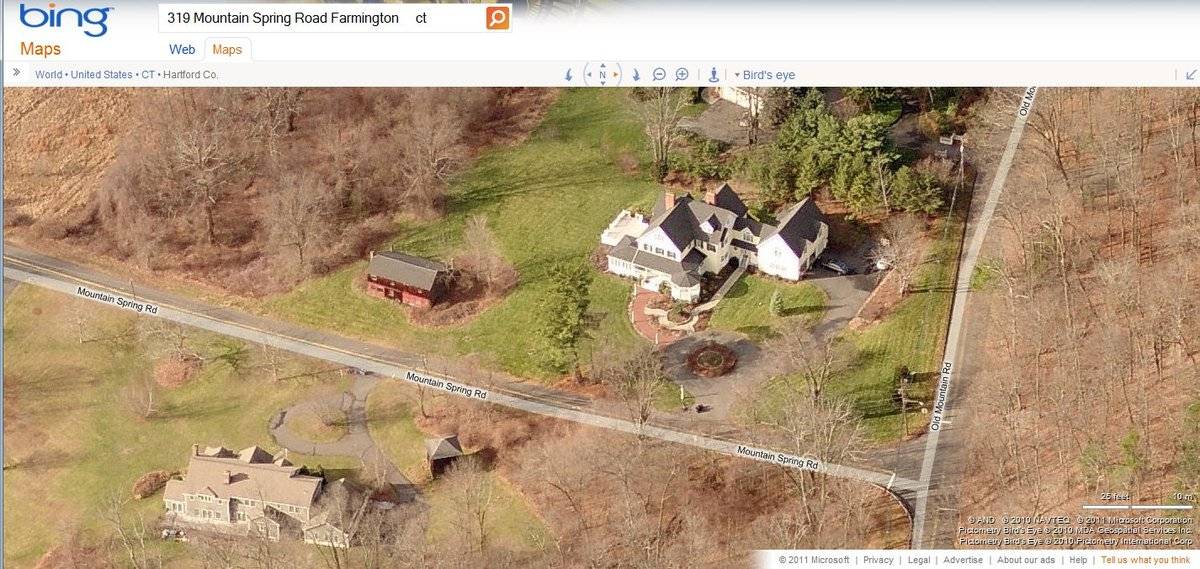
This barn is situated parallel to Mountain Spring Road and the primary façade faces east. The house associated with this barn is a large 1980s-built estate located just to the north of the barn. This house is one of several large modern estates in this area, each set back from the road and on a large plot of grass. Some trees and other brush have grown up around the south, west, and north sides of this barn. A small woodland is present to the south of the barn, beyond which is a plot of open land which may be used for agriculture. The balance of the surrounding area is woodland.
- Typology & Materials
-
Building Typology
Materials
Structural System
n/a
Roof materials
Roof type
Approximate Dimensions
BARN + ADDITION: 2000 square feet
- Source
-
Date Compiled
04/11/2011
Compiled By
N. Nietering & T. Levine, reviewed by CT Trust
Sources
Photographs by Meyer/Macomber.
Sexton, James, PhD; Survey Narrative of the Connecticut Barn, Connecticut Trust for Historic Preservation, Hamden, CT, 2005, http://www.connecticutbarns.org/history.
Visser, Thomas D.,Field Guide to New England Barns and Farm Buildings, University Press of New England, 1997, 213 pages.
Map of Farmington, CT, retrieved on April 9, 2011 from website www.bing.com.
Farmington Assessor’s Records - online - http://www.farmington-ct.org/landrecords/search.php
- PhotosClick on image to view full file
-