Barn Record New Hartford
RETURN TO ‘FIND BARNS’- Building Name (Common)
- Bakerville Blacksmith Shop
- Building Name (Historic)
- George Jones Blacksmith Shop/The Tannery
- Address
- 1151 Litchfield Turnpike (Rte 202), New Hartford
- Typology

- Overview
-
Designations
Historic Significance
Architectural description:
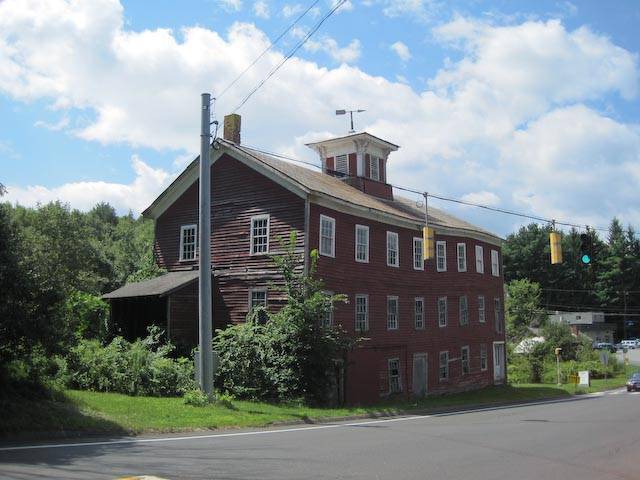
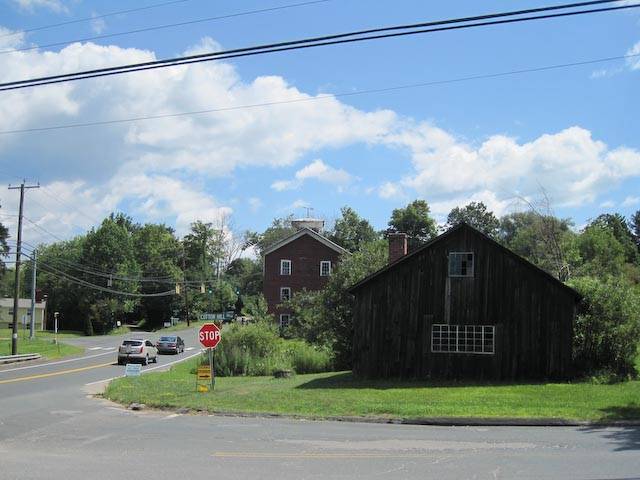
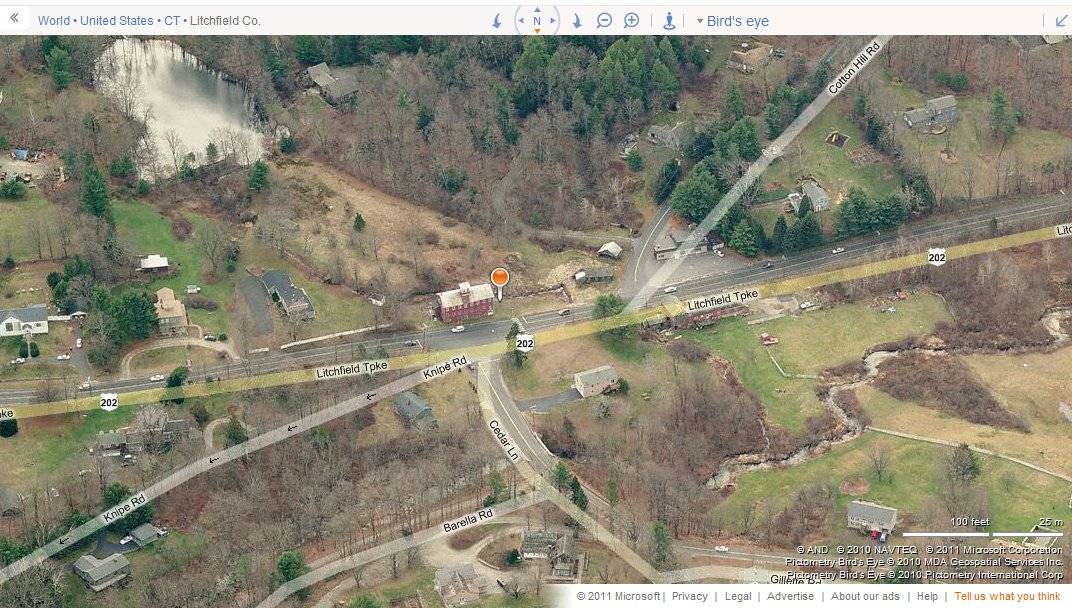
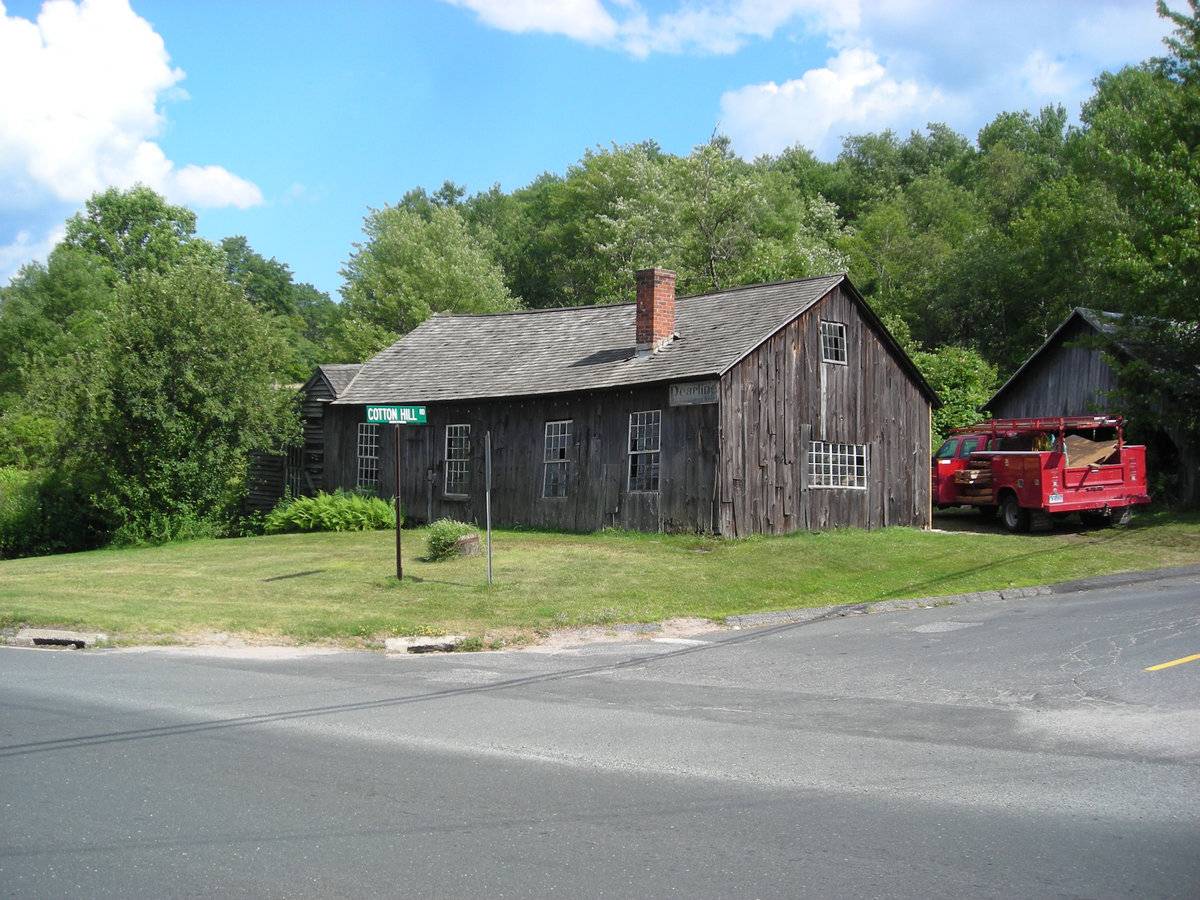
Two historic stand-alone structures of important local manufacturing significance are located on this site. The Blacksmith Shop is a 1 1/2-story gable-roof structure with two small attached additions. The Sawmill building is a larger 3-story gable-roof bank structure with a rectangular footprint. Both structures front the Litchfield Turnpike, and constitute the center of the village of Bakersville within the town of New Hartford. The Litchfield Turnpike passes this property at a southwest to northeast angle.
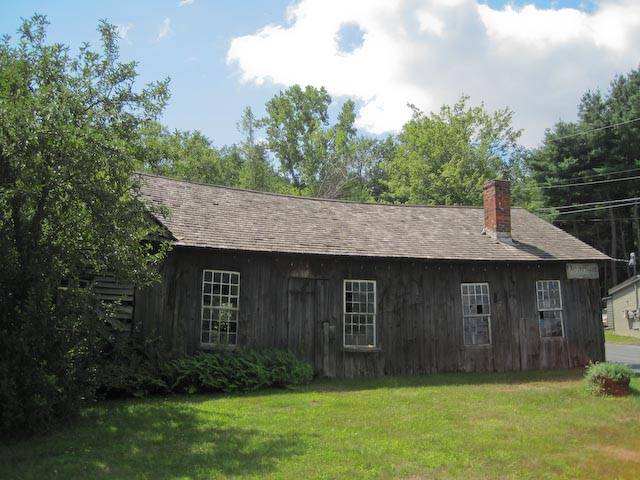
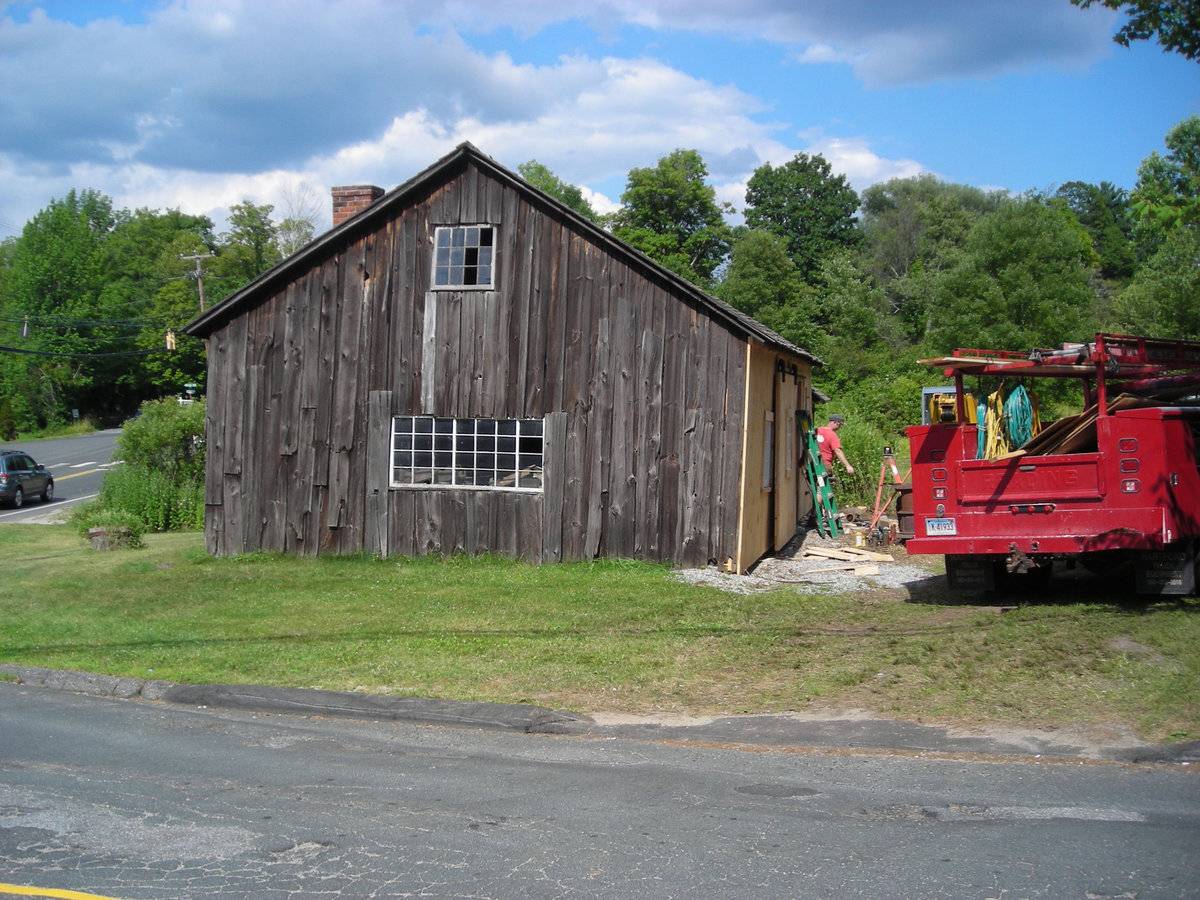
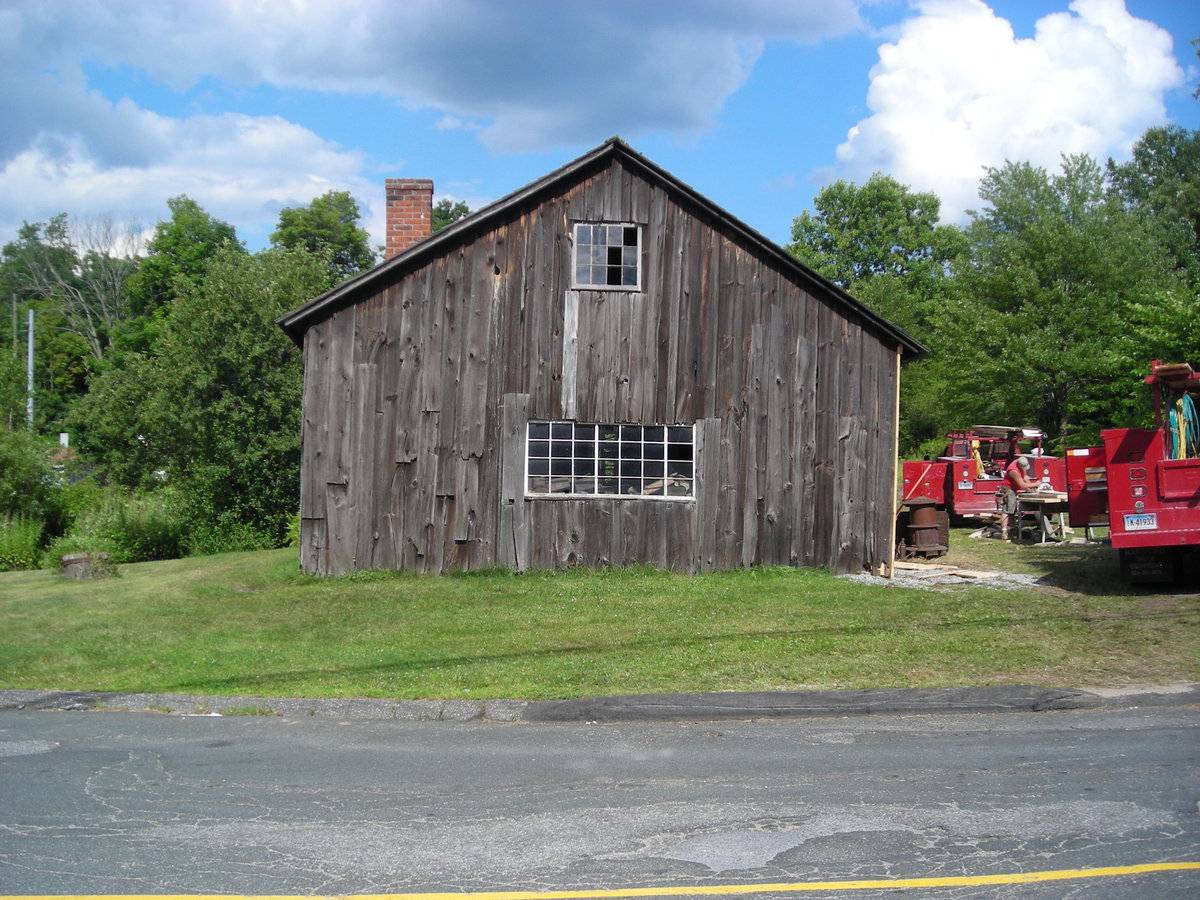
The Blacksmith Shop is located very near to the intersection of the Litchfield Turnpike with Cotton Hill Road. The building is set back slightly from the Turnpike, but is roughly parallel to it. The façade of the Blacksmith Shop is the north eave-side. The structure is four-bays in length, with a large twelve-over-twelve window in each bay on the facade. A wood-plank pass-through door is located between the east and east-central bays. The west gable-end contains a large twenty-eight pane window centered on the first story. A smaller twelve-pane window is centered within the gable-attic on this end.
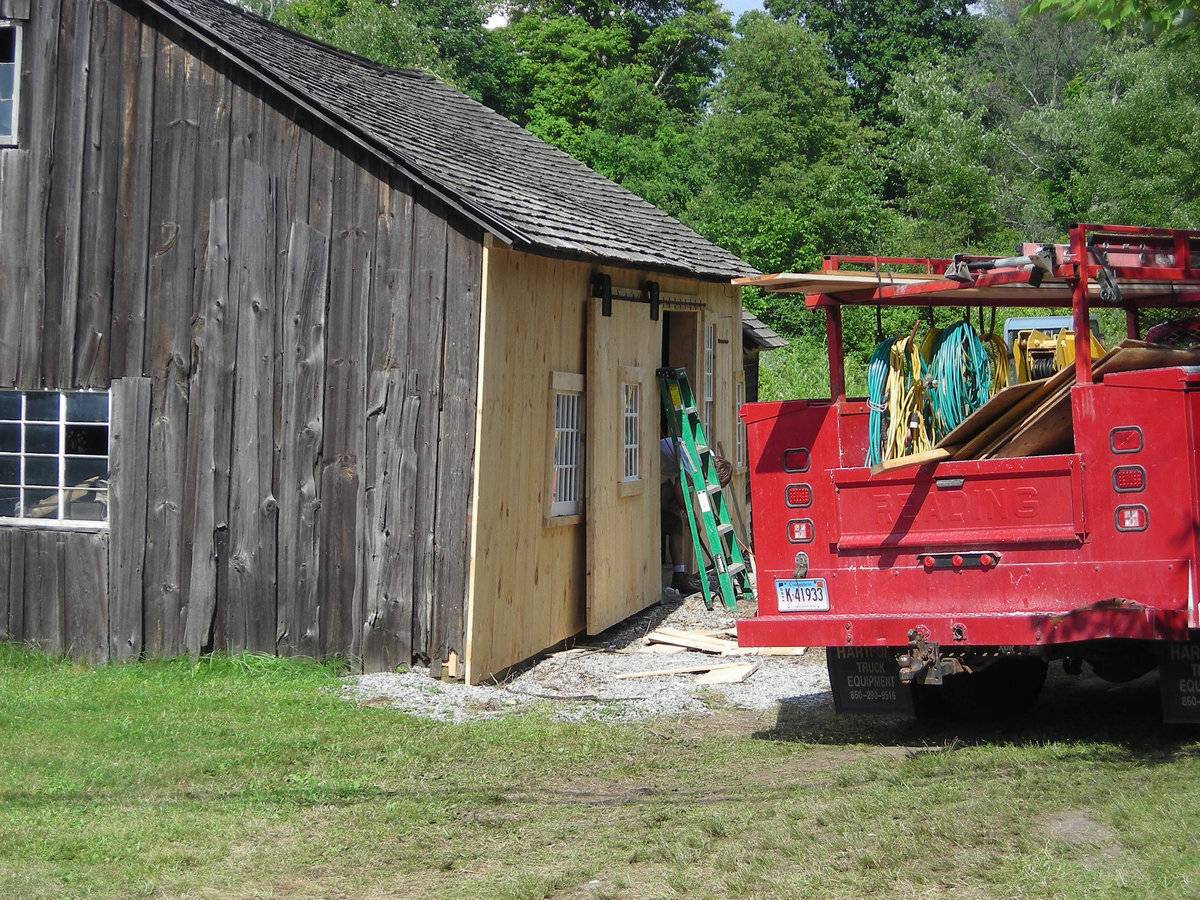
The south eave-side contains an oversize sliding door of wood plank construction, mounted on an overhead track, nearly centered on this side. A twelve-pane window is located in the west half of this door. A twenty-four pane window is located in the west half of this eave-side. A twelve-over-twelve double-hung window is located to the immediate east of the door, followed by a four-over-four double-hung window at the southeast corner. The east gable-end is blank but contains two additions. Addition I is a small gable-roof outhouse, at the southeast corner, blank on all sides. Addition II is a slightly-larger shed-roof addition at the northeast corner. Both additions project to the east. Addition II served as the blacksmith office. A twelve-over-twelve double-hung window is located on both the south and north gable-ends of this addition.
The exterior walls of the Blacksmith Shop are faced in vertical wood siding. Both additions are faced in horizontal wood clapboard siding. The roof of the main building is covered in asphalt shingle. The addition roofs appear to be of cedar shingle. A single brick chimney protrudes from the roof, in the north face, between the west and west-center bays.
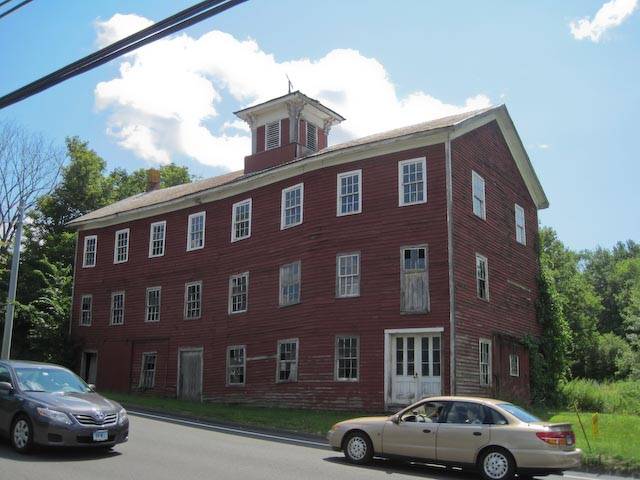
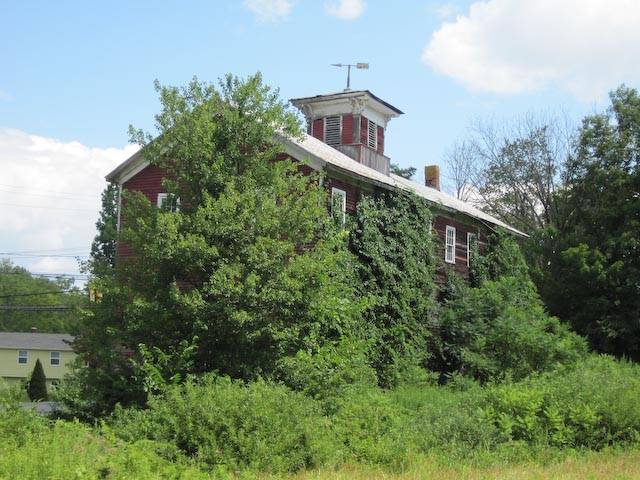
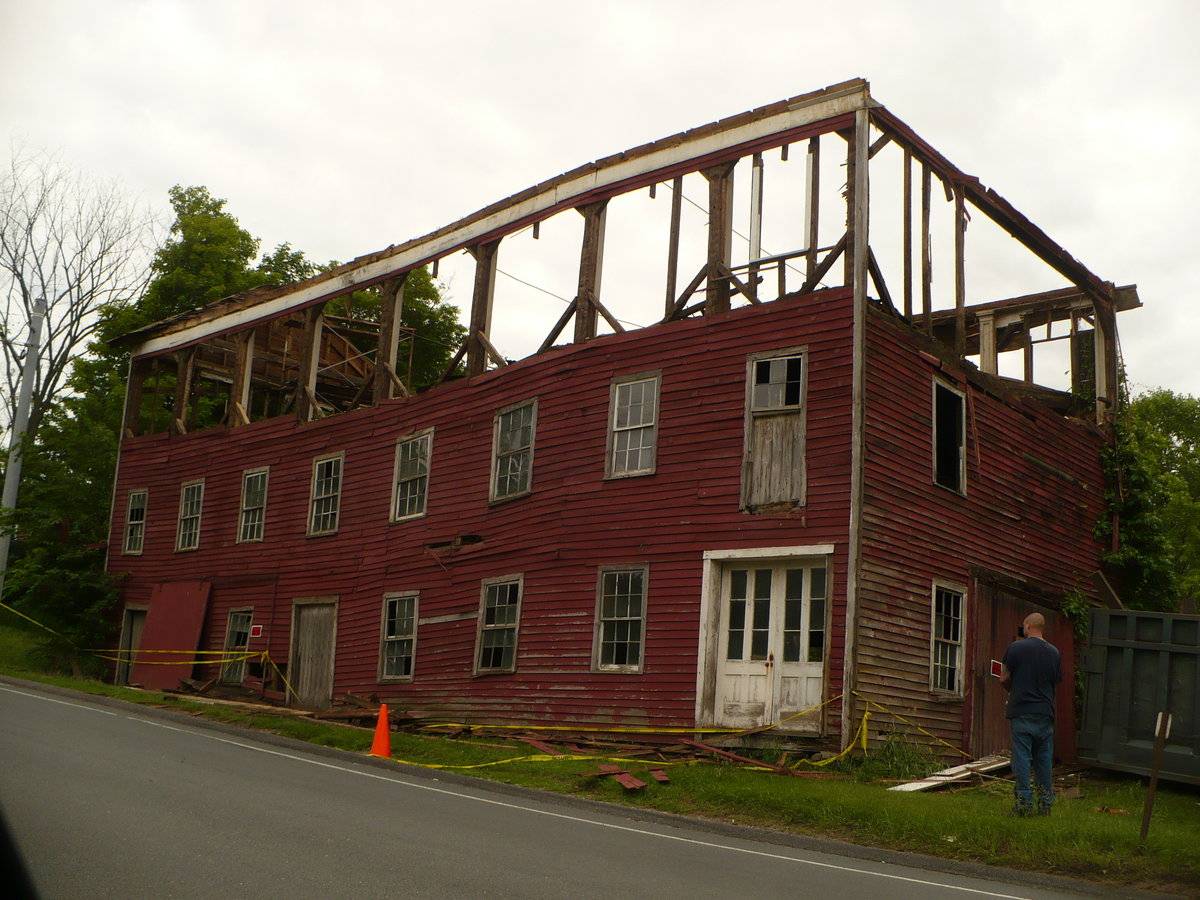
The Sawmill building is prominently located at the head of the T intersection where Cedar Lane intersects with the Litchfield Turnpike. The main façade of this building is the north eave-side, which faces this intersection. The structure is eight-bays in width, with window and door openings centered within each bay. Beginning at the northwest corner and continuing to the east on the façade on the first story, first is a pair of recessed panel pass-through doors, each with six panes of glass in the upper half, followed by three six-over-six double-hung windows. The east half contains a wide wood-plank pass-through door, followed by another six-over-six double-hung window, an oversize wood plank sliding door mounted on an upper track, and a wood plank pass-through door at the northeast corner. On the second story, a wood plank pass-through door is located in the northwest corner, with six panes of glass in the upper portion. The remaining seven bays are filled with a six-over-six double-hung window in each. The third story has a six-over-six double-hung window in each of the eight bays.
The west gable-end has a six-over-six double-hung window in the northern half and an over-size sliding wooden door in the southern half of the first story. The sliding door contains what appears to be a single six-pane stationary window. The second-story contains a six-over-six double-hung window in the northern half; the southern half is blank. The third-story contains a six-over-six double-hung window in each the northern and southern halves.
The south eave-side appears to contain a single pass-through door in the west-central bay of the first-story. The second-story appears to contain window openings in both the two center bays, as well as the bay in the southeast corner. The third-story appears to contain window openings in every bay except the southeast corner. The grade rises up across the length of this eave-side toward the southeast corner.
The east gable-end contains an earthen ramp raised to the southern half of the second-story, which leads to an over-size entry. This entry is protected by a projecting shed roof, supported by side walls, creating an alcove. Six-over-six double-hung windows occupy the northern half of the second story, and both the northern and southern halves of the third-story, on this gable-end.
The exterior of this building is faced in horizontal wooden clapboard siding, at one time painted red. Door and window trim, and corner posts are painted white. The roof appears to be covered in light gray asphalt shingles. A brick chimney protrudes from the roof ridgeline at the extreme east gable-end of the building. A large square cupola is centered atop the roof ridgeline. It is heavily ornamented in the Italianate style complete with wide eaves and decorative paired brackets at the corners. A rectangular louvered vent is centered within each of the four sides. A shallow-pitch pyramid roof tops this cupola, with a decorative metal arrow weathervane at the apex.
Historical significance:Blacksmith Shop:
Known as the shop, workshop, carpentry shop, toolshed, blacksmith shop, or machine shop, these small, well-lighted buildings provide a heated space for making and repairing furnishings, tools, and equipment, as well as for earning outside income through various trades. Typically 1 1/2-stories with a gabled front, and easily accessible doorway, and windows all around, most shops have a chimney for venting a cast iron rood or coal stove.
Field Notes
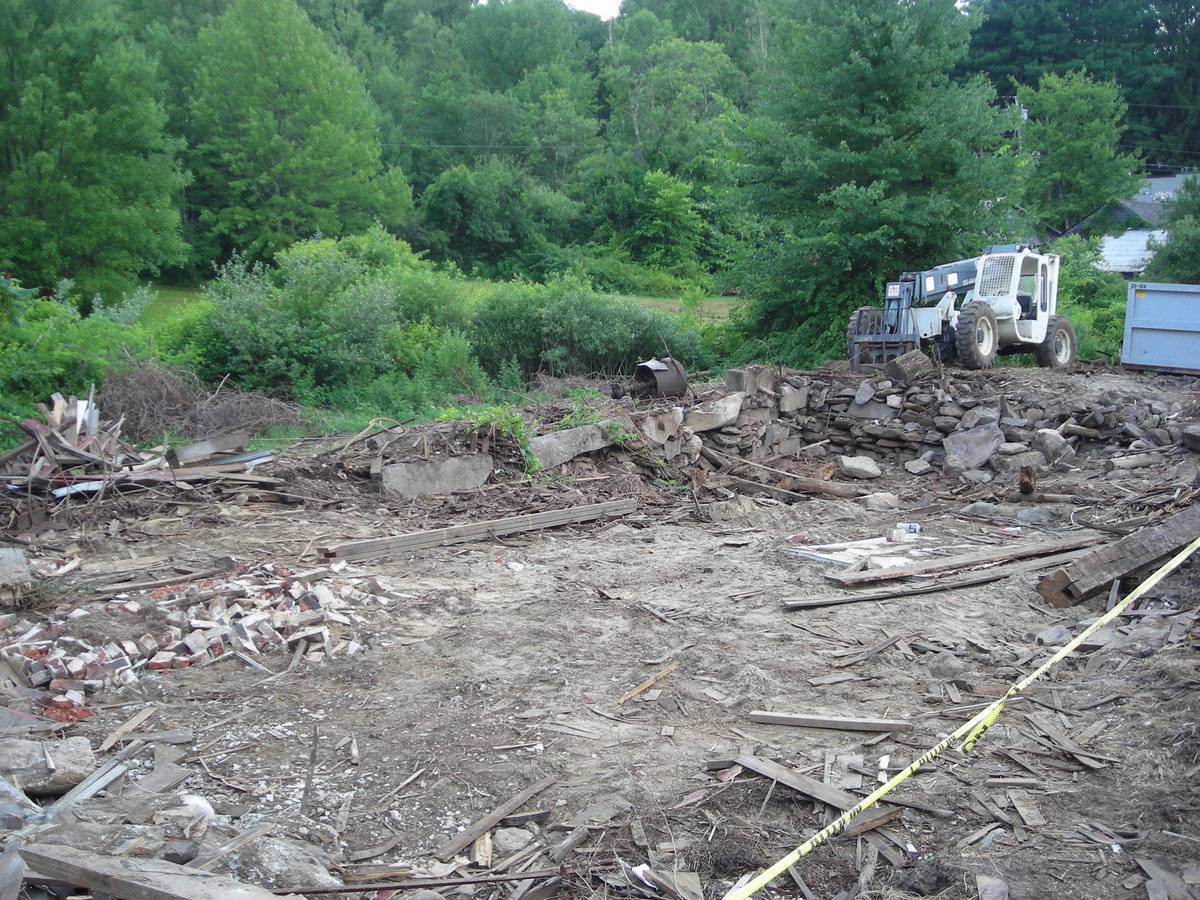
The Blacksmith shop and the tannery/sawmill were the main industry in Bakerville. The small blacksmith shop was purpose built, including a wooden cradle for confining oxen and a forge. The tannery was water driven. The turbine was located on the ground floor with a workshop on the second floor. The third floor was a dance hall, stage and meeting hall for Bakerville village. The tannery/mill building was deconstructed in June 2011. Up to 40% of the lumber was salvaged for re-use. National Register listing April 2012.
- Use & Accessibility
- Environment
Related features
Environment features
Relationship to surroundings
These two structures are located on property situated in the very center of the village of Bakersville. Both are prominently visible from the Litchfield Turnpike, US Route 202. The land immediate surrounding both structures is primarily an overgrown grassland, with brush and small trees growing up. Both structures are prominently visible along the Turnpike and from the intersections with Cedar Lane and Cotton Hill Road. A small creek parallels the Turnpike and passes to the immediate south of both structures before continuing toward the southeast. South of the creek is a woodland. The surrounding land and streets are lined by tracts of woodland intermixed with residences and occasional areas of open land.
- Typology & Materials
-
Building Typology
Materials
Structural System
n/a
Roof materials
Roof type
Approximate Dimensions
n/a
- Source
-
Date Compiled
05/27/2011
Compiled By
N. Nietering & T. Levine, reviewed by CT Trust
Sources
Photographs by Anne C. Hall and Nathan Nietering.
Hall, Anne C., Bakerville Blacksmith Shop National Register Nomination (draft), National Park Service, 2012.
Hosley, William, GW Jones Blacksmith Shop, PowerPoint Presentation, 2006.
Sexton, James, PhD; Survey Narrative of the Connecticut Barn, Connecticut Trust for Historic Preservation, Hamden, CT, 2005, http://www.connecticutbarns.org/history.
Visser, Thomas D.,Field Guide to New England Barns and Farm Buildings, University Press of New England, 1997, 213 pages.
Map of New Hartford, CT, retrieved on May 26, 2011 from website www.bing.com.
New Hartford Assessor’s Records - Vision Appraisal online - http://data.visionappraisal.com/NewHartfordCT
- PhotosClick on image to view full file
-