Barn Record Kent
RETURN TO ‘FIND BARNS’- Building Name (Common)
- Kallstrom Farm
- Building Name (Historic)
- Kallstrom Farm
- Address
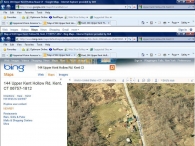
- 144 Upper Kent Hollow Road, Kent
- Typology
- Overview
-
Designations
n/a
Historic Significance
Architectural description:
There are two structures of note.
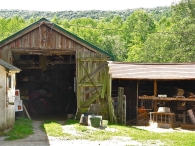
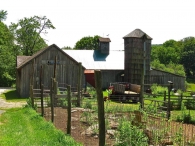
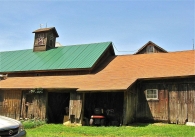
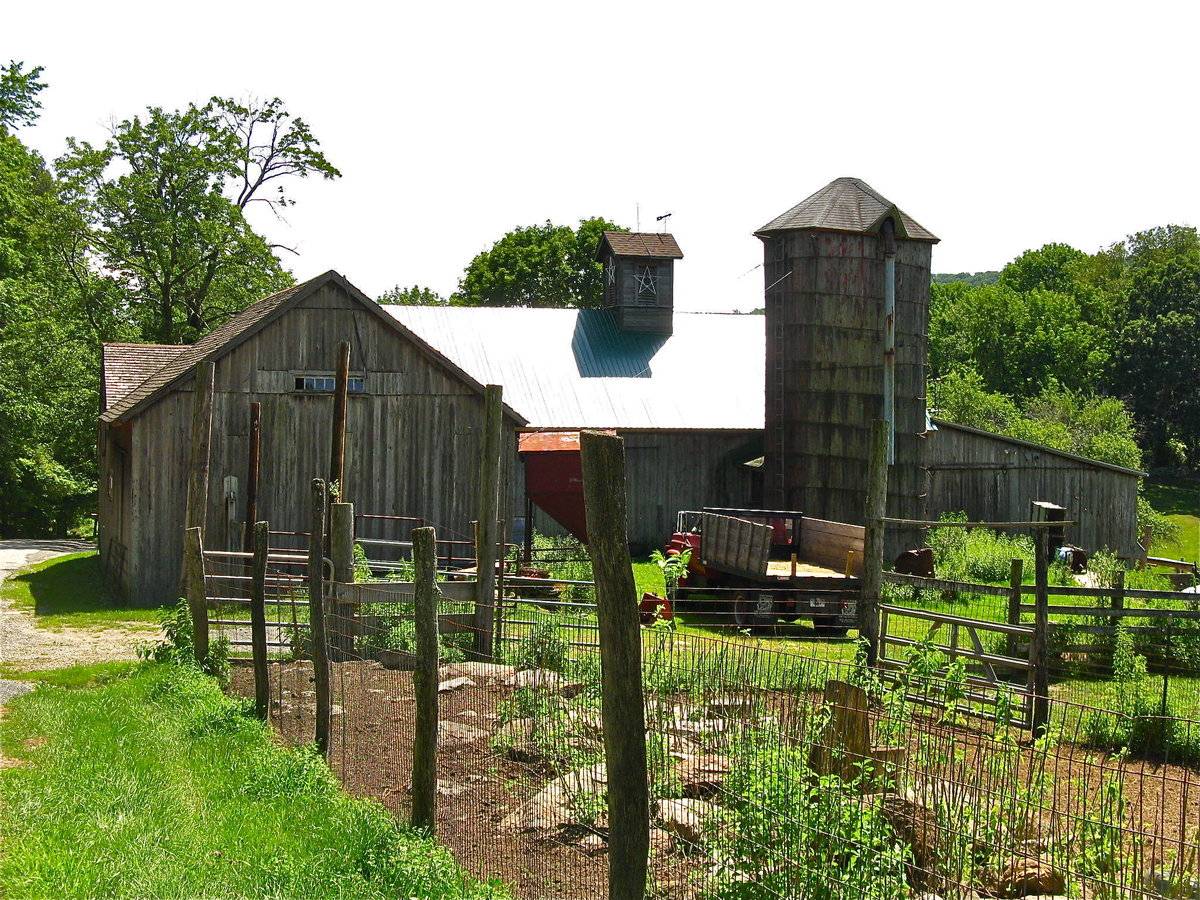
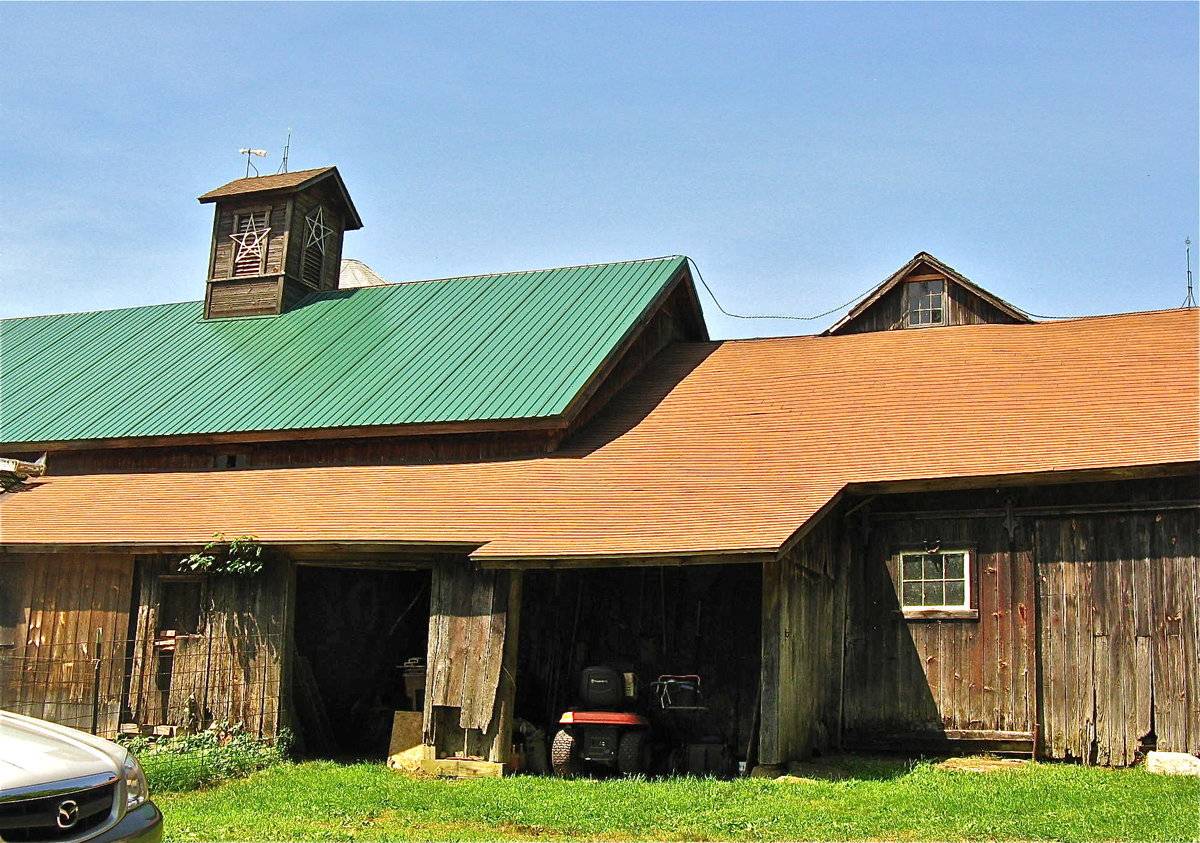
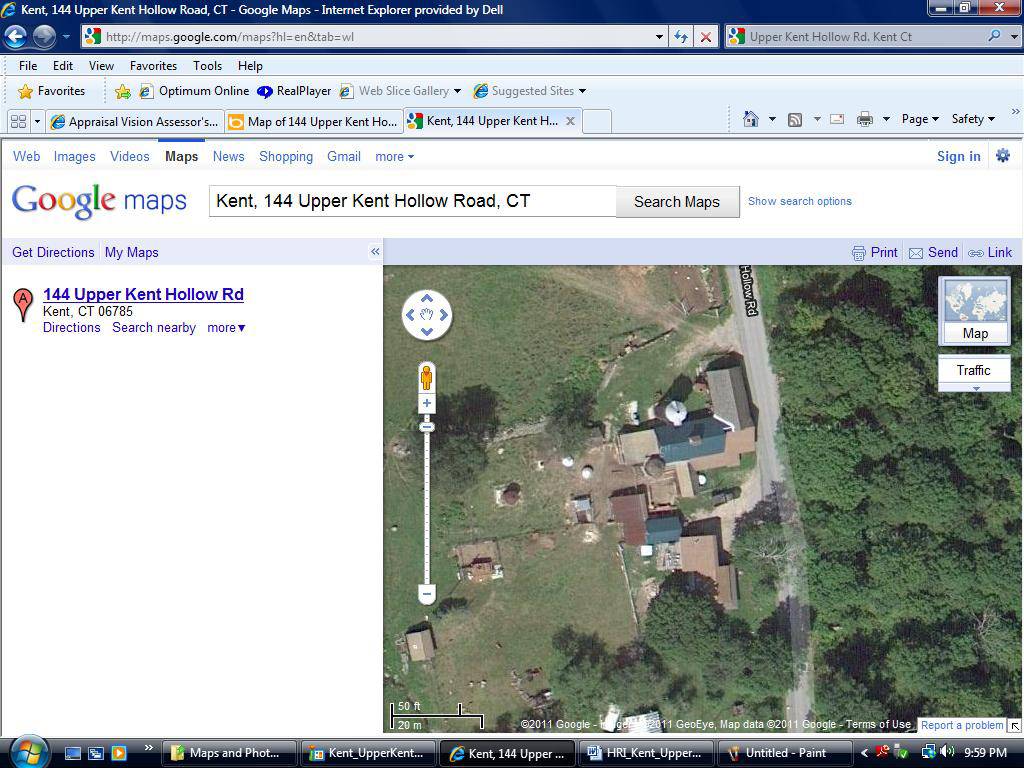
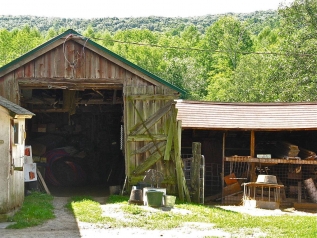
Structure #1 consists of two independent barns located at 90-degree angles to each other that are now connected to each other by a shed roof- addition, forming an L-shaped plan. The original barn is 1-½ story gable-entry barn with a gable roof. Its ridgeline runs north-south, parallel to Upper Kent Hollow Road. At its southwest corner is a larger barn with a gable roof with topped with a cupola. Its ridgeline runs east west, perpendicular to Upper Kent Hollow Road and the original barn to the northeast. The two gable-roof barns are connected by a shed addition that extends from the south gable end of the original barn, running west along the eastern half of the south eave side of the second gable-roof barn. To the west of the second gable roof barn there is another shed-roof addition.
Currently, the main façade appears to face south. Proceeding from east to west, there is what appears to be a pair of sliding doors constructed of vertical wood boards mounted on an external track, followed by a six-pane stable window with trim. The shed-roof than projects further outward and there are two open bays, followed by a vacant window opening. On the south gable-end of the original structure there is a nine-pane stable window right below the apex of the eave. Along the east eave-end there appears to be a small stable-window and a sliding pass-through door at the northeast corner of the east eave-side. Along the north side of the barn, there is a transom with seven lights on the north gable-end of the original barn. There appears to have once been a pair of stable doors below the transom, as well as a hay-loft door above the transom. Further west, along the north eave-side of the other gable-roof barn, there appears to be a small pass-through door followed by a window opening.
All of the exterior walls are covered with vertical board siding. The roof of the original gable-entry barn appears to be covered in wood shingles, and its counterpart to the southwest is covered with a painted standing-seam metal roof. In the center of the roof at the apex of the gable there is a louvered cupola with a gable roof covered with what appears to be wood shingles. The shed roof addition to the southwest appears to be covered in wooden boards.
There are two silos adjacent to structure #1, one to the north, and another to the south. The silo to the north is a wood-stave silo with a conical roof covered in what appears to be wood shingles.
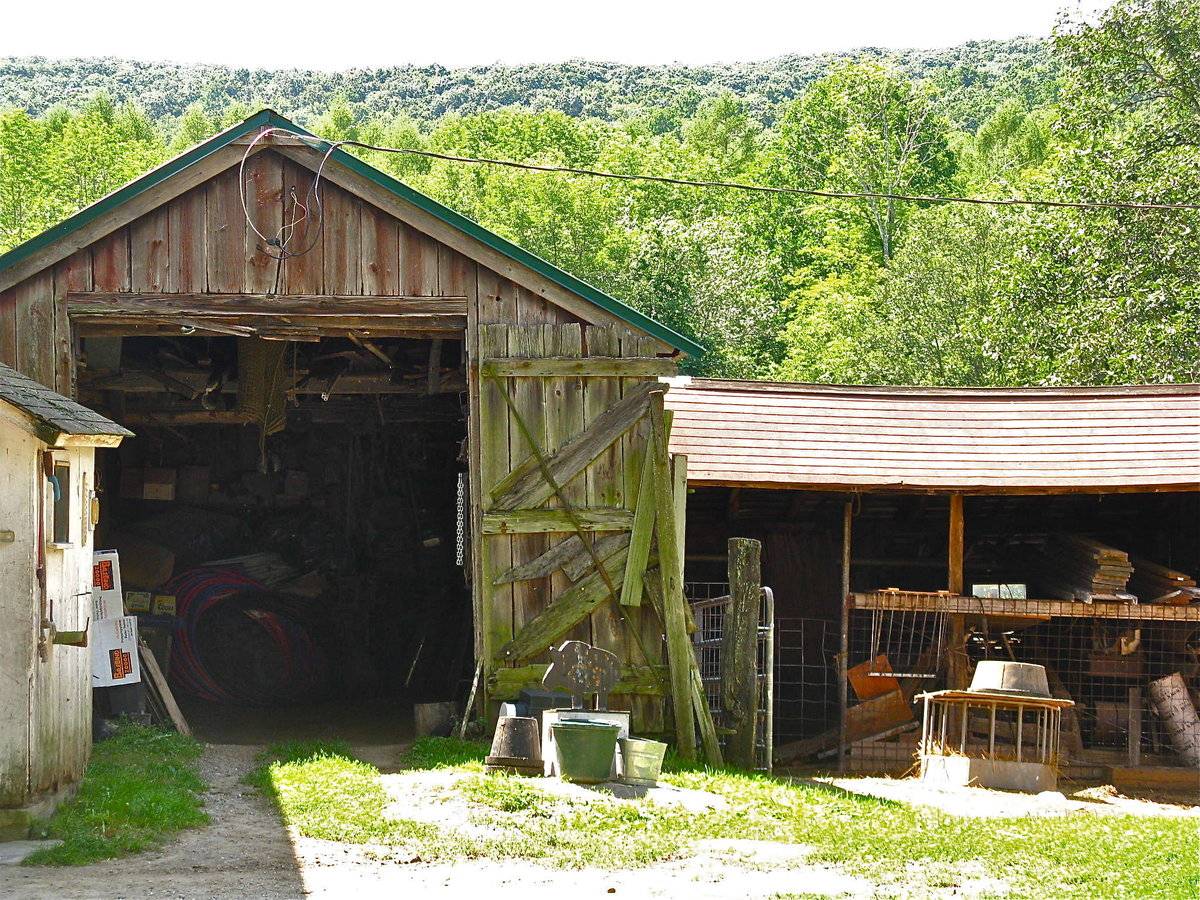
Structure #2 is located at the southwest corner of structure #1. This is a 1-½ story, gable entry garage or shed with a 1-story addition with a low-pitched gable roof to its north and west, its ridgeline running north-south, perpendicular to that of the original structure. The main façade faces east, and the ridgeline runs east-west, perpendicular to Upper Kent Hollow Road. Principal entry is provided by a pair of hinged doors constructed of vertical boards reinforced with z-braces. Proceeding northwards, the main façade of the addition appears to be open. Along the west eave-end of the addition, there appears to be a four-pane stable window. The walls of the original structure are covered with vertical board siding, and there is a standing-seam metal roof. The roof of the addition appears to be covered with horizontal wood boards.
Historical significance:The oldest barns still found in the state are called the “English Barn,” “side-entry barn,” “eave entry,” or a 30 x 40. They are simple buildings with rectangular plan, pitched gable roof, and a door or doors located on one or both of the “eave” sides of the building based on the grain warehouses of the English colonists’ homeland. The New England barn or gable front barn was the successor to the English barn and relies on a gable entry rather than an entry under the eaves. The gable front offers many practical advantages. Roofs drain off the side, rather than flooding the dooryard. Although it was seen by many as an improvement over the earlier side entry English Barn, the New England barn did not replace its predecessor but rather coexisted with it. It this case, both an eave entry and a gable entry are used.
The New England barn or gable front barn was the successor to the English barn and relies on a gable entry rather than an entry under the eaves. The gable front offers many practical advantages. Roofs drain off the side, rather than flooding the dooryard. With the main drive floor running parallel to the ridge, the size of the barn could be increased to accommodate larger herds by adding additional bays to the rear gable end. Although it was seen by many as an improvement over the earlier side-entry English Barn, the New England barn did not replace its predecessor but rather coexisted with it, as both types continued to be built.
Field Notes
n/a
- Use & Accessibility
Use (Historic)
Use (Present)
Exterior Visible from Public Road?
Yes
Demolished
n/a
Location Integrity
Unknown
- Environment
Related features
Environment features
Relationship to surroundings
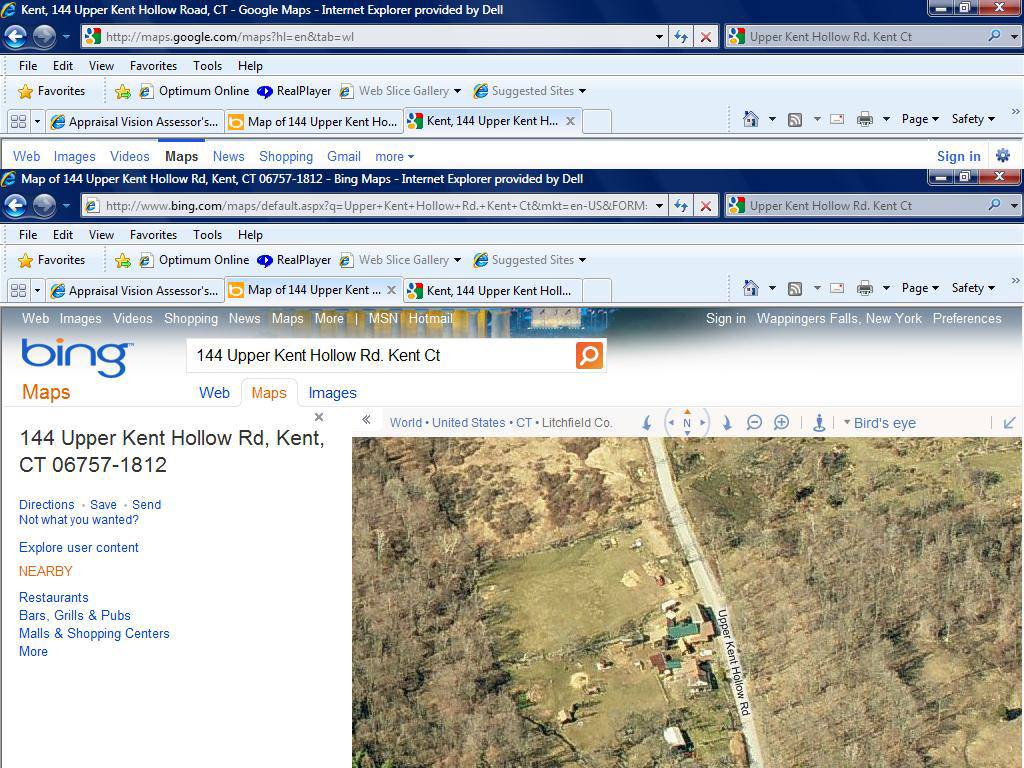
This property is located to the east of Kent, in a rural wooded area with a few scattered farms and residences. The barn is located on a 8.0-acre parcel that also contains a c.1880 house located to the south of the barns. This is a 1-½ story, eave-entry structure with a gable roof. Its main façade faces east, its ridgeline running north south. There is a single-story wrap-around porch along the southern portion of the main façade and the eastern portion of the south gable-end. To the northwest of the original structure, there is a 1-story addition with a low-pitched gable roof.
To the north and east of the property there are open fields interspersed with patches of woods. To the west there are dense woodlands, and Kent Hollow Cemetery lies to the south.
- Typology & Materials
-
Building Typology
Materials
Structural System
Roof materials
Roof type
Approximate Dimensions
n/a
- Source
-
Date Compiled
02/21/2011
Compiled By
E. Reisman & T. Levine; reviewed by CT Trust
Sources
Field notes and photographs by Lesley Meyer 08/30/2010.
Town of Kent’s Assessor’s Record: http://data.visionappraisal.com/KentCT/findpid.asp?iTable=pid&pid=1779 (Parcel ID: 00212500: 8.00 acres: c. 1880 house, 1,000 sq. ft.; garage, 416 sq. ft.; lean-to, 756 sq. ft.; lean-to, 300 sq. ft.; shed, 216 sq. ft.; shed, 300 sq. ft.; shed, 360 sq. ft. shed, 252 sq. ft.; shed, 570 sq. ft.; 1-story barn, 1,344 sq. ft.; 1-story barn, 960 sq. ft.; 1-story barn, 480 sq. ft. silo)
Aerial Mapping:
http://maps.google.com accessed 02/21/2011
http://www.bing.com/maps accessed 02/21/2011.Sexton, James, PhD, Survey Narrative of the Connecticut Barn, Connecticut Trust for Historic Preservation, Hamden, CT, 2005, http://www.connecticutbarns.org/history.
Visser, Thomas D., Field Guide to New England Barns and Farm Buildings, University Press of New England, 1997. - PhotosClick on image to view full file
-