Barn Record Southington
RETURN TO ‘FIND BARNS’- Building Name (Common)
- Levi B. Frost House
- Building Name (Historic)
- Levi B. Frost/Barnes Tavern
- Address
- 1089 Marion Avenue, Southington
- Typology
- Overview
-
Designations
Historic Significance
Architectural description:
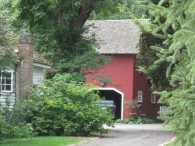
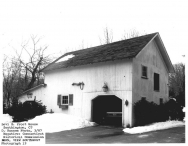
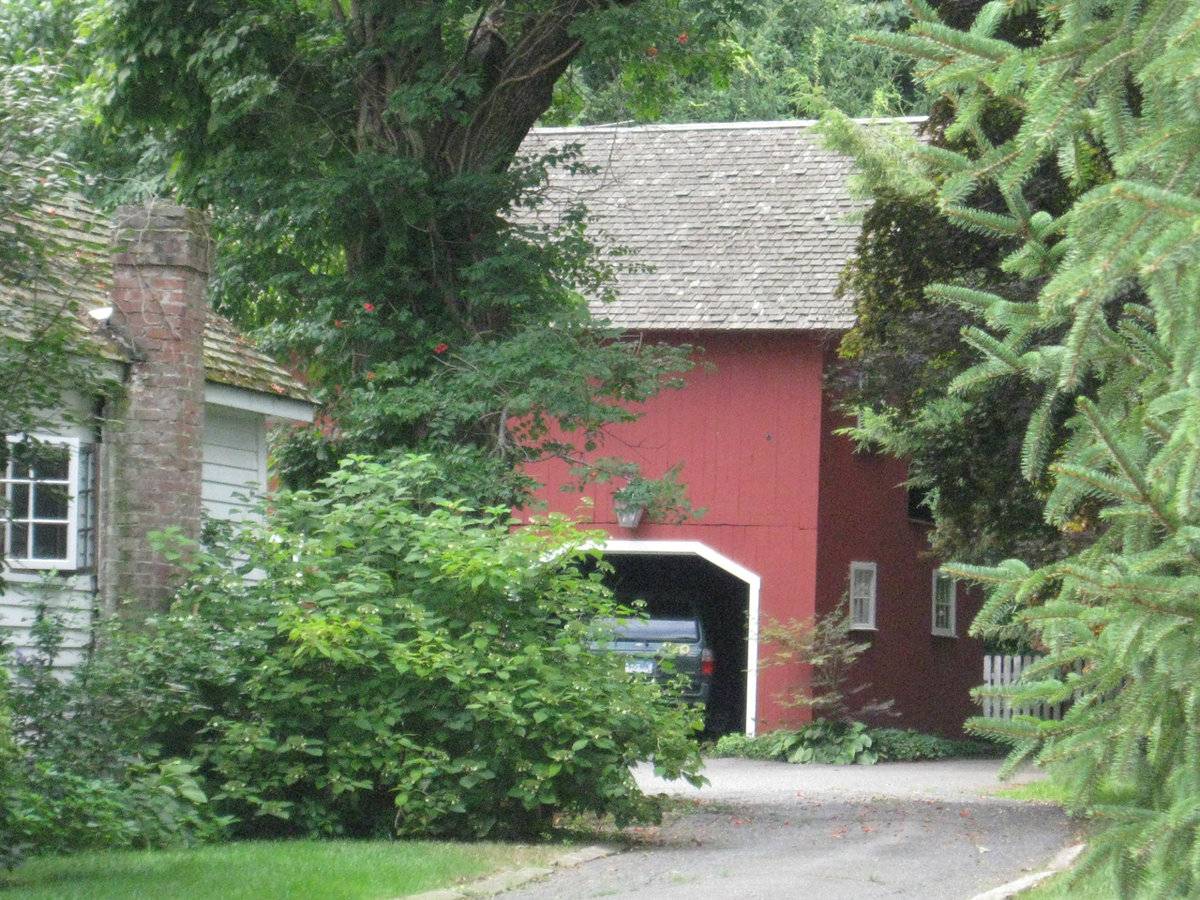
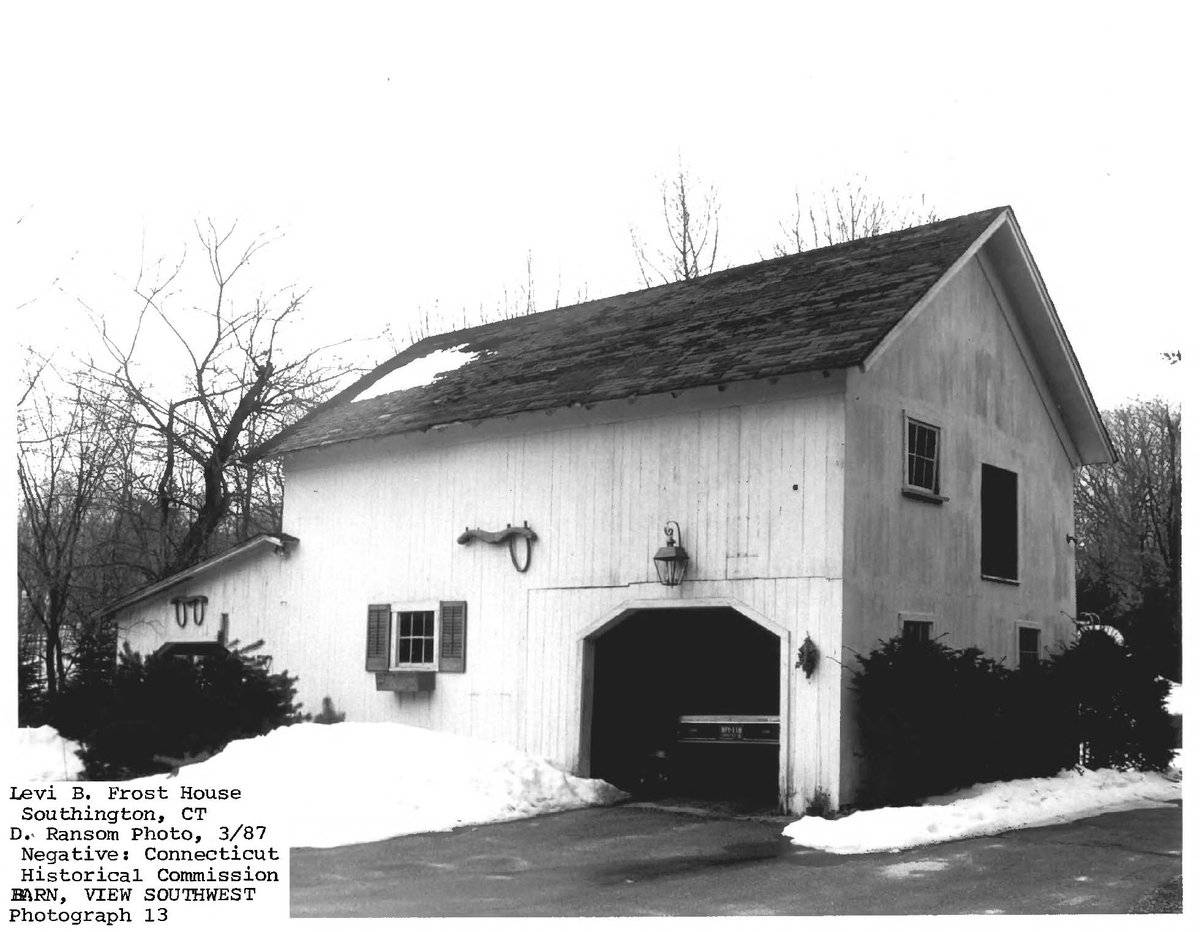
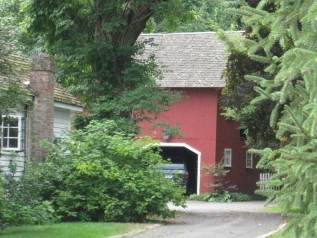
This is a 2 ½-story gable-roofed structure with its ridgeline oriented north-south. The main entry is an open wagon bay with upper chamfered corners in the east eave-side façade. The north gable-end wall has two six-pane stable windows at the ground level and a hay mow door flanked to the left (east) by a six-pane window in the second level. There appears to be a gable-roofed wing extending west attached to the southern bays of the west side, and a shed-roofed addition attached to the south gable-end, with an open doorway in its east side.
Roofing is asphalt and siding is vertical flush-board siding painted red.Historical significance:
Until the 1830s, the horses used for riding and driving carriages were often kept in the main barn along with the other farm animals. By the 1850s, some New England farmers built separate horse stables and carriage houses. Early carriage houses were built just to shelter a carriage and perhaps a sleigh, but no horses. The pre-cursors to the twentieth-century garage, these outbuildings are distinguished by their large hinged doors, few windows, and proximity to the dooryard.
The combined horse stable and carriage house continued to be a common farm building through the second half of the nineteenth century and the first decade of the twentieth century, until automobiles became common. Elaborate carriage houses were also associated with gentlemen farms and country estates of the late 19th and early 20th centuries. Another form of carriage barn, the urban livery stable, served the needs of tradespeople.
Historical background:
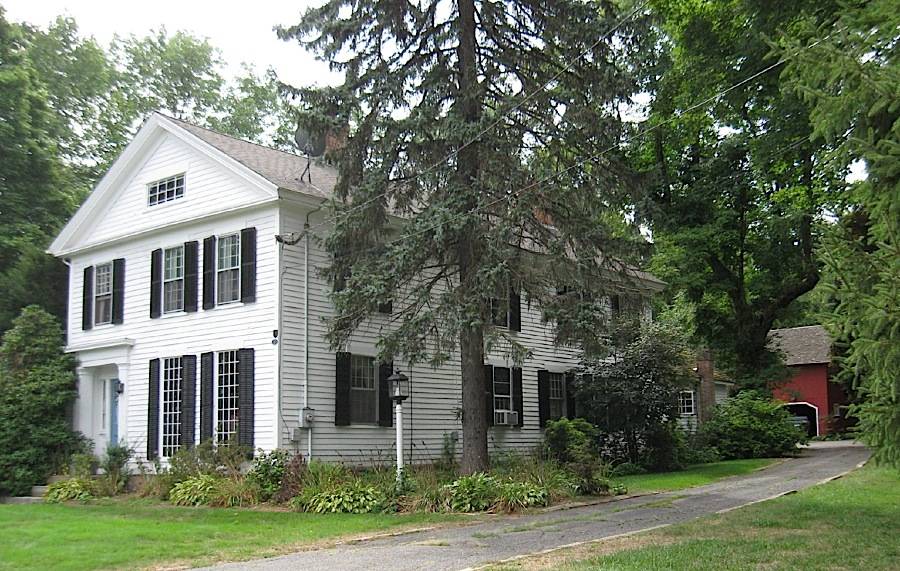
This is identified (Ransom) as a 19th-century barn associated with the Levi B. Frost House (c. 1840). Levi B. Frost was a noted local industrialist, proprietor of the L. B. Frost and Sons bolt factory located at 1108 Marion Avenue.
The house was in the 18th century the location of Asa Barns’s tavern, and hosted the Comte de Rochambeau in 1781 and 1782 on his journey from Newport RI to Yorktown NY. Levi Frost purchased it in 1820; a serious fire occurred in 1836, and the present Greek Revival appearance dates from the post-fire reconstruction.
Field Notes
Barn is a contributing resource in the Marion Historic District located in Southington CT, and is individually listed on the National Register of Historic Places.
- Use & Accessibility
Use (Historic)
Use (Present)
Exterior Visible from Public Road?
Yes
Demolished
n/a
Location Integrity
Unknown
- Environment
Related features
Environment features
Relationship to surroundings
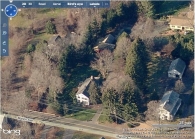
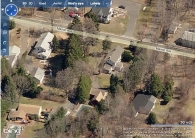
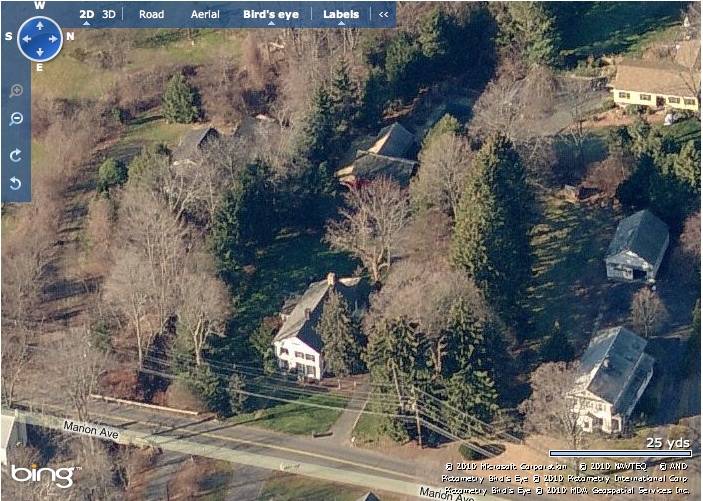
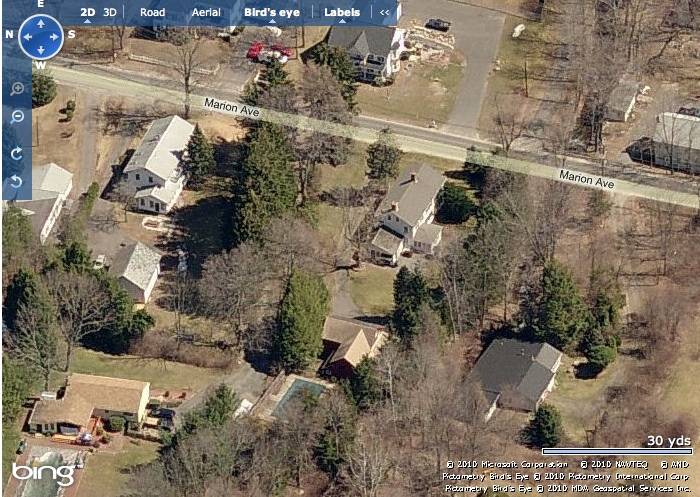
This house and barn are located on the west side of Marion Avenue near the northern edge of the Marion Historic District, a residential community with buildings dating from the 18th to the 20th centuries. Marion Avenue was established as a north-south route between Cheshire and Bristol, while the Marion-Waterbury Turnpike has run east-west since 1813. Farms were laid out in the area known as “Little Plain” just east of a north-south trending mountain ridge, French Hill. The early farmsteads were spaced apart and later development occurred through the 19th century as families divided their lands among children, infilling the street frontage along Marion Avenue. Industrial development in the later 19th century both in Marion and nearby Plantsville, and a trolley line connecting Waterbury and Southington, led to suburban-style development. Today the district is fully developed with houses of various periods lining the road on both sides and extending along several side streets.
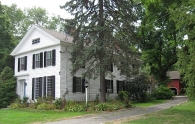
The Levi B. Frost House is a Greek Revival style two-story three-bay, temple-form structure with a full gable pediment. The ridgeline is oriented east-west with the gable-end entry facade facing east. A long narrow lot of 1.74 acres extends west and the carriage barn is located to the west behind the house.
- Typology & Materials
-
Building Typology
Materials
Structural System
Roof materials
Roof type
Approximate Dimensions
38 x 44 ft
- Source
-
Date Compiled
09/02/2010
Compiled By
Charlotte Hitchcock, reviewed by CT Trust
Sources
Field notes and photographs by Charlotte Hitchcock and Helen Higgins 8/18/2010
Southington Assessor’s Record Parcel ID: 029/015 and GIS mapping.
(38 x 44 ft - 1.74 acre).Aerial Mapping:
http://maps.google.com
http://www.bing.com/maps accessed 9/02/2010.Elliott, Janice L., Ransom, David F., Marion National Register Historic District Nomination No. 88001423, National Park Service, 1988.
Ransom, David F., Levi B. Frost House National Register Nomination No. 87002037, National Park Service, 1987.
Sexton, James, PhD, Survey Narrative of the Connecticut Barn, Connecticut Trust for Historic Preservation, Hamden, CT, 2005, http://www.connecticutbarns.org/history.
Visser, Thomas D., Field Guide to New England Barns and Farm Buildings, University Press of New England, 1997. - PhotosClick on image to view full file
-