Barn Record Southington
RETURN TO ‘FIND BARNS’- Building Name (Common)
- n/a
- Building Name (Historic)
- n/a
- Address
- 44 School Street, Southington
- Typology
- Overview
-
Designations
n/a
Historic Significance
Architectural description:
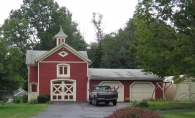
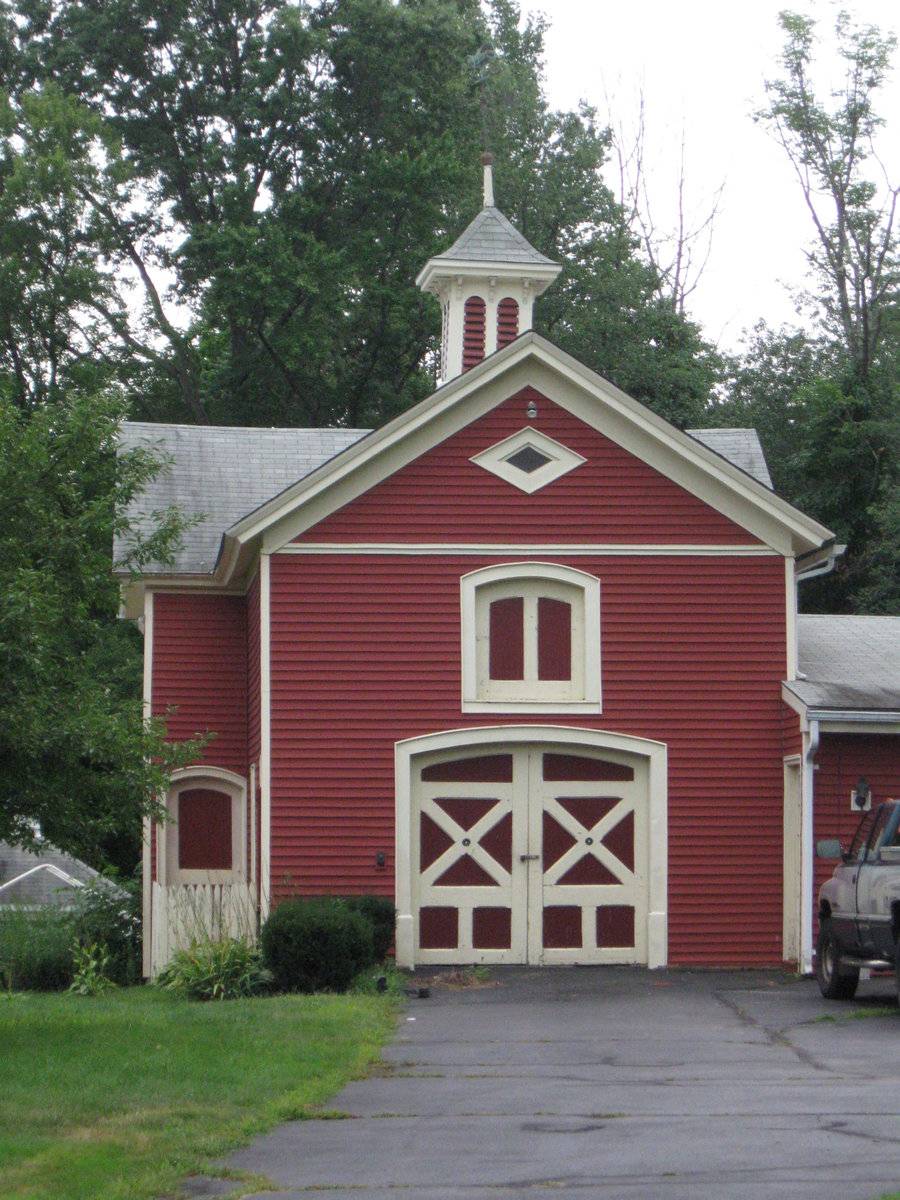
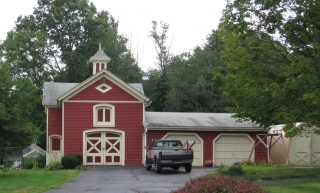
This is a 2 ½-story structure with an L-shaped plan. The main entry on the north façade is in the gable-end of a block with its ridgeline oriented north-south. At the rear, a perpendicular wing with a cross-gable roof runs east-west. The east gable-end of this wing projects beyond the east wall of the primary block. The west gable-end is flush with the west wall of the primary block.
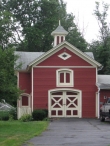
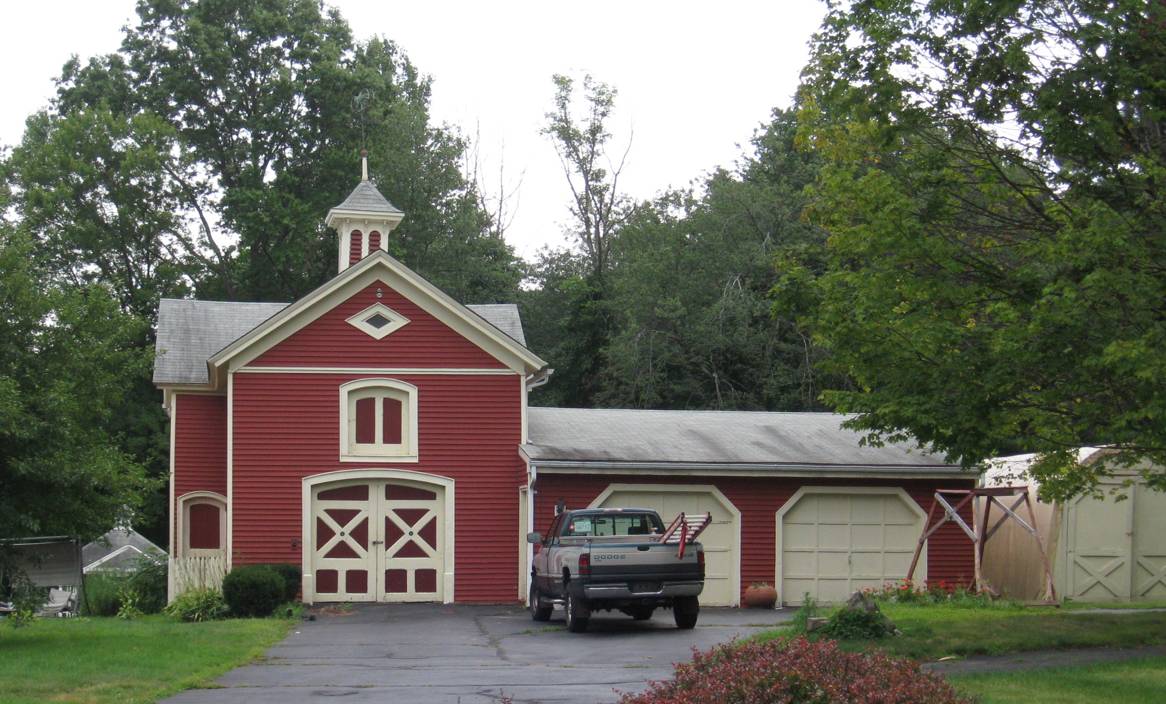
The north gable-end has a pair of interior sliding barn doors with a segmental arched head at the main level. The doors are richly paneled, with x-braced middle sections over a pair of lower panels and single panels at the head. Above in the second floor is a two-panel hay mow door. In the attic a diamond-shaped attic window sits below the peak. The roof pitch is less steep than the adjacent house, and has closed sloped eaves and rake. A paneled pass-through door with a flat-arched head is located in the north wall of the east wing, also facing the street.
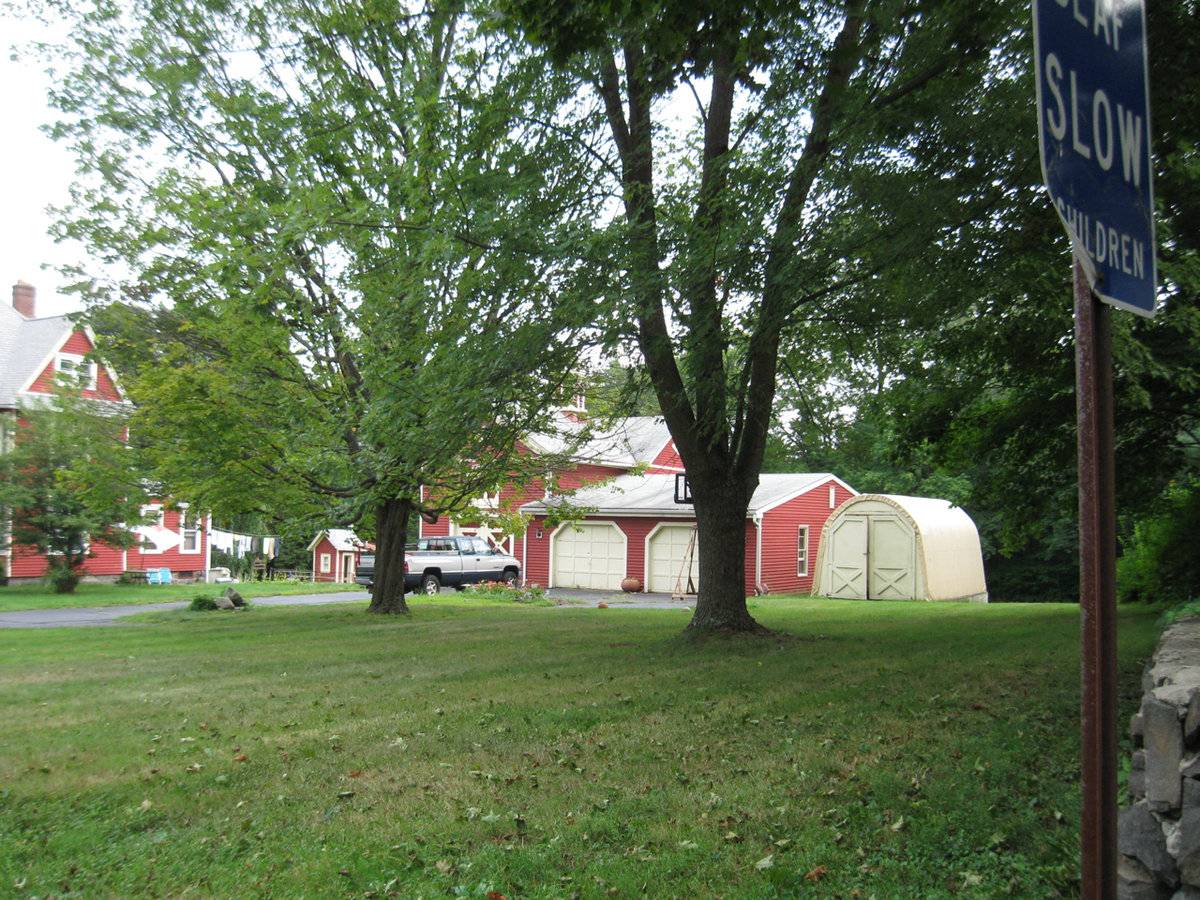
The east side has simpler details, consisting of an attic window in the east gable end, a single window at the first floor level below, and a pair of windows in the east eave-side wall. The south – the eave-side wall of the cross-gable – has a basement level, due to the down-sloping grade, and two stable windows at the main level. The west side has a diamond window in the attic; the lower part is covered by a 20th-century attached one-story garage addition which projects westward and has two overhead garage doors in the north eave-side facing the street.
Siding is red aluminum or vinyl siding and contrasting cream trim, which for the most part appears to be wood. Roofing is asphalt shingle and there is a hip-roofed cupola on the ridge of the north block. The cupola has paired arched louvered openings on each side and ornamental brackets under the eaves. A finial with a weathervane projects up from the peak of the cupola.
Historical significance:Until the 1830s, the horses used for riding and driving carriages were often kept in the main barn along with the other farm animals. By the 1850s, some New England farmers built separate horse stables and carriage houses. Early carriage houses were built just to shelter a carriage and perhaps a sleigh, but no horses. The pre-cursors to the twentieth-century garage, these outbuildings are distinguished by their large hinged doors, few windows, and proximity to the dooryard.
The combined horse stable and carriage house continued to be a common farm building through the second half of the nineteenth century and the first decade of the twentieth century, until automobiles became common. Elaborate carriage houses were also associated with gentlemen farms and country estates of the late 19th and early 20th centuries. Another form of carriage barn, the urban livery stable, served the needs of tradespeople.
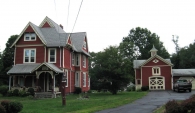
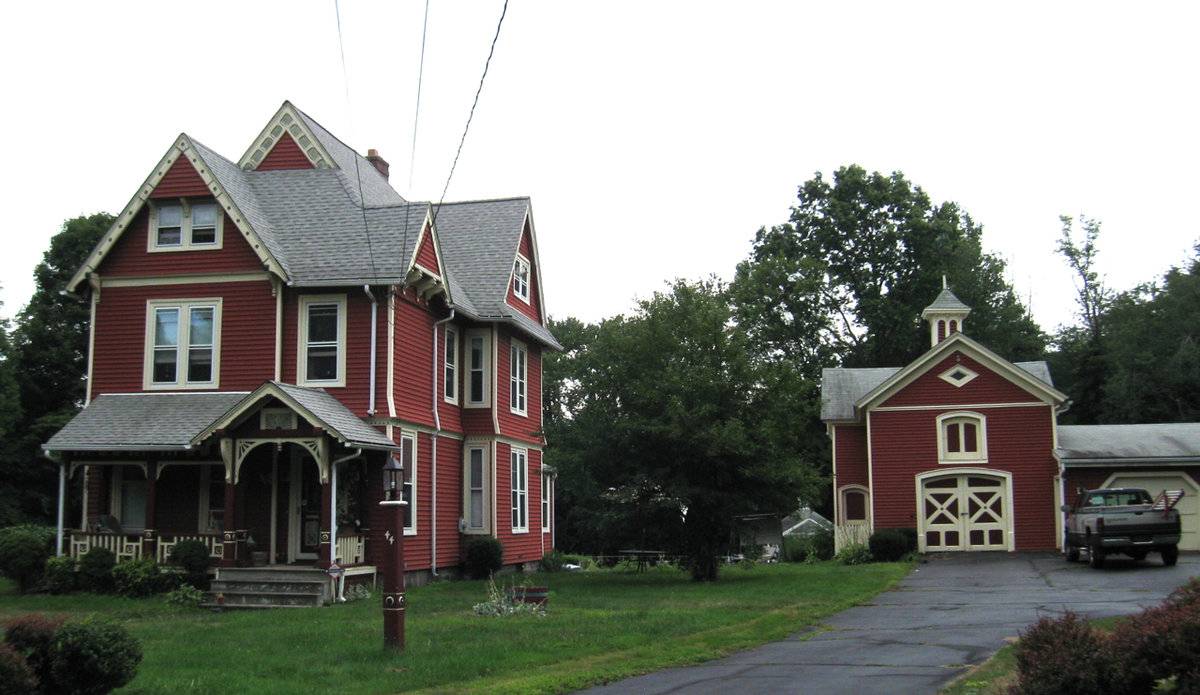
This carriage house in an Italianate style, accompanies a Victorian house of a vernacular Carpenter Gothic style.
Field Notes
n/a
- Use & Accessibility
Use (Historic)
Use (Present)
Exterior Visible from Public Road?
Yes
Demolished
n/a
Location Integrity
Unknown
- Environment
Related features
Environment features
Relationship to surroundings
This house and barn are located adjacent to the Marion Historic District, a historic residential community with buildings dating from the 18th to the 20th centuries. Marion Avenue was established as a north-south route between Cheshire and Bristol, while the Marion-Waterbury Turnpike has run east-west since 1813. Farms were laid out in the area known as “Little Plain” just east of a north-south trending mountain ridge. The early farmsteads were spaced apart and later development occurred through the 19th century as families divided their lands among children, infilling the street frontage along Marion Avenue. Industrial development in the later 19th century both in Marion and nearby Plantsville, and a trolley line connecting Waterbury and Southington, led to suburban-style development. Today the district is fully developed with houses of various periods lining the road on both sides and extending along several side streets.
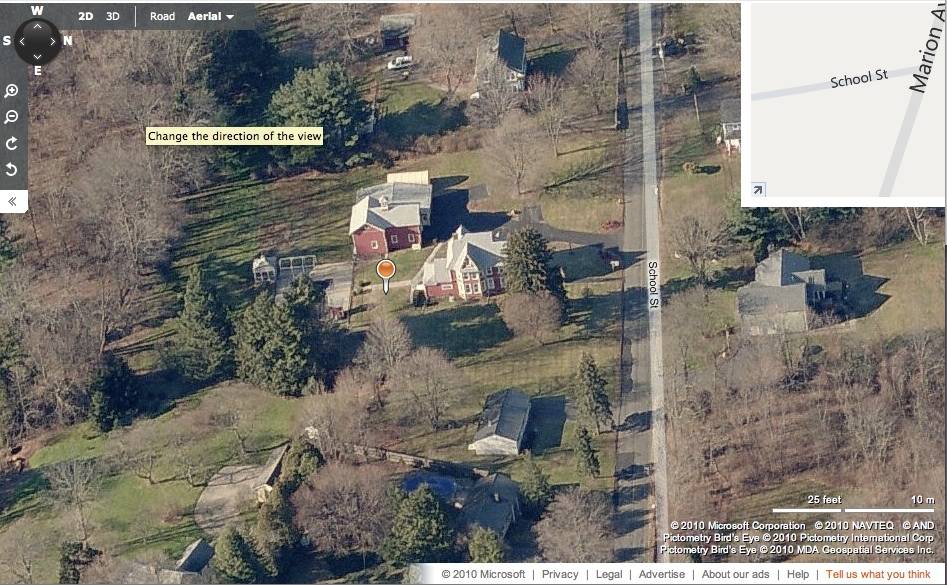
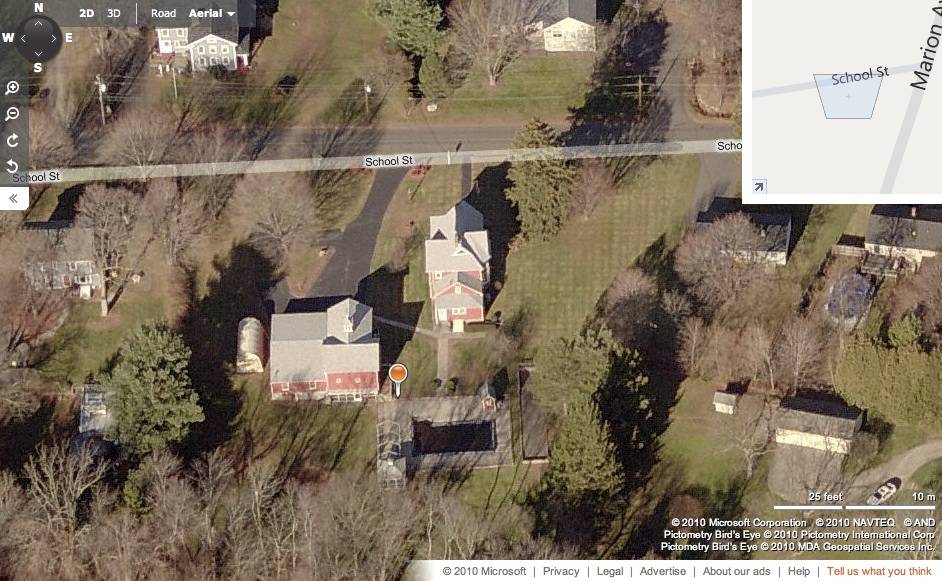
School Street runs west from Marion Avenue, where the local school occupies the corner of Marion and School Streets. The density of development decreases with distance from Marion Avenue.
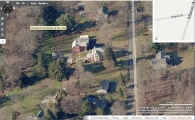
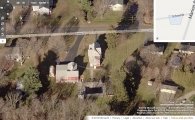
The house at 44 School Street is a 2 1/2-story Carpenter Gothic structure with steeply-pitched roof, a variety of cross-gable and wall dormer roof volumes, and ornamental brackets and bargeboards. Its long axis runs north-south, with the front porch and entry door facing north toward School Street. The carriage barn is set back further and to the west of the house.- Typology & Materials
-
Building Typology
Materials
Structural System
Roof materials
Roof type
Approximate Dimensions
22 x 40 feet, attached garage wing 26 x 44 feet
- Source
-
Date Compiled
10/19/2010
Compiled By
Charlotte Hitchcock, reviewed by CT Trust
Sources
Field notes and photographs by Charlotte Hitchcock and Helen Higgins; date 8/18/2010.
Southington Assessor’s Record Parcel ID 028035, Southington GIS viewer: http://www.southingtongis.com/ags_map/default.htm?MBL=028035
1.36 acres. House c. 1850
2-story 22 x 40 ft, newer 1-story attached garage wing 26 x 44 ftAerial Mapping:
http://maps.google.com
http://www.bing.com/maps accessed 10/18/2010.Elliott, Janice L., Ransom, David R., Marion National Register Historic District No. 88001423, National Park Service, 1988.
Sexton, James, PhD, Survey Narrative of the Connecticut Barn, Connecticut Trust for Historic Preservation, Hamden, CT, 2005, http://www.connecticutbarns.org/history.
Visser, Thomas D., Field Guide to New England Barns and Farm Buildings, University Press of New England, 1997. - PhotosClick on image to view full file
-