Barn Record Kent
RETURN TO ‘FIND BARNS’- Building Name (Common)
- n/a
- Building Name (Historic)
- n/a
- Address
- 0 Unpublished, Kent
- Typology

- Overview
-
Designations
n/a
Historic Significance
Architectural description:
There are eleven agriculture structures.
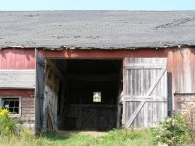
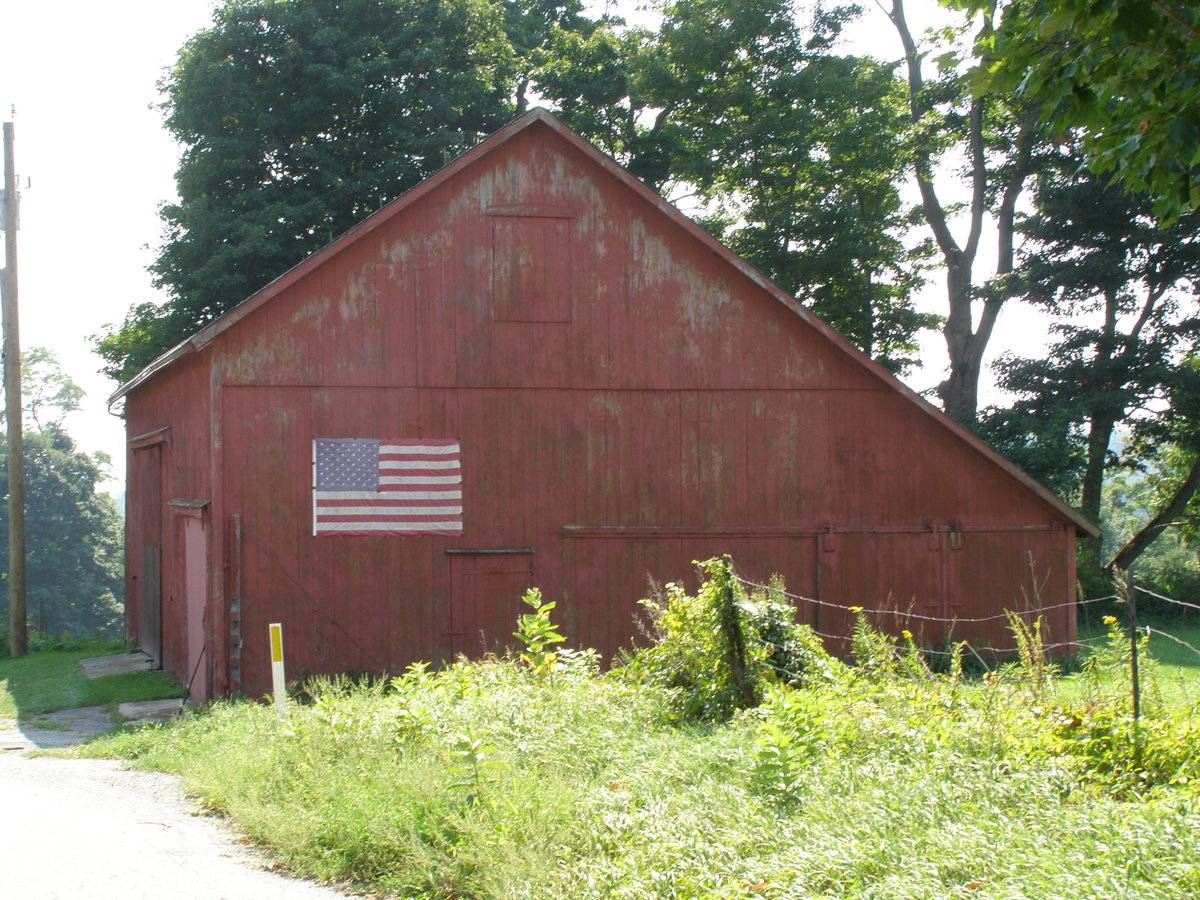
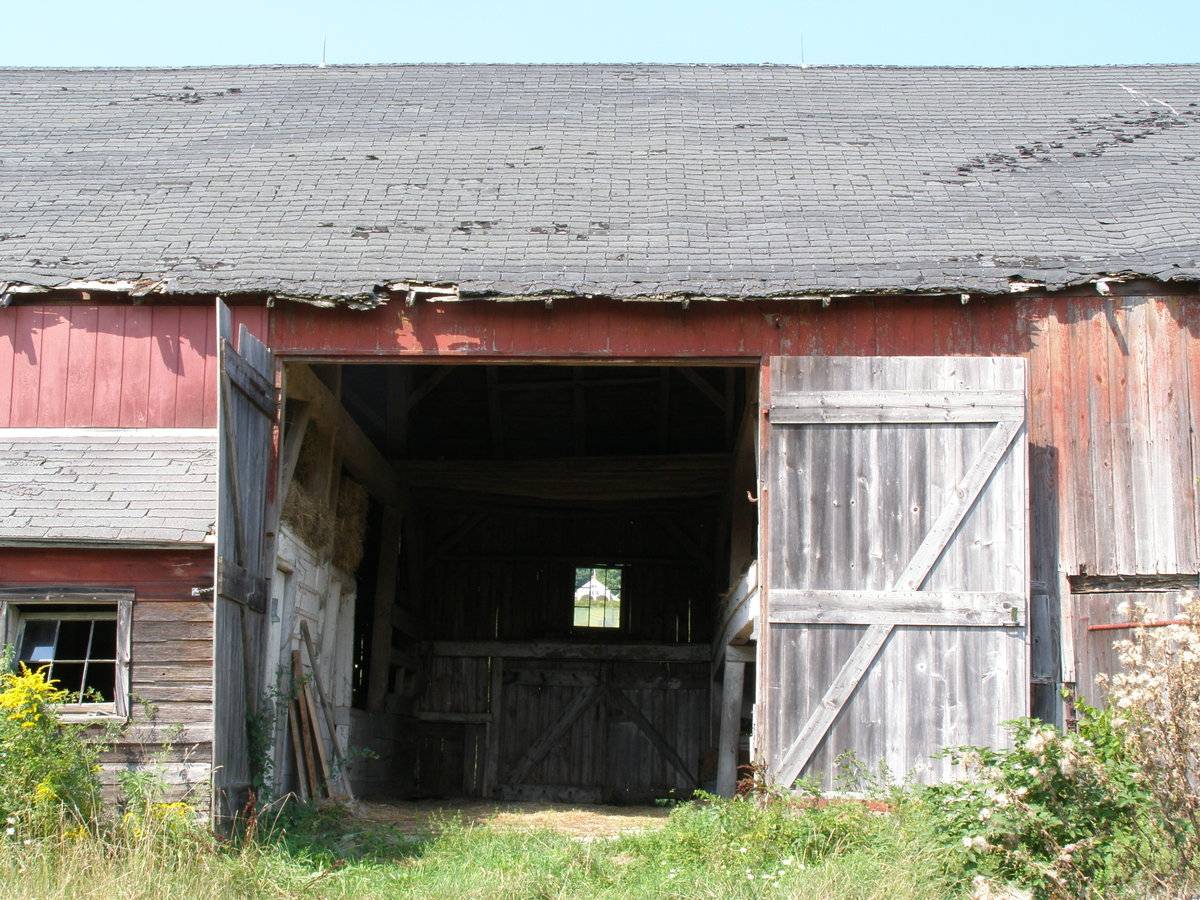
Structure #1 is a 1-½ story eave-entry barn with a saltbox roof. The main façade faces east, and the ridgeline runs north south, parallel to Skiff Mountain Road, which lies just to the east. Principal entry is provided by a centrally located door constructed of wood vertical boards mounted on an external sliding track. In the northern corner of the main façade there is a small pass-through door. On the eastern corner of the north gable end there is a hinged pass-through door constructed of vertical wood boards. Further west there are two large sliding doors constructed of vertical boards mounted on an external sliding track. There is a hinged hay door below the apex of the eave. The barn is covered with painted vertical board siding, and a dropped girt siding-line divide is visible. The roof appears to be covered with asphalt shingles.
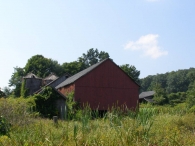
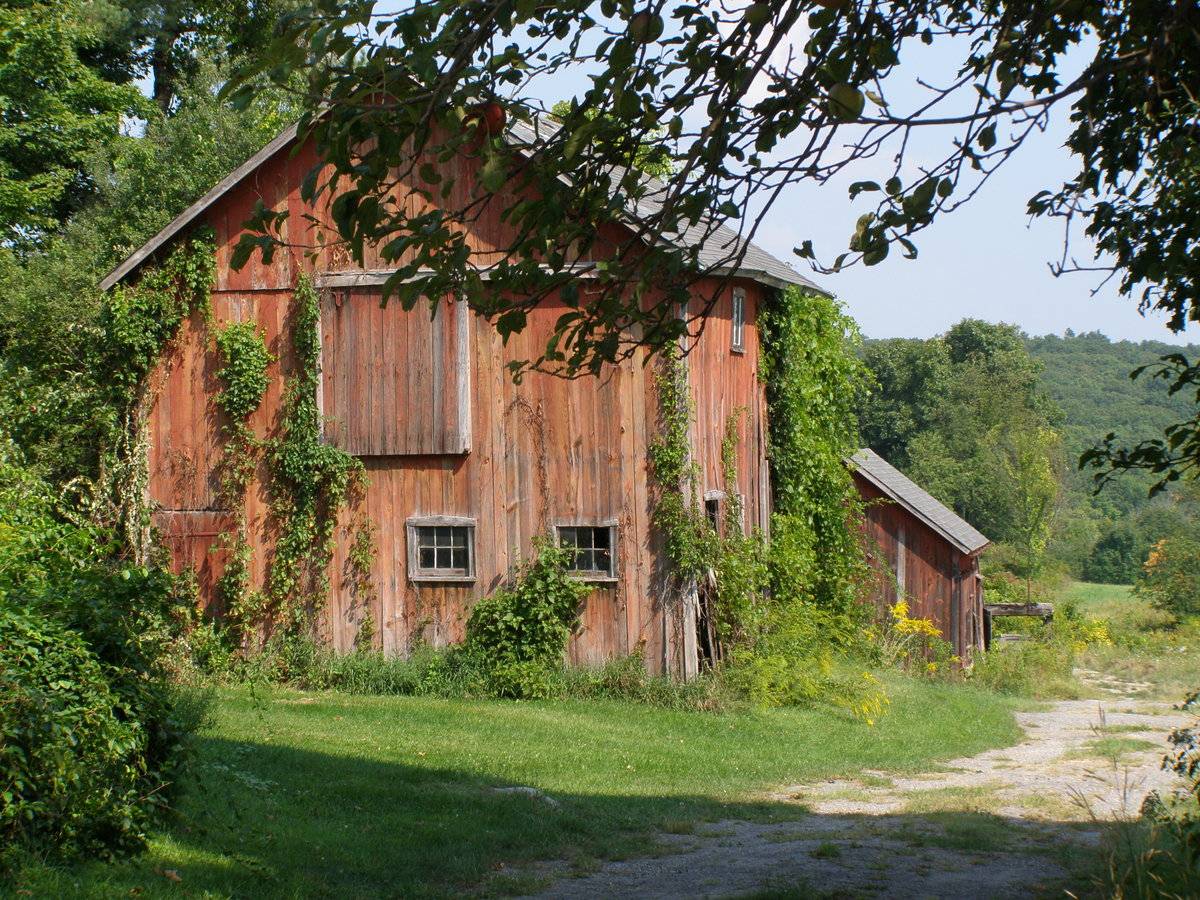
Structure #2 is located to the southeast of the main house on the east side of Skiff Mountain Road. It is a 2-½ story, eave-entry gable-roof structure, its ridgeline running east-west. The main façade appears to face west, and there is a hinged pass-through door at the northern corner, and two six-pane stable windows to the south. Above the stable windows is wood hay door constructed of vertical boards mounted on an external sliding track. Along the south eave-side there are three stable windows. The north eave-side and east gable-end are covered in ivy. The walls are covered with vertical board siding. A girt-line siding divide is visible. The roof is covered with asphalt shingles.
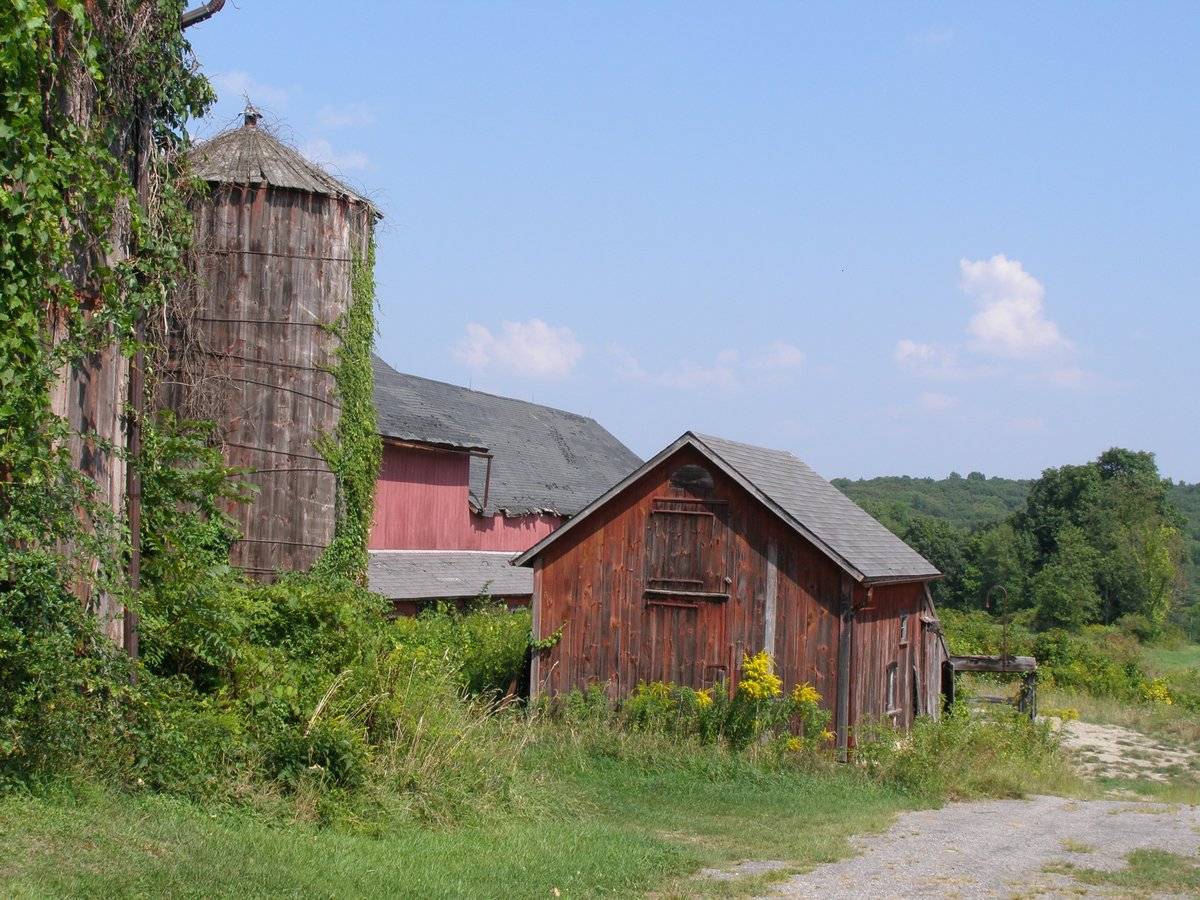
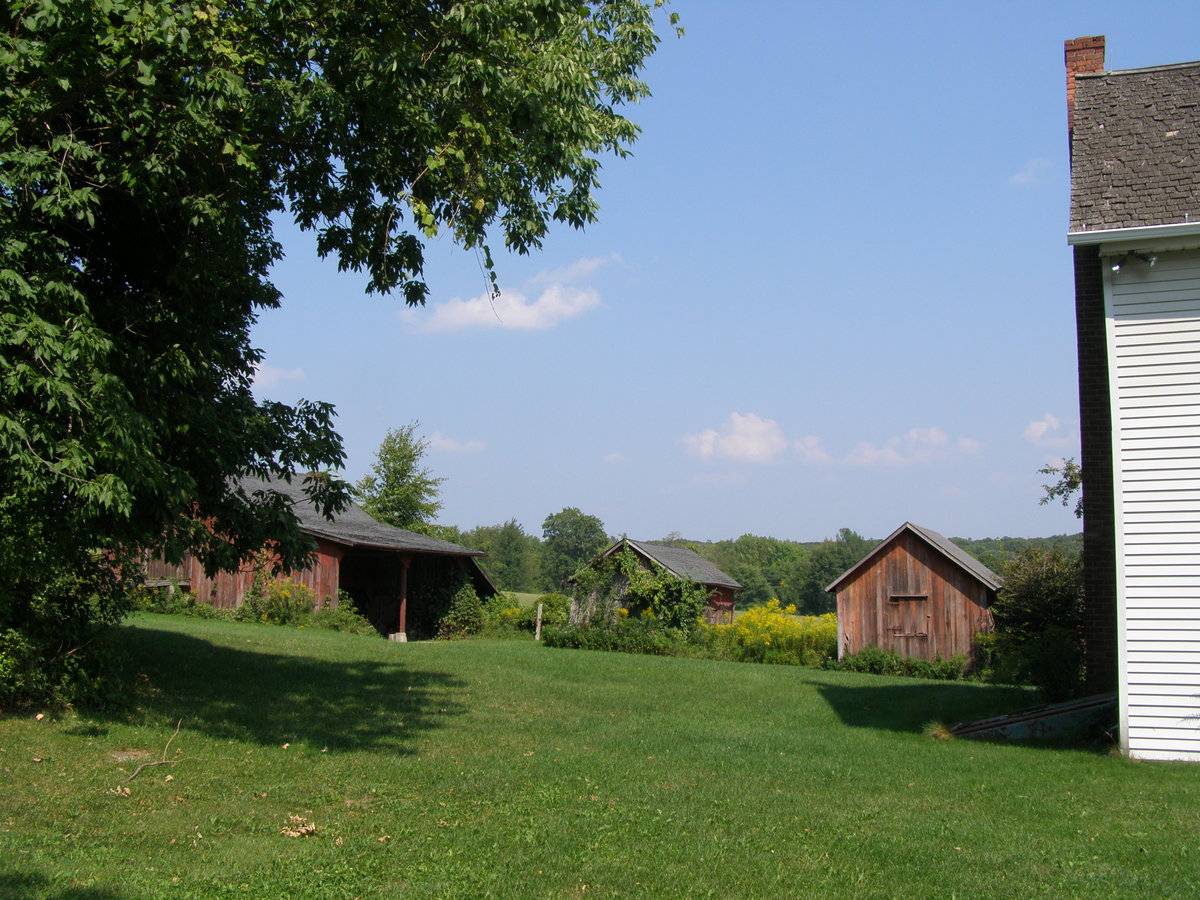
Structure # 3 is located to the east of structure #2. It is a small 1-½ story gable-entry structure with a shed roof-addition to the west. Its ridgeline runs east west, and the main façade faces west. Principal entry is provided by a hinged pass-through door constructed of vertical wood boards. Above the main door is hinged loft-door constructed of vertical wood boards. Above the loft-door, right below the apex of the gable, there appears to have once been a lunette-shaped window opening that is now covered with horizontal boards. There are two stable-windows on the south eave side. Along the east gable end above the shed-roof addition, there appears to have once been an arched window, now boarded over. The north eave-side is covered with ivy. The walls are covered with vertical board siding. The roof is covered with asphalt shingles.
Structure #4 is located to the north of structure #3. It is a large, 1-½ story eave-entry barn with a gable roof, and two additions, a gable-roof addition to the west, and a shed-roof addition to the southwest. Its ridgeline runs east west. The main façade faces south, and main entry is provided by a pair of full-height hinged doors located in the center of the original structure. To the west there is a six-pane stable window. The east gable-end is unadorned. There appears to be a solitary stable window along the north eave-façade. The barn is covered with painted vertical board siding. A dropped girt-line siding divide is visible along the east gable-end. The roof is covered with asphalt shingles.
Structure #5 is located at the southeast corner of structure #4. It is a small gable-roofed structure. Its ridgeline runs east-west. The walls are covered in unpainted vertical board siding. The roof appears to be covered in asphalt shingles.
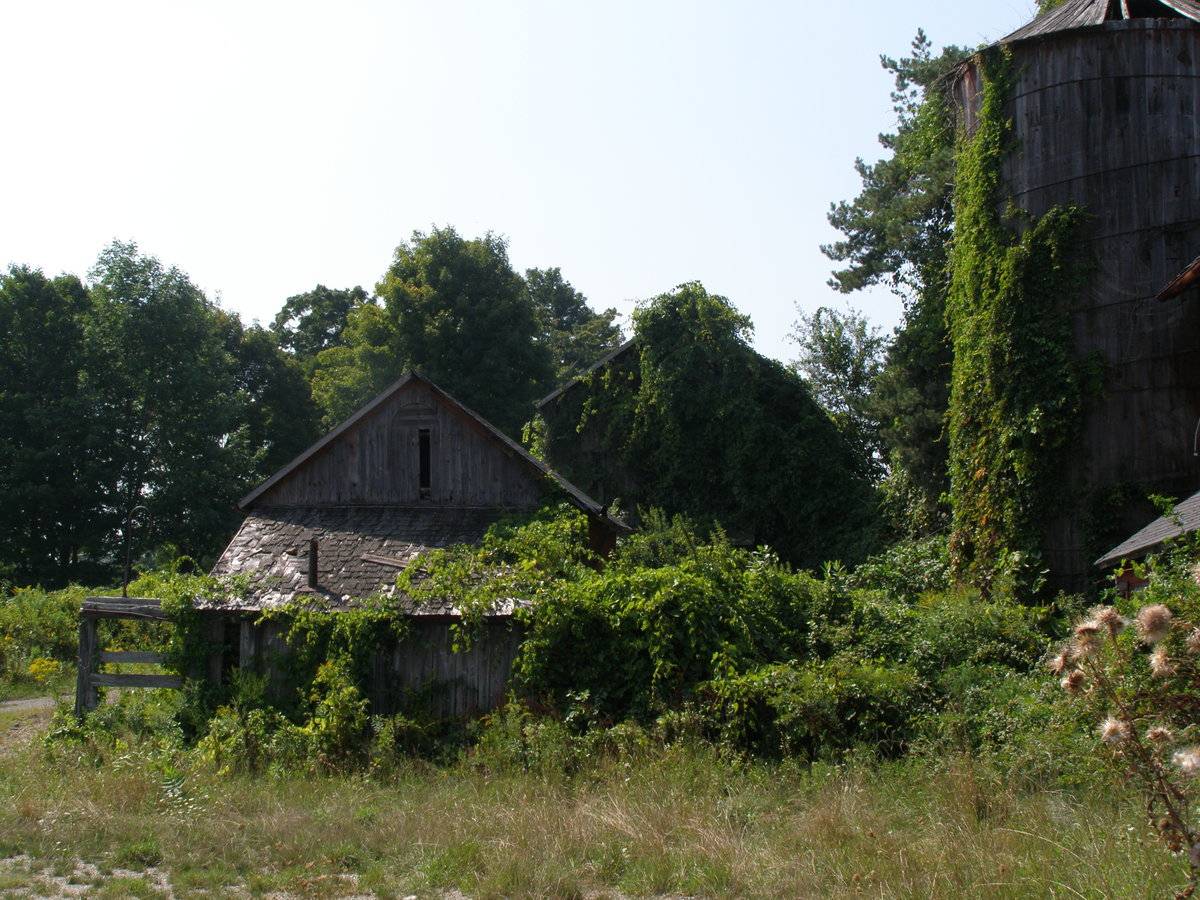
Structure #6 and # 7 are located to the west of structure #4. They are wood-stave silos with conical wood roofs.
Structure # 8 is located to the northwest of structures #6 and #7. This is a small 1-½ story gable-roof structure with a ridgeline running north-south. The walls appear to be covered with unpainted vertical board siding, and the roof appears to be covered with asphalt shingles.
Structure#9 is located to the north of structure #8. This is a small, 1-½ story with a gable roof and a gable addition to the east. Its ridgeline runs east-west. The main façade faces east, and the main entry is through a covered portico topped by a gable roof. On the west-gable end, there is a hinged loft door constructed of vertical wood boards. The walls are covered with painted vertical board siding, and the roof is covered with asphalt shingles.
Structure # 10 is located to the north of structure #9. This is a small, 1-½ story with a gable roof and a gable addition to the east. Its ridgeline runs east-west. There appears to be a window opening on the east gable-end below the apex of the eave. The walls are covered with painted vertical board siding, and the roof is covered with asphalt shingles.
Structure#11 is located to the north of structure # 10. This is a gable roof structure with a shed-roof addition to the south and west. On the south eave side, the shed roof extends outward from the walls, forming a covered portico supported by braced posts. There appears to be a stable window along the south eave-side. The walls are covered with painted vertical board siding. The roof is covered with asphalt shingles.
Historical significance:The oldest barns still found in the state are called the “English Barn,” “side-entry barn,” “eave entry,” or a 30 x 40. They are simple buildings with rectangular plan, pitched gable roof, and a door
or doors located on one or both of the eave sides of the building based on the grain warehouses of the English colonists’ homeland. The name “30 by 40” originates from its size (in feet), which was large enough for 1 family and could service about 100 acres. The multi-purpose use of the English barn is reflected by the building’s construction in three distinct bays - one for each use. The middle bay was used for threshing, which is separating the seed from the stalk in wheat and oat by beating the stalks with a flail. The flanking bays would be for animals and hay storage.Before the 1880s, cheese and butter making were usually done on the farm. The milk room or dairy room was often located in an ell between the kitchen and the woodshed. Some farms had separate milk rooms and dairy rooms. In the milk room, the fresh milk was poured into shallow pans placed on shelves or racks. After the cream rose to the surface, it was skimmed off the milk and then churned to make butter. Cooperative creameries were being established throughout New England in the 1880s. Usually located next to the railroad line in villages, these creameries processed the milk of dozens of farmers, who shipped the liquid from the farm to the creamery by wagon in metal cans. Single-story milk houses are typically attached to [20th-century] ground-level stable barns for preparation of the milk to be sent to the creamery. Designed to comply with state and local ordinances intended to minimize the potential for milk contamination, many are now fitted with large, electrically cooled stainless steel bulk storage tanks.
When chopped cornstalks are compressed to prevent their exposure to the air, the silage ferments instead of spoiling, providing nutritious food for the dairy herd and allowing them to produce milk through the winter. Early silos were built inside the barns, but by the 1890s free standing silos were being built outside dairy barns. Constructed much like a very large wooden barrel, with adjustable steel hoops holding the vertical grooved staves together, the round wooden stave silo was widely accepted by dairy farmers in New England from the 1890s through the 1930s. Conical roofs are most common on wooden stave silos, usually covered with composition sheet roofing and topped with a metal ventilator. Removable wooden access doors extend up one side. The hoops were loosened in fall to accommodate the swelling of the wood as it absorbed moisture from the silage, and tightened over the winter as the silage dried.
A shed is typically a simple, single-story structure in a back garden or on an allotment that is used for storage, hobbies, or as a workshop. Sheds vary considerably in the complexity of their construction and their size, from small open-sided tin-roofed structures to large wood-framed sheds with shingled roofs, windows, and electrical outlets. Sheds used on farms or in industry can be large
structures.Field Notes
n/a
- Use & Accessibility
Use (Historic)
Use (Present)
Exterior Visible from Public Road?
Yes
Demolished
n/a
Location Integrity
Unknown
- Environment
Related features
Environment features
Relationship to surroundings
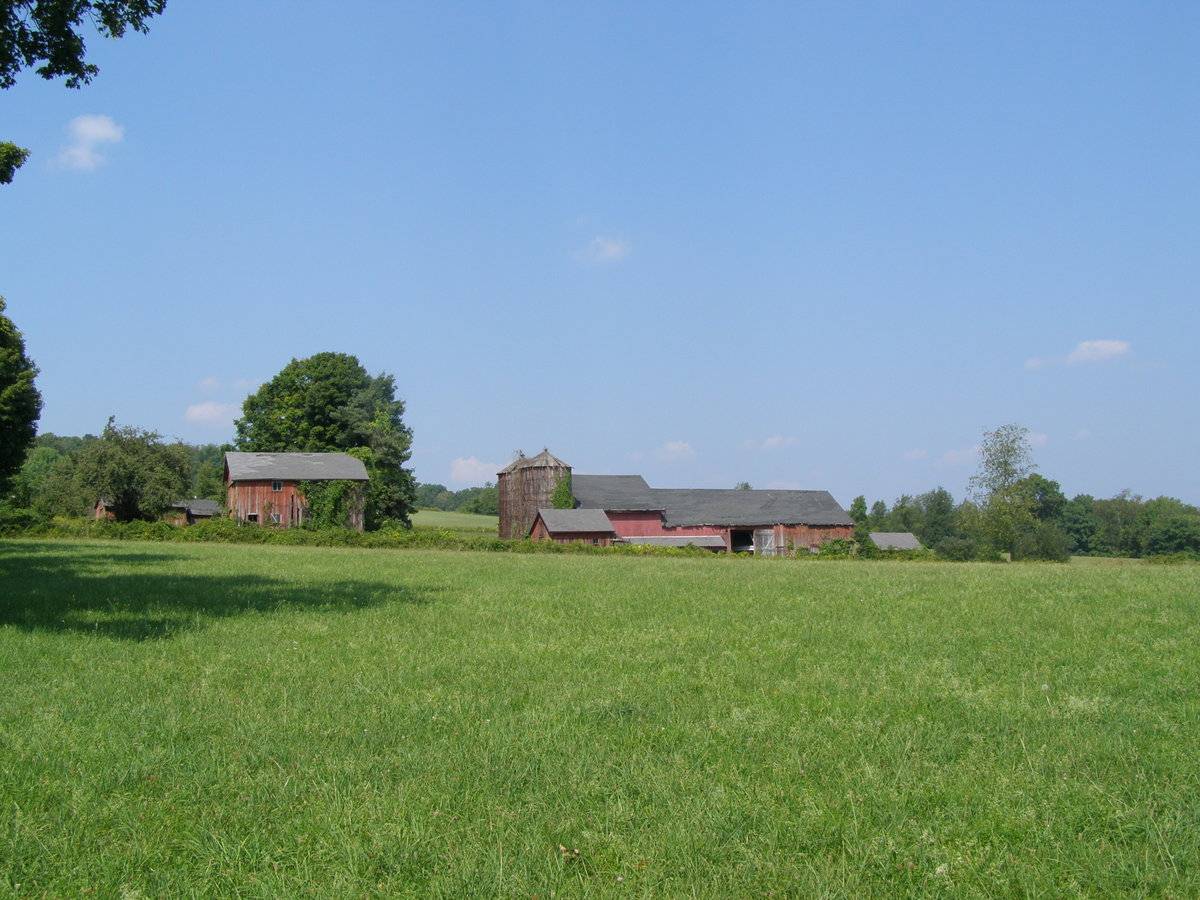
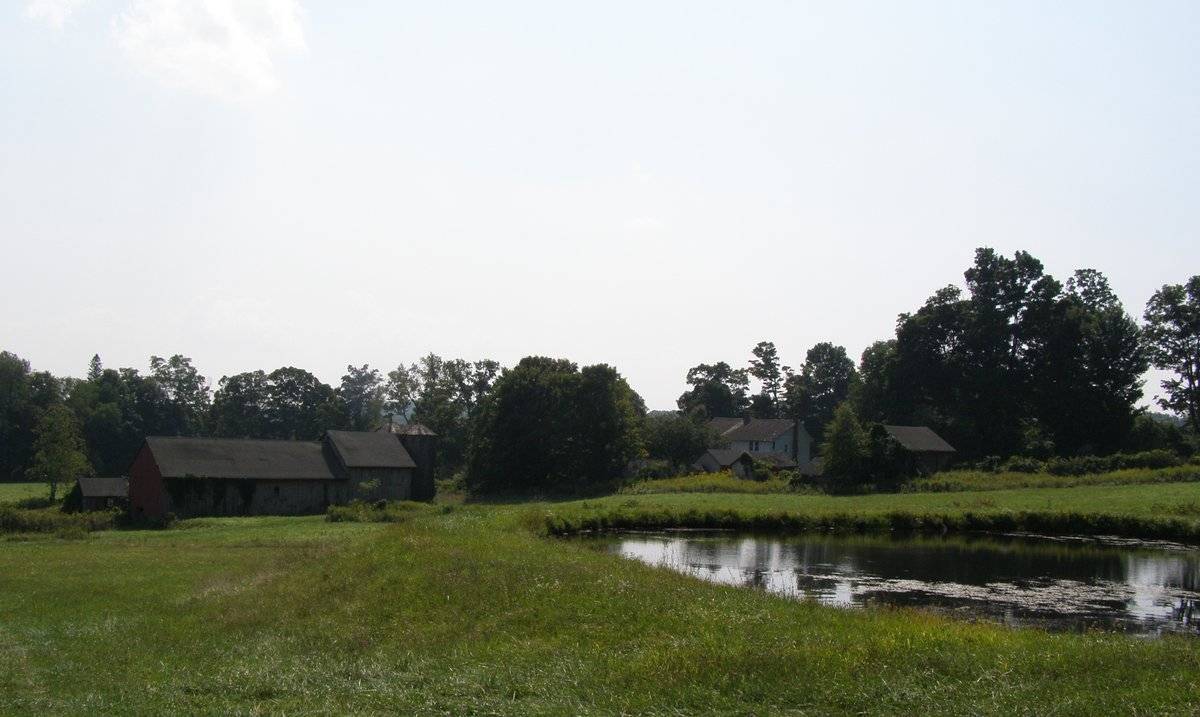
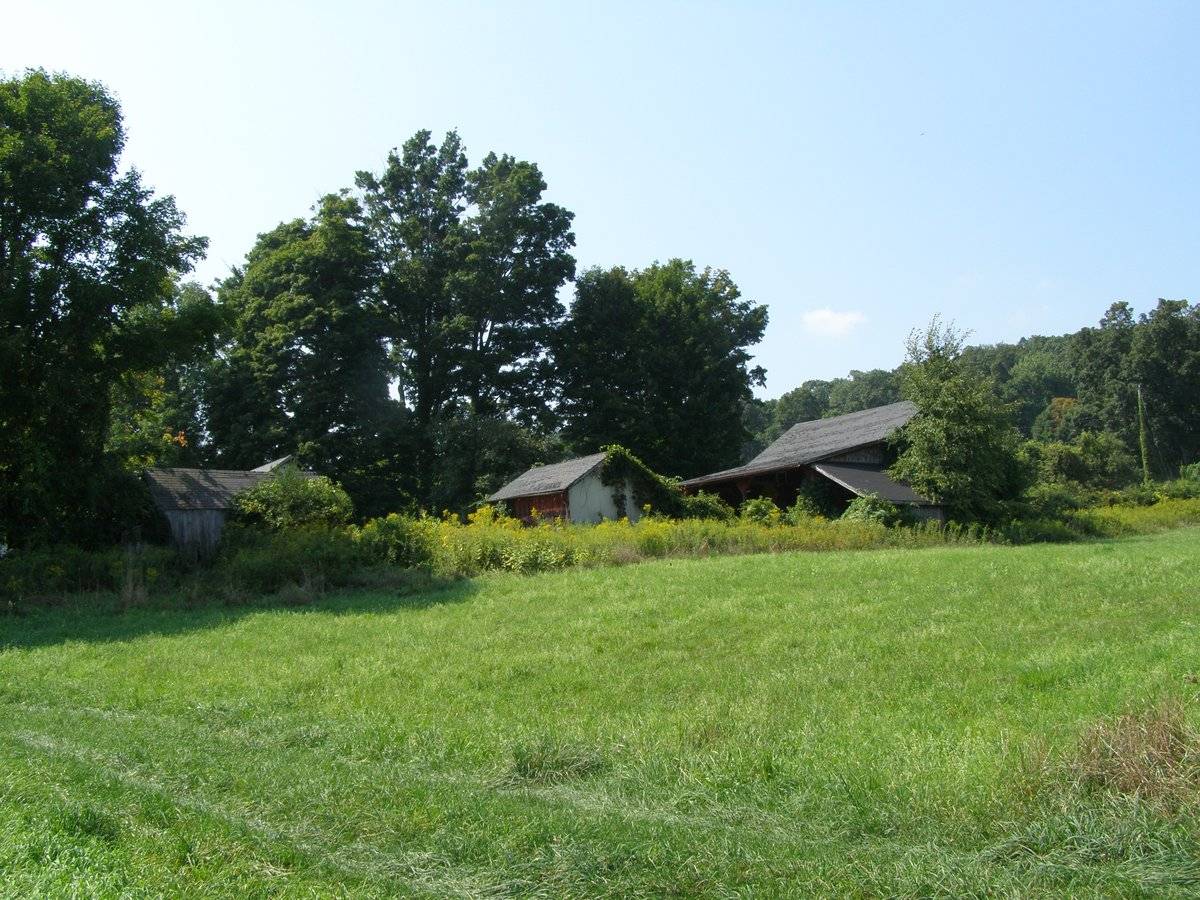
The farm and its extensive complex of agricultural buildings is located on a 78.0 acre parcel to the north of Kent, in a rural agricultural area surrounded by farms and woods.
In addition to the agricultural structure, there is a 2-story, gable-entry c. 1790 residential structure with a rectangular plan. Its ridgeline runs east-west parallel to the road. The main façade faces south, and a single story portico surrounds the main façade and the east eave-end. In the northeast corner of the eave-end there is a single-story addition with a shed roof. The roof appears to be covered with asphalt shingles.
The main farm complex is surrounded by woods and open fields to the east and west. To the north there is a large pond and beyond that a series of plowed fields.
- Typology & Materials
-
Building Typology
Materials
Structural System
Roof materials
Roof type
Approximate Dimensions
n/a
- Source
-
Date Compiled
02/20/2011
Compiled By
E. Reisman & T. Levine; reviewed by CT Trust
Sources
Field notes and photographs by Austi Brown 09/03/2010.
Town of Kent’s Assessor’s Record:
http://www.visionappraisal.com/KentCT/Aerial Mapping:
http://maps.google.com accessed 02/20/2011
http://www.bing.com/maps accessed 02/20/2011.Harris, Cyril M., Illustrated Dictionary of Historic Architecture, Dover, 1977.
Sexton, James, PhD, Survey Narrative of the Connecticut Barn, Connecticut Trust for Historic Preservation, Hamden, CT, 2005, http://www.connecticutbarns.org/history.
Visser, Thomas D., Field Guide to New England Barns and Farm Buildings, University Press of New England, 1997. - PhotosClick on image to view full file
-