Barn Record South Windsor
RETURN TO ‘FIND BARNS’- Building Name (Common)
- n/a
- Building Name (Historic)
- n/a
- Address
- 0 Main Street, South Windsor
- Typology

- Overview
-
Designations
n/a
Historic Significance
Architectural description:
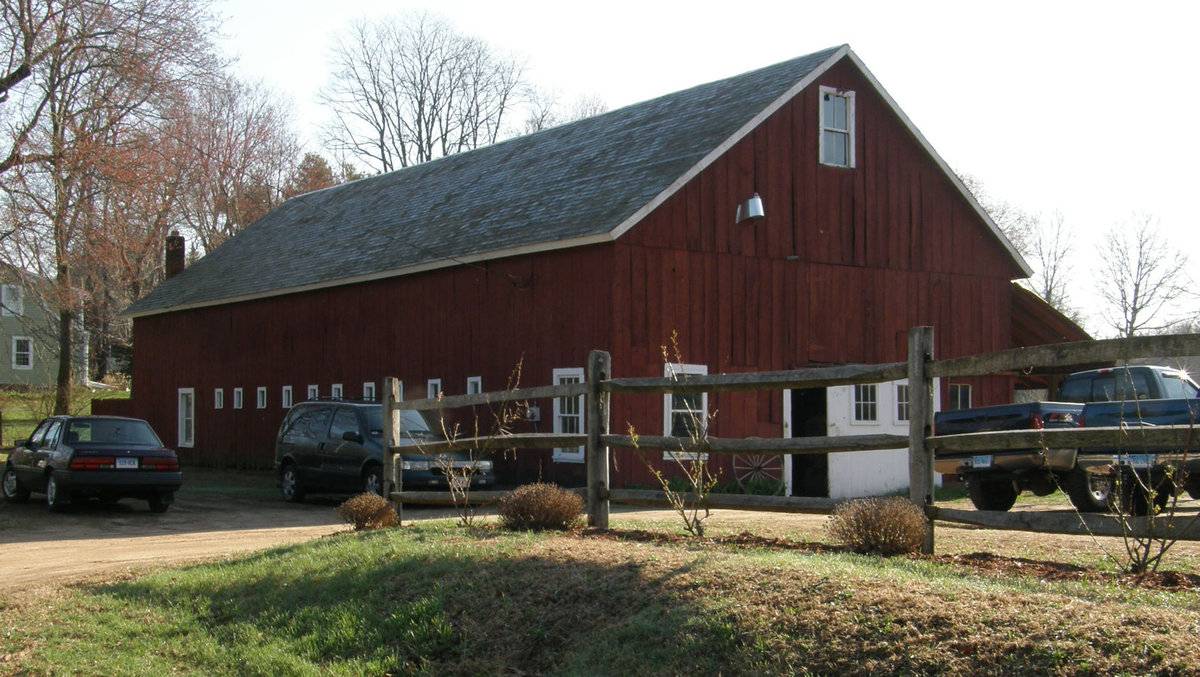
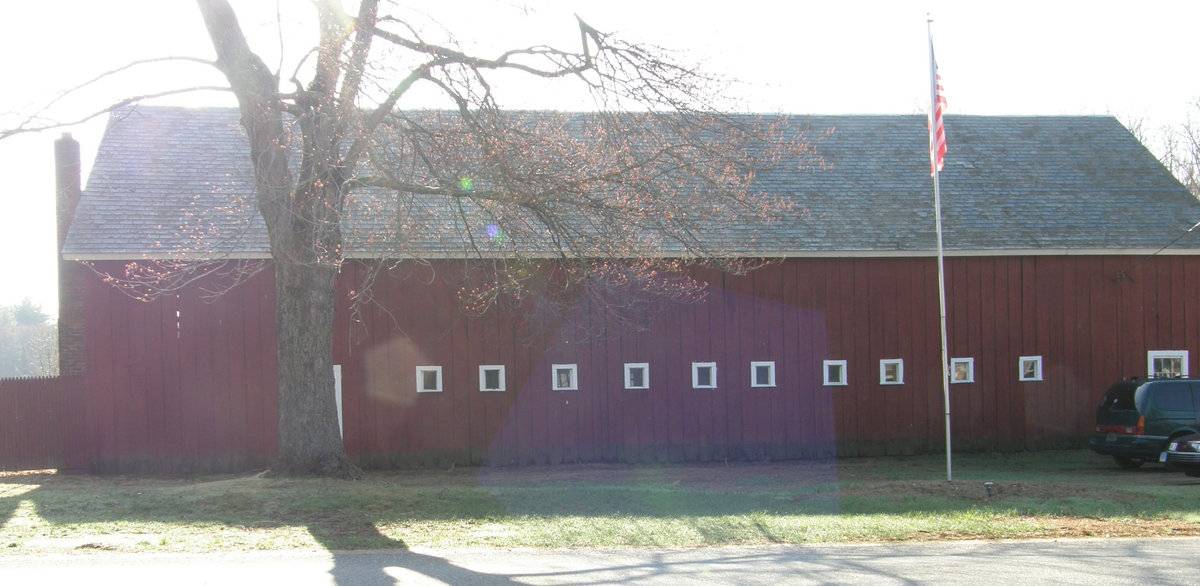
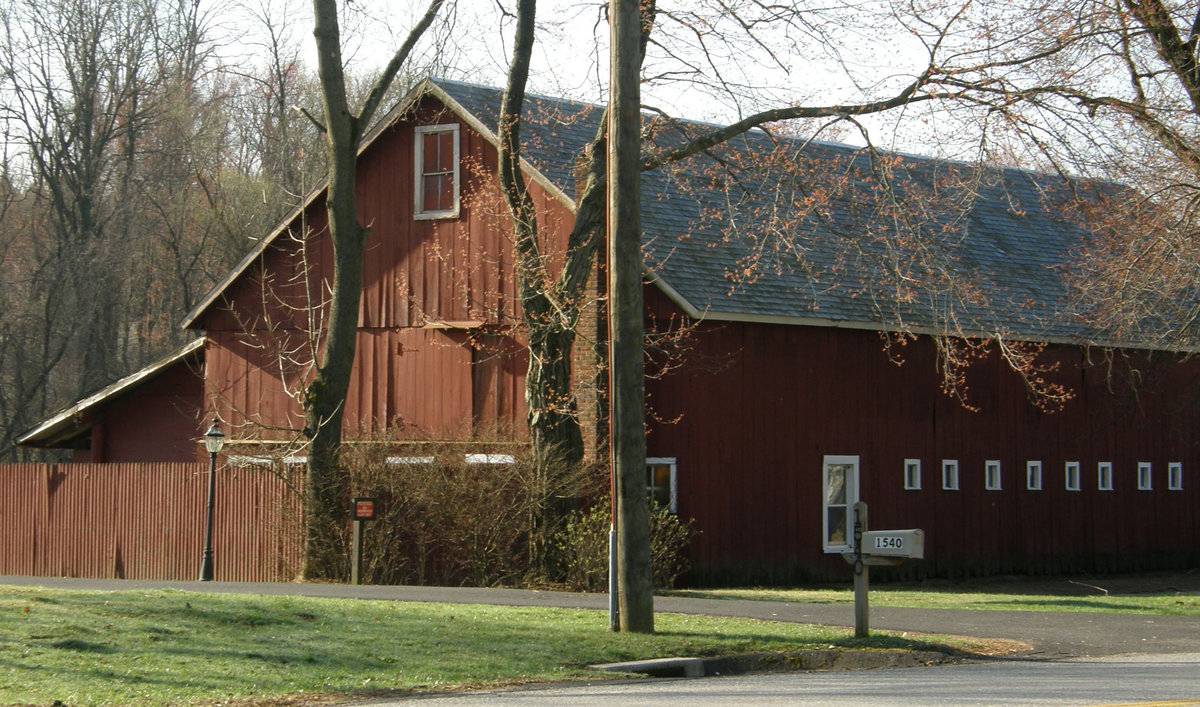
This is a 1 ½ - story multi-bay gable-entry barn with a semi-open shed-roof addition encompassing the entire length of its east eave-side. The west eave-side of the barn faces Main Street while the ridge line runs north-south parallel to the road. The south gable-end of the barn is the main façade with the main entrance at the center through an exterior-hung wagon door entrance with two six-pane window inserts. The main entrance is flanked by a double-hung sash window towards its east and a two-pane window on its west. The gable attic is separated from the rest of the façade by a distinct girt siding divide line and has a two-over-two double-hung sash window just below the apex of the roof. The west eave-side of the barn facing the road has a six-over-six double-hung sash window towards either edge separated by ten equally spaced single-pane windows. The north gable-end of the barn has few openings at the first floor level screened from the road by wooden fence. A hinged hay-door with hood can be seen just below a distinct girt siding divide line which separates the gable attic. The north gable-end of the barn has a two-over-two double-hung sash window just below the apex of the roof.
The wooden frame of the barn has asphalt shingles roofing and vertical siding walls with white trim.
Historical significance:The New England barn or gable front barn was the successor to the English barn and relies on a gable entry rather than an entry under the eaves. The gable front offers many practical advantages. Roofs drain off the side, rather than flooding the dooryard. With the main drive floor running parallel to the ridge, the size of the barn could be increased to accommodate larger herds by adding additional bays to the rear gable end. Although it was seen by many as an improvement over the earlier side-entry English Barn, the New England barn did not replace its predecessor but rather coexisted with it, as both types continued to be built.
By the early 20th century agricultural engineers developed a new approach to dairy barn design: the ground-level stable barn, to reduce the spread of tuberculosis bacteria by improving ventilation, lighting, and reducing the airborne dust of manure. A concrete slab typically serves as the floor for the cow stables. Many farmers converted manure basements in older barns into ground-level stables with concrete floors. Some older barns were jacked up and set on new first stories to allow sufficient headroom. With the stables occupying the entire first story, the space above serves a a hayloft. By the 1920s most ground-level stable barns were being constructed with lightweight balloon frames using two-by-fours or two-by-sixes for most of the timbers. Novelty or tongue-and-groove beveled siding is common on the walls, although asbestos cement shingles also were a popular sheathing. Some barns have concrete for the first-story walls, either poured in place or built up out of blocks.
Field Notes
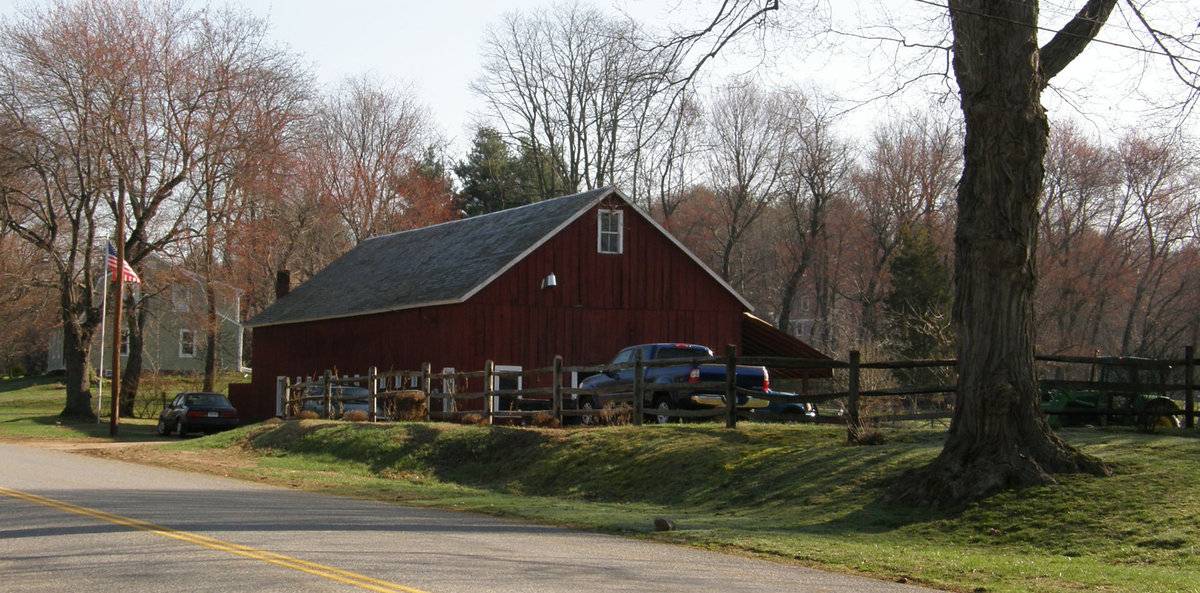
West side faces street - No.1: W side from street, No.2: Context, No.3: 3/4 view of N end, No.4: 3/4 view of S end
- Use & Accessibility
Use (Historic)
Use (Present)
Exterior Visible from Public Road?
Yes
Demolished
n/a
Location Integrity
Unknown
- Environment
Related features
Environment features
Relationship to surroundings
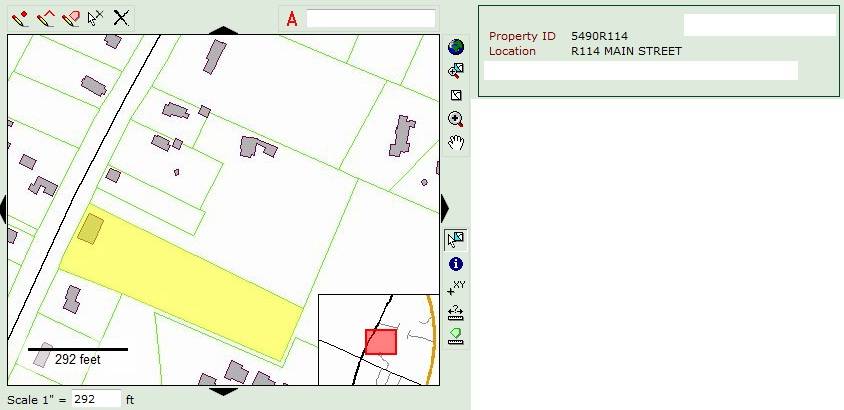
The 3.18 acres property, the land with outbuildings, Account Number- 0000357 and Map Number- 96 40, is located towards the east of main Street in a rural-residential community. Residential plots can be seen towards the north and the south of the property while recently developed housing units can be seen towards the southeast. Farmland with farm houses, barns and other out buildings can be seen towards the west of the property across the road.
The barn is located along the western edge of the property abutting to Main Street. The ridge line of the barn runs almost north-south parallel to the road. A stream of water with trees on both sides flows along the southern of the property while woodland covers the area towards the east.
- Typology & Materials
-
Building Typology
Materials
Structural System
Roof materials
Roof type
Approximate Dimensions
Barn: 2400 SqFt, Circa 1900;
- Source
-
Date Compiled
06/08/2011
Compiled By
T. Levine and M. Patnaik, reviewed by CT Trust
Sources
Field notes provided by Dan Taylor, 09/06/2010.
Assessors’ information retrieved on June 8th, 2011 from website www.southwindsor.org/pages/swindsorct_assessor/index
GIS Map and information retrieved on June 8th, 2011 from website www.southwindsor.org/pages/swindsorct_dpw/gis/gis
Photograph/Information retrieved on June 8th, 2011 from website http://www.google.com
Photograph/Information retrieved on June 8th, 2011 from website http://www.bing.com.
Photograph/Information retrieved on June 8th, 2011 from website http://www.zillow.com.
Sexton, James, PhD; Survey Narrative of the Connecticut Barn, Connecticut Trust for Historic Preservation, Hamden, CT, 2005, http://www.connecticutbarns.org/history.
Visser, Thomas D.,Field Guide to New England Barns and Farm Buildings, University Press of New England, 1997.
- PhotosClick on image to view full file
-