Barn Record Canaan
RETURN TO ‘FIND BARNS’- Building Name (Common)
- n/a
- Building Name (Historic)
- n/a
- Address
- 8 Kellogg Road, Canaan
- Typology

- Overview
-
Designations
n/a
Historic Significance
Architectural description:
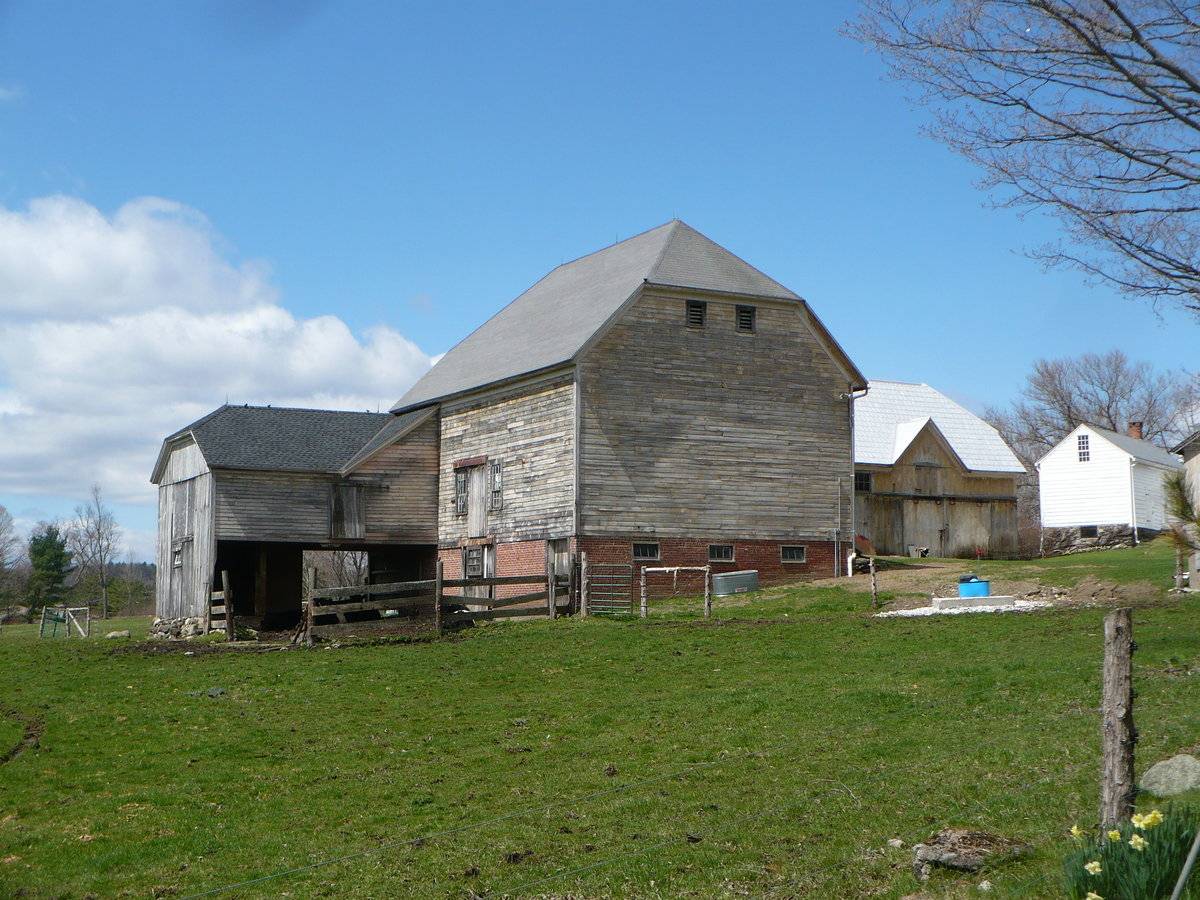
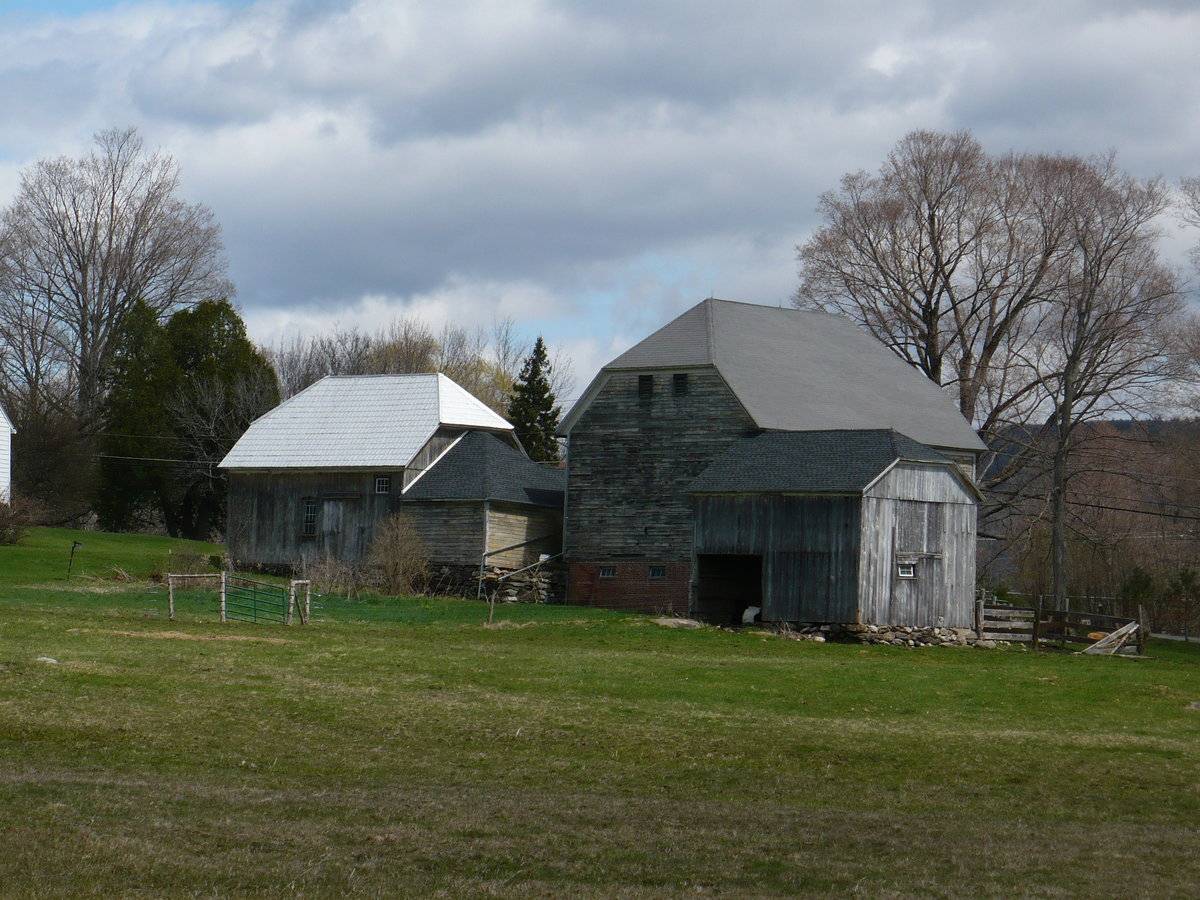
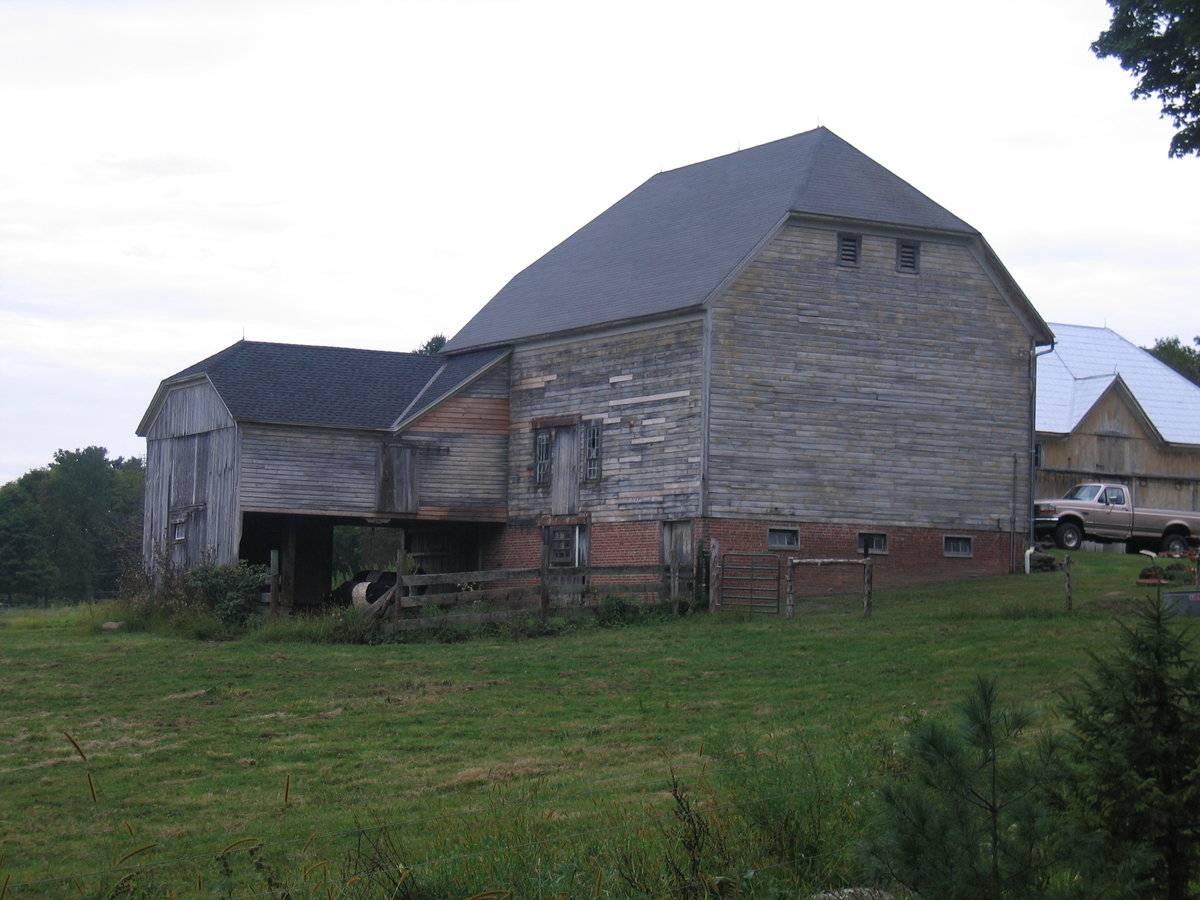
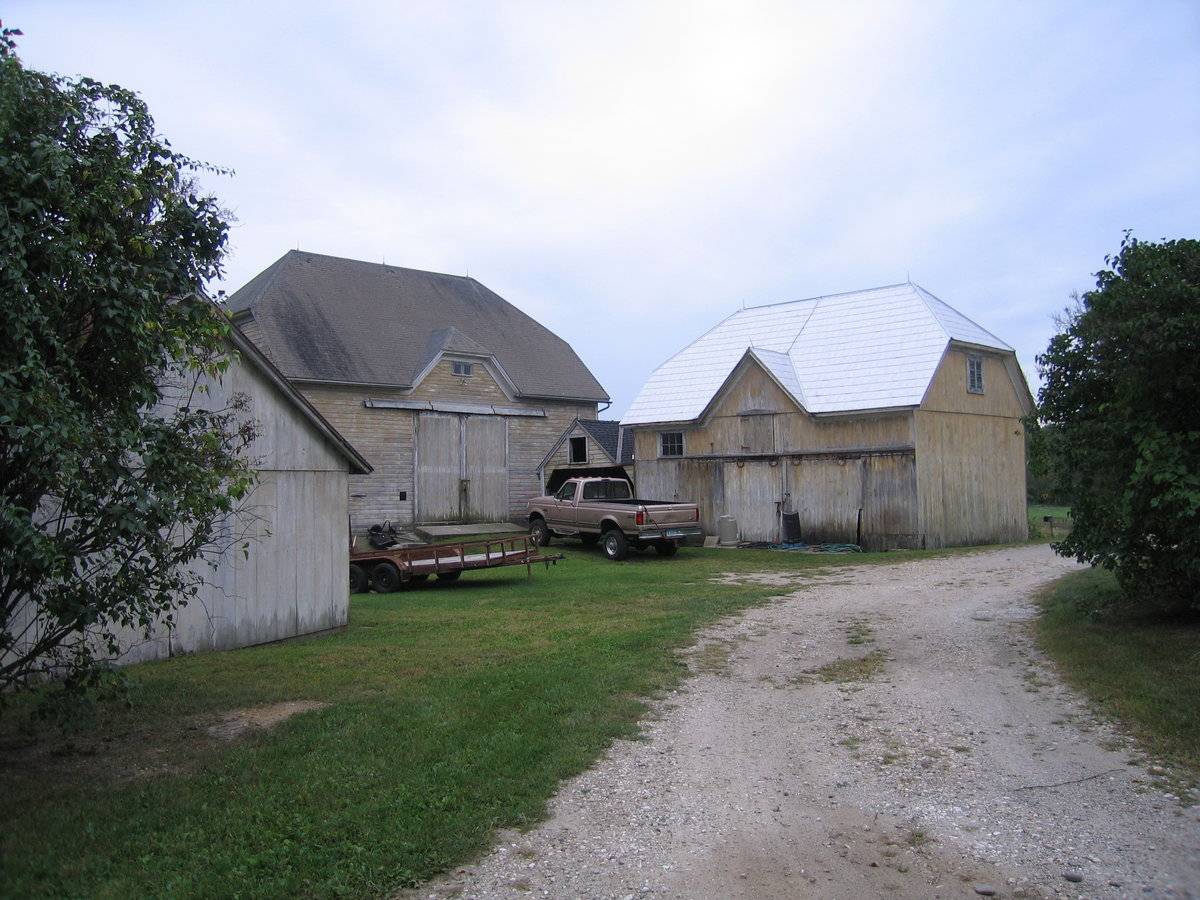
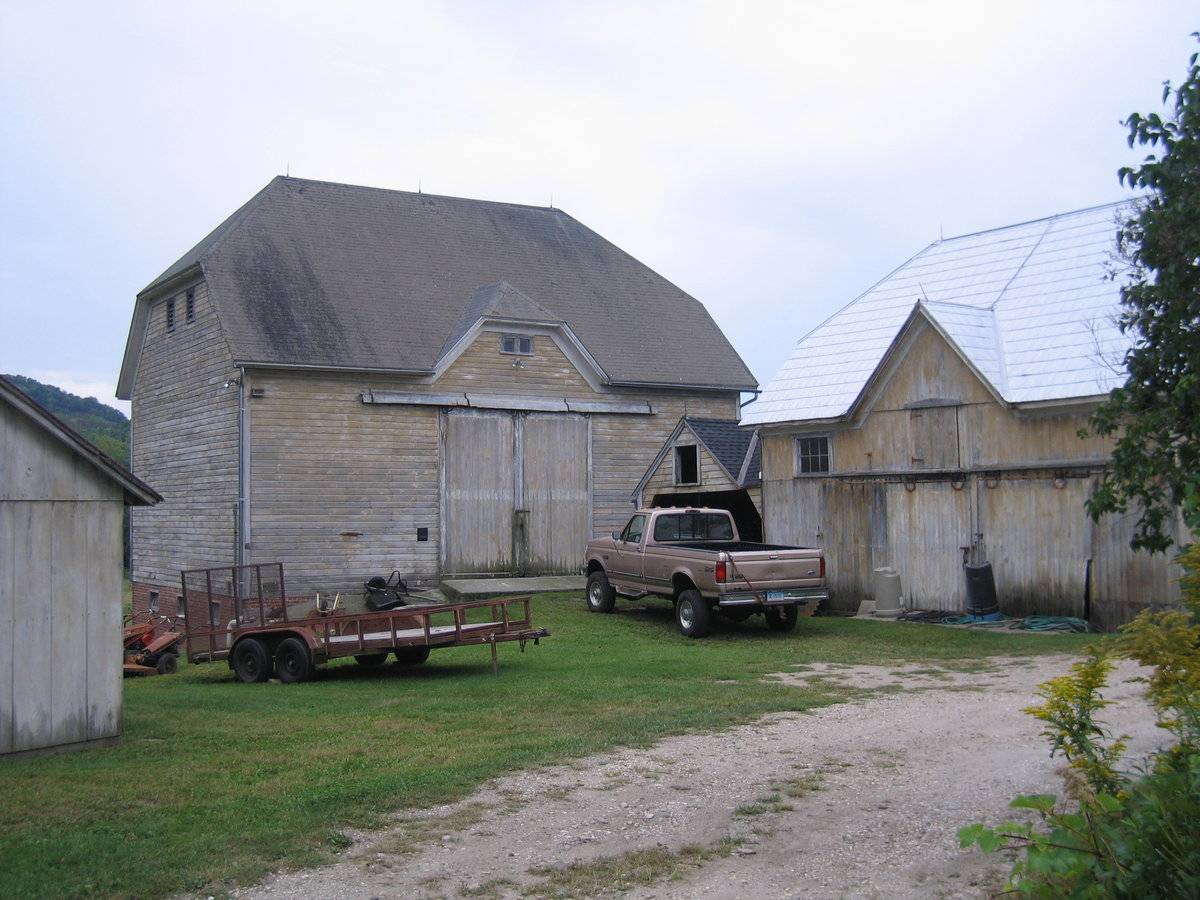
The agricultural buildings on this property are comprised of two separate stand-alone barns each with a connected addition. Barn I is a tall 1 ½-story eave-entry bank barn. The primary façade of this barn faces northwest. This barn has a 1-story bank addition attached to its south corner, projecting southeast. Barn II is a slightly-smaller 1 ½-story barn with an eave entry. The primary façade of this barn faces northeast, such that the two primary barn entries form a small courtyard. An attached 1-story addition extends the full width of the southeast gable-end of Barn II. Each of these structures, the main barns and their respective additions, feature a unique hipped-upon-gable roof. Although the property’s address is on Kellogg Road, the property sits at the southwest corner of this road with South Canaan Road (Route US-7). The barns are in close proximity to Kellogg Road. However, Barn I is oriented perfectly parallel with South Canaan Road, and Barn II perfectly perpendicular.
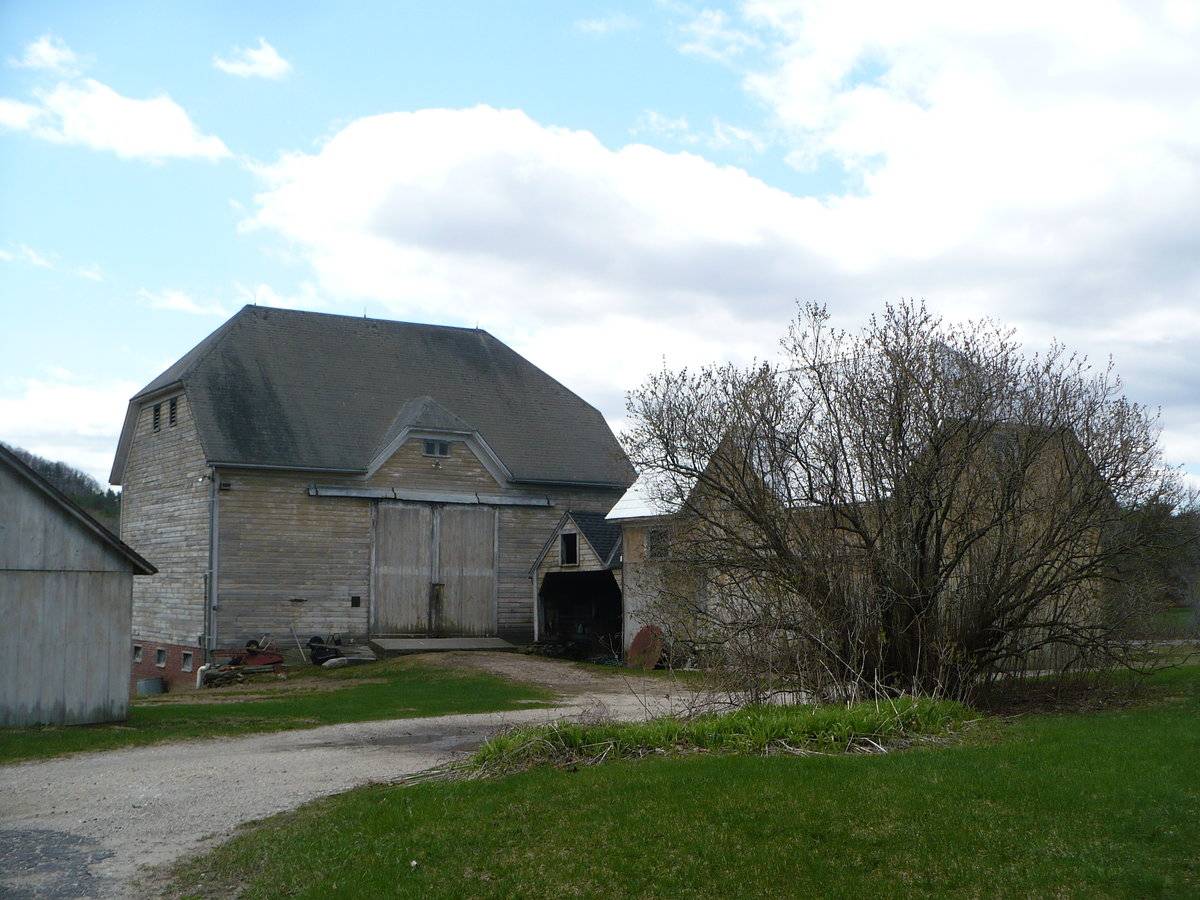
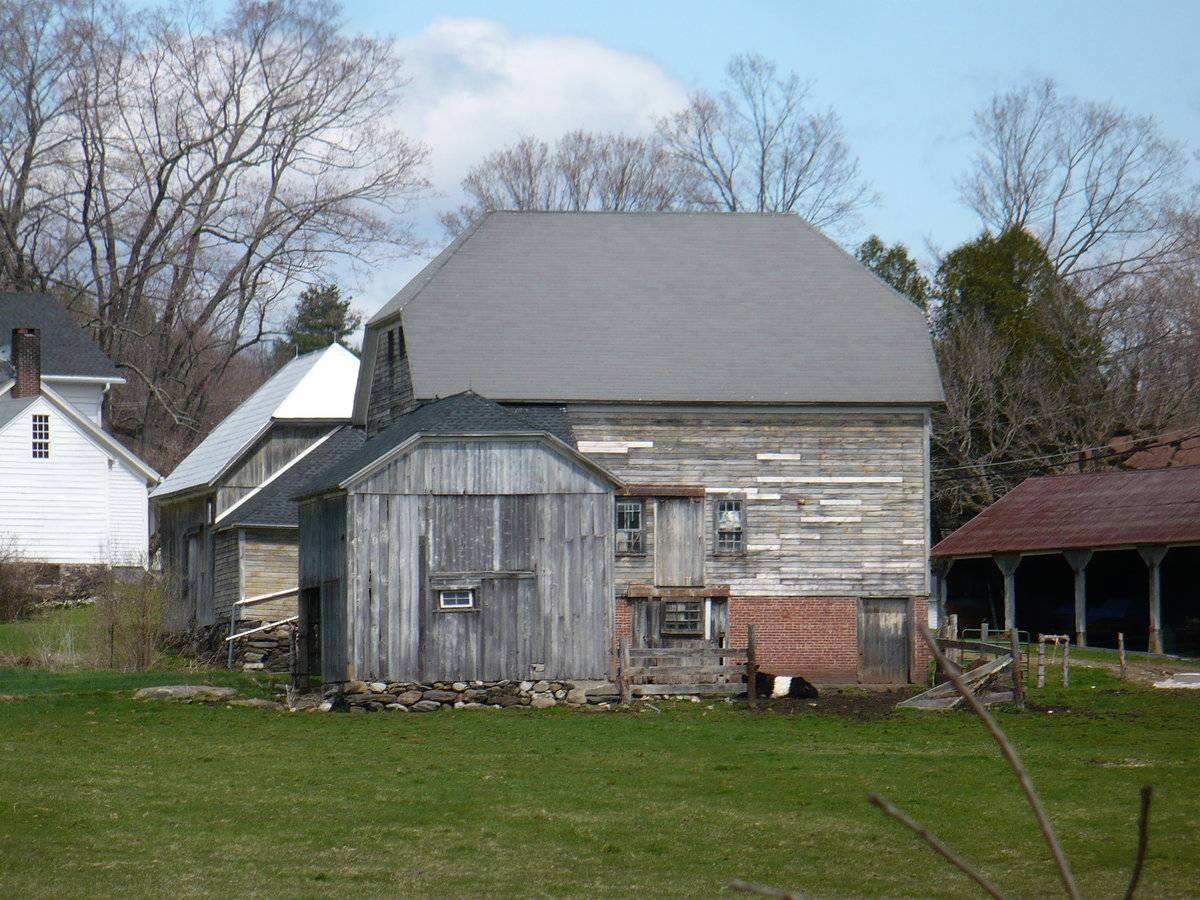
Barn I is a tall 1 ½-story eave-entry bank barn with a full hipped-upon-gable roof. The primary façade of this barn is the northwest eave-side. The main entry on the façade consists of a centered pair of over-size sliding wooden doors. These are located beneath a hipped-upon-gable roof wall dormer, which contains a small horizontal two-pane window above. The remainder of the façade is blank. The ground slopes down from north to south on this property, thus the northeast gable-side partially exposes the brick foundation and basement level. Evenly spaced within the brick at the basement level are three horizontal three-pane inward-opening windows. The first story is blank on this gable-end. Two small louvered vents are located in the gable-end, just below the clipped part of this gable.
The southeast eave-side exposes the full basement level and brick foundation. Three doorways are located at the basement level. The central door opening appears to have been filled in with vertical wooden planks and now has a nine-pane window located in the upper half. A wooden plank pass-through door is located near the east corner. A similar door appears to be present near the south corner. The first story contains a centered wooden plank pass-through sliding door. This door is flanked to either side by a nine-over-six double-hung window. No other openings are present on this eave-side. The southwest gable-end mirrors the northeast gable end. Three evenly-spaced horizontal three-pane inward-opening windows are located in the brick foundation at the basement level. The first story is blank, and the gable-attic contains two small louvered vents below the clipped part of the gable.
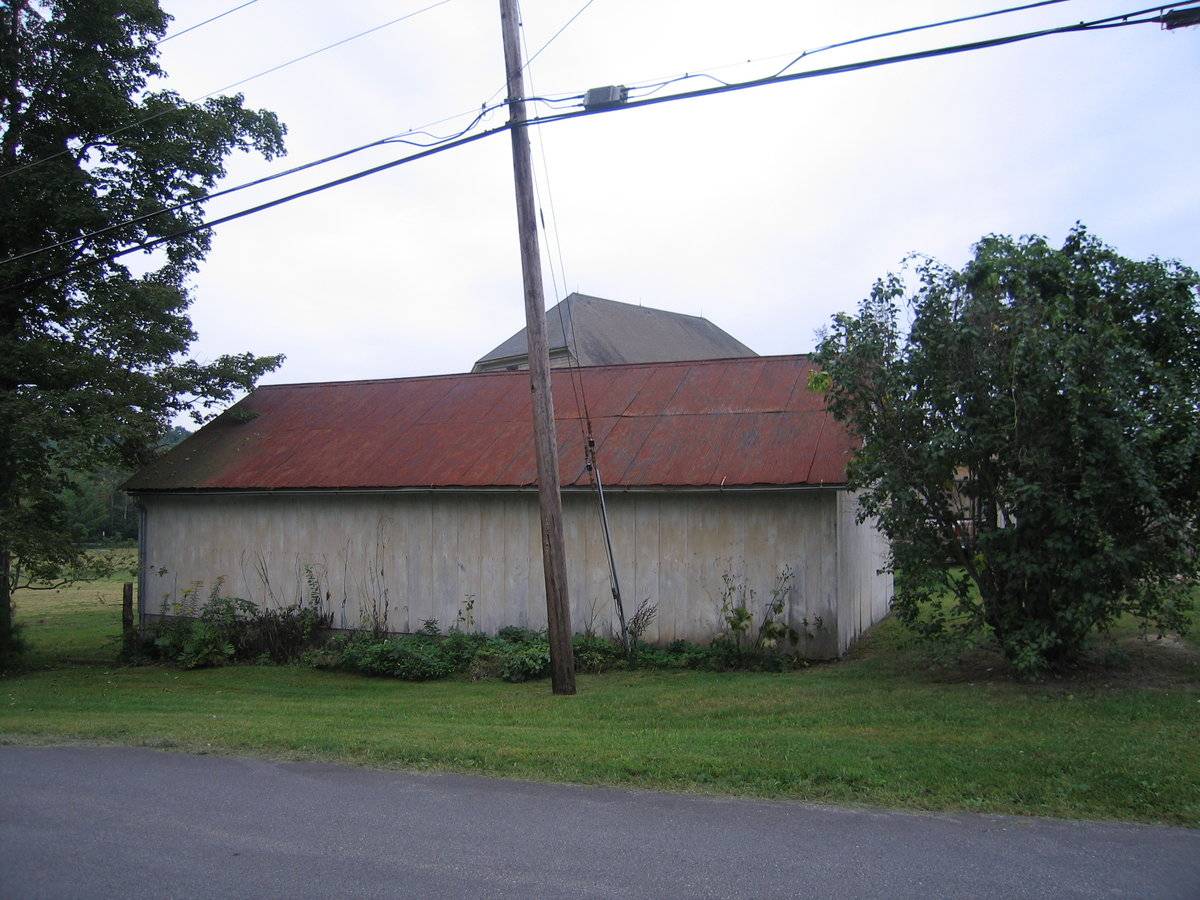
The addition to Barn I adjoins it at the main barn’s south corner, and projects south. This addition is oriented perpendicular to the main barn, and the ridgeline of the addition joins the main barn at the south corner end post. The basement level of the addition is an open stall which faces the northeast. The first story on the northeast eave-side of the addition has a small centered sliding wooden door. The remainder of this side is blank. The southeast gable-end has a small horizontal four-pane window located off-center at the basement level. The foundation of this addition is fieldstone and it is exposed on this end. The gable on this end of the addition is also clipped. The southwest eave-side of the addition contains a single over-width door opening in the north half at the basement level. The remainder of this side is blank. The small area of the northeast gable-end which is exposed near the west corner appears to be blank.
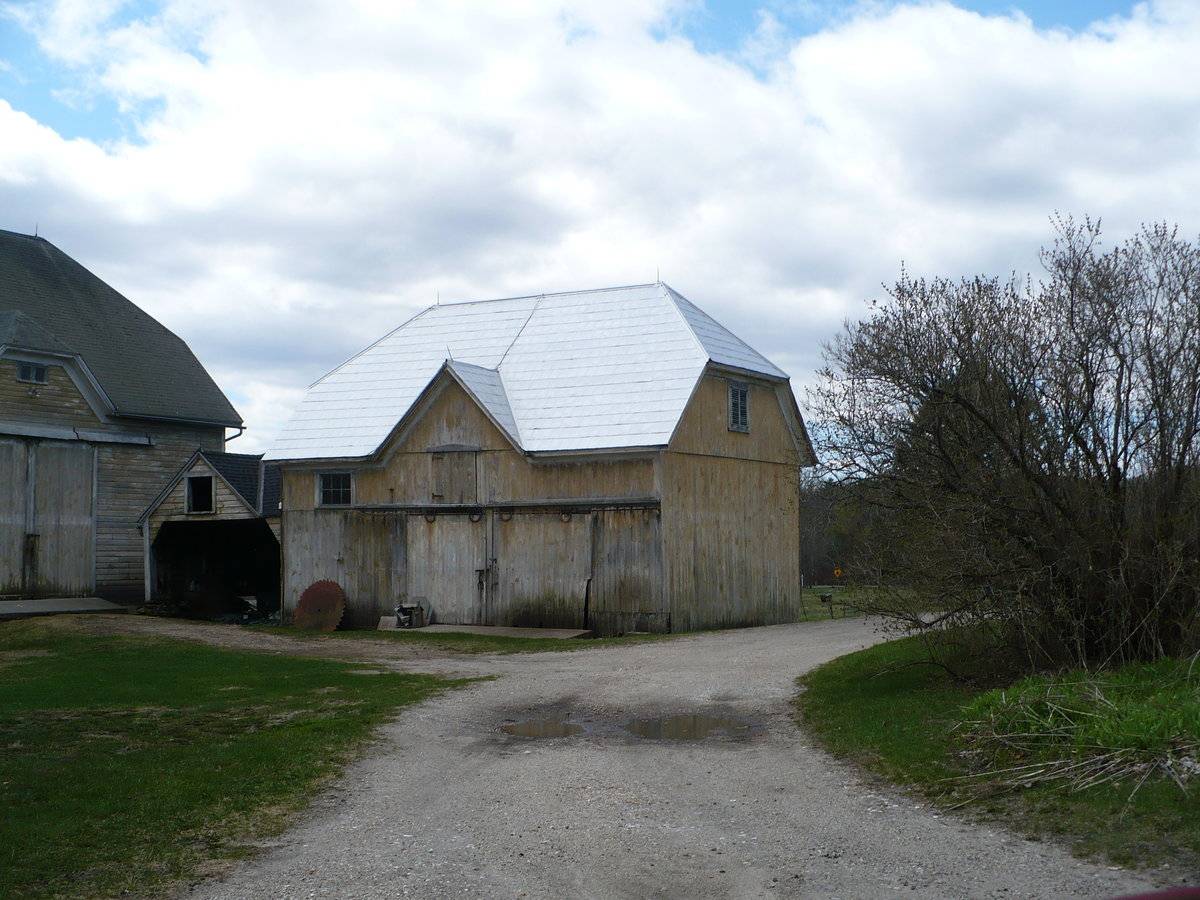
Barn II is a 1 ½-story barn with an eave entry and a hipped roof. The primary façade is the northeast eave-side, which faces Kellogg Road. The main entry on this side consists of a pair of over-size wooden sliding doors, off-center to the north. A gable wall dormer is centered on the façade. It contains a square wooden hinged hay door, which leads to the gable-attic. A horizontal six-pane window is located in the south bay just below the eave. The remainder of the façade is blank.
The northwest gable-end is blank on the first story. A vertical rectangular louvered vent is located just below the clipped gable within the gable-attic. The southwest eave-side contains a centered double-hung window on the first story. A horizontal six-pane window is located in the south bay just below the eave. The ground beneath this barn gently slopes down from north to south, requiring a built-up foundation of fieldstone along the southwest and southeast sides. The southeast gable-end is occupied by the full-width hipped-roof addition. This addition serves as a garage stall, with the primary entry located on the northeast side. A cross-gable faces this direction, containing a large square window opening within the gable. The southeast gable-end and southwest eave-side are both blank.
The exterior walls of Barn I are covered with horizontal wooden siding. The foundation is of brick construction. The addition to Barn I has horizontal wooden siding on the northeast eave-side, vertical wooden flush-board siding on all other sides, and a fieldstone foundation. The roof of the barn is covered in gray asphalt shingles, and the roof of the addition is covered in a different type of asphalt shingles, dark gray. Three steel lightening rods are spaced along the ridgeline of Barn I.
The exterior walls of Barn II are clad in vertical wooden flush-board siding. The addition to Barn II is clad in horizontal wooden clapboard siding on all sides. The foundation of both Barn II and its addition is fieldstone. The roof of the main barn appears to be covered in metal panels. The roof of the addition to Barn II is covered in dark gray asphalt shingles.
Historical significance:
The oldest barns still found in the state are called the “English Barn,” “side-entry barn,” “eave entry,” or a 30 x 40. They are simple buildings with rectangular plan, pitched gable roof, and a door or doors located on one or both of the eave sides of the building based on the grain warehouses of the English colonists’ homeland. The name “30 by 40” originates from its size (in feet), which was large enough for 1 family and could service about 100 acres. The multi-purpose use of the English barn is reflected by the building’s construction in three distinct bays - one for each use. The middle bay was used for threshing, which is separating the seed from the stalk in wheat and oat by beating the stalks with a flail. The flanking bays would be for animals and hay storage.
The 19th century saw the introduction of a basement under the barn to allow for the easy collection and storage of a winter’s worth of manure from the animals sheltered within the building. The bank barn is characterized by the location of its main floor above grade, either through building into a hillside or by raising the building on a foundation.
This innovation, aided by the introduction of windows for light and ventilation, would eventually be joined by the introduction of space to shelter more animals under the main floor of the barn.
Field Notes
Wonderful complex of old barns, interesting roof lines.
- Use & Accessibility
Use (Historic)
Use (Present)
Exterior Visible from Public Road?
Yes
Demolished
n/a
Location Integrity
Unknown
- Environment
Related features
Environment features
Relationship to surroundings
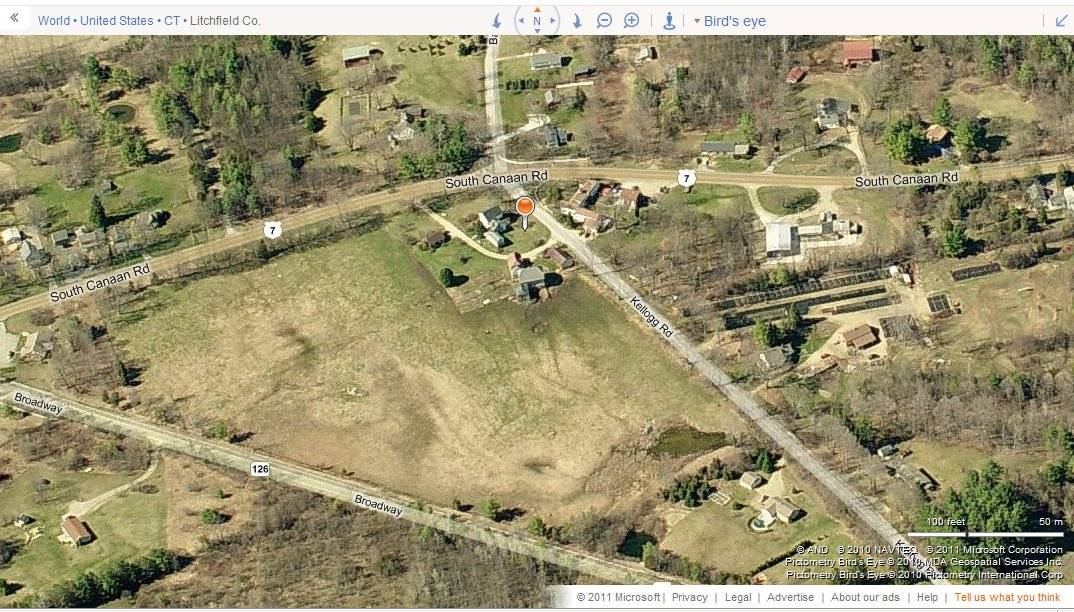
The agricultural buildings on this property at located near the north corner of a pentagonal shaped plot of land bounded by South Canaan Road (US-7) to the northwest, Kellogg Road to the northeast, and CT Route 126 to the south. The barns are located to the immediate southeast of the farmhouse associated with this property. The northwest façade of Barn I and the northeast façade of Barn II face an open grassy parking area. The barns are accessed via a gravel drive which loops from Kellogg Road to South Canaan Road, boxing in the house, and passing Barn II along its northwest end. The remainder of this plot of land, stretching to the southeast and southwest, is an agricultural field. A small pond is located at the lowland of the property in the southeast corner. The opposing sides of both Kellogg Road and South Canaan Road are lined with residences. Woodland is across CT-126 from this property. The property is located along the eastern edge of the village of Falls Village.
- Typology & Materials
-
Building Typology
Materials
Structural System
Roof materials
Roof type
Approximate Dimensions
BARN: 1,200 square feet.
- Source
-
Date Compiled
04/28/2011
Compiled By
N. Nietering & T. Levine, Reviewed by CT Trust
Sources
Photographs by Liddy Baker & Nathan Nietering.
Sexton, James, PhD; Survey Narrative of the Connecticut Barn, Connecticut Trust for Historic Preservation, Hamden, CT, 2005, http://www.connecticutbarns.org/history.
Visser, Thomas D.,Field Guide to New England Barns and Farm Buildings, University Press of New England, 1997, 213 pages.
Map of Canaan, CT, retrieved on April 27, 2011 from website www.bing.com.
Canaan Assessor’s Records - Town of Canaan Assessor’s Office site visit - April 21, 2011.
- PhotosClick on image to view full file
-