Barn Record Kent
RETURN TO ‘FIND BARNS’- Building Name (Common)
- Kent Hollow Farm Part 1 of 2
- Building Name (Historic)
- Kent Hollow Farm
- Address
- 69 Tanguay Road, Kent
- Typology

- Overview
-
Designations
n/a
Historic Significance
Architectural description:
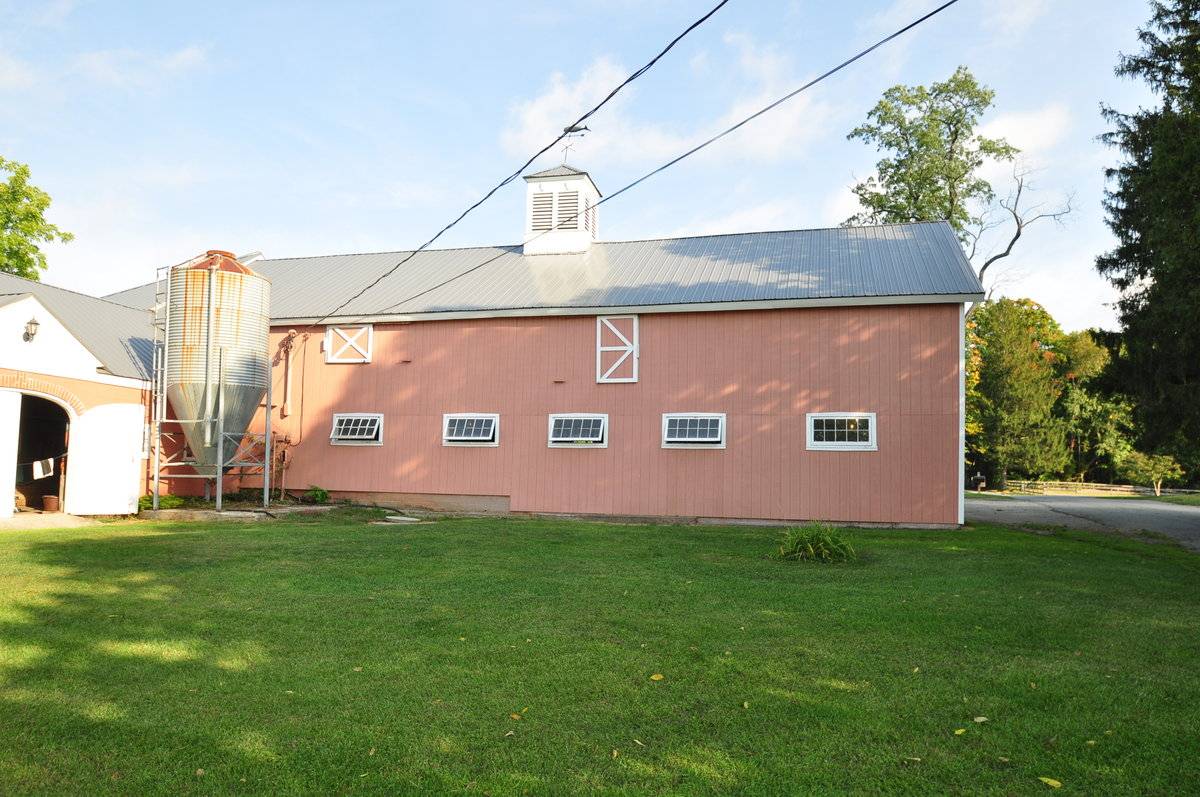
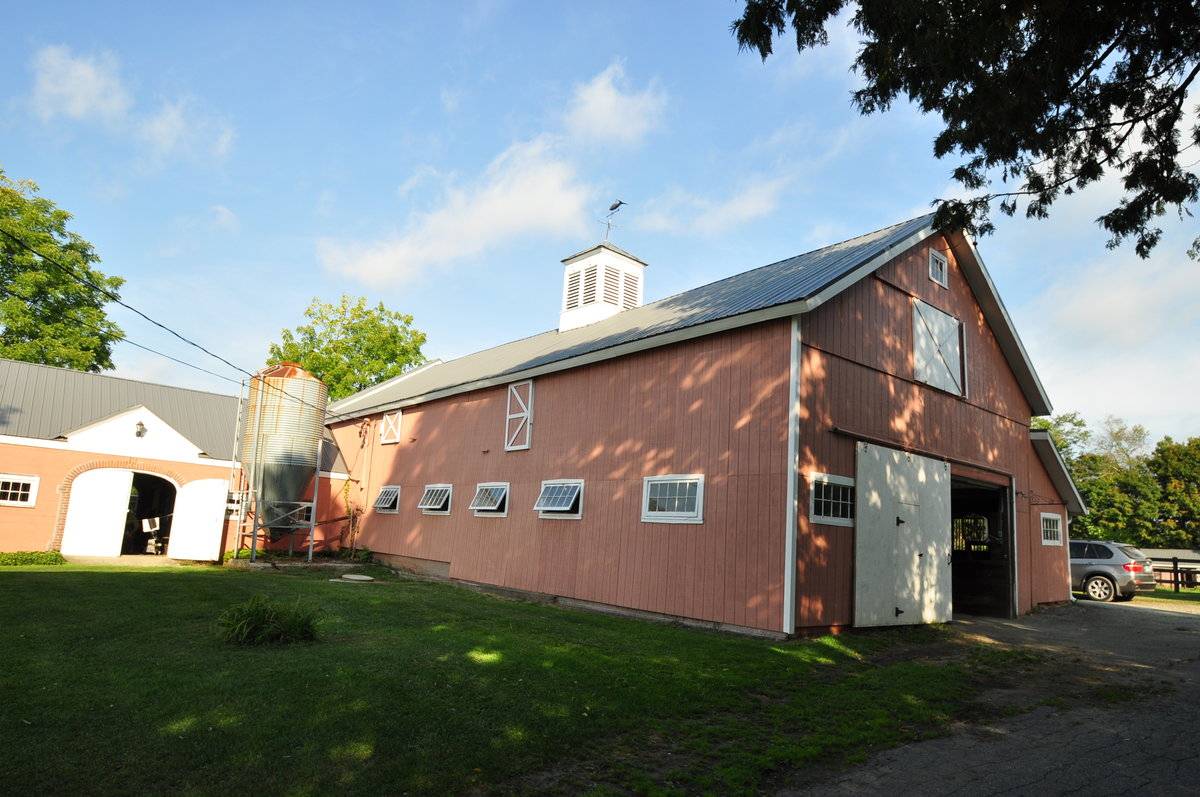
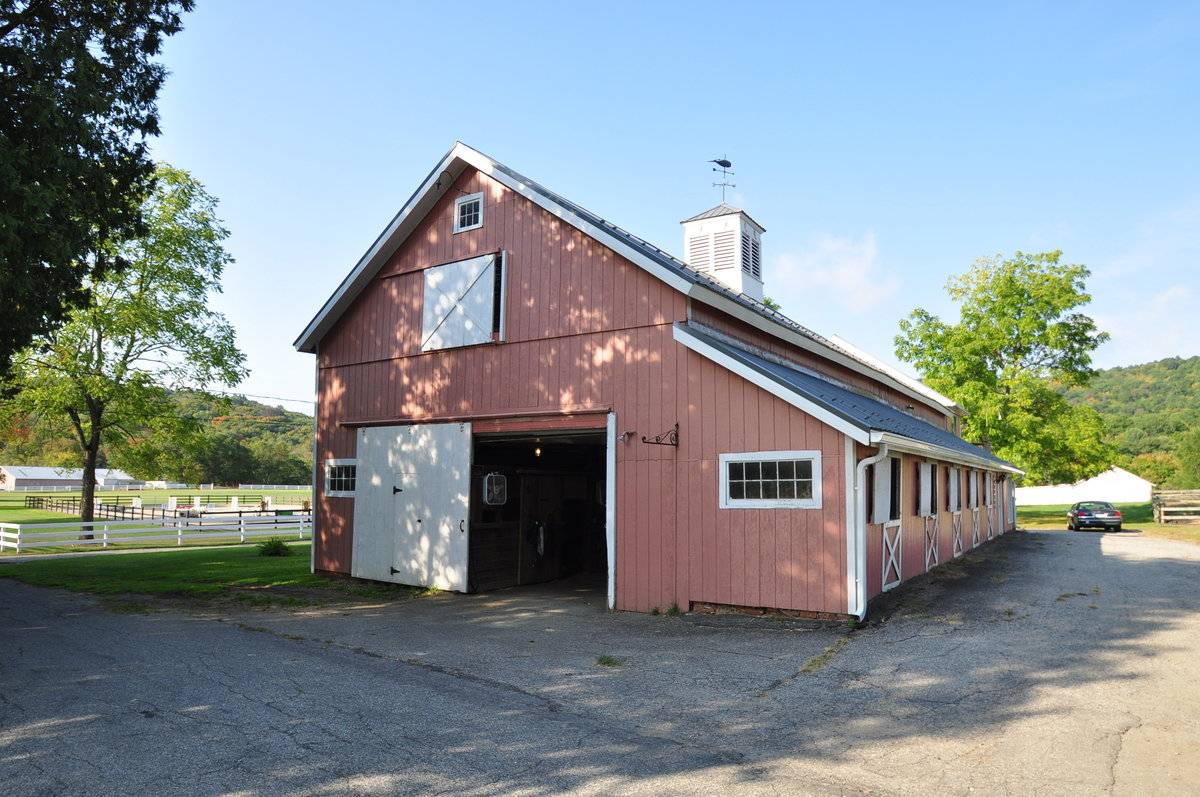
This is a 2-½ story, gable-entry barn with multiple additions, forming an L-shaped plan. To its north there is a single-story shed-roof addition, and to the west of the main structure is a 2-story addition with a hipped roof. On the southwest corner of the main structure there is a 1-½ story eave-entry addition with a gable roof.The original structure’s main façade faces east. Its ridgeline runs east-west, perpendicular to Tanguay Road. Principal entry is provided by a wood sliding door constructed of vertical boards mounted on an external track located in the center of the main façade. In the center of the sliding door is a hinged pass-through door. There are two, ten-pane awning windows with trim flanking the sliding door, one to the south, and the other to its north, the north window being located on the east-end of the shed-roof addition. Above the main entrance is a hay door mounted on an external sliding track. The door is constructed of vertical wood boards reinforced with diagonal bracing. Above the hay-door, just below the apex of the gable is a six-pane stable window. Along the south eave-side is a series of five, evenly-spaced, ten-pane awning windows with trim, identical to those found on the main facade. Above and just to the east of the center window is a hinged, rectangular-shaped hay-door. The door is constructed of vertical wood boards reinforced with z-bracing. Above the westernmost awning window is another hinged hay-door, a square-shaped door constructed of vertical wood boards reinforced with x-bracing. The walls of the structure are covered in flesh-toned painted vertical board siding with white-painted trim. A dropped, girt-line siding divide is visible on the main façade. The foundation appears to be concrete. There is a flat-seamed metal roof. In the center of the gable is a louvered cupola ventilator with a hipped roof topped with a weathervane.
The single-story shed-roof addition spans the entire length of the north eave-side of the main structure. Its north side is dominated by what appears to be five identical Dutch doors with decorative trim on the lower halves of the Dutch-doors. There appears to be a pass-through door at the western corner of its north-eave side. The foundation appears to be mortared brick, and the walls are covered with painted vertical siding with trim. There is a flat-seamed metal roof.
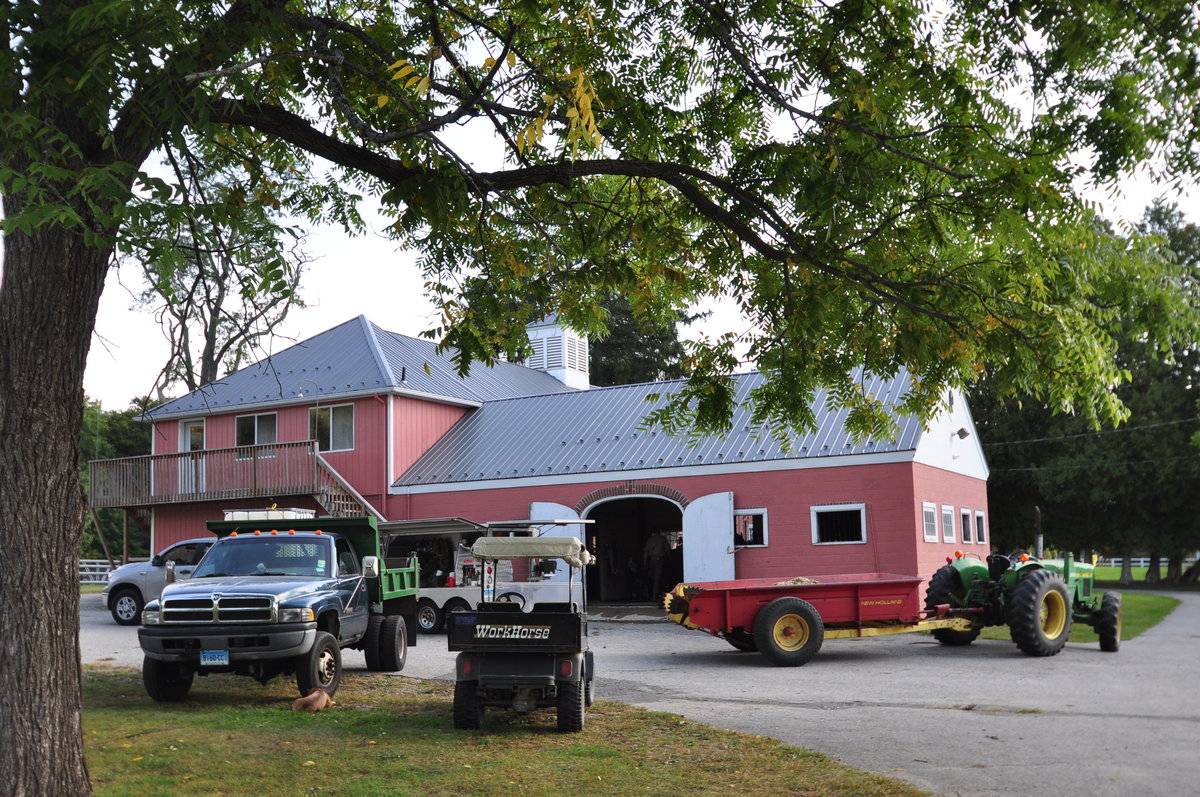
To the west of the main structure is a 2-½ story addition with a half-hipped roof. Along the second-story, there is a pass-through door with a large glass light located at the northern corner of the west side. To its south are two sliding windows. A wood deck wraps around the west and north sides of the addition. The exterior walls are covered with painted vertical board siding.
At the southwest corner of the main structure there is a 1-½ story, eave-entry addition with a gable roof. The main façade faces east, and the addition’s ridgeline runs north-south, parallel to Tanguay Road. Principle entry is provided by a pair of centrally located, hinged stable doors framed by an elliptical arch constructed of exposed brick. Above the stable doors is a small cross-gable. Flanking each side of the door are two evenly-spaced stable windows with trim, for a total of four. Along the south gable-end there are four evenly-spaced windows openings. The two western windows have ten-panes and trim while the two easternmost windows appear to be absent. Similar to the main façade, the west eave-side has two centrally located stable-doors surrounded by an elliptical arch constructed of exposed brick. Flanking each side of the stable doors are two, evenly-spaced window openings. The windows are missing from the two southernmost windows, and also appear to be missing from the two northern windows. The exterior walls are constructed of painted concrete blocks. There is a flat-seam metal roof.
Historical significance:The oldest barns still found in the state are called the “English Barn,” “side-entry barn,” “eave entry,” or a 30 x 40. They are simple buildings with rectangular plan, pitched gable roof, and a door or doors located on one or both of the eave sides of the building based on the grain warehouses of the English colonists’ homeland. The New England barn or gable front barn was the successor to the English barn and relies on a gable entry rather than an entry under the eaves. The gable front offers many practical advantages. Roofs drain off the side, rather than flooding the dooryard. Although it was seen by many as an improvement over the earlier side entry English Barn, the New England barn did not replace its predecessor but rather coexisted with it. In this case the two styles are combined; both a gable entry and an eave entry are used.
The tobacco barn, or shed as it is called in the Connecticut River Valley, is one of the most distinctive of the single-crop barns. They tend to be long, low windowless buildings with pitched roofs. They are characterized by vented sides and roofs to regulate air flow and allow harvested tobacco to cure at the appropriate rate. Derived initially from the design of the English barn, the shed is composed of a fixed skeleton consisting of two- or three-aisle bents repeated at intervals of 15 feet to the desired length. The wood-framed bents sit on piers of stone or concrete and the bents are connected by girts and diagonal braces. Typically there are one or two door openings at each end, making the shed a “drive-through,” although some sheds are accessed through doors on the sides. The interior structural framework serves a second purpose in addition to supporting the walls and roof of the building; it provides a framework for the rails used to hang the tobacco as it cures.
The first ventilators were simple wooden louvered boxes with gable roofs, mounted near the ridge of the barn. The object of the cupola [or ventilators] is to protect the opening of the flue from the elements, keep out birds, prevent backdrafts as far as possible, and assist in drawing the foul air from the barn. Later, metal ventilators were introduced to offer more efficient ventilation with less maintenance. By the early twentieth century, prefabricated galvanized-steel ventilators were being marketed across the country. Despite sometimes being ornamented with finials or weathervanes, they lacked the romantic feel of the wooden cupola. The factory-produced steel ventilator symbolized a step in the movement towards an industrial approach to farming.
Field Notes
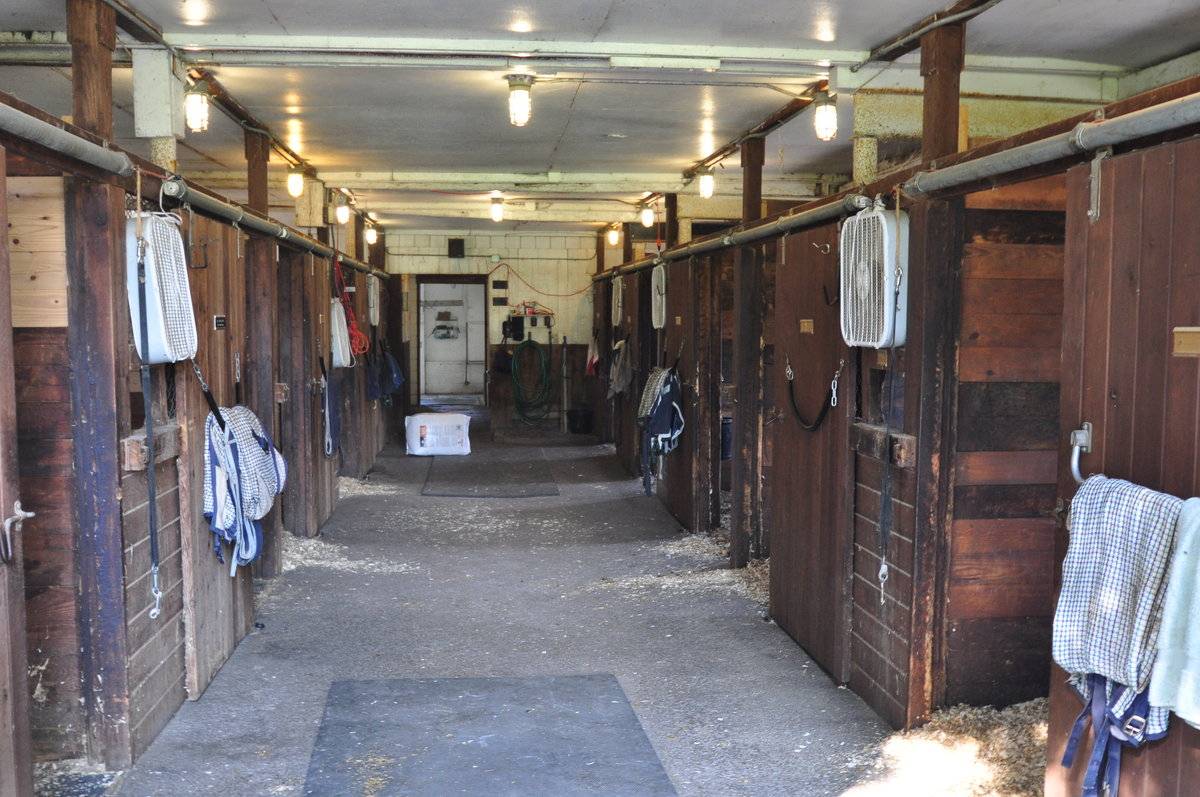
Originally a tobacco barn perhaps built in the mid 1800's. 28 X 70 with an 7 ft shed roof section built on North side. Addition on South side was milking parlor at one time. Vertical siding with a metal roof. Cupola. Presently used as stable for horses and office space.
- Use & Accessibility
Use (Historic)
Use (Present)
Exterior Visible from Public Road?
Yes
Demolished
n/a
Location Integrity
Unknown
- Environment
Related features
Environment features
Relationship to surroundings
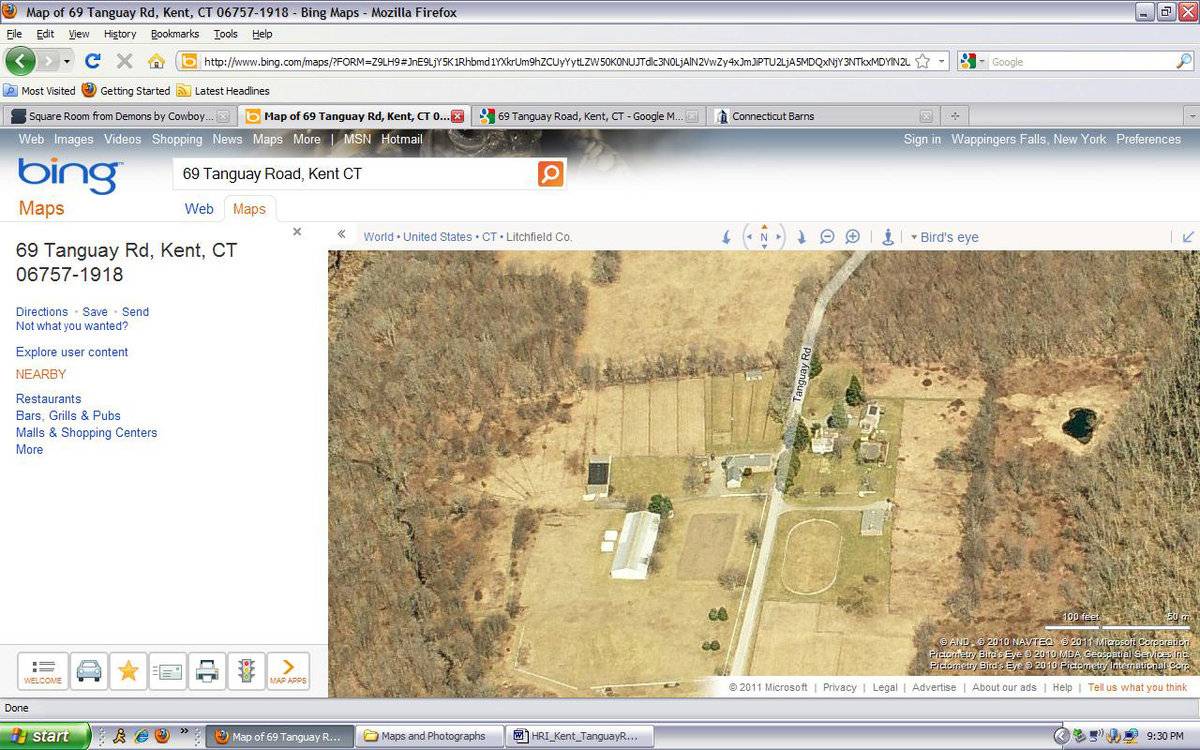
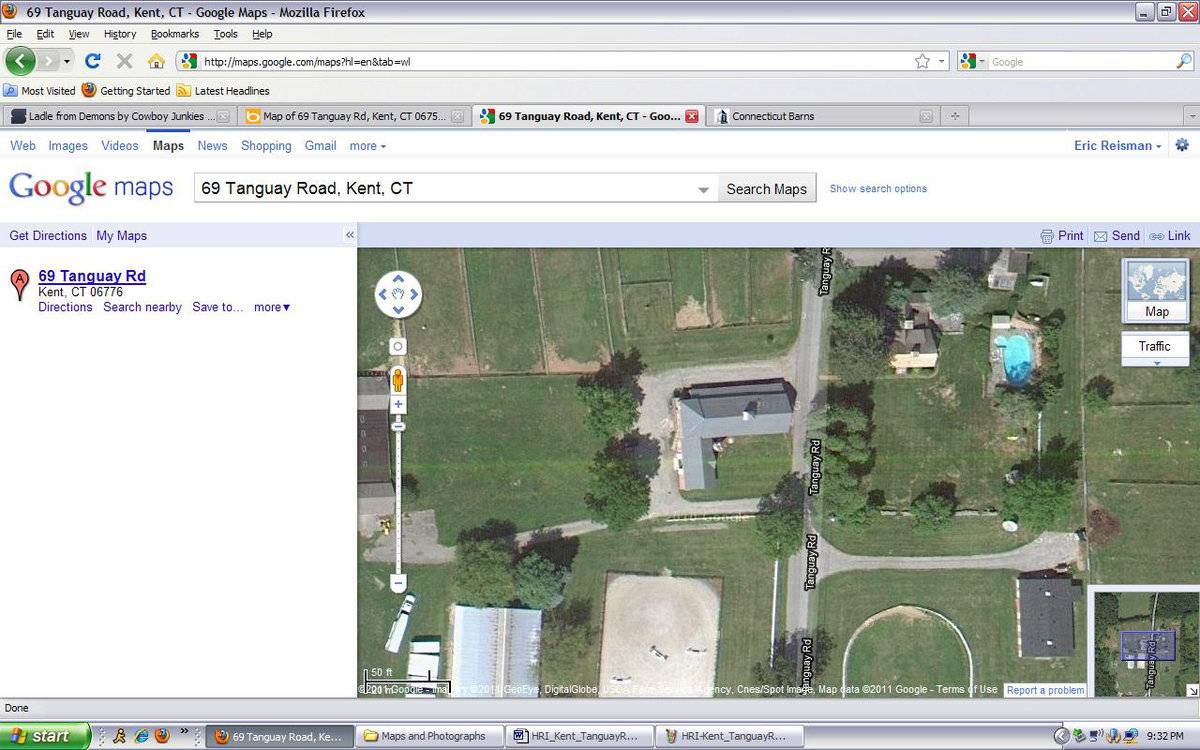
This property is located to the east of Kent, in a rural, wooded area. The barn is located on a 37.20-acre parcel that consists of the main complex of stables, a small barn to the north, an unidentified structure to the west, a large stable with a metal roof to the southwest, and a pole barn to south. The property is surrounded by open-fields and woods.
To the east of barn across Tanguay Road is a large, c. 1720 structure with what appears to be a gable roof, its ridgeline running east-west, perpendicular to Tanguay Road.
To the northeast of this structure is a c. 1800 carriage house that has been modified for residential use. It is a 2-story, 4-bay, eave-entry structure with a rectangular plan and a side-gable roof. Its ridgeline runs north-south, parallel to Tanguay Road. The main façade faces west. (see Tanguay Road 69b #31751).
To the south of the converted carriage house is an in-ground pool, and a large barn.
- Typology & Materials
-
Building Typology
Materials
Structural System
Roof materials
Roof type
Approximate Dimensions
n/a
- Source
-
Date Compiled
02/17/2011
Compiled By
E. Reisman & T. Levine; reviewed by CT Trust
Sources
Field notes and photographs by Dick Lindsey, date 09/27/2010.
Town of Kent’s Assessor’s Record: http://data.visionappraisal.com/KentCT/findpid.asp?iTable=pid&pid=1915 (Parcel ID: 00205000 37.20 acres: 1-story barn, 3,525 sq. ft.; stable, 960 sq.; ft.; stable, 1,848 sq. ft.; stable, 462 sq. ft.; stable, 308 sq. ft.; stable, 3,452 sq. ft.; riding arena, 9,720 sq. ft.) Listed as address #72
Aerial Mapping:
http://maps.google.com accessed 02/17/2011.
http://www.bing.com/maps accessed 02/17/2011.Sexton, James, PhD, Survey Narrative of the Connecticut Barn, Connecticut Trust for Historic Preservation, Hamden, CT, 2005, http://www.connecticutbarns.org/history.
Visser, Thomas D., Field Guide to New England Barns and Farm Buildings, University Press of New England, 1997. - PhotosClick on image to view full file
-