Barn Record New Hartford
RETURN TO ‘FIND BARNS’- Building Name (Common)
- Esperanza Farm
- Building Name (Historic)
- Esperanza Farm
- Address
- 511 Town Hill Road (Rte 219), New Hartford
- Typology
- Overview
-
Designations
Historic Significance
Architectural description:
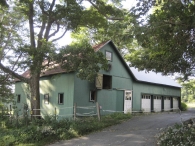
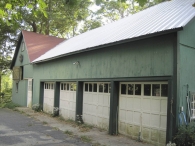
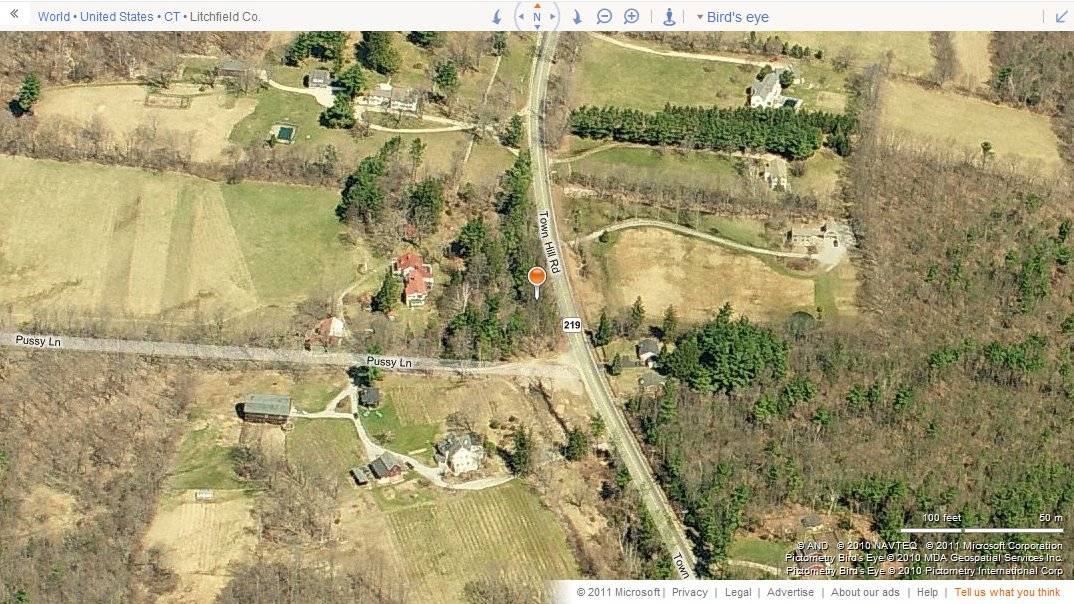
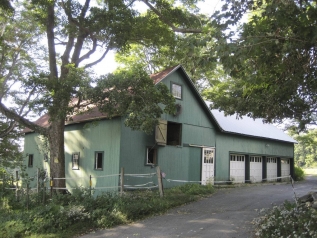
This is a 1 ½-story barn with a gable-roof and an L-shaped footprint. It consists of a north-south oriented barn which has been converted into a garage, attached to an east-west oriented horse barn. The primary façade of this barn is the east eave-side of the garage. Although the address of this barn is on Town Hill Road, it is set well back from that road and is not visible. Pussy Lane, a side road, runs east-west along the southern edge of this property and directly along the south eave-side of the horse barn portion.
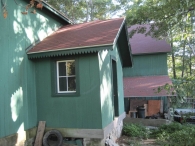
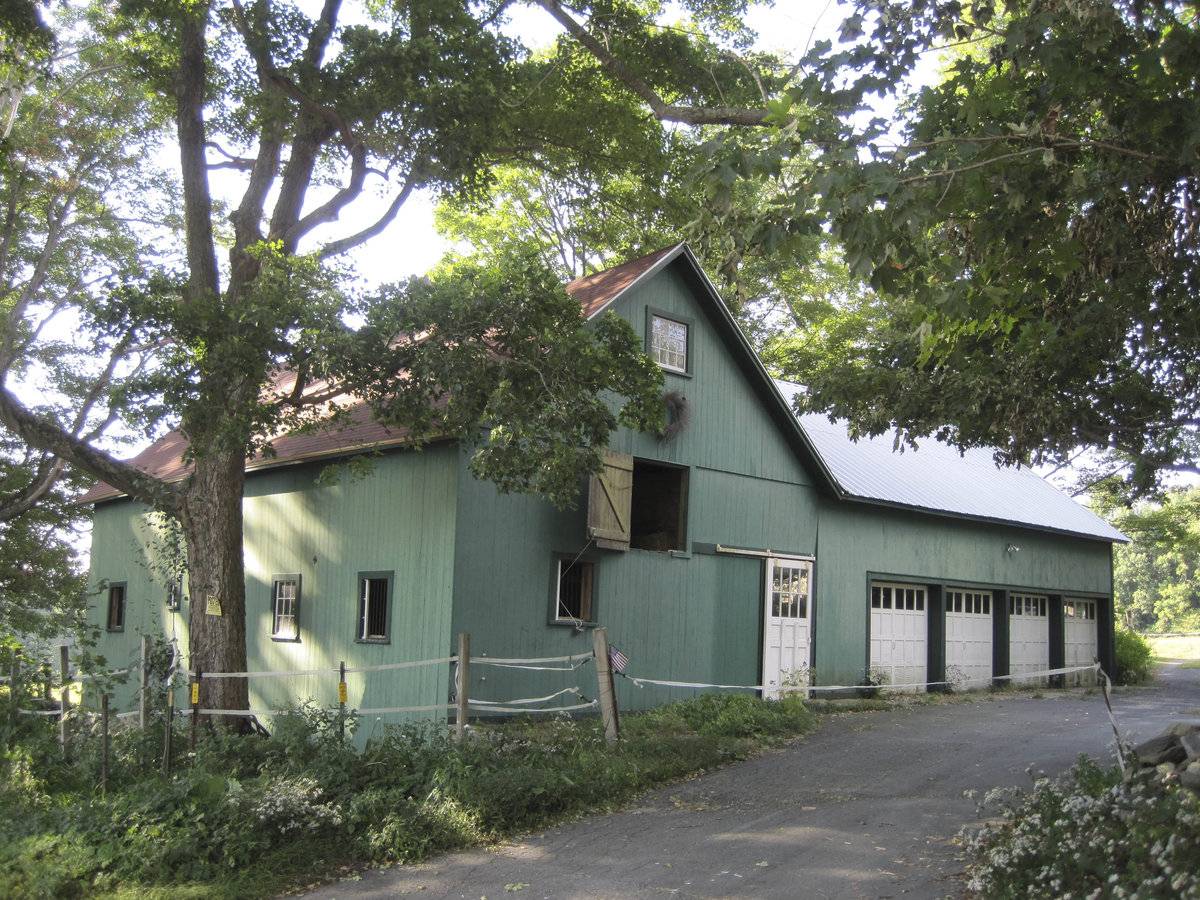
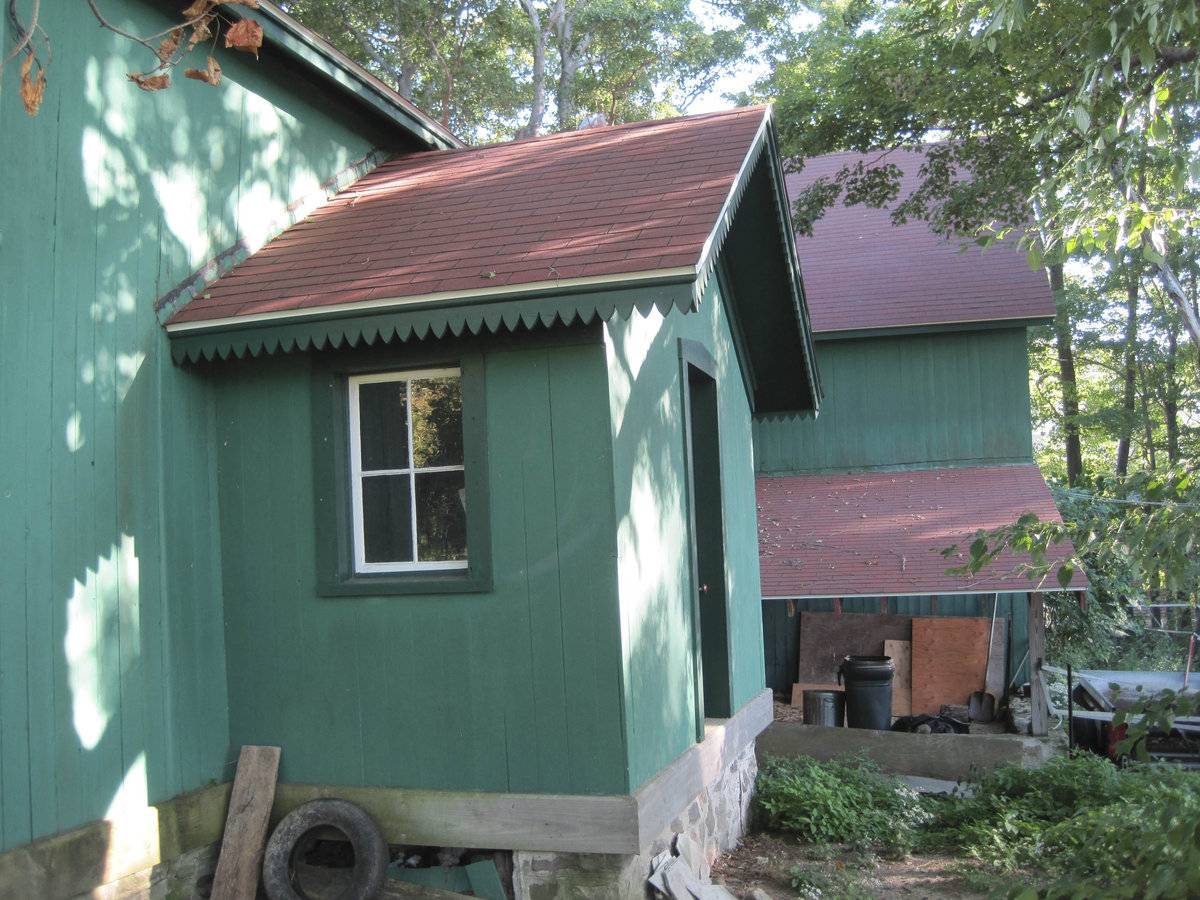
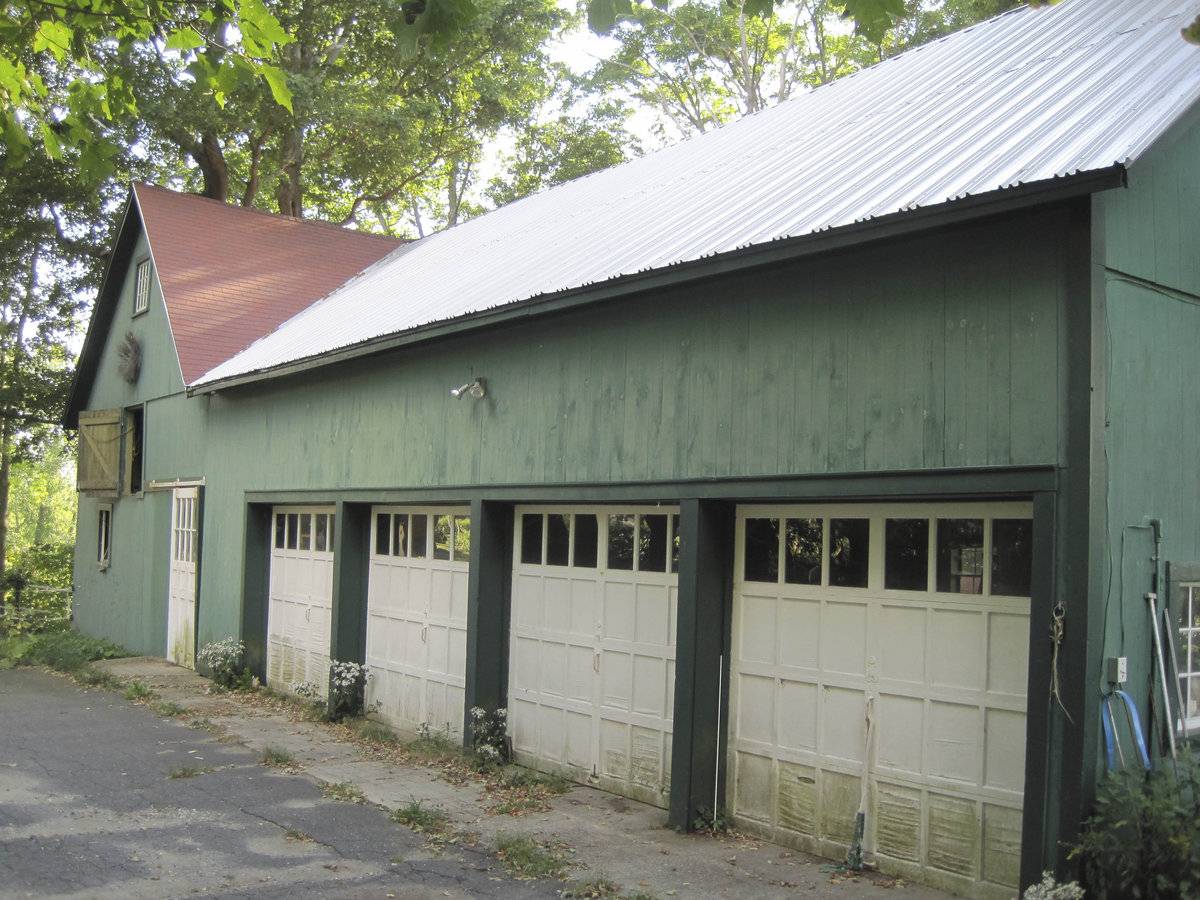
The façade of the garage contains the main entries to this structure, four single-width panel overhead garage doors, stretching the full length of this portion of the structure. The top row of panels in each door has been replaced with six panes of window glass. A modern security light assembly is mounted beneath the eave, centered above the two middle doors. The north gable-end of the garage portion is not visible for the purposes of an Historic Resource Inventory. The west eave-side of the garage portion includes a small gable-roof addition, projecting to the west. A four-pane window is located on the north eave-side of this addition. The addition contains a single wooden pass-through door, centered, on the gable-end. Decorative saw-tooth vergeboard is present along the eaves and gable fascia on this addition only. A six-over-six double-hung window is located to the south of this addition on the west eave-side of the garage.
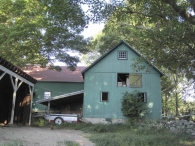
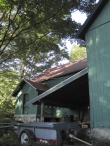
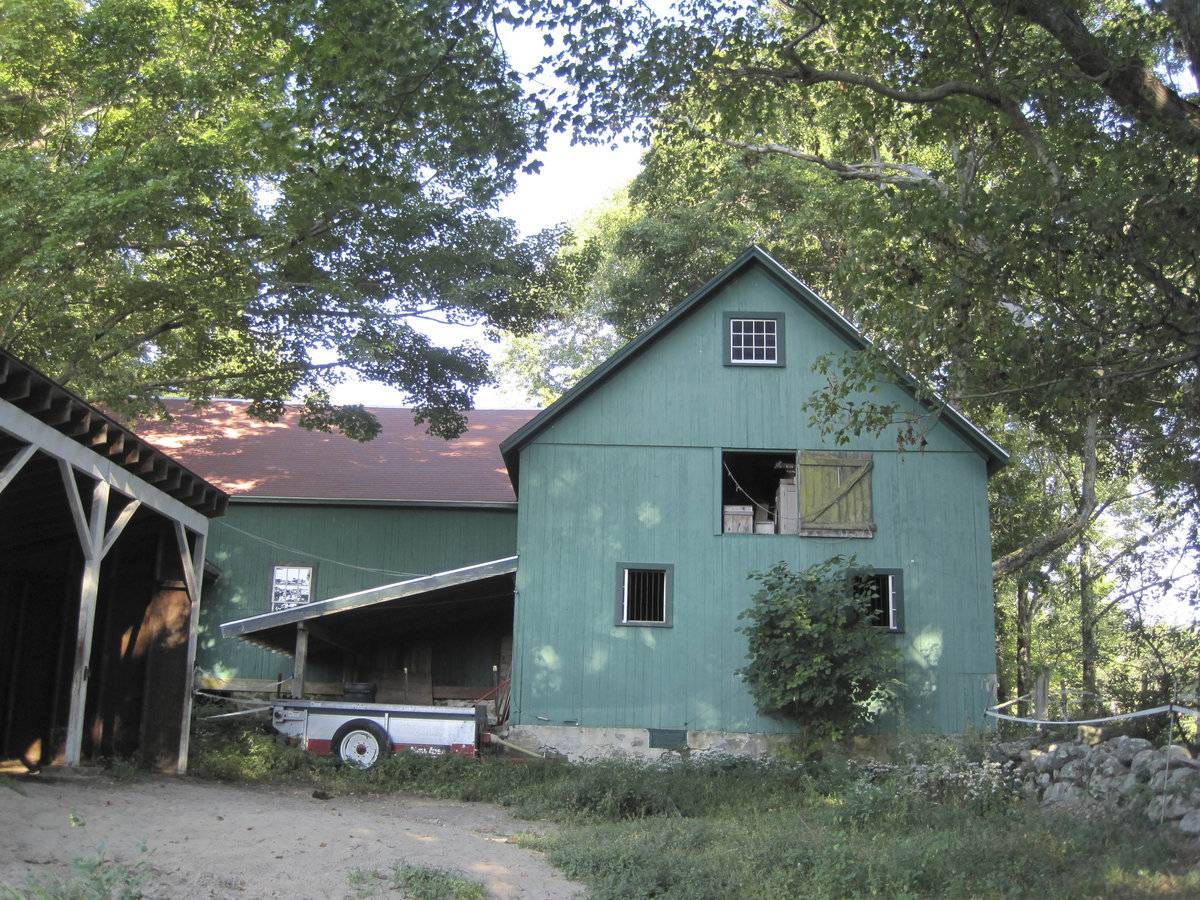
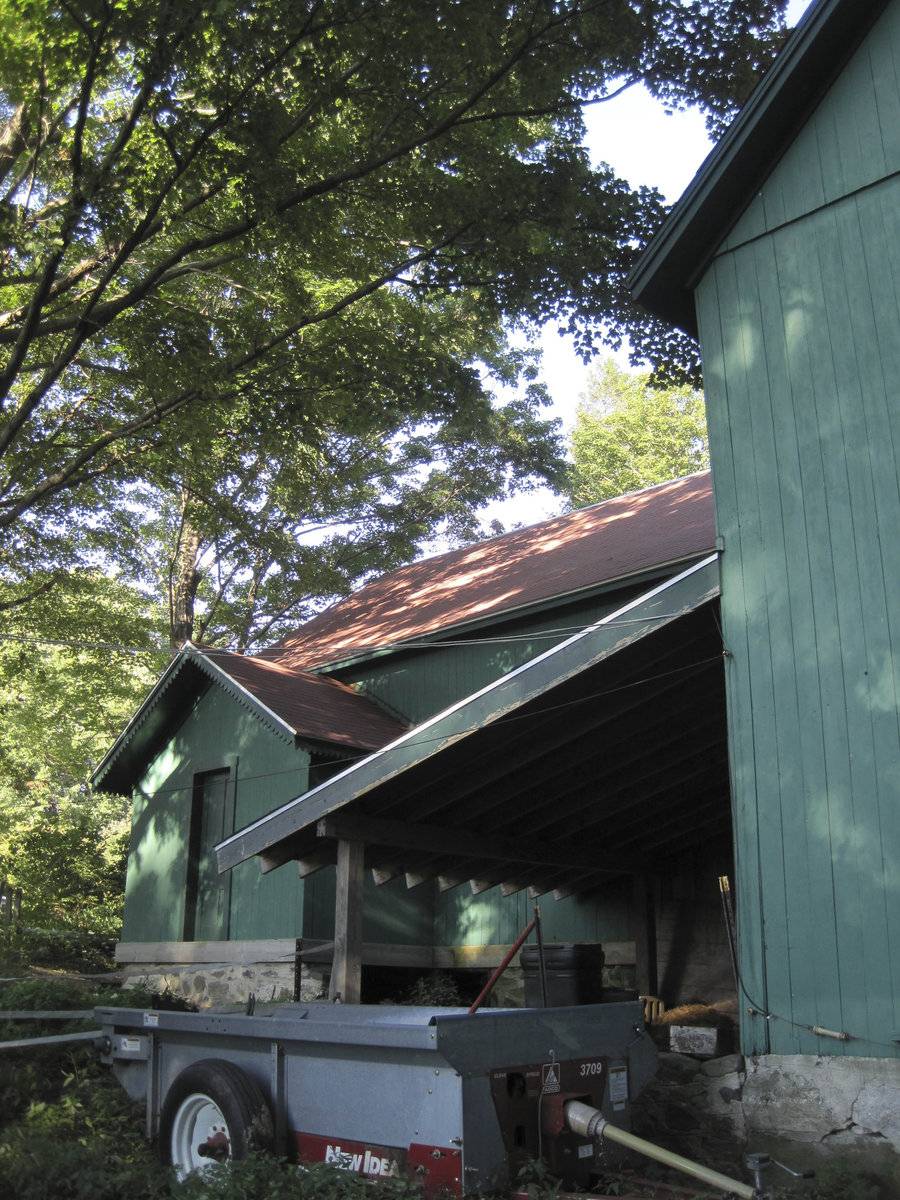
A shed roof overhang projects to the south from the north eave-side of the horse barn building, within the elbow of the L. The north eave-side appears to be blank. The west gable-end of the horse barn includes two first-story rectangular window openings, symmetrically placed. A square wooden hay door is centered on this end, just beneath the girt line. A rectangular twelve-pane window is located in the gable-attic on this end, centered beneath the roof ridgeline.
The south eave-side of the horse barn contains what appears to be three twelve-pane windows, unevenly spaced along its length. The east gable-end contains a single rectangular window opening in the southern half of the first-story, and a sliding panel pass-through door with eight windows in the northern half. As on the west gable-end, a square hay door is centered just beneath the girt line. A twelve pane rectangular window is also placed just beneath the roof ridgeline in the gable-attic.
The exterior walls of this structure are faced with vertical wooden flush-board siding, painted green. Dark green trim adorns the windows and doors. The horse barn has a solid mortared fieldstone foundation. The garage portion and small gable-roof addition are mounted on mortared fieldstone piers. The roof of the structure is primarily covered in maroon asphalt shingles. The east face of the roof on the garage portion, directly over the garage doors, is covered in gray sheet metal panels.
Historical significance:The oldest barns still found in the state are called the “English Barn,” “side-entry barn,” “eave entry,” or a 30 x 40. They are simple buildings with rectangular plan, pitched gable roof, and a door or doors located on one or both of the eave sides of the building based on the grain warehouses of the English colonists’ homeland. The name “30 by 40” originates from its size (in feet), which was large enough for 1 family and could service about 100 acres. The multi-purpose use of the English barn is reflected by the building’s construction in three distinct bays - one for each use. The middle bay was used for threshing, which is separating the seed from the stalk in wheat and oat by beating the stalks with a flail. The flanking bays would be for animals and hay storage.
Field Notes
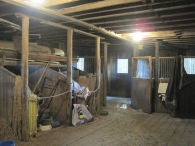
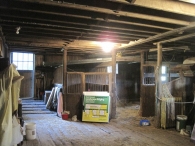
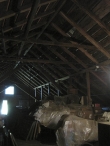
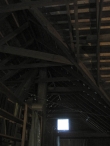
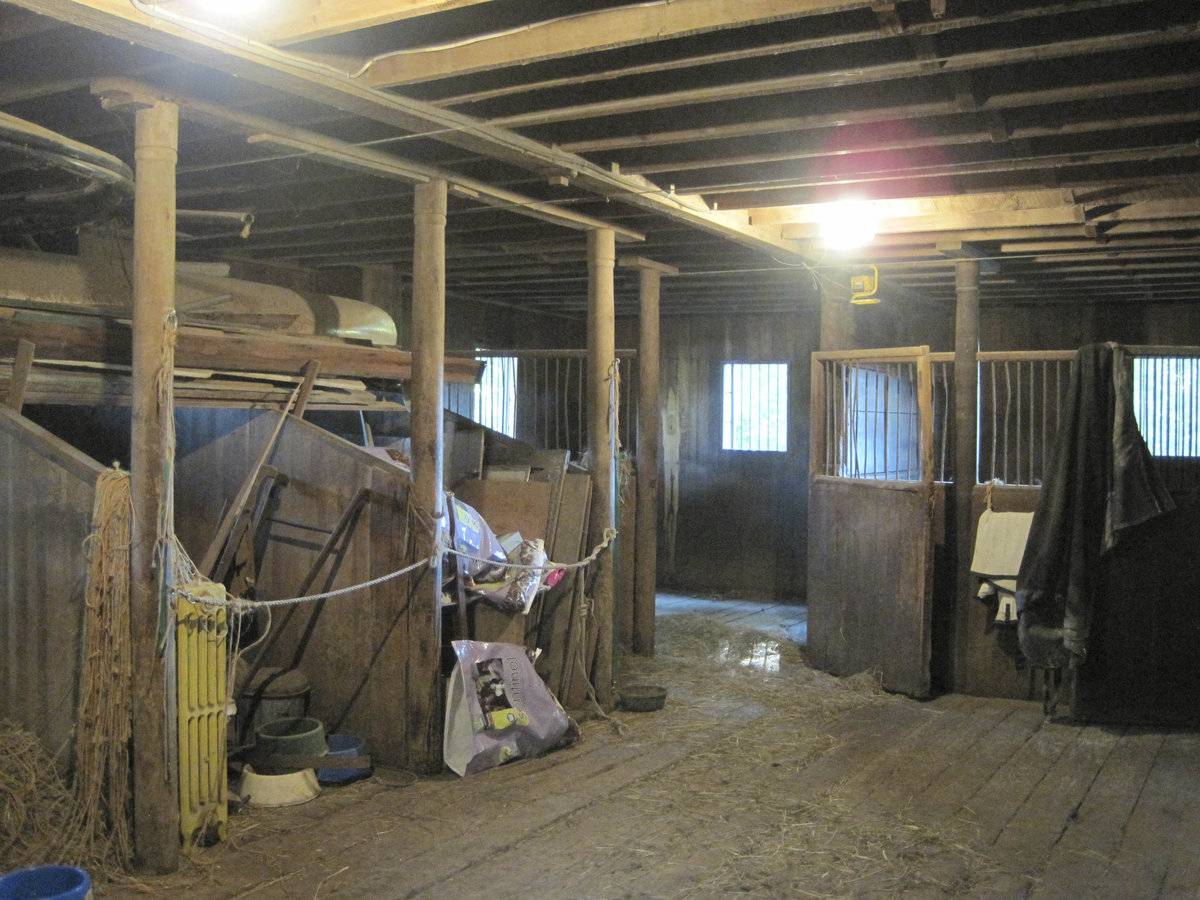
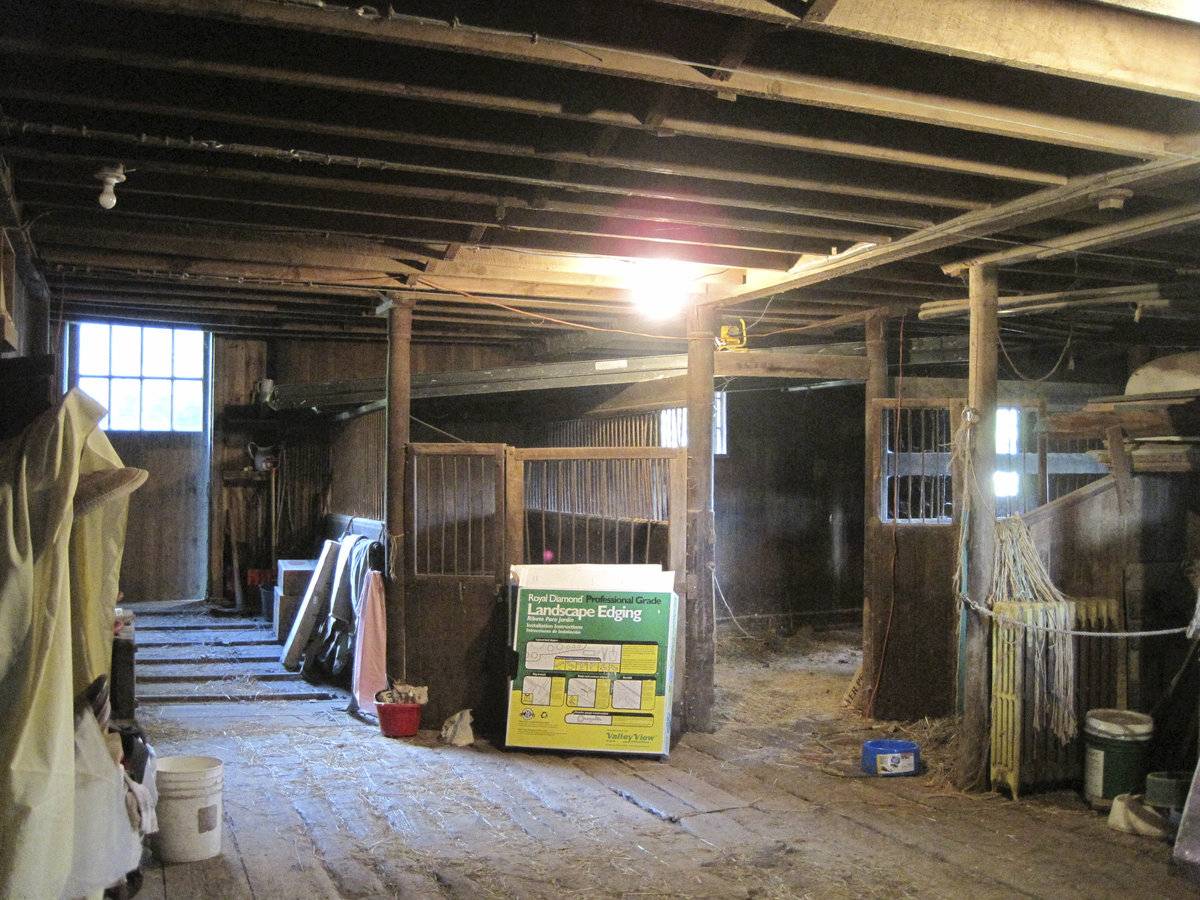
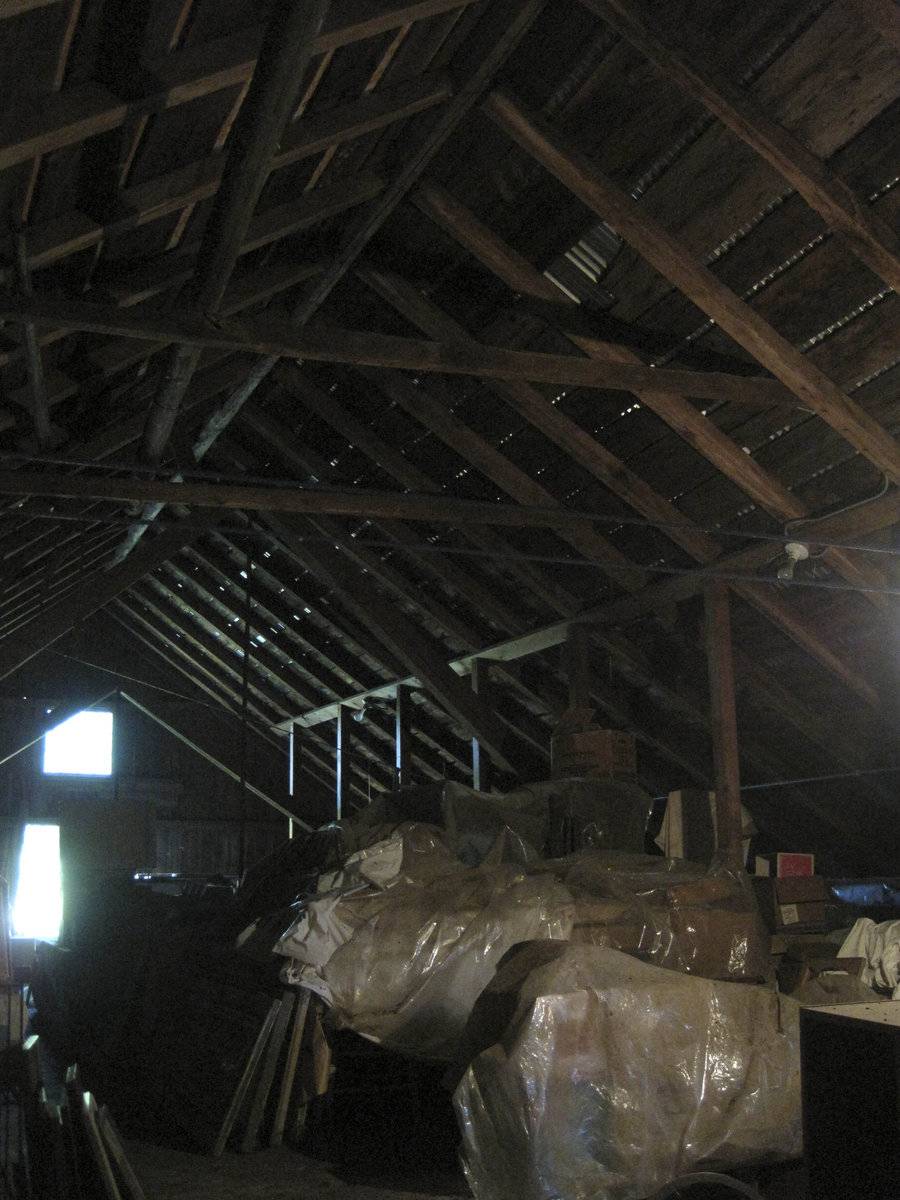
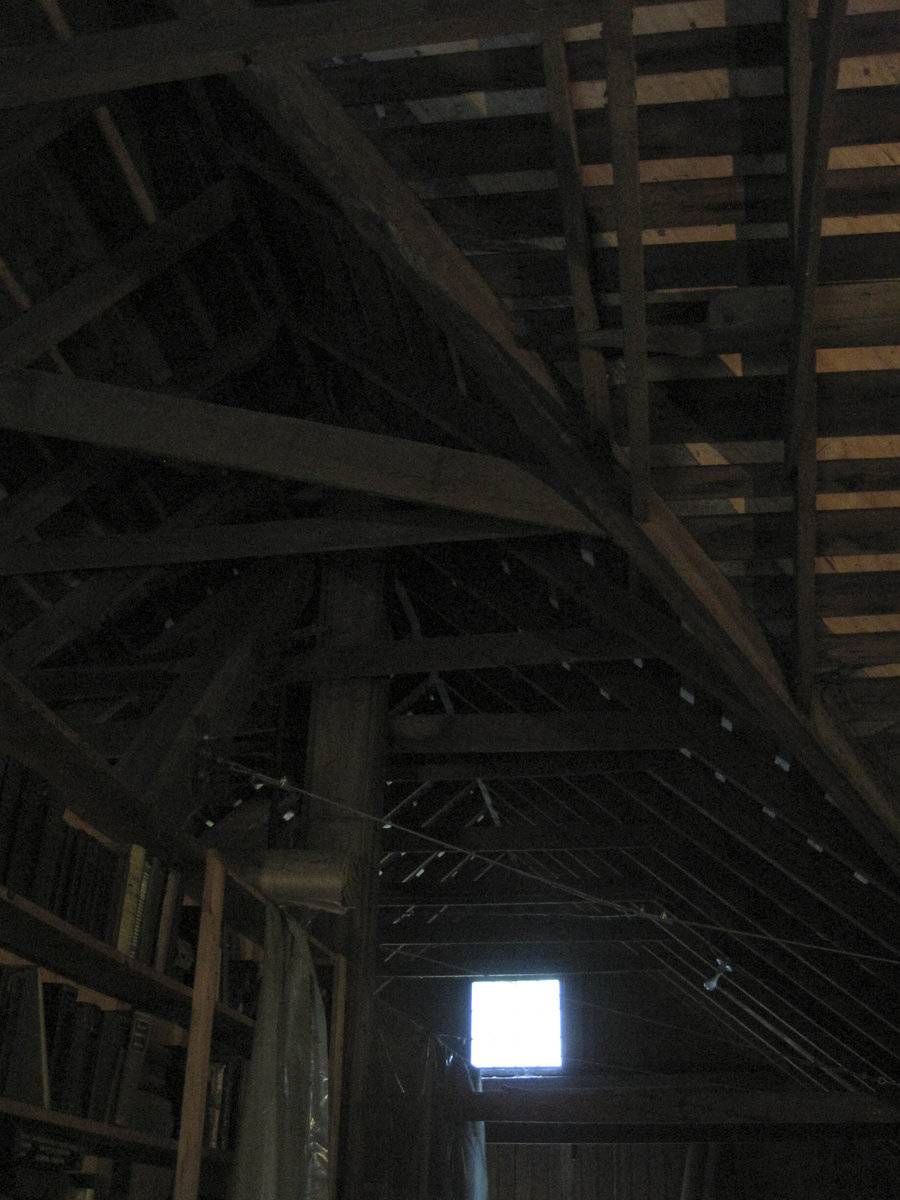
Esperanza, on the National Register of Historic Places, was originally a standard Connecticut hill farm. The north section of the barn, with the four large garage doors, is actually an early 1800's English style structure. It was modified to take cars in the early 1900's, with the removal of the sliding doors. A groom's apartment was added to the northwest corner in the 1870s. The southern section is a purpose-built horse barn with four box stalls and four standing stalls. The horse barn was built by Julie Palmer Smith in the 1870's. A popular author, then living in Hartford, she bought the farm as a summer house in 1872, along with the neighboring property, 535 Town Hill. Julie loved fast horses, and generally drove out from Hartford with her own team rather than taking the train. The horse barn rests on stone pillars rather than a continuous stone foundation and is a post and beam structure, much of the framing and floor is chestnut. Esperanza is still owned by Julie's descendants, now into the seventh generation. Until the 1930's members of the family also owned 105 Old Bruning Road and 535 Town Hill, and built the two large dairy barns on those properties. Interior shots of the 511 Town Hill Rd.'s horse barn. The barn is a post and beam structure purpose built for horses in the 1870's, and in nearly continuous use for that purpose. The barn is supported on stone pillars, rather than a continuous foundation. The dry sink was fed by a cistern in the loft which collected roof water, it is tin lined. Beside the sink is visible a paddle object on the wall, this is the bottom opening of the grain bin. The bin is a tin lined compartment under the loft stairs, a hinged stair at the top feeds into it. Hay was sent down into each stall by individual hay chutes from the loft. The original tack room was behind the stairs and is accessible from the older structure, which in the 1870's was re-purposed for carriages and has since been used for cars. The box stalls housed the farm's draft horses, while the standing stalls housed the carriage and riding horses. The small box stall next to the ramp was used for the children's donkey. Originally the floors were all chestnut, however about twenty years ago the stall floors had to be replaced due to wear. The photos of the loft show the join between the two structures. The triangular truss structure which actually supports the hayloft of the horse barn is partially visible in the second loft photo. The vertical boxed structure is the main ventilator.
- Use & Accessibility
Use (Historic)
Use (Present)
Exterior Visible from Public Road?
Yes
Demolished
n/a
Location Integrity
Unknown
- Environment
Related features
n/a
Environment features
Relationship to surroundings
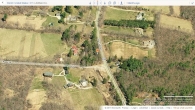
Although the address of this barn is on Town Hill Road, it is set well back from that road and is not visible. Pussy Lane, a side road, runs east-west along the southern edge of this property and directly along the south eave-side of the horse barn portion. The barn is accessed from a driveway leading north from Pussy Lane and passing along the east side of the barn, allowing access to all garage doors. The drive then loops to the east to access the large historic residence on this site, located to the northeast of the barn. The barn itself is surrounded by trees on all sides, and a woodland continues to the east surrounding the house. An agricultural field extends to the northwest of the barn site. Additional fields and areas of open land are intermixed with woodlands in the surrounding area. Pussy Lane and Town Hill Road are both lined by trees. Dwellings line Town Hill Road along both sides.
- Typology & Materials
-
Building Typology
Materials
Structural System
Roof materials
Roof type
Approximate Dimensions
Garage w/Loft 1200 S.F., Barn 1-story w/Loft 750 S.F.
- Source
-
Date Compiled
05/27/2011
Compiled By
N. Nietering & T. Levine, reviewed by CT Trust
Sources
Photographs by Anne C. Hall.
Sexton, James, PhD; Survey Narrative of the Connecticut Barn, Connecticut Trust for Historic Preservation, Hamden, CT, 2005, http://www.connecticutbarns.org/history.
Visser, Thomas D.,Field Guide to New England Barns and Farm Buildings, University Press of New England, 1997, 213 pages.
Map of New Hartford, CT, retrieved on May 26, 2011 from website www.bing.com.
New Hartford Assessor’s Records - Vision Appraisal online - http://data.visionappraisal.com/NewHartfordCT
National Register Nomination No. 02000334, National Park Service, 2002.
- PhotosClick on image to view full file
-