Barn Record New Hartford
RETURN TO ‘FIND BARNS’- Building Name (Common)
- Jerram Winery
- Building Name (Historic)
- Esperanza Farm
- Address
- 535 Town Hill Road (Rte 219), New Hartford
- Typology

- Overview
-
Designations
Historic Significance
Architectural description:
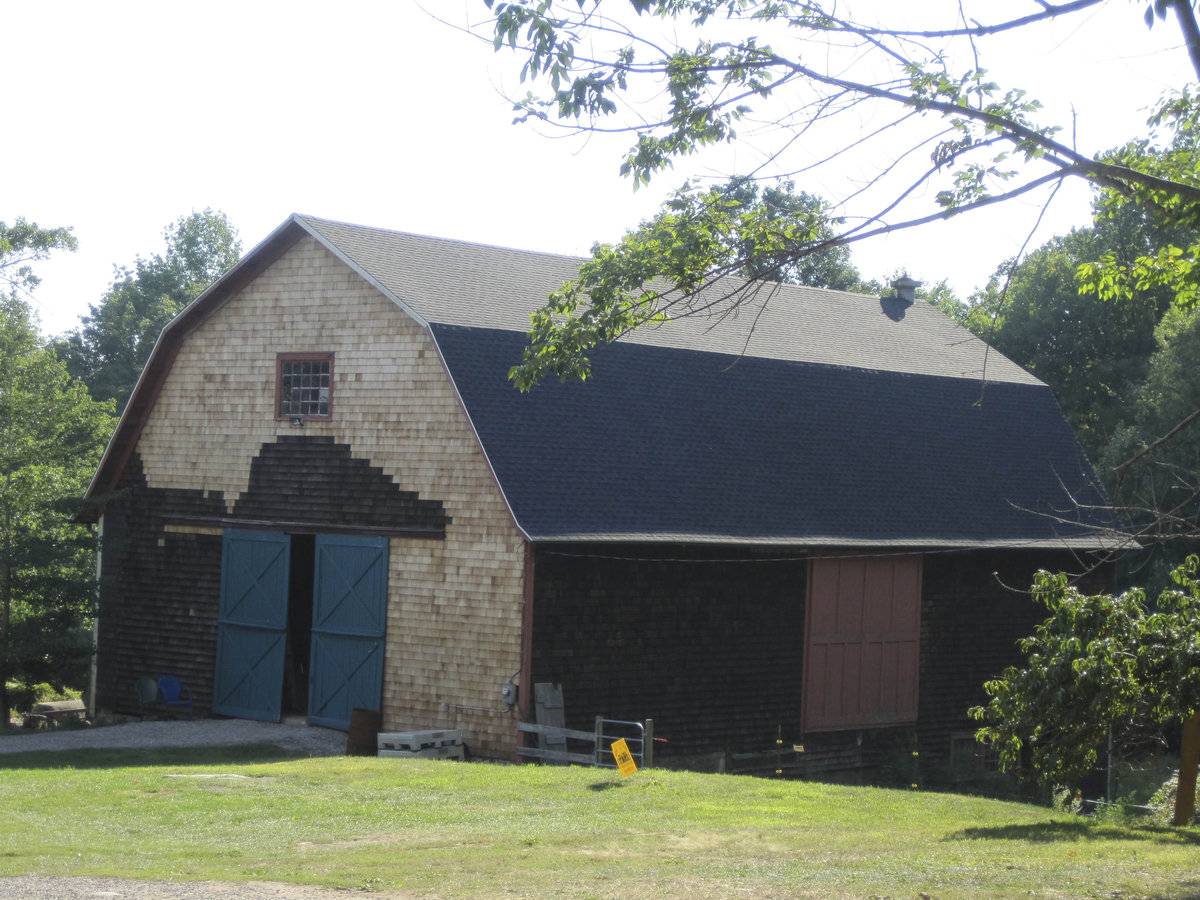
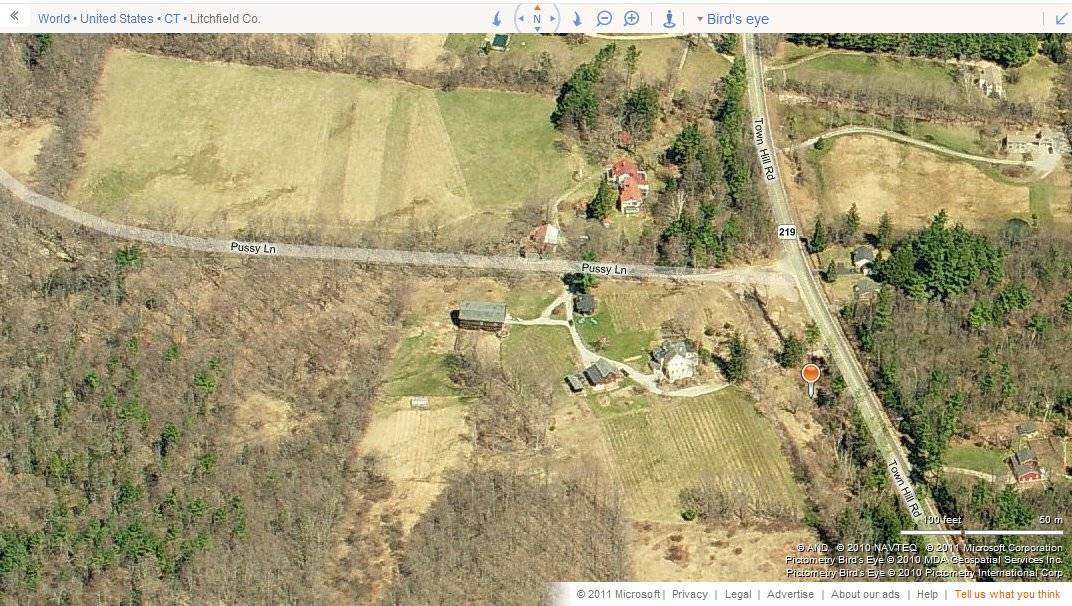
This is a large, 1 ½-story gable-entry bank barn with a gambrel roof. The primary façade of this barn is the east gable-end, which faces Town Hill Road. Town Hill Road passes this property at a north to south angle. The north eave-side of this barn is parallel to Pussy Lane, which passes from east to west and is the north property line of this site.
The primary façade of this barn is the east gable-end. This end contains the main entry on the first story. The main entry contains a pair of centered over-size sliding doors of wood plank construction. Each door is divided into two paneled halves, each panel with X bracing. Centered in the gable attic on the façade is a rectangular twenty-pane window. A modern security light is mounted immediately beneath this window. A modern electrical meter is mounted at the northeast corner on the first story.
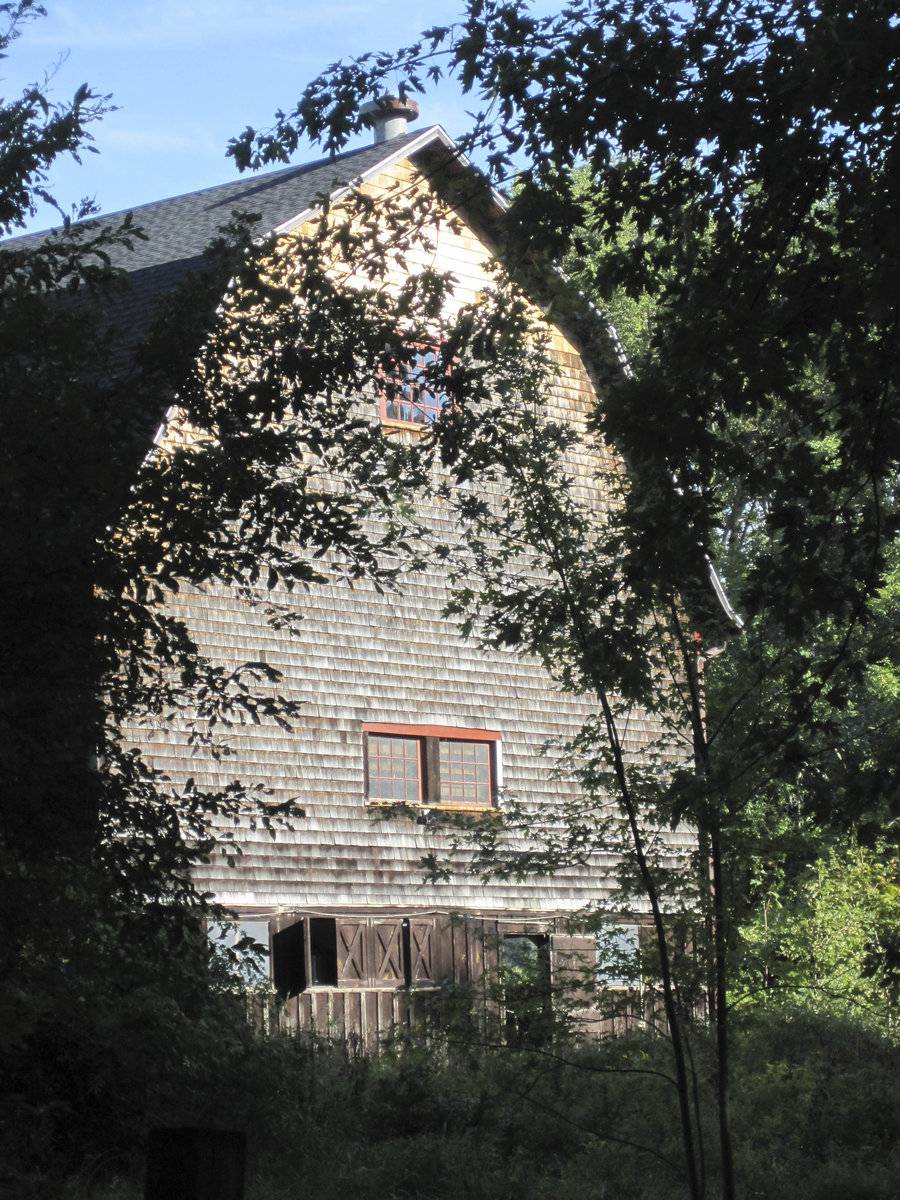
The ground slopes down from east to west. The north eave-side partially reveals the basement level as the grade slopes downward. The west half of the basement level contains a pair of twelve-pane windows. Two large over-size panel doors are centered on the first-story on this eave-side. No other openings are present on this side.The west gable-end exposes the full basement level. This level contains several openings along its length. A large square window opening is symmetrically set-in slightly from each corner. Between these windows openings, the south half contains a wood-plank pass-through door. The north half contains a pair of shutter-windows. The first-story contains a pair of centered twelve-pane windows. The gable-attic contains a centered twenty-pane window.
The south eave-side appears to have an over-width entry on the basement level, centered on this side. Two window openings appear to be located on the first story, one roughly centered and the other near the southeast corner. The circular foundation for a silo appears to be present at the southeast corner.
The exterior walls of this barn are faced in wooden shingles, some of which are new. The basement level on the west gable-end is faced in vertical board-and-batten siding. The roof is covered in gray asphalt shingles. A small circular steel ventilator is located on the roof ridgeline at the over the west gable-end. The roof has slightly flared eaves.
Historical significance:The New England barn or gable front barn is the successor to the English barn and relies on a gable entry rather than an entry under the eaves. The gable front offers many practical advantages. Roofs drain off the side, rather than flooding the dooryard. With the main drive floor running parallel to the ridge, the size of the barn could be increased to accommodate larger herds by adding additional bays to the rear gable end. Although it was seen by many as an improvement over the earlier side entry English Barn, the New England barn did not replace its predecessor but rather coexisted with it as both types continued to be constructed.
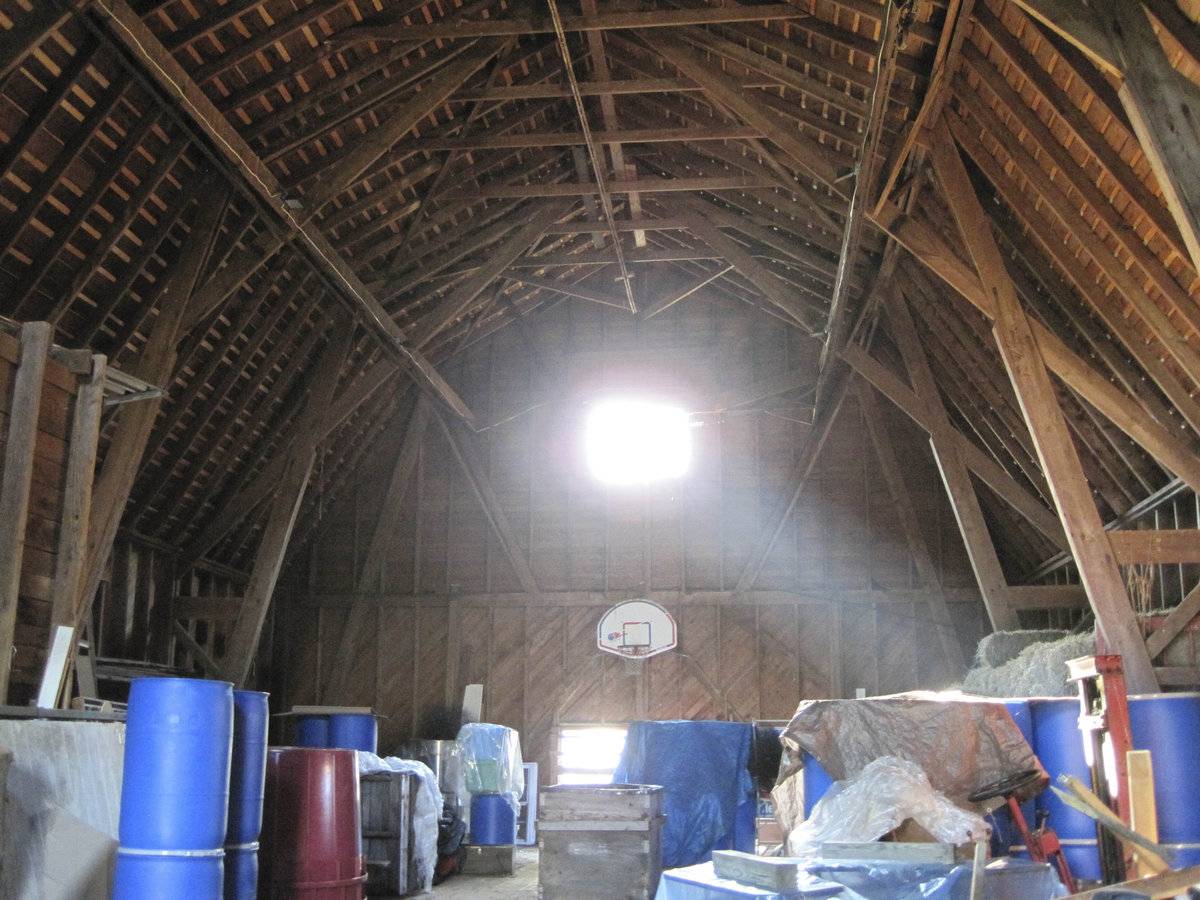
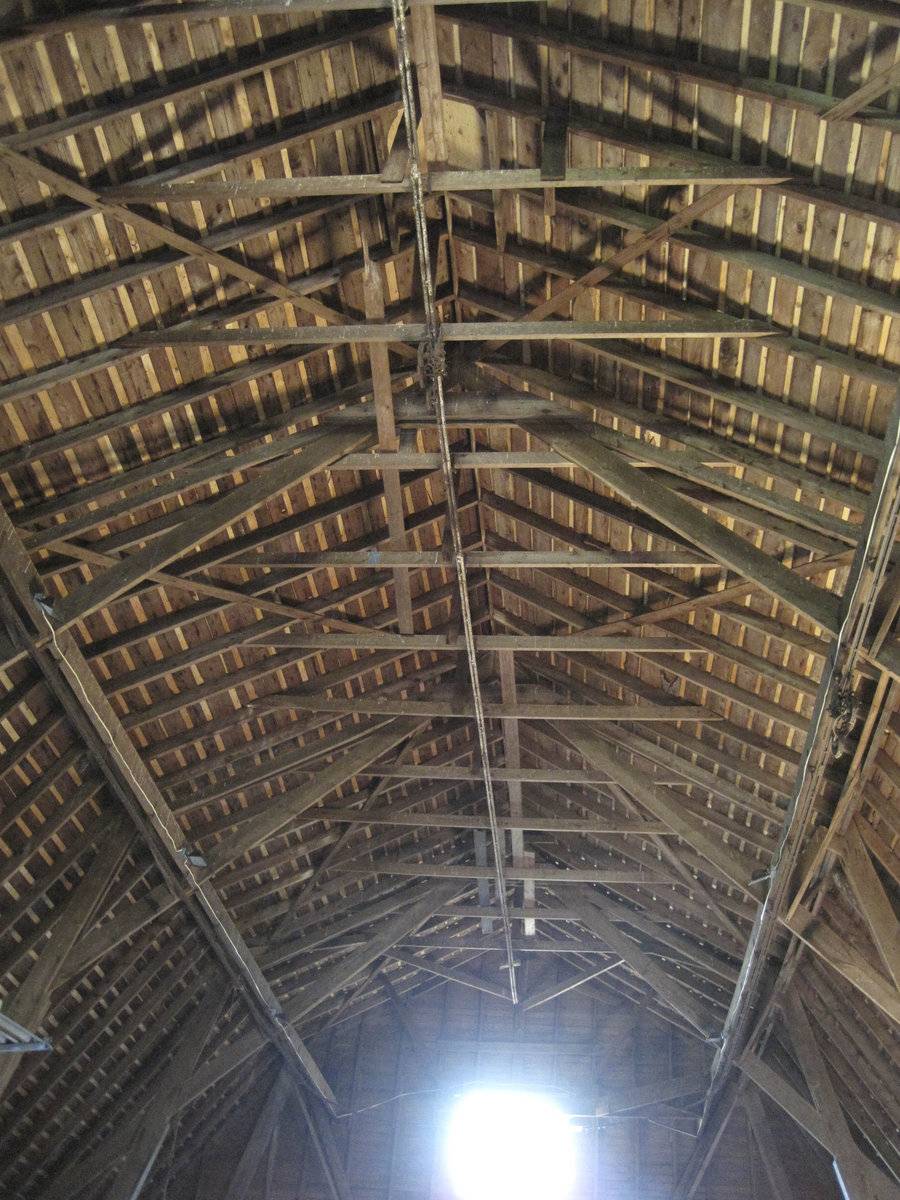
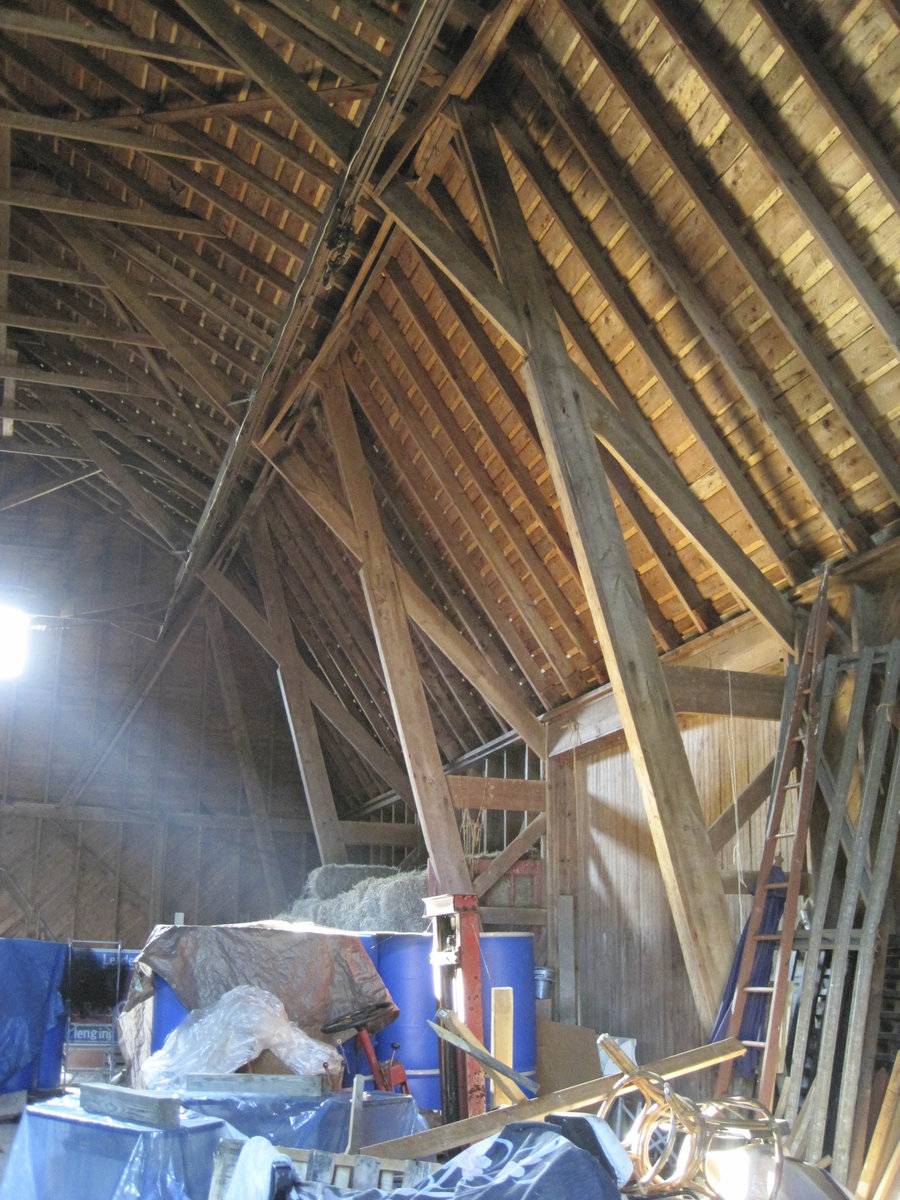
The gambrel roof enclosed a much greater volume than a gable roof did, and its shape could be formed with trusses that did not require cross beams, which would interfere with the movement and storage of hay. Also known as the curb roof, the double slopes of the gambrel offer more volume in the hayloft without increasing the height of the side walls.
The 19th century would see the introduction of a basement under the barn to allow for the easy collection and storage of a winter’s worth of manure from the animals sheltered within the building. The bank barn is characterized by the location of its main floor above grade, either through building on a hillside or by raising the building on a foundation. This innovation, aided by the introduction of windows for light and ventilation, would eventually be joined by the introduction of space to shelter more animals under the main floor of the barn.
Field Notes
Jerram Winery is an active winery. 535 Town Hill Rd is the address today, NR nomination gives 511 Town Hill Road. This dairy barn was built in 1906 by William Webster Ellsworth, son-in-law of Julie Palmer Smith, who built the barn at 511 Town Hill Rd, and the father of Capt. Bradford Ellsworth who built the barn at 105 Old Bruning Road. Originally this farm had several other structures, including an old English style barn that was a virtual match for the older section of the barn at 511. It also had two silos, the foundation of one is still evident and a calf shed extension on the south side. The hay loft was generally filled from the east doors, which have ground level access. The hay was loose hay, while the silos took corn. The north bay doors were operable. Ground level access to the bottom floor is possible on the north, south and west sides. The original layout of the livestock floor is somewhat visible in the interior, although rearrangement for horses was done. The inscription: 'W.W.E. 1906 was visible just inside the south entry for a number of years.
- Use & Accessibility
Use (Historic)
Use (Present)
Exterior Visible from Public Road?
Yes
Demolished
n/a
Location Integrity
Unknown
- Environment
Related features
Environment features
Relationship to surroundings
This large gable-entry gambrel roof barn faces east, and is located on a hillside that slopes down from east to west. Although the barn’s address is Town Hill Road, it is setback a great distance from that street. The barn is much better seen from Pussy Lane, which is the northern boundary for this property and parallels the length of the barn along its north side. An L-shaped driveway connected the short driveway which leads to the main entry of the barn with Pussy Lane to the north and Town Hill Road to the east. This barn is immediately surrounded on all sides by a grassy field. To the south and southeast, this field is bordered by a larger field of active agriculture. To the west of the immediate barn area is a woodland. The farmhouse associated with this barn is located to the immediate east of the barn, just to the east of the driveway. Across both Town Hill Road and Pussy Lane, to the east and north respectively, are agricultural fields intermixed with woodlands.
- Typology & Materials
-
Building Typology
Materials
Structural System
Roof materials
Roof type
Approximate Dimensions
BARN: 2,800 square feet.
- Source
-
Date Compiled
05/30/2011
Compiled By
N. Nietering & T. Levine, reviewed by CT Trust
Sources
Photographs by Anne C. Hall.
National Register Nomination No. 02000334, National Park Service, 2002.
Sexton, James, PhD; Survey Narrative of the Connecticut Barn, Connecticut Trust for Historic Preservation, Hamden, CT, 2005, http://www.connecticutbarns.org/history.
Visser, Thomas D.,Field Guide to New England Barns and Farm Buildings, University Press of New England, 1997, 213 pages.
Map of New Hartford, CT, retrieved on May 26, 2011 from website www.bing.com.
New Hartford Assessor’s Records - Vision Appraisal online - http://data.visionappraisal.com/NewHartfordCT
- PhotosClick on image to view full file
-