Barn Record Barkhamsted
RETURN TO ‘FIND BARNS’- Building Name (Common)
- Roy Barn
- Building Name (Historic)
- Fuller Farm
- Address
- 12 Fuller Road, Barkhamsted
- Typology
- Overview
-
Designations
n/a
Historic Significance
Architectural description:
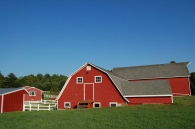
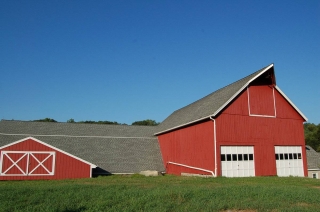
This is a two structure complex (barn I & barn II), resulting in an ell-shaped structure, with a number of lesser additions.
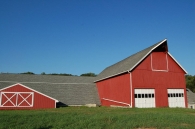
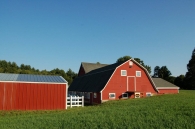
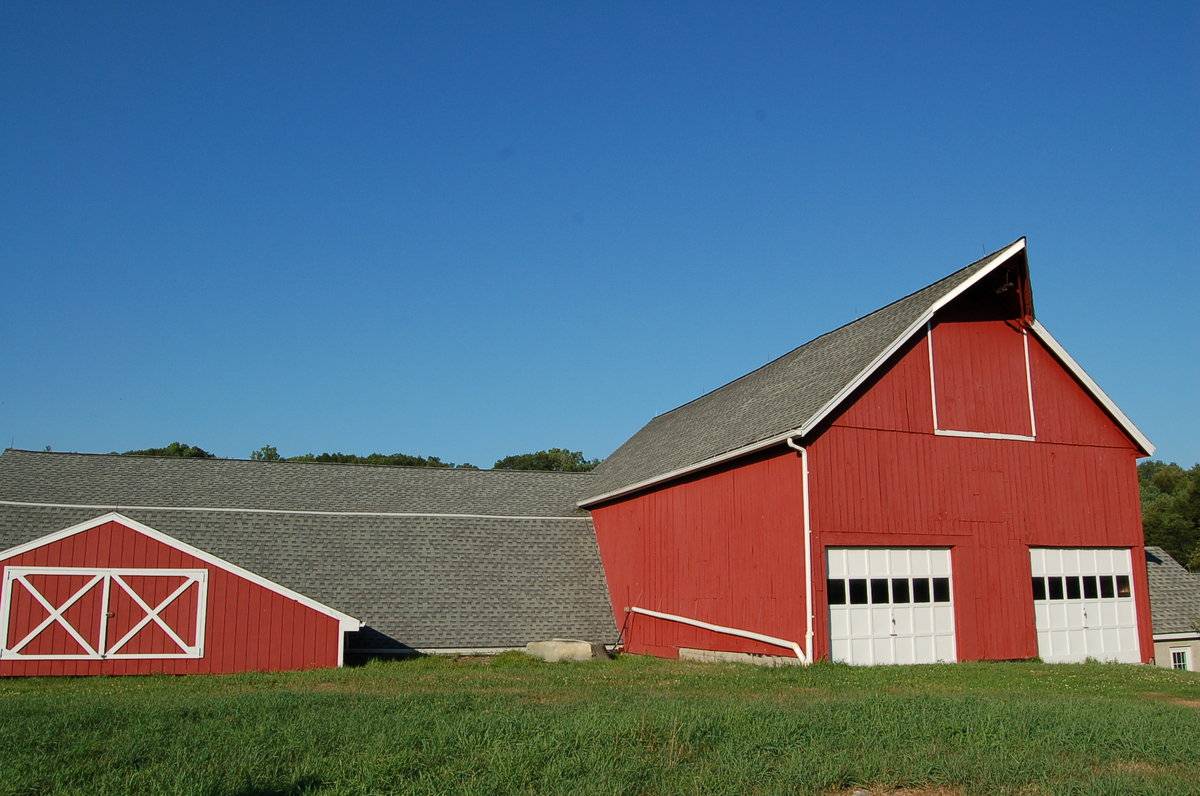
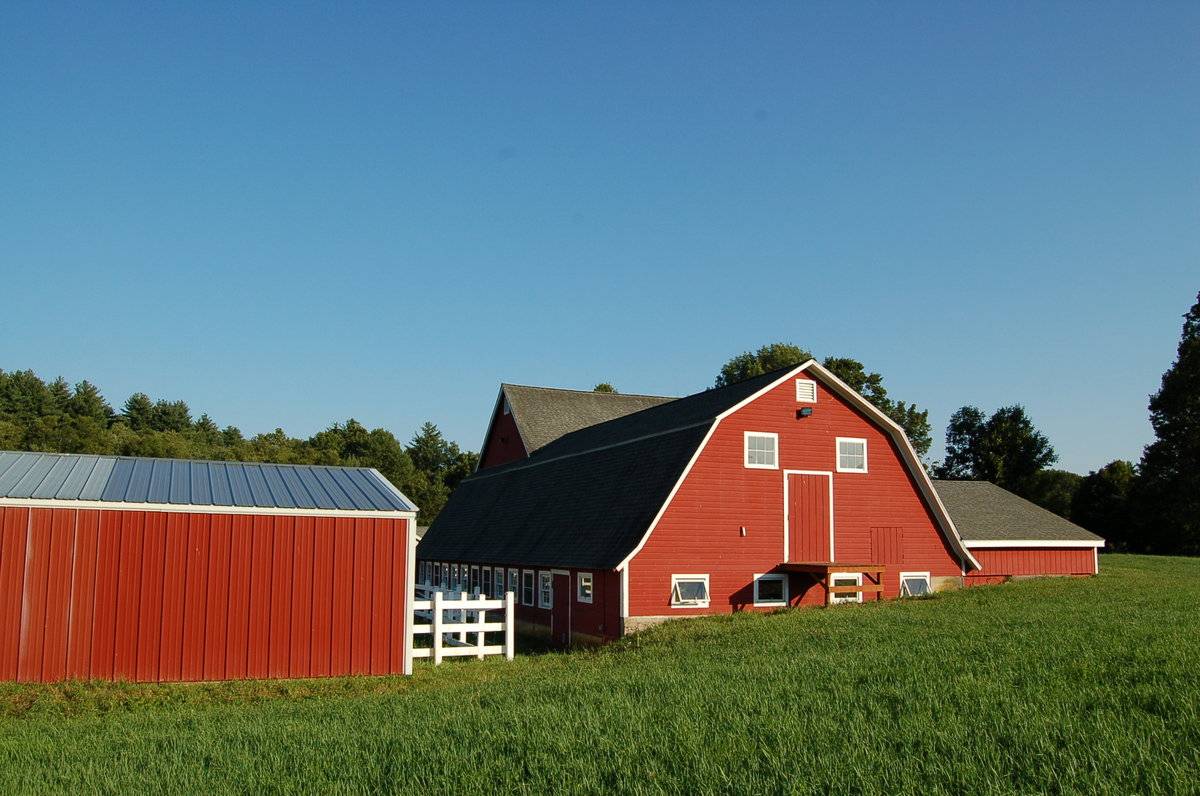
Barn I is a 1 1/2-story, gable-roof, gable-entry barn. Barn II is a 1 1/2 story, gambrel-roofed, eave-entry barn. The main façade of barn I faces southwest, and the ridge-line is perpendicular to Fuller Road, which at this point runs southeast-northwest. The ridge-line of barn II is parallel with Fuller Road. The main entrance on the southwest gable-end of Barn I are two, equally spaced, overhead garage doors. A large hay door with trim is just beneath the apex of the roof and follows the roof line. A small hay door is centered beneath the large hay door.
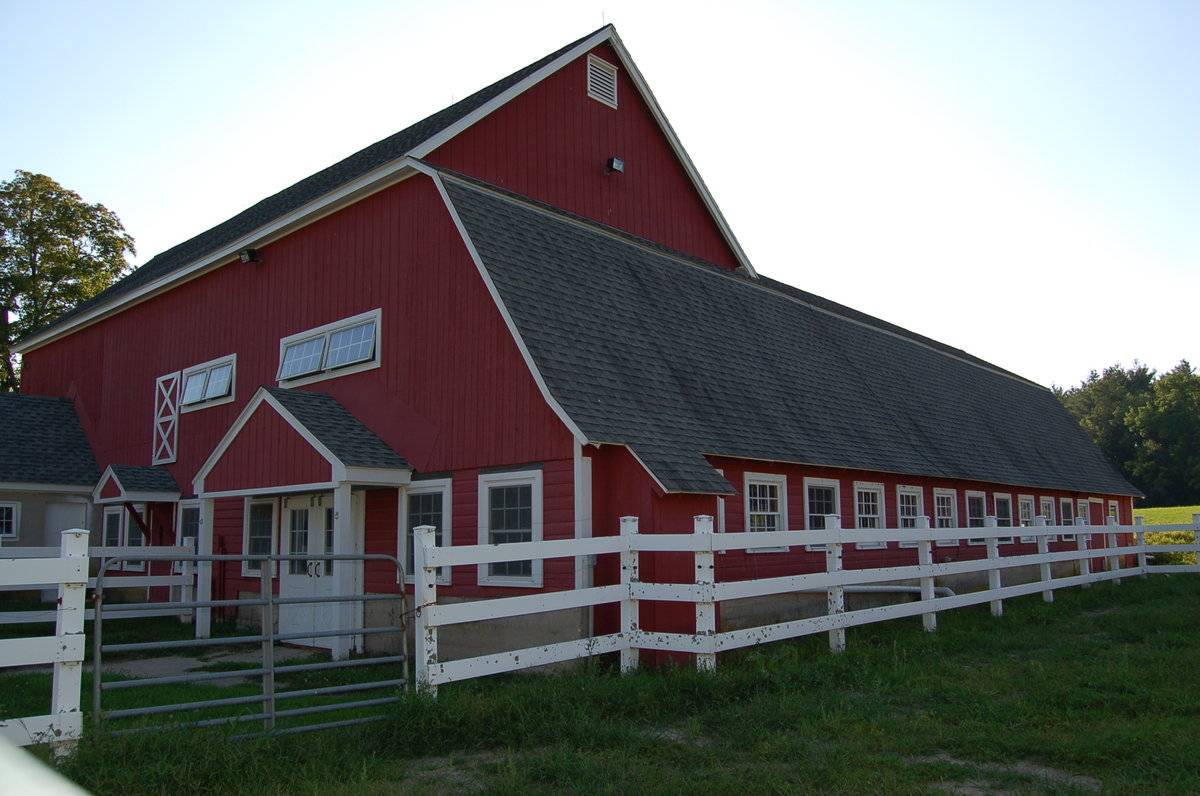
At the south corner of the southeast eave-side of the barn is an attached, gable-roof shed (Shed I). To the east of Shed I are two six-over-six double-hung windows.. In the center of the southeast eave-side of the barn is a pass-through door with a gable-roof porch supported by brackets. A Dutch hay door is directly above. At the east corner of the southeast eave-side of the barn is a pair of hinged, paneled, pass-through doors inset with six panes on the upper halves. The doors are covered by an open-sided, gable-roof porch supported by two square pillars. Flanking this entry are two six-over-six double-hung windows. Above are two sets of two awning windows; the set directly above the porch each have eight panes and the set next to the Dutch hay door each have six panes.
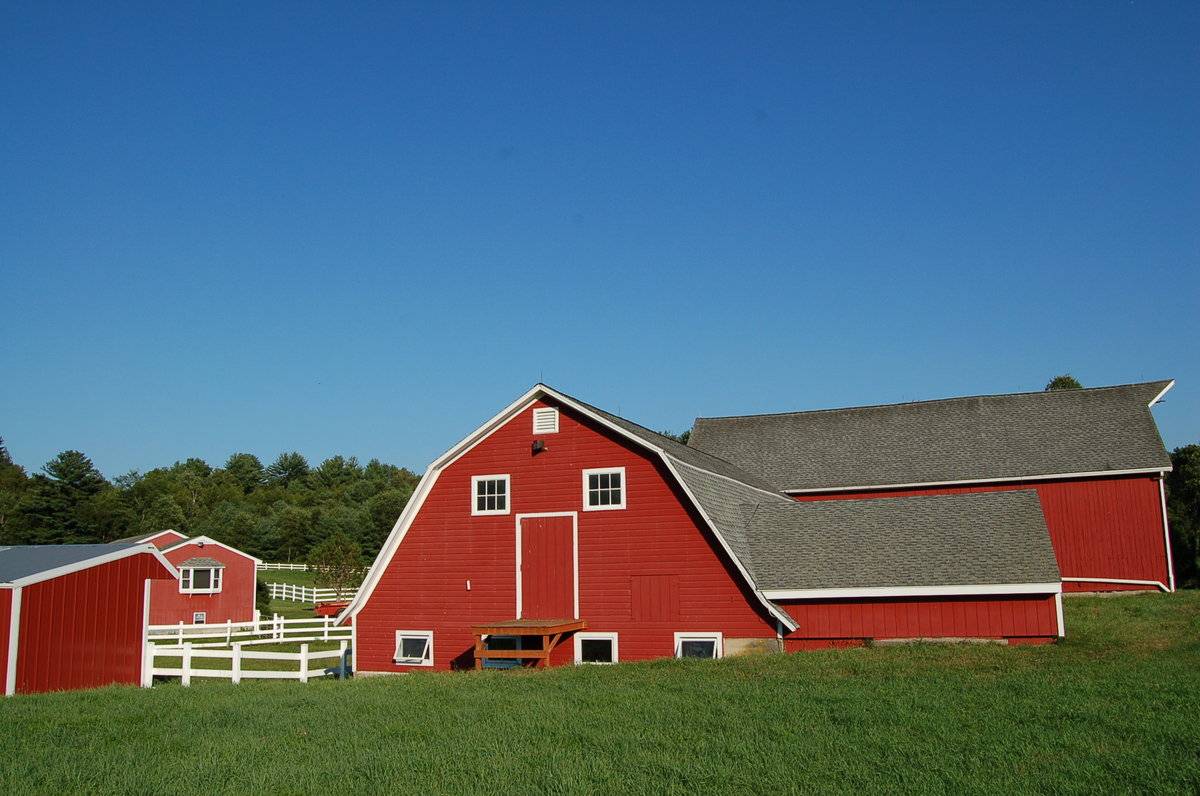
Attached to the northeast gable-end of barn I is the wrapped-around gambrel-roof of barn II. The northeast gable-end of barn I is completely encompasses by the wrap-around roof on the main level; the gable attic of barn I is blank except for a louvered vent just beneath the apex of the roof.
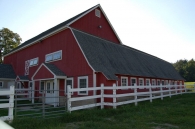
Attached near the east corner of barn II northeast eave-side is a small shed-roof annex. To the north of the annex on the northeast eave-side of barn II is a series of twelve six-over-six double-hung windows. There is a louvered vent with trim at the north corner with a pass-through door adjacent to the east. The northwest gable-end of barn II is built into a hillside and the grade inclines from north to south until the foundation is no longer visible at the south corner. In the main level are four, rectangular stable windows. In the gable attic at the eave line is a hay door with a small deck. To the west of the hay door is a smaller smaller hay door. Above and flanking the larger hay door are fixed windows with six-pane sashes. Just beneath the apex of the roof is a louvered vent.
The southwest eave-side of barn II is below grade so that only the eave-line and roof are visible. There is an attached, gable-roofed shed (Shed III) that encompasses the north half outhwest eave-side of barn II. In the gable attic of Shed III are two hinged hay doors.
The siding of barn I & II is vertical, flush-board painted red with white trim and doors. The foundation is concrete. The roof has asphalt shingles and a projecting hood.
Historical significance:The New England barn or gable front barn is the successor to the English barn and relies on a gable entry rather than an entry under the eaves. The gable front offers many practical advantages. Roofs drain off the side, rather than flooding the dooryard. With the main drive floor running parallel to the ridge, the size of the barn could be increased to accommodate larger herds by adding additional bays to the rear gable end. Although it was seen by many as an improvement over the earlier side entry English Barn, the New England barn did not replace its predecessor but rather coexisted with it as both types continued to be constructed. The gambrel roof enclosed a much greater volume than a gable roof did, and its shape could be formed with trusses that did not require cross beams, which would interfere with the movement and storage of hay. Also known as the curb roof, the double slopes of the gambrel offer more volume in the hayloft without increasing the height of the side walls.
The 19th century would see the introduction of a basement under the barn to allow for the easy collection and storage of a winter’s worth of manure from the animals sheltered within the building. The bank barn is characterized by the location of its main floor above grade, either through building on a hillside or by raising the building on a foundation. This innovation, aided by the introduction of windows for light and ventilation, would eventually be joined by the introduction of space to shelter more animals under the main floor of the barn.Field Notes
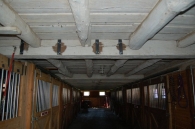
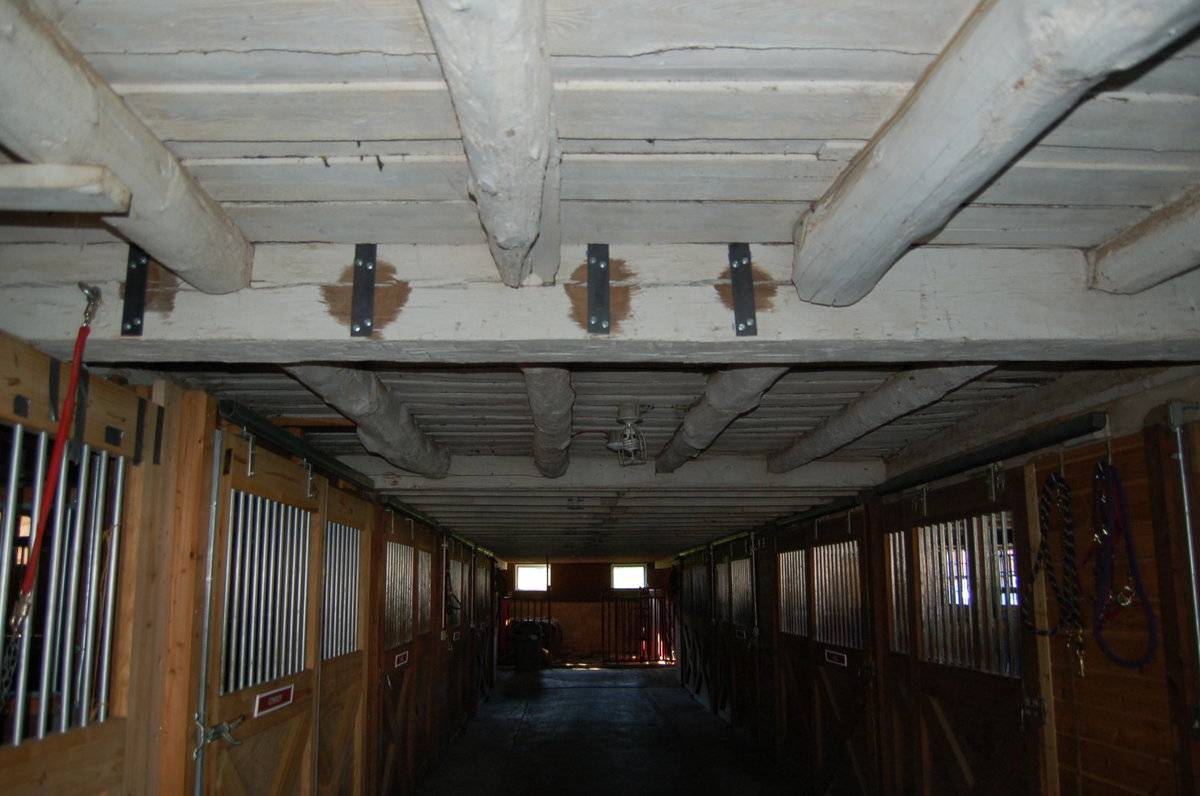
Section of Barn with Gable roof is older-has post and beam framing Section with Gambrel roof has balloon framing There are 2 silo foundations-silos removed circa 1995
- Use & Accessibility
Use (Historic)
Use (Present)
Exterior Visible from Public Road?
Yes
Demolished
n/a
Location Integrity
Unknown
- Environment
Related features
Environment features
Relationship to surroundings
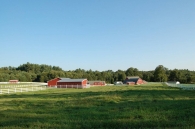
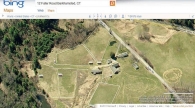
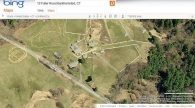
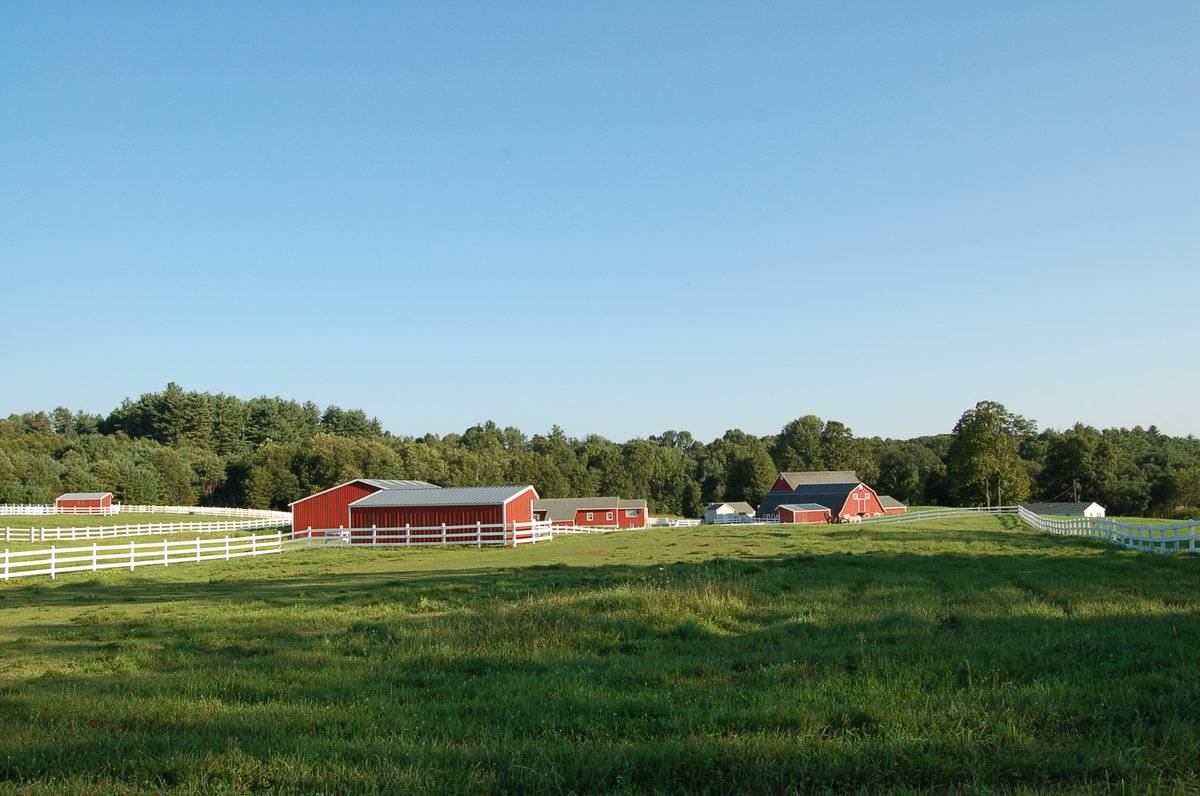
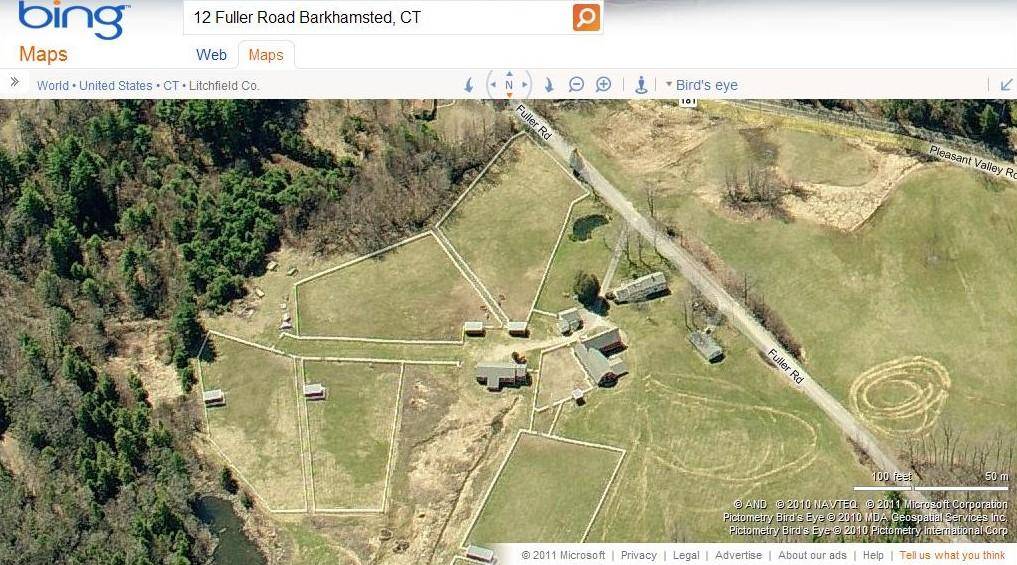
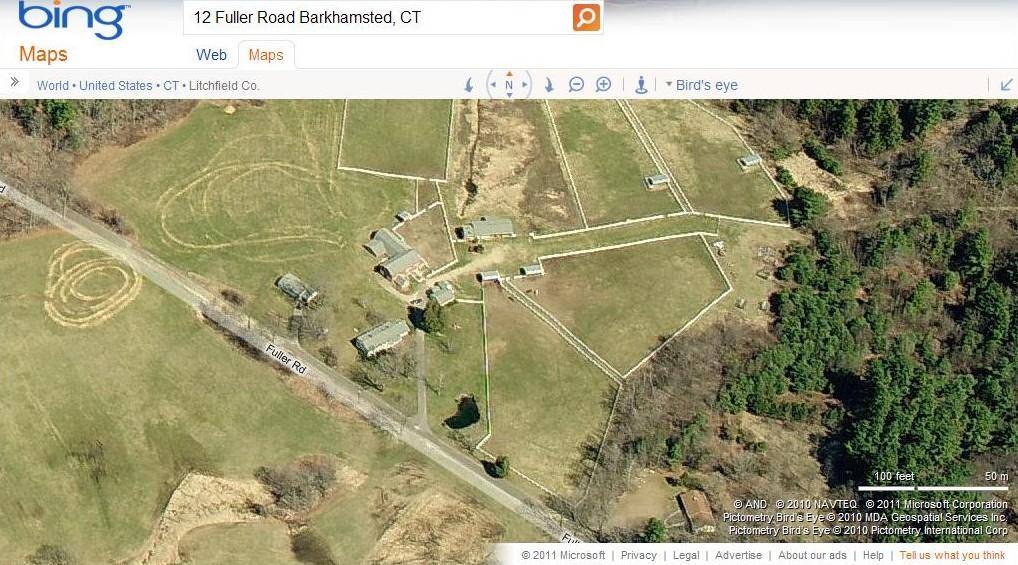
The barns sit on a 104-acre parcel of land on the north side of Fuller Road, northwest of its intersection with Pleasant Valley Road (Rte 181.) Southwest of the barns is the house with which they are associated, built in 1849. Nearby are clustered several sheds of varying sizes and configurations. Most of the remaining open land on the property is divided into grazing areas and paddocks delineated by post and rail fencing. The surrounding landscape is rural, with heavily wooded areas mixed with agricultural and residential use. Fuller Road is in Litchfield County, 1 1/2 miles west of the Barkhamsted Reservoir, and approximately two miles north of New Hartford Center.
M/P 412317- Typology & Materials
-
Building Typology
Materials
Structural System
Roof materials
Roof type
Approximate Dimensions
Gable 62'x 25' Gambrel 32.5'x 77'
- Source
-
Date Compiled
03/20/2011
Compiled By
C. Wilkinson & T. Levine, reviewed by CT Trust
Sources
Field notes and photographs by Paul Hart & John Greaser - 7/27/2010
Town of Barkhamsted Assessor’s Record:
http://www.visionappraisal.com
Parcel ID: 412317Aerial Mapping:
http://maps.google.com accessed 3/19/2011
http://www.bing.com/maps accessed 3/19/2011Sexton, James, PhD, Survey Narrative of the Connecticut Barn, Connecticut Trust for Historic Preservation, Hamden, CT, 2005, http://www.connecticutbarns.org/history.
Visser, Thomas D., Field Guide to New England Barns and Farm Buildings, University Press of New England, 1997. - PhotosClick on image to view full file
-