Barn Record Barkhamsted
RETURN TO ‘FIND BARNS’- Building Name (Common)
- Griswold Farm
- Building Name (Historic)
- Tiffany Farm
- Address
- 142 Park Road, Barkhamsted
- Typology

- Overview
-
Designations
n/a
Historic Significance
Architectural description:
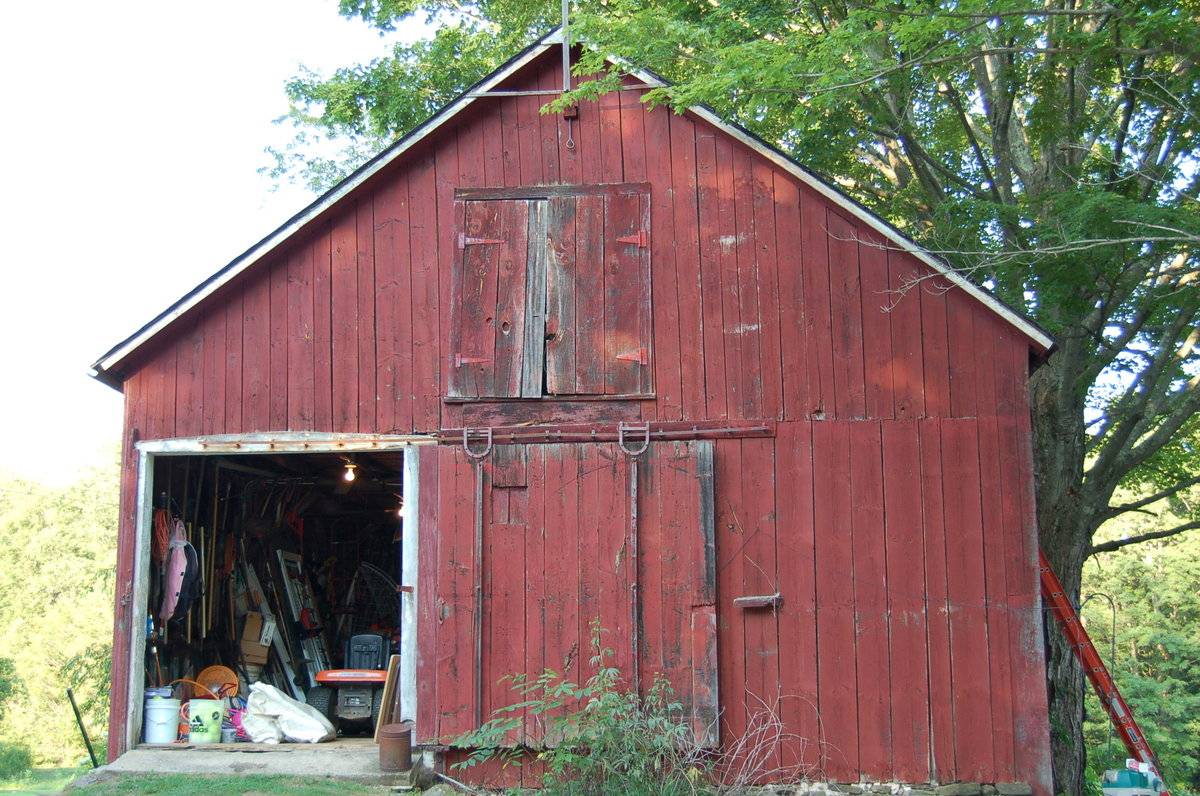
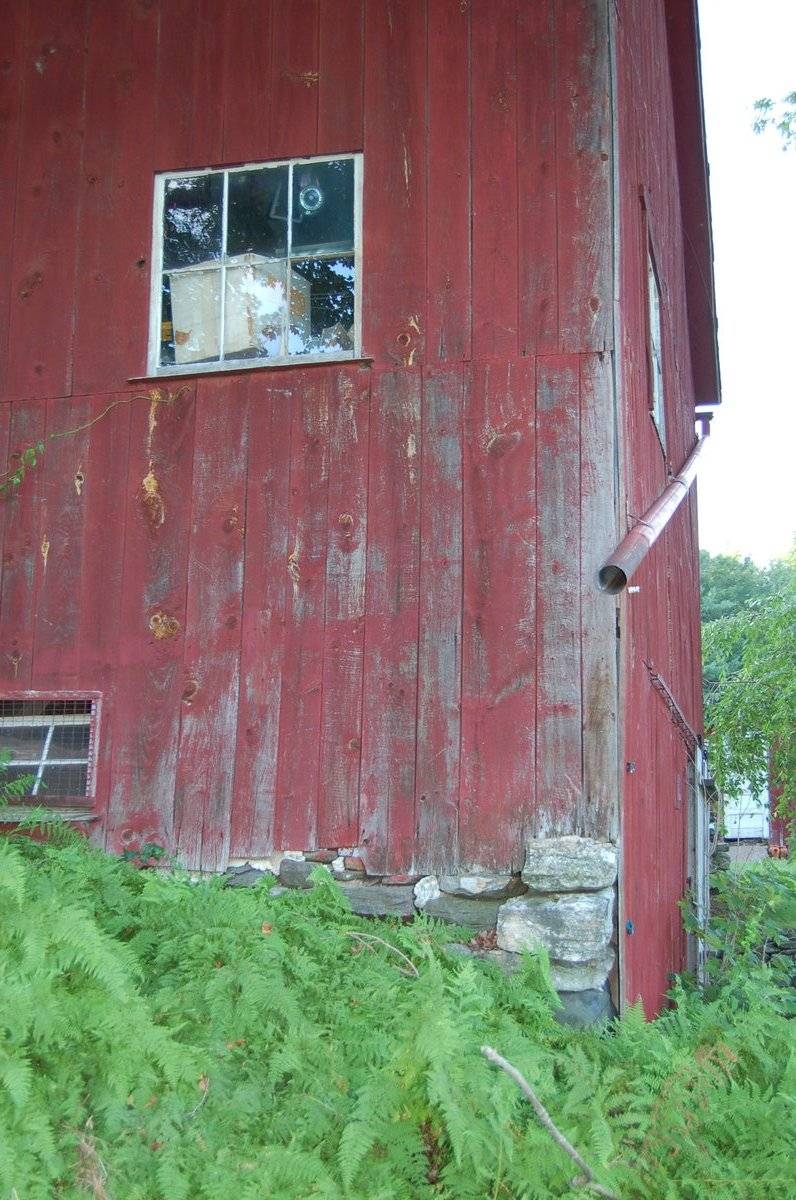
This is a 1 ½-story, gable-roof, gable-entry barn. The main façade faces west, and the ridge-line is perpendicular to Park Road, which at this point runs north-south. The main entrance is an over-sized sliding exterior door located at the north corner and reached by a slightly inclined concrete ramp. In the gable-attic is a pair of hay doors. A decorative truss sits at the peak of the gable. South of the ramp, the grade declines gradually to reveal the field stone foundation. The grade declines sharply at the south corner revealing a basement level. The south eave-side of the barn has a stable window located east of the center in the basement level. On the main level of the south eave-side of the barn is a six-pane stable window near the east corner.
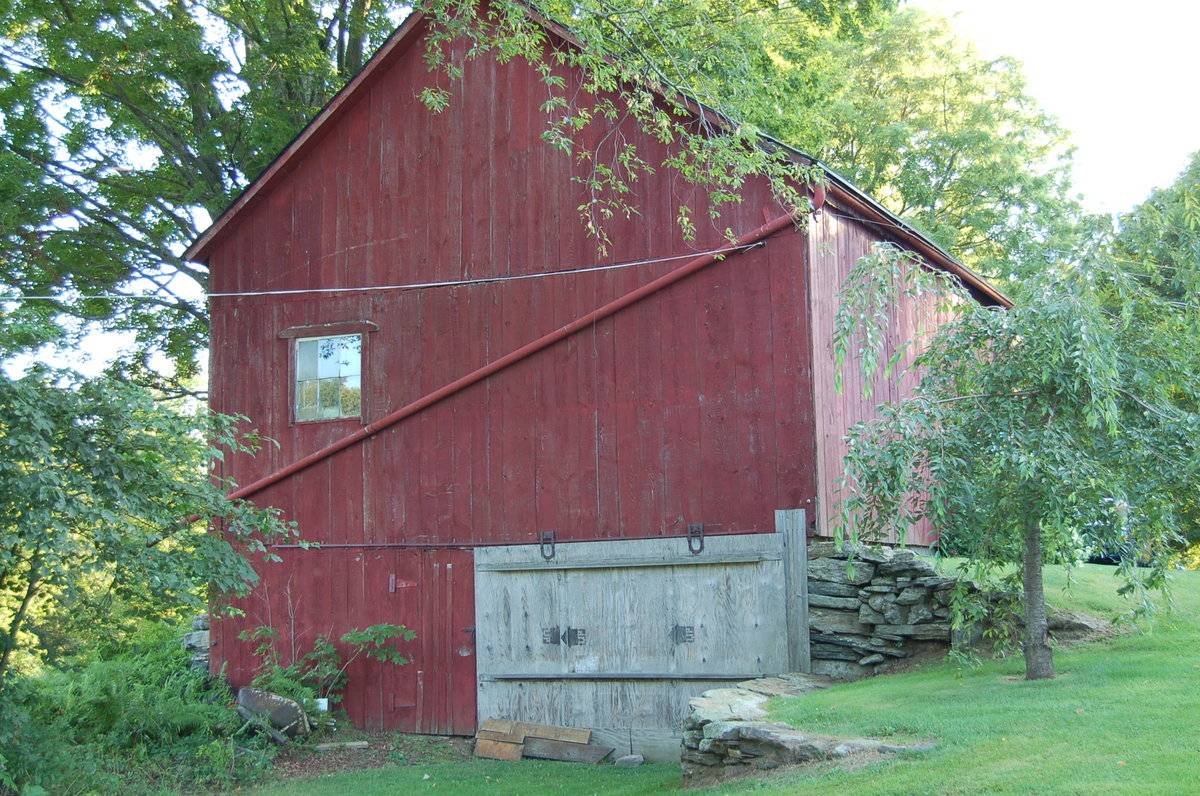
At the east gable-end of the barn, the grade, which naturally declines south, was altered to drop sharply at the north corner and is reinforced by a short fieldstone retaining wall that runs perpendicular to the barn’s gable-end foundation. Next to the retaining wall, to permit access to the basement level, is a sliding exterior door. Off-center to the south is a pass-through door. The main level of the gable-end is crossed by a downspout that runs diagonally from the end of a gutter at the north corner to a point halfway between the girt-line and the foundation at the south corner. Towards the south corner of the main level is a six-pane stable window with trim. The north eave-side of the barn appears to have an over-sized, sliding exterior door reached by an inclined earthen ramp retained by fieldstone. Above the door appears to be a transom window. The barn has vertical, flush-board siding painted red with some white trim, including the sliding door in the east gable-end. The roof has a slight projecting overhang and is covered with asphalt shingles. The foundation is fieldstone.
Historical significance:The New England barn or gable front barn was the successor to the English barn and relied on a gable entry rather than an entry under the eaves. The gable front offered many practical advantages. Roofs drained off the side, rather than flooding the dooryard. With the main drive floor running parallel to the ridge, the size of the barn could be increased to accommodate larger herds by adding additional bays to the rear gable end. Although it was seen by many as an improvement over the earlier side-entry English Barn, the New England barn did not replace its predecessor but rather coexisted with it; both types continued to be constructed.
The 19th century also saw the introduction of a basement under the barn to allow for the easy collection and storage of a winter’s worth of manure from the animals sheltered within the building. The bank barn is characterized by the location of its main floor above grade, either through building on a hillside or by raising the building on a foundation. This innovation, aided by the introduction of windows for light and ventilation, would eventually be joined by the introduction of space to shelter more animals under the main floor of the barn.
Field Notes
Historically this was part of the larger Tiffany Farm. There was a large barn to the west of the house and parts of the foundation are still visible.
- Use & Accessibility
Use (Historic)
Use (Present)
Exterior Visible from Public Road?
Yes
Demolished
n/a
Location Integrity
Unknown
- Environment
Related features
Environment features
Relationship to surroundings
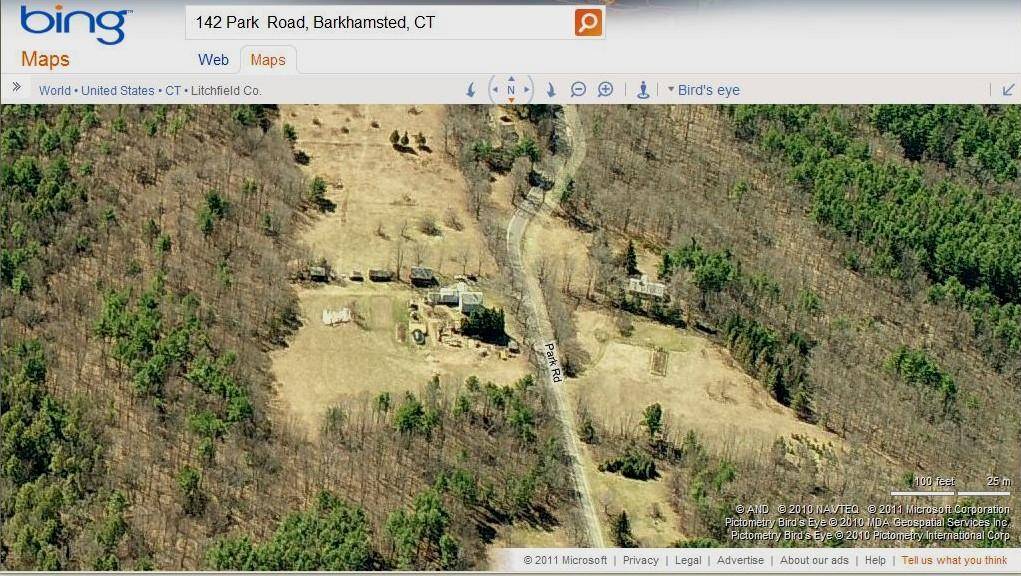
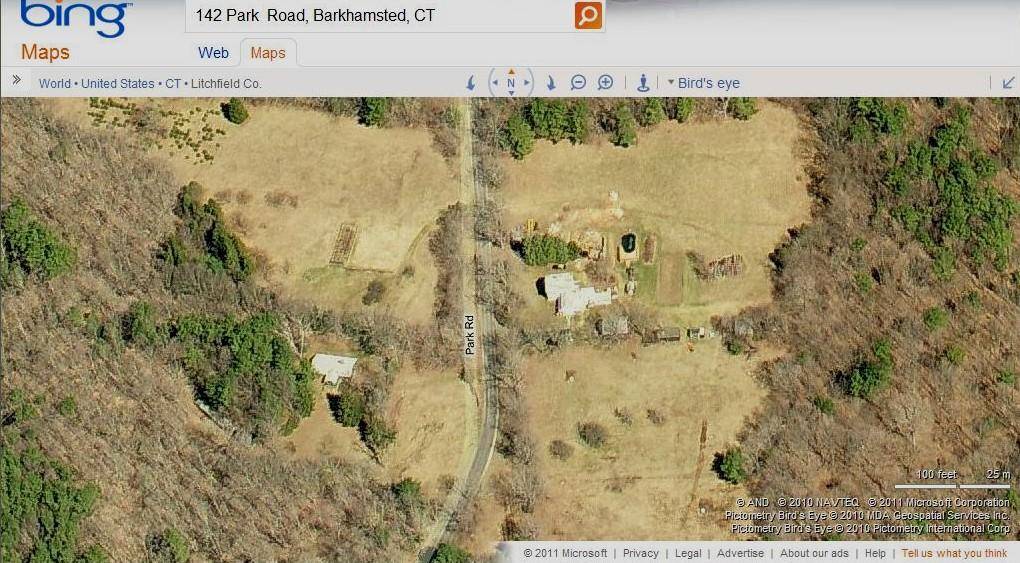
The barn sits on a 37.70-acre parcel of land on the east side of Park Road in Barkhamsted, Litchfield County. The property is approximately five miles northeast of Winsted, and is located between People’s State Forest to the east, and Barkhamsted Reservoir to the west. The acreage is mostly open land, but bordered by densely wooded areas. The house, built in 1870, is north of a long entrance drive that runs perpendicular to Park Road. The barn is situated southeast of the house on the south side of the drive. Stretching east of the barn, and parallel to the drive, is a row of of agricultural outbuildings of varying sizes. The surrounding area is rural and heavily wooded, with small pockets of open land that is largely residential.
M/P 22224
- Typology & Materials
-
Building Typology
Materials
Structural System
Roof materials
Roof type
Approximate Dimensions
25' x 31'
- Source
-
Date Compiled
03/23/2011
Compiled By
C. Wilkinson & T. Levine, reviewed by CT Trust
Sources
Field notes and photographs by Paul Hart & John Greaser - 7/20/2010
Town of Barkhamsted Assessor’s Record:
http://www.visionappraisal.com
Parcel ID: 22224Aerial Mapping:
http://maps.google.com accessed 3/22/2011
http://www.bing.com/maps accessed 3/23/2011Sexton, James, PhD, Survey Narrative of the Connecticut Barn, Connecticut Trust for Historic Preservation, Hamden, CT, 2005, http://www.connecticutbarns.org/history.
Visser, Thomas D., Field Guide to New England Barns and Farm Buildings, University Press of New England, 1997. - PhotosClick on image to view full file
-