Barn Record Oxford
RETURN TO ‘FIND BARNS’- Building Name (Common)
- n/a
- Building Name (Historic)
- n/a
- Address
- 124 Moose Hill Road, Oxford
- Typology
- Overview
-
Designations
n/a
Historic Significance
Architectural description:
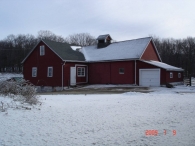
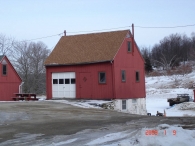
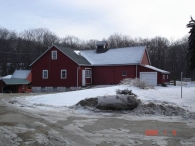
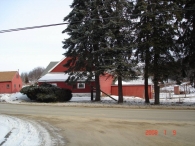
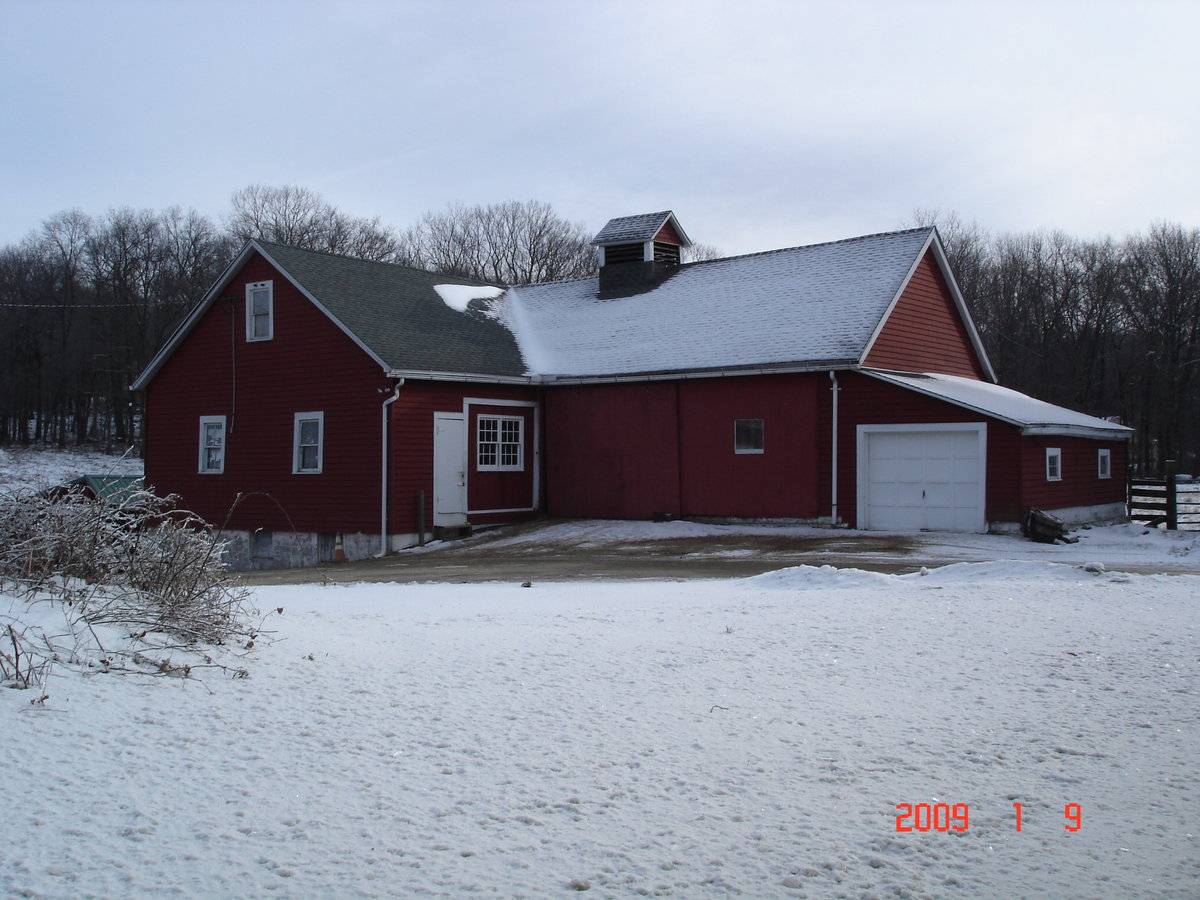
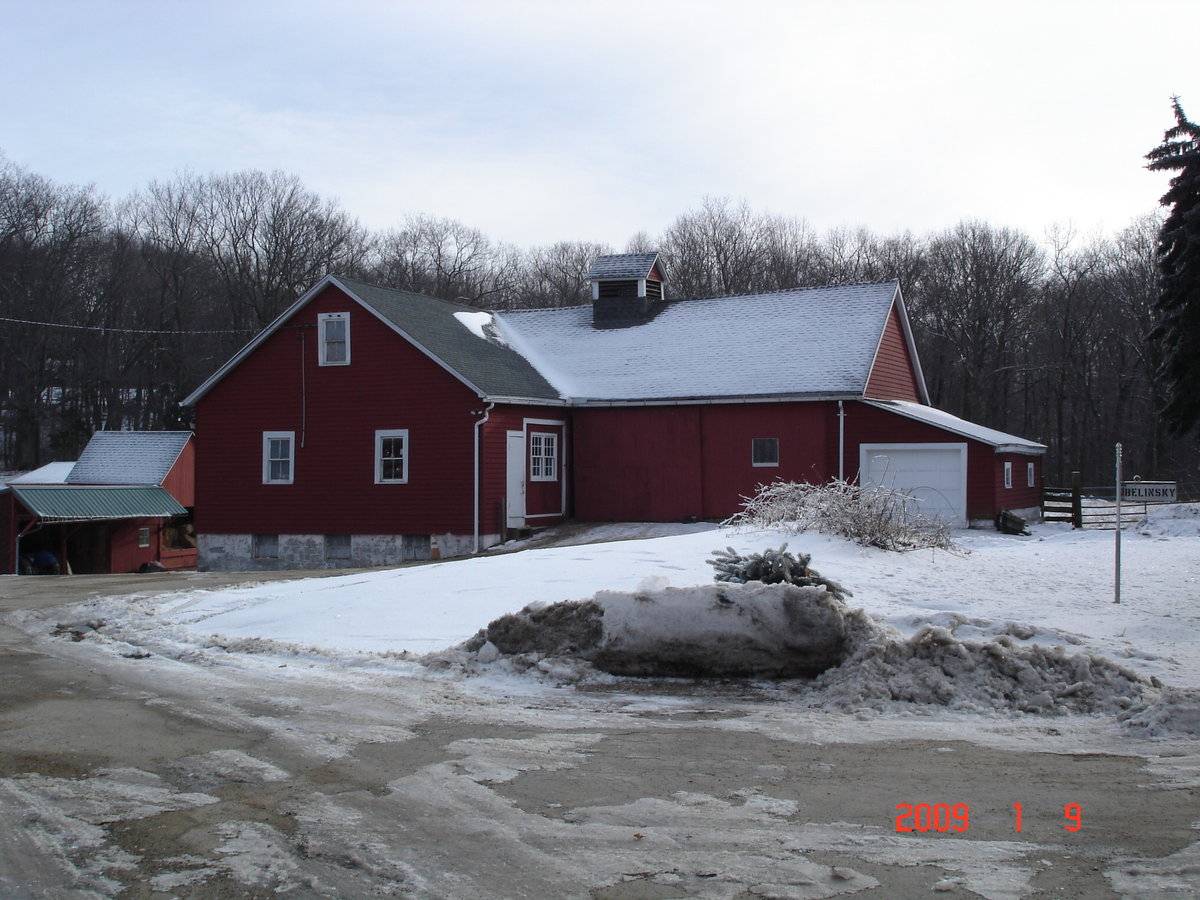
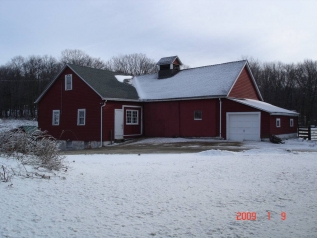
Barn I - This is a three bay, 1 1/2-story eave-entry barn with one 1 1/2-story gable-roof addition, one 1-story gable roof addition, and one 1-story shed-roof addition. The main facade faces northwest and the ridge-line of the barn is perpendicular to Moose Hill Road which runs diagonally southeast to northwest. The main facade has a set of double-height sliding barn doors which appear to be mounted on overhead exterior hardware and are located in the center bay. There is a square, window in the west bay of the facade. To the west is the west side of the shed-roof addition (addition I) which has an overhead garage door taking up the majority of this side.
Extending out to the northwest from the north bay of the northwest eave-side of the barn is the 1 1/2-story gable-roof addition (addition II). The peak of this addition meets the peak of the barn. The grade declines sharply along the northwest side of the addition from the west corner to the north corner so that the basement wall is exposed. There are three six-pane windows equally spaced, located just at the top of the basement wall. The northwest gable-end of addition II has two-over-two double-hung windows symmetrically located on the first floor. A single two-over-two double-hung window is centered in the gable-attic of this side.
The northeast, gable-side of the barn has three window-sized openings at its lower level, two towards the north corner and one towards the east. There appears to be a pass-through door at the extreme east corner. To the north is the eave-side of addition II. There appears to be two window-sized openings on the lower level located towards the east corner and a pass-thorough door at the north corner. On the upper level towards the north corner appears to be one of the two-over-two double-hung windows similar to those on the northwest gable-side. Continuing to the east on the northeast gable-side of the barn is the 1-story gable-roof addition (addition III). The peak of this roof begins below the eave of the barn roof as the main and only level of this addition appears to be a level lower than that of the main barn. There are no openings on the northeast eave-side of this addition.
The southeast eave-side of the barn appears to have no openings. Addition III, which extends from the east bay of the barn to the southeast, is open for the extent of this facade with a gate across the opening. The southwest gable-end of the barn is covered at the main level by addition I. There are two eight-pane windows equally spaced across the main level of the southwest eave-side of addition I. The southwest eave-side of addition III, which is set back, has no openings. Continuing to the west is addition II, extending to the northwest and setback. It has a pass-through door towards the west corner and a pair of six-over-six double-hung windows which appear to be set into a former barn door opening, now sealed. A square cupola with louvers on all four sides and a gable-roof with a ridge-line following that of the barn is centered on the gable-roof of the barn. The clapboard siding on the body of the barn is painted red with white trim. The cement block basement walls are painted white. Addition III has vertical siding painted red. The roof is clad in asphalt shingles.
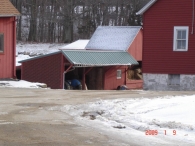
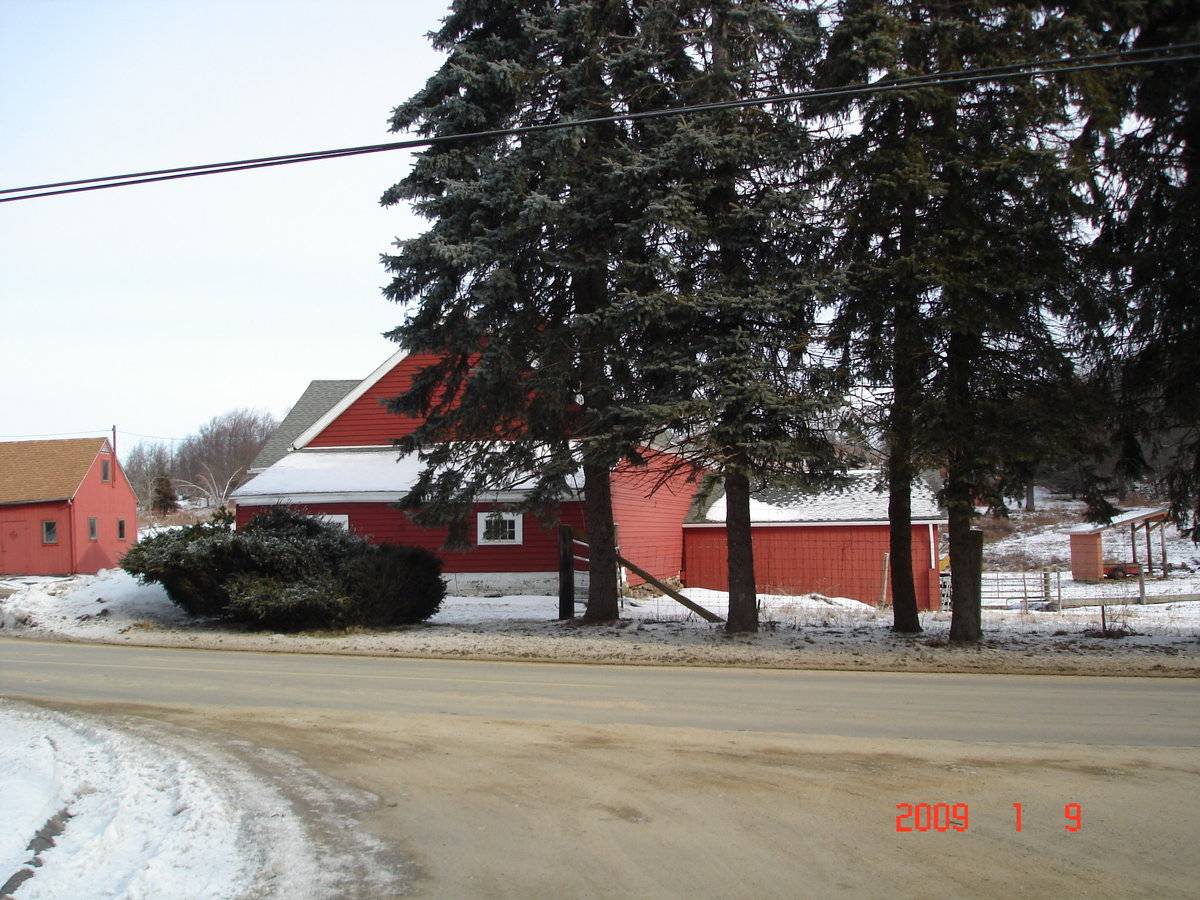
Barns IIa and IIb - Continuing to the northwest on Moose Hill Road are two small 1 1/2-story eave-entry barns with gable roofs whose main facades face southwest and whose ridge-lines are parallel to the road.
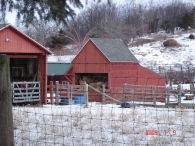
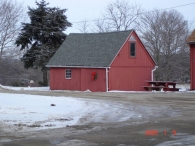
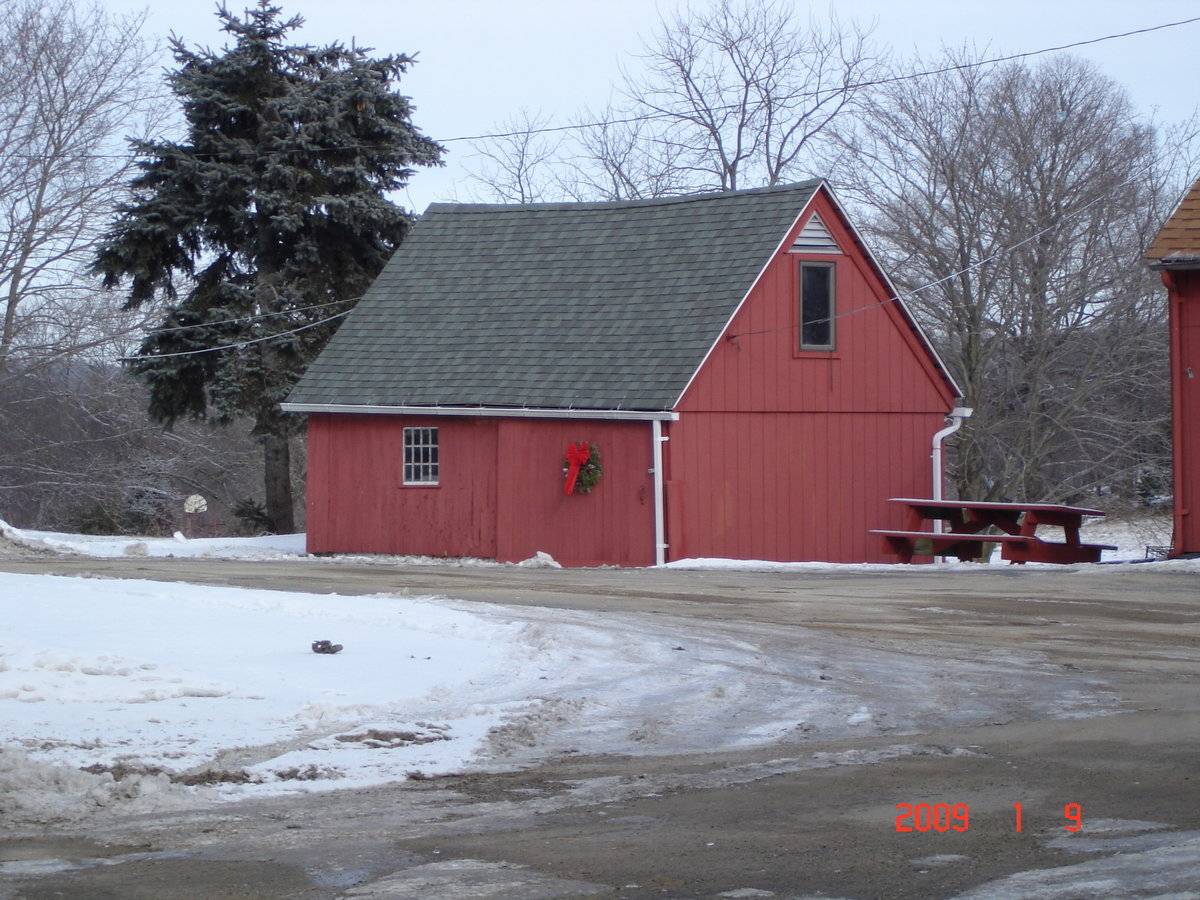
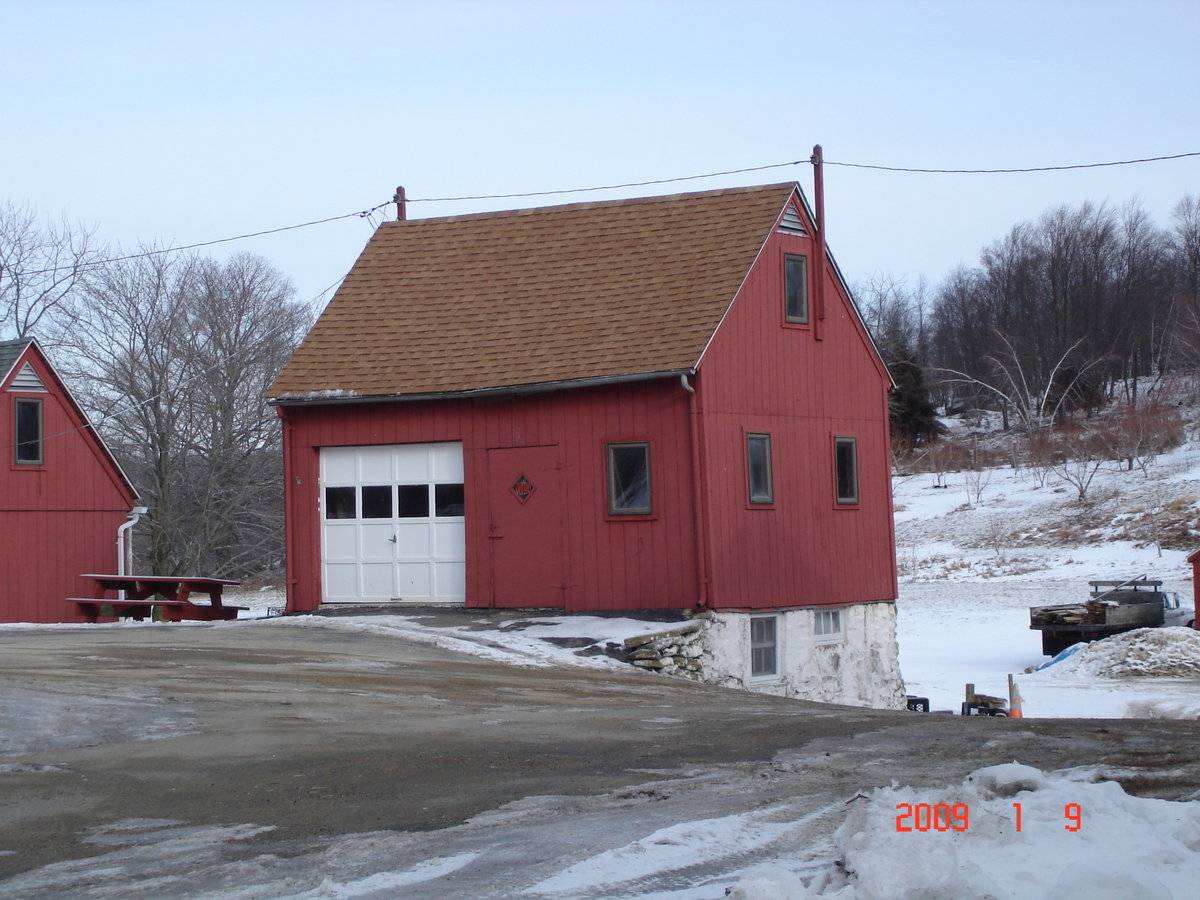
Barn IIa - The main eave-side facade has a pass-through door just south of center with a small diamond-shaped window. A single-pane window is located in the southern half of the facade while an overhead garage door is located in the western half of the facade. The grade declines sharply along the northwest elevation of the barn from the west corner to the north corner so that the stone basement wall is exposed. There appear to be no openings on the northwest gable-end of the barn. On the northeast eave-side of the barn, the stone basement wall is fully exposed. There appear to be a few small window openings in the basement wall toward the north corner and a pass-through door at the east corner. There appears to be a small window in the west half of the facade on the main level. On the southeast gable-end the grade declines from the south corner to the east corner exposing the stone basement wall. There is a three-over-three double-hung window at the south half and a three-pane window at the east half of the facade of the basement wall. There are two single-pane windows symmetrically located on the main level of the facade. A single, single-pane window is centered in the gable-attic of this side with a triangular louvered vent directly above the window. The barn is clad in vertical siding painted red, while the gutters and some minor accents painted an accent of white, and the stone foundation and basement walls are painted white. The roof is clad in asphalt shingles.
Barn IIb - The main eave-side has a sliding barn door located in the south half of the facade with no visible hardware while a twelve-pane window is located in the west half of this facade. The grade declines along the northwest elevation of the barn from the west corner to the north corner slightly exposing the stone foundation wall. On the northwest gable-end of the barn, there are two windows symmetrically located on the main level. The northeast, eave-side appears to have no openings. The southeast gable-end has one single-pane window centered in the gable attic with a triangular louvered vent located just above the window. The vertical siding on the barn is painted red. The gable roof is clad in asphalt.
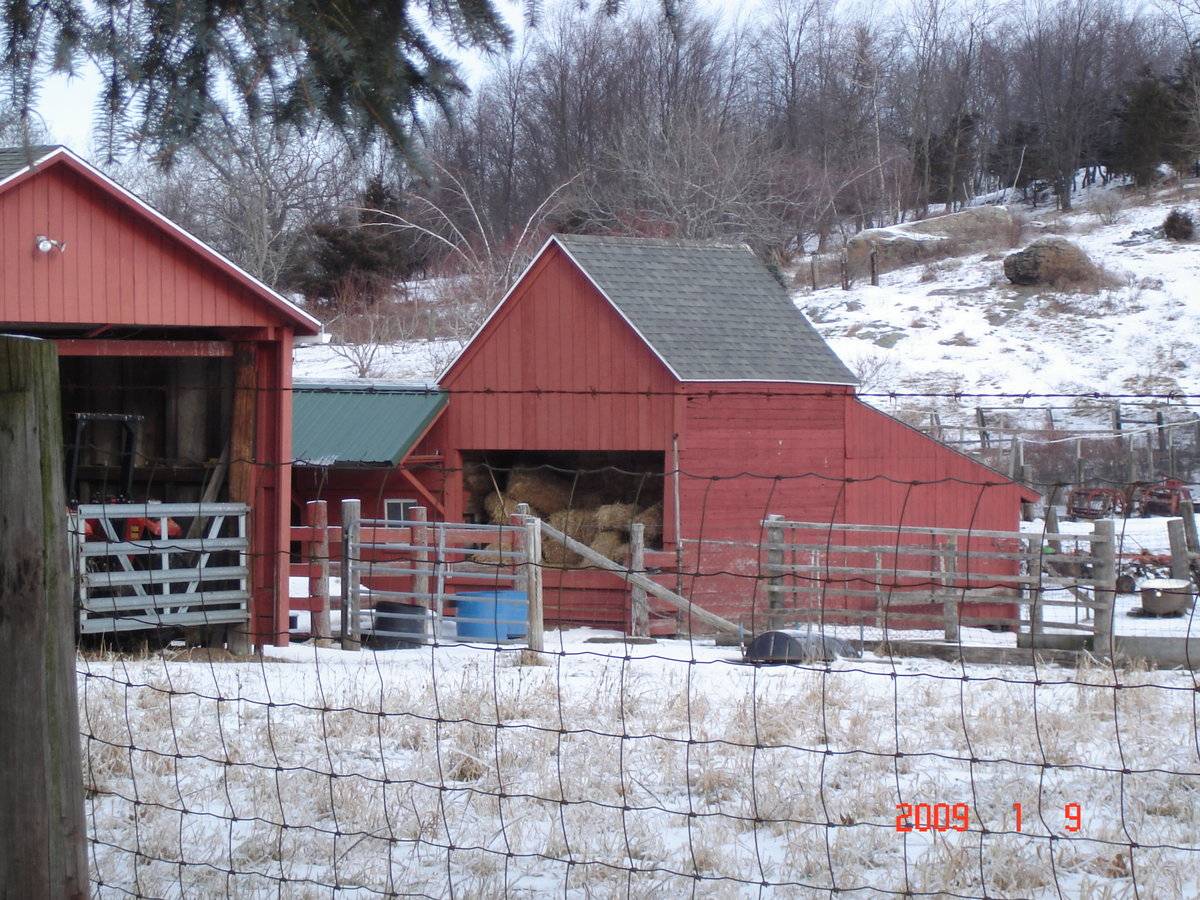
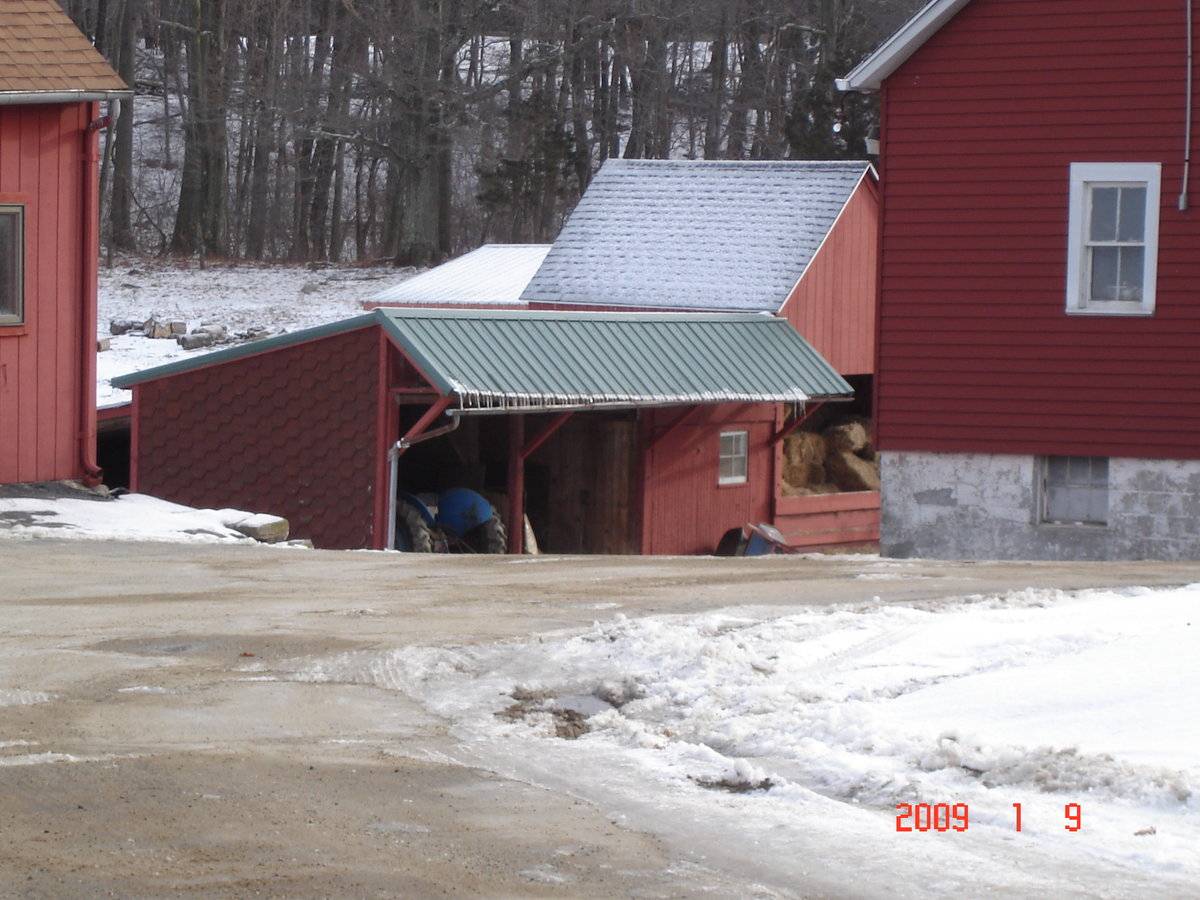
Barn III - This barn is located behind Barn I and is a small 1-story gable-entry barn with numerous additions. The main facade faces southwest and its ridge-line is perpendicular to Moose Hill Road. There is a large opening on the main level with no door which takes up the entire facade of the southwest gable-side of the barn. To the west is a 3 bay 1-story shed-roof addition (addition I) with a small four-pane window in its south bay and a large 2-bay opening in its center and west bay. A small shed-roof extends the entire width of this addition. The northwest side of addition I has no openings and is clad in hexagonal asphalt shingles. The roof slopes down from the southwest to the northeast. A shed-roof addition (addition II) is attached to the northeast side of addition I, encompassing the entire side. The northeast elevation of addition II appears to have no openings. To the east of addition II is another shed-roof addition (addition III) which is directly behind the barn itself. The roof of addition III also slopes from the southwest to the northeast and the northeast elevation of this addition appears to be open. The southeast eave-side of the barn, and the southeast side of addition III have no openings. The barn is a combination of vertical and horizontal siding. The roof of the barn is clad in asphalt shingles while the roofs of the shed-roof additions appear to be clad in metal.
Historical significance:The oldest barns still found in the state are called the “English Barn,” “side-entry barn,” “eave entry,” or a 30 x 40. They are simple buildings with rectangular plan, pitched gable roof, and a door or doors located on one or both of the eave sides of the building based on the grain warehouses of the English colonists’ homeland. The name “30 by 40” originates from its size (in feet), which was large enough for 1 family and could service about 100 acres. The multi-purpose use of the English barn is reflected by the building’s construction in three distinct bays - one for each use. The middle bay was used for threshing, which is separating the seed from the stalk in wheat and oat by beating the stalks with a flail. The flanking bays would be for animals and hay storage. The bank barn is characterized by the location of its main floor above grade, either through building on a hillside or by raising the building on a foundation. This innovation, aided by the introduction of windows for light and ventilation, would eventually be joined by the introduction of space to shelter more animals under the main floor of the barn.
The New England barn or gable front barn was the successor to the English barn and relies on a gable entry rather than an entry under the eaves. The gable front offers many practical advantages. Roofs drain off the side, rather than flooding the dooryard. With the main drive floor running parallel to the ridge, the size of the barn could be increased to accommodate larger herds by adding additional bays to the rear gable end. Although it was seen by many as an improvement over the earlier side-entry English Barn, the New England barn did not replace its predecessor but rather coexisted with it.
Field Notes
n/a
- Use & Accessibility
Use (Historic)
Use (Present)
Exterior Visible from Public Road?
Yes
Demolished
n/a
Location Integrity
Unknown
- Environment
Related features
Environment features
Relationship to surroundings
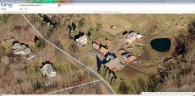
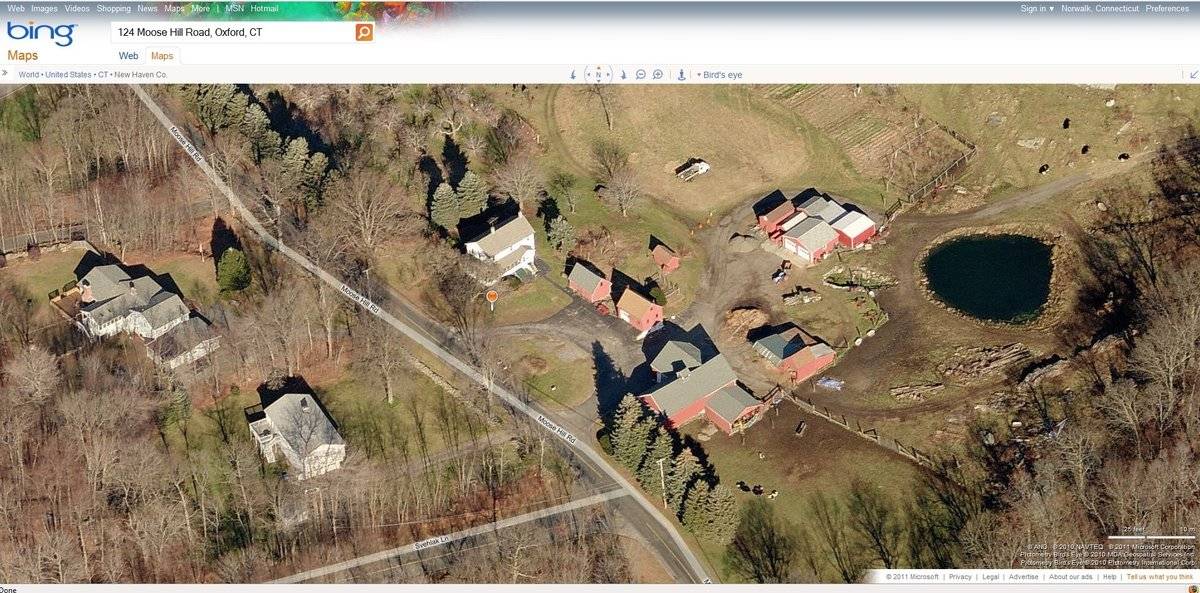
This property is located south of the town of Oxford, in a rural/residential area. The barn is located on 89.5 acres that consists of a two houses and several barns or garages. Barn I is set back approximately 30 feet from Moose Hill Road with its main ridge-line perpendicular to the road. Barn IIa and IIb are set back approximately 90 feet from Moose Hill Road and approximately 35 feet away from Barn I. Barn III is located approximately 30 feet directly behind Barn I. Approximately 40 feet behind Barns IIa and IIb is a small shed of unknown purpose. Clustered at the end of a driveway which runs between Barn I and Barn IIa and set back approximately 115 feet behind Barn IIa is a group of six small 1-story gable-roof barns and/or garages. The house which is set back approximately 35 feet from the road is 150 feet northwest of Barn I, is Colonial in style and was built in 1900. Its main gable ridgeline runs perpendicular to the road. The remainder of the property is composed of a combination of open fields and stands of deciduous trees and one large pond. The house is clad in aluminum siding and the gable roof is clad with architectural shingles.
Book 93, Page 1108, Parcel No. 29/72/14, Account (www.cogcnvgis.com):B0031900 (data.visoinappraisal.com): Z9000063
- Typology & Materials
-
Building Typology
Materials
Structural System
n/a
Roof materials
Roof type
Approximate Dimensions
Barn I: 1752 sq. ft., Barn IIa: approximately 300 sq. ft., Barn IIb: approximately 300 sq. ft., Barn III: approximately 100 sq. ft.
- Source
-
Date Compiled
03/21/2011
Compiled By
R. Rothbart & T. Levine, reviewed by CT Trust
Sources
Field notes and photographs by Dottie Debisschop date 10/17/2010.
Town of Oxford Assessor’s Record:
http://www.cogcnvgis.com/Oxford/ags_map/Vision Appraisal Online Database:
http://data.visionappraisal.com/OxfordCT/
Parcel ID: 29/72/14Aerial Mapping:
Google Earth: 8/30/2010
http://maps.google.com
http://www.bing.com/maps accessed 03/17/2010.Sexton, James, PhD, Survey Narrative of the Connecticut Barn, Connecticut Trust for Historic Preservation, Hamden, CT, 2005, http://www.connecticutbarns.org/history.
Visser, Thomas D., Field Guide to New England Barns and Farm Buildings, University Press of New England, 1997.
- PhotosClick on image to view full file
-