Barn Record Kent
RETURN TO ‘FIND BARNS’- Building Name (Common)
- Rock Cobble Farm
- Building Name (Historic)
- Chase Farm
- Address
- 59 Peet Hill Road, Kent
- Typology
- Overview
-
Designations
n/a
Historic Significance
Architectural description:
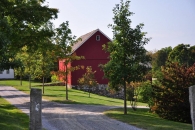
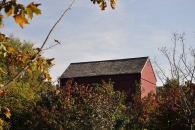
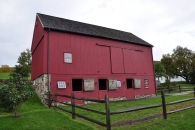
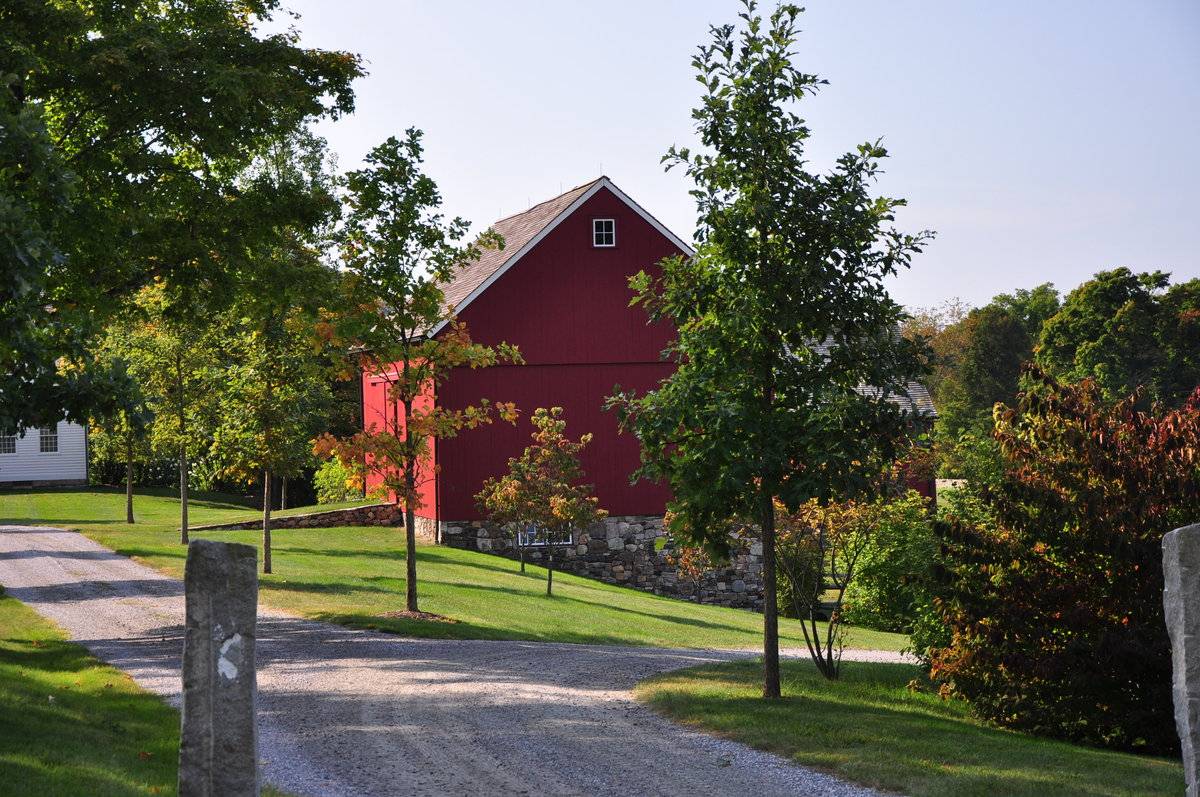
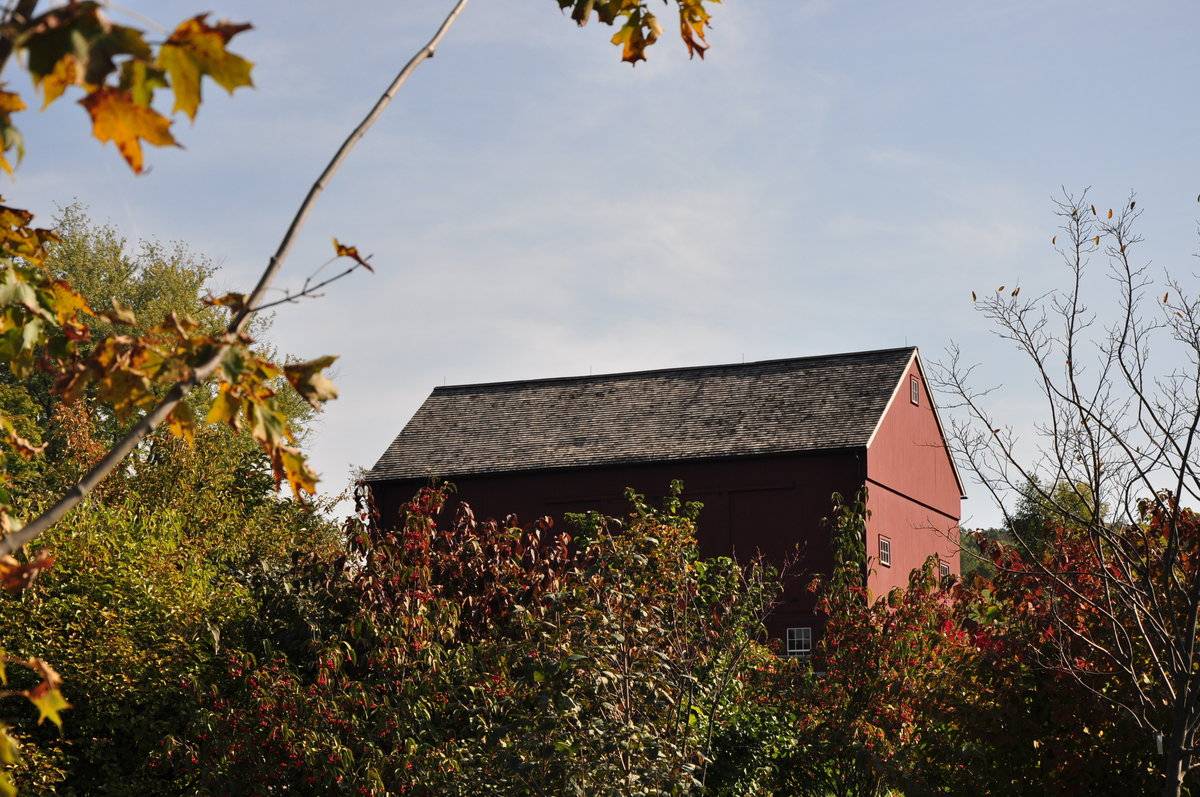
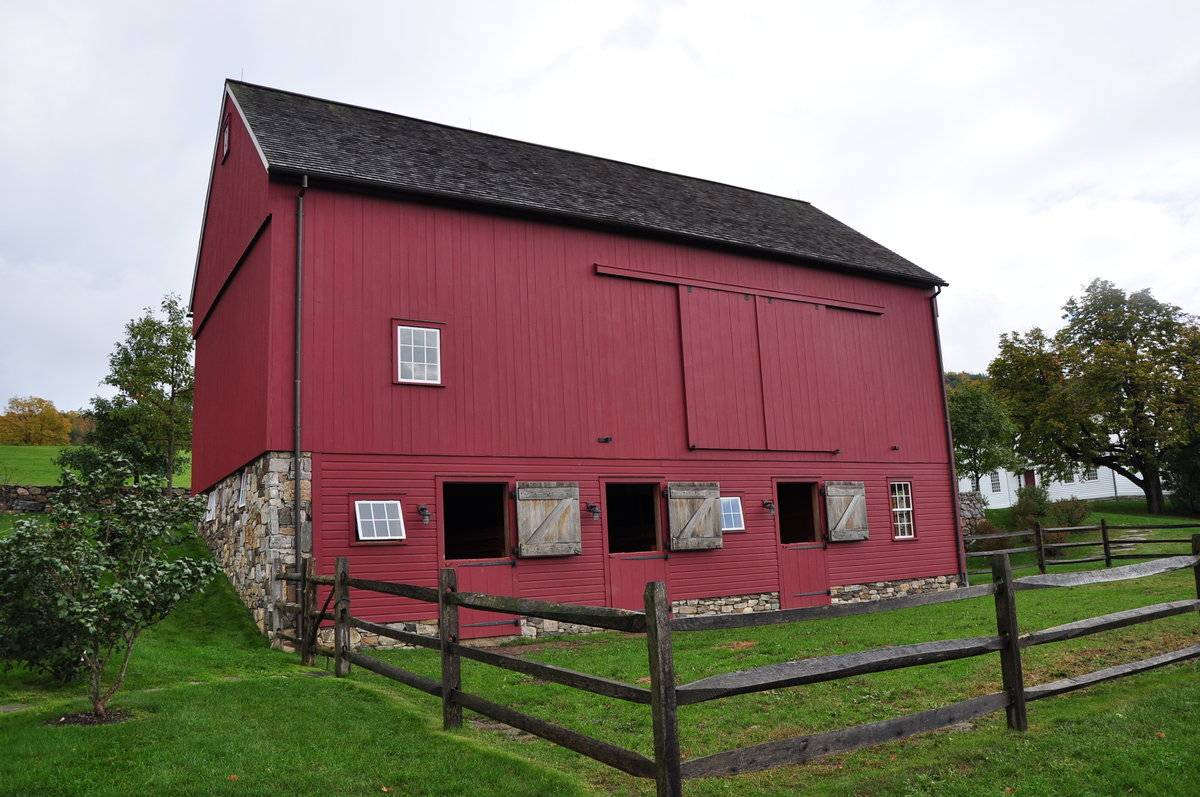
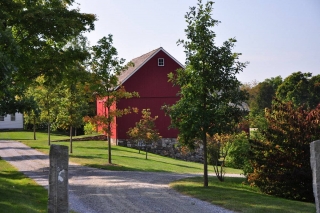
This is a 1 1/2-story eave-entry bank barn clad in vertical siding with the main facade facing predominantly east away from Peet Hill Road. The ridge line runs predominantly north-south diagonal to Peet Hill Road which at this point runs diagonally from northeast to southwest. A narrow, low ramp edged with fieldstone leads to the main entry on the east facade which appears to be a pair of sliding double doors mounted on an exterior track located slightly south of center. The south gable-end elevation appears to be similar to the north elevation as the grade decreases sharply toward the west. At the basement level, the west eave-side elevation is composed of three Dutch doors somewhat symmetrically spaced flanked by a eight-pane horizontal window to the north and a six-over-six double-hung window on the south. Another window is located just south of the central Dutch door. A fieldstone foundation is visible at the basement level. On the main level is a pair of double sliding doors with exterior track in the south bay and a single square glazed divided-light window in the north bay. On the north gable-end of the barn, the grade decreases sharply toward the west eave-side of the barn so that the fieldstone base is exposed. This facade appears to have one window in the gable attic area. The vertical siding is painted red with white trim and the roof is clad in wood shingles.
Historical significance:The oldest barns still found in the state are called the “English Barn,” “side-entry barn,” “eave entry,” or a 30 x 40. They are simple buildings with rectangular plan, pitched gable roof, and a door or doors located on one or both of the eave sides of the building based on the grain warehouses of the English colonists’ homeland. The name “30 by 40” originates from its size (in feet), which was large enough for 1 family and could service about 100 acres. The multi-purpose use of the English barn is reflected by the building’s construction in three distinct bays - one for each use. The middle bay was used for threshing, which is separating the seed from the stalk in wheat and oat by beating the stalks with a flail. The flanking bays would be for animals and hay storage.
Historical background:
From Kent Historical Society: “Ore Hill - the steep road that goes up (southeast) from the foot of Geer Mt. Road. There was the Spaulding Farm off the first steep part, on the right; up a little further, on the left where the Standens live, is an old Chase farmhouse that I don’t remember as a working farm, but the lands were extensive. The Benedict farm was located where Ore Hill Road turns to dirt (and eventually joins Treasure Hill Road). Turn around there, and go back & take a left down Peet Hill Road - (the one-room schoolhouse was smack in the middle of the intersection of Ore Hill Road & Peet Hill Road - torn down in the 50s). I remember the Hoffmans, who were tenant farmers for the old Samuel Peet Farm (the big stone house is still there, on the right) - but I can’t remember who owned it when the Hoffmans worked there. Bill Litwin bought the barn on the left and converted it into a house (now Ann Bass). I think Hoffman’s house (also on the left) was razed. Further down Peet Hill was (is) Bud Chase’s farm - he & wife Caroline were part of Triple A Ranch group who played country music & square dances. Caroline’s family, the Smyrskis, also had a farm at the end of Peet Hill Road right before it joins West Meetinghouse Road (the New Milford end of Camps Flat Road).”Also according to the Kent Historical Society many farmers in the area were tobacco farmers. Among those mentioned in the above article listed as tobacco farmers were the Benedict, Chase, and Peet families.
Many of these farms in the area were purchased in the late 1990’s and early 2000’s by Ann Bass the ex-wife of an oil billionaire from Texas who purchased a number of these farms and consolidated them to form “Rock Cobble Farm” which all together equal over 1000 acres. According to a newspaper article, in an effort to “restore her land to the condition it was in during the 18th century” Ms. Bass “tore down the houses and destroyed all the history” - two different perspectives. Point being, the barns and other structures on these properties may have been moved or altered.
One of the agricultural endeavors of Ms. Bass and a Ms. Cynthia Creech is the preservation of a rare and endangered breed of cattle, the Randall, which can be raised for both dairy and beef purposes.
Field Notes
30 X 40 post and beam vertical siding wood shingle roof gable English bank barn. Horse stalls at lower level hay storage above.
- Use & Accessibility
Use (Historic)
Use (Present)
Exterior Visible from Public Road?
Yes
Demolished
n/a
Location Integrity
Unknown
- Environment
Related features
Environment features
Relationship to surroundings
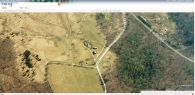
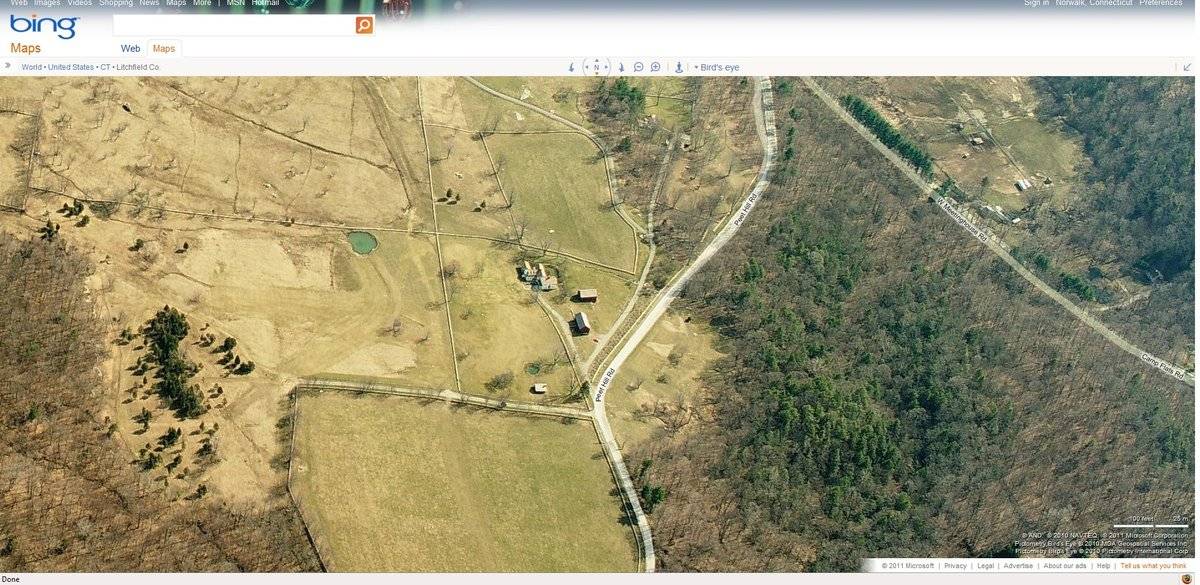
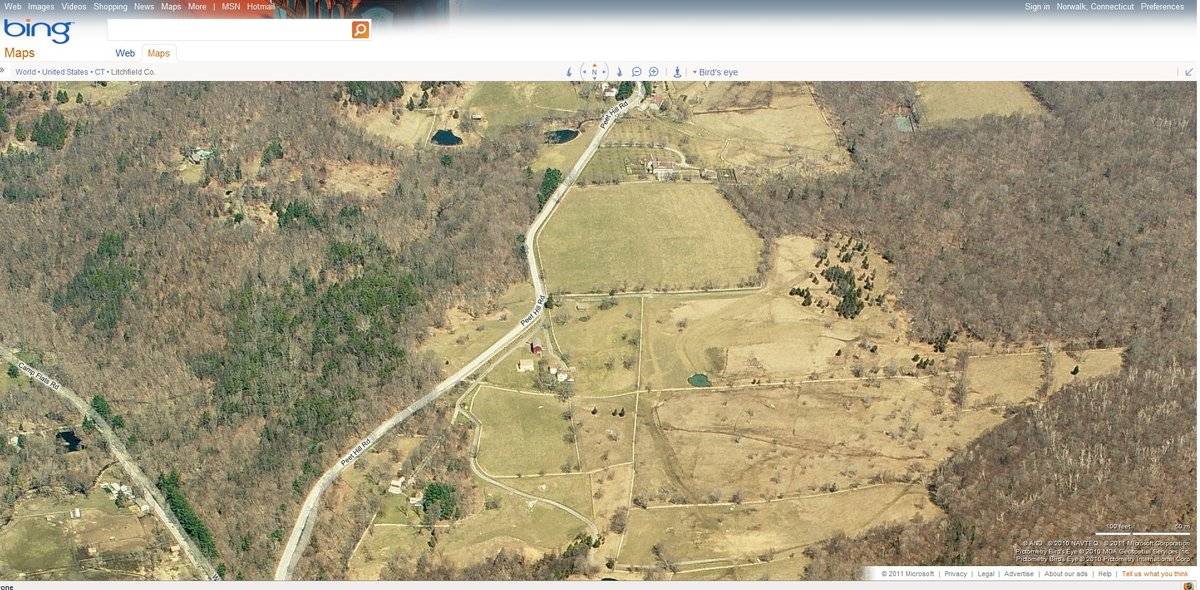
This property is located to the southwest of Kent among rolling hills, in a rural residential area with a few scattered farms. The barn is located on a 50.01-acre parcel that consists mainly of woodlands and open fields, a large house and another barn. The barn is located approximately 150 feet east of Peet Hill Road on a slight rise. A second barn is located 120 feet to the southwest of this barn with its ridgeline running east-west. Another 175 feet away to the southeast is a large “L”-shaped house, whose main “L” is perpendicular to the barn, running east-west. A garage extends out perpendicularly from the second “L’ of the house and yet another “L’ extends out behind the garage. All of these buildings are set in open pasture dotted with a few ponds and evergreen and deciduous trees.
Map 12, Block 33, Lot 8- Typology & Materials
-
Building Typology
Materials
Structural System
Roof materials
Roof type
Approximate Dimensions
1200 sq. ft., 30 x 40
- Source
-
Date Compiled
02/23/2011
Compiled By
R. Rothbart & T. Levine, reviewed by CT Trust
Sources
Field notes by Dick Lindsey and photographs by Joan Tomaszewski date 10/12/2010.
Vision Appraisal Online Database. http://data.visionappraisal.com/KentCT
Aerial Mapping:
Google Earth: 3/301991 - 8/30/2010
http://maps.google.com
http://www.bing.com/maps accessed 02/23/2010.Sexton, James, PhD, Survey Narrative of the Connecticut Barn, Connecticut Trust for Historic Preservation, Hamden, CT, 2005, http://www.connecticutbarns.org/history.
Visser, Thomas D., Field Guide to New England Barns and Farm Buildings, University Press of New England, 1997.
Kent Historical Society Article on Agriculture: http://www.kenthistoricalsociety.org/the-history-of-agriculture-in-kent.htm
Kent Historical Society Article on Tobacco Growing: http://www.kenthistoricalsociety.org/tobacco-growing-in-the-housatonic-valley.htmNew York Times Article on Ann Bass, date 5/18/2007: http://www.nytimes.com/2007/05/18/nyregion/18bass.html
Kent Good Times Dispatch Article on Randall Cattle: http://www.randallcattleregistry.org/page10G.html, date 12/2/2005 - PhotosClick on image to view full file
-