Barn Record Scotland
RETURN TO ‘FIND BARNS’- Building Name (Common)
- (Part 1 of 2)
- Building Name (Historic)
- n/a
- Address
- 520 Bass Road, Scotland
- Typology
- Overview
-
Designations
n/a
Historic Significance
Architectural description:
There are three structures of note:
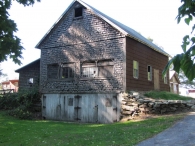
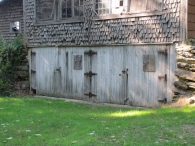
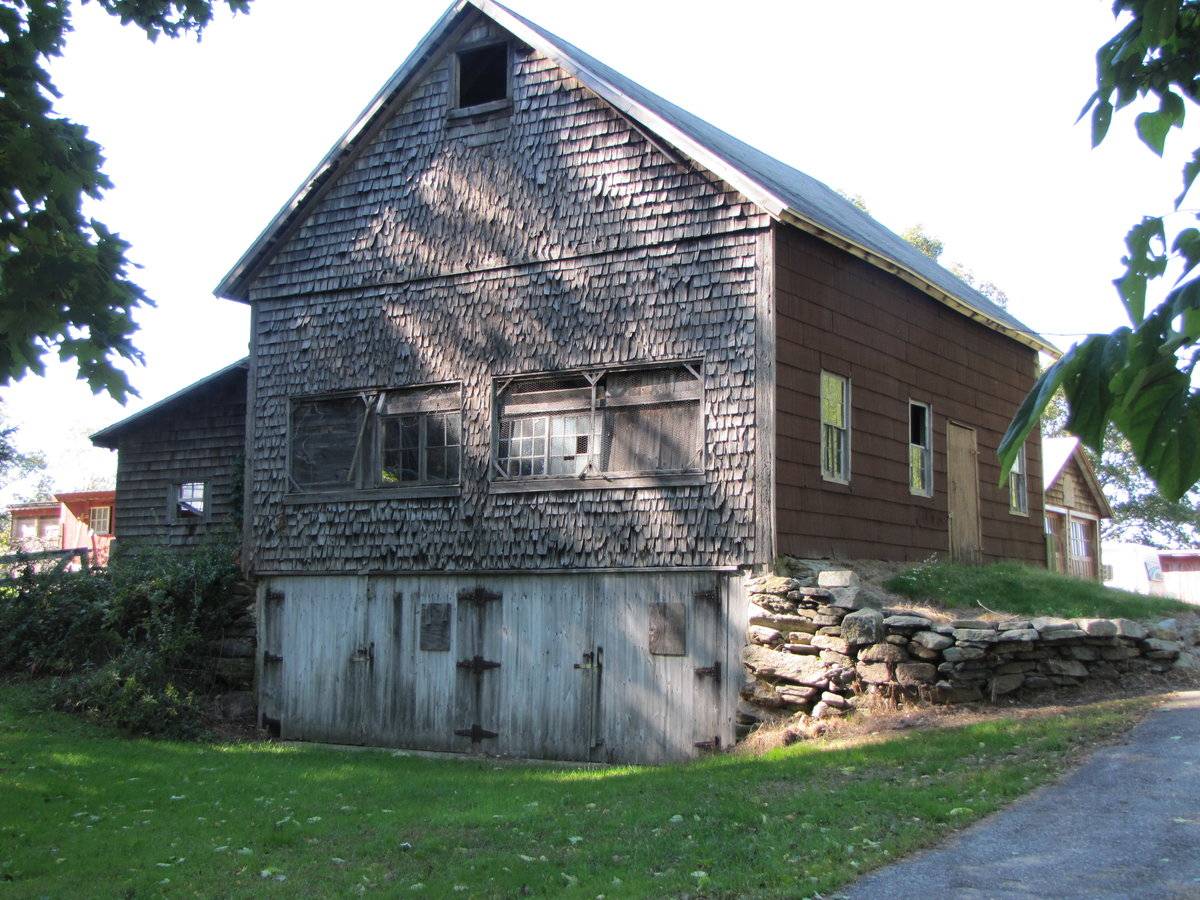
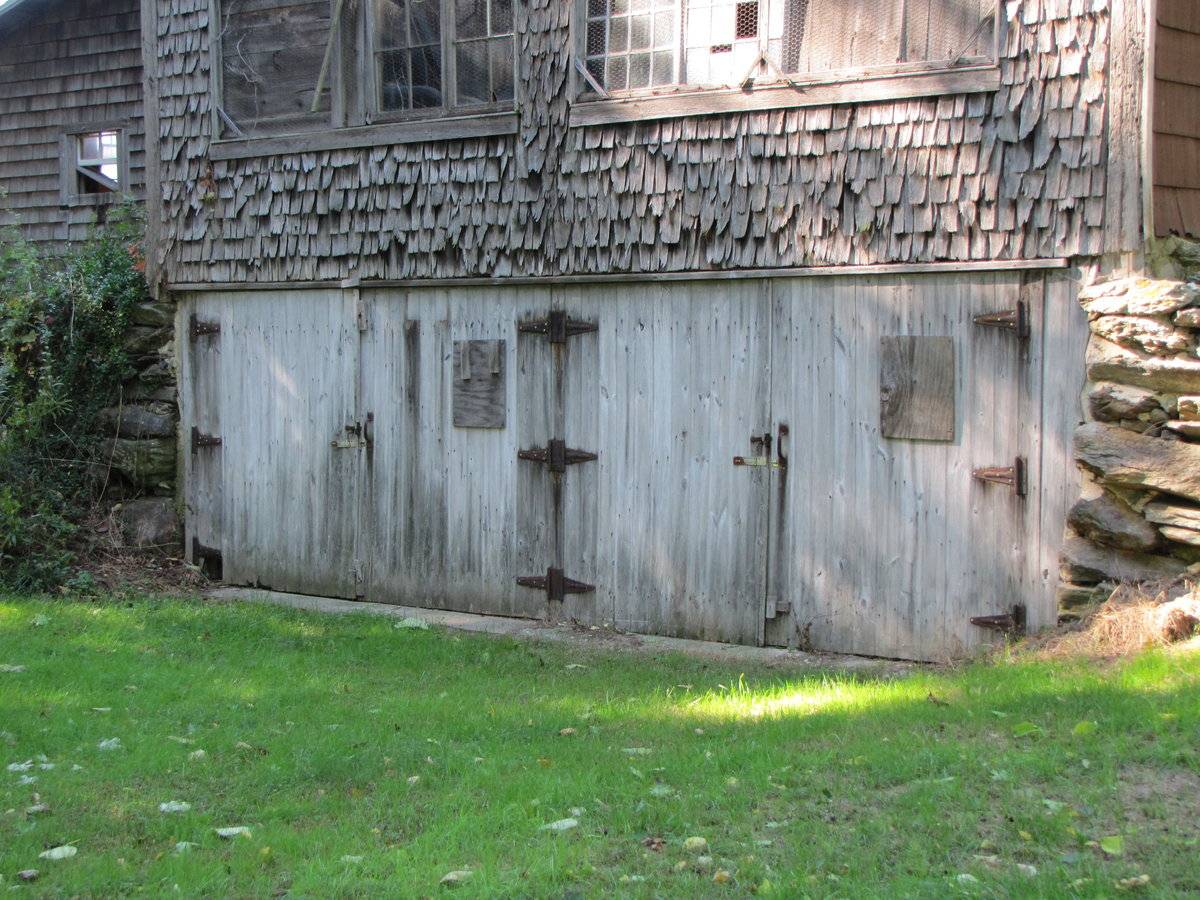
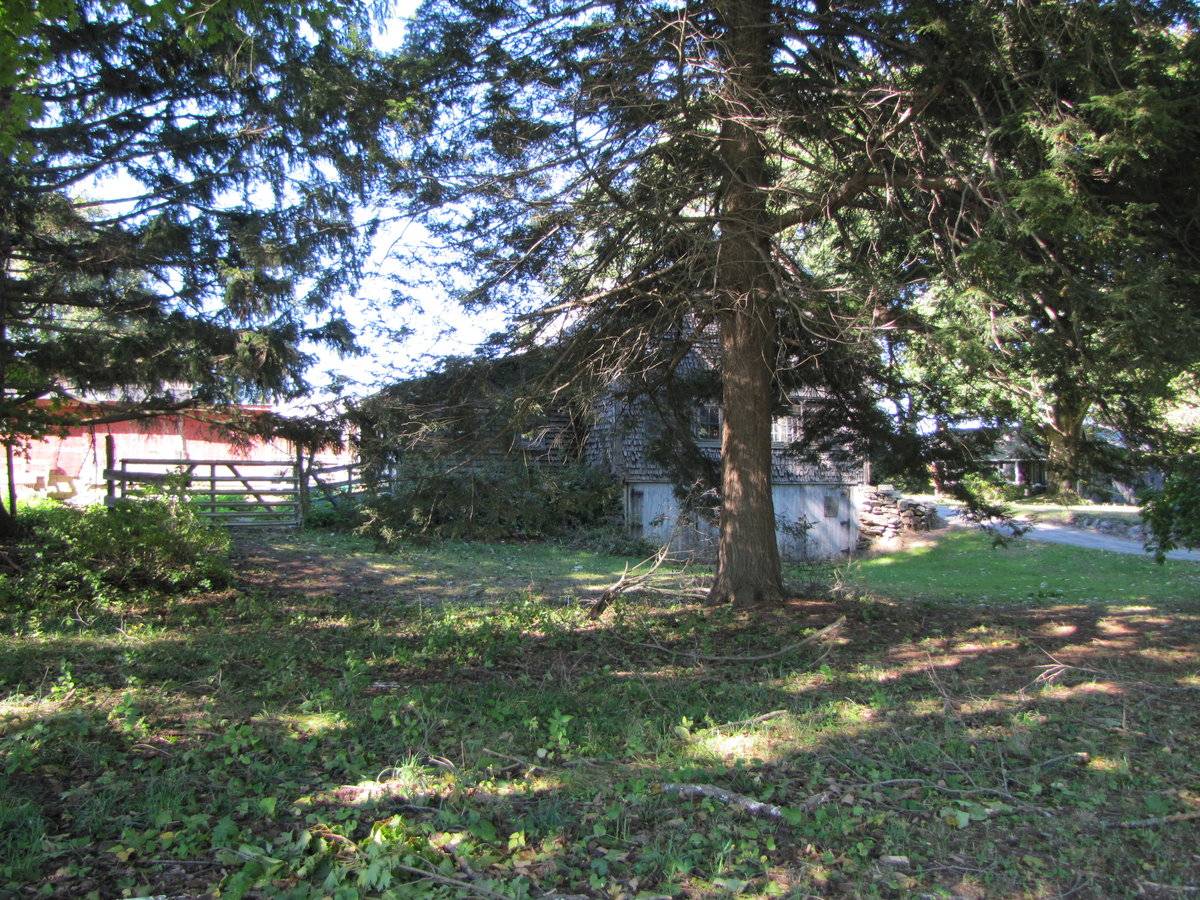
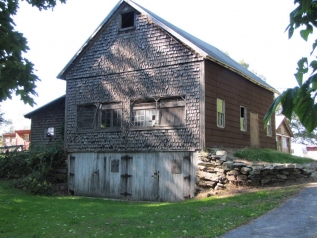
Barn I is a 1-½ story eave-entry bank barn with a gable-roof and a shed-roof addition on the northern half of the west eave-side. The main façade faces east and is at grade, with the ground sloping sharply away to the southwest. The ridge-line runs north-south, perpendicular to Bass Road which lies to the south. The principal entry is provided by a hinged pass-through door constructed of vertical wood boards located just north of center on the main facade. To its north is a six-over-six double-hung window with trim. There are two identical six-over-six double-hung windows on the southern half of the main façade. The grade declines sharply at the south corner, revealing a basement level. On the south gable-end of the barn are two pairs of twinned window openings, one on the eastern half, the other on the western half. The eastern window opening houses two twelve-pane stable windows. The western window opening houses two four-pane stable windows. The remaining window openings are covered with vertical or horizontal boards. Below the apex of the roof on the south gable-end of the barn is a window opening. Extending the full width of the basement level of the original structure are two pairs of hinged doors constructed of vertical wood boards. At the southeast corner of the structure, a stonewall that begins at the basement level projects eastward away from the foundation, gradually ascending to a gravel road which lies to the east of the barn. Proceeding further west, there appears to be two window openings along the south end of the shed-roof addition, the westernmost window being a four-pane stable window.
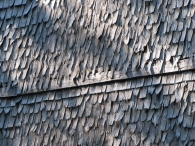
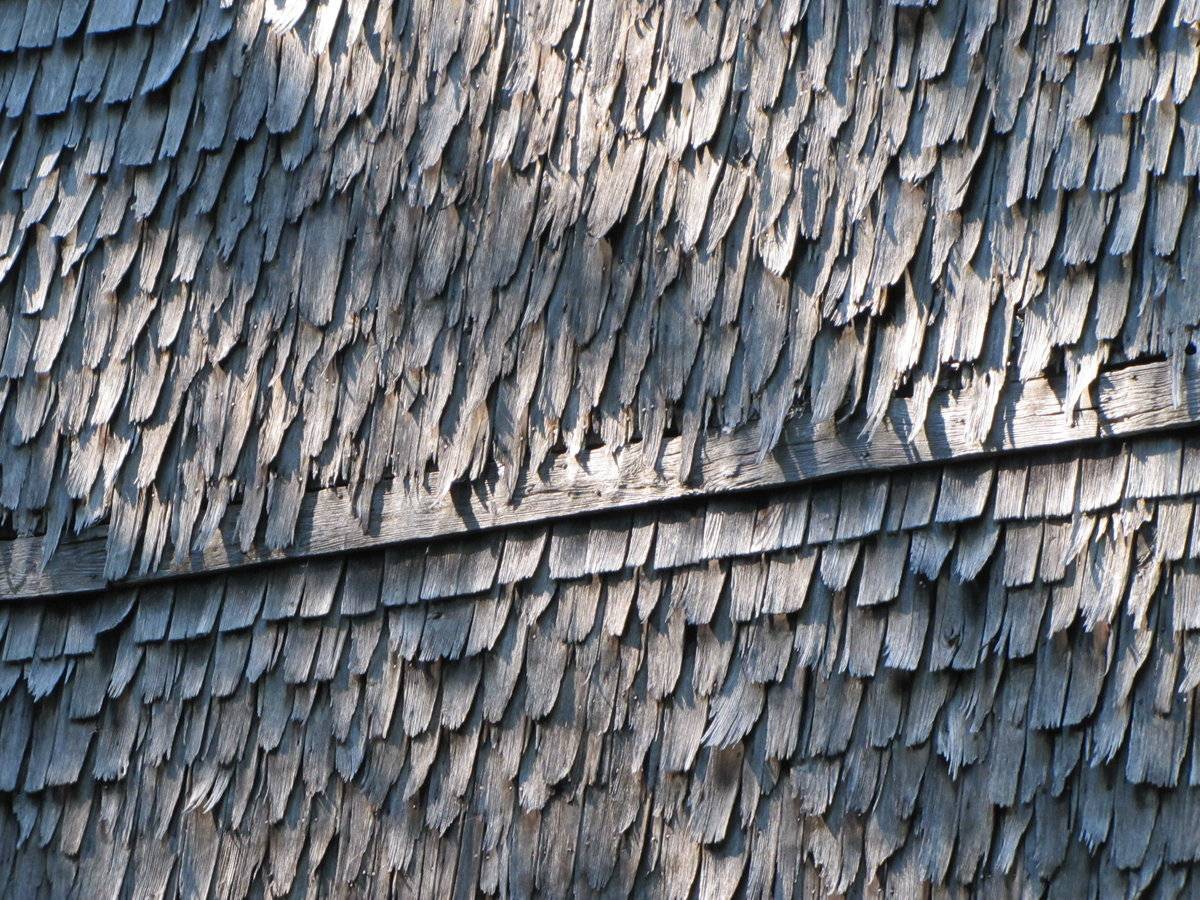
At the northwest corner of the west eave-side of the shed-roof addition is a six-over-six double-hung window with trim. The exterior walls of the main façade are covered with asbestos siding. The remaining walls are covered with wood shingles. The roof is covered with asphalt shingles. The foundation appears to be constructed of un-mortared fieldstone.
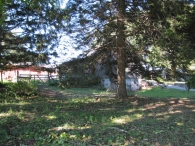
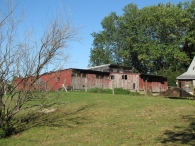
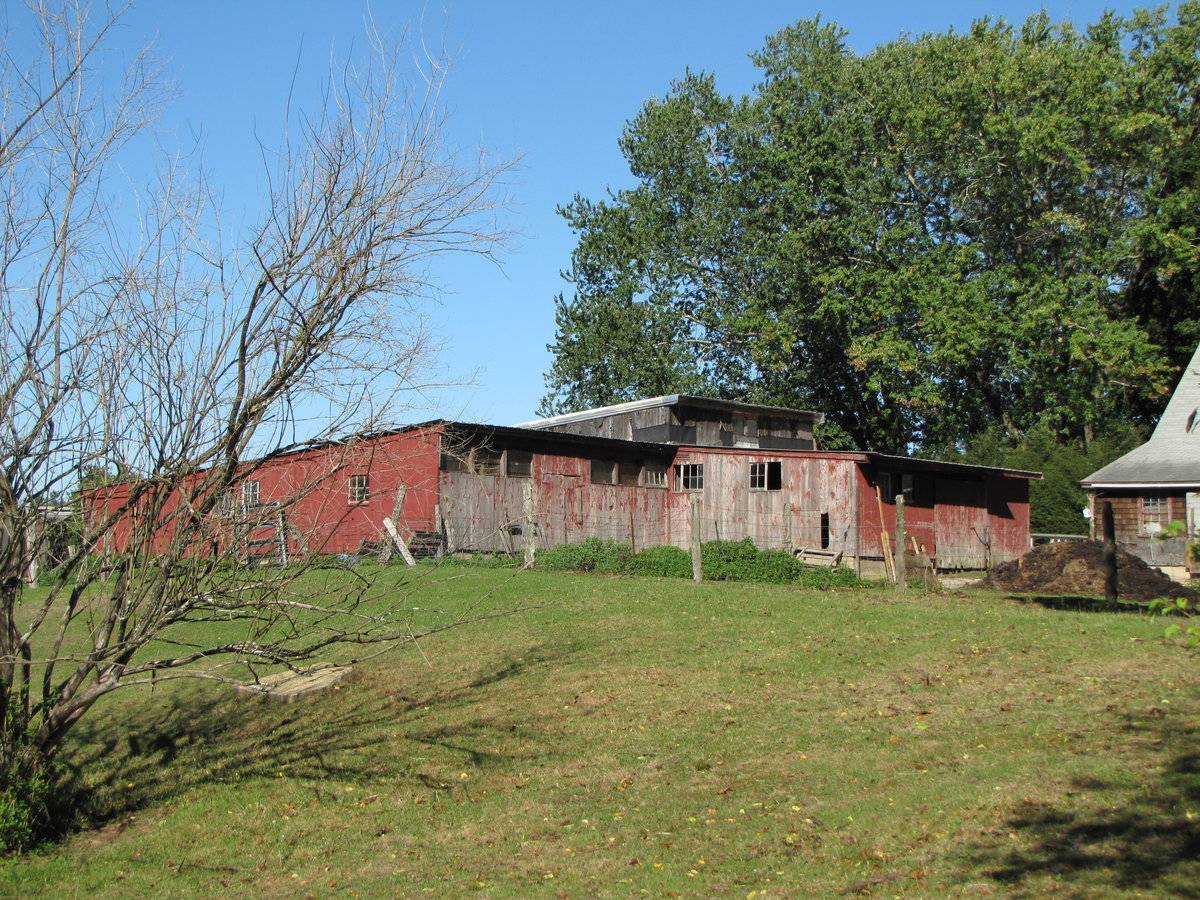
Barn II lies directly to the north of Barn I. It appears to be a gable-entry garage with two bays. Its main façade faces east, its ridge-line running east-west, parallel to Bass Road which lies to the south. The principal entry appears to be a pair of overhead garage doors with multiple panes. Above the garage door appears to be an arched window, now boarded up. The wall of the gable-attic is covered with wood shingles. The roof appears to be covered with asphalt shingles.Barn III lies to the west of Barn II. This is a 1-½ story barn with a flat-roof and two single-story additions with flat roofs to the south and west, creating an L-shaped plan. The main façade remains unclear, but likely faces south. Principal entry appears to be via a large door constructed of vertical wood boards at the southeast corner of the main façade. To its west are two six- pane stable windows below the eave. On the recessed upper story of the original structure appears to be a two-pane stable window. This window is flanked by what appears to have once been other window openings, now boarded up. On the main façade of the single-story addition that lies to the west are two pairs of three strip windows, one on the eastern half and the other on the western half of the addition to the barn. Along the west side of the barn, from south to north is a four-pane stable window followed by a six-pane stable window. Proceeding to the single-story addition that lies to the west, there are two six-pane stable windows. The walls are covered in vertical board siding painted red. The roof appears to be corrugated metal.
Historical significance:The New England barn or gable front barn was the successor to the English barn and relied on a gable entry rather than an entry under the eaves. The gable front offered many practical advantages. Roofs drained off the side, rather than flooding the dooryard. With the main drive floor running parallel to the ridge, the size of the barn could be increased to accommodate larger herds by adding additional bays to the rear gable end. Although it was seen by many as an improvement over the earlier side-entry English Barn, the New England barn did not replace its predecessor but rather coexisted with it; both types continued to be constructed.
The 19th century also saw the introduction of a basement under the barn to allow for the easy collection and storage of a winter’s worth of manure from the animals sheltered within the building. The bank barn is characterized by the location of its main floor above grade, either through building on a hillside or by raising the building on a foundation. This innovation, aided by the introduction of windows for light and ventilation, would eventually be joined by the introduction of space to shelter more animals under the main floor of the barn.
A shed is typically a simple, single-story structure in a back garden or on an allotment that is used for storage, hobbies, or as a workshop. Sheds vary considerably in the complexity of their construction and their size, from small open-sided tin-roofed structures to large wood-framed sheds with shingled roofs, windows, and electrical outlets. Sheds used on farms or in industry can be large structures.
Field Notes
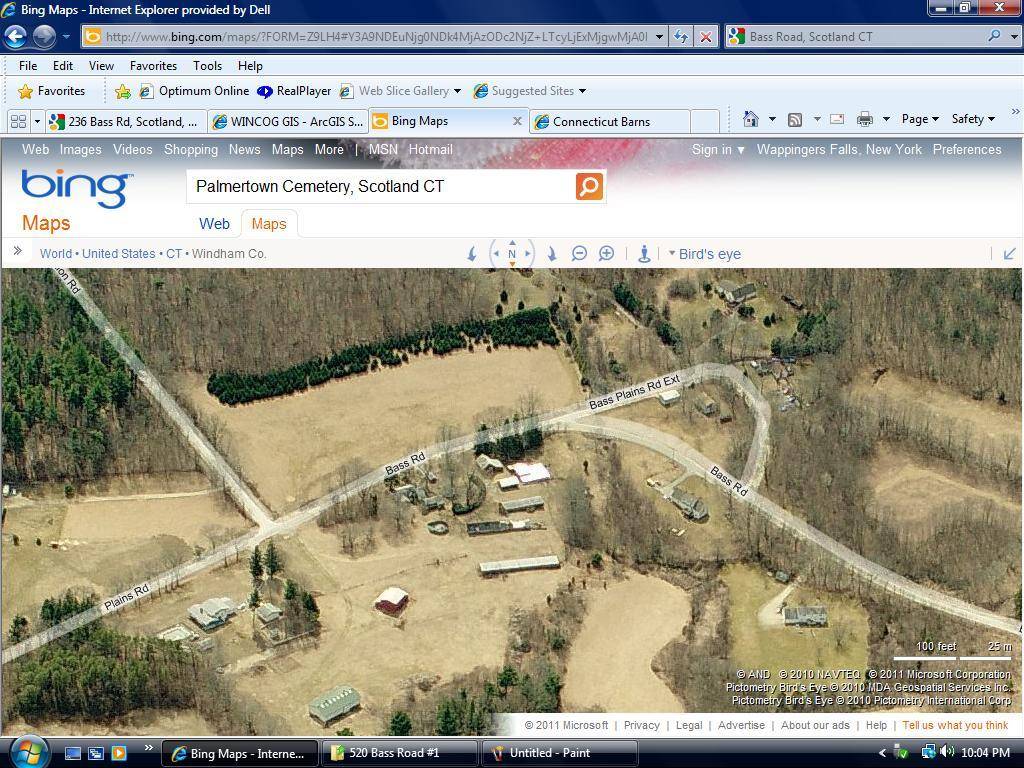
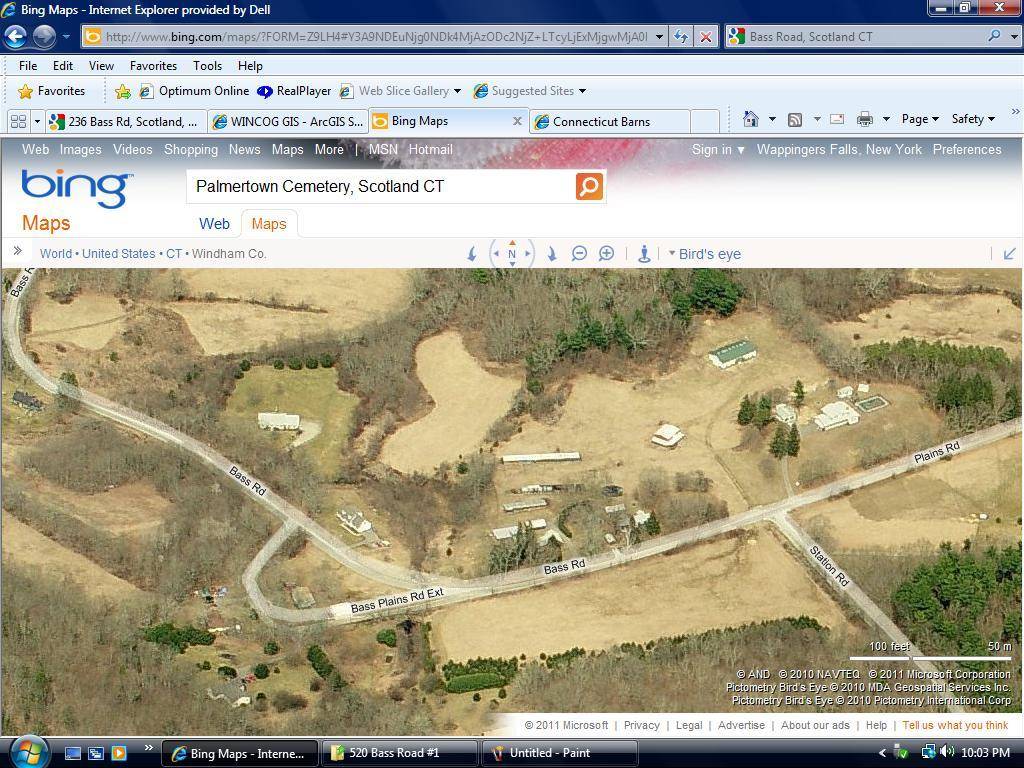
At corner of Plains Road, on E side of Bass Road. There are 3 barns: one (natural shingles) directly left of the house (labelled A), one (red) further left in a field (labelled B), and one (natural wood) behind the house (labeled C, and shown in another submission).
- Use & Accessibility
Use (Historic)
Use (Present)
Exterior Visible from Public Road?
Yes
Demolished
n/a
Location Integrity
Unknown
- Environment
Related features
Environment features
Relationship to surroundings
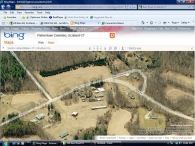
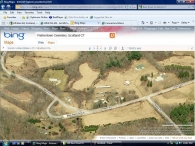
This property is located to the southwest of Scotland, in a rural residential area with several large farms in the vicinity. The barn is located on a 2.63-acre parcel that contains a c. 1830 house and several agricultural structures. The property is bordered by Bass Road to the south and west. The southern end of the property is lightly wooded, while the northern end consists mainly of open fields. A gravel drive that is bordered by fieldstones begins on Bass Road, heading north past the main facade of Structure I before curving eastward towards the direction of the main house.
The main house, a c.1830 house, is located to the east of the barn. It is a 1-½ story eave-entry structure with 3-bays, a rectangular plan and a gable roof and a large shed-roof dormer on the main façade. The walls are covered with wood shingles, and the roof is covered with asphalt shingles.
To the north of the house lies a gable-roof barn, and there are two single-story barns with shed roofs and rectangular plans to the north of Structures II & III. (see 520 Bass Road Part 2)
- Typology & Materials
-
Building Typology
Materials
Structural System
Roof materials
Roof type
Approximate Dimensions
Barn I: 1,284 square feet; Barn II: 748 square feet; Barn III: 1,924 square feet
- Source
-
Date Compiled
03/16/2011
Compiled By
E. Reisman & T. Levine; reviewed by CT Trust
Sources
Field notes and photographs by Joan Tomasewski 10/17/2010.
Town of Scotland’s GIS Viewer:
http://www.wincog-gis.org/ags_map/default.asp?town=Scotland
(Parcel ID #29-25-21: 2.63 acres: c. 1830 house, 2,454 sq. ft.)Aerial Mapping:
http://www.bing.com/maps accessed 03/16/2011.Sexton, James, PhD, Survey Narrative of the Connecticut Barn, Connecticut Trust for Historic Preservation, Hamden, CT, 2005, http://www.connecticutbarns.org/history.
Visser, Thomas D., Field Guide to New England Barns and Farm Buildings, University Press of New England, 1997. - PhotosClick on image to view full file
-