Barn Record Scotland
RETURN TO ‘FIND BARNS’- Building Name (Common)
- Hillyland Farm
- Building Name (Historic)
- Hillyland Farm
- Address
- 75 Murphy Hill Road, Scotland
- Typology
- Overview
-
Designations
n/a
Historic Significance
Architectural description:
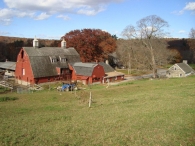
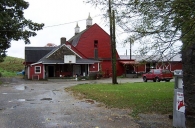
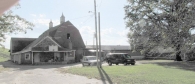
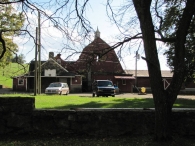
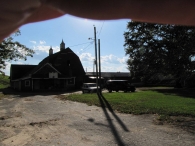
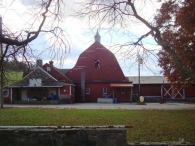
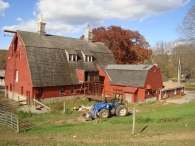
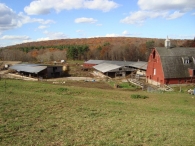
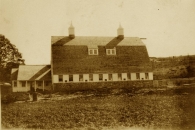
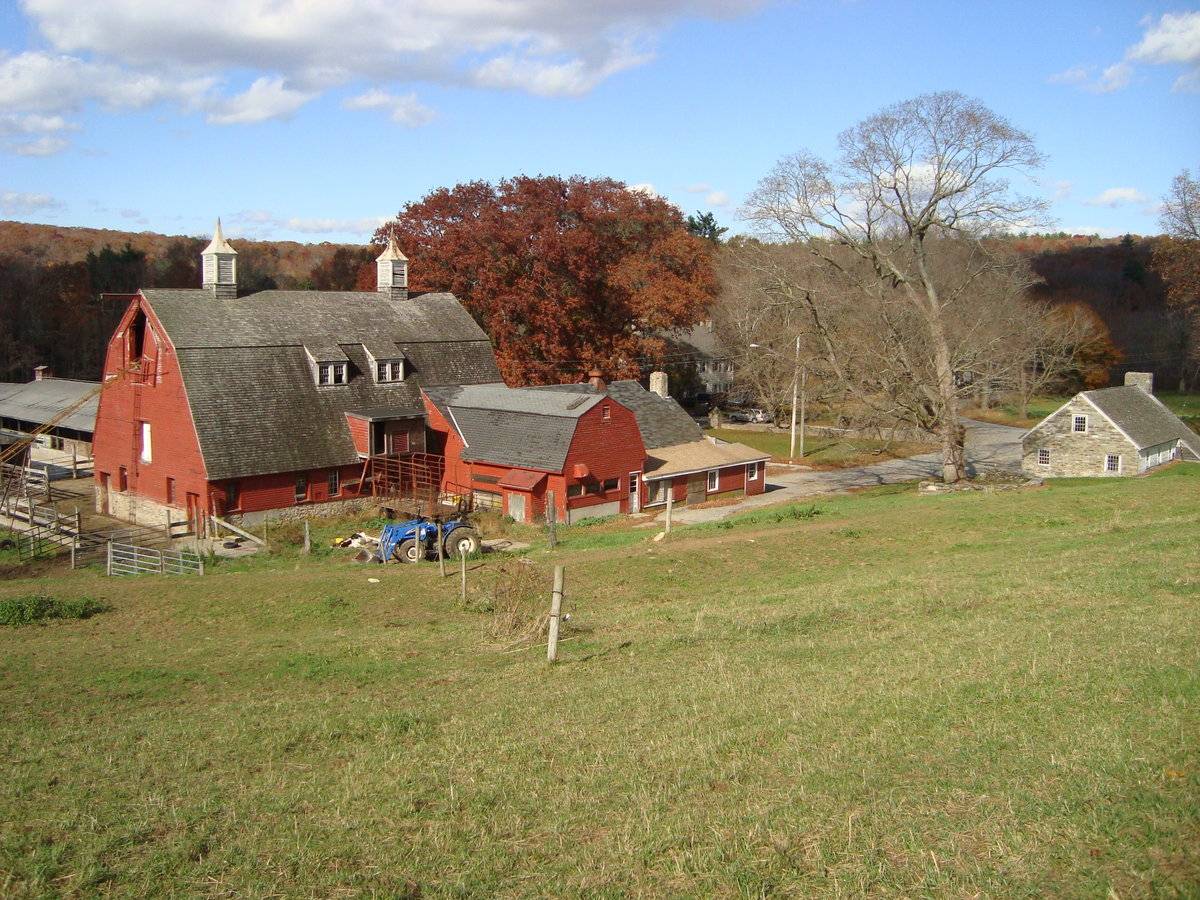
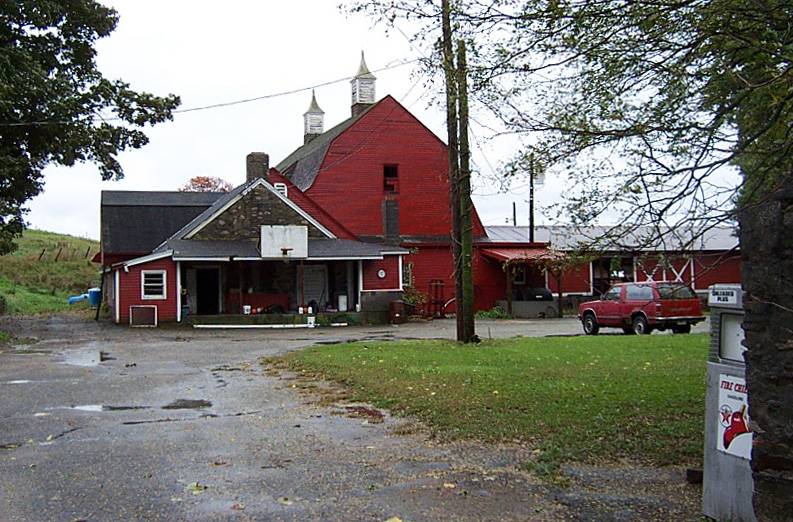
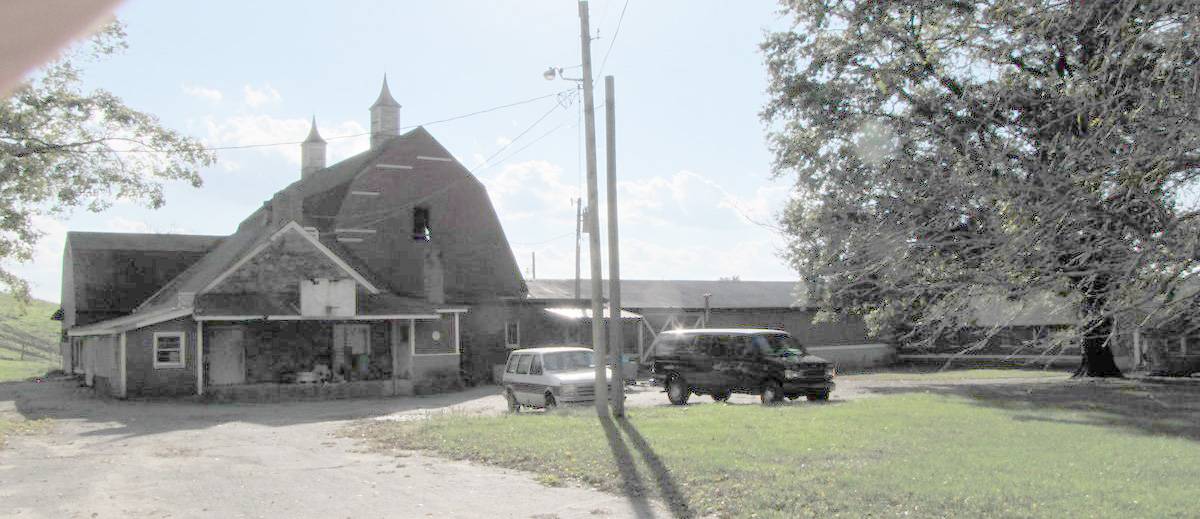
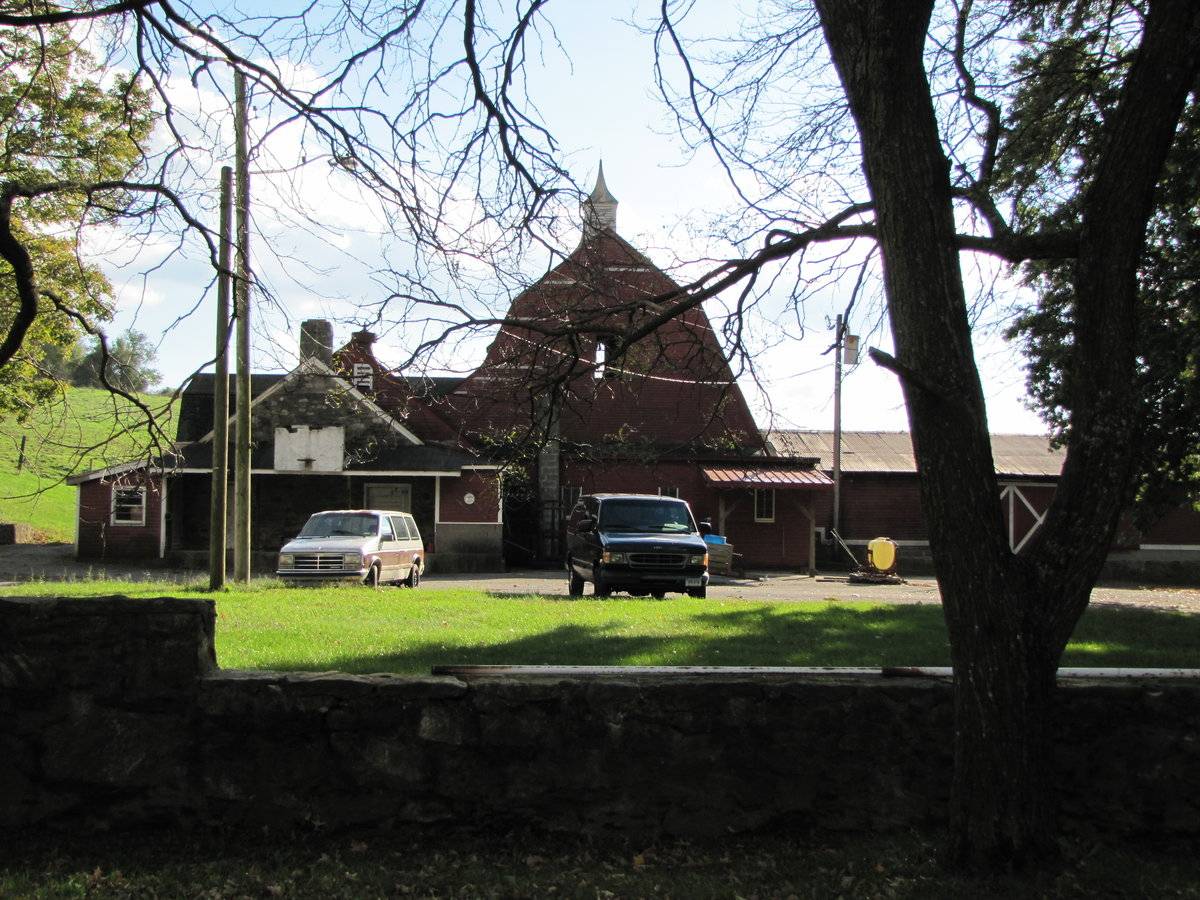
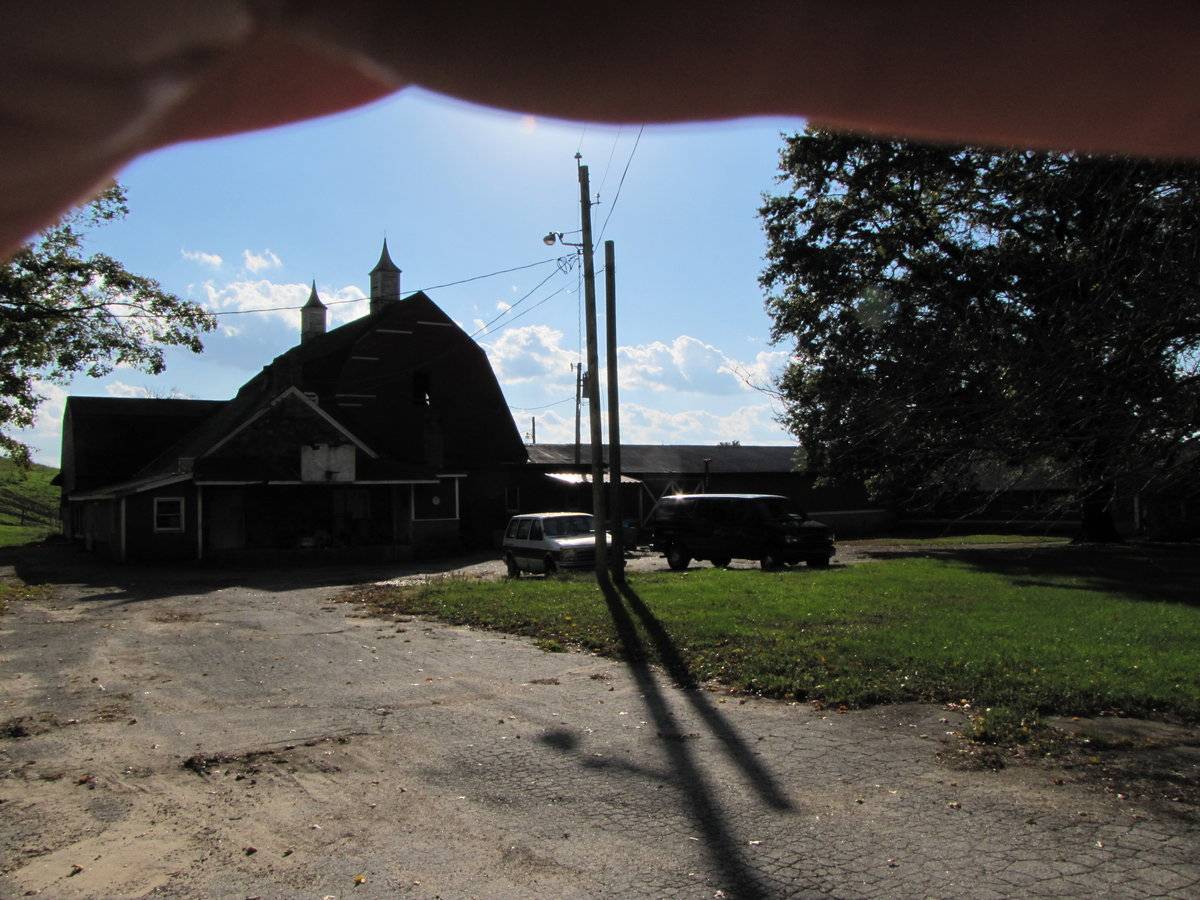
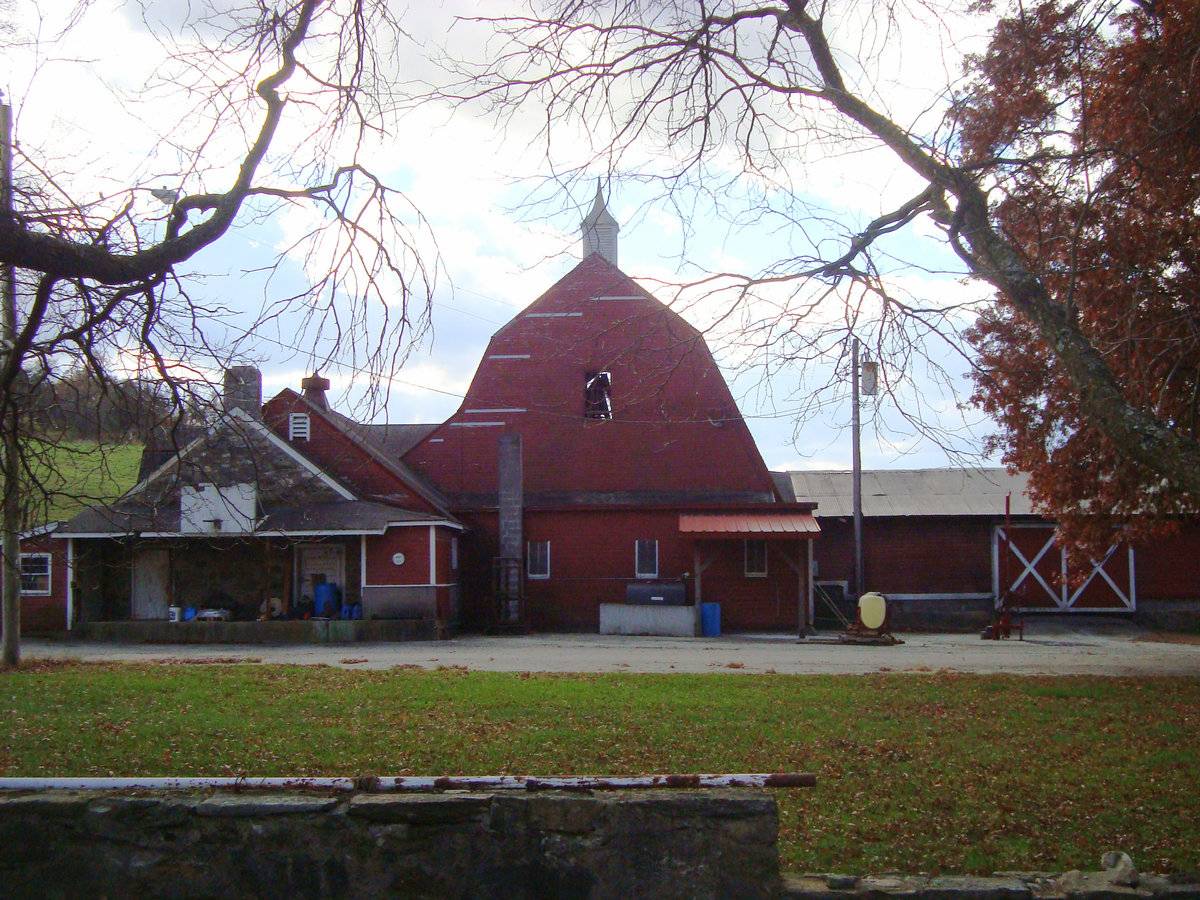
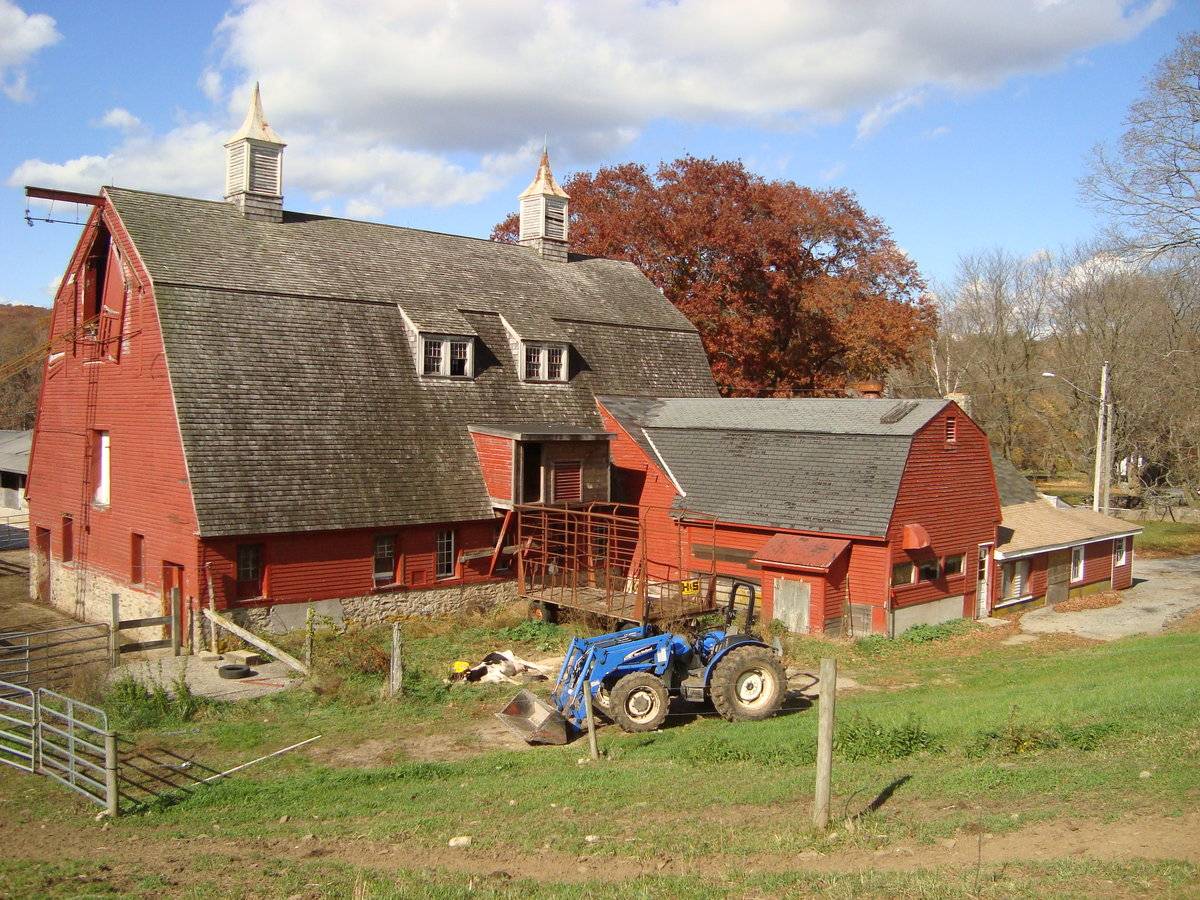
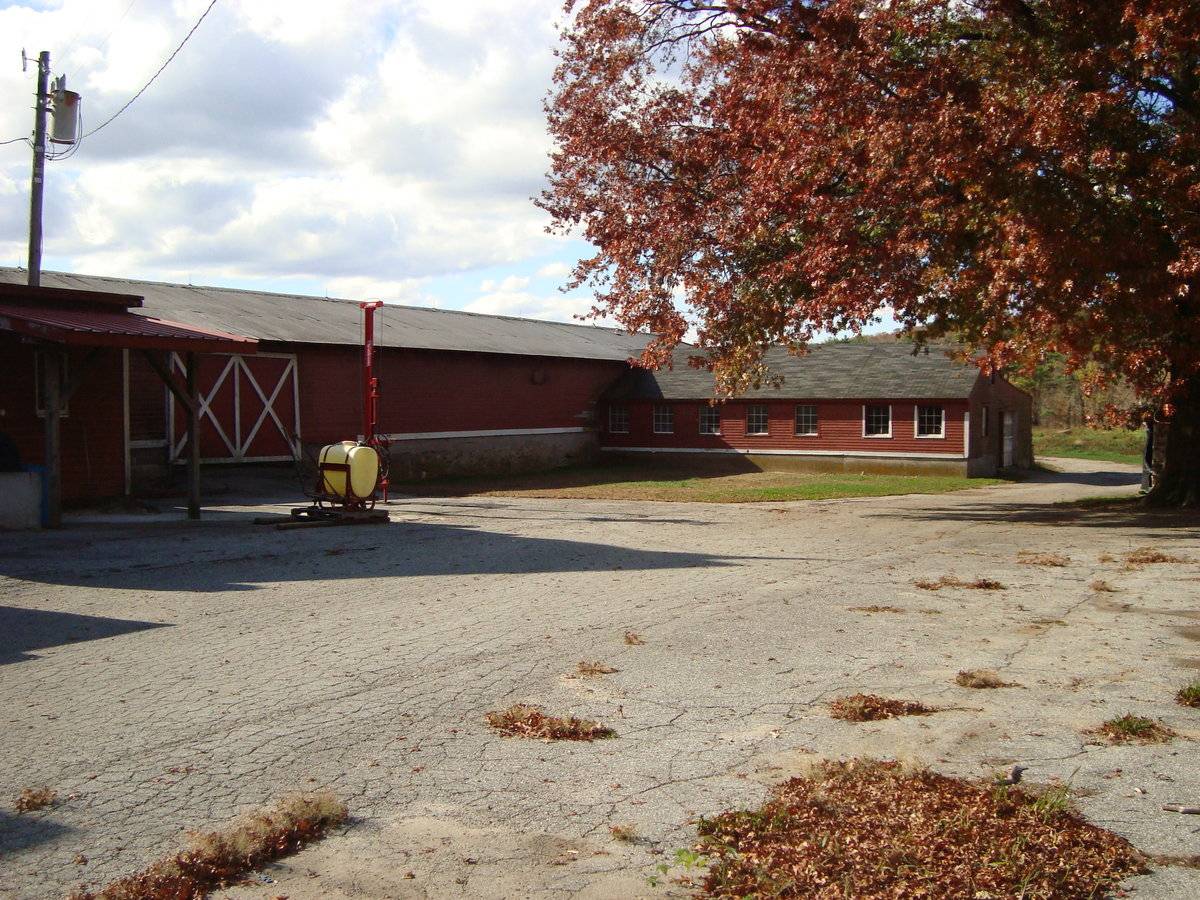
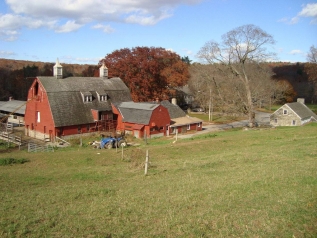
This was originally a 1 ½-story gable-entry barn with a gambrel roof that now features multiple additions on its main façade and west and east eave-sides. The ridge-line of the original barn runs approximately north-south, perpendicular to Murphy Hill Road, which lies to the north. Across the entire-length of its main façade is a single-story addition with a shed-roof (Addition I). When read in its entirety, the main façade faces north.
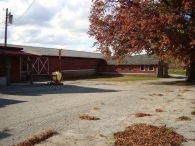
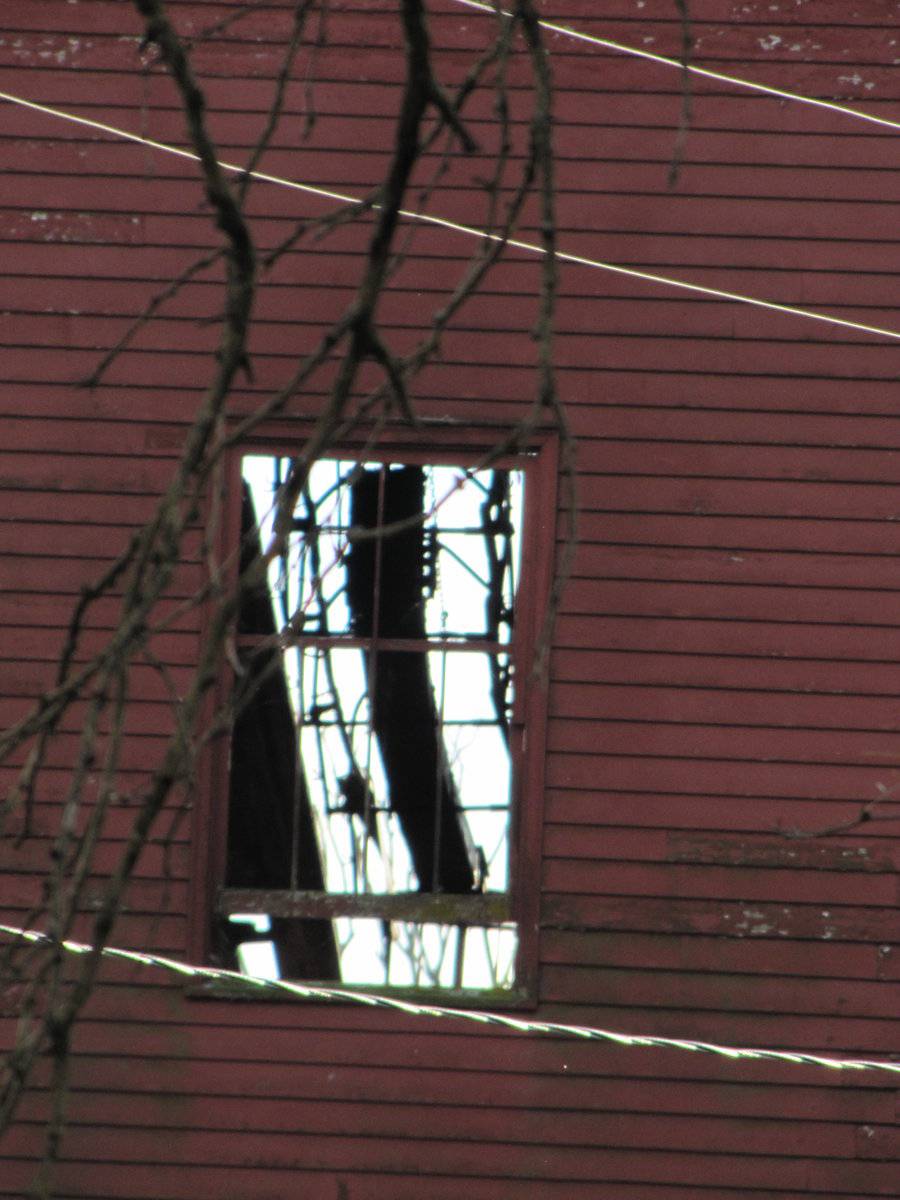
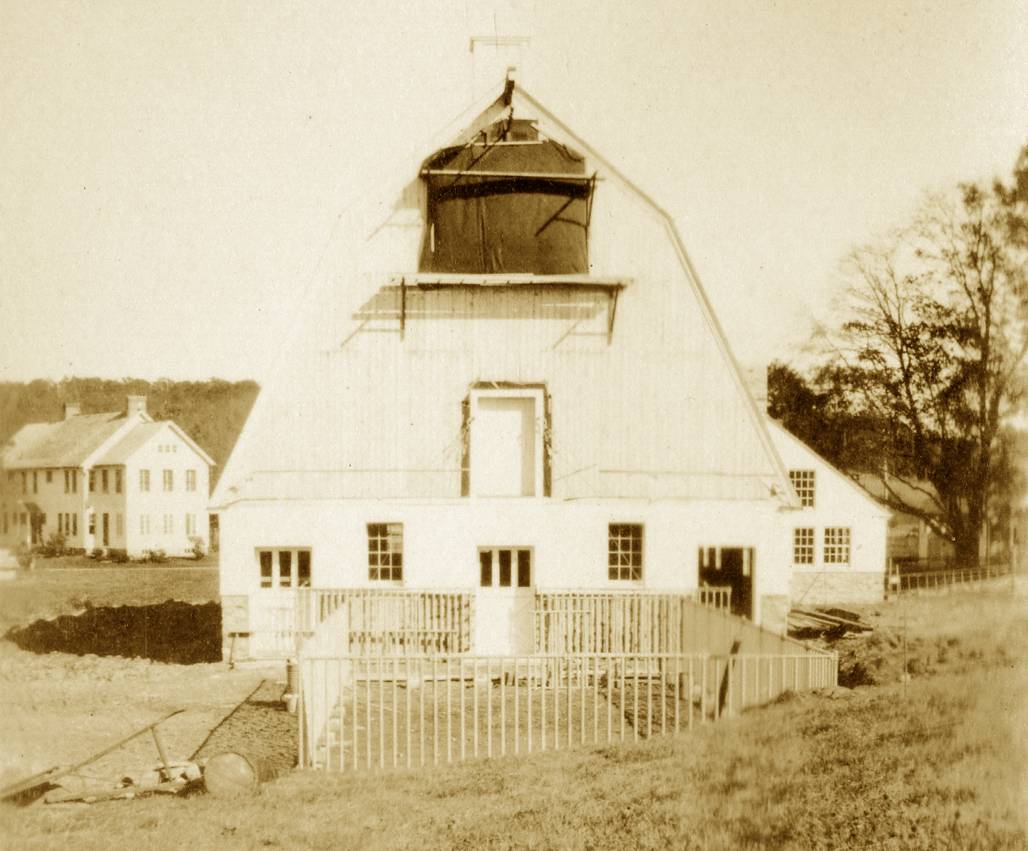
From east to west along the main façade, beginning at the east corner of the 1 1/2-story gable-roof addition (Addition II), is a one-over-one double-hung window with trim, followed by a pass-through door. On the western half of the main façade of Addition II appears to be a second pass-through door. Below the apex of the gable on the main façade of Addition II is a louvered vent. Proceeding further west, there are three six-pane stable windows with trim across Addition I on the main façade of the original barn. Above the westernmost window is a small, shed-roof awning supported by two braced posts. In the center of the gable-attic of the original barn appears to be either a window opening or a hay door opening. Below the apex of the gable on the south gable-end of the original gambrel-roof barn is a large hay loft opening.
Along the east eave-side of the gambrel-roof barn are two additions. The first is Addition II, a 1 ½-story gable-roof addition located at the northeast corner of the main gambrel-roof barn. Its main façade faces north and its ridge-line runs approximately north-south, parallel to that of the gambrel-roof barn. Located on the east eave-side of Addition II, to the east of the original barn, appears to be a series of stable windows. Along the east-eave side of Addition II is a smaller, single-story shed-roof extension that spans the entire length of the east eave-side of Addition II. Projecting from the main façade of Addition II is a slightly smaller 1 ½-story addition with a gable-roof (Addition III), that also features a single-story full-length entry portico with a shed-roof. Directly to the south of Addition II is a 1 ½-story addition with a gambrel roof (Addition IV). Its ridge-line runs east-west, perpendicular to that of the original structure, its north eave-side abutting the south gable-end of Addition II.
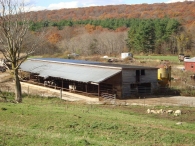
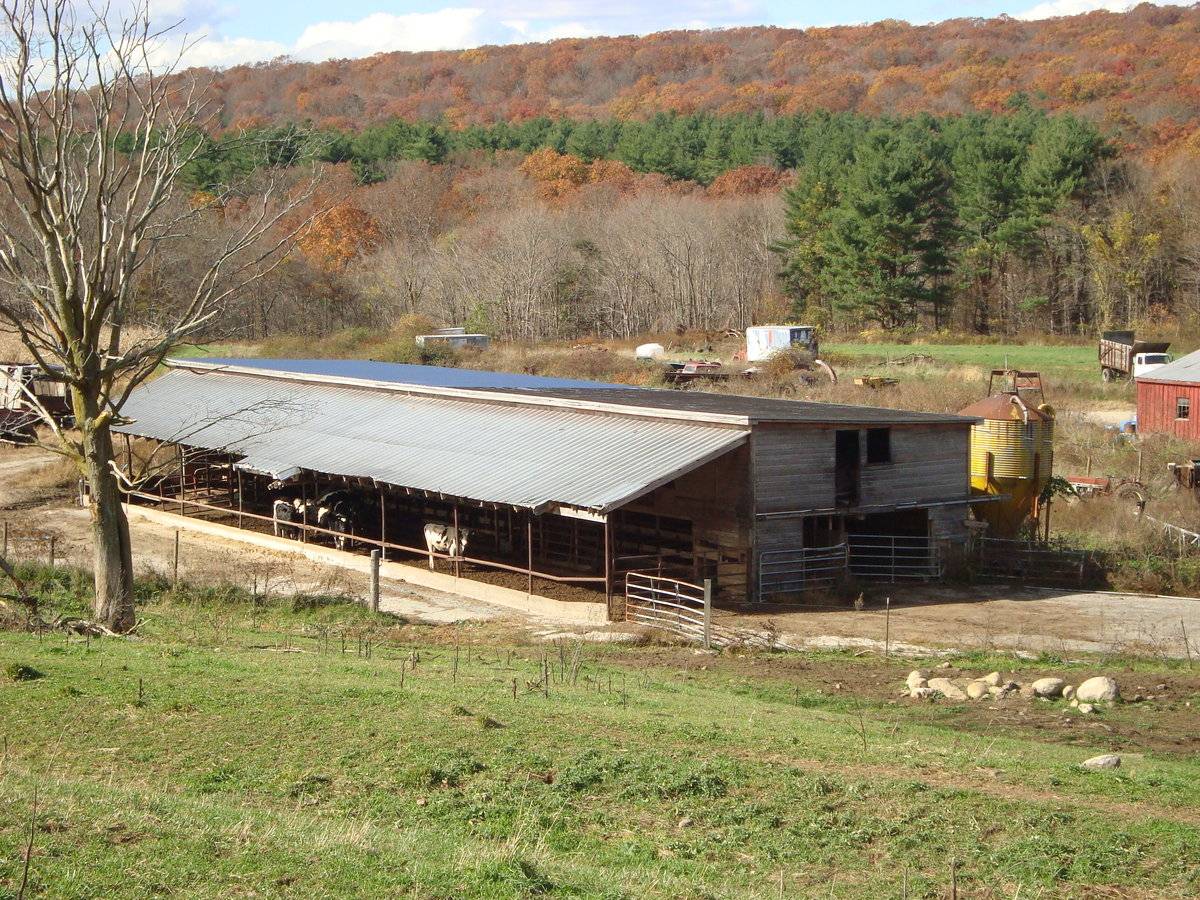
Along the northern half of the west eave-side of the original gambrel-roof barn is a large, 1 ½-story addition with a rectangular plan and a low-pitched gable-roof (Addition V). Its ridge-line runs east-west, perpendicular to that of the original gambrel-roof barn. Along the main façade of Addition V is a sliding door mounted on an external track that appears to be constructed of vertical wood boards with “X” bracing. Across the entire length of the east eave-side of Addition V are six nine-pane stable windows with trim.
Three further additions project outward from Addition V. The first is located on the western corner of its north eave-side (Addition VI). This is a 1 ½-story addition with a low-pitched gable-roof. Its ridge-line runs approximately north-south, perpendicular to that of Addition V. On the west eave-side of Addition VI appears to be a small shed-roof extension.
The second addition is located on the west gable-end of Addition V (Addition VII). This is a 1 ½-story barn with a low-pitched gable-roof, its ridge-line running a true east-west. At the eastern corner of its north eave-side is a smaller addition with a gable-roof, its ridge-line running approximately east-west (Addition VIII).
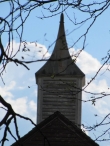
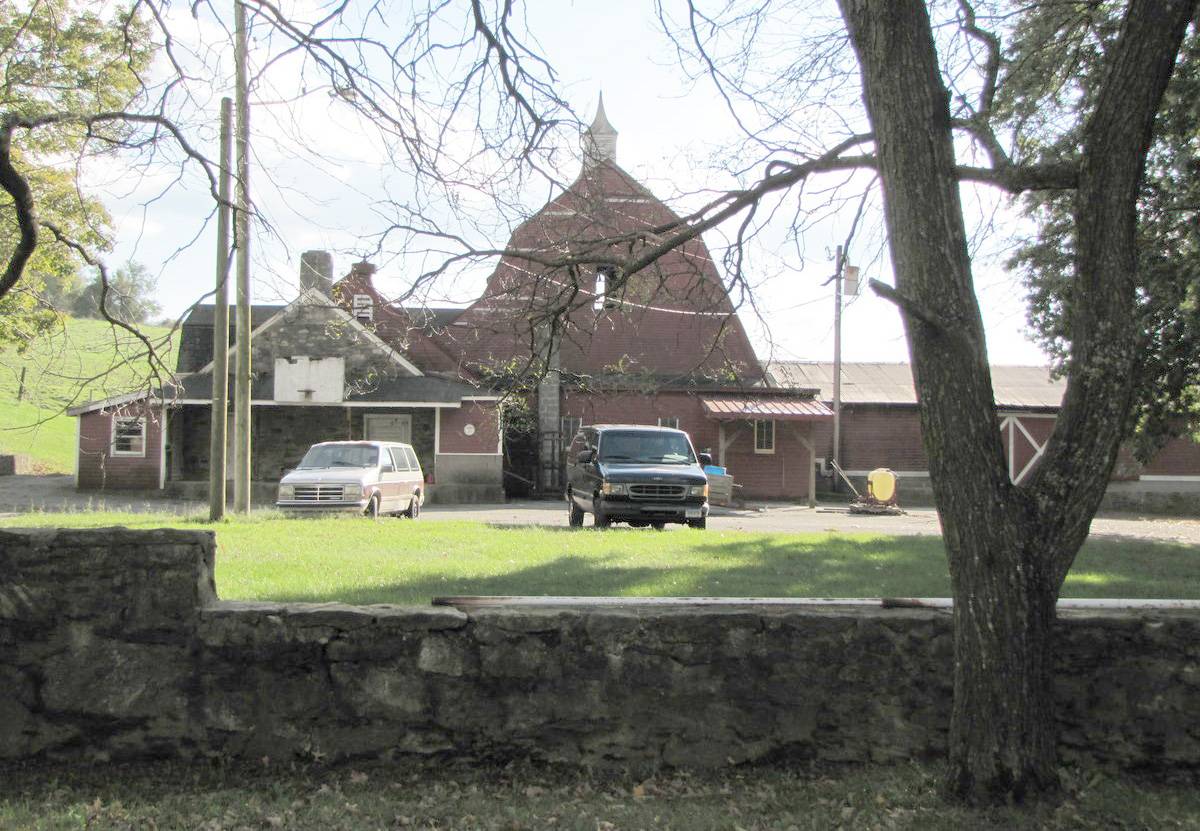
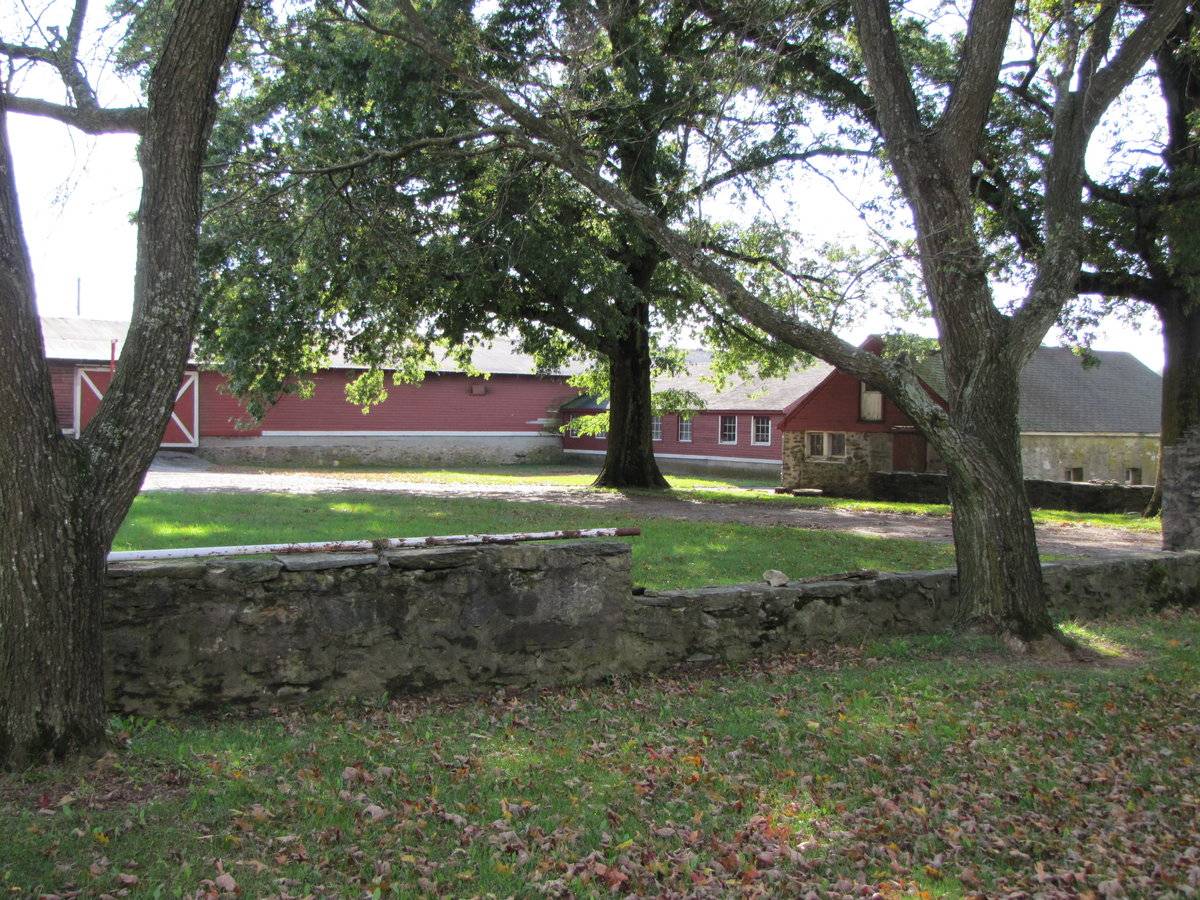
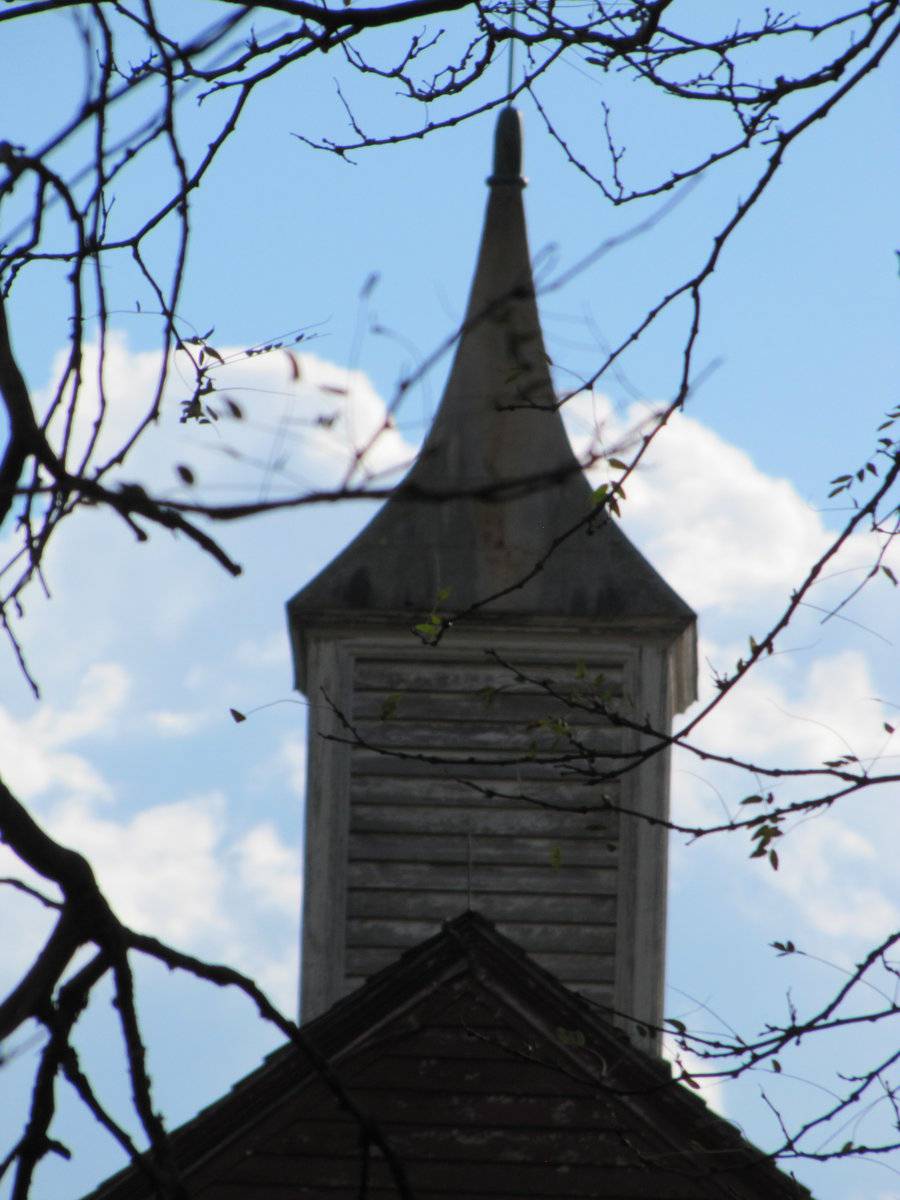
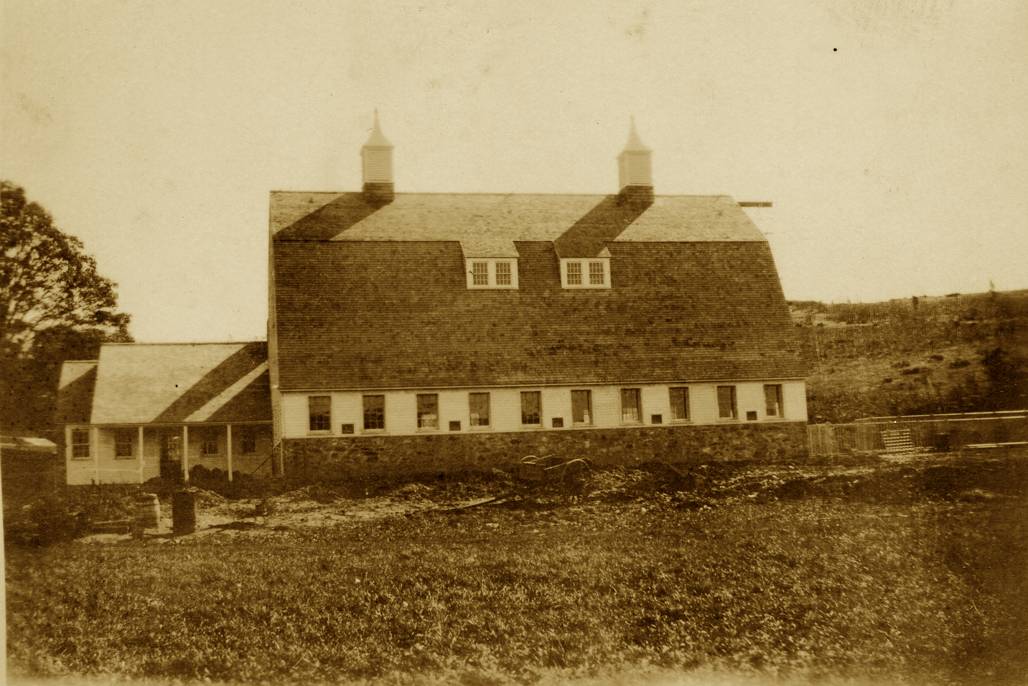
The walls of the barn and additions are covered with several different materials. The original barn and the majority of the additions and various wings are covered with clapboard siding painted red, with white trim. The main façade of Addition II appears to be clad with mortared cobblestones. The roofs of the original barn and its additions to the east are covered with asphalt shingles. Additions V and VII are covered with flat-seam metal roofs. Additions VI and VIII are covered with asphalt shingles. The gambrel roof of the original barn features two cupolas with louvered vents and hip roofs, one on its northern half at the ridge-line, the other located on its southern half, also at the ridge-line. On the center of the roof at the ridge-line of Addition II is a metal ventilator. To its north is a stone chimney. A second chimney that appears to be constructed of mortared concrete blocks is visible on the eastern half of the main façade of the original barn. The foundations appear to be a combination of concrete and mortared fieldstone.
Historical significance:By the early 20th century agricultural engineers developed a new approach to dairy barn design: the ground-level stable barn, to reduce the spread of tuberculosis bacteria by improving ventilation, lighting, and reducing the airborne dust of manure. A concrete slab typically serves as the floor for the cow stables. Many farmers converted manure basements in older barns into ground-level stables with concrete floors. Some older barns were jacked up and set on new first stories to allow sufficient headroom. With the stables occupying the entire first story, the space above serves a a hayloft. By the 1920s most ground-level stable barns were being constructed with lightweight balloon frames using two-by-fours or two-by-sixes for most of the timbers. Novelty or tongue-and-groove beveled siding is common on the walls, although asbestos cement shingles also were a popular sheathing. Some barns have concrete for the first-story walls, either poured in place or built up out of blocks. The gambrel roof design was universally accepted as it enclosed a much greater volume than a gable roof did, and its shape could be formed with trusses. Also see entry for Pole Barn.
Field Notes
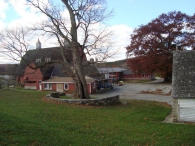
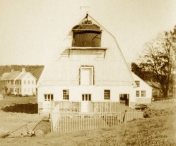
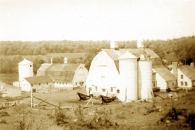
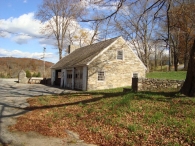
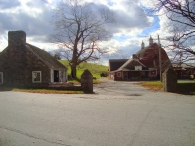
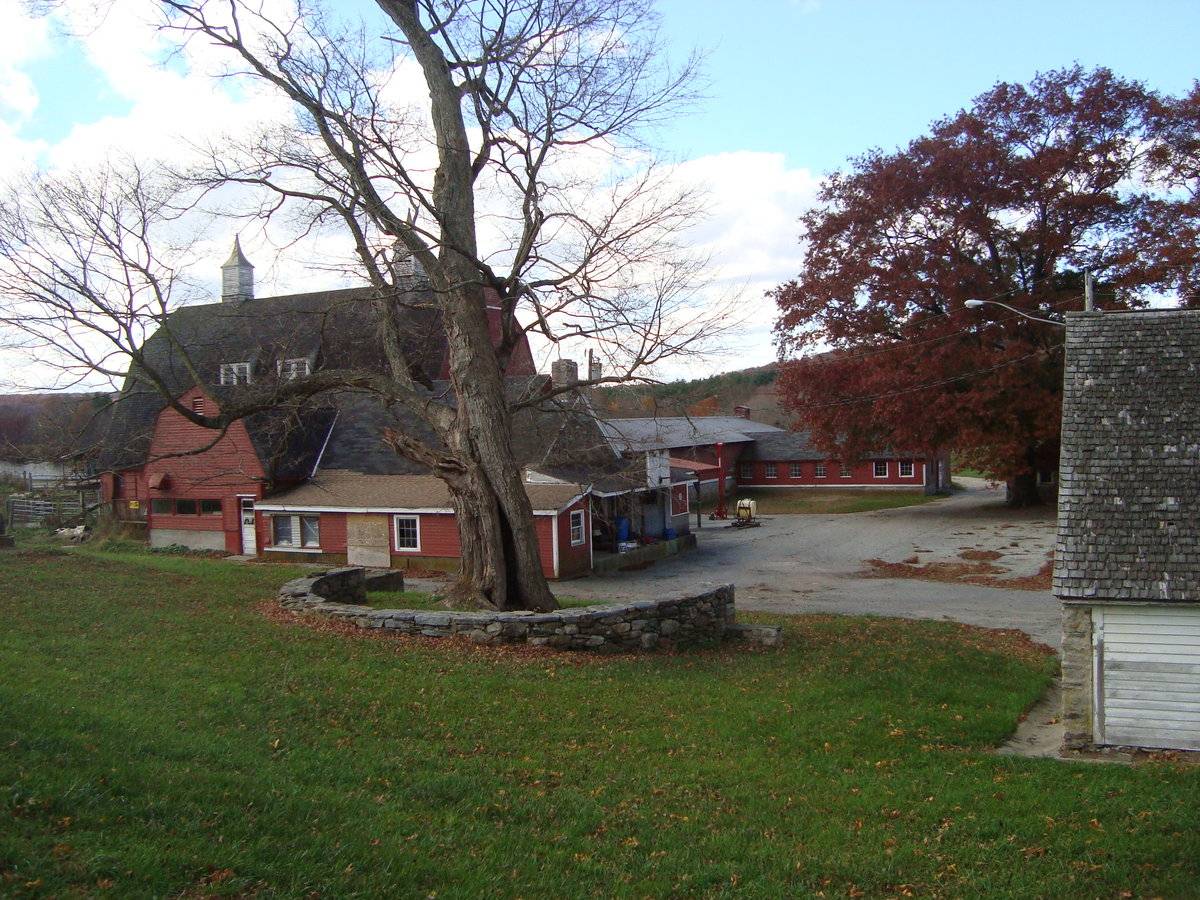
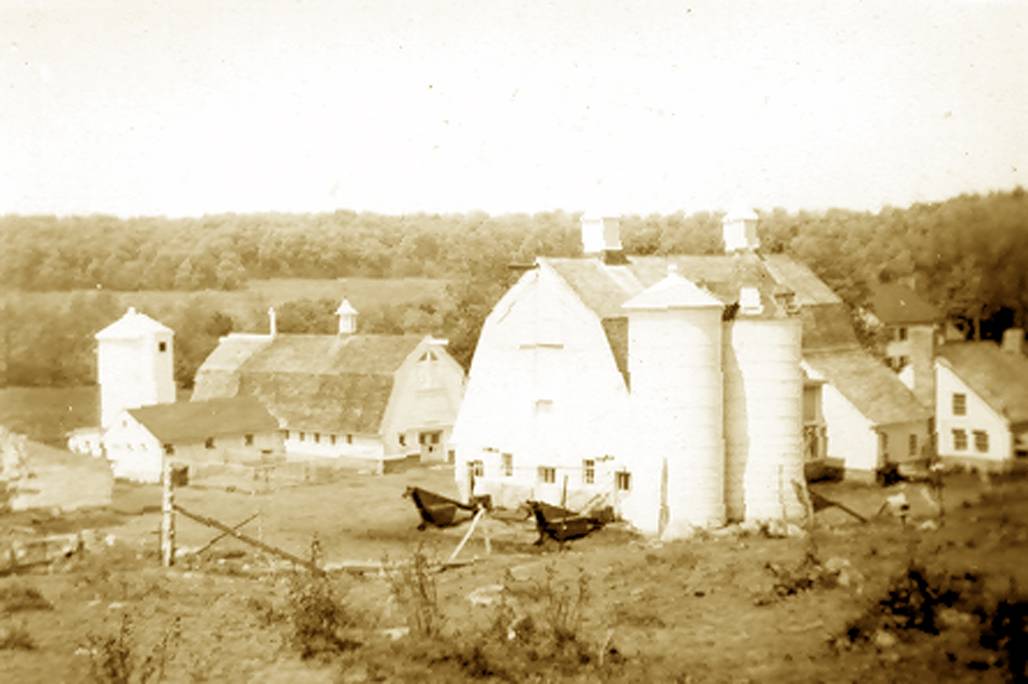
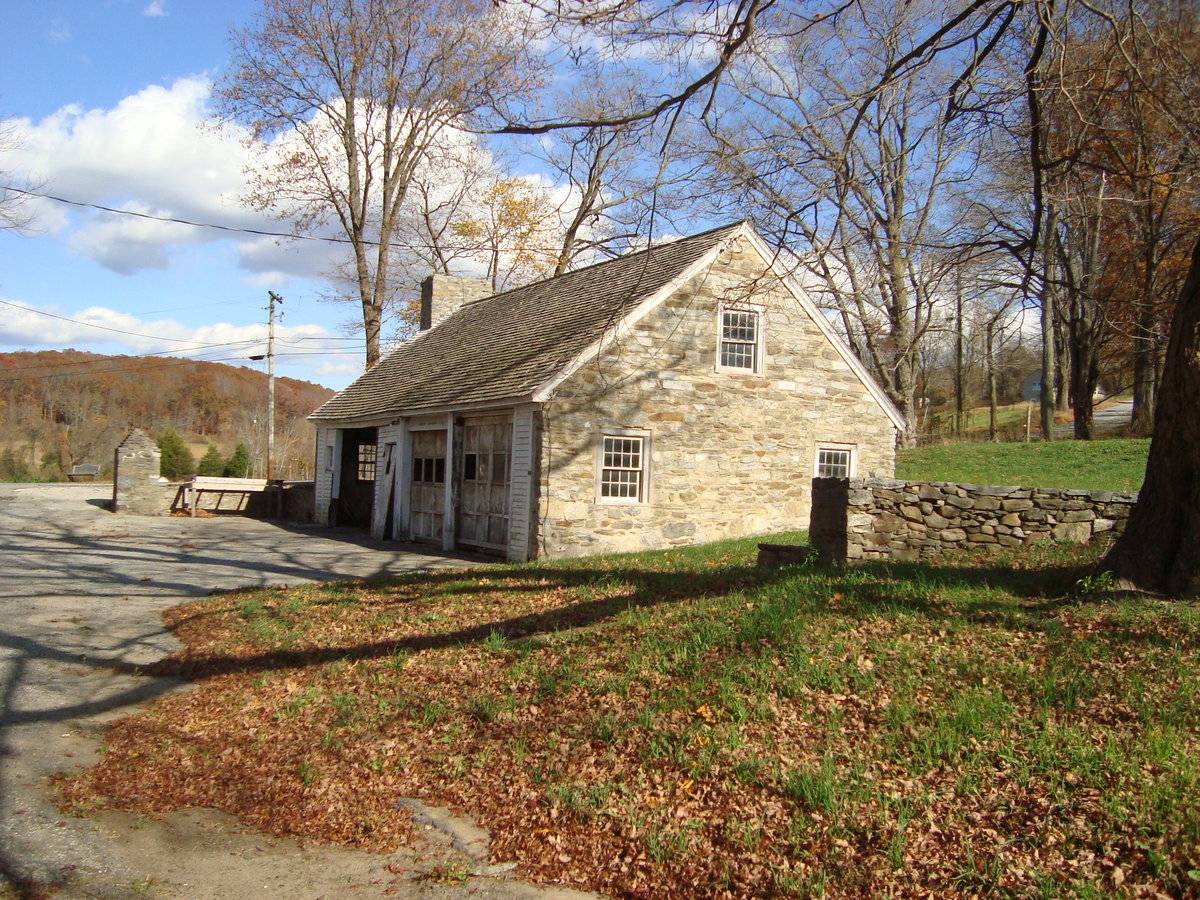
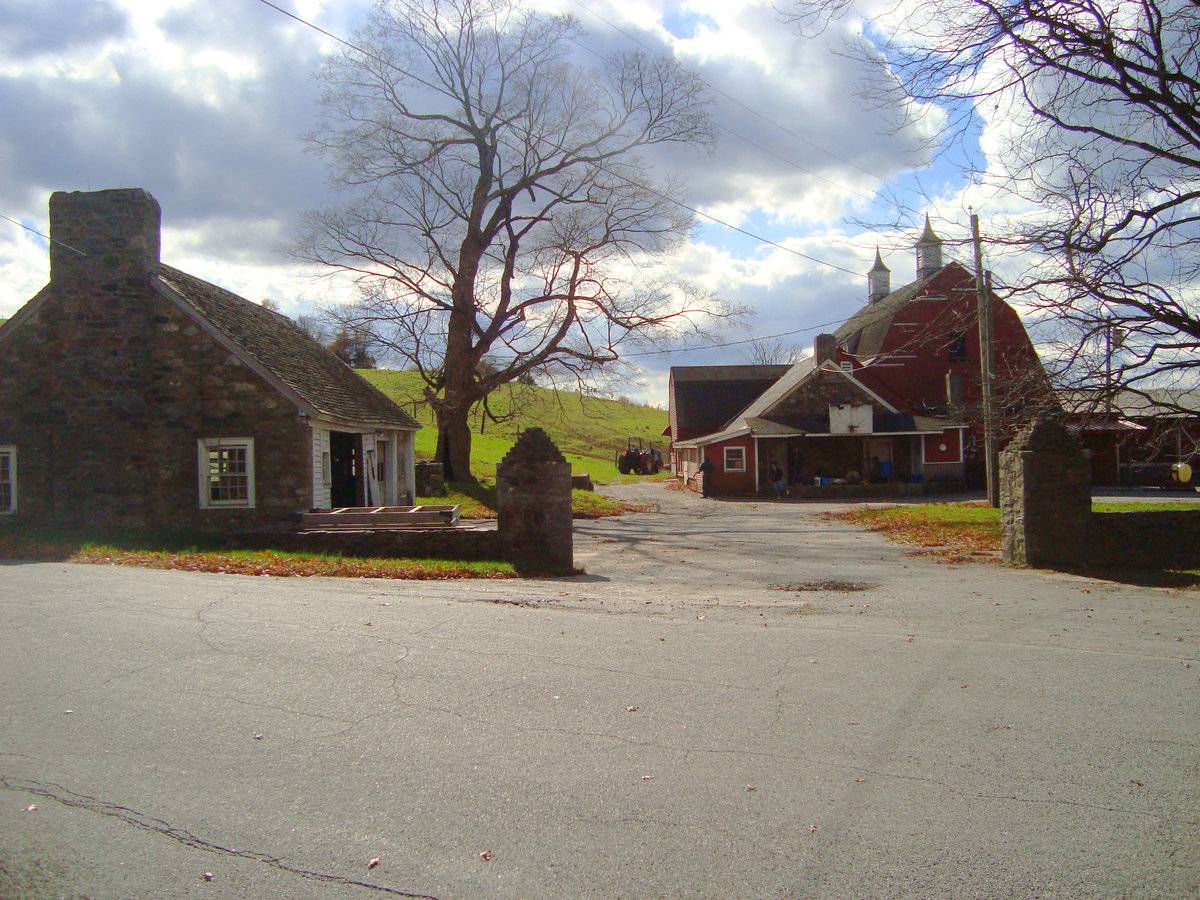
West wide of Murphy Hill Road, at bend of road. There is a major red barn, with an outbuilding to the right, and an apparently much older white outbuilding with stone chimney, to the left of the barn. The whole area seems to be in active use. Address listed as 75 Murphy Hill Road, but Tax Assessor lists it as 51 Murphy Hill Road. Current owner is the son whose father purchased the farm in 1970 and tells of the main barn being built for a New York City jeweler who came out to the farm on weekends. Barn was said to have been built in the early 1920's by the Perry brothers, two Scotland carpenters. The oldest of the black and white photos show the barn nearly finished, with the 2 1/2 story original homestead. The home burned to the ground prior to the late 1930's and was rebuilt in it's current configuration as a 2 1/2 story stone end structure. Carriage house type structure under consideration to be renovated into wine tasting facility for a winery operation started in 2009.
- Use & Accessibility
Use (Historic)
Use (Present)
Exterior Visible from Public Road?
Yes
Demolished
n/a
Location Integrity
Unknown
- Environment
Related features
Environment features
Relationship to surroundings
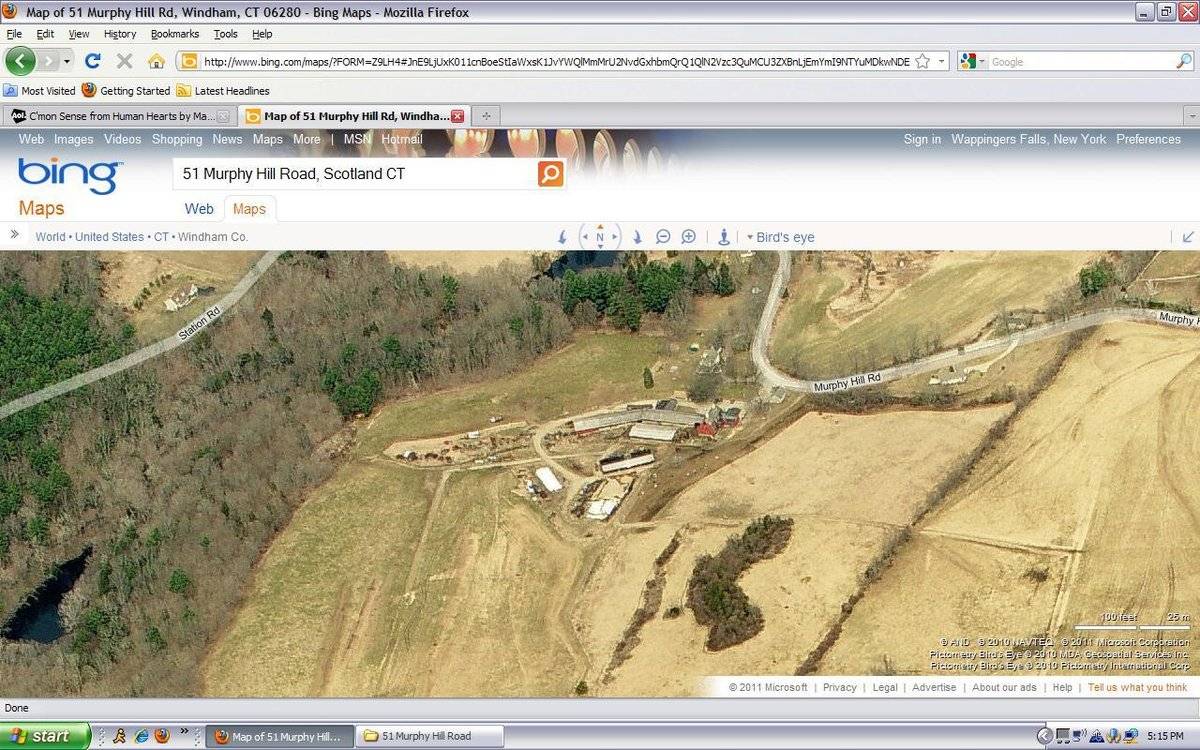
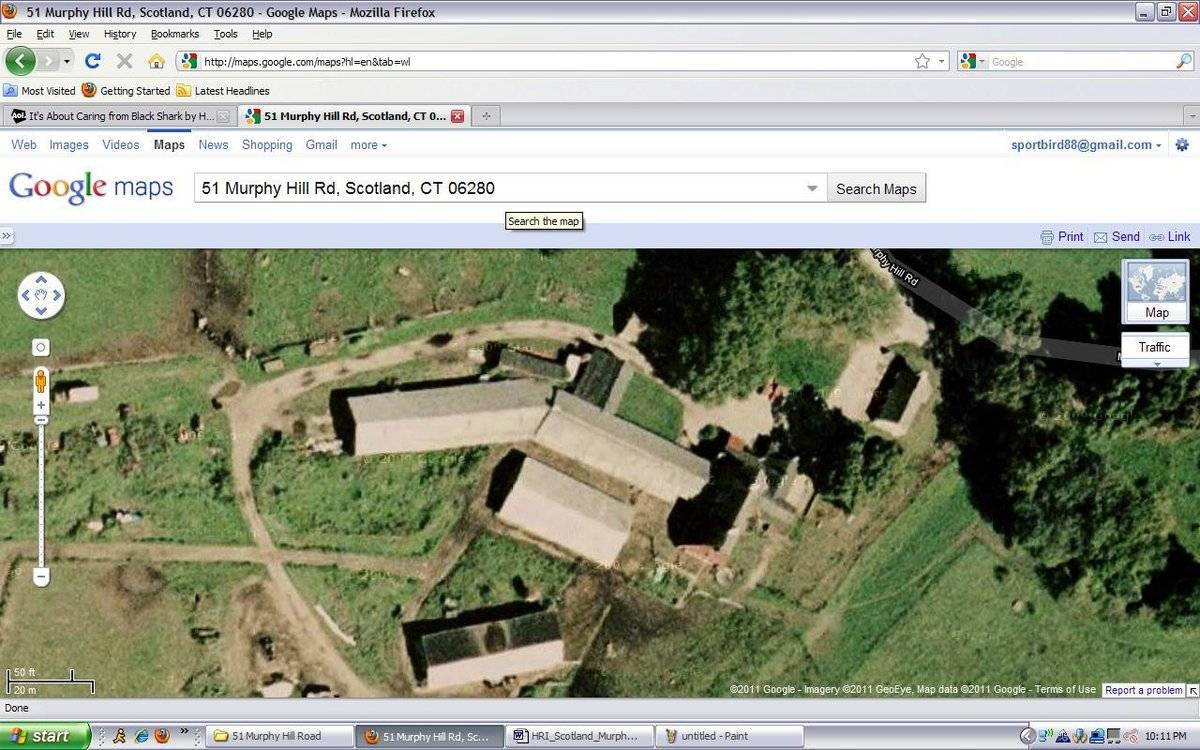
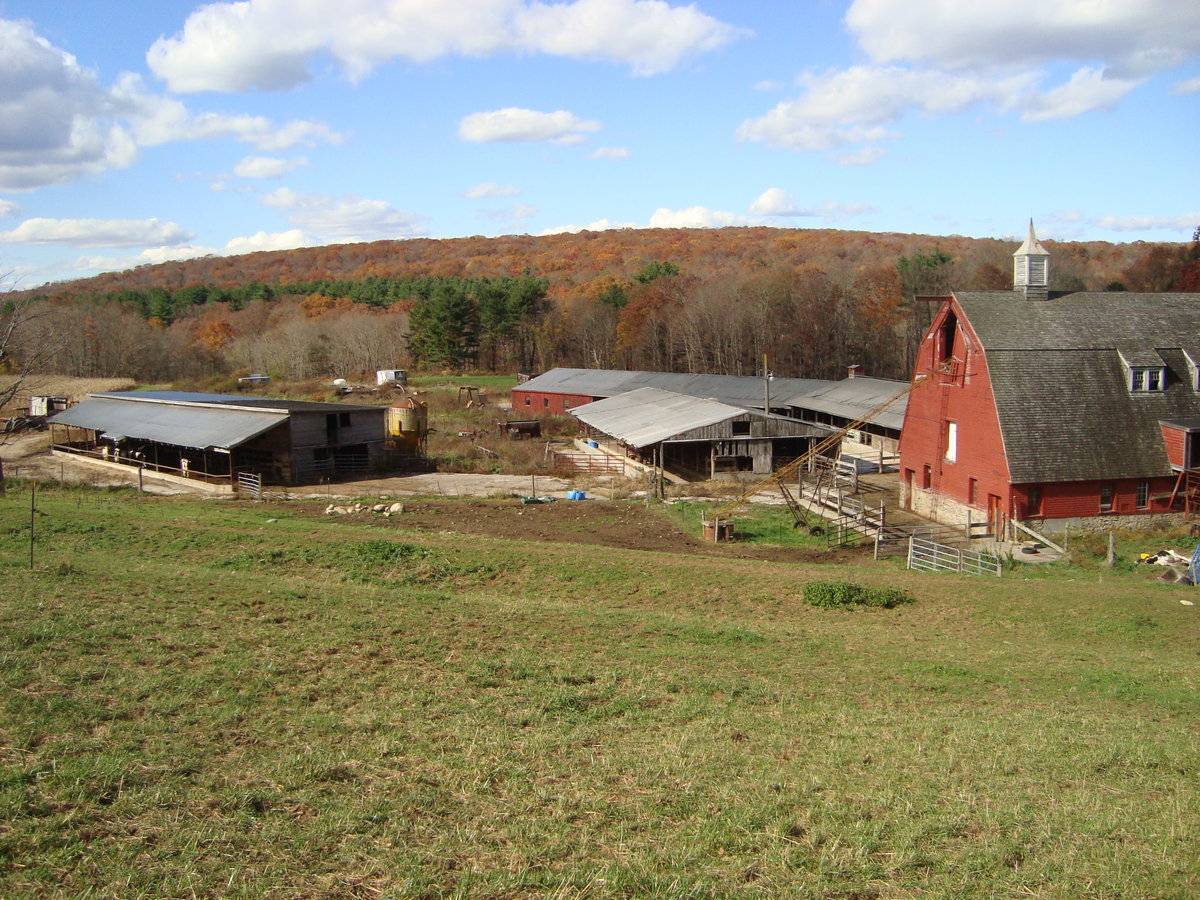
This barn complex is located to the south of the Town of Scotland in a largely agricultural enclave with a few scattered residences. The barns are located on a 146.6-acre parcel that is bordered by Murphy Hill Road to the north, and the Scotland-Baltic town line to the south. The property consists mainly of agricultural fields to the south of the barn complex, but also features several additional agricultural structures and a c. 1996 residential structure.
To the east of the barn complex is a 1 ½-story eave-entry structure with a gable-roof. Its main façade faces west, and its ridge-line runs southwest-northeast. To the south of the barn complex is a gable-roof barn, its ridge-line running northwest-southeast. To the south of this barn is an additional gable-roof barn, its ridge-line running east-west.
The c. 1996 house is located to the east of the barn complex. This appears to be a 1 ½-story gable-roof structure with a 1 ½-story gable-roof wing to its north. The main façade appears to face east. The walls are covered with taupe vinyl siding. The roofs are covered with asphalt shingles. The house is approached via a paved drive that begins on Murphy Hill Road. To the south of the house is a grove of trees that partitions the house from the remainder of the property.
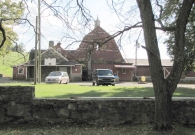
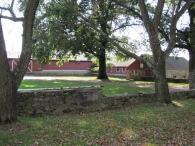
To the north of the barns, the property is bordered by a mortared cut stone wall arranged in irregular coarses. A paved drive that begins on Murphy Hill Road runs west on the north side of the barn complex, before turning south. Beyond the boundaries of the property are large expanses of woodlands interspersed with occasional tracts of farmland.
- Typology & Materials
-
Building Typology
Materials
Structural System
Roof materials
Roof type
Approximate Dimensions
20,846 square feet.
- Source
-
Date Compiled
03/29/2011
Compiled By
E. Reisman & T. Levine; reviewed by CT Trust
Sources
Field notes and photographs by Joan Tomaszewski, 10/17/2010.
Additional field notes and photographs added by Kevin P. Ring, Sr. - 6/16/2011.
Town of Scotland’s GIS Viewer:
http://www.wincog-gis.org/ags_map/default.asp?town=Scotland
(Parcel ID #33/29/7: 146.6-acres: c. 1996 house, 1,512 sq. ft.)
Aerial Mapping:
http://maps.google.com accessed 03/29/2011
http://www.bing.com/maps accessed 03/29/2011.Sexton, James, PhD, Survey Narrative of the Connecticut Barn, Connecticut Trust for Historic Preservation, Hamden, CT, 2005, http://www.connecticutbarns.org/history.
Visser, Thomas D., Field Guide to New England Barns and Farm Buildings, University Press of New England, 1997.
- PhotosClick on image to view full file
-