Barn Record Plainfield
RETURN TO ‘FIND BARNS’- Building Name (Common)
- n/a
- Building Name (Historic)
- n/a
- Address
- 26 Main Street (Rte 12), Plainfield
- Typology
- Overview
-
Designations
Historic Significance
Architectural description:
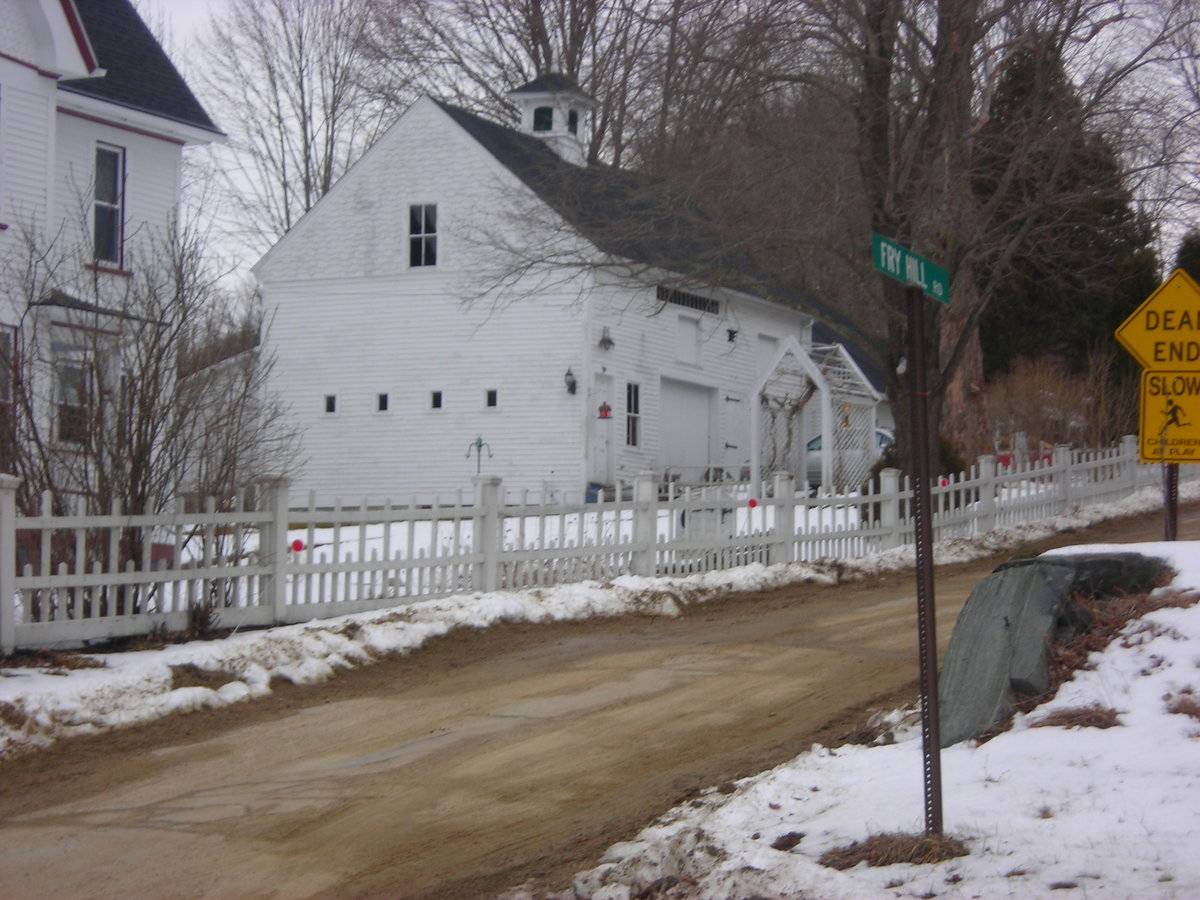
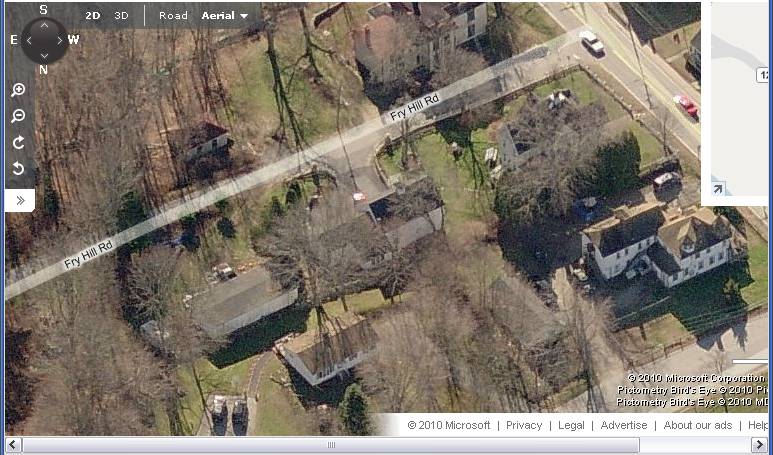
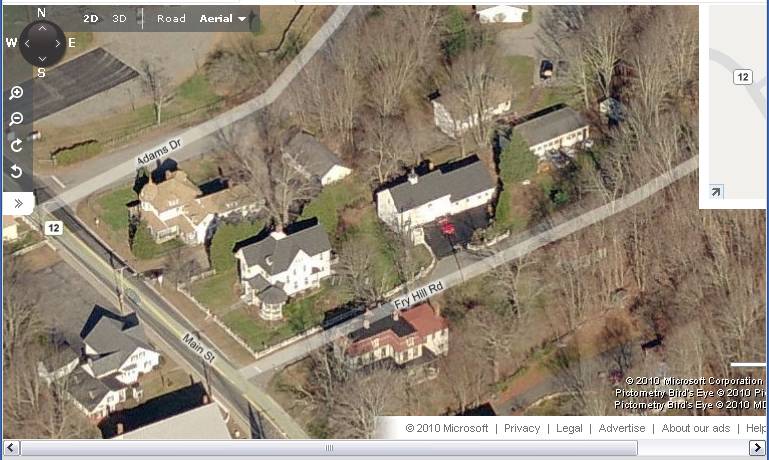
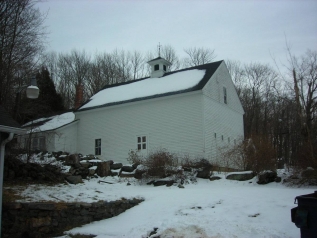
This is a large 1 ½-story eave-entry bank barn with a gable-roof. Although the house on this site faces and is addressed on Main Street, the primary façade of this barn is the southeast eave-side, which faces Fry Hill Road. Fry Hill Road passes this site at a southwest to northeast angle. A gable-roof addition, which is likely modern, adjoins this historic barn on its northeast gable-end. This barn and associated house are both listed as contributing structures in the Central Village Historic District on the National Register of Historic Places.
The primary façade of this barn is the southeast eave-side and four bays in width, and contains several main entries on the first story. These entries consist of two oversize entry doors in the east and west-central bays. A hinged wood-plank door is located in the east-central bay. The west bay contains a wooden paneled pass-through door at the south corner, with a four-pane double-hung window immediately to the east. A rectangular hay-door is centered above each of the oversize entries on the first-story. A lengthy transom-light is situated just beneath the eave over the west-central oversize and hay doors. No other openings are apparent on this façade.
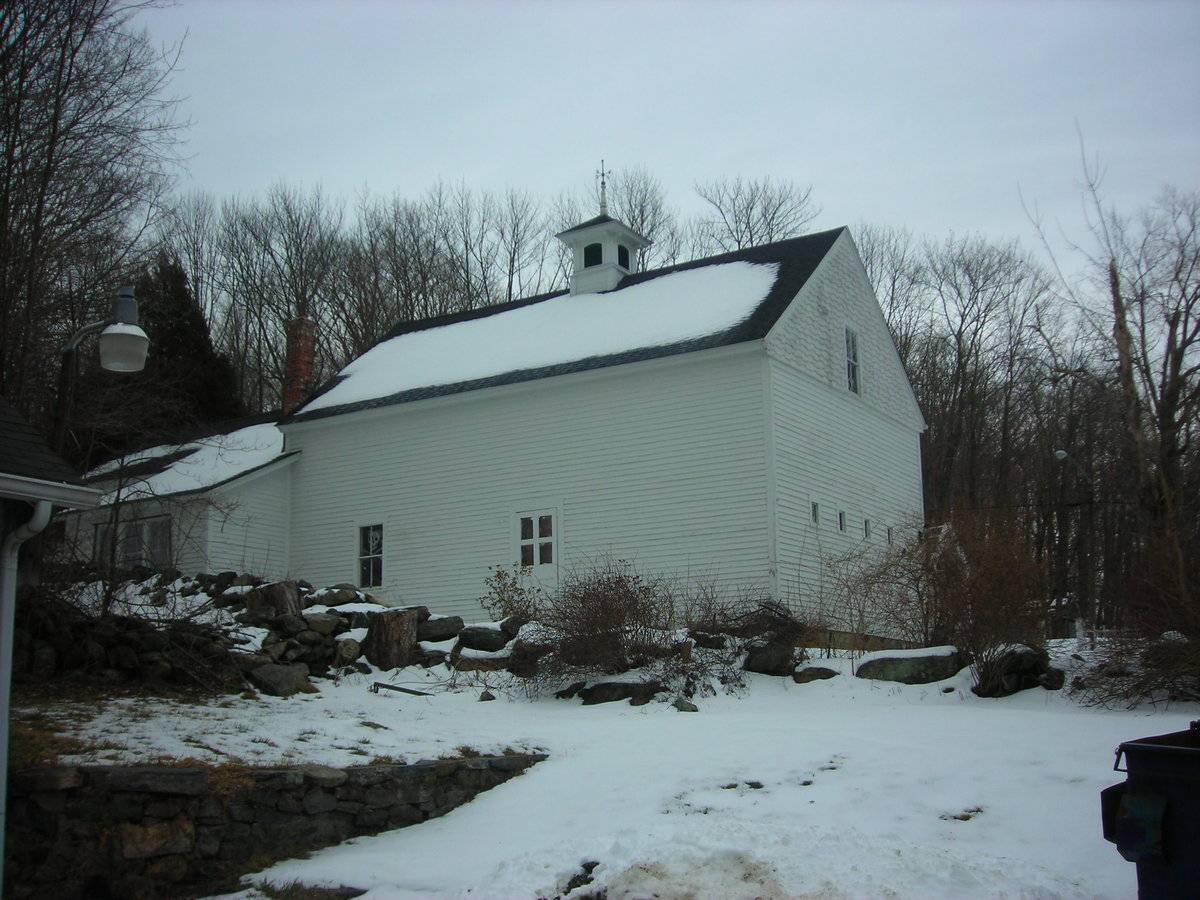
The southwest gable-end contains four very small rectangular windows symmetrically placed along the length of the first-story. A single double-hung two-over-two window is centered within the gable-attic, just above the girt line. An exterior porch light is mounted on the first story at the south corner on this end. The northwest eave-side contains a slightly off-centered wood panel pass-through door, with four window panes in the upper half. A single two-over-two double-hung window is mounted in the northern half of this eave-side. The northeast gable-end attaches to what appears to be a more modern gable-roof addition, which is not documented in this Historic Resource Inventory. No openings are apparent on the northeast gable-end of the main barn.
The exterior of this barn is faced with horizontal wooden clapboard siding. The southwest gable-attic exterior is faced in decorative horizontal shingling. The roof is clad with black asphalt shingles. A square cupola is centered on the roof ridgeline. Each of the four sides contains a slightly-arched louvered vent, painted black. It is capped by a shallow pyramidal roof, with wide eaves and decorative corner brackets. The apex of the pyramid is topped by a short spire and weathervane.
Historical significance:
The oldest barns still found in the state are called the “English Barn,” “side-entry barn,” “eave entry,” or a 30 x 40. They are simple buildings with rectangular plan, pitched gable roof, and a door or doors located on one or both of the eave sides of the building based on the grain warehouses of the English colonists’ homeland. The name “30 by 40” originates from its size (in feet), which was large enough for 1 family and could service about 100 acres. The multi-purpose use of the English barn is reflected by the building’s construction in three distinct bays - one for each use. The middle bay was used for threshing, which is separating the seed from the stalk in wheat and oat by beating the stalks with a flail. The flanking bays would be for animals and hay storage.
The 19th century saw the introduction of a basement under the barn to allow for the easy collection and storage of a winter’s worth of manure from the animals sheltered within the building. The bank barn is characterized by the location of its main floor above grade, either through building into a hillside or by raising the building on a foundation.
This innovation, aided by the introduction of windows for light and ventilation, would eventually be joined by the introduction of space to shelter more animals under the main floor of the barn.
Historical Background:
This barn is located just to the east of the village center of Central Village. Central Village is a distinct settlement within the town of Plainfield. Much of the village was designated as a Historic District on the National Register of Historic Places in 1991. The house at 26 Main Street is of the Queen Anne style and is one of several large high-styled houses on larger-than-average lots fronting Main Street. Most of the houses in this district were built in the mid to late 1800s, making this one of the more recent additions. This barn was likely never used for agricultural purposes and probably began as a carriage house. See the National Register nomination forms linked in the Sources section of this Historic Resource Inventory for more information about the Central Village Historic District.
Field Notes
At NW corner of Fry Hill Rd. Main Street (Rte 12) is also known as Putnam Rd. Assessor: http://plainfield.ias-clt.com/parcel.detail.php?id=1CV-0085-003501 Parcel ID: 1CV-0085-0035 1.87 acres House c. 1902 AB1 BANK BARN 1 1860 25 36 900 C FAIR (Res) RS1 FRAME UTILITY SHED > 100 1 1902 22 50 1100 C AVERAGE (Res) RG1 FRAME OR CB DETACHED GARAGE 1 1980 23 31 713 C AVERAGE (Res) RS1 FRAME UTILITY SHED > 100 1 1930 11 16 176
- Use & Accessibility
Use (Historic)
Use (Present)
Exterior Visible from Public Road?
Yes
Demolished
n/a
Location Integrity
Unknown
- Environment
Related features
Environment features
Relationship to surroundings
Although the house on this site is faces and is addressed on Main Street, the primary façade of this barn is the southeast eave-side, which faces Fry Hill Road. Fry Hill Road passes this site at a southwest to northeast angle. The barn is easily visible from the side-street. It is accessed by a wide asphalt driveway and parking area situated between the front of the barn and Fry Hill Road. A decorative wooden fence lines Fry Hill Road to the north and south of the driveway entry. Fry Hill Road inclines toward the northeast. This barn and house are located near the center of the Central Village Historic District, and the surrounding blocks of Main Street include several high-styled dwellings, many with associated barns or carriage houses. Woodlands are intermixed between and behind many of the dwellings.
- Typology & Materials
-
Building Typology
Materials
Structural System
n/a
Roof materials
Roof type
Approximate Dimensions
Bank Barn: 900 square feet
- Source
-
Date Compiled
06/11/2011
Compiled By
N. Nietering & T. Levine, reviewed by CT Trust
Sources
Photographs by Charles and Irene Hutchinson.
Sexton, James, PhD; Survey Narrative of the Connecticut Barn, Connecticut Trust for Historic Preservation, Hamden, CT, 2005, http://www.connecticutbarns.org/history.
Visser, Thomas D.,Field Guide to New England Barns and Farm Buildings,
University Press of New England, 1997, 213 pages.Map of Plainfield, CT, retrieved on June 8, 2011 from website www.bing.com.
Plainfield Assessor’s Records - Plainfield, CT Assessor Database online - http://plainfield.ias-clt.com/parcel.list.php
Clouette, Bruce and Roth, Matthew, “Central Village Historic District,” National Register Nomination Form, 1991. Available from the Web: http://pdfhost.focus.nps.gov/docs/NRHP/Text/91000949.pdf
- PhotosClick on image to view full file
-