Barn Record Southington
RETURN TO ‘FIND BARNS’- Building Name (Common)
- Quality Oil Company Barn
- Building Name (Historic)
- John Collins Store Barn
- Address
- 756 Main Street (Rte 10), Southington
- Typology
- Overview
-
Designations
Historic Significance
Architectural description:
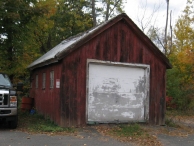
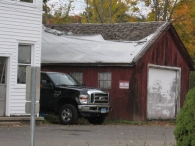
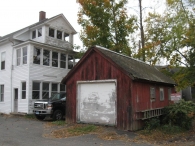
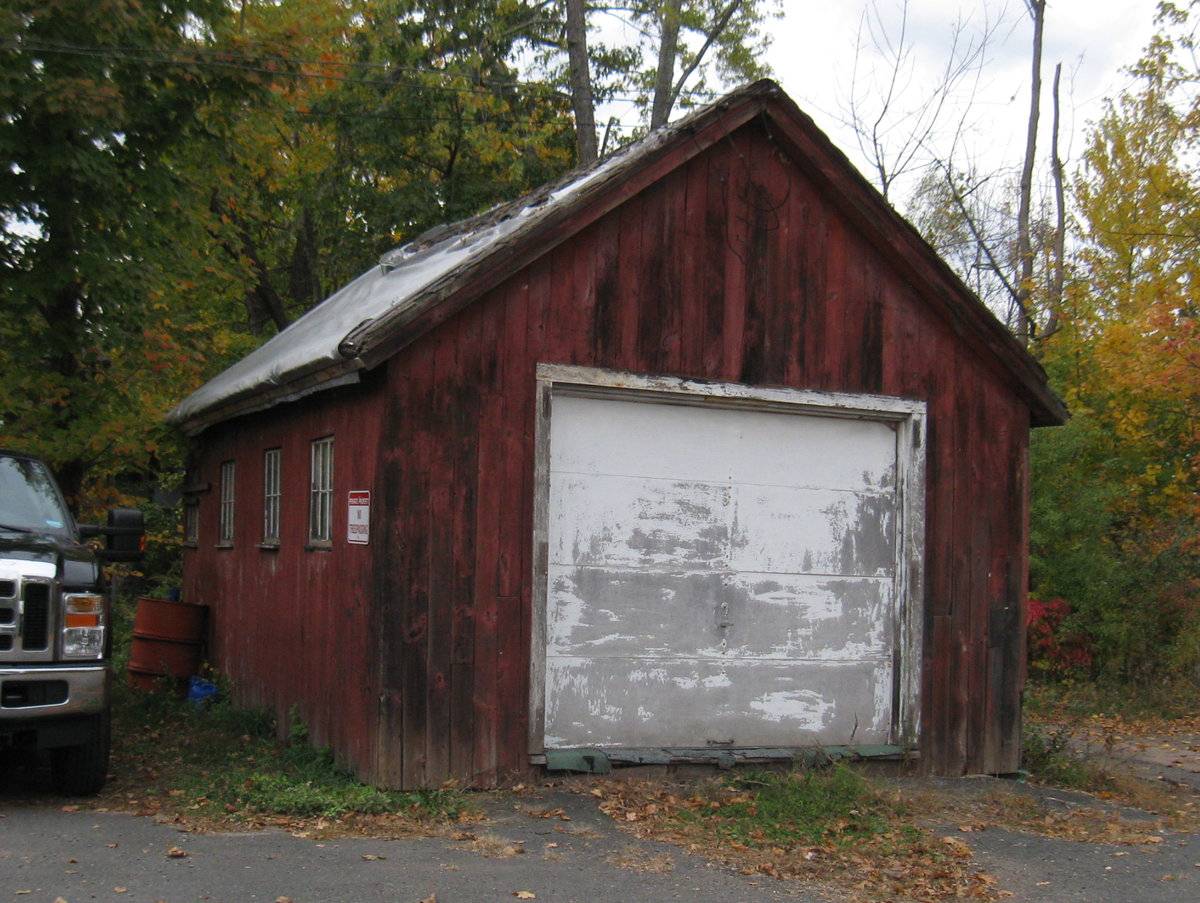
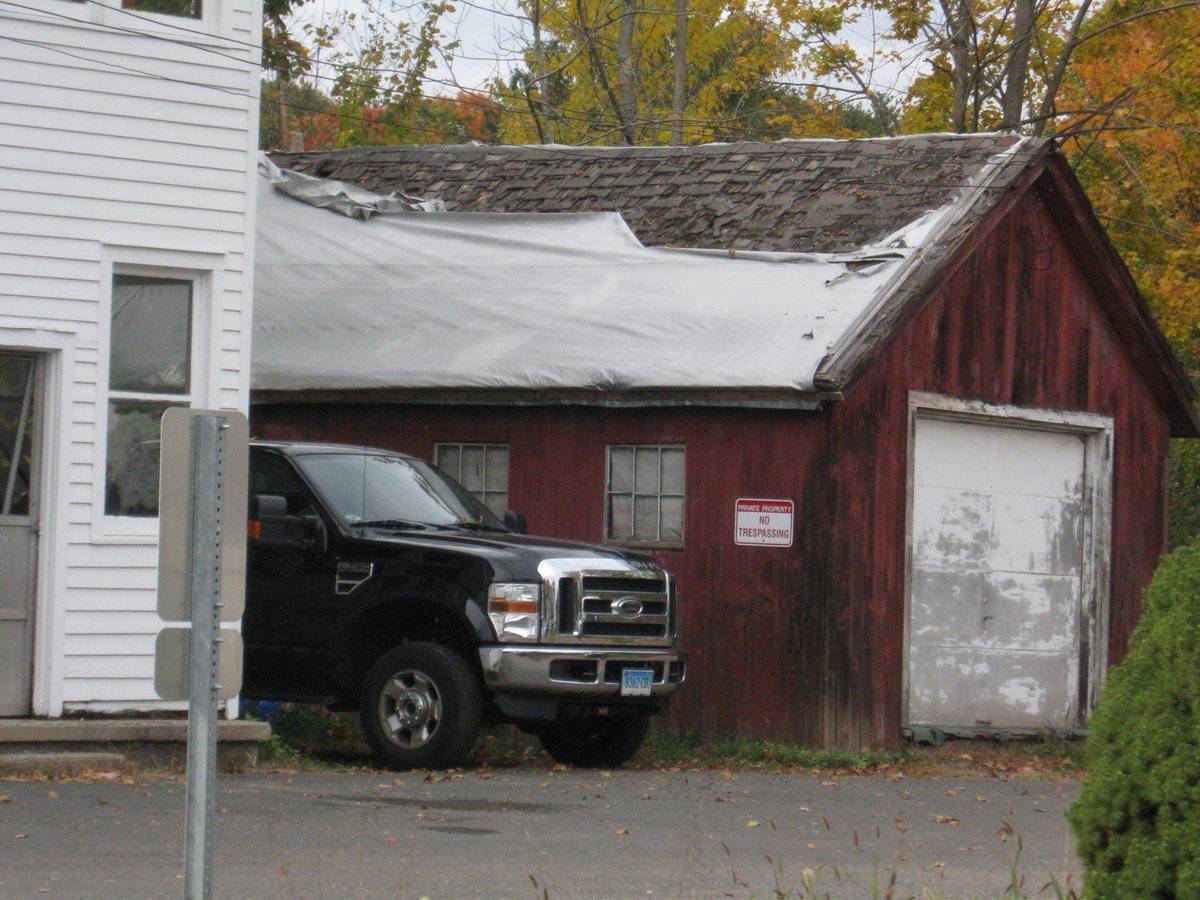
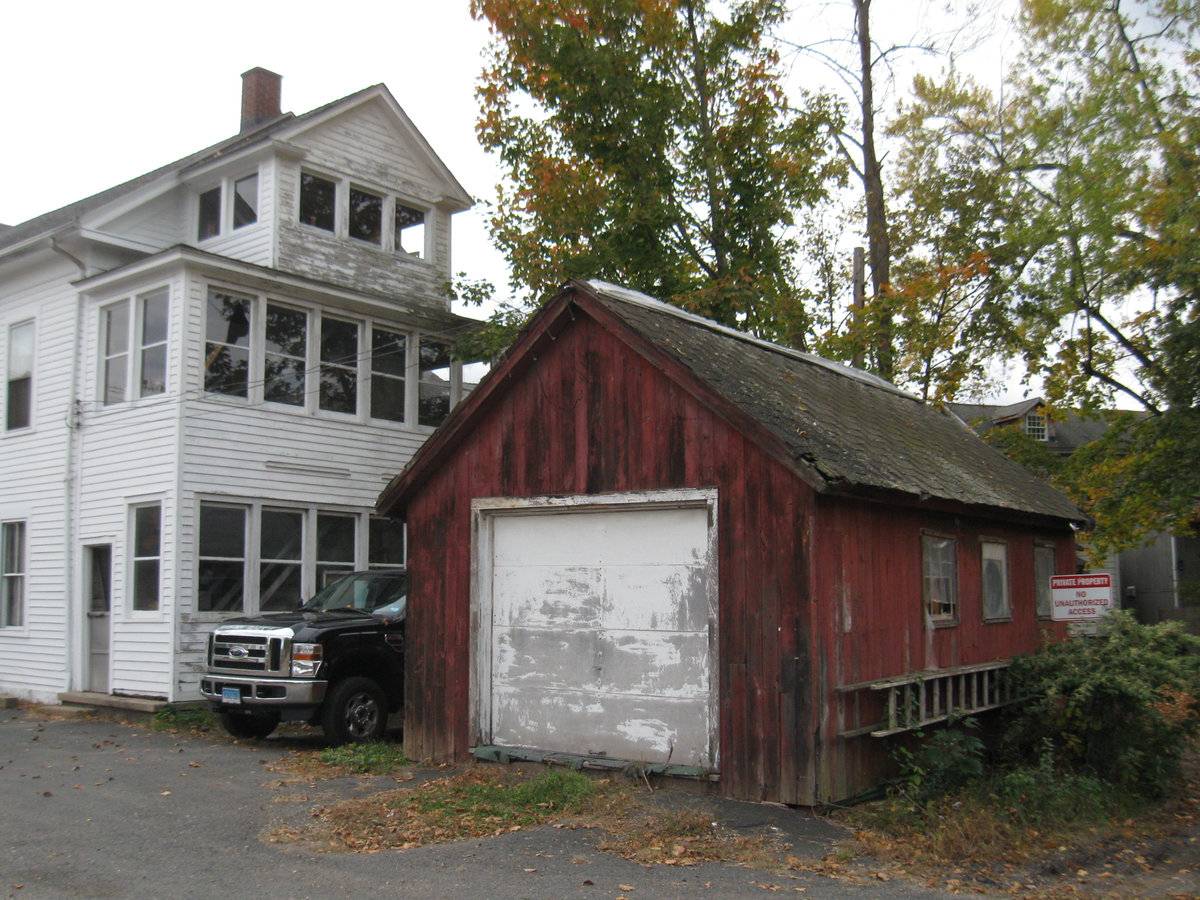
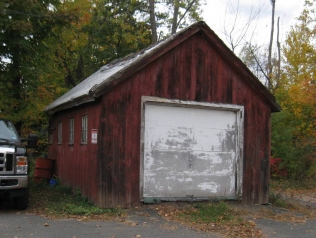
This is a one-story gable-roofed structure with its ridge-line oriented east-west. The east gable-end faces a wide driveway and has an overhead door. The north and south eave-sides have two six-pane stable-type windows each. Siding is vertical boards stained red. Roofing is severely deteriorated apshalt shingles.
Historical significance:
Known as the shop, workshop, carpentry shop, toolshed, blacksmith shop, or machine shop, these small, well-lighted buildings provide a heated space for making and repairing furnishings, tools, and equipment, as well as for earning outside income through various trades. Typically 1 1/2 stories with a gabled front, and easily accessible doorway, and windows all around, most shops have a chimney for venting a cast iron rood or coal stove.
Historical background:
The Plantsville Historic District, located in Southington, Connecticut, encompasses approximately 116 acres. Formerly known as “Pearl’s Corners,” Plantsville developed at the junction of roads leading from Farmington to Waterbury and from Bristol to New Haven (present day Main, South Main, and West Main Streets). The district contains a mixture of industrial, commercial, and residential architecture. At the center of the district are several industrial complexes that were home to Southington’s prosperous hardware industry, which flourished in the mid-to-late nineteenth century. Plantsville’s identity as an industrial center began to take shape in 1842 when the Plant Brothers, A.H. Plant and E.M. Plant harnessed the water power of the Quinnipiac River to operate a factory for the manufacture of carriage bolts. Manufacturing buildings are located along the Quinnipiac River and Penn Central Railroad (formerly the New Haven and Northampton Railroad, now the Farmington Canal Trail) that bisects the district and along the Eight Mile River that runs through the western edge of the district. A strip of commercial architecture runs east-west along Main and West Main Streets, connecting the district’s two main residential concentrations. These areas are centered on Church Street and on Grove Street. A substantial strip of residential architecture also extends northward along Summer Street (formerly Water Street) near the course of the Quinnipiac River (Lewis, 1988).
Field Notes
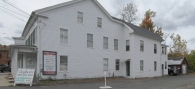
Contributing resource in the Plantsville Historic District. John Collins Store, Greek Revival/Italianate, c!840 and 1870. Italianate storefront (c!870) added to Greek Revival house (c!840). Barn, c.1880 (Lewis). Gas Station, Colonial Revival, c.1910.
- Use & Accessibility
- Environment
Related features
Environment features
Relationship to surroundings
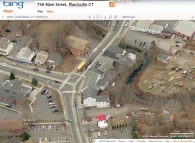
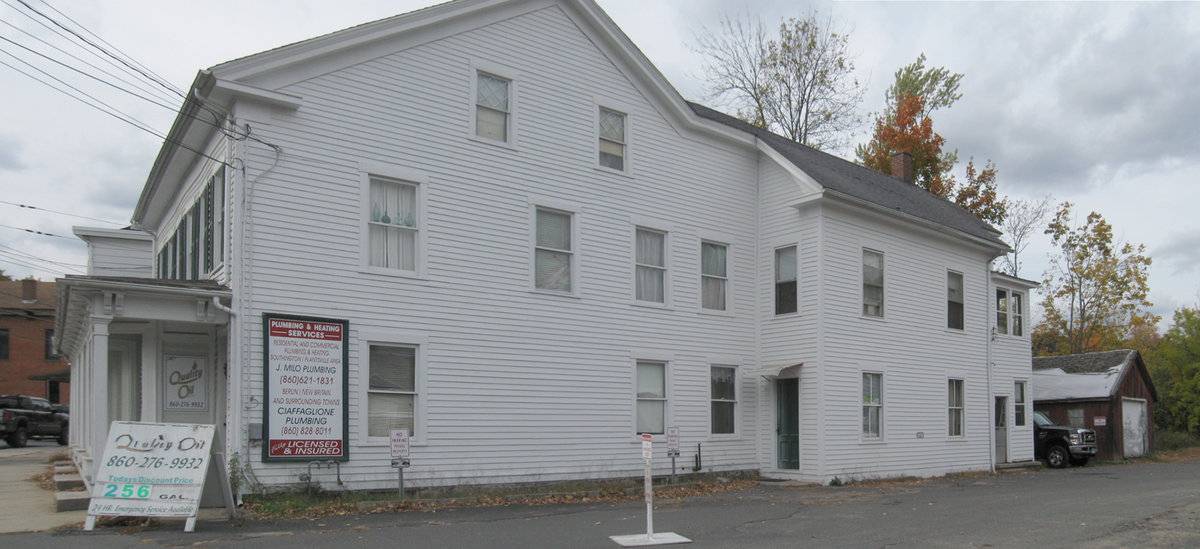
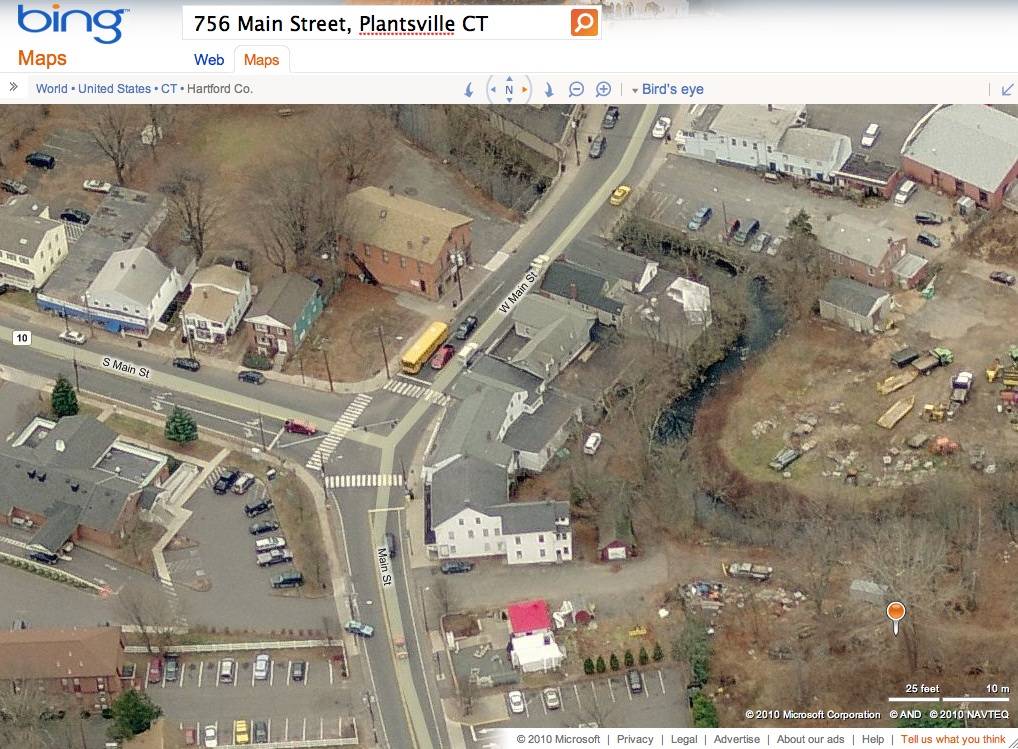
This small barn or workshop shed is located close behind, to the north of, its associated building, a commercial building of Greek Revival style with Italianate storefront additions, in the Plantsville Historic District. Main Street runs east-west through the center of Plantsville, crossing the Quinnipiac Rever to the west of this property. The former railroad line which is now the Farmington Canal Heritage Trail parallels the river to the west and is still lined with industrial and commercial buildings from the 19th century. The neighborhood consists of some streets of densely-developed 19th- and early-20th-century homes, while other blocks have larger lots, with substantial mansions of the mill owners of Plantsville’s period of industrial prosperity. Many of the large lots have been further subdivided and infill construction added. In the area of this property many buildings are in commercial use. A 1945 gasoline filling station building is located to the east on the same 2-acre property.
- Typology & Materials
-
Building Typology
Materials
Structural System
Roof materials
Roof type
Approximate Dimensions
16 feet x 24 feet
- Source
-
Date Compiled
11/21/2010
Compiled By
Charlotte Hitchcock, reviewed by CT Trust
Sources
Sources Field notes and photographs by Charlotte Hitchcock date 10/21/2010.
Town of Southington Assessor’s Record and GIS Viewer http://www.southingtongis.com/ags_map/
Parcel ID 075033 2.01 acres 16 x 24 ft Assessor gives 1945 (probably the gas station adjacent)
Aerial Mapping:
http://maps.google.com
http://www.bing.com/maps accessed 11/19/2010Andrews, Gregory, Sherrow, Doris, Colonial Houses of Southington Thematic Resource National Register Nomination, National Park Service, 1987.
Lewis, Barbara, Andrews, Gregory, Plantsville National Register District Nomination No. 88002673, National Park Service, 1988.
Ransom, David, Johnson, Lisa Fern, Southington Center National Register District Nomination No. 88002961, National Park Service, 1988.
Sexton, James, PhD, Survey Narrative of the Connecticut Barn, Connecticut Trust for Historic Preservation, Hamden, CT, 2005, http://www.connecticutbarns.org/history.
Visser, Thomas D., Field Guide to New England Barns and Farm Buildings, University Press of New England, 1997.
- PhotosClick on image to view full file
-