Barn Record East Haddam
RETURN TO ‘FIND BARNS’- Building Name (Common)
- My Father's House Retreat Center
- Building Name (Historic)
- Clovermead Farm / Orchard Mansion Resort
- Address
- 39 North Moodus Road, East Haddam
- Typology
- Overview
-
Designations
Historic Significance
Architectural description:
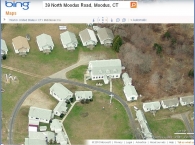
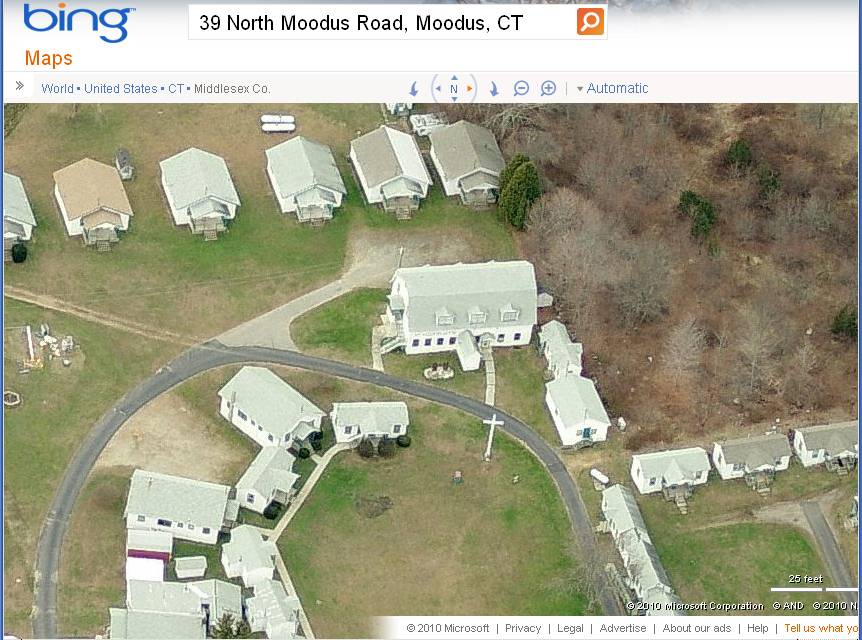
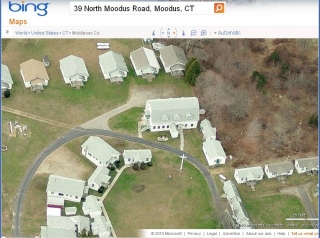
This is a 2 1/2-story gambrel-roofed structure with its ridge-line oriented north-south. It has been converted to use as program space for the resort/retreat center. The south gable-end has a door at the second floor level, approached by a porch and stair up from grade. There is a door at the grade level also, below the porch. The grade-level door is flanked by a window on the left (west) only; the right side has the stair butted against the wall. The second floor door is flanked by high double-hung windows on both sides. There is a vent or small window in the peak below the roof ridge, which has a projecting hay hood.
The east eave-side has, from the left (south) corner, a row of four double-hung windows, a projecting gable-roofed one-story addition, a double-hung window, a door with a small porch with a gable roof, and two double-hung windows. Above in the steep pitch of the roof there are three gable-roofed dormers, each with a pair of double-hung windows.
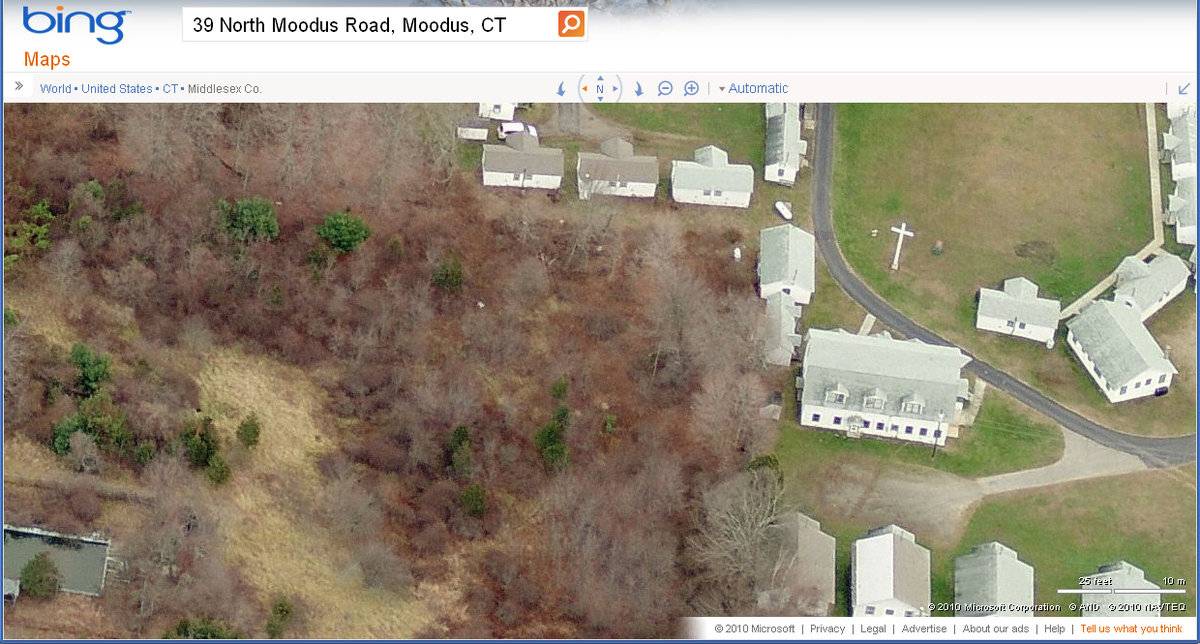
The north gable-end has two double-hung windows on each of the two floor levels, and appears to have a single door in the center of the ground floor. The west eave-side has a row of eight double-hung windows and a door with a porch and gable roof between the second and third windows from the left (north). In the steep roof pitch there are three dormers similar to the east side.
Siding appears to be horizontal lap or clapboard, painted white, and roofing is asphalt shingles.
Historical significance:
The New England barn or gable front barn is the successor to the English barn and relies on a gable entry rather than an entry under the eaves. The gable front offers many practical advantages. Roofs drain off the side, rather than flooding the dooryard. With the main drive floor running parallel to the ridge, the size of the barn could be increased to accommodate larger herds by adding additional bays to the rear gable end. Although it was seen by many as an improvement over the earlier side entry English Barn, the New England barn did not replace its predecessor but rather coexisted with it as both types continued to be constructed.
The gambrel roof enclosed a much greater volume than a gable roof did, and its shape could be formed with trusses that did not require cross beams, which would interfere with the movement and storage of hay. Also known as the curb roof, the double slopes of the gambrel offer more volume in the hayloft without increasing the height of the side walls.
Field Notes
Farm converted to Jewish-oriented resort after 1926 purchase of farm by Morris Mager, mortgaged by Jewish Agricultural Society, Inc. After closing of resort in 1972, converted to Roman Catholic retreat center. Orchard Mansion is significant architecturally because it is a complete campus of about two dozen buildings constructed as a resort by a Jewish owner... The campus is a well-preserved example of a resort of the type for which Moodus was well-known. The original Greek Revival house and gambrel-roofed barn are typical of farm buildings acquired by Jewish owners with mortgage assistance of the Jewish Agricultural Society. Both the house and barn appear to be complete, the house with additions. Established Connecticut farms often changed hands in the manner for which the Orchard Mansion house and barn provide a documented example (Ransom, p. 104).
- Use & Accessibility
Use (Historic)
Use (Present)
Exterior Visible from Public Road?
Yes
Demolished
n/a
Location Integrity
Unknown
- Environment
Related features
Environment features
Relationship to surroundings
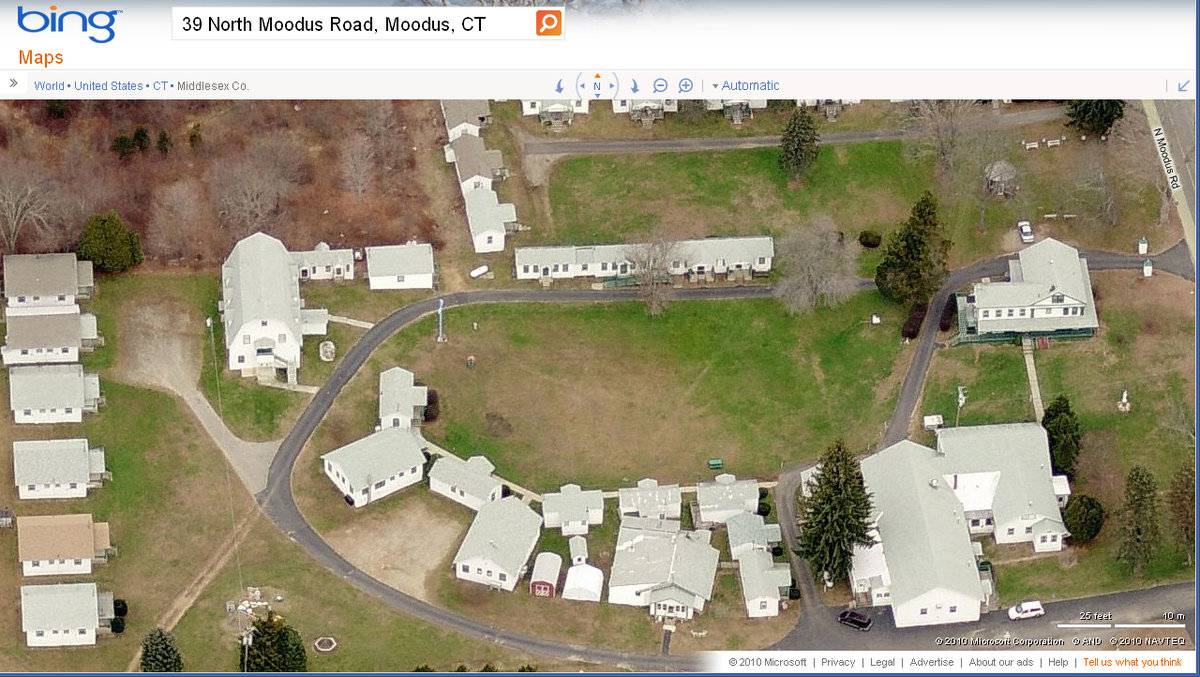
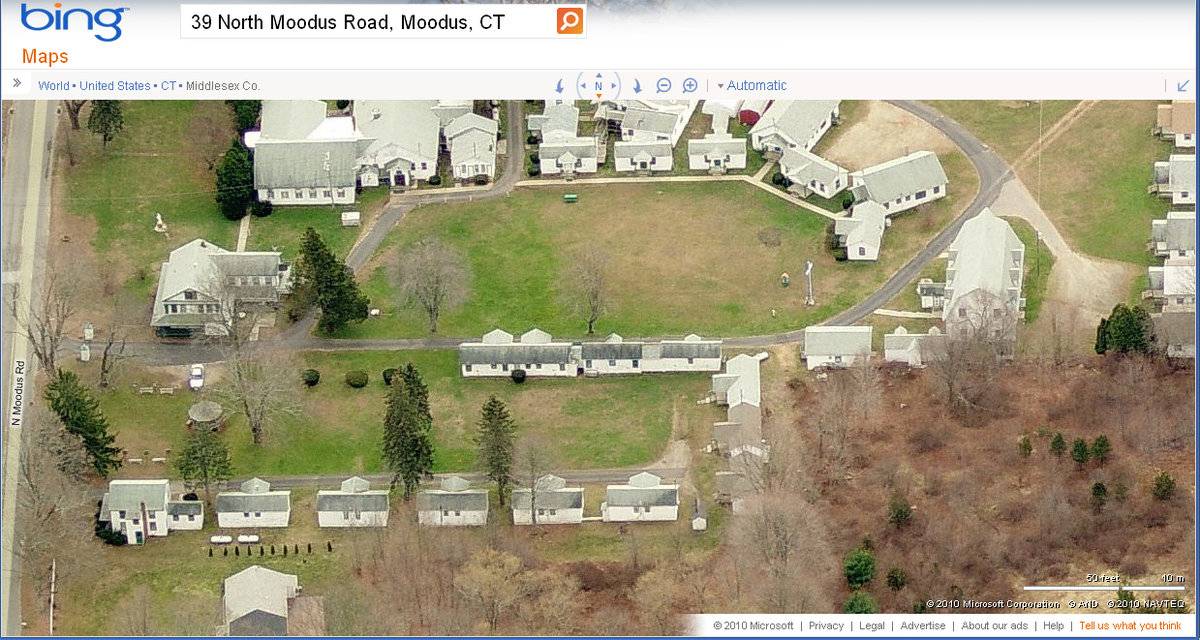
The 62-acre property includes an early 19th-century farmhouse, an early 20th-century gambrel barn, and a complex of residential cabins, dining, meeting, and chapel facilities, most of which date from the period of 1927-72 when Orchard Mansion operated as a Jewish vacation resort. After 1972 it was converted to a Christian retreat center. The property is located on North Moodus Road, north of the center of Moodus. The area was home to a number of resorts catering to Jewish clientele during the mid-20th-century. Today the area has a mix of commercial uses along North Moodus, Routes 151 and 149, and Plains Road, which intersect in the village of Moodus. In addition there is residential development, a country club (another former resort), and second growth woodlands along with a few remaining open farm fields.
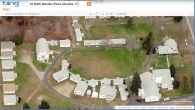
The house and barn are the oldest structures, with the L-shaped two-story house located on the west side of North Moodus Road behind an expanse of lawn and the gambrel barn set back to the west of the house. Subsequent structures have filled in around these two to create the resort complex focused on a central lawn between the house and barn.- Typology & Materials
-
Building Typology
Materials
Structural System
Roof materials
Roof type
Approximate Dimensions
34 feet x 60 feet
- Source
-
Date Compiled
12/01/2010
Compiled By
Charlotte Hitchcock, reviewed by CT Trust
Sources
Town of East Haddam Assessor’s Record
http://www.rmsreval.com/results.asp?ID=873421188&town=East%20Haddam
M/B/L: M64-L054 62 acres (5 commercial, 57 open land) gambrel bldg 1920.Aerial views from:
http://maps.google.com/
http://www.bing.com/maps/ accessed 12/01/2010.Cunningham, Janice, and Ransom, David; Back to the Land: Jewish Farms and Resorts in Connecticut 1890-1945, State of Connecticut Historical Commission and Jewish Historical Society of Greater Hartford, 1998, 186 pages, pp.102-105.
Sexton, James, PhD; Survey Narrative of the Connecticut Barn, Connecticut Trust for Historic Preservation, Hamden, CT, 2005, http://www.connecticutbarns.org/history.
Visser, Thomas D.,Field Guide to New England Barns and Farm Buildings, University Press of New England, 1997, 213 pages.
Website: http://www.simonpure.com/resorts.htm
Reminiscences of visitors to Orchard Mansion resort. - PhotosClick on image to view full file
-