Barn Record Brooklyn
RETURN TO ‘FIND BARNS’- Building Name (Common)
- Niemann's Allen Hill Mini Storage
- Building Name (Historic)
- Bouthillier Barn
- Address
- 311 Allen Hill Road, Brooklyn
- Typology
- Overview
-
Designations
n/a
Historic Significance
Architectural description:
Barn I:
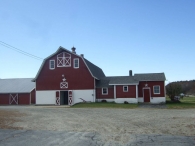
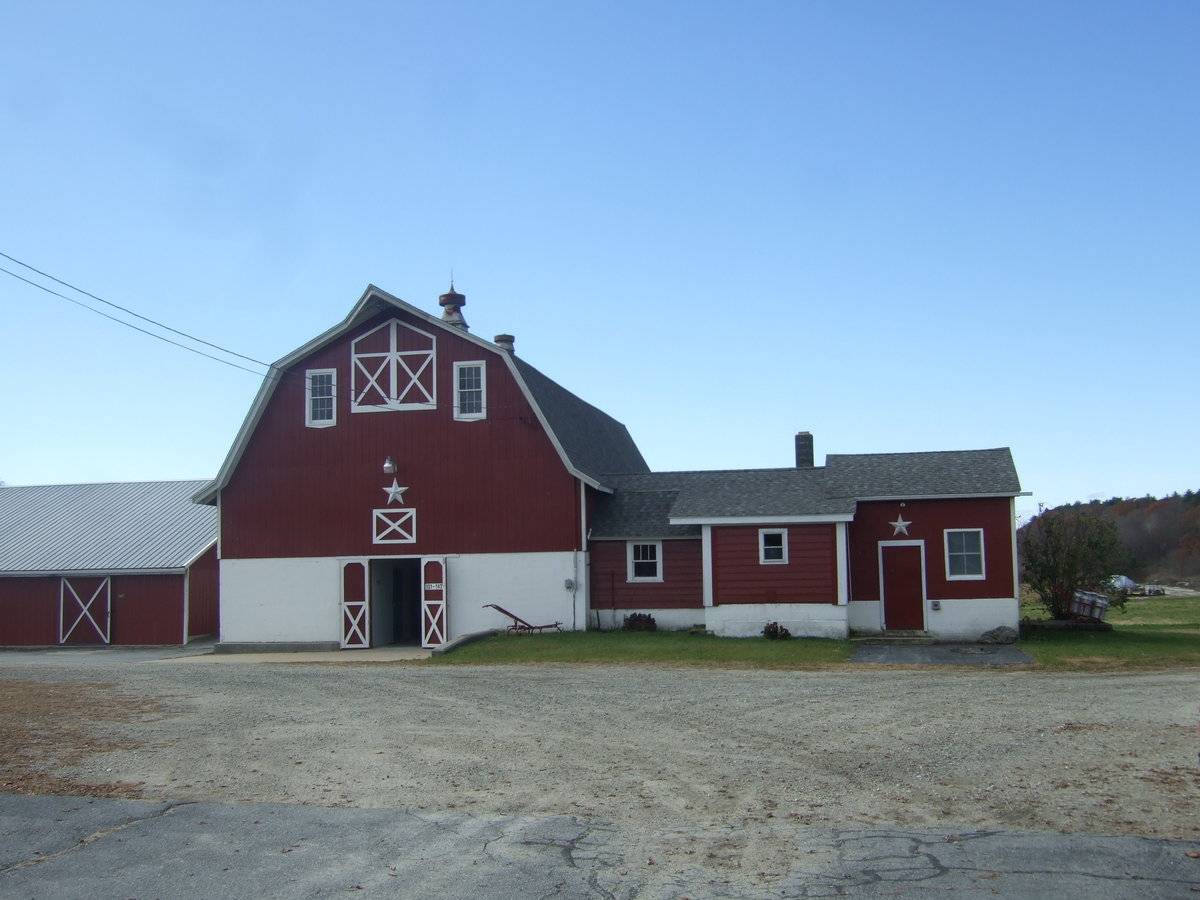
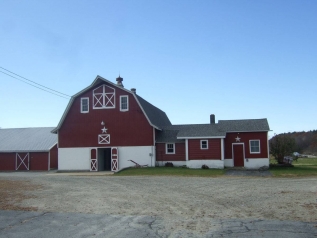
This is a 2-story gambrel barn with a gable-roof additions. The main gable-end façade faces east and the ridge-line runs east-west. The main entry is a centered pair of exterior sliding doors. In the gable attic there is a pair of six-over-six double-hung windows. There are two hay doors which appear to be fixed closed, with exterior x-bracing above the main entry and below the projecting hay hood in the gable peak. Extending from the northeast corner of the north eave-side of the barn, there is a series of small additions. A gambrel-roofed 1-story addition is attached to the main barn, likely the original milk room; it has a three-over-one double-hung window in its east eave-side. A shed-roofed addition extends north from the east side of this, with a one-over-one double-hung window in its east eave-side. A gable-roofed 1-story addition extends the milk room portion northward with the ridge-lines aligned. There are a pass-through door and a two-over-two double-hung window in the east eave-side of this addition. The west gable-end and the south eave-side of the barn appear to be blank. The barn foundation level and first story are concrete and second story has vertical flushboard siding. The first floor is painted white and the siding is painted red, with white trim. The additions have a concrete foundation and horizontal shiplap and plywood siding. There are two iron ventilators in the ridge-line of the main barn. The Dutch gambrel roof has flared eaves and is covered with asphalt shingles
Barn II:
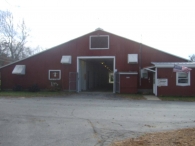
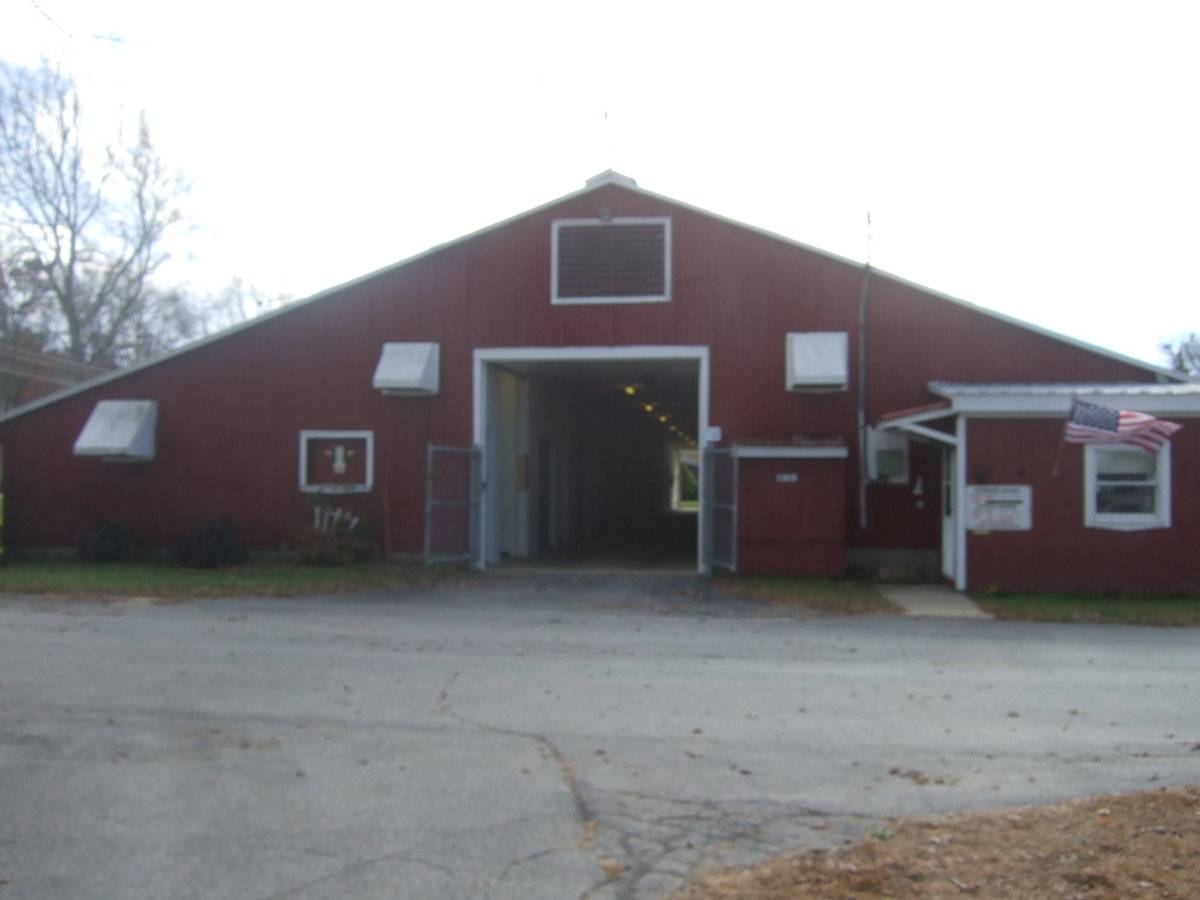
This is a 1 ½-story gable-entry pole barn with two additions. The main façade faces north and the ridge-line of the barn is roughly parallel with this portion of Allen Hill Road, which runs approximately north-south. The main entry is a centered double opening with exterior-swinging iron gates. There is a wooden louvred opening above the main entry. A 1 story shed-roof addition extends from the northwest corner of the main façade which has a pass-through door on its east side and a sash window on its north side. There are three window openings on the main façade covered with projecting tin hoods on the first story and another small shed roof addition. The west and east eave-sides have approximately 25 windows evenly spread across the main level. The south gable-end has a gable-roof addition with an entry flanked by two openings on its south gable-end. The barn has vertical flushboard siding painted red with white trim and is covered with a tin roof.A third barn (III) in the complex stands to the south of Barn I. This is a 1-story eave-entry gable-roof barn, with a ridge-line running north-south. The main façade faces east and has three exterior sliding doors. The remaining three sides are blank. The barn has vertical flushboard siding painted red and white with white trim and the roof is covered with tin.
A fourth barn (IV) stands between Barns I and II. This is a 1-story eave-entry barn, with a ridge-line running north-south. The main façade faces west and appears to have at least three garage entries. The south, east and north facades appear to be blank. The barn has a concrete foundation and wooden siding painted red. The roof is covered with tin.
Historical significance:Barn I:
By the early 20th century agricultural engineers developed a new approach to dairy barn design: the ground-level stable barn, to reduce the spread of tuberculosis bacteria by improving ventilation, lighting, and reducing the airborne dust of manure. A concrete slab typically serves as the floor for the cow stables. Many farmers converted manure basements in older barns into ground-level stables with concrete floors. Some older barns were jacked up and set on new first stories to allow sufficient headroom. With the stables occupying the entire first story, the space above serves as a hayloft. By the 1920s most ground-level stable barns were being constructed with lightweight balloon frames using two-by-fours or two-by-sixes for most of the timbers. Novelty or tongue-and-groove beveled siding is common on the walls, although asbestos cement shingles also were a popular sheathing. Some barns have concrete for the first-story walls, either poured in place or built up out of blocks. The gambrel roof design was universally accepted as it enclosed a much greater volume than a gable roof did, and its shape could be formed with trusses.
Barn II:
Most ground-level stable barns and free-stall dairy barns built since the 1970s have no hayloft. Instead, the roofs are supported by prefabricated wooden trusses covered with metal roofing. While most single-story truss-roofed barns in New England are constructed with concrete foundations and stud-framed walls, pole barns with open sides are becoming popular, especially for sheltering large herds of dairy cows, heifers, and beef cattle. Many of these large truss-roofed structures are free-stall barns, introduced in the late 1940s.
Field Notes
Barn I: Built after 1940, gambrel-roofed dairy stanchion barn has concrete foundation and vertical siding. Now used for storage rental. Barn II: Dairy free stall barn, now storage rental units
- Use & Accessibility
- Environment
Related features
Environment features
Relationship to surroundings
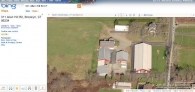
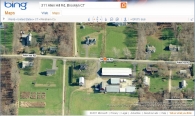
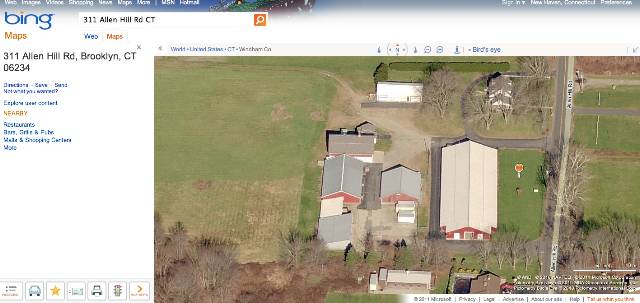
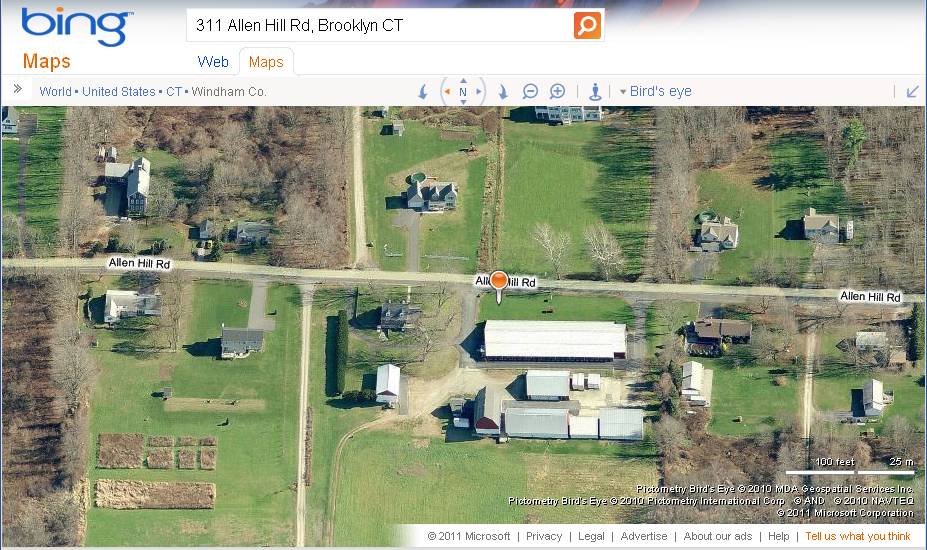
This is a complex of six or more barns and shed, located on the west side of Allen Hill Road which runs north-south. The associated house, built in c. 1949, is a 1 ½-story gable-roofed cape style with attic dormer windows. Three driveways run west from Allen Hill Road. The first and second run each side of the house and meet behind the house and the second and third run either side of the largest pole barn (Barn II) and meet behind the barn. Barn I, a gambrel barn, is located to the southwest of the house and northwest of Barn II. Ranged to the south of Barn I and west of Barn II are a series of smaller sheds or pole barns. There is a garage west of the house. The remainder of the 24.37-acre property is flat, open land. The area surrounding the property is open land, woodland and residential. The property is approximately 2 miles southeast of the town center of Brooklyn.
- Typology & Materials
-
Building Typology
Materials
Structural System
Roof materials
Roof type
Approximate Dimensions
Barn I: 1,904 square feet; Barn II: 14,406 square feet; Barn II: 4,224 square feet; Barn IV: 2,880 square feet
- Source
-
Date Compiled
03/08/2011
Compiled By
L. Mackintosh & T. Levine, reviewed by CT Trust
Sources
Field notes and photographs by Joyce Meader, date 12/7/2010.
Town of Brooklyn Assessor’s Record or GIS Viewer: http://data.visionappraisal.com/BrooklynCT/.
Parcel ID: 33/ / 79/ /Aerial Mapping:
http://www.bing.com/maps accessed 3/8/2010.Sexton, James, PhD, Survey Narrative of the Connecticut Barn, Connecticut Trust for Historic Preservation, Hamden, CT, 2005, http://www.connecticutbarns.org/history.
Visser, Thomas D., Field Guide to New England Barns and Farm Buildings, University Press of New England, 1997.
- PhotosClick on image to view full file
-