Barn Record Brooklyn
RETURN TO ‘FIND BARNS’- Building Name (Common)
- Kingswood Farms
- Building Name (Historic)
- Kingswood Dairy
- Address
- 289 Providence Road (Rte 6), Brooklyn
- Typology
- Overview
-
Designations
n/a
Historic Significance
Architectural description:
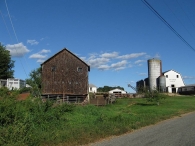
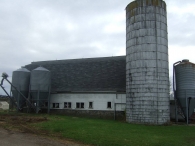
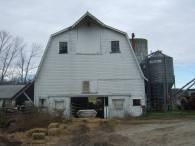
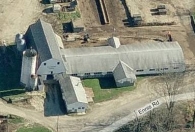
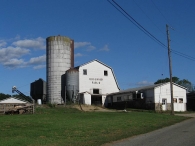
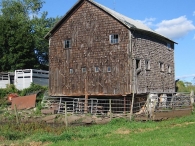
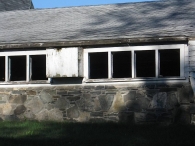
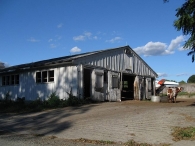
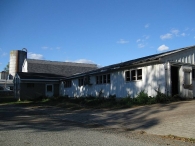
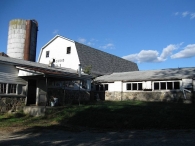
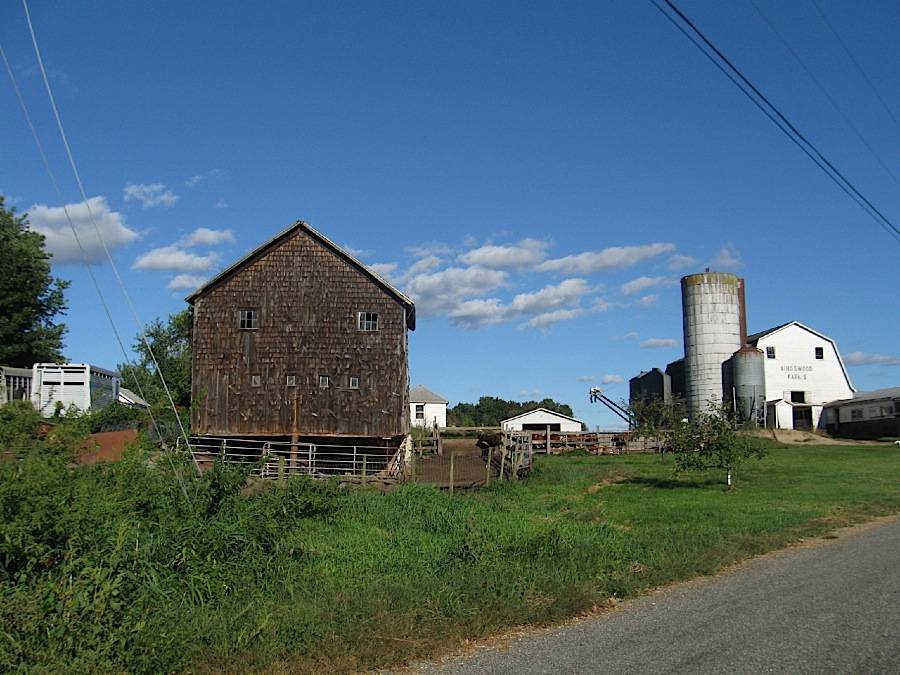
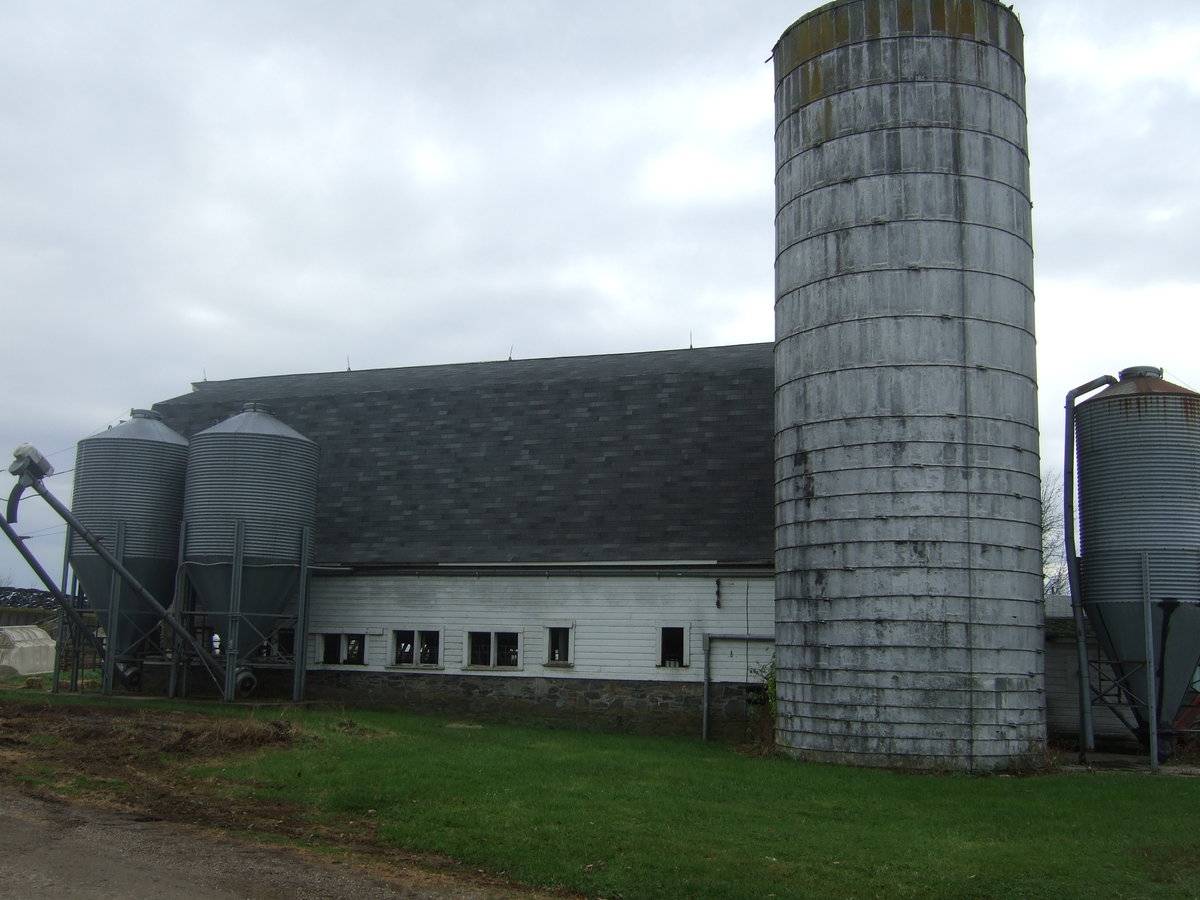
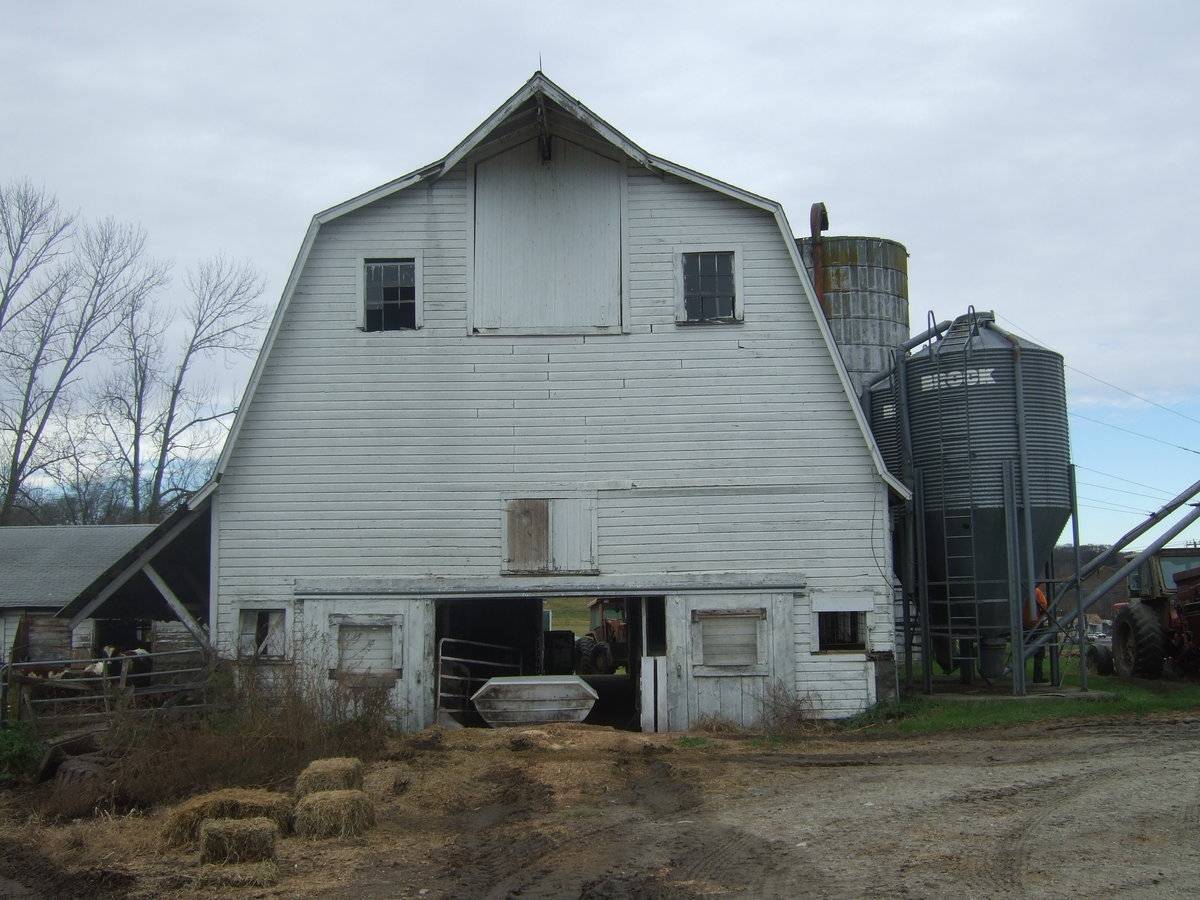
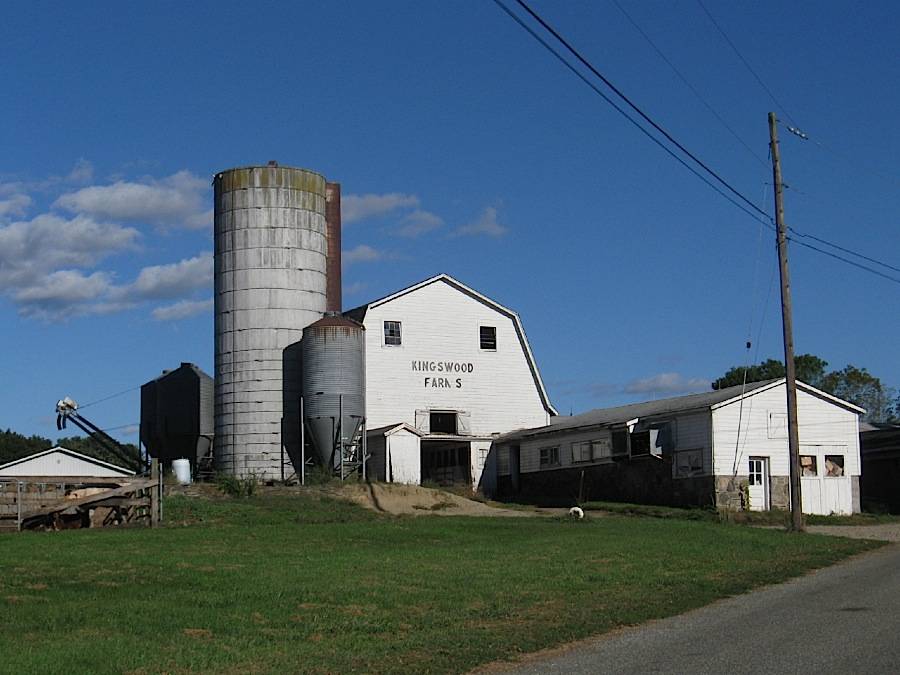
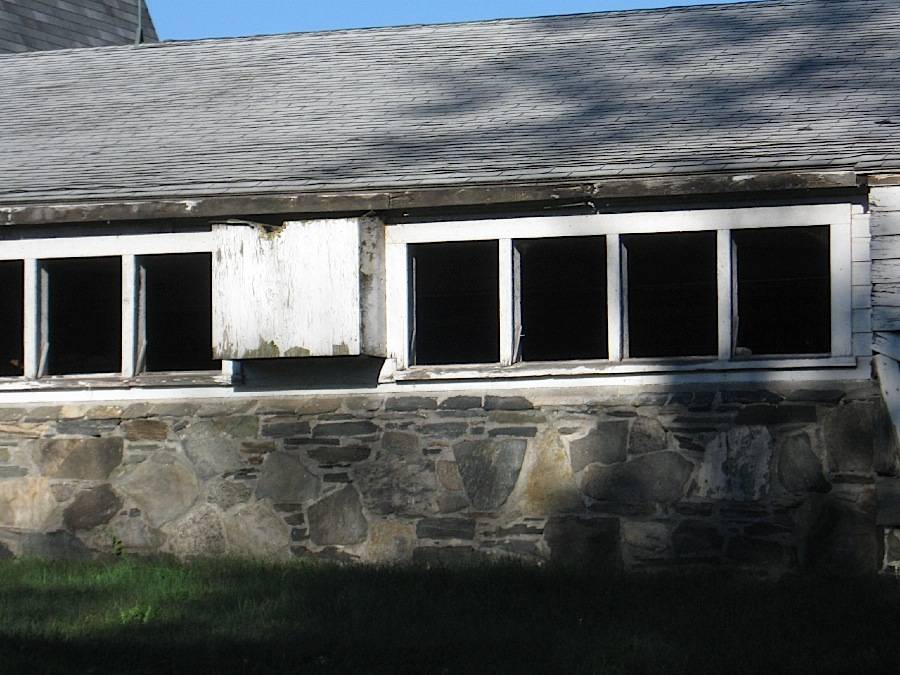
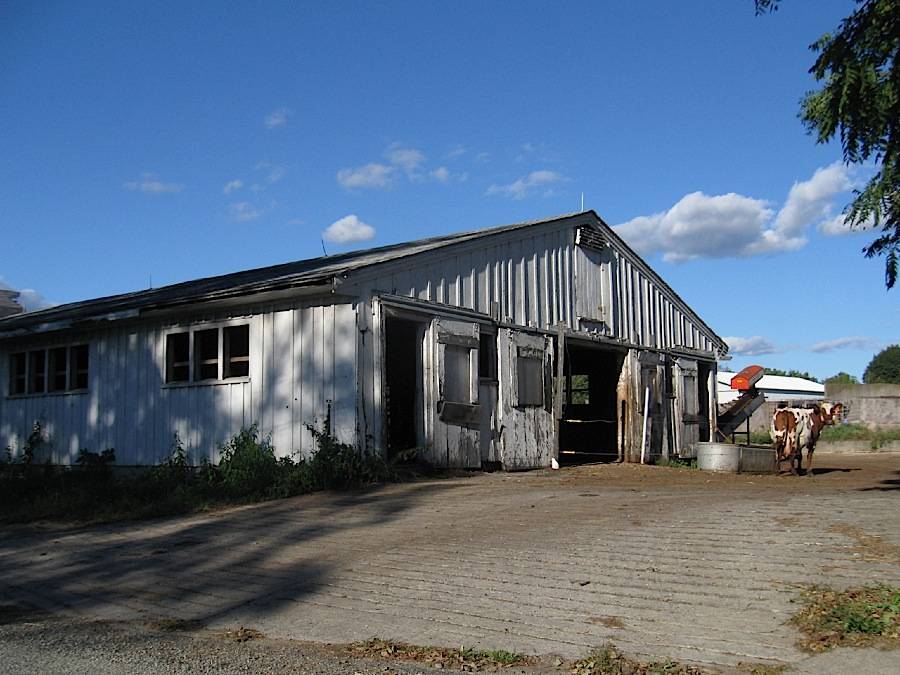
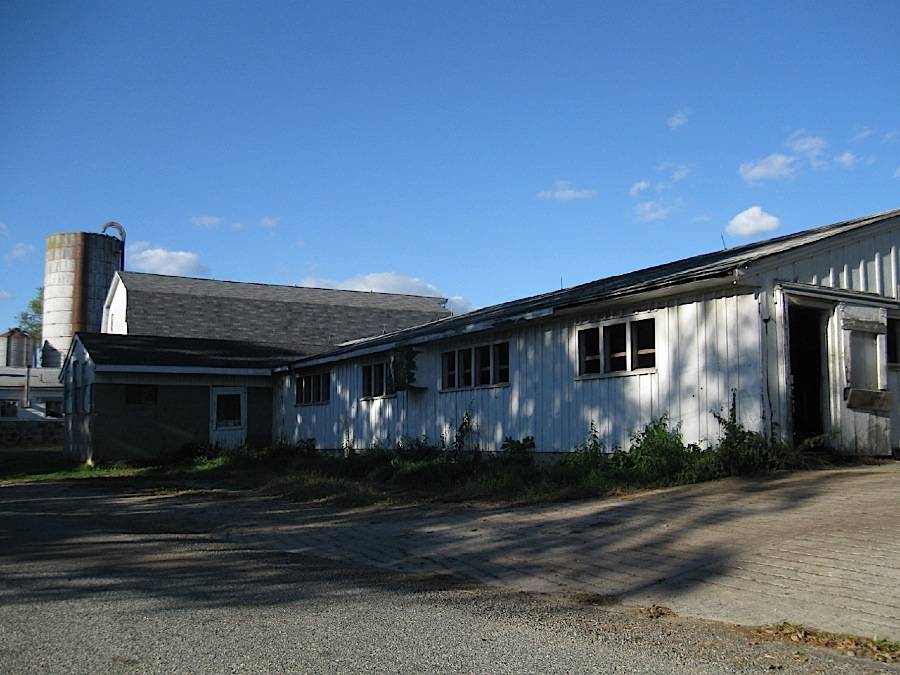
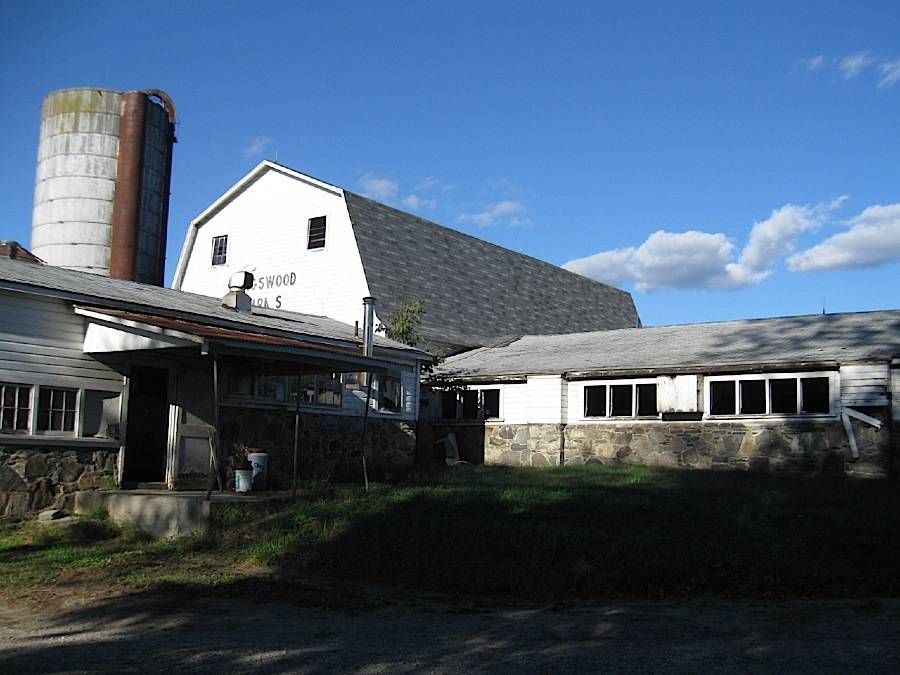
This is a 2 1/2- story gambrel-roofed, gable-entry barn. The main gable facade faces Ennis Road to the west and the ridge-line of the barn is essentially perpendicular to Ennis Road and Parallel to Providence Road. Centered on the east gabled entry facade’s main level is a pair of sliding doors. To either side of the center opening are one-story buildings which are additions to the barn and which extend perpendicularly out from the facade. Centered in the second level is a framed side-hinged hay door. The gable attic of the west gable-facade has a pair of windows at the far left and right sides. Below these windows and above the second floor hay door appears to be painted the name of the farm, “Kingswood Farms”. At the northwest corner of the barn is a tall silo. On the north eave-side of the barn on the main level are two single framed unglazed openings toward the west end and six pair of framed unglazed openings along the remainder of the north eave-side of the barn. Two smaller silos obscure the eastern half of the north elevation. Centered on the gabled west entry facade is a pair of sliding doors composed of vertical boards each with a rectangular unglazed framed centered opening. To either side of this opening to the far left and right are unglazed square framed openings. Centered in the second level is a framed side-hinged hay door composed of vertical boards. The gable attic of the east gable-side has a hay door opening under the apex of the roof with the top of the opening mirroring the pitch of the roof. This opening has been sealed with vertical boards. Above the door and just beneath the apex of the roof is a hay rack extension covered by an extension of the gambrel roof. Flanking the opening are nine-light windows at the far left and right sides. The south eave-side is mostly obscured by a one-story barn addition which extends out perpendicularly from the barn. The remainder of the south elevation is covered by a shed roof. The barn is primarily clad in horizontal wood siding painted white. The base of the wall at the north and south elevations is fieldstone for a height of about three feet. This base is visible on the east and west gable facade at its termination. The gambrel roof has a slight projecting overhang with exposed rafter tails and a Dutch flair. It is covered with asphalt shingles.
Historical significance:
The New England barn or gable front barn was the successor to the English barn and relies on a gable entry rather than an entry under the eaves. The gable front offers many practical advantages. Roofs drain off the side, rather than flooding the dooryard. With the main drive floor running parallel to the ridge, the size of the barn could be increased to accommodate larger herds by adding additional bays to the rear gable end. Although it was seen by many as an improvement over the earlier side-entry English Barn, the New England barn did not replace its predecessor but rather coexisted with it, as both types continued to be built.
The gambrel roof design was universally accepted for ground-level stable barns as it enclosed a much greater volume than a gable roof did, and its shape could be formed with trusses that did not require cross beams, which would interfere with the movement and storage of hay. Also known as the curb roof, the double slopes of the gambrel offer more volume in the hayloft without increasing the height of the side walls.
A slight flare in the roof near the eaves, reminiscent of the starched caps that women once wore in the Netherlands, gives the Dutch gambrel its name. Dutch Colonial buildings of the 17th century also had the flare or “overshoot” design. The flare functions to protect the walls and foundations below by directing rain and snow away from the walls.Field Notes
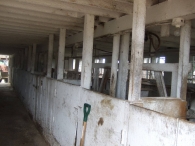
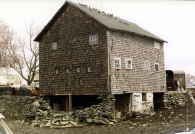
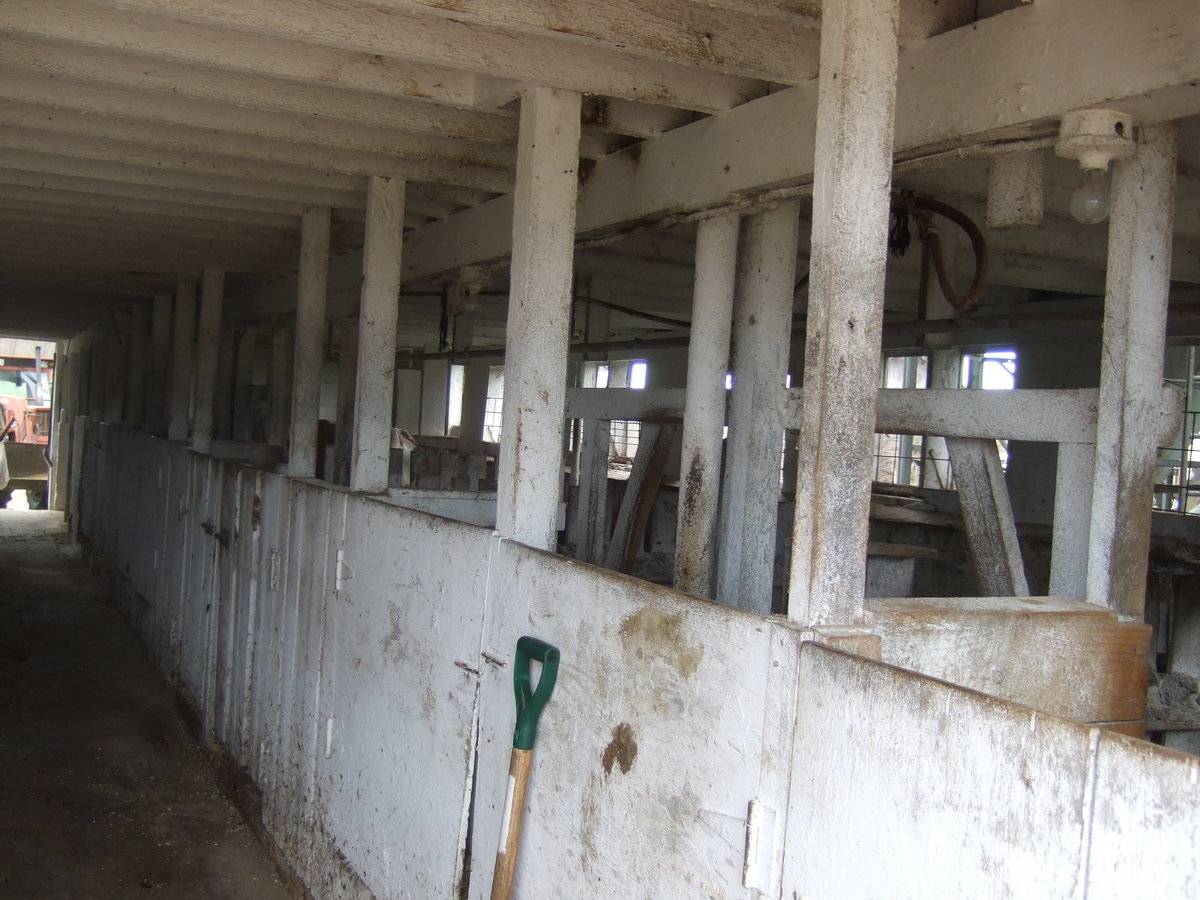
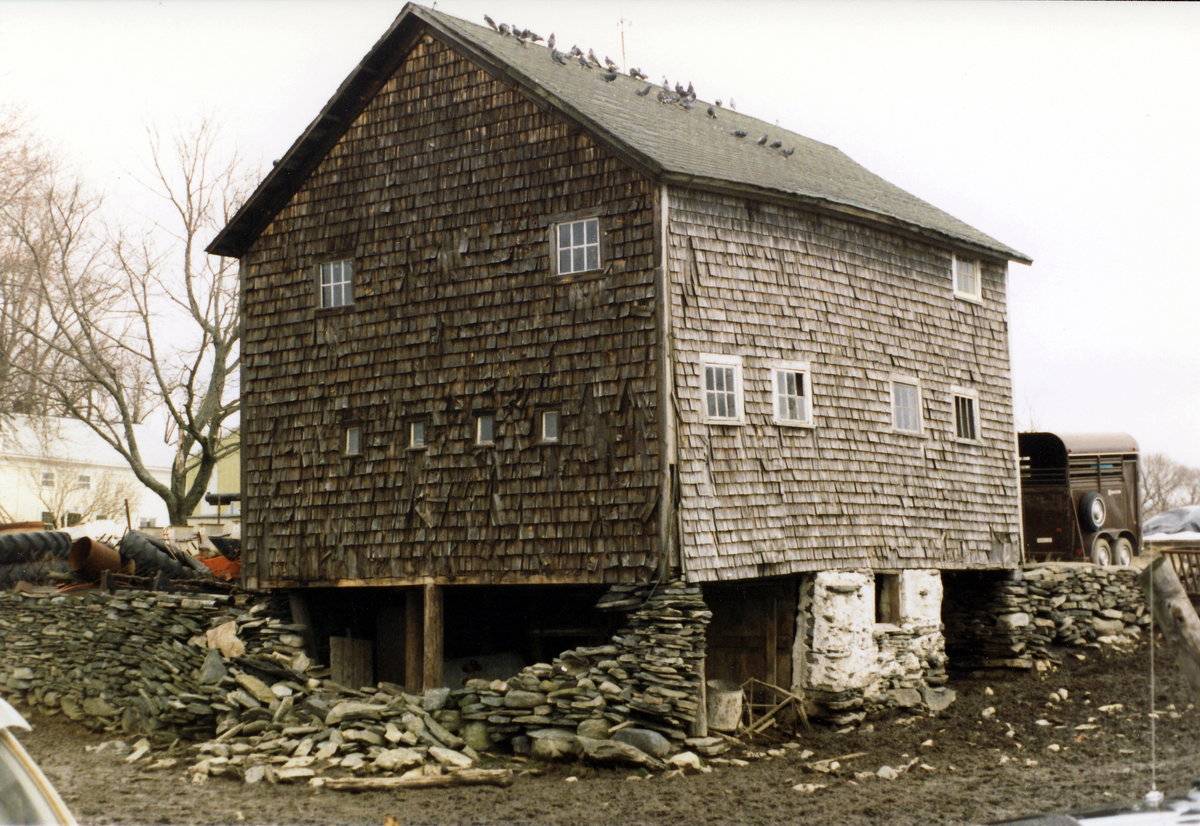
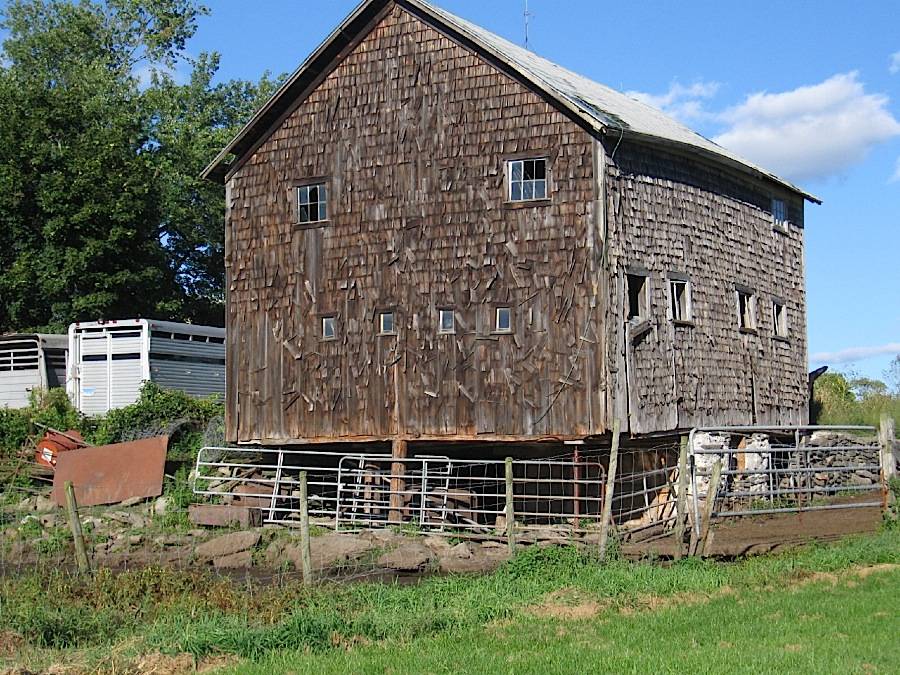
Gambrel roofed dairy two story stanchion barn built after 1938 hurricane. Currently milking multi-breed dairy herd. Older New England bank barn in poor condition.
- Use & Accessibility
- Environment
Related features
Environment features
Relationship to surroundings
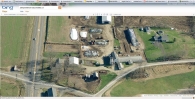
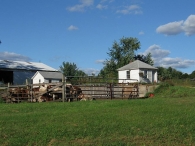
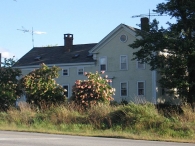
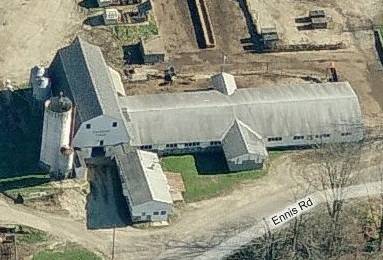
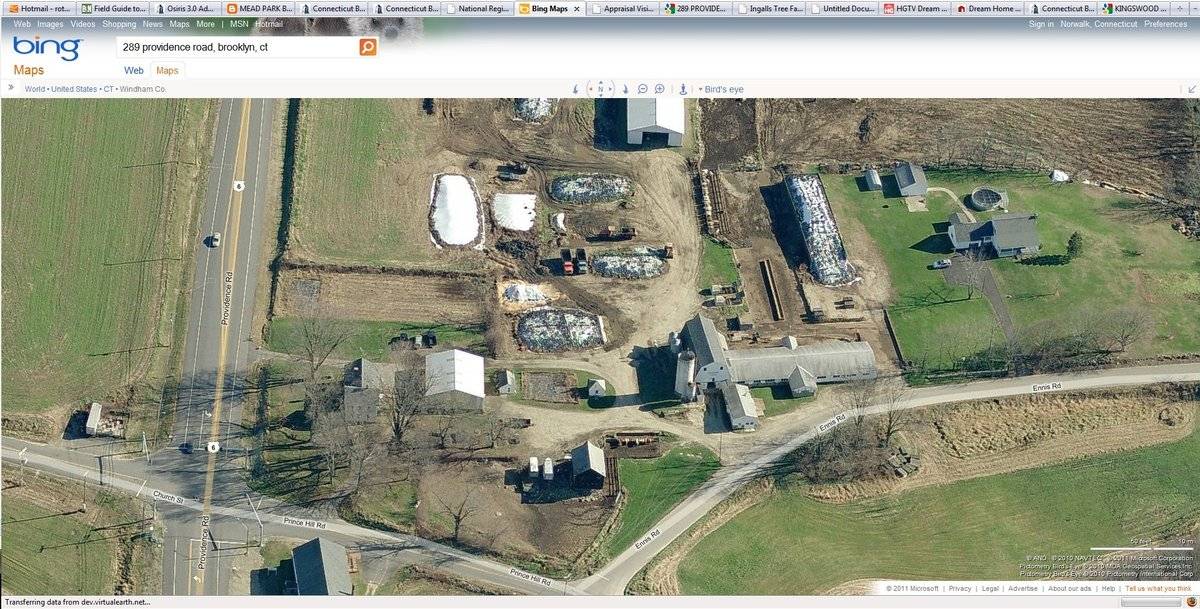
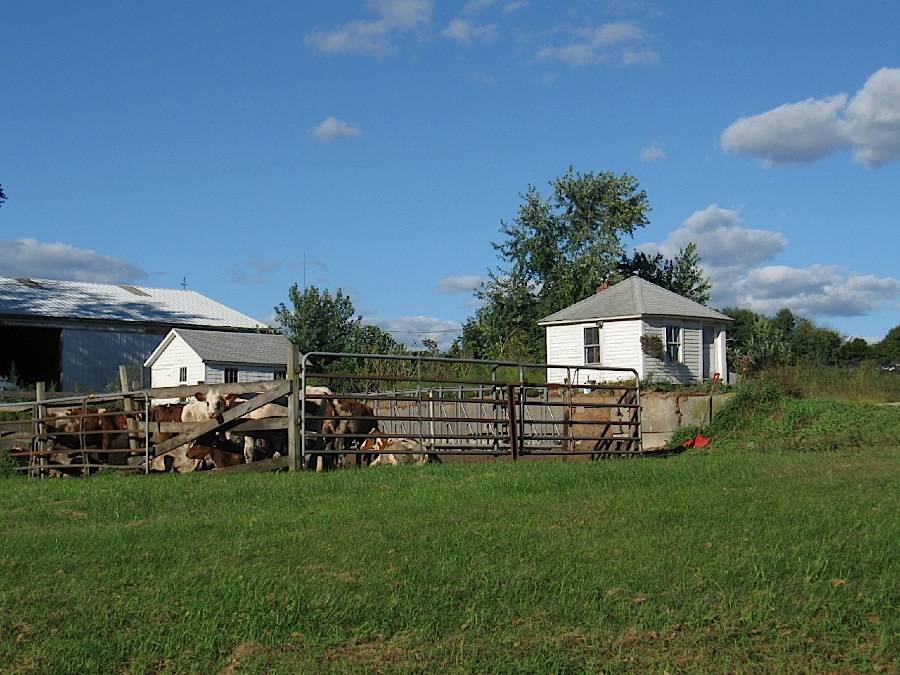
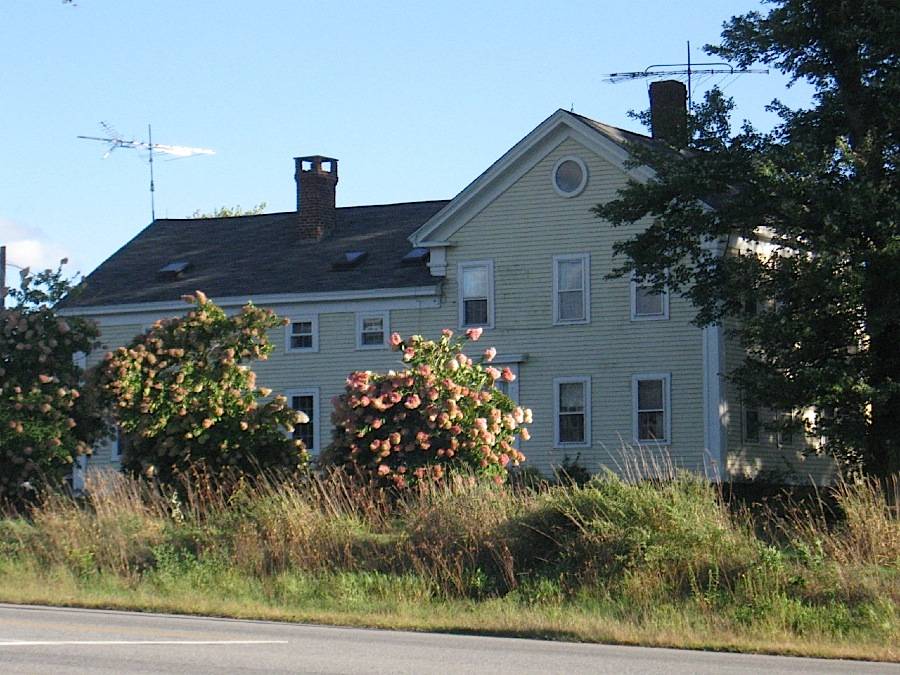
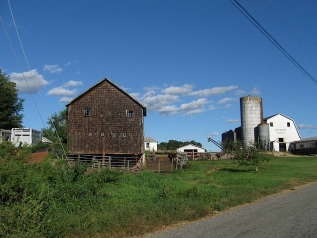
The barn is south of the 1867 house with which it is associated. The house is a “T” shape, so that the ridge-line of the front portion of the house is perpendicular to Providence Road, while ridge-line of the rear portion is parallel to both Providence Road and the barn. The driveway runs perpendicularly from Providence Road behind the house, behind another barn, past two other smaller structures and directly into the north, eave-side of the barn. There is another larger barn west of this barn and yet another smaller barn northeast of this barn. All ridge-lines of all these mentioned barns are parallel to that of this barn. The property is bound by Providence Road on the north, Prince Hill Road on the west, and Ennis Road coming in from the south turning southwest to form a triangle. The property functions as a dairy farm, known as “Kingswood Farms”, formerly as “Kingswood Dairy”. Surrounding land is agricultural, residential, and wooded.
- Typology & Materials
-
Building Typology
Materials
Structural System
Roof materials
Roof type
Approximate Dimensions
Site is 53.70 acres (Map 34, Lot 39). Barn is 5440 square feet.
- Source
-
Date Compiled
02/09/2011
Compiled By
R. Rothbart & T. Levine, reviewed by CT Trust
Sources
Field notes and photographs by Joyce Meader - CH
Aerial views from:
http://www.bing.com/mapsVision Appraisal Online Database. http://data.visionappraisal.com/BrooklynCT
Sexton, James, PhD; Survey Narrative of the Connecticut Barn, Connecticut Trust for Historic Preservation, Hamden, CT, 2005, http://www.connecticutbarns.org/history.
- PhotosClick on image to view full file
-