Barn Record Farmington
RETURN TO ‘FIND BARNS’- Building Name (Common)
- Brooks Barn
- Building Name (Historic)
- Morgan/Broadbent Carriage Barn
- Address
- 1755 Farmington Avenue (Route 4), Farmington
- Typology
- Overview
-
Designations
Historic Significance
Architectural description:
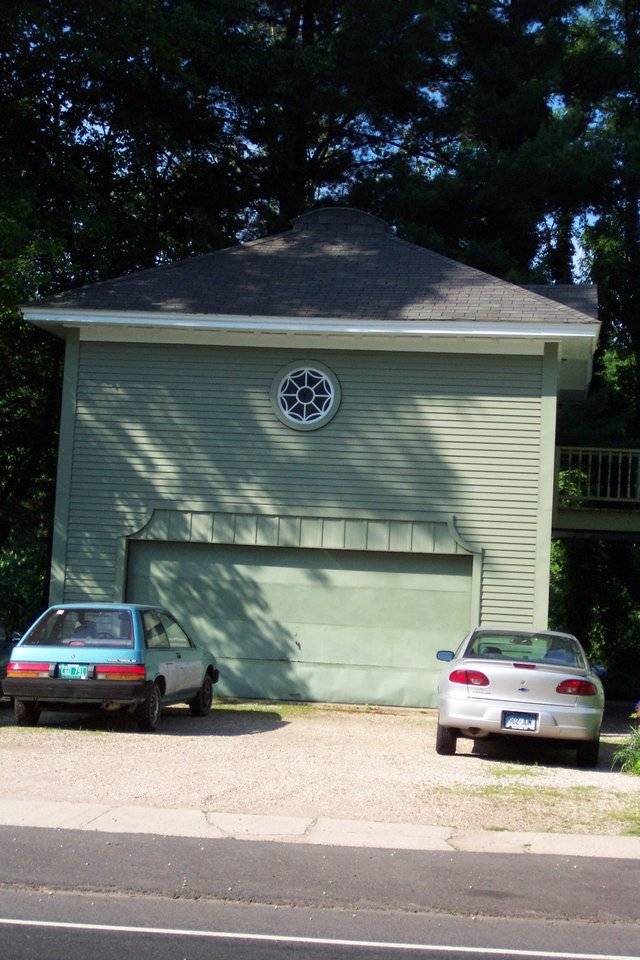
This is a 2-story hipped-roof carriage house. The primary façade is the northeast side, which faces Farmington Avenue. Farmington Avenue passes this property along a southeast to northwest alignment.
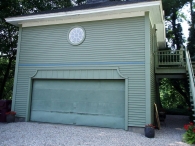
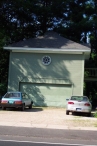
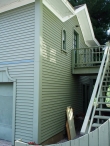
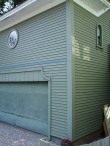
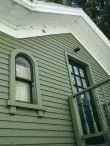
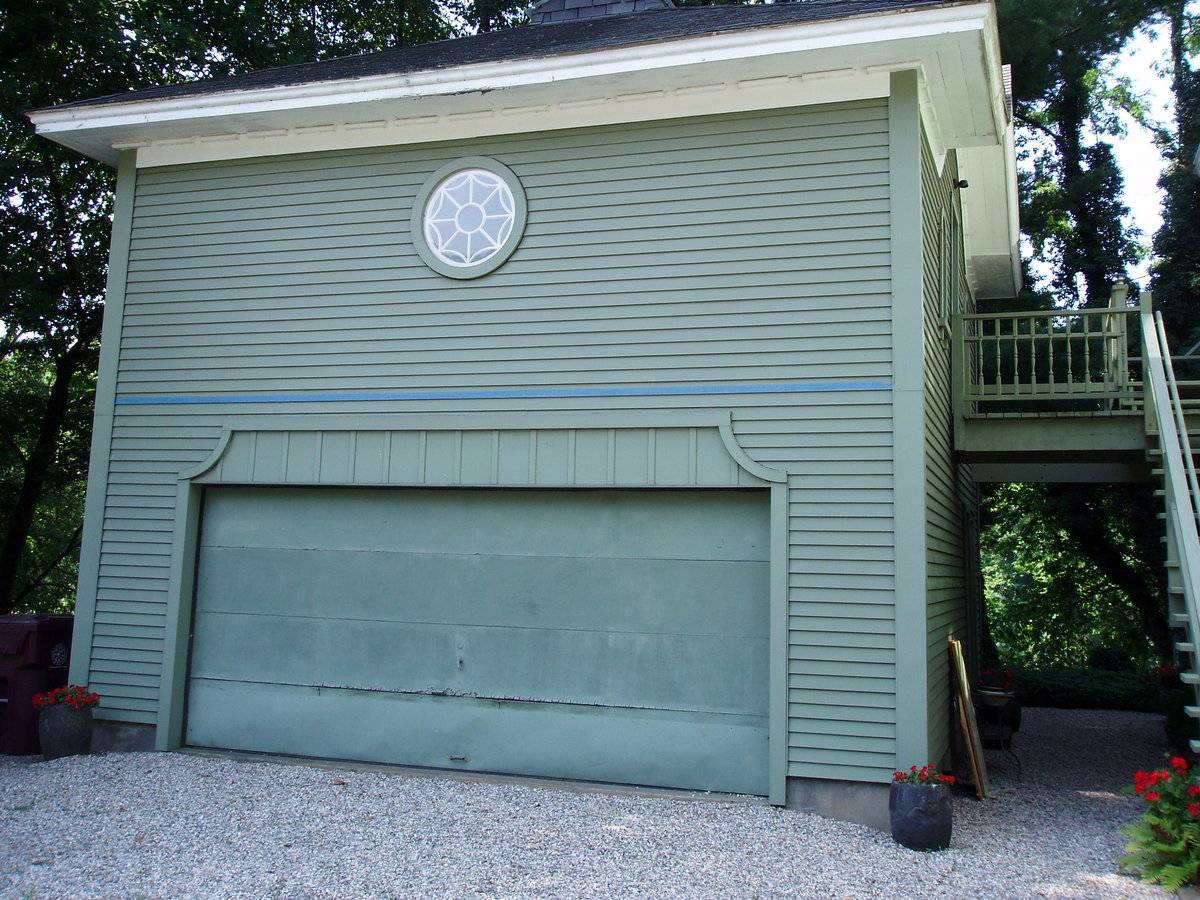
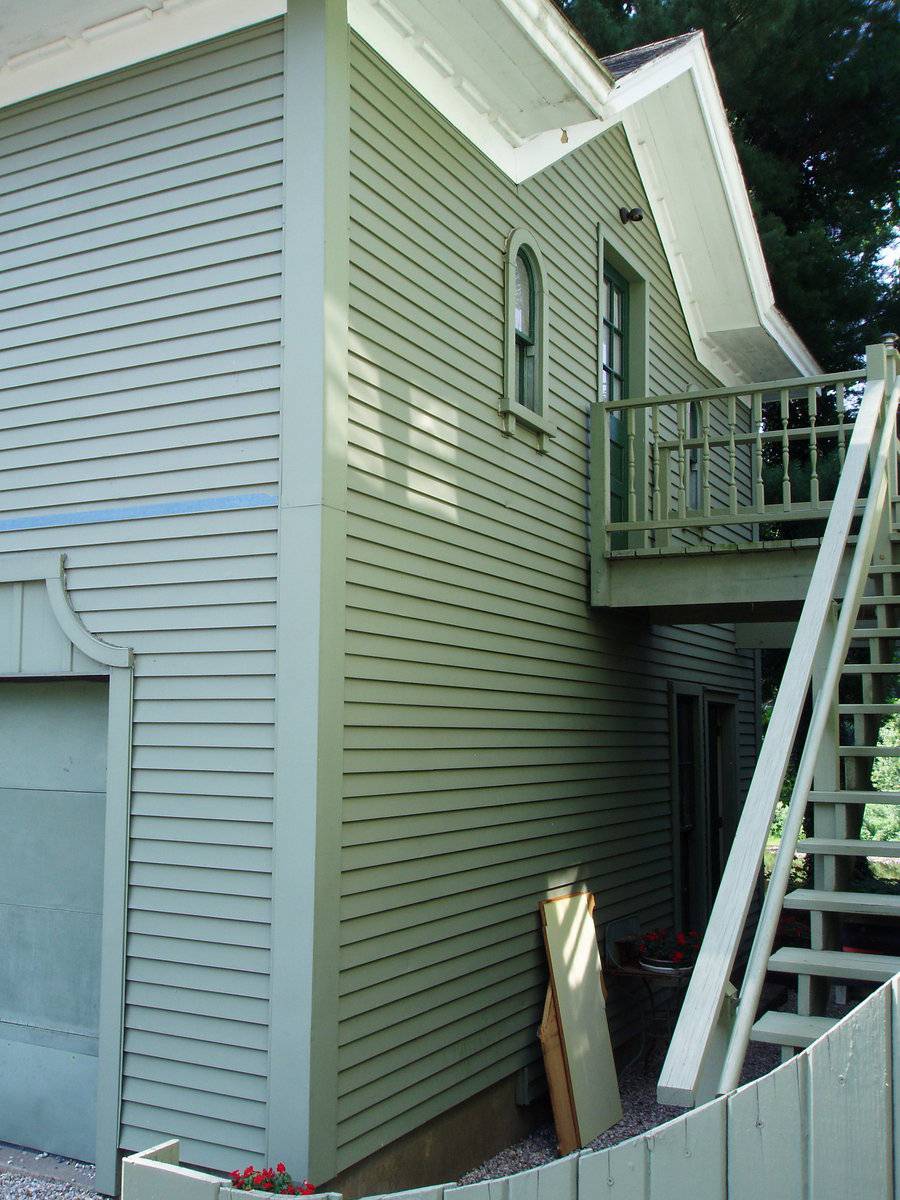
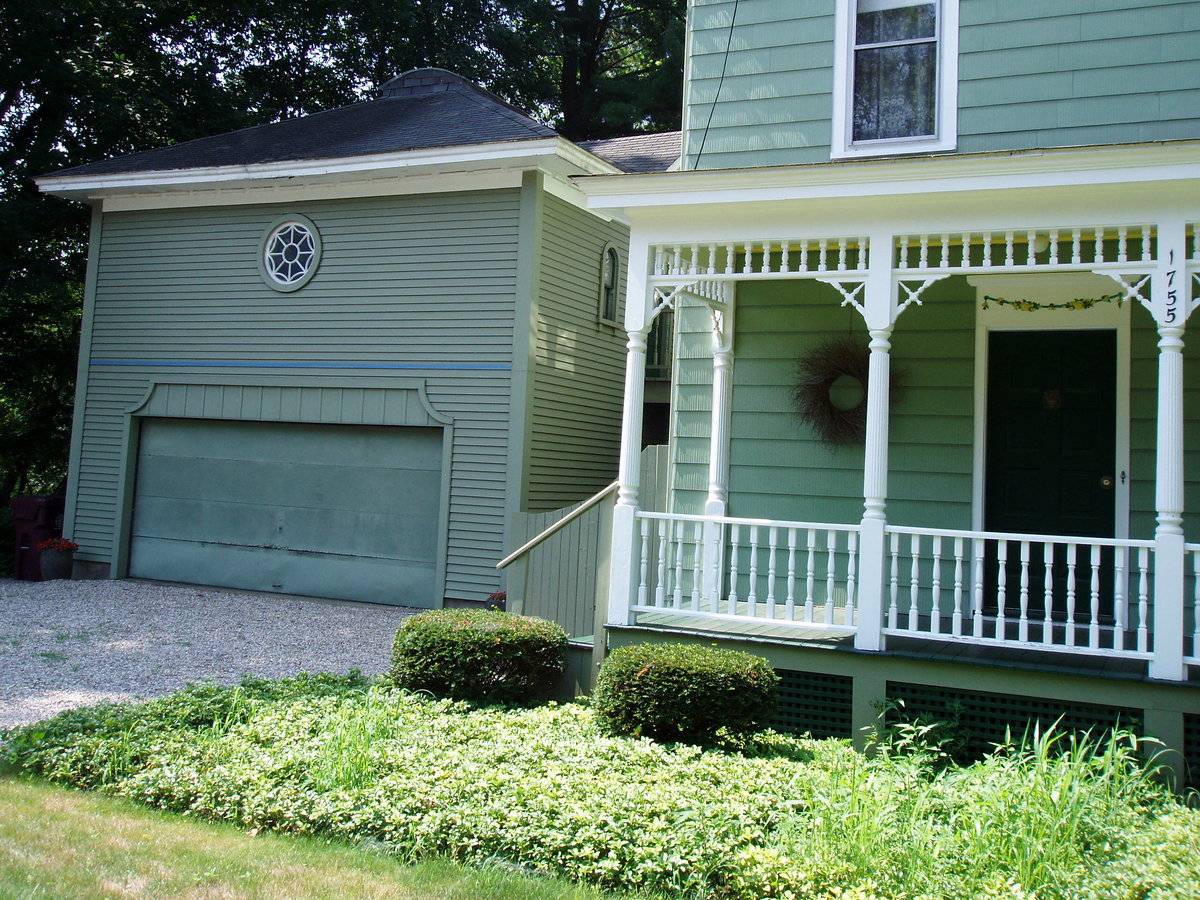
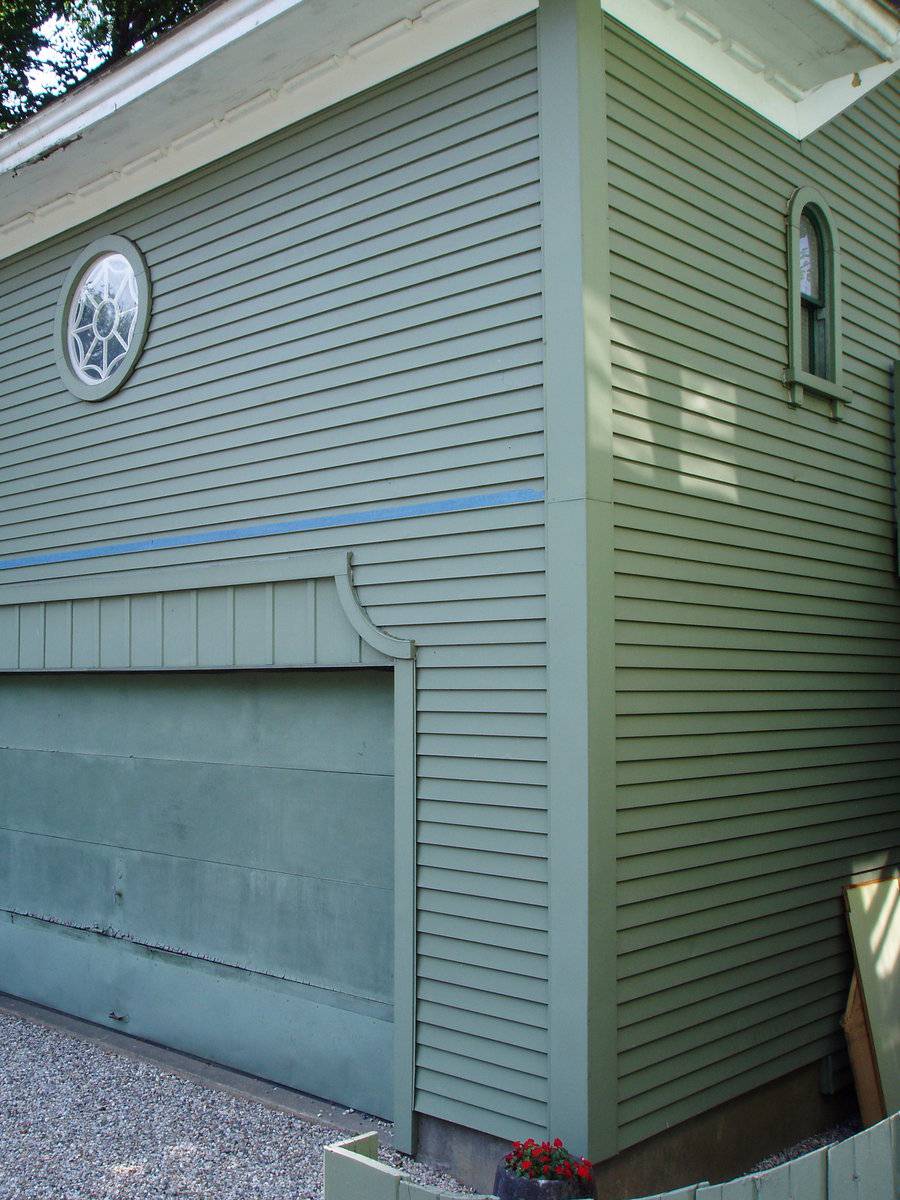
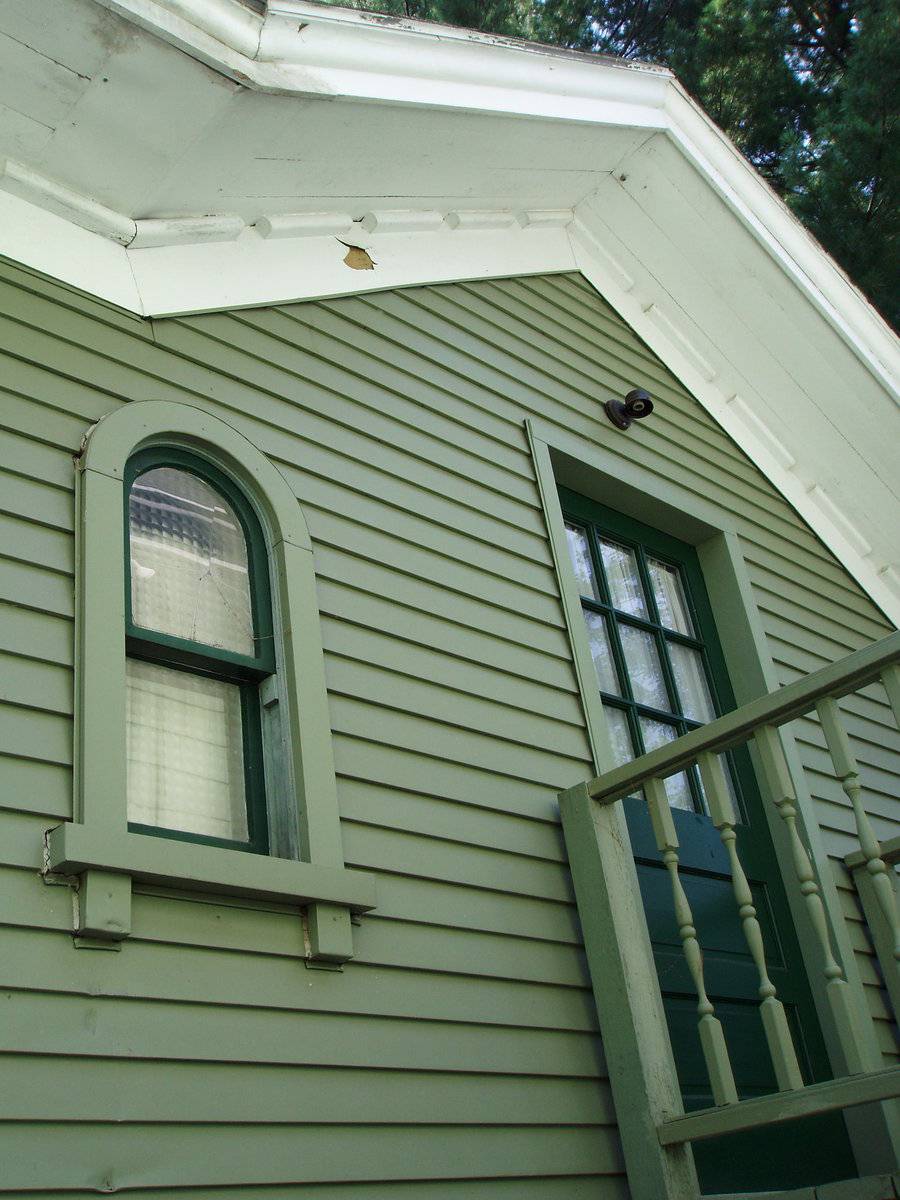
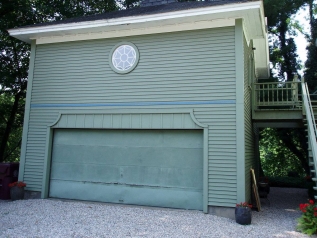
The primary façade of this carriage house faces Farmington Road and is the northeast side. The primary entry on this side is a modern double-width overhead garage door, which occupies most of the first story. A decorative blind transom is present in the siding above this door. Centered on the second story of the façade is a historic circular window which was originally located in the old Farmington Town Hall and was saved and reinstalled here when that building was demolished. Located on the northwest side is a centered wall dormer. The first story contains two side-by-side pass-through doors, both located near the west corner. Centered on the second story beneath the dormer is the primary entry to the second floor, a wood panel pass-through door. The upper half of the door has nine window panes, and the door is accessed via a raised wooden landing and stairway which extends from this door down to the northeast, parallel to the wall. Flanking the door to each side is an arched one-over-one double-hung window. The southwest side of this structure is not visible for the purposes of an Historic Resource Inventory. The southeast side of the carriage house appears to have two window openings symmetrically placed on the second story. The first story appears to be blank.
This carriage house is clad in modern horizontal aluminum siding, painted gray. The roof, which has wide overhanging eaves, is covered with dark gray asphalt shingles.
Historical significance:
Until the 1830s, the horses used for riding and driving carriages were often kept in the main barn along with the other farm animals. By the 1850s, some New England farmers built separate horse stables and carriage houses. Early carriage houses were built just to shelter a carriage and perhaps a sleigh, but no horses. The pre-cursor to the twentieth-century garage, these outbuildings are distinguished by their large hinged doors, few windows, and proximity to the dooryard. The combined horse stable and carriage house continued to be a common farm building through the second half of the nineteenth century and the first decade of the twentieth century, until automobiles became common. Elaborate carriage houses were also associated with gentlemen farms and country estates of the late 19th and early 20th centuries.
Field Notes
c.1860s This carriage barn was built for Mary (Morgan) Smith, wife of the Rev. Jas. A. Smith, minister of the Unionville Congregational Church, on their property at 79 Main Street. Upon her death, her nephew, J. Pierpont Morgan, sold the property to J. Frederick Broadbent, manufacturer of cotton goods. Four generations of Broadbents lived at 79 Main Street, until the house burned in the 1950s. The barn was used for horses, a pair of mules, and, later, cars. It was moved to the David Brooks property on Farmington Avenue in the 1970s. In 1972, when the Richard F. Jones-built Farmington Town Hall on School Street was demolished during urban renewal, Brooks saved the circular facade window and installed it in the old Morgan/Broadbent barn. The asphalt-shingled, hip-roofed carriage house has been somewhat modified (alum. siding, overhead garage door, skylight)to create a rental apt. on second floor. Current use: storage, garage. Wood frame structure. Current location is residential, high density.
- Use & Accessibility
Use (Historic)
Use (Present)
Exterior Visible from Public Road?
Yes
Demolished
n/a
Location Integrity
Moved
- Environment
Related features
n/a
Environment features
Relationship to surroundings
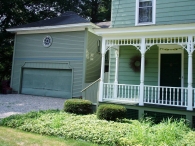
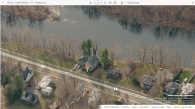
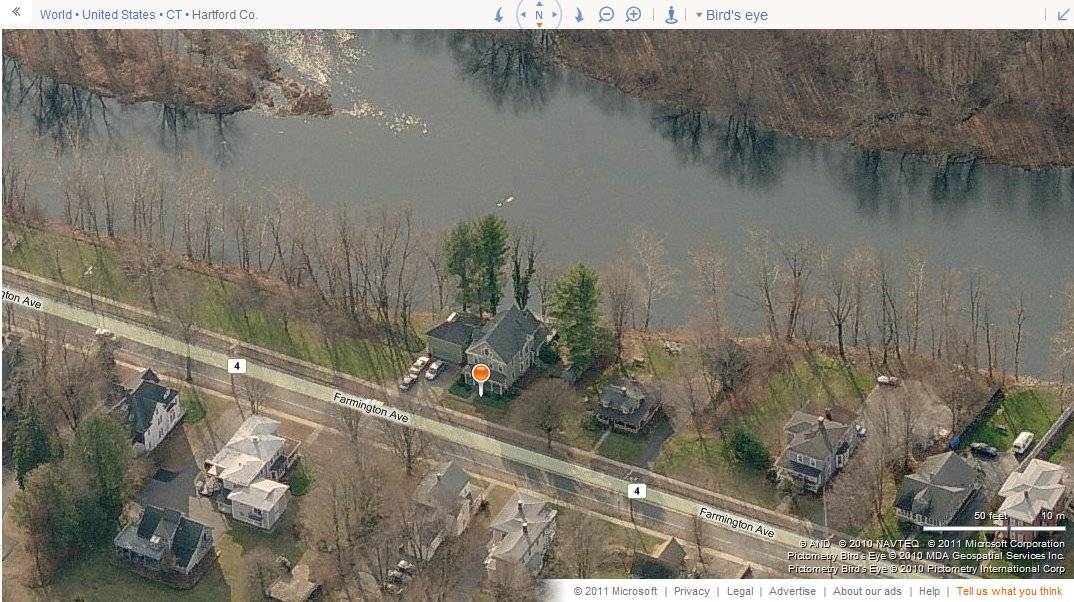
The primary façade of this carriage house faces Farmington Road and is the northeast side. The barn is located very close to the street and is accessed by a very short gravel driveway. The house presently associated with this carriage house is located immediately to the northwest, setback about the same distance from the street. Immediately behind the carriage house, to the southwest, the ground drops dramatically down to the level of the Farmington River. The river is edged by woodlands on both banks. A strip of greenspace is located along Farmington Road’s south side to the east, between the road and the river. Elsewhere, nearby streets are lined with dwellings. A small island is located in the river immediately to the south of this property.
- Typology & Materials
-
Building Typology
Materials
Structural System
n/a
Roof materials
Roof type
Approximate Dimensions
BARN: 528 square feet each story
- Source
-
Date Compiled
04/11/2011
Compiled By
N. Nietering & T. Levine, reviewed by CT Trust
Sources
Photographs by Meyer/Macomber and Todd Levine.
Sexton, James, PhD; Survey Narrative of the Connecticut Barn, Connecticut Trust for Historic Preservation, Hamden, CT, 2005, http://www.connecticutbarns.org/history.
Visser, Thomas D.,Field Guide to New England Barns and Farm Buildings, University Press of New England, 1997, 213 pages.
Map of Farmington, CT, retrieved on April 9, 2011 from website www.bing.com.
Farmington Assessor’s Records - online - http://www.farmington-ct.org/landrecords/search.php
- PhotosClick on image to view full file
-