Barn Record Burlington
RETURN TO ‘FIND BARNS’- Building Name (Common)
- Pleasant View Farm
- Building Name (Historic)
- Jairus Thompson and Evelina Curtiss Root Farmstead
- Address
- 184 East Chippens Hill Road, Burlington
- Typology

- Overview
-
Designations
Historic Significance
Architectural description:
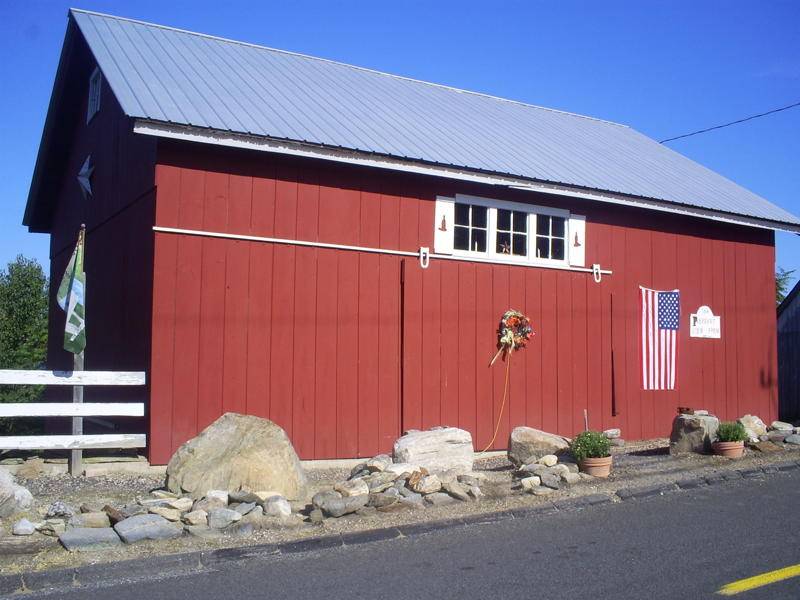
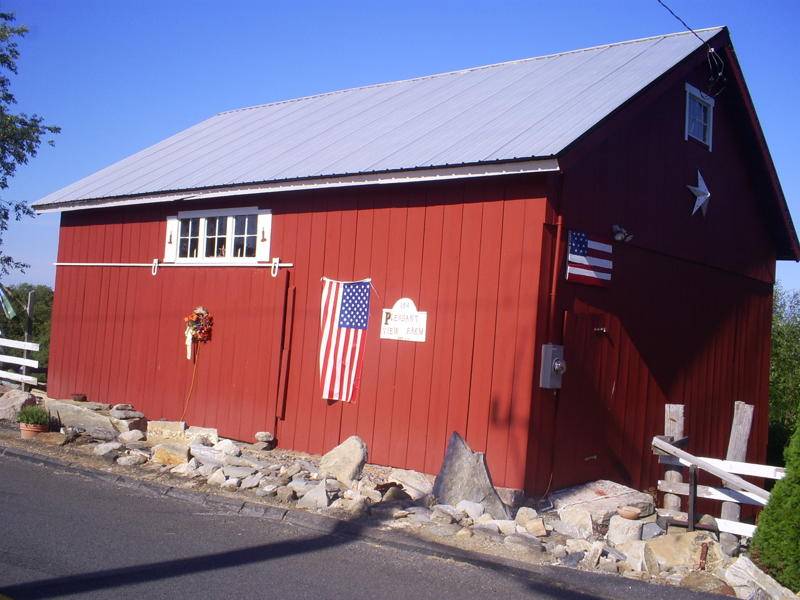
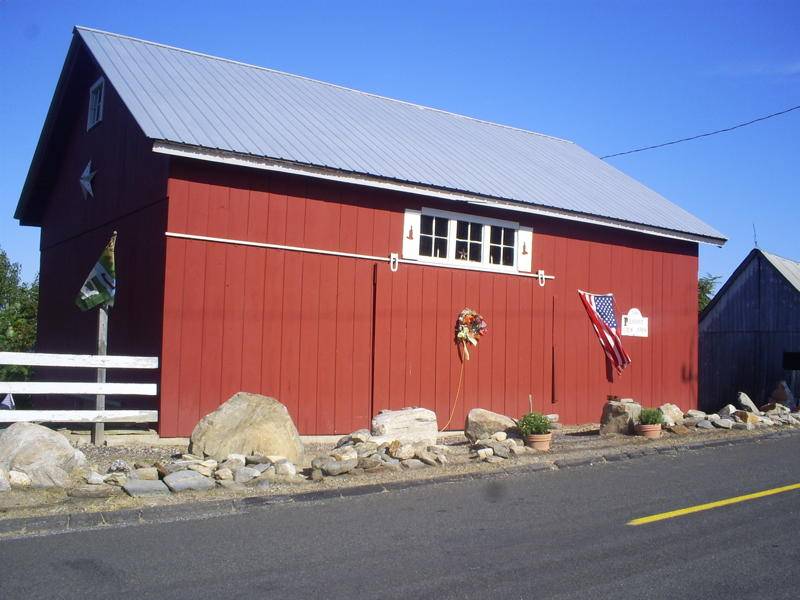
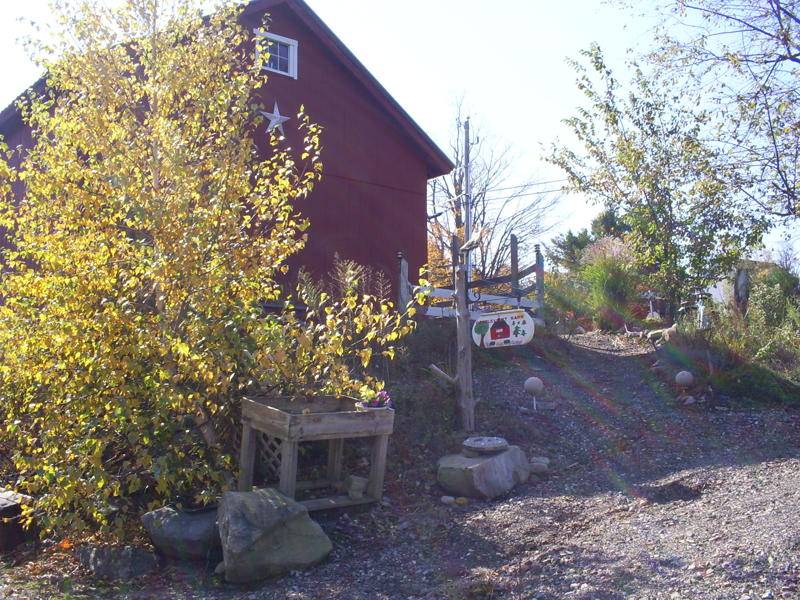
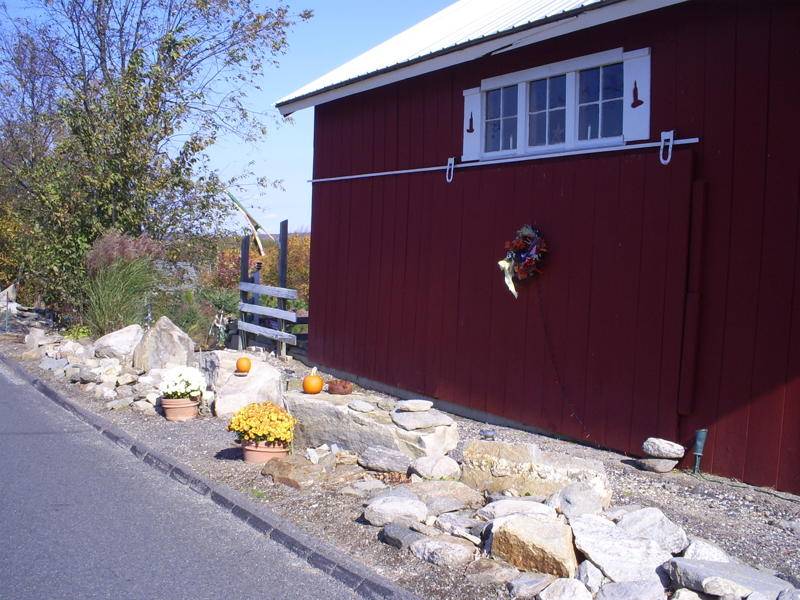
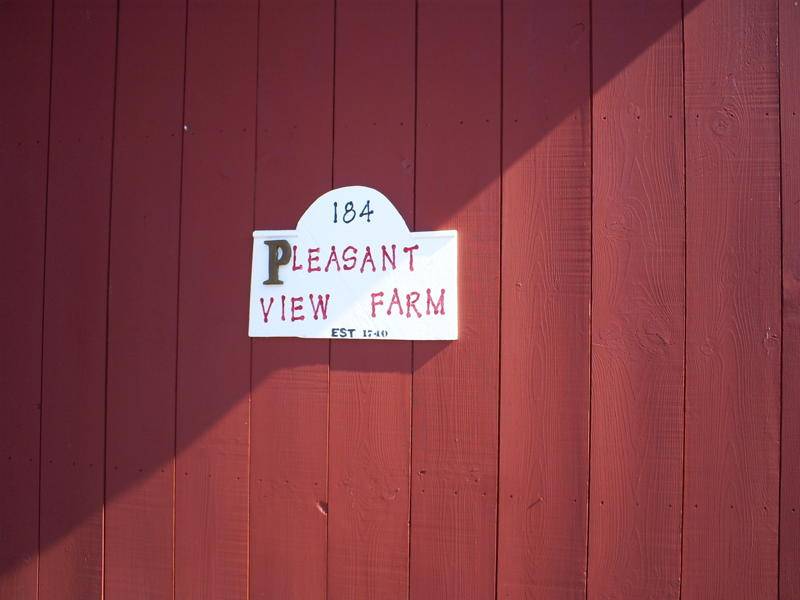
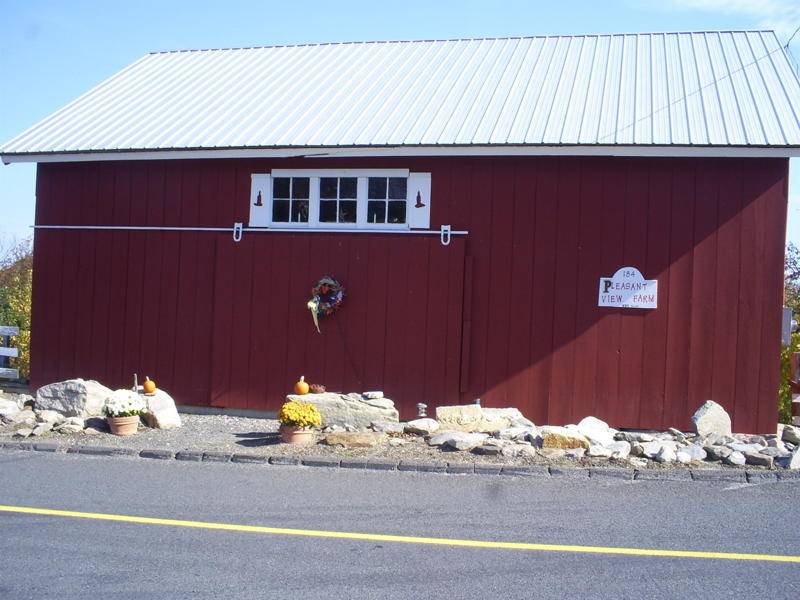
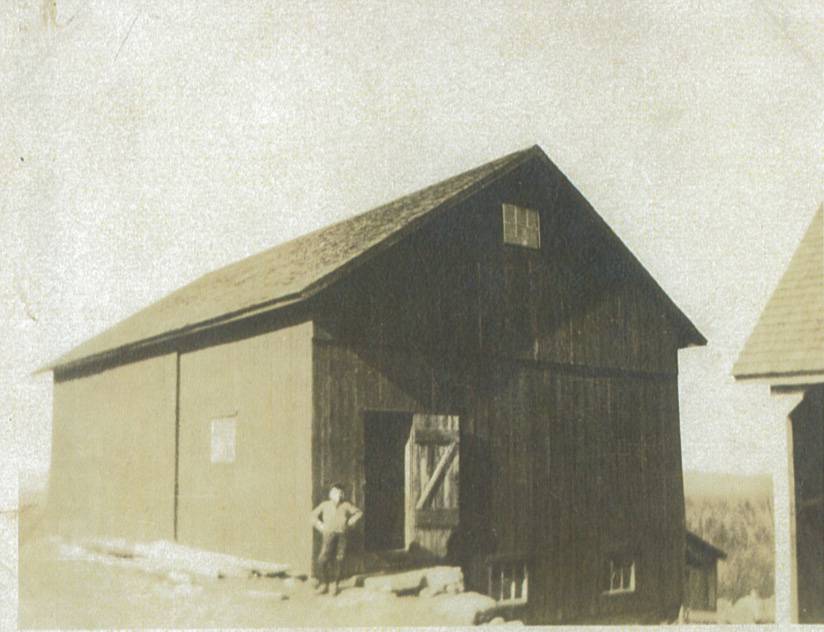
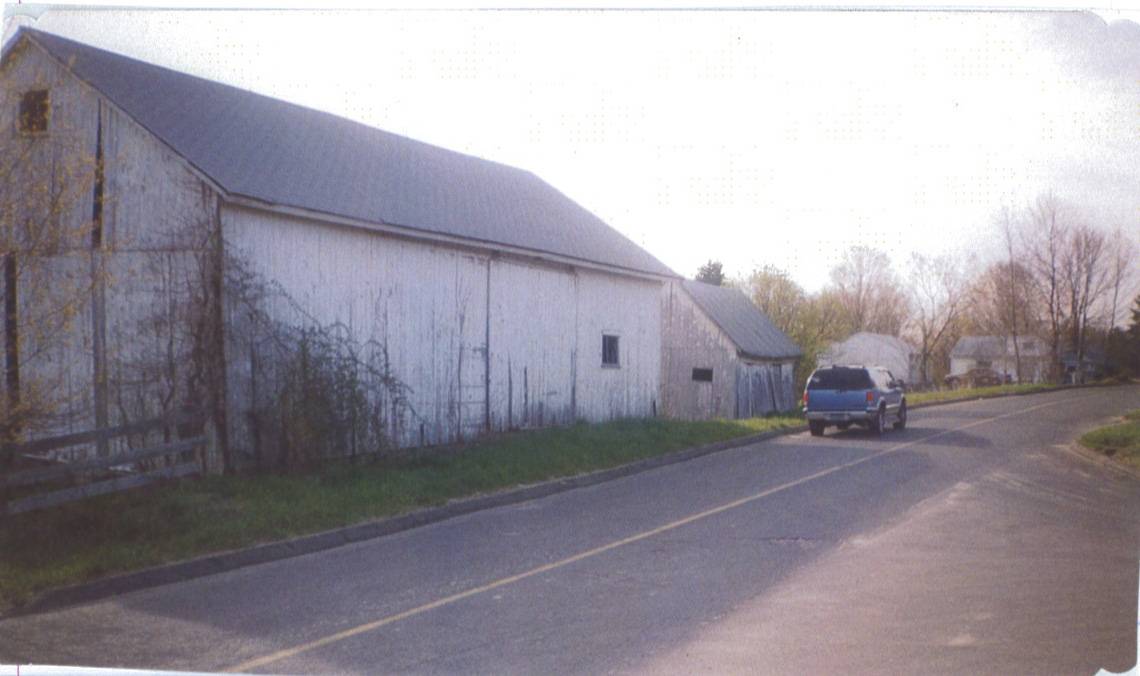
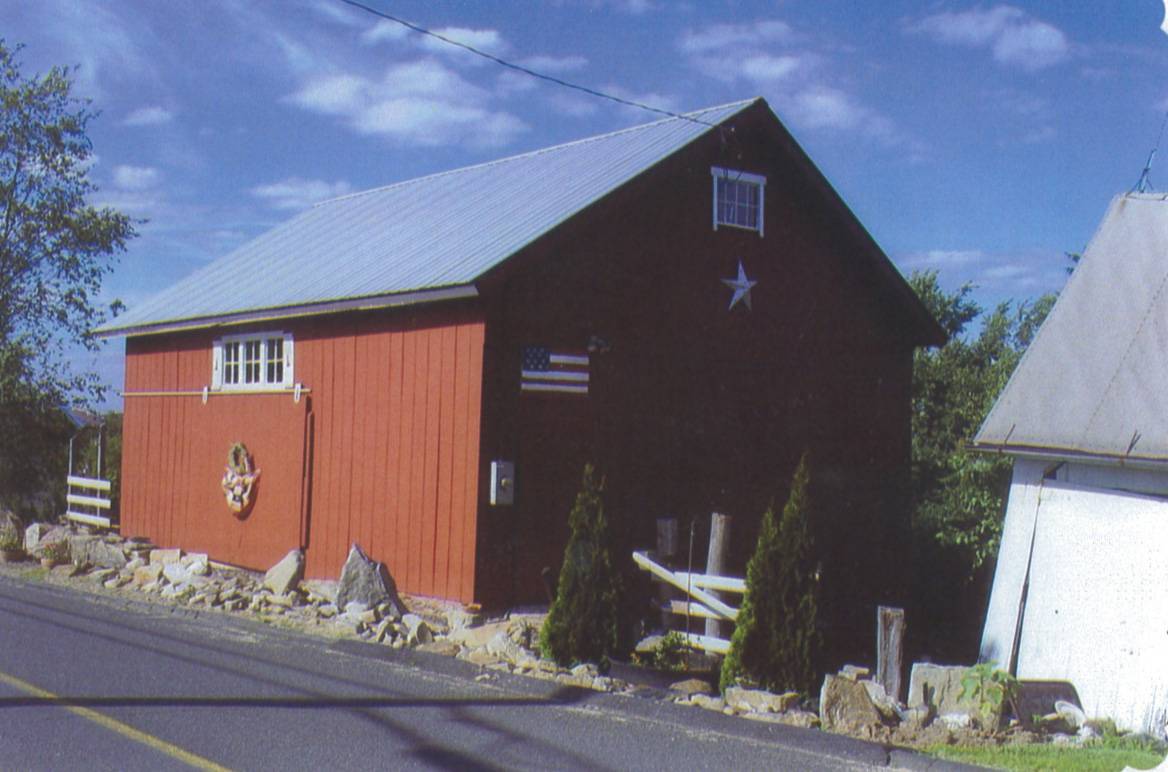
This is a 1 ½ - story three-bay eave-entry bank barn. The ridge line of the barn runs north-south parallel to East Chippens Hill Road. The three-bay west eave-side of the barn facing the road is the main façade with the main entrance centered in the middle bay through a double-height exterior-hung sliding wagon door. A series of three closely spaced four-pane windows with decorative shutter on either side can be seen above the main entrance. The first bay from the south has a signboard at the center displaying the number and the name of the property as ‘184, Pleasant View Farm’. The south gable-end of the barn has an entrance towards the extreme west through a hinged pass-through door. The gable attic lined by deep soffit is separated from the rest of the gable end by a distinct dropped girt siding divide line. A decorative star is centered in the gable attic while a six-pane window is positioned just below the apex of the roof. The grade level along the south gable-end of the barn gradually declines towards the east and forms the bank level along the east eave-side. The first floor level of the three-bay east eave-side of the barn is blank while the bank level is separated by a distinct siding-divide line. The north gable-end of the barn appears to be blank with a distinct dropped girt siding divide line separating the gable attic which has an ornate star displayed at the center. The gable attic is lined by deep soffit and has a six-pane window just below the apex of the roof.
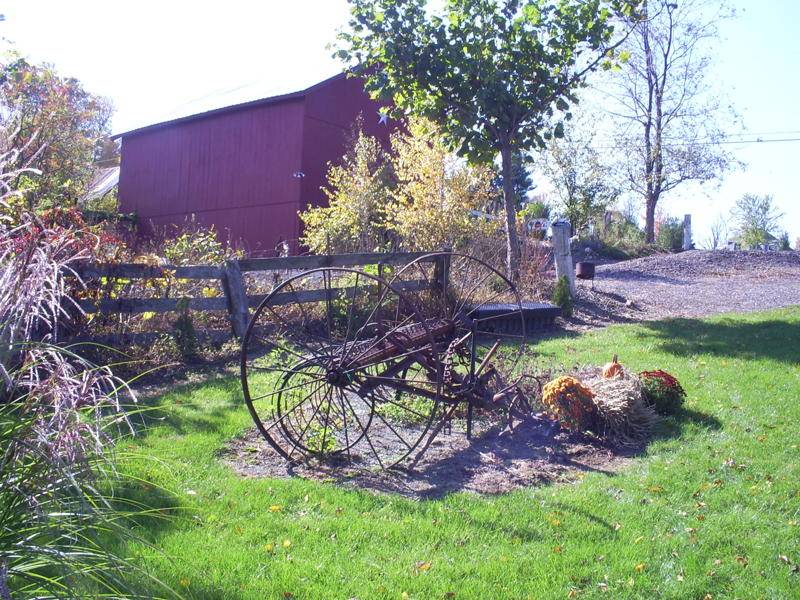
The wooden frame of the barn is supported on field-stone masonry foundation. The barn has metal roofing and red painted vertical siding walls.
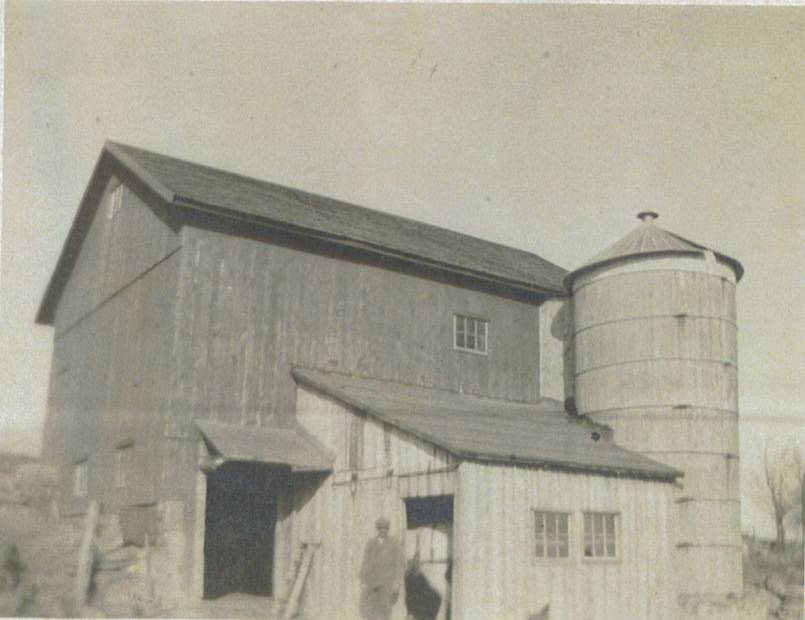
Historical significance:The oldest barns still found in the state are called the “English Barn,” “side-entry barn,” “eave entry,” or a 30 x 40. They are simple buildings with rectangular plan, pitched gable roof, and a door or doors located on one or both of the eave sides of the building based on the grain warehouses of the English colonists’ homeland. The name “30 by 40” originates from its size (in feet), which was large enough for 1 family and could service about 100 acres. The multi-purpose use of the English barn is reflected by the building’s construction in three distinct bays - one for each use. The middle bay was used for threshing, which is separating the seed from the stalk in wheat and oat by beating the stalks with a flail. The flanking bays would be for animals and hay storage.
The 19th century saw the introduction of a basement under the barn to allow for the easy collection and storage of a winter’s worth of manure from the animals sheltered within the building. The bank barn is characterized by the location of its main floor above grade, either through building into a hillside or by raising the building on a foundation.
This innovation, aided by the introduction of windows for light and ventilation, would eventually be joined by the introduction of space to shelter more animals under the main floor of the barn.Field Notes
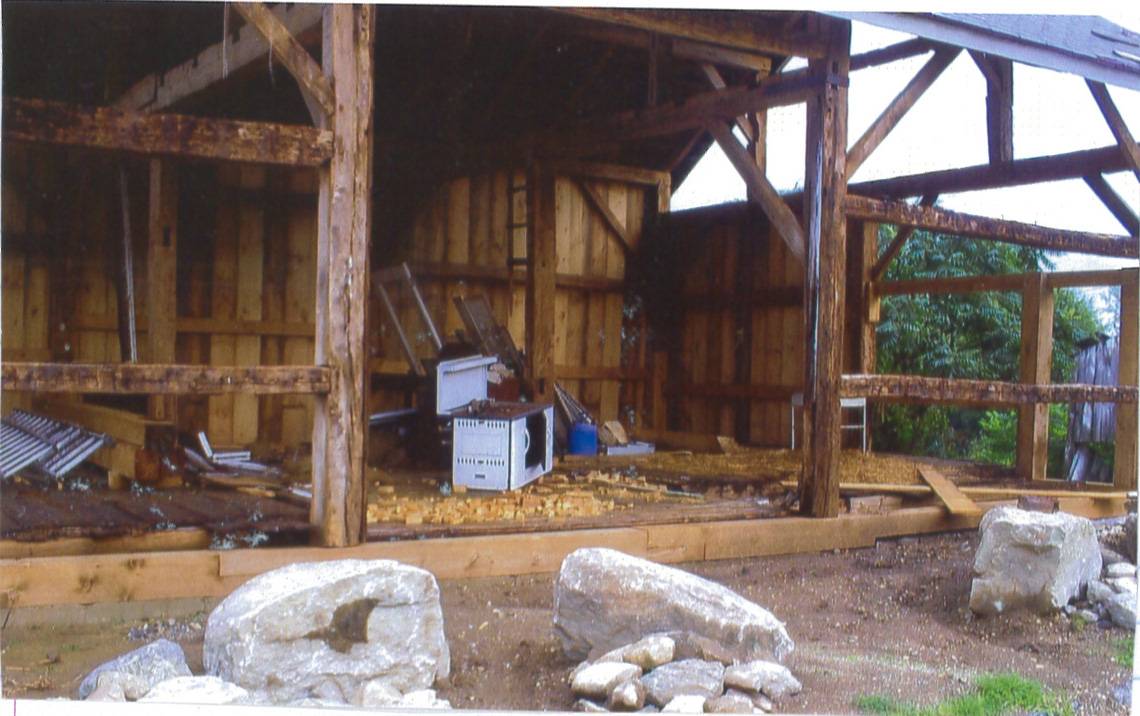
Listed on the State Register of Historic Places, 4/03/2014. Reynard Thompson from Bring Back Barns is the one who helped us with this project. We worked hard to get it back to life. We have our business, Candlelight Barn, out of it. Check our website if you have a chance. We have the same pictures of the barn on it. We sell crafts, quilts, cards, jams and jellies, and even some Christmas trees this year. We hope to get chickens this spring. Thanks for your interest and help. 2012 Barns Grants pre-application.
- Use & Accessibility
Use (Historic)
Use (Present)
Exterior Visible from Public Road?
Yes
Demolished
n/a
Location Integrity
Unknown
- Environment
Related features
Environment features
Relationship to surroundings
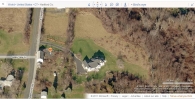
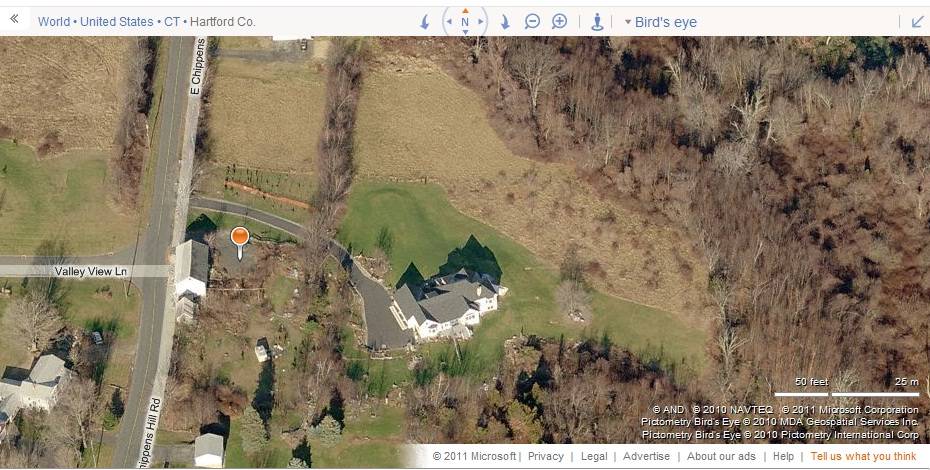
The 35.43 acres property, Account number – 30241305 and MBLU number- 5/03 / 61/1 / /, is located towards the east of East Chippens Hill Road, opposite to the intersection of the road with Valley View Lane. The property is located in a predominantly residential area of sub-urban character. Residential plots can be seen towards the north, south and the west of the property while the area towards the east is covered by dense woodland.
The barn is located along the western edge of the property abutting to East Chippens Hill Road. The ridge line of the barn runs north-south parallel to the road. A small gable-roof shed can be seen towards the south of the barn with its ridge line running north-south. The circa 2005 ranch style main residence with garden is located towards further east of the barn. The property has open land towards the north and the northeast of the barn while dense woodland covers the area towards further north and the east.
- Typology & Materials
-
Building Typology
Materials
Structural System
Roof materials
Roof type
Approximate Dimensions
Barn: 936 SqFt; Shed: 216 SqFt;
- Source
-
Date Compiled
02/11/2011
Compiled By
T. Levine and M. Patnaik, reviewed by CT Trust
Sources
Field notes provided by: Vonda deVeau, 02/11/2011
Assessors’ information retrieved on May 23rd, 2011 from website http://data.visionappraisal.com/BurlingtonCT/search.asp.
Photograph/Information retrieved on May 23rd, 2011 from website http://www.google.com
Photograph/Information retrieved on May 23rd, 2011 from website http://www.bing.com.
Photograph/Information retrieved on May 23rd, 2011 from website http://www.zillow.com.
Sexton, James, PhD; Survey Narrative of the Connecticut Barn, Connecticut Trust for Historic Preservation, Hamden, CT, 2005, http://www.connecticutbarns.org/history.
Visser, Thomas D.,Field Guide to New England Barns and Farm Buildings, University Press of New England, 1997.
- PhotosClick on image to view full file
-