Barn Record Farmington
RETURN TO ‘FIND BARNS’- Building Name (Common)
- Miss Porter's School Barn
- Building Name (Historic)
- Miss Porter's School Barn
- Address
- 7 Mountain Road, Farmington
- Typology
- Overview
-
Designations
n/a
Historic Significance
Architectural description:
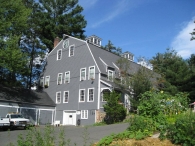
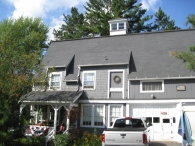
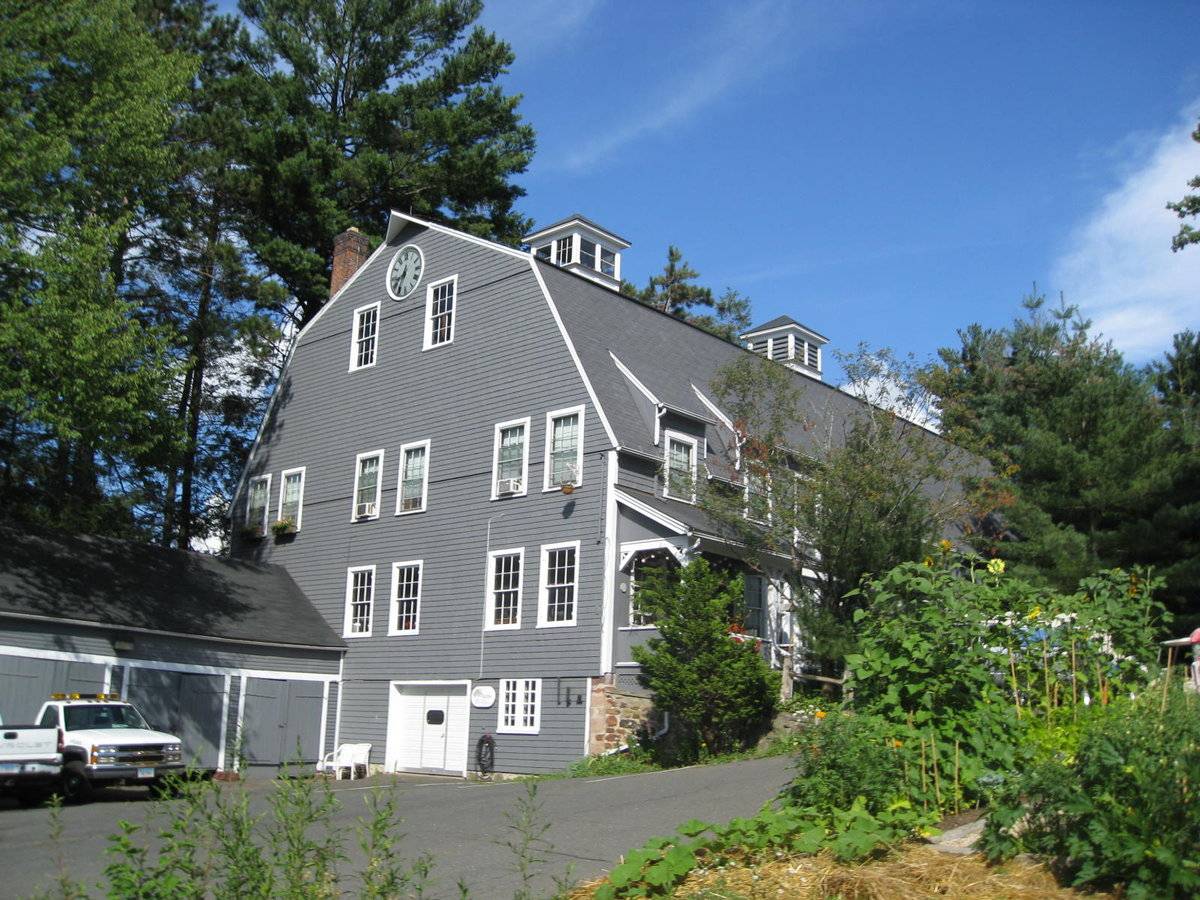
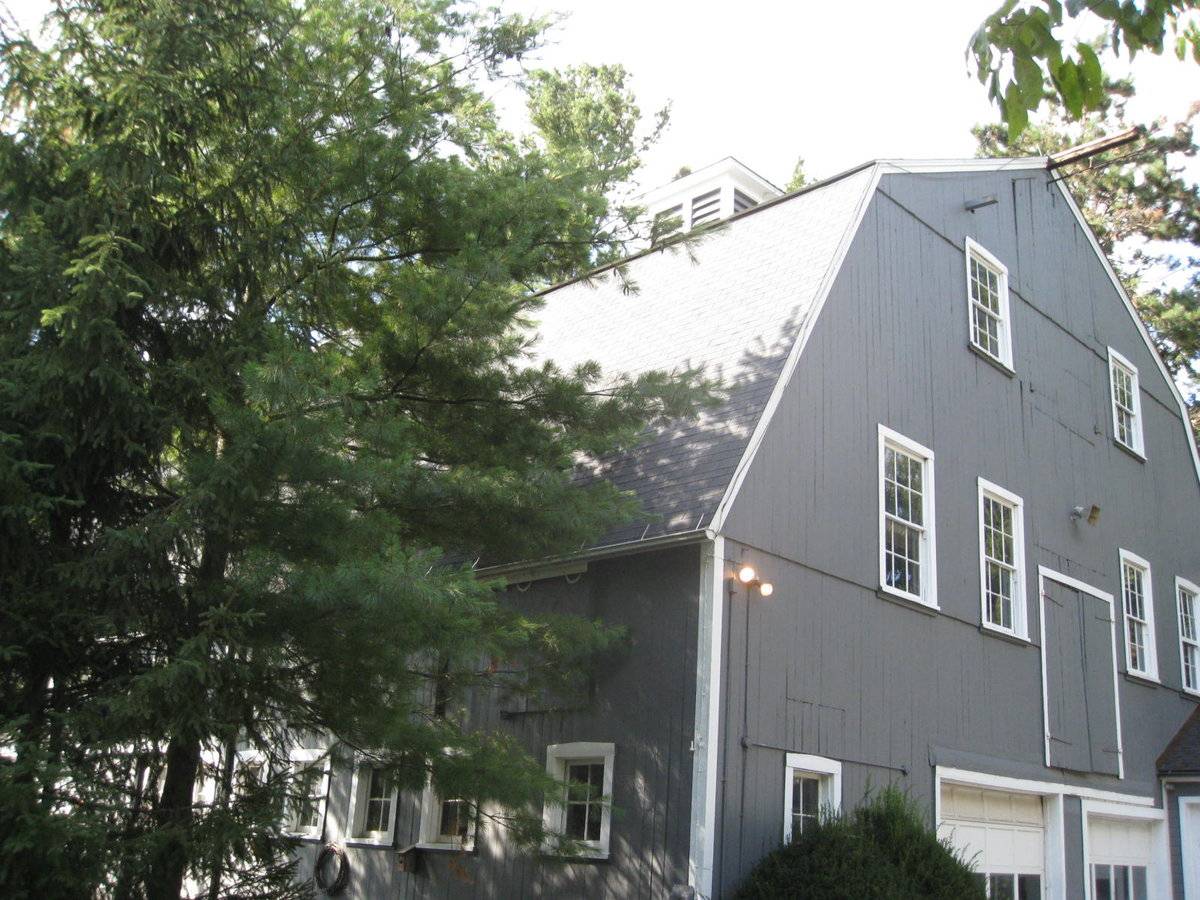
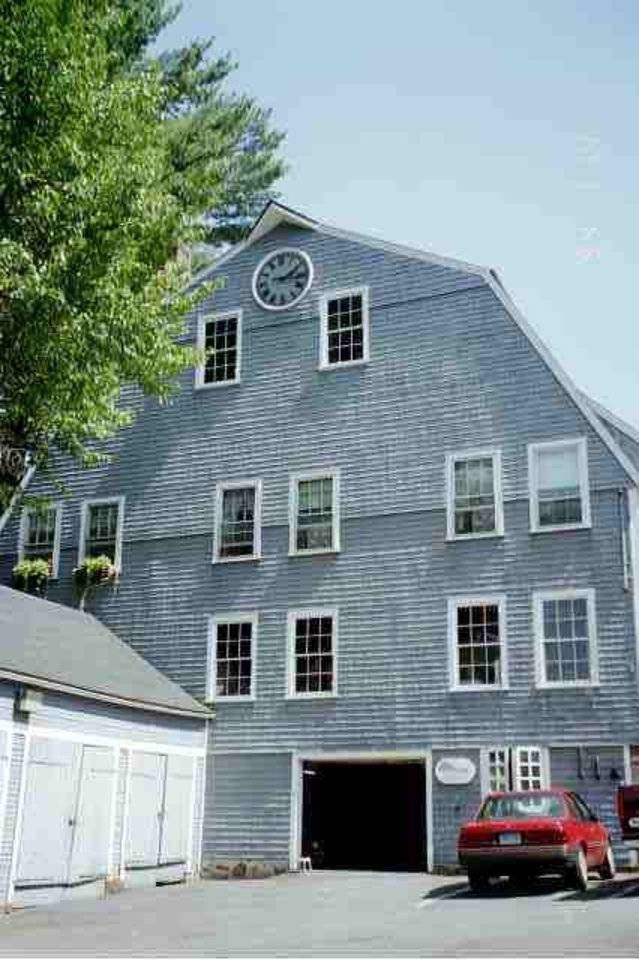
This is a very large 3-story bank barn with a gambrel roof. It is five bays in length and three bays in width. The eave of the gambrel roof is at the middle of the second story. Two single-story gable-roof garage additions are attached to this structure, one to the northwest gable-end of the barn and one to the southeast gable-end.
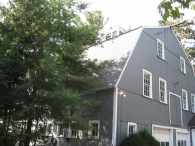
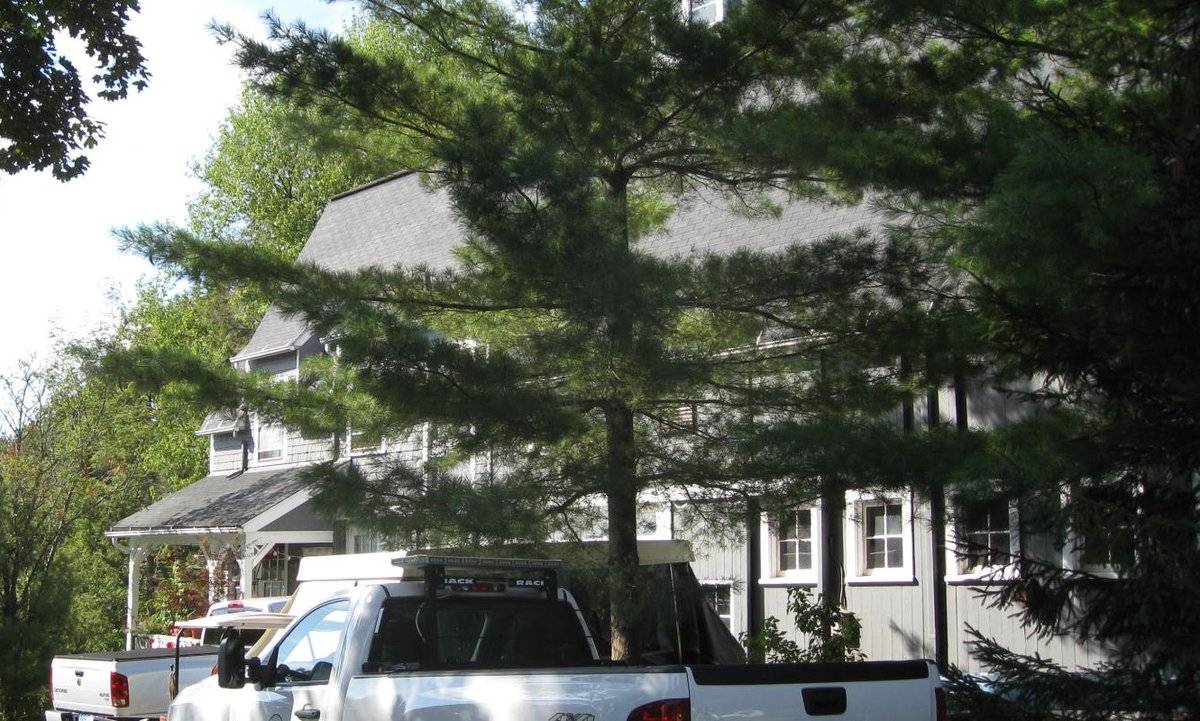
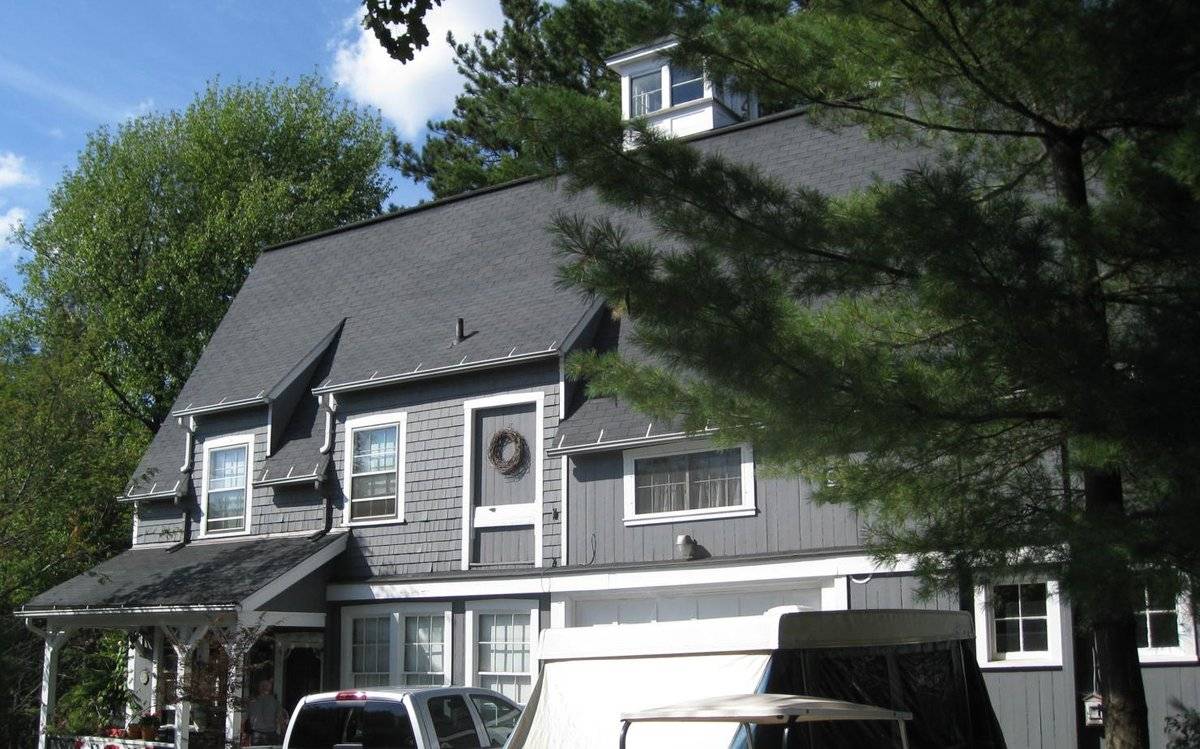
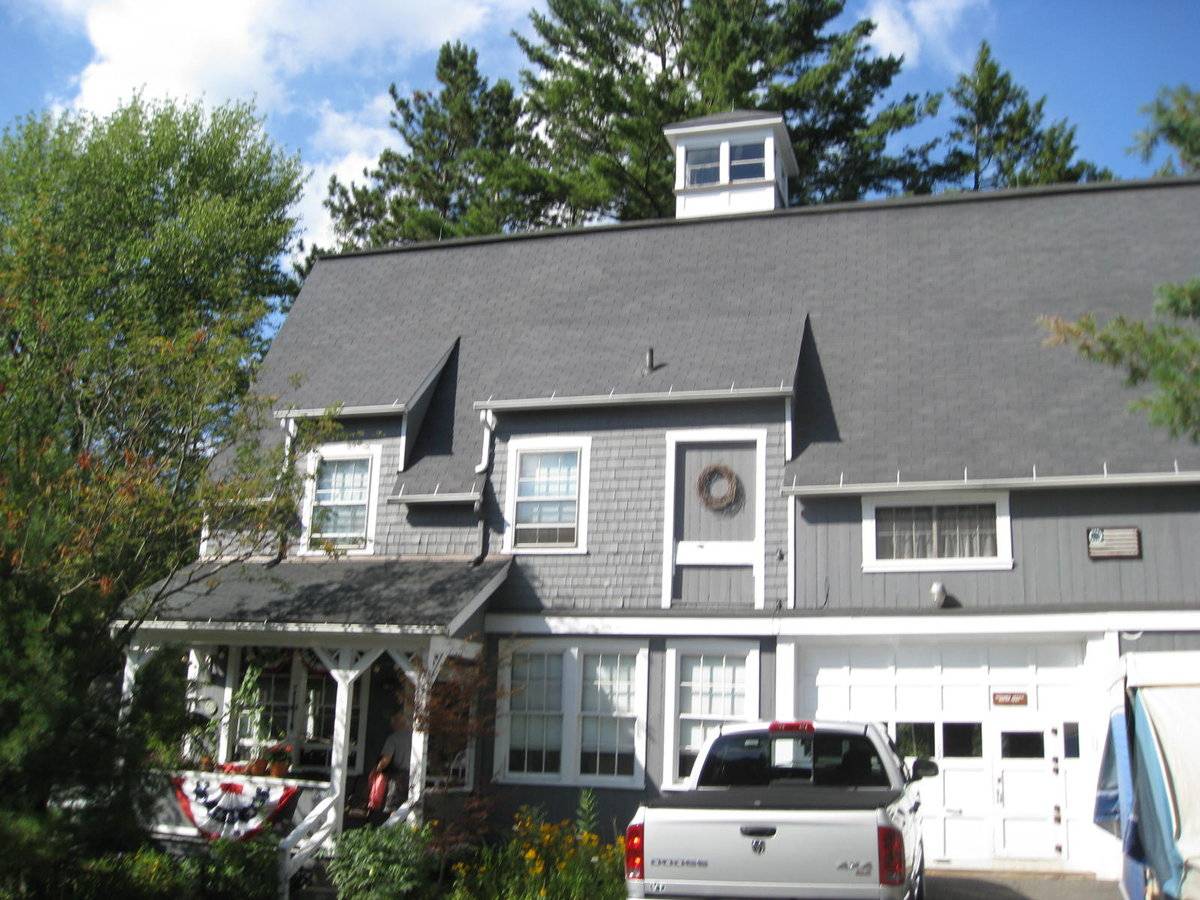
The main barn is set well back from Mountain Road, behind several other buildings. The primary façade is the southwest eave-side. A small raised porch projects off this side of the building in the far west bay, which provides access to the main entry. The porch is covered by a shed roof, which projects off the side below the eave of the main roof. The main entry consists of a single pass-through door located on the eastern half of the porch. To the west of the door, near the west corner of the building, is a pair of six-over-six double-hung windows with trim. The west central bay contains a pair of six-over-six double-hung windows with trim to the west, and a single six-over-six double-hung window to the east. The central bay contains a modern panel overhead garage door. The third row of panels from the bottom has been replaced with glass windows along the length, six panes in total. The east central bay contains three four-pane windows with trim. The east bay contains two four-pane windows with trim, of the same dimensions as the previous. The second floor on the façade also contains several openings. The west bay contains a centered shed-roof wall dormer with a six-over-six double-hung window within. The west central bay contains a full-width flush shed-roof dormer with a six-over-six double-hung window with trim to the west and a wooden plank pass-through door with trim to the east. The central bay contains a paired six-pane window opening, oriented horizontally, centered over the overhead garage door below. An exterior utility light is centered immediately below this window. The east central bay is blank on the second floor. The east bay contains a horizontal sliding door of wooden plank construction, located below the eave. The third story has no openings on the façade. The ground level slopes down from east to west along this façade.
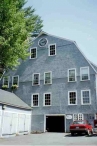
The northwest gable-end exposes the basement level and full height of the structure. The south bay on the basement level contains a small pair of eight-pane windows with trim. The space between the south and central bays contains a wide recessed door frame, but has a single modern pass-through door within. The remainder of the basement level on this side is occupied by the northwest garage addition. The south bay at the first-story level contains a pair of non-connected six-over-six double-hung windows with trim. The central bay contains an identical window pair to the south bay. No openings are present in the north bay at this level. The second story features identical non-connected six-over-six double-hung windows vertically aligned with those on the first story. It also features an identical pair of windows in the north bay. The girt line siding divide runs through the middle of the windows at this level. Two six-over-six double-hung windows are placed symmetrically into the gable-end of the third story. A large analog clock face is present between and above these windows.
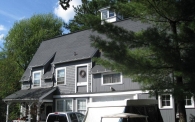
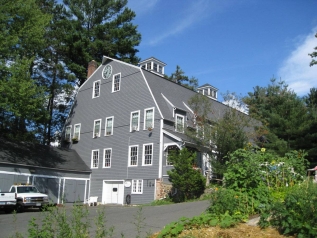
The southeast gable-end has a pair of centered paneled overhead garage doors on the first story. Each has a row of panels removed and replaced with glass panes. A small four-pane window with trim is also present near the south corner. The northern portion of the first story on this gable-end is occupied by the southeast garage addition. The second story contains four evenly-spaced six-over-six double-hung windows with trim along its width. A dropped pair of hinged wooden doors is present between the central two windows at this level. The windows on this level are set at a higher level than on the opposite gable-end, with the girt line siding divide passing through their sills. The third story contains two six-over-six double-hung windows with trim aligned vertically with the central two windows of the story below. A centered flush opening between these two windows may at one time have provided access to a hay track.
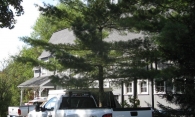
The northeast eave-side is closely bordered by a row of tall evergreen trees, and is not clearly visible for the purposes of an Historic Resource Inventory. Two carriage-house style garages are present as wings extending off the main building. Each is 1-story in height and has a gable roof. The northwest garage addition has four bays and paired hinged wooden doors. The southeast garage addition has five bays and modern paneled overhead garage doors. The main barn and winged garage additions are clad in gray painted siding. The southeast gable-end and east three bays of the barn’s length are clad in vertical wooden flush-board siding, which extends all the way to the basement level on the northwest gable-end. The northwest gable-end and west two bays of the barn’s length are clad in horizontal clapboard siding. The dormers on the southwest eave-side, second story, are clad in wooden shingles. The roof is covered with gray asphalt shingles. Two cupolas are present, set symmetrically into the roof ridgeline. The western cupola has paired windows on each side, some with two panes, others with six panes. The eastern cupola has paired louver vents on each side, painted gray. A projecting hay hood is present at the ridgeline of the northwest gable end. A brick chimney also extends above the roof line from the north purlin near the northwest gable end.
Historical significance:
Main Barn:
The gambrel roof design was universally accepted for ground-level stable barns as it enclosed a much greater volume than a gable roof did, and its shape could be formed with trusses that did not require cross beams, which would interfere with the movement and storage of hay. Also known as the curb roof, the double slopes of the gambrel offer more volume in the hayloft without increasing the height of the side walls.
The 19th century also saw the introduction of a basement under the barn to allow for the easy collection and storage of a winter’s worth of manure from the animals sheltered within the building. The bank barn is characterized by the location of its main floor above grade, either through building on a hillside or by raising the building on a foundation.
This innovation, aided by the introduction of windows for light and ventilation, would eventually be joined by the introduction of space to shelter more animals under the main floor of the barn.
Garage Additions:
Distinguished by the long shed or gable roof and the row of large openings along the eave side, the typical wagon shed was often built as a separate structure or as a wing connected to the farmhouse or the barn. These open-bay structures protect farm vehicles and equipment from the weather and provide shelter for doing small repairs and maintenance.
Field Notes
Miss Porter's School barn, 1901 Originally used for horses, hay, and carriages. There was a riding ring in back where a parking lot is now. Some of the original stalls remain. Part has been converted to a residence and office. Barn currently headquarters of Buildings and Grounds Department, Miss Porter's School. Some photos are titled as 60 Main Street, which is the mailing address of the school.
- Use & Accessibility
Use (Historic)
Use (Present)
Exterior Visible from Public Road?
1
Demolished
n/a
Location Integrity
Unknown
- Environment
Related features
n/a
Environment features
Relationship to surroundings
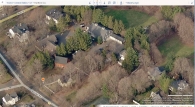
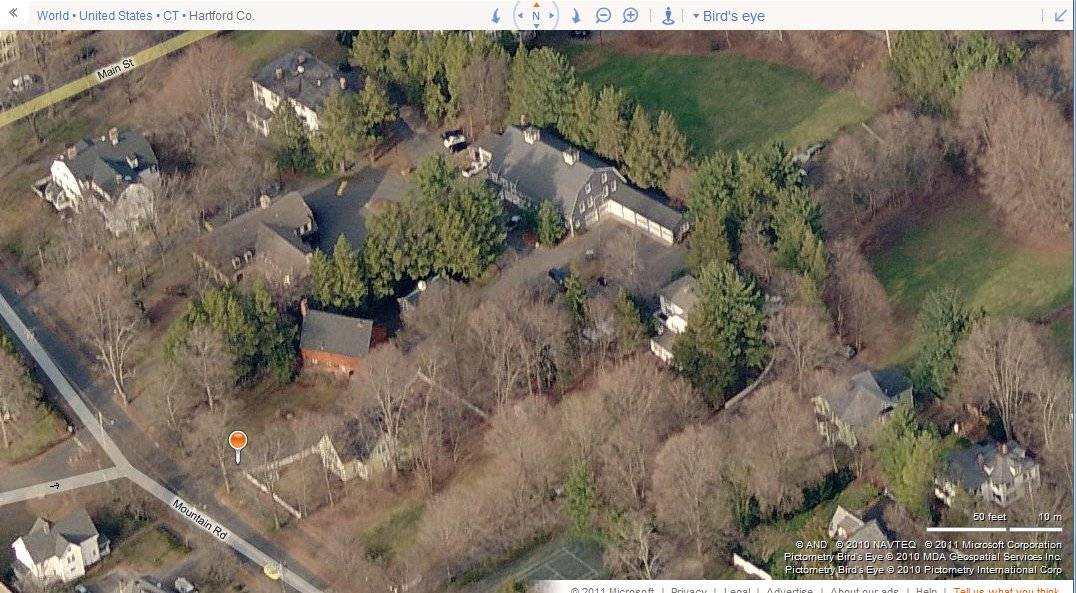
The barn at this site is situated well back from Mountain Road, behind several other buildings and many trees, making it impossible to see from the street. The barn is one of several historic buildings located on the campus of Miss Porter’s School. Asphalt parking lots and driveways are situated adjacent to the barn and additions to the southwest, which lead to Mountain Road, and to Main Street, which is located to the northwest of the barn. A long line of evergreen trees extends along the northeast eave-side of the barn and garage additions, and a similar long line extends from the center bay of the barn in a southwesterly direction. Beyond the evergreen trees lie two small plots of open space to the north and east of the barn. Aside from Miss Porter’s School buildings, residences line the surrounding streets to the north, east, and south, intermixed by small groves of trees and open some yards.
- Typology & Materials
-
Building Typology
Materials
Structural System
n/a
Roof materials
Roof type
Approximate Dimensions
Main barn: 80’ x 50’ Northwest Garage Addition: 20’ x 41’ Southeast Garage Addition: 23’ x 59’
- Source
-
Date Compiled
04/09/2011
Compiled By
N. Nietering & T. Levine, reviewed by CT Trust
Sources
Photographs by Todd Levine (tlevine@cttrust.org) and Linda Guernsey.
Sexton, James, PhD; Survey Narrative of the Connecticut Barn, Connecticut Trust for Historic Preservation, Hamden, CT, 2005, http://www.connecticutbarns.org/history.
Visser, Thomas D.,Field Guide to New England Barns and Farm Buildings, University Press of New England, 1997, 213 pages.
Map of Farmington, CT, retrieved on April 9, 2011 from website www.bing.com.
Farmington Assessor’s Records - online - http://www.farmington-ct.org/landrecords/search.php
- PhotosClick on image to view full file
-