Barn Record Farmington
RETURN TO ‘FIND BARNS’- Building Name (Common)
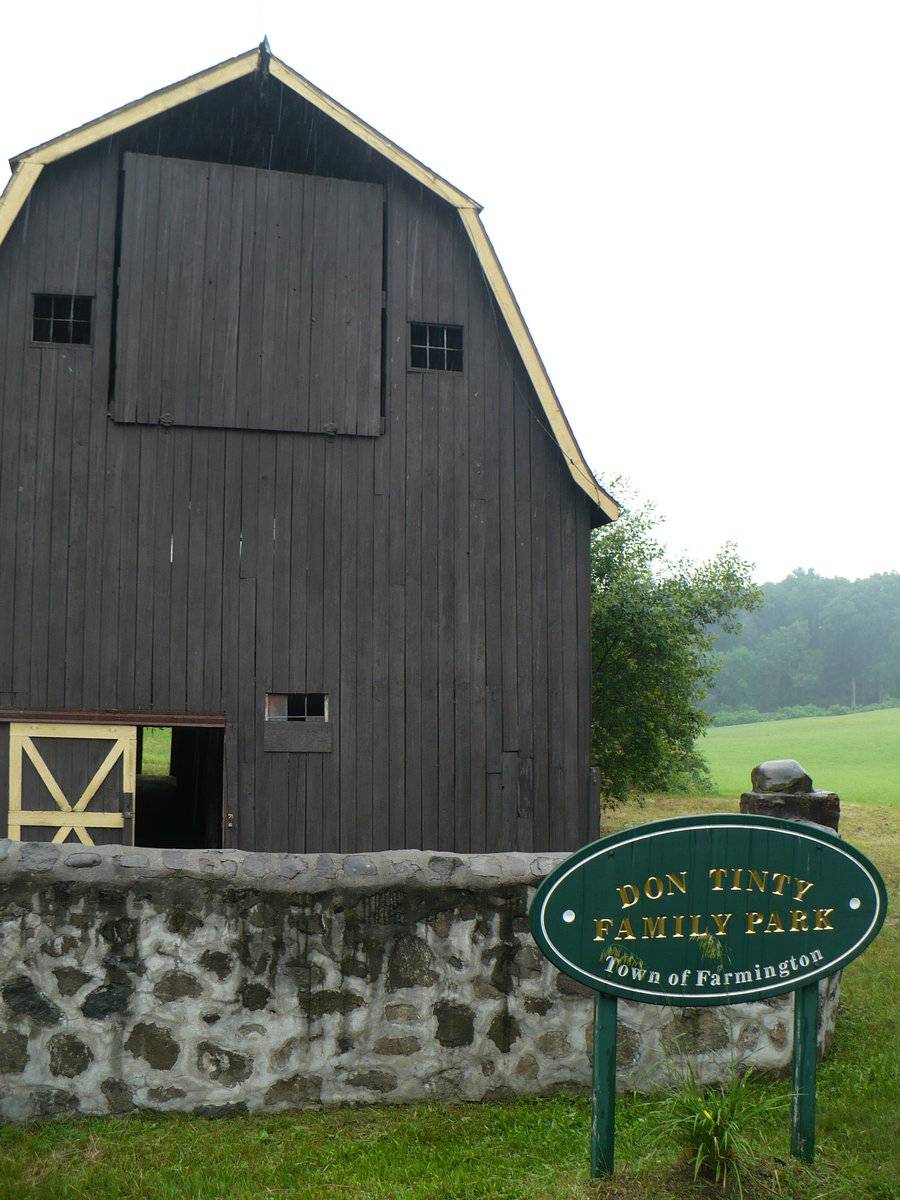
- Tinty, Don, Family Park
- Building Name (Historic)
- Cowles, Isaac, Farmstead
- Address
- 9190 Main Street (Route 10), Farmington
- Typology
- Overview
-
Designations
Historic Significance
Architectural description:
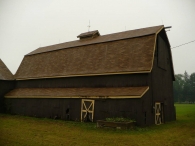
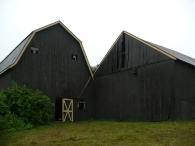
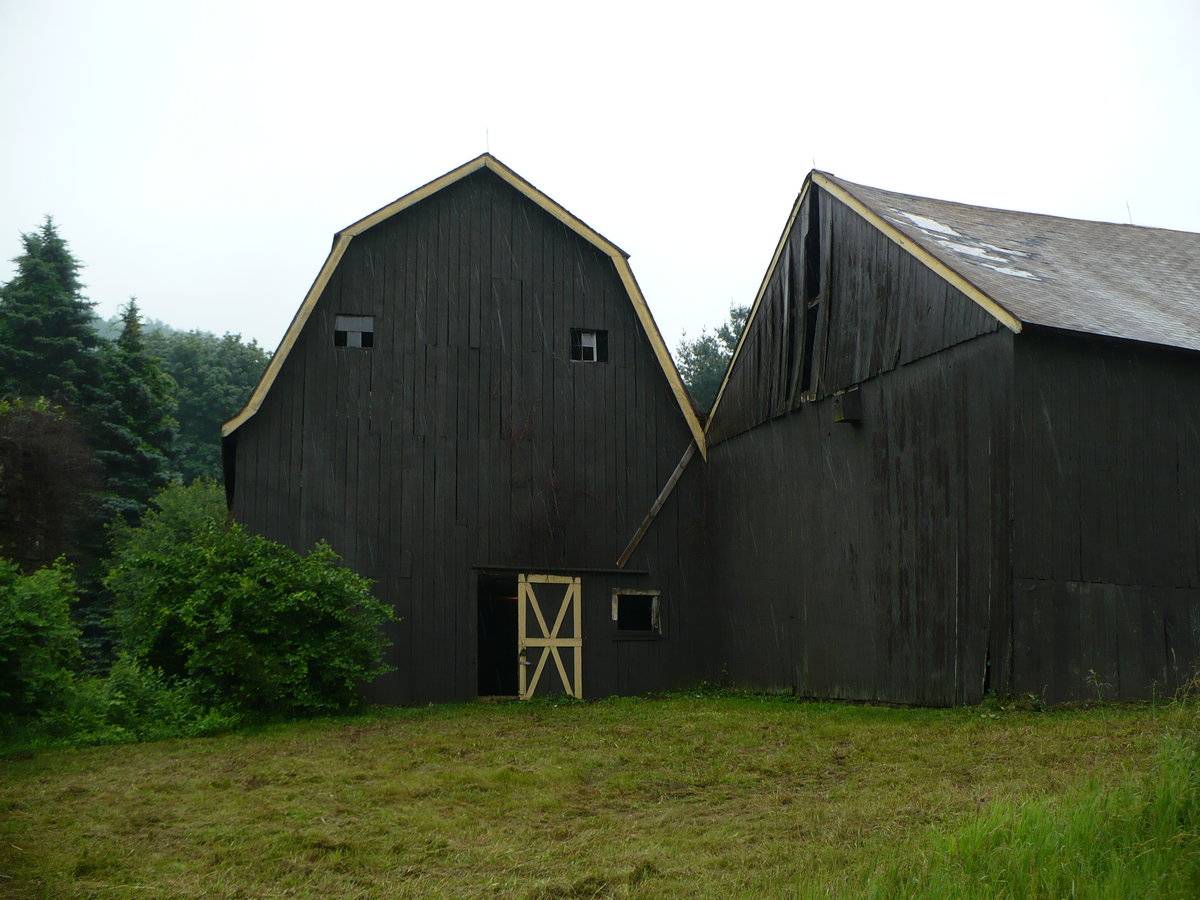
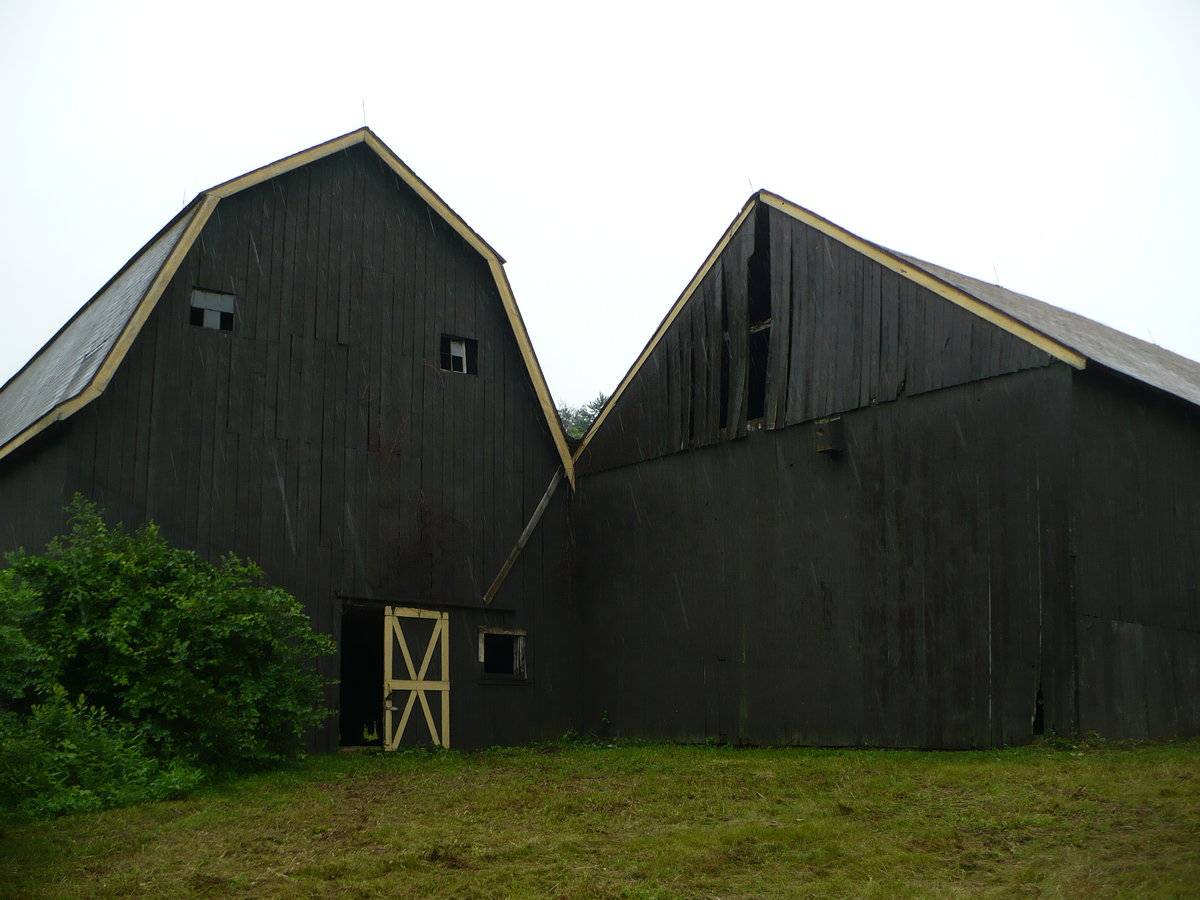
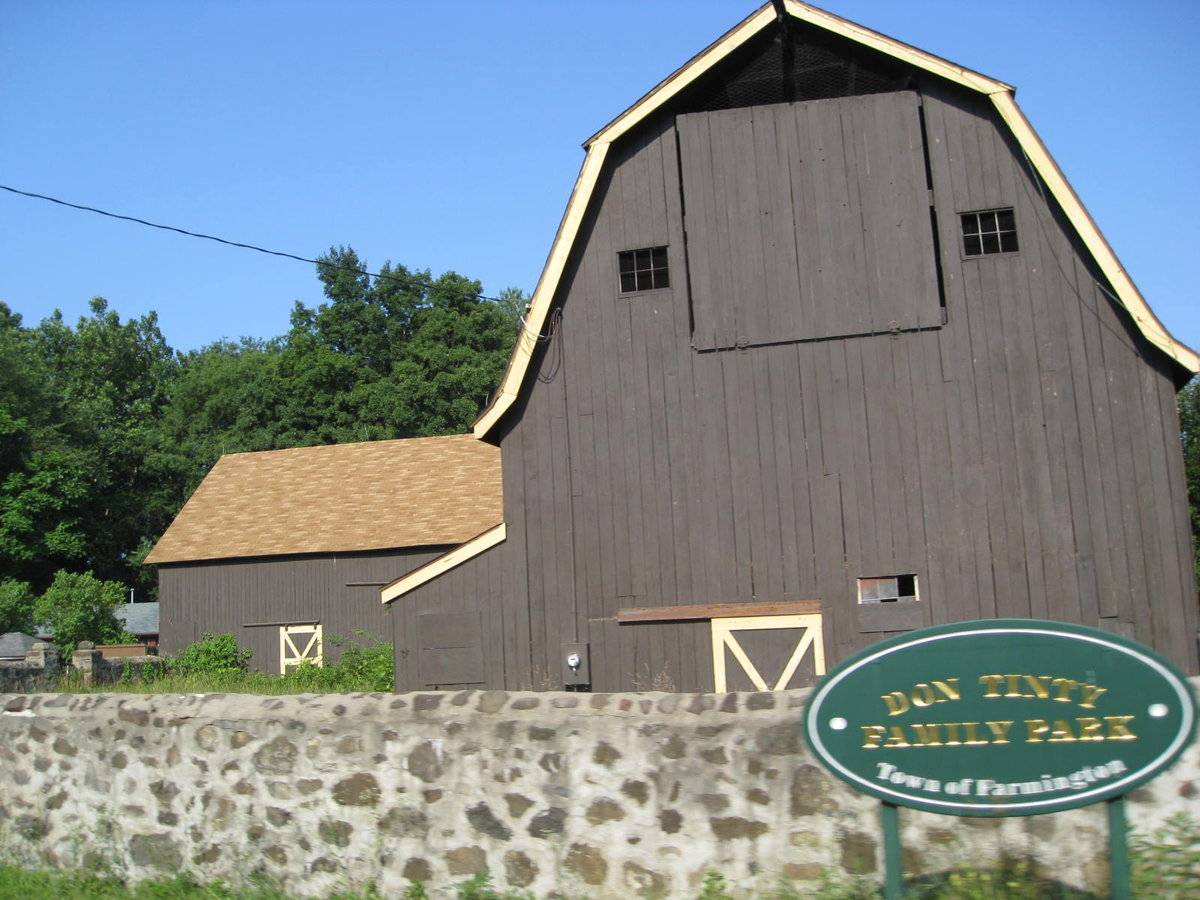
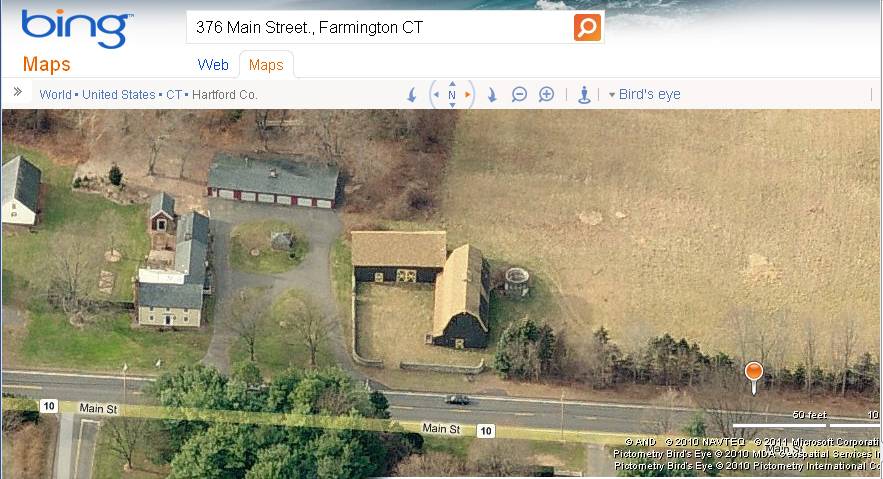
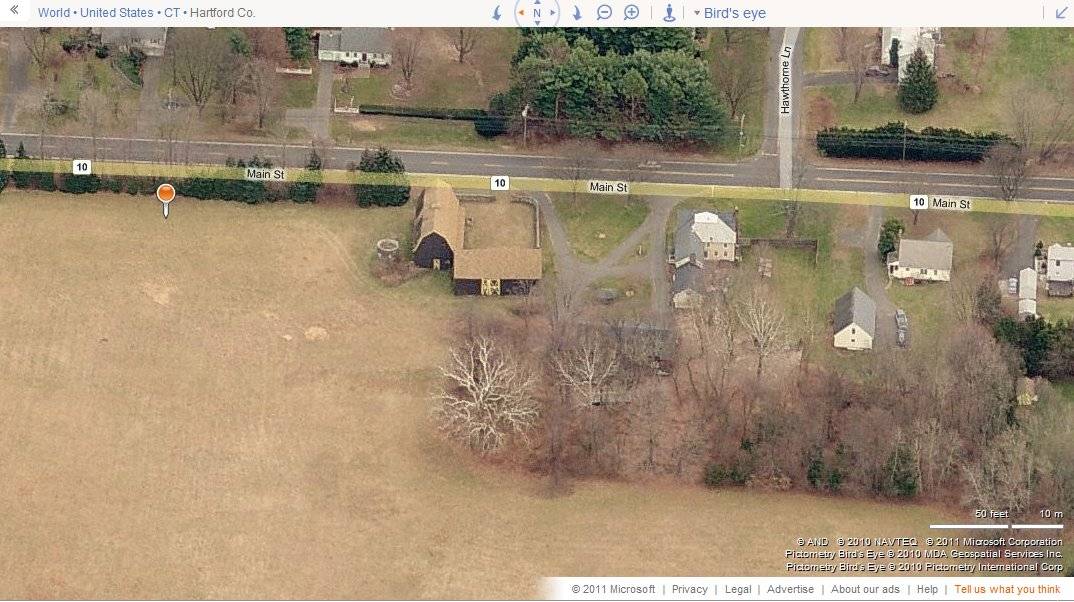
These agricultural buildings at this property include two separate but adjacent barns. Barn I is a large 1 ½-story gambrel roof barn with a gable-entry. Barn II is a four-bay 1 ½-story gable roof barn with an eave-entry. Barn I is located very close to Main Street and is situated perpendicular to the road. Barn II is located to the immediate southwest of Barn I and is parallel to Main Street. Barn I has a single-story shed roof addition running its full length along the south eave-side. Main Street passes this property at a north to south angle.
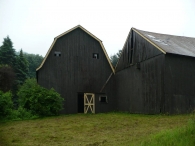
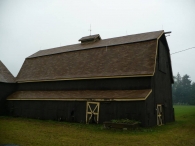
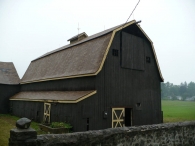
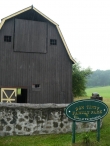
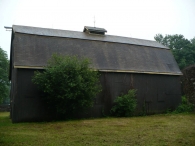
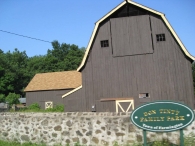
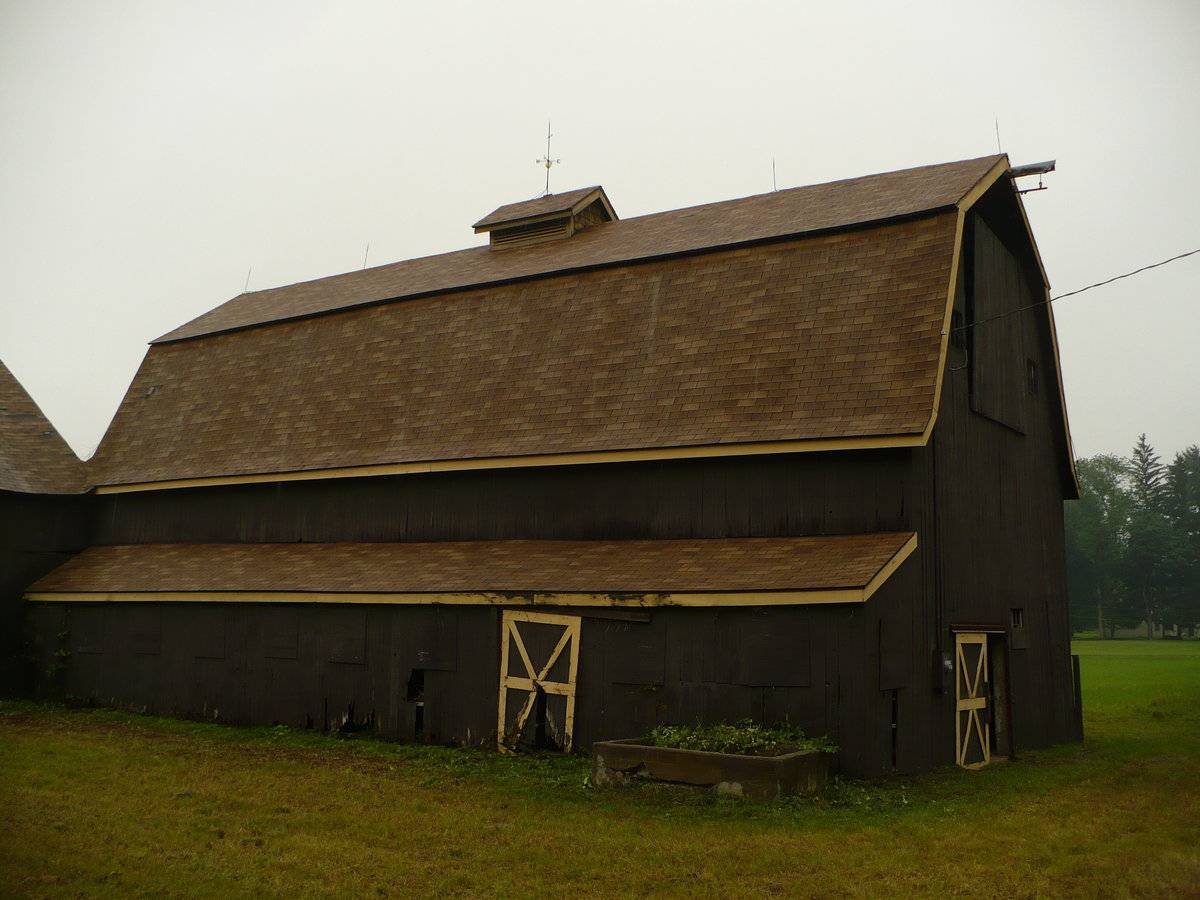
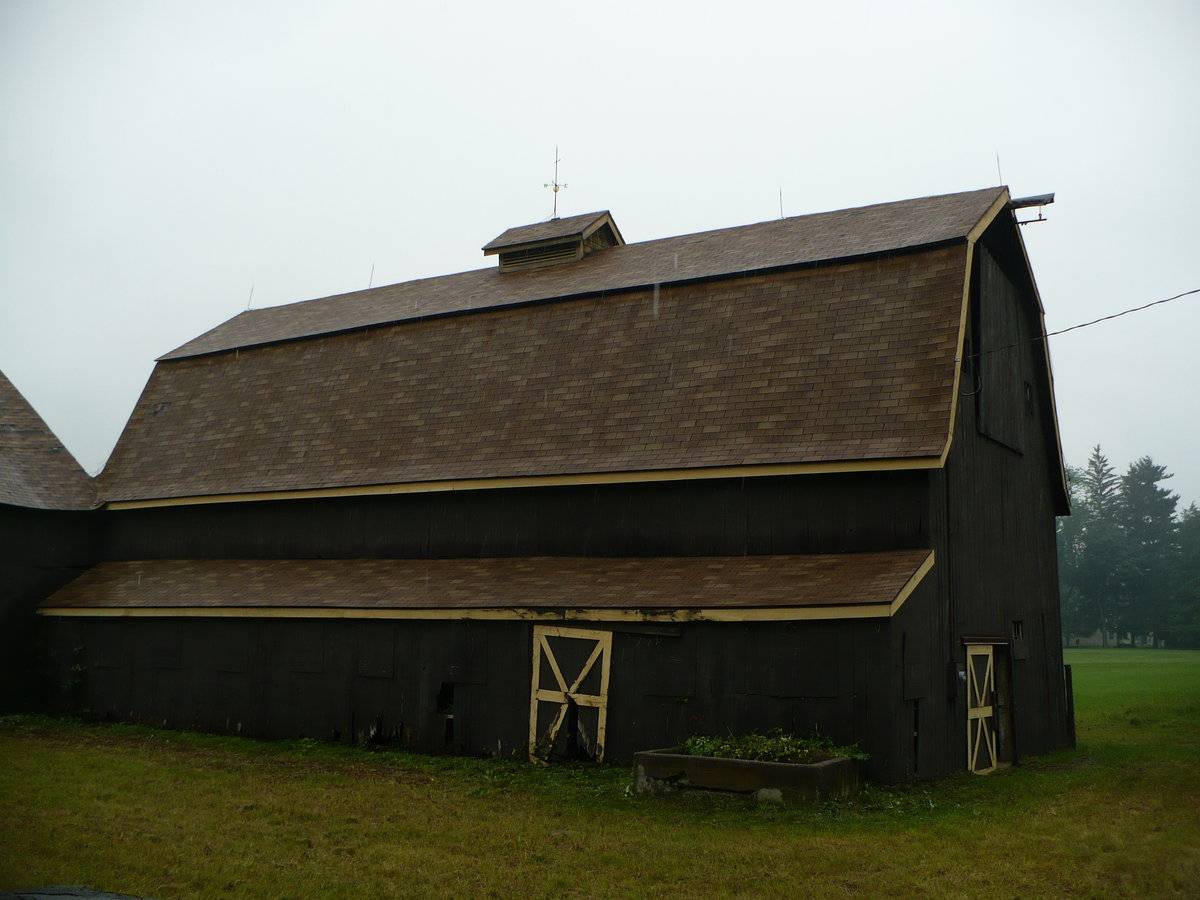
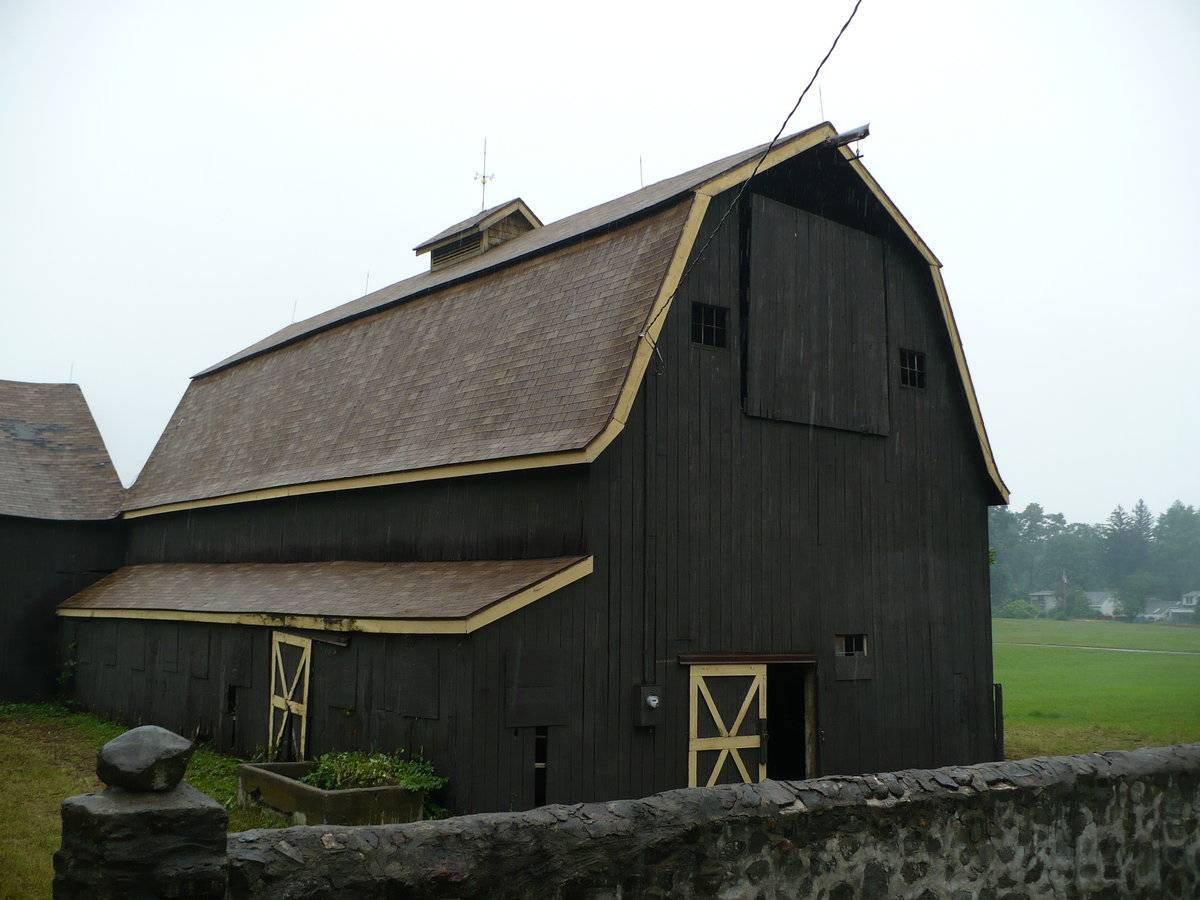
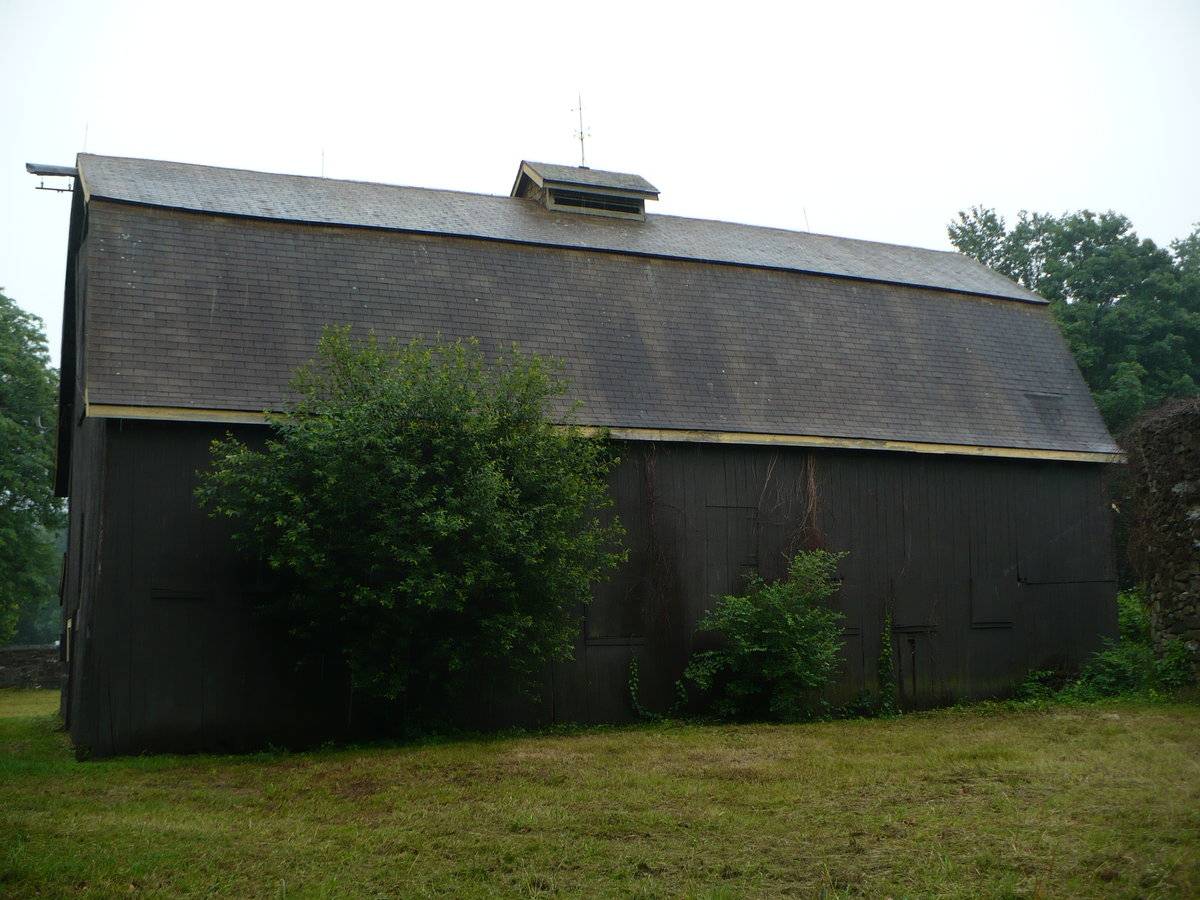
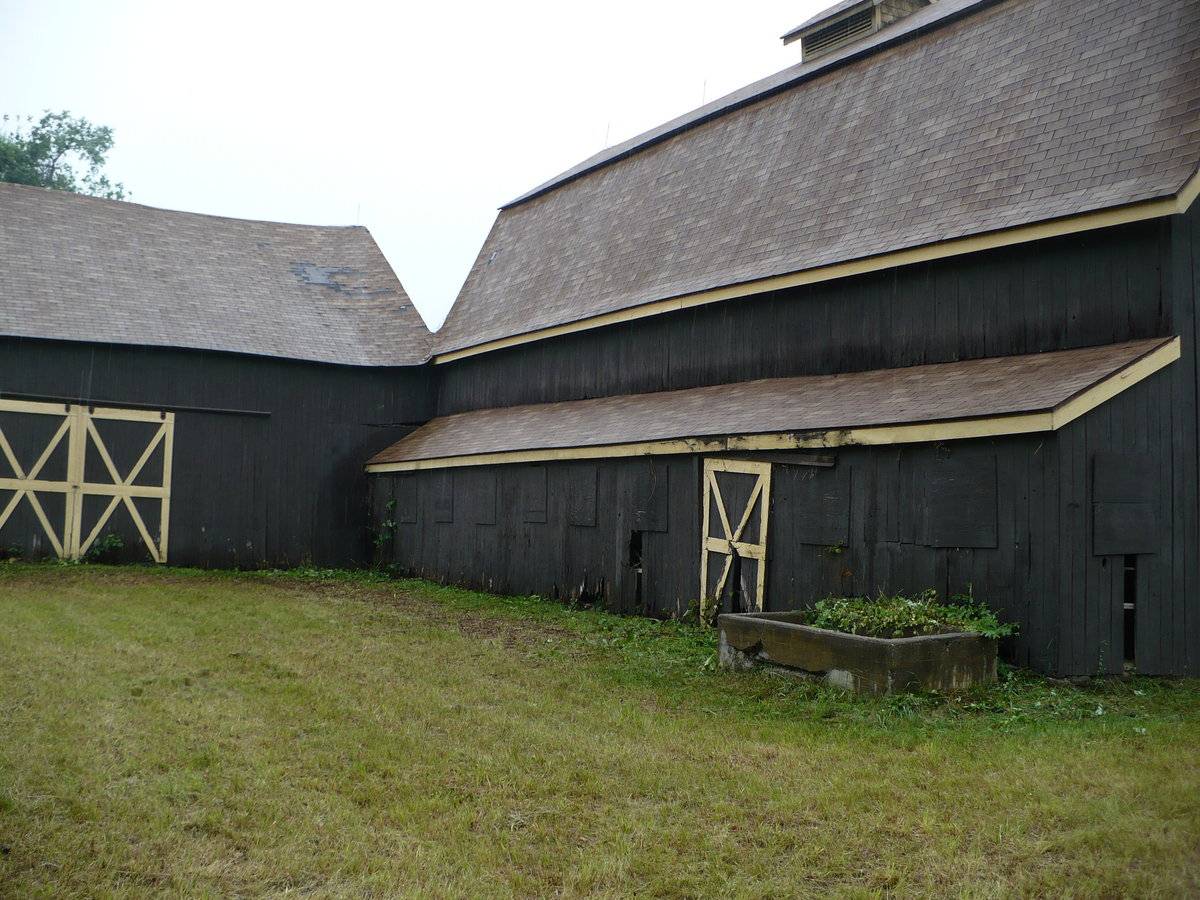
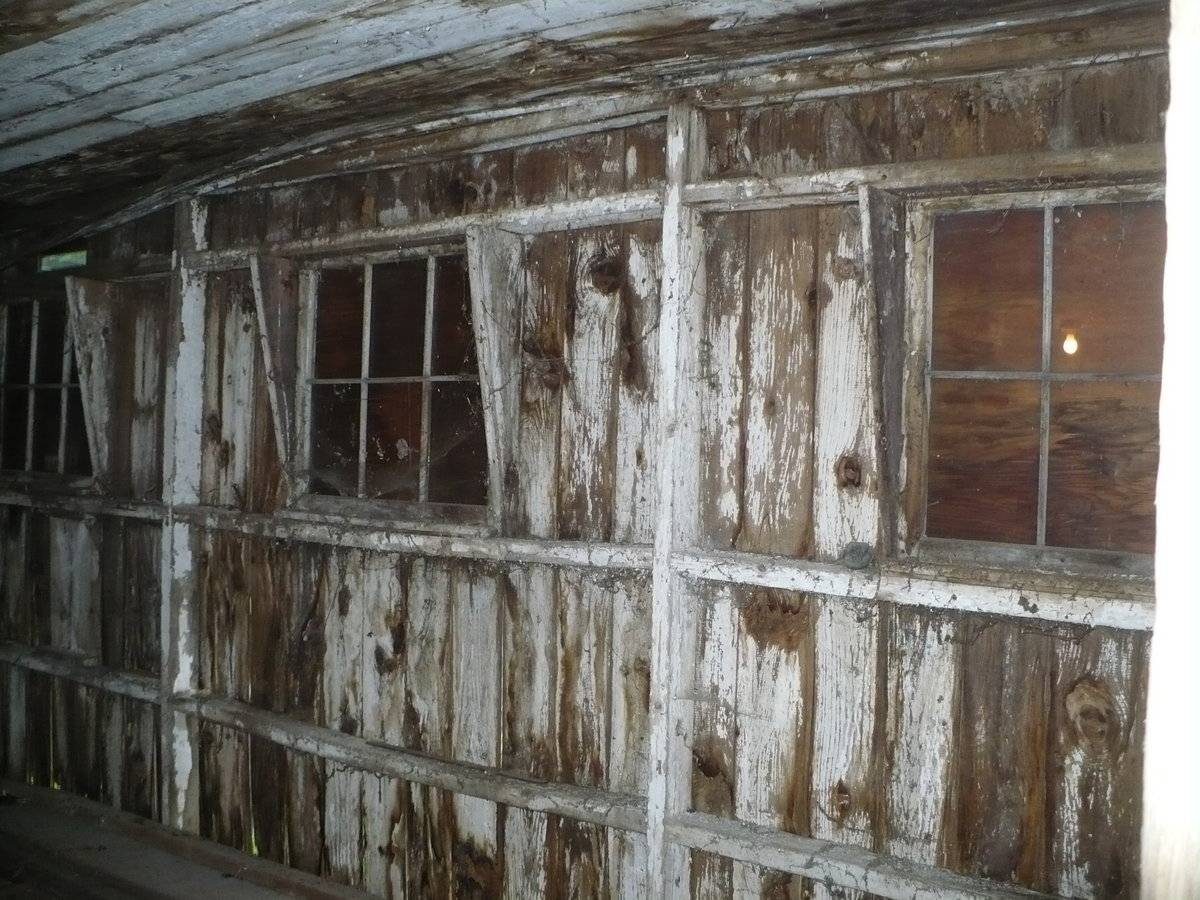
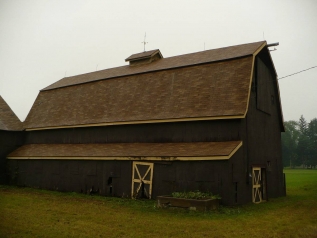
Barn I is a large 1 ½-story gambrel roof barn with a gable-entry. The primary façade of this barn is the east gable-end, which faces Main Street. A sliding pass-through door of braced wood construction is present near the center in the south half of this façade on the first story. To the immediate north of this door is a six-pane window. An electric meter is mounted to the wall near the southeast corner of the main barn. The east end of the addition has a single window opening which has been boarded over. The attic gable consists of a very large wooden plank hay door, hinged at the bottom, which is centered beneath the ridgeline. One six-pane window is present to each side of this central door. The area between the top of the door and the roof has no siding but has a chicken wire mesh providing ventilation to the attic-loft. The north eave-side appears to be blank. The west gable-end appears to be a mirror image of the east gable-end, with wooden braced pass-through door located just to the south of center on the first story, with a small window between this door and the southwest corner. Two windows are placed in the attic-loft in the same places as they are found on the opposite gable-end. The shed roof addition extends off the south eave-side of the barn, stretching the barn’s full length. The shed roof begins slightly below the eave of the main gambrel roof. A single braced wooden pass-through door is present roughly halfway between the center and the southeast corner of the addition.
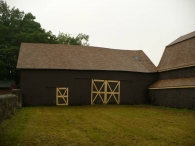
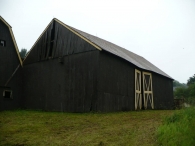
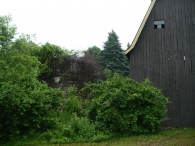
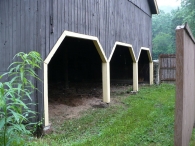
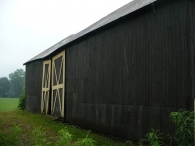
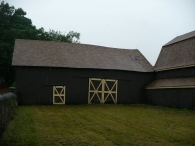
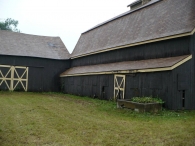
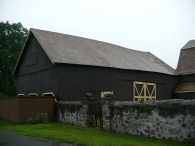
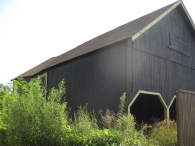
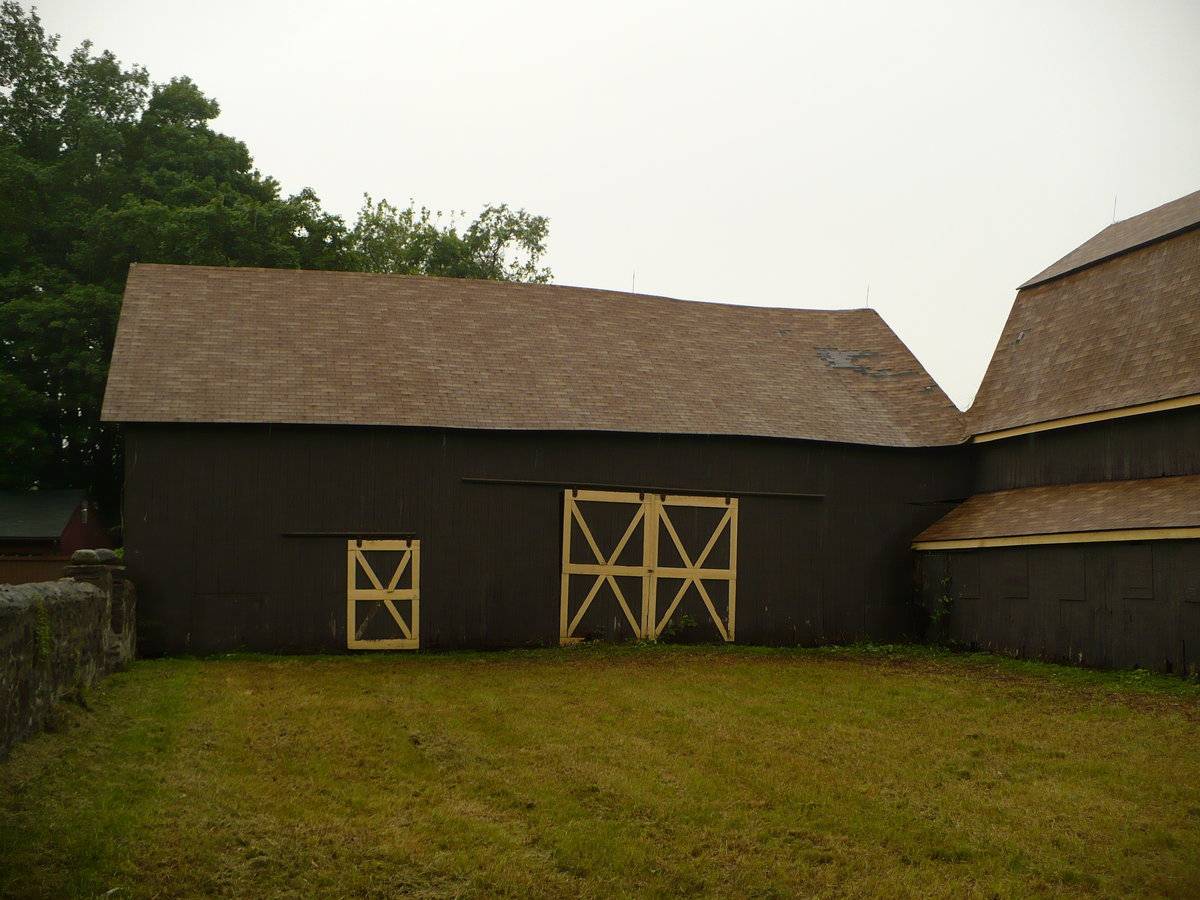
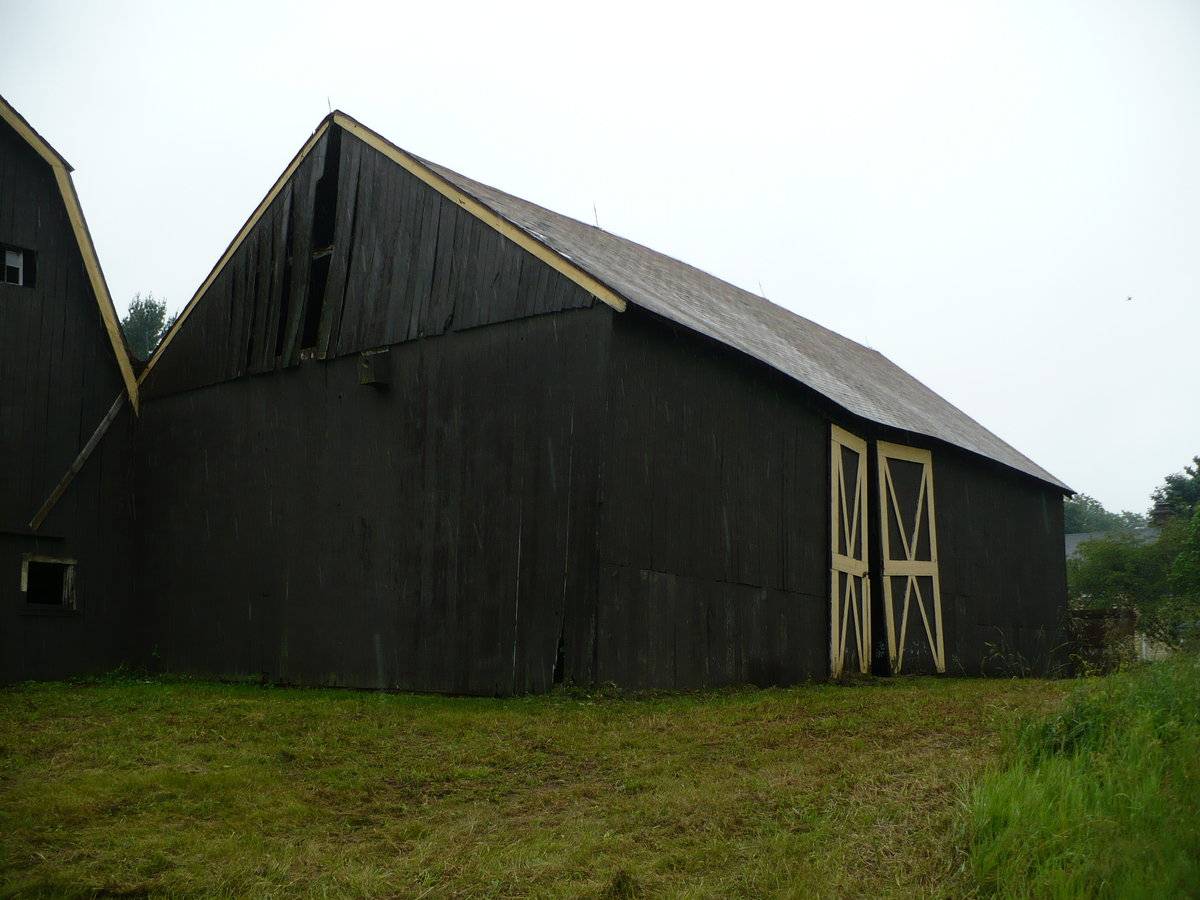
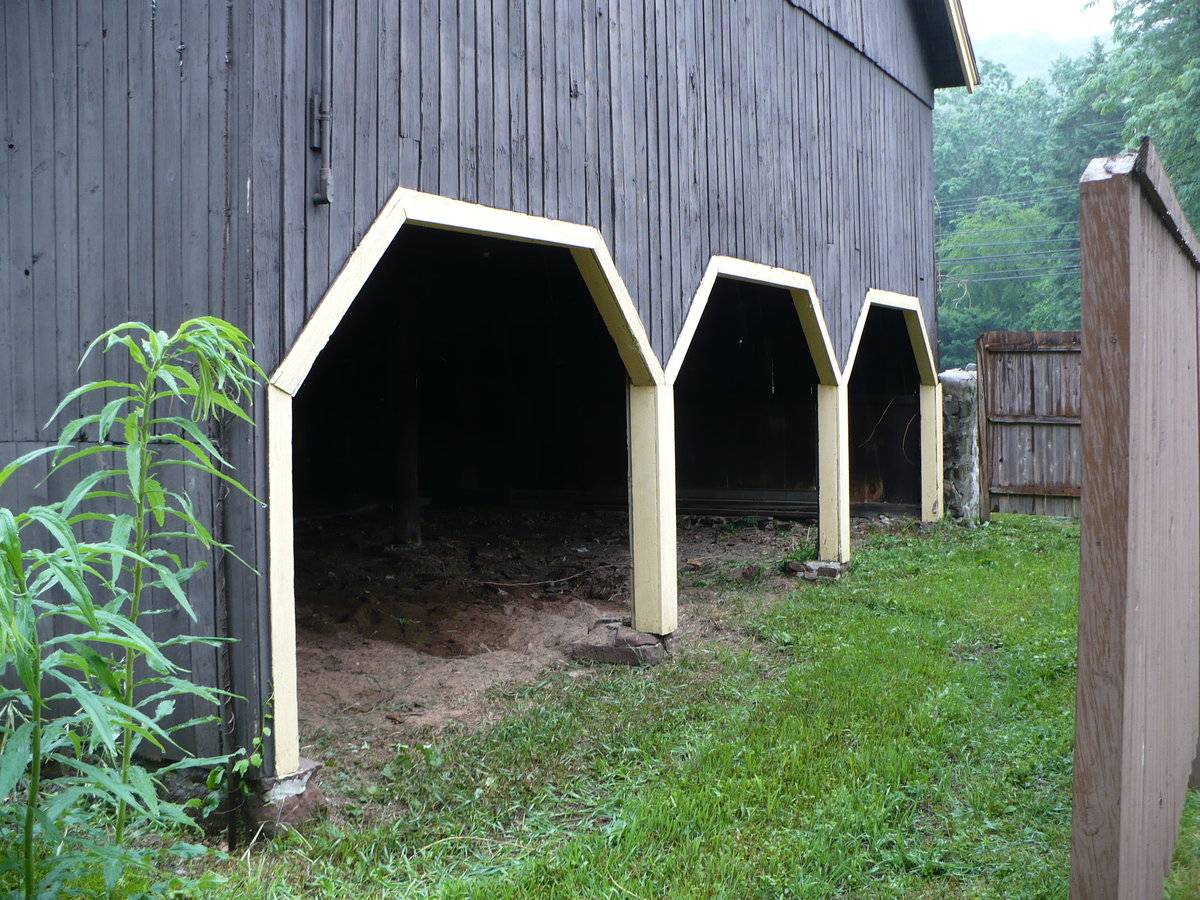
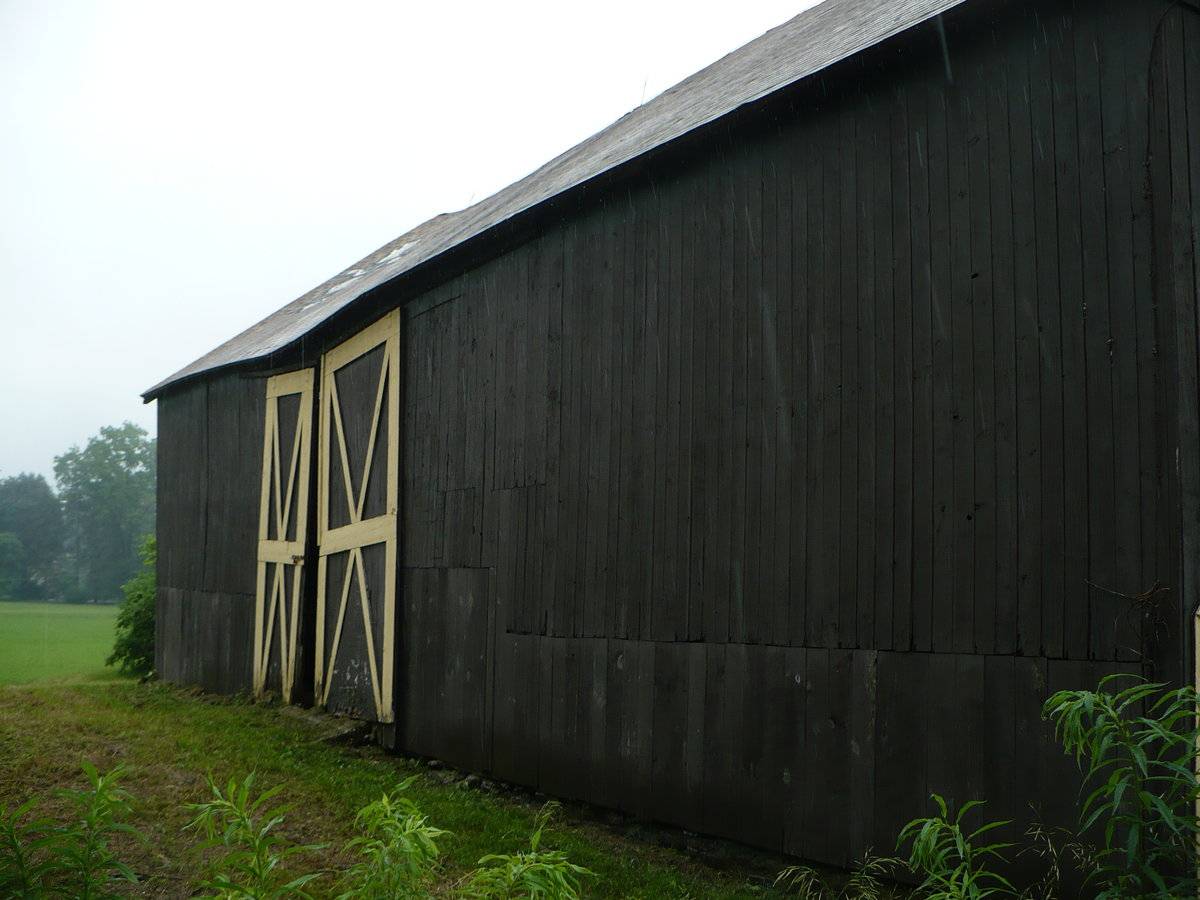
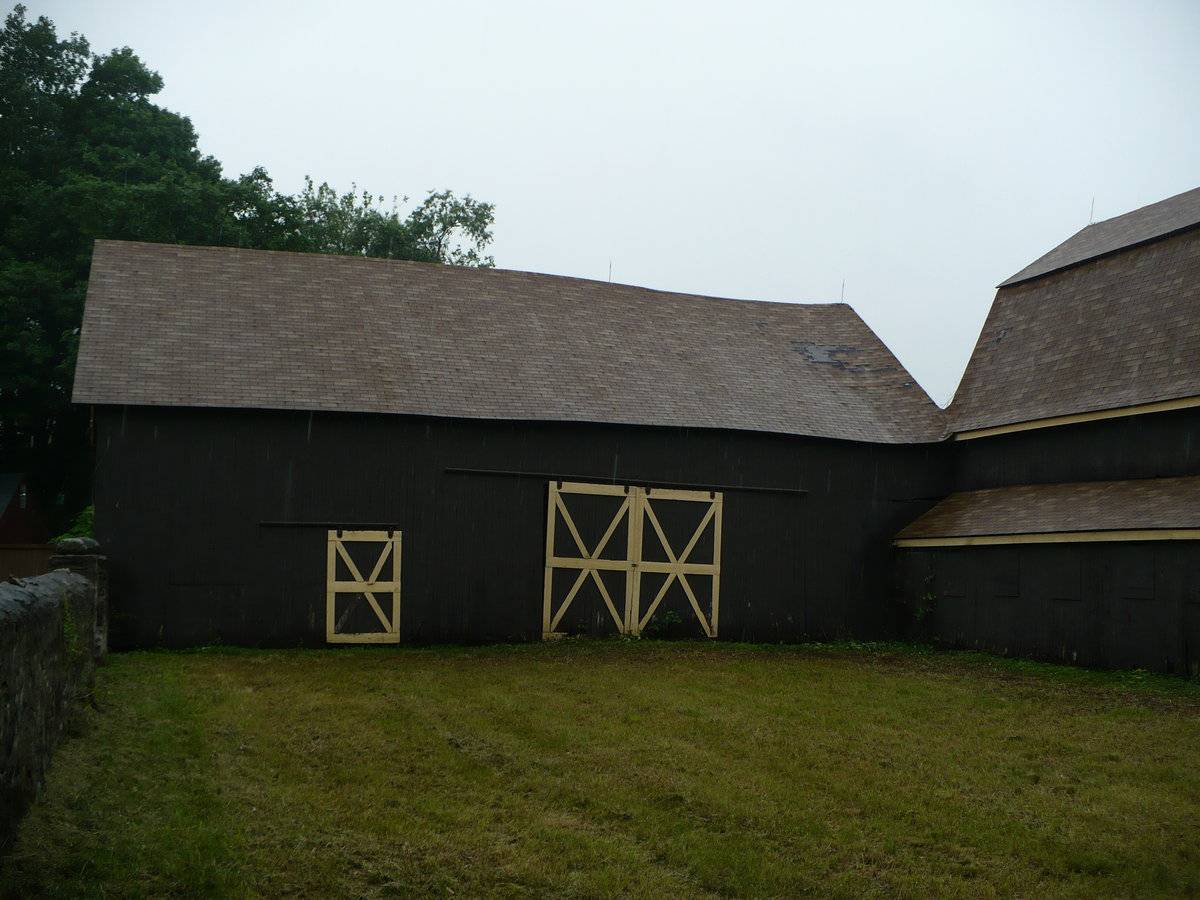
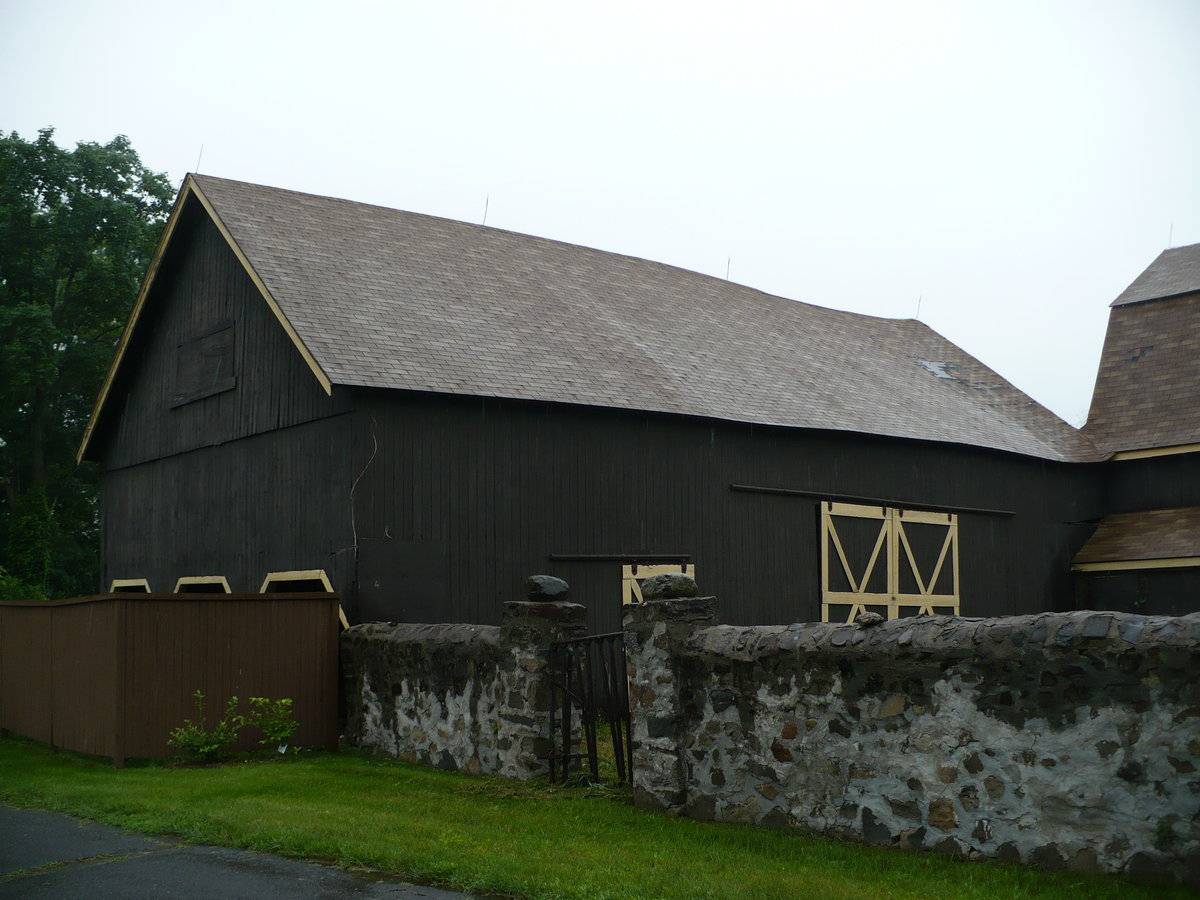
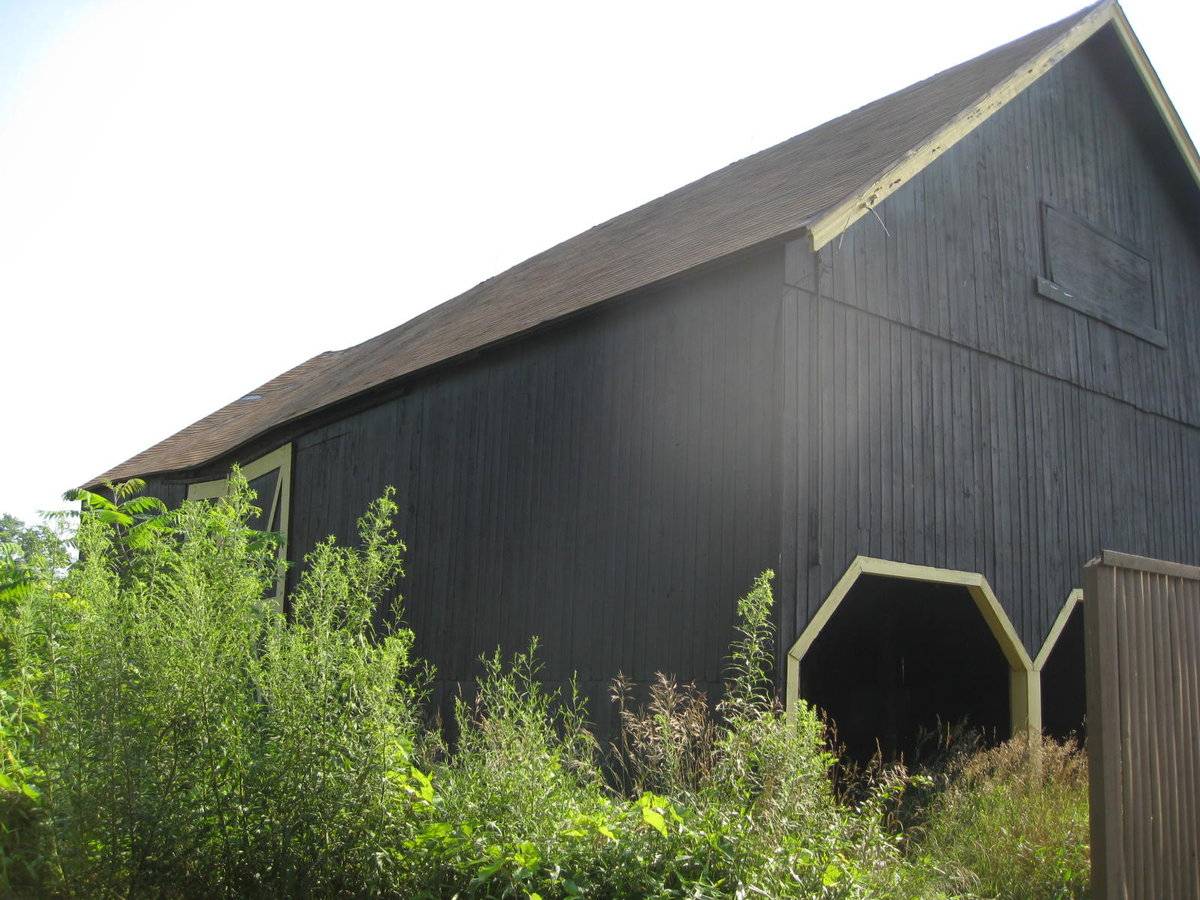
Barn II is a four-bay 1 ½-story gable roof barn with an eave-entry. The primary façade of this barn is the east eave-side, which faces Main Street. A pair of oversize sliding braced wooden doors constitute the main entry, just to the north of the center of the structure. A smaller sliding pass-through door is present about halfway between the oversize doors and the southeast corner of this barn. No window openings are present on this side. The north gable-end appears blank. The west eave-side of the barn features a pair of oversize sliding wooden doors in the same bay as on the east façade. However, in the case of the west eave-side, the northern door is only about half the width of the southern door. The south gable-end reveals that the farthest south bay of this barn is actually recessed beneath a projecting gable-attic, in the form of three garage stalls. Each stall has clipped upper corners with trim. A wide, horizontal window opening is present centered in the gable attic above the dropped girt line siding divide, but has been covered over with a sheet of plywood.
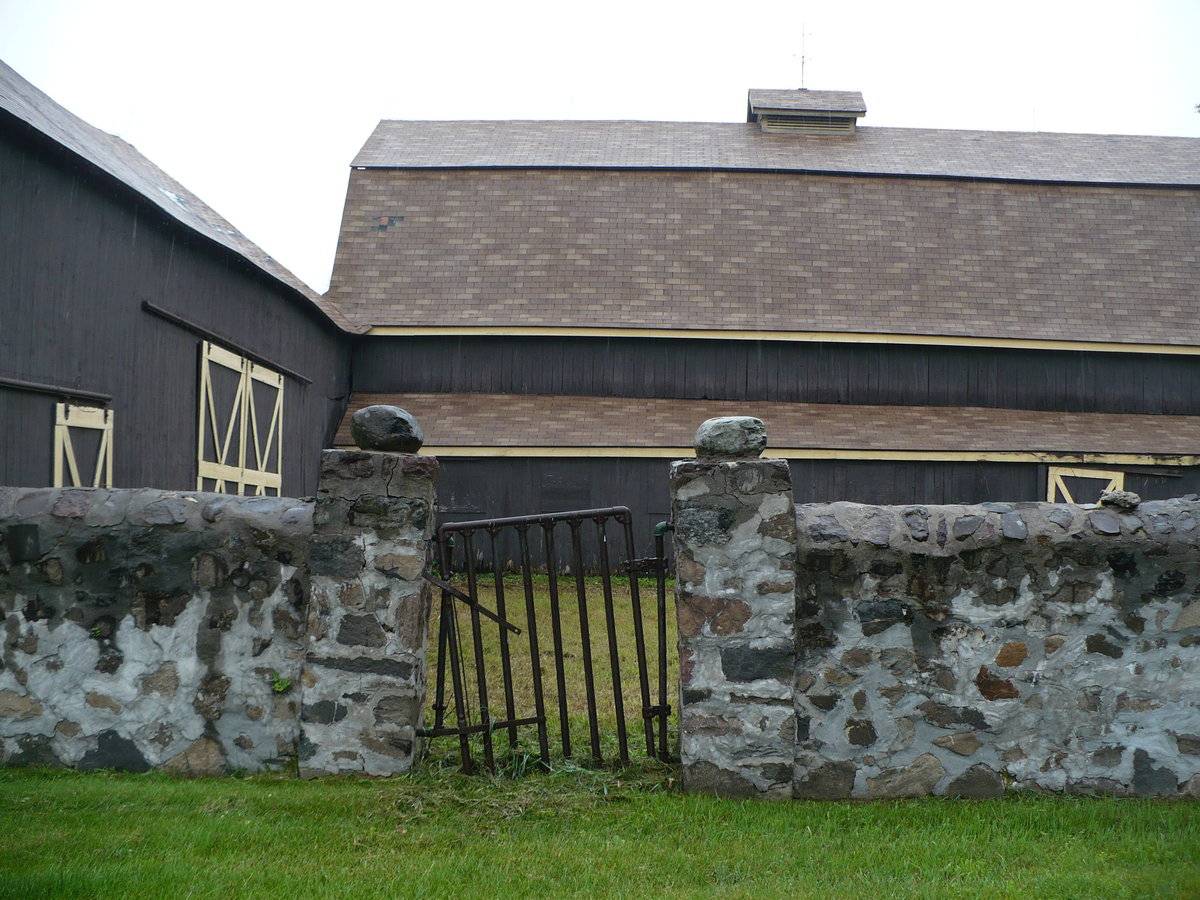
Both Barns I & II are sheathed in vertical wooden flush-board siding, painted deep brown. The trim along roof eaves and gable ends, where present, and the framing and bracing of all doors, is painted yellow. Both roofs are covered in brown asphalt shingles. A small monitor roof projection is present at the center of the length of Barn I’s ridgeline with long louvers down the eave-sides. This has a gable roof of the same roofing material and a weathervane at the ridgeline. Barn I’s gambrel roof also has flared eaves.
Historical significance:
Barn I:
The New England barn or gable front barn was the successor to the English barn and relied on a gable entry rather than an entry under the eaves. The gable front offered many practical advantages. Roofs drained off the side, rather than flooding the dooryard. With the main drive floor running parallel to the ridge, the size of the barn could be increased to accommodate larger herds by adding additional bays to the rear gable end. Although it was seen by many as an improvement over the earlier side-entry English Barn, the New England barn did not replace its predecessor but rather coexisted with it; both types continued to be constructed.
The gambrel roof design was universally accepted for ground-level stable barns as it enclosed a much greater volume than a gable roof did, and its shape could be formed with trusses that did not require cross beams, which would interfere with the movement and storage of hay. Also known as the curb roof, the double slopes of the gambrel offer more volume in the hayloft without increasing the height of the side walls.
Barn II:
The oldest barns still found in the state are called the “English Barn,” “side-entry barn,” “eave entry,” or a 30 x 40. They are simple buildings with rectangular plan, pitched gable roof, and a door or doors located on one or both of the eave sides of the building based on the grain warehouses of the English colonists’ homeland. The name “30 by 40” originates from its size (in feet), which was large enough for 1 family and could service about 100 acres. The multi-purpose use of the English barn is reflected by the building’s construction in three distinct bays - one for each use. The middle bay was used for threshing, which is separating the seed from the stalk in wheat and oat by beating the stalks with a flail. The flanking bays would be for animals and hay storage.
Field Notes
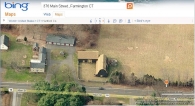
Listed on the State Register of Historic Places 5/01/2013 Isaac Cowles farm c. 1733. House and barns were in the Cowles family until the 1950s. Descendants of Isaac Cowles farmed the original 300 acres until World War II. In the 1880s a tavern was supposedly kept there. In 1900 Percy Cowles helped his father, Gustavus, build an orchard and establish a milk route. In the 1950s most of the land was sold for development. All that remains of the original farm is the yellow farmhouse at No. 400, the large gambrel-roofed barn, some sheds, part of a stone silo, and a stone well-house. 2011 Barns Grant Recipient #9190 is a number the town has given to the Tinty Barn. However, Google Maps and Bing Maps do not recognize this address. 400 Main Street is the adjacent house that was once associated with the barns, best for map search of location.
- Use & Accessibility
Use (Historic)
Use (Present)
Exterior Visible from Public Road?
Yes
Demolished
n/a
Location Integrity
Original Site
- Environment
Related features
Environment features
Relationship to surroundings
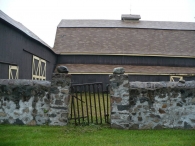
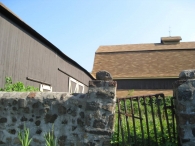
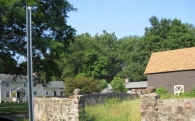
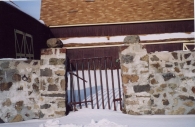
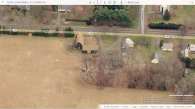
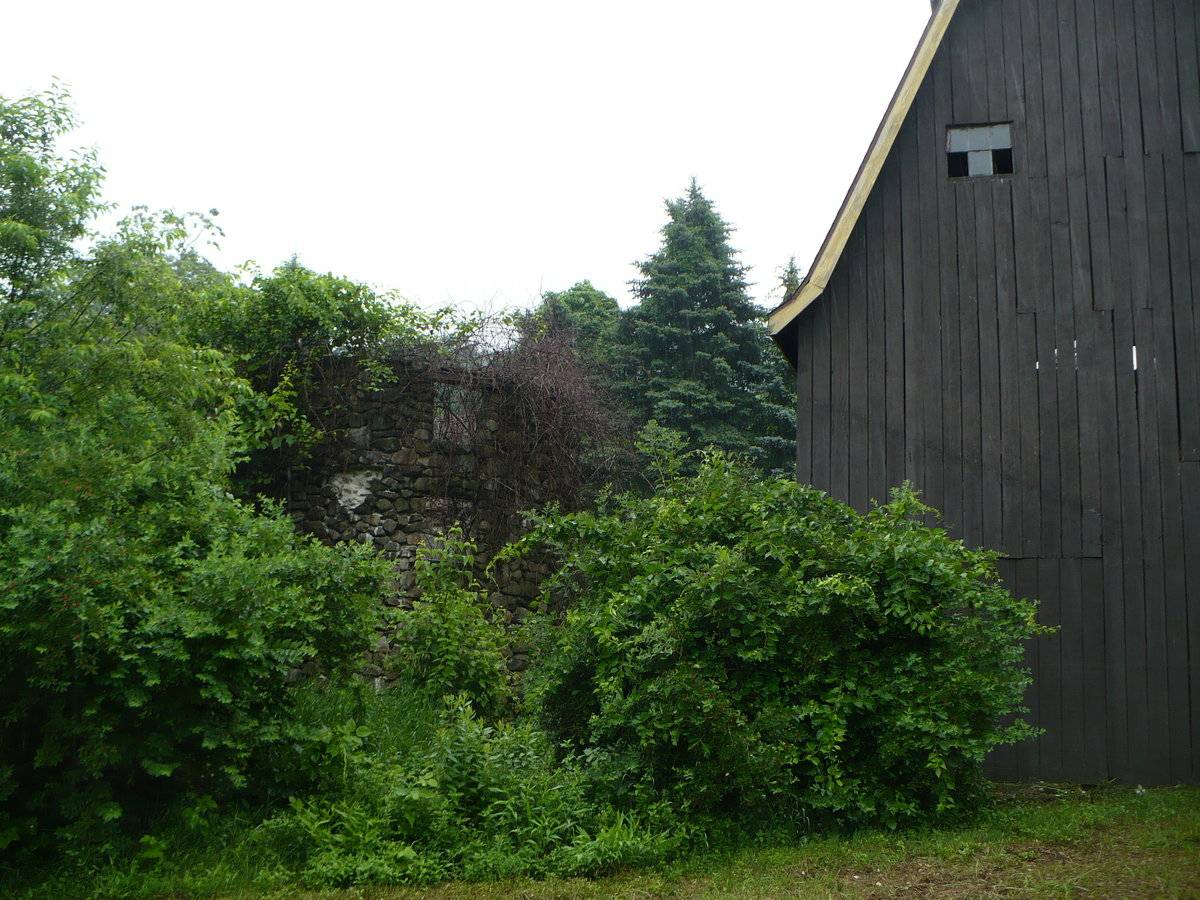
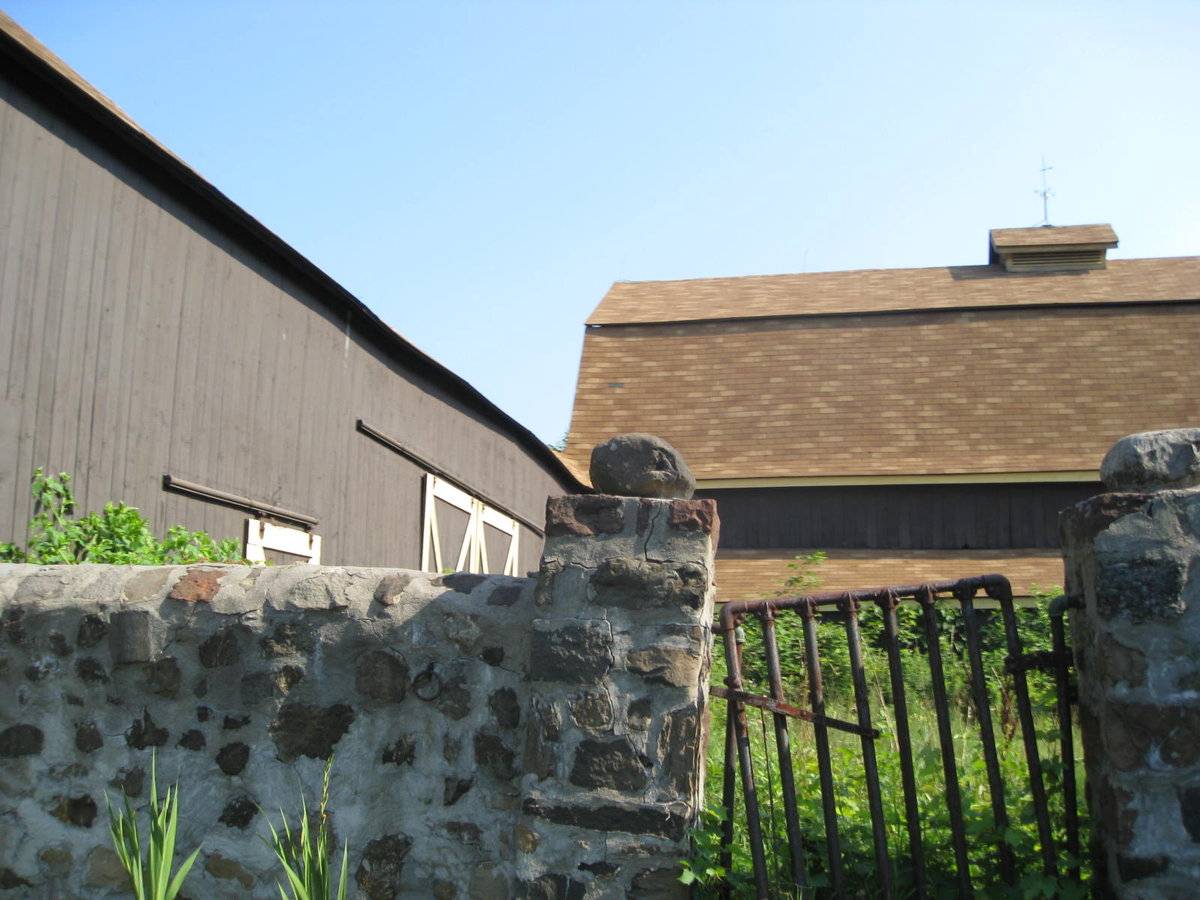
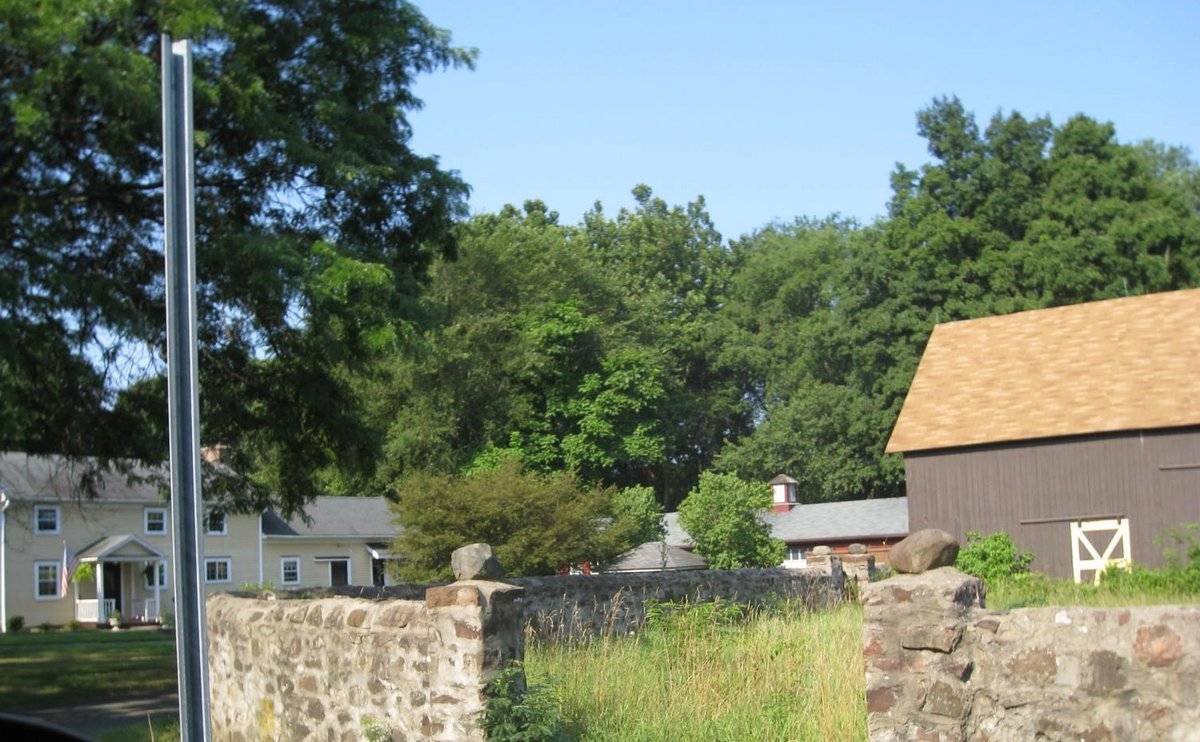
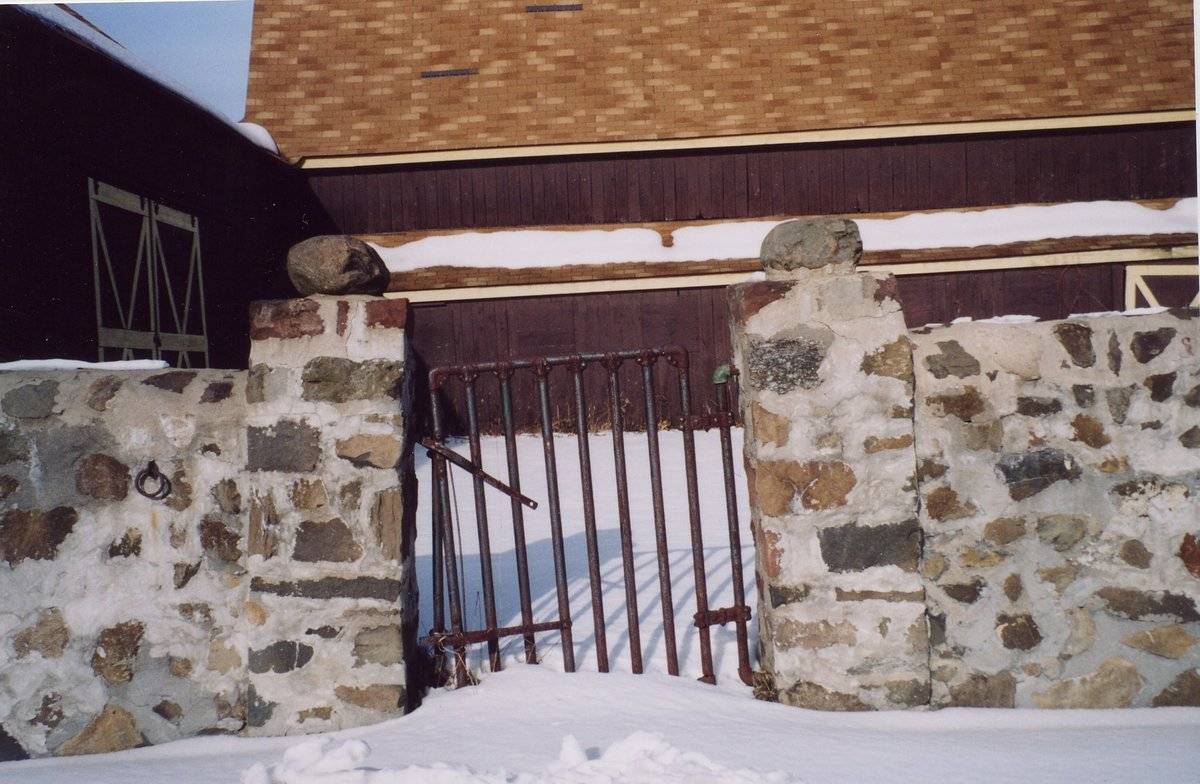
The pair of barns at this site are in close proximity to eachother and Main Street. The farmhouse associated with this property is situated just to the south of the barns, separated by a small grassy patch criss-crossed by gravel driveways. A mortared fieldstone wall extends from the southeast corner of Barn II toward Main Street, then curves around in front of Barn I parallel to Main Street to near the northeast corner of that barn, where it curves in again, parallel to the north eave-side of the barn. An iron gate in this wall is present near where it meets Barn II, and an opening in the wall is present facing Main Street near the southeast corner. The area within this stone wall is grass. A long garage is located to the southwest of the barns, and is the farthest extent of the gravel driveways. To the immediate north of Barn I are partially-remaining stone walls from an old silo. A large agricultural field extends to the north and west of the barns, wrapping around behind the garage, separated by a small stand of trees. Beyond the field to the west is the floodplain for a small river. A live of trees also serves as a wind break along Main Street right-of-way. Elsewhere, the streets surrounding this farm are lined with residences and shade trees.
- Typology & Materials
-
Building Typology
Materials
Structural System
Roof materials
Roof type
Approximate Dimensions
n/a
- Source
-
Date Compiled
04/11/2011
Compiled By
N. Nietering & T. Levine, reviewed by CT Trust
Sources
Photographs by Linda Guernsey, Todd Levine and Nathan Nietering.
Sexton, James, PhD; Survey Narrative of the Connecticut Barn, Connecticut Trust for Historic Preservation, Hamden, CT, 2005, http://www.connecticutbarns.org/history.
Visser, Thomas D., Field Guide to New England Barns and Farm Buildings, University Press of New England, 1997, 213 pages.
Map of Unionville, CT, retrieved on April 9, 2011 from website www.bing.com.
Farmington Assessor’s Records - online - http://www.farmington-ct.org/landrecords/search.php
- PhotosClick on image to view full file
-