Barn Record Washington
RETURN TO ‘FIND BARNS’- Building Name (Common)
- Hollister House Barn
- Building Name (Historic)
- Gideon Hollister Homestead
- Address
- 300 Nettleton Hollow Road, Washington
- Typology
- Overview
-
Designations
Historic Significance
Architectural description:
There are four outbuildings. Barn I is described; the remainder are described under “Environment.”Barn I:
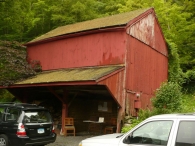
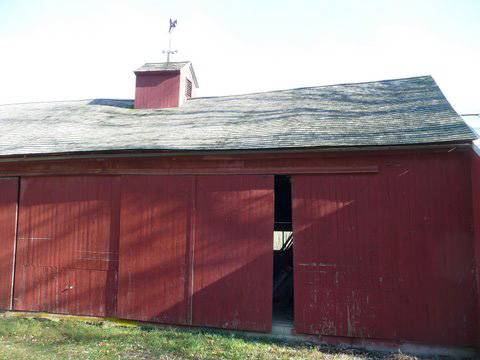
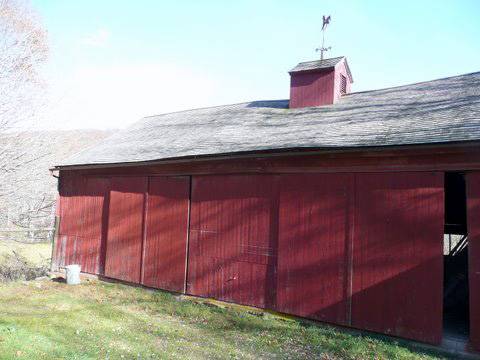
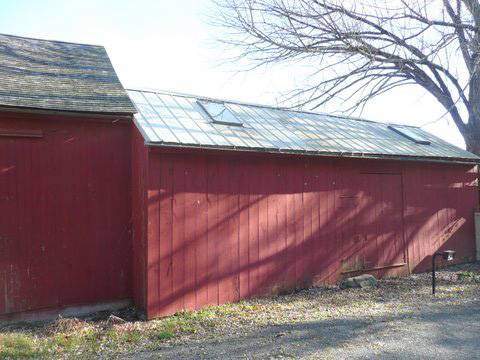
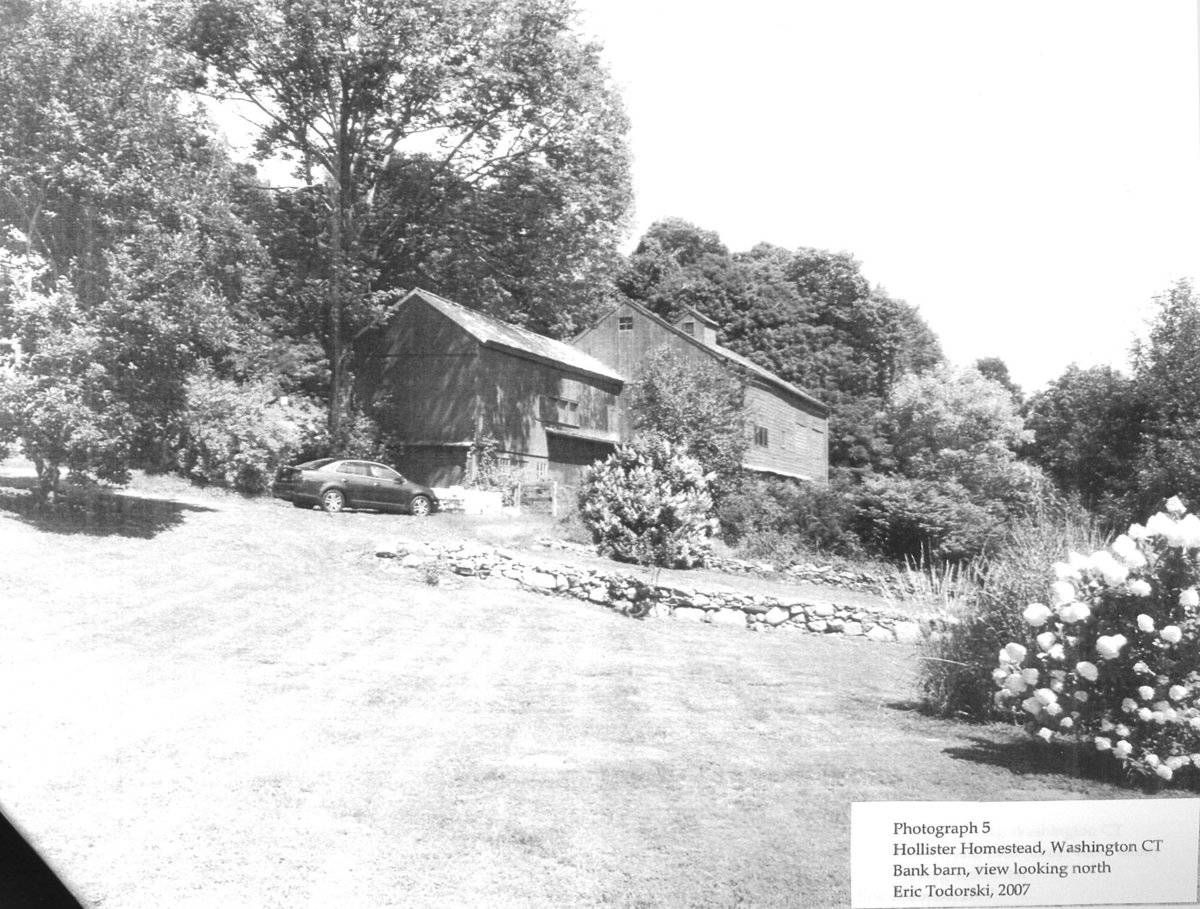
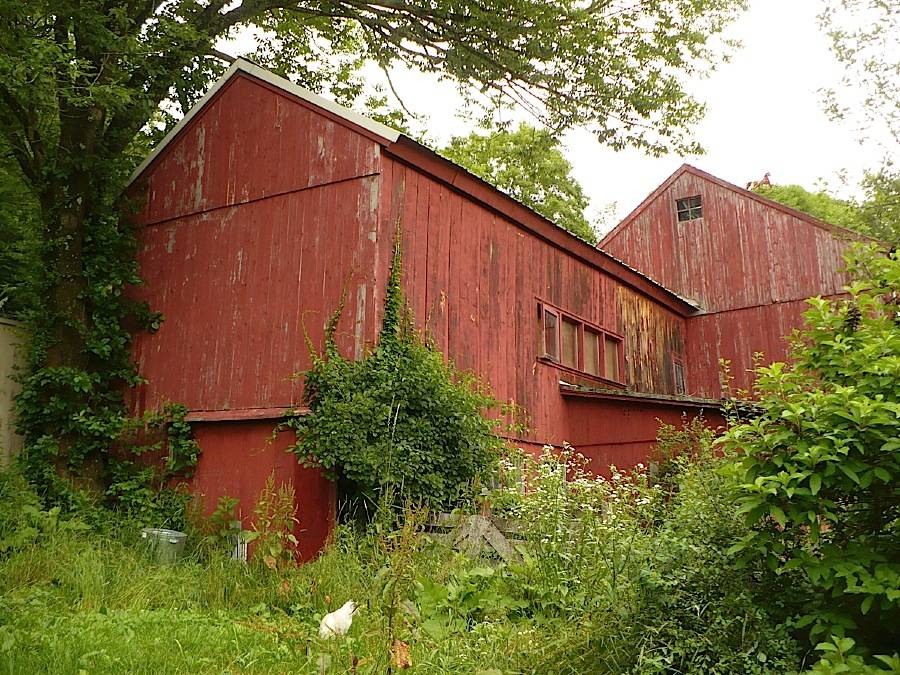
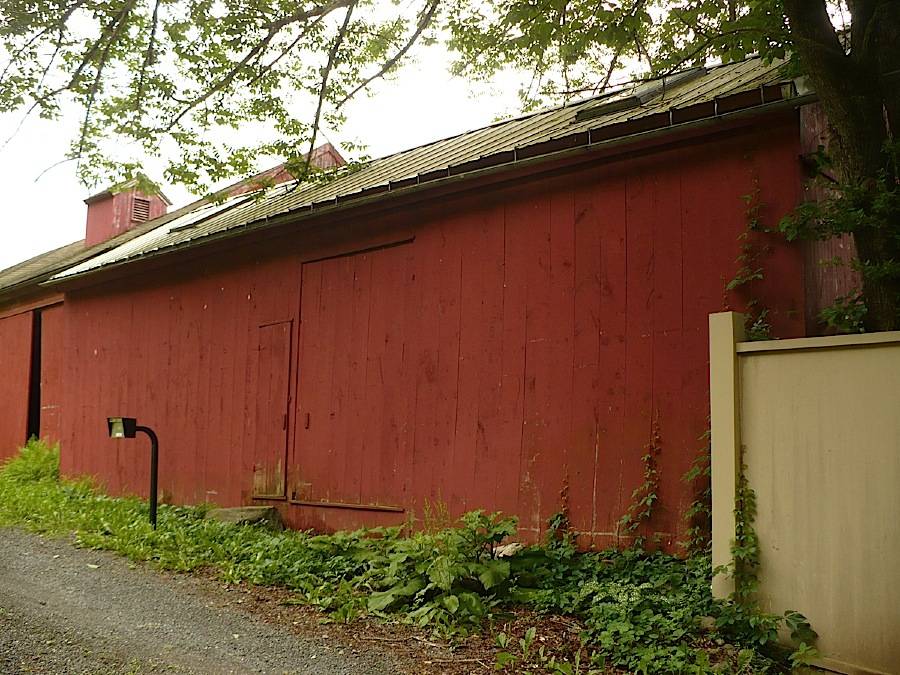
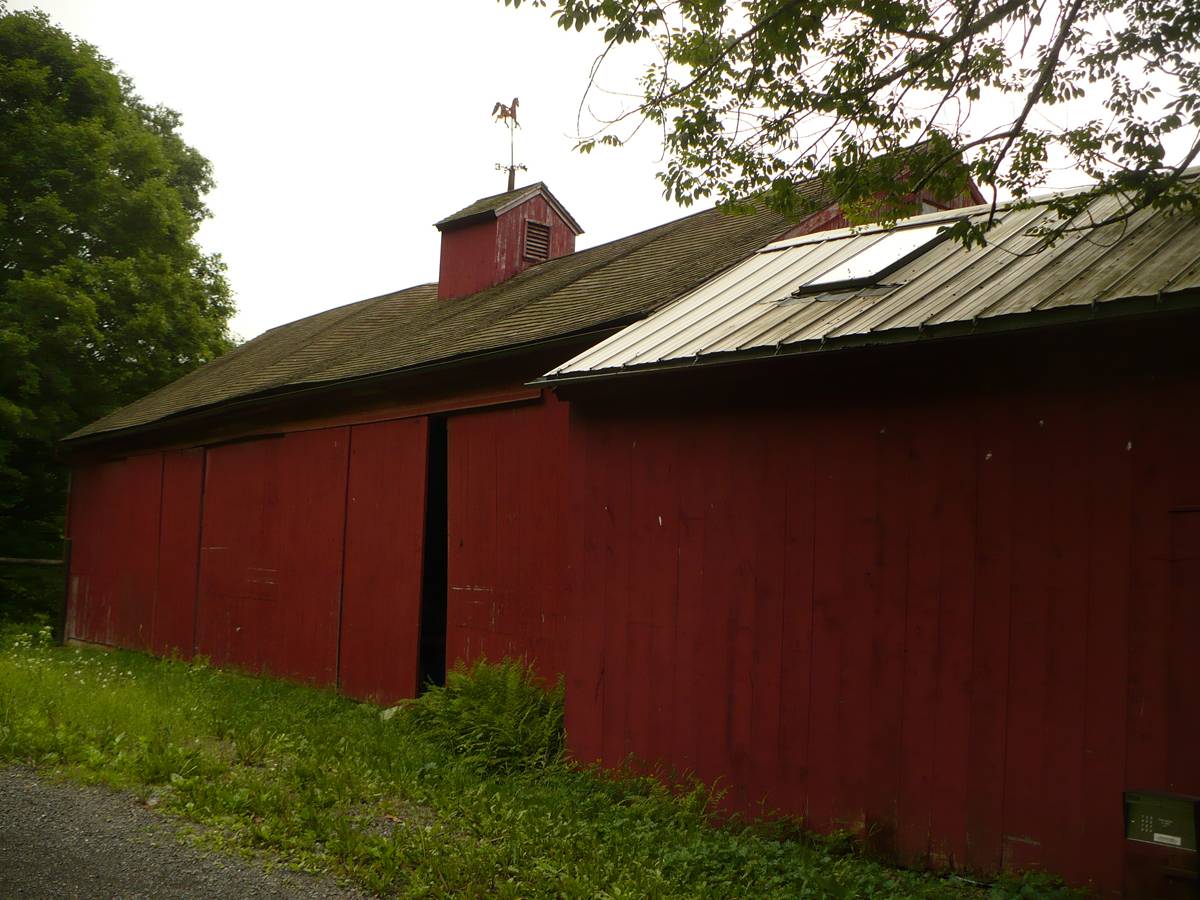
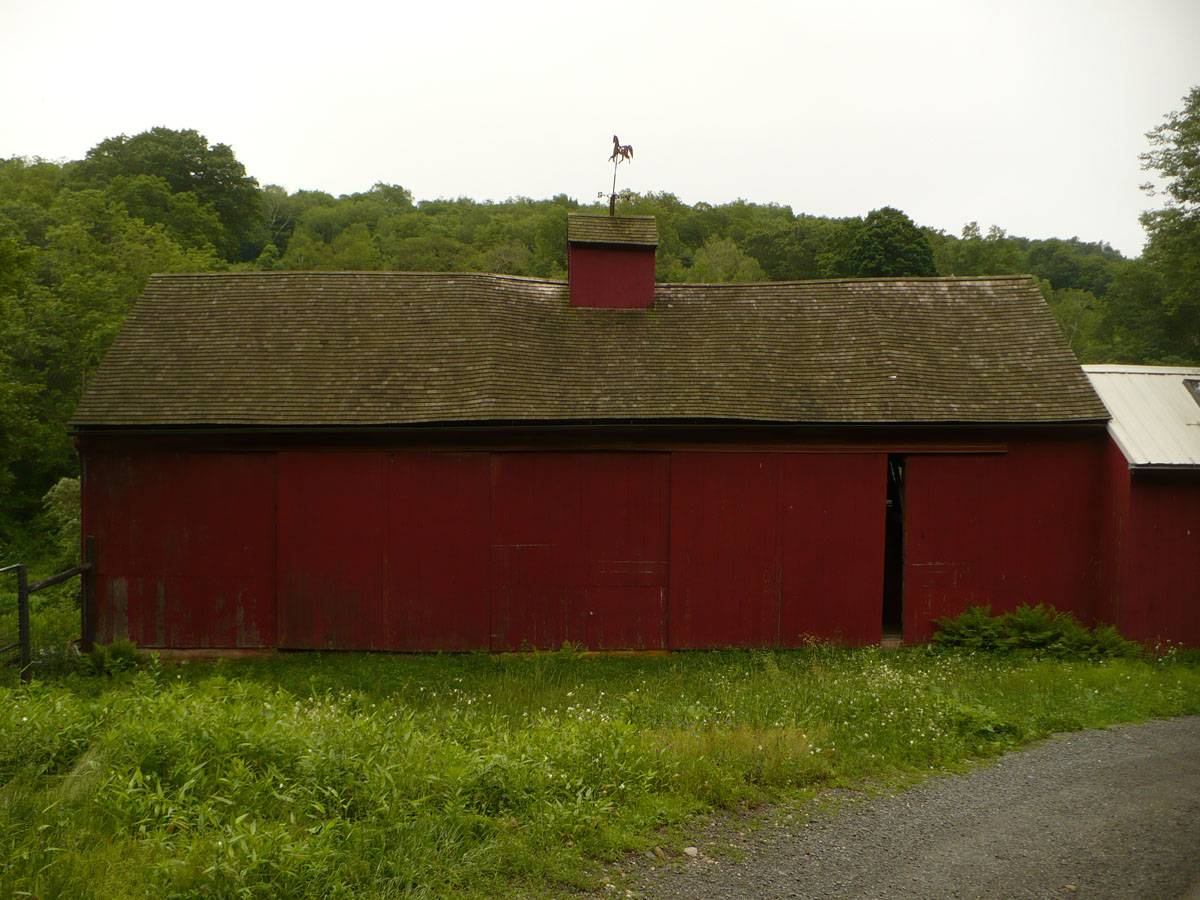
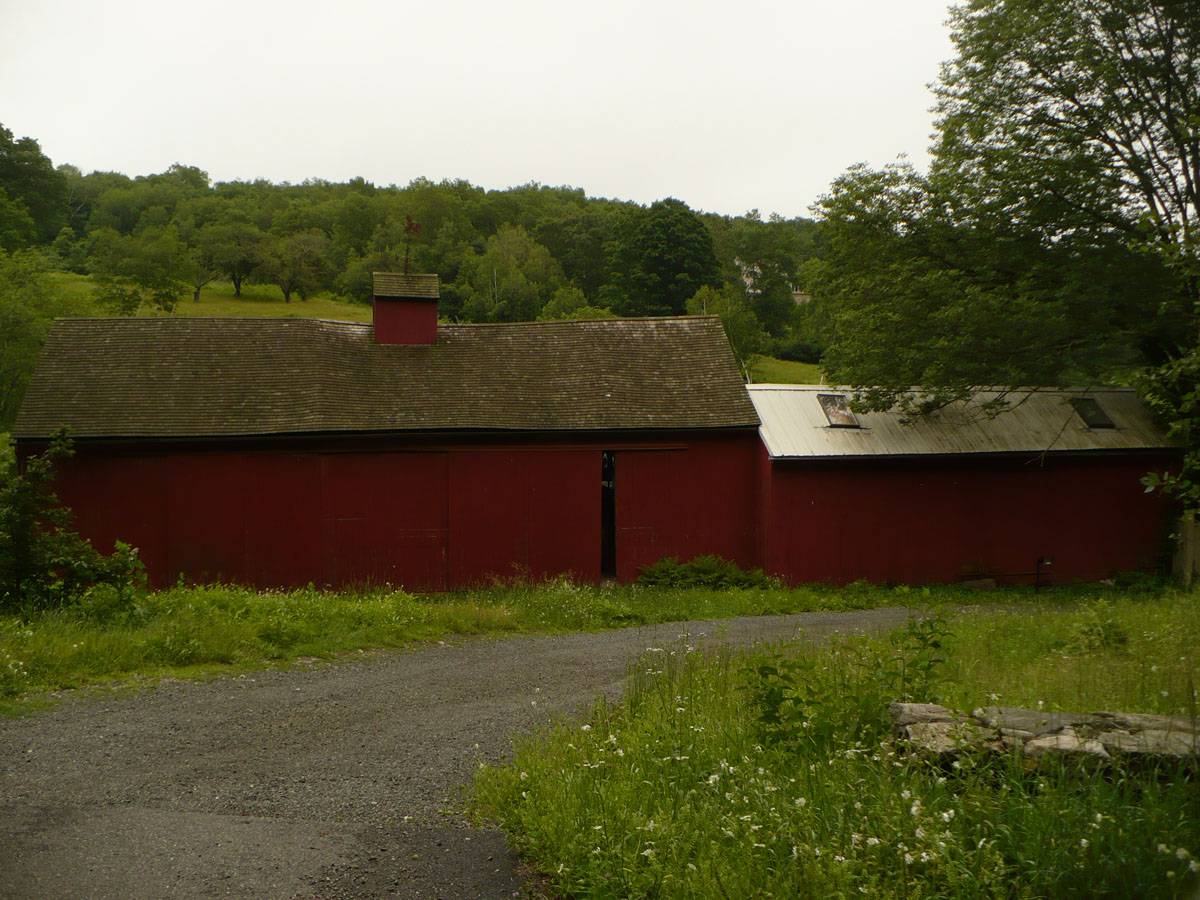
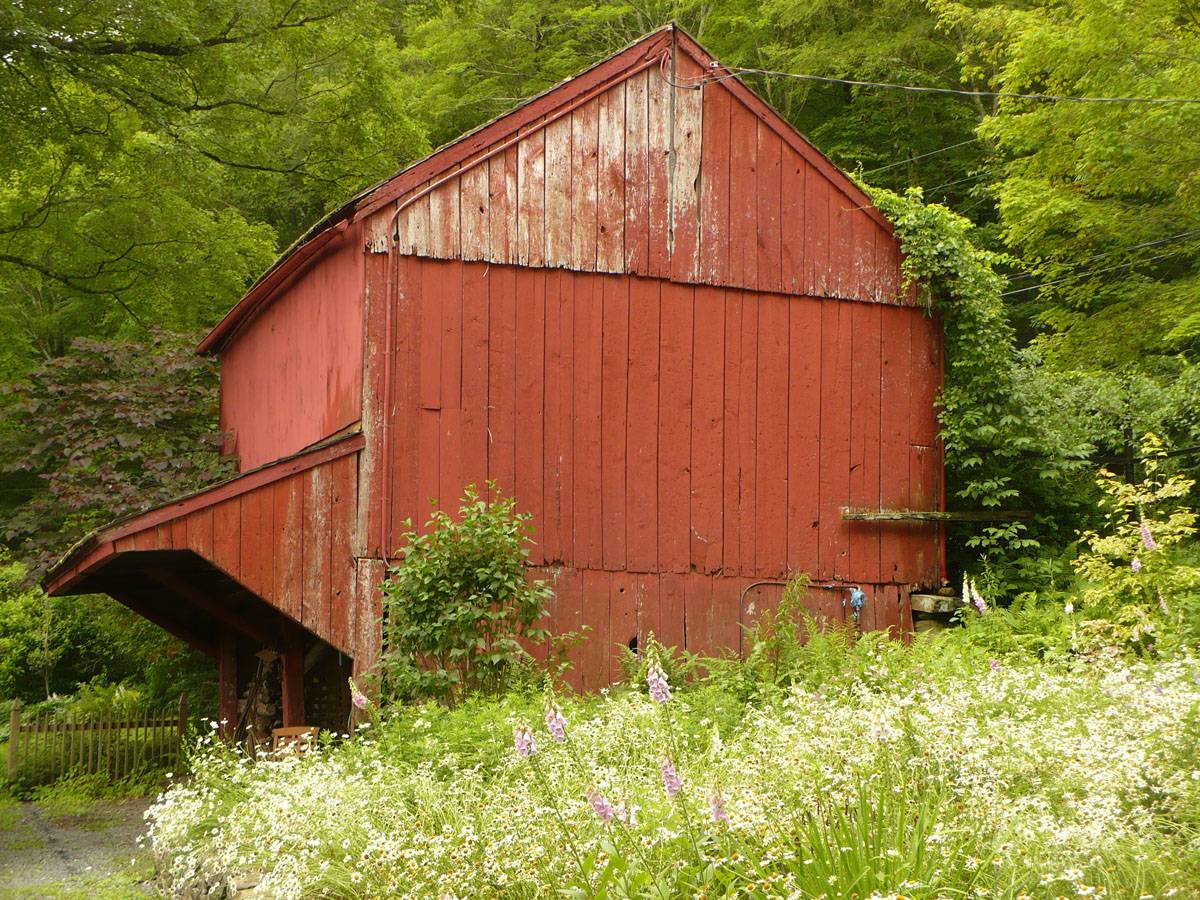
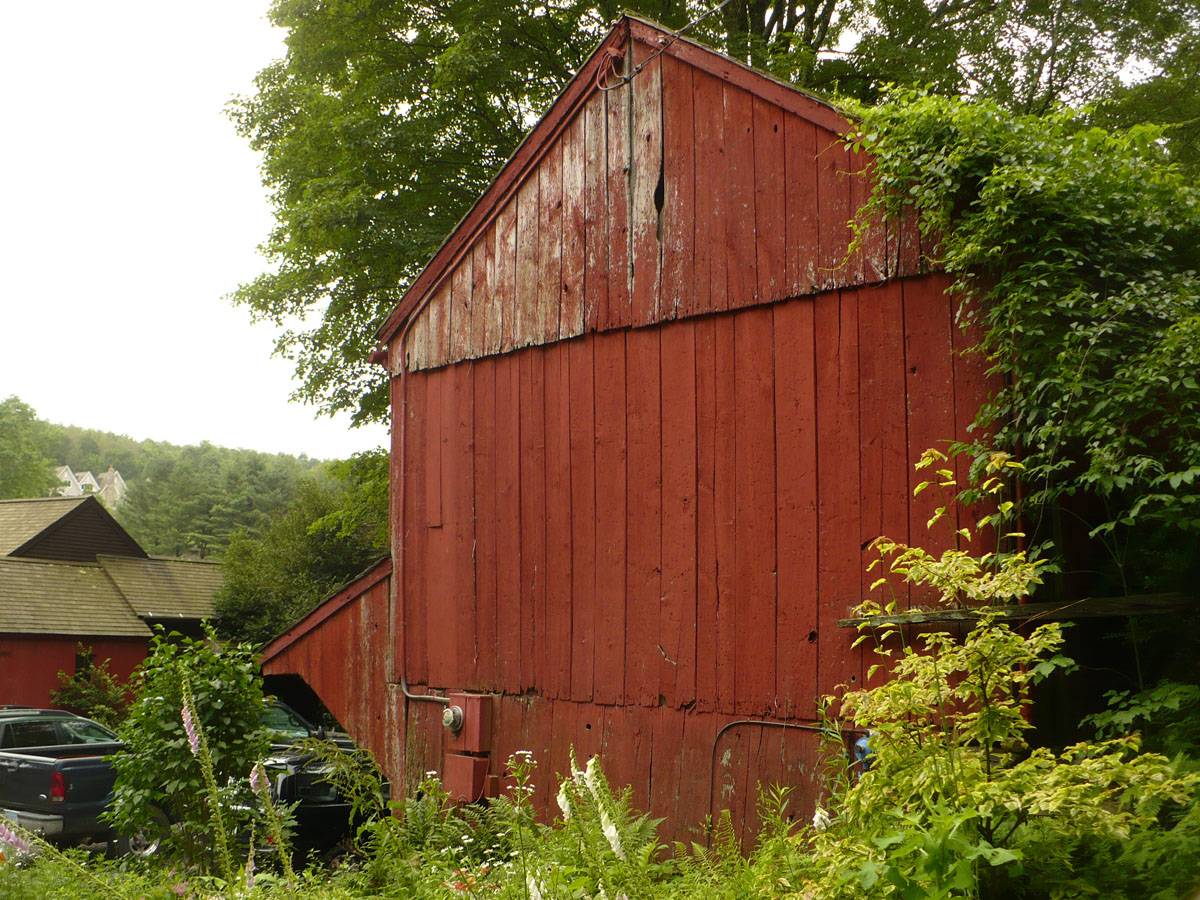
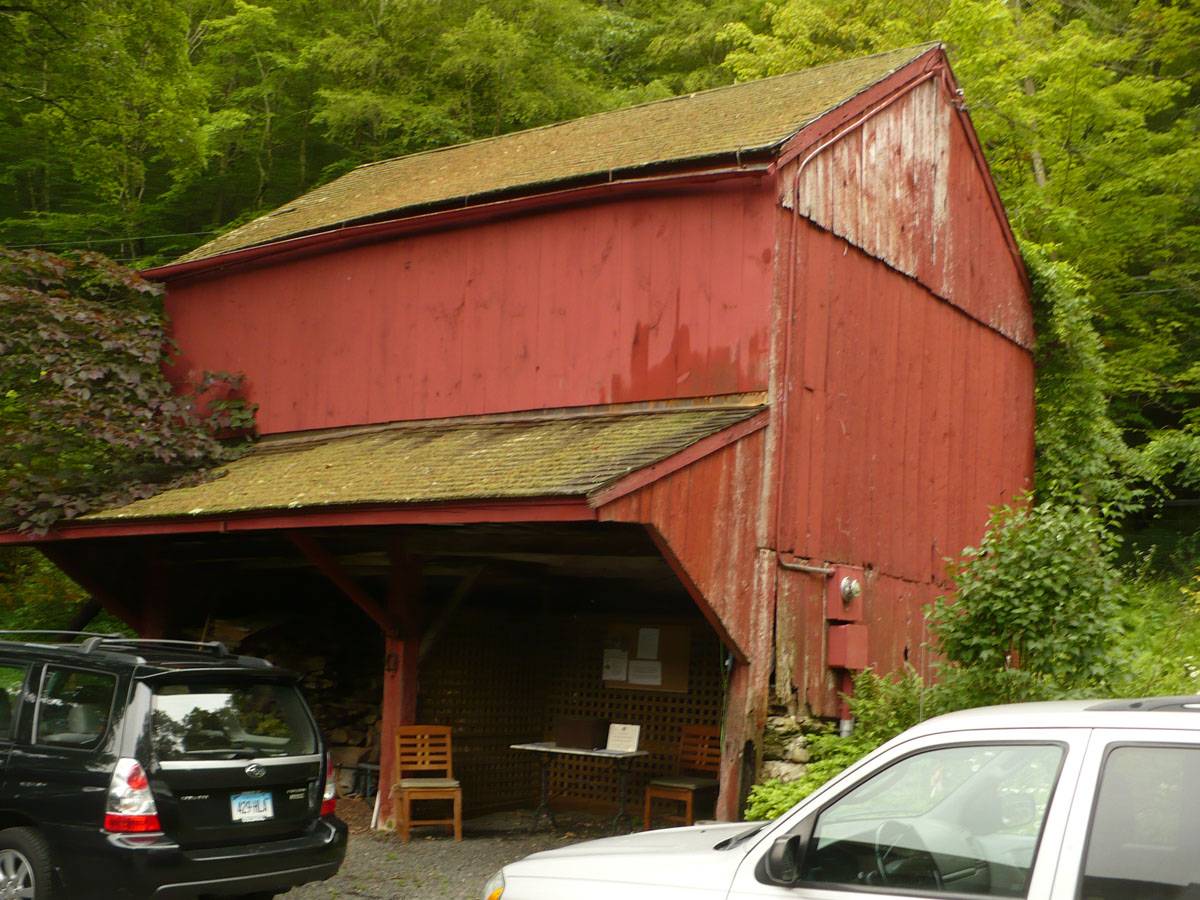
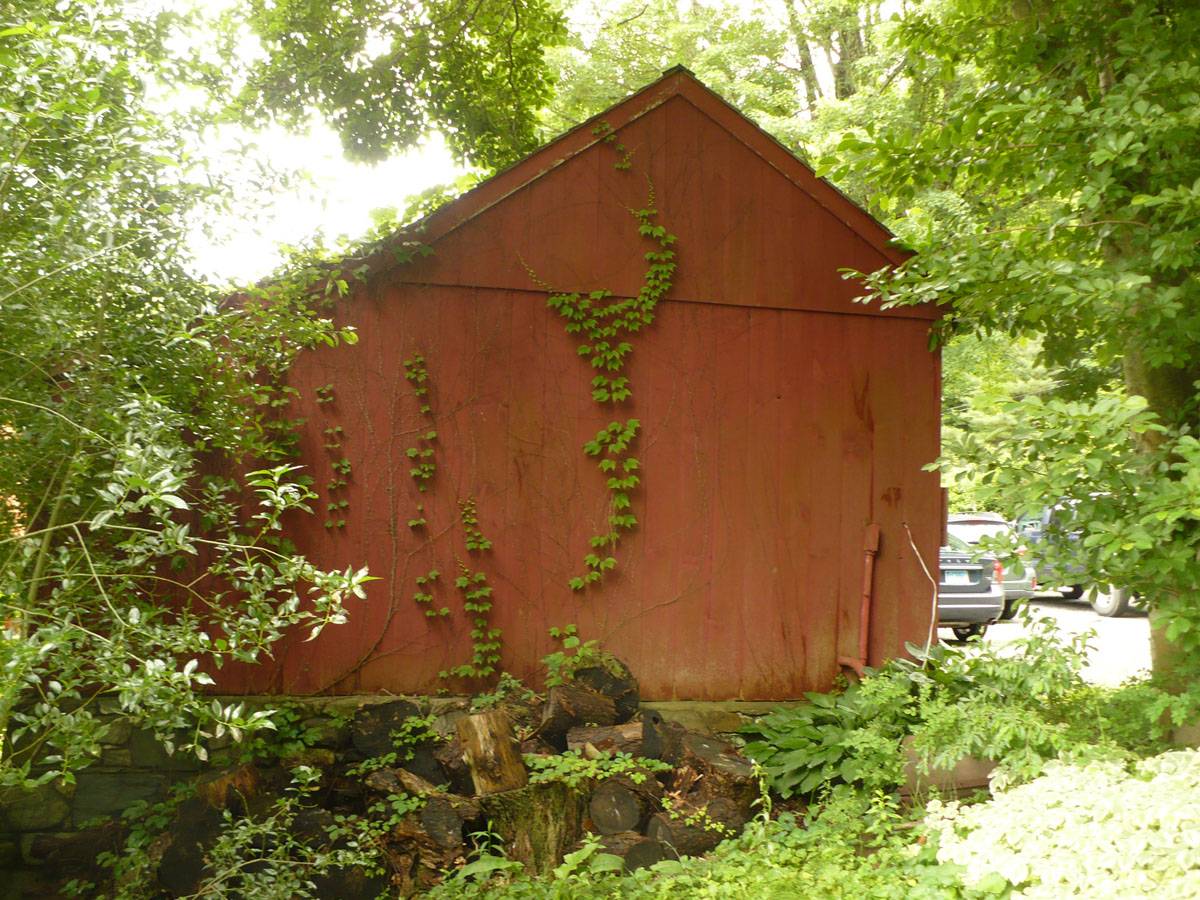
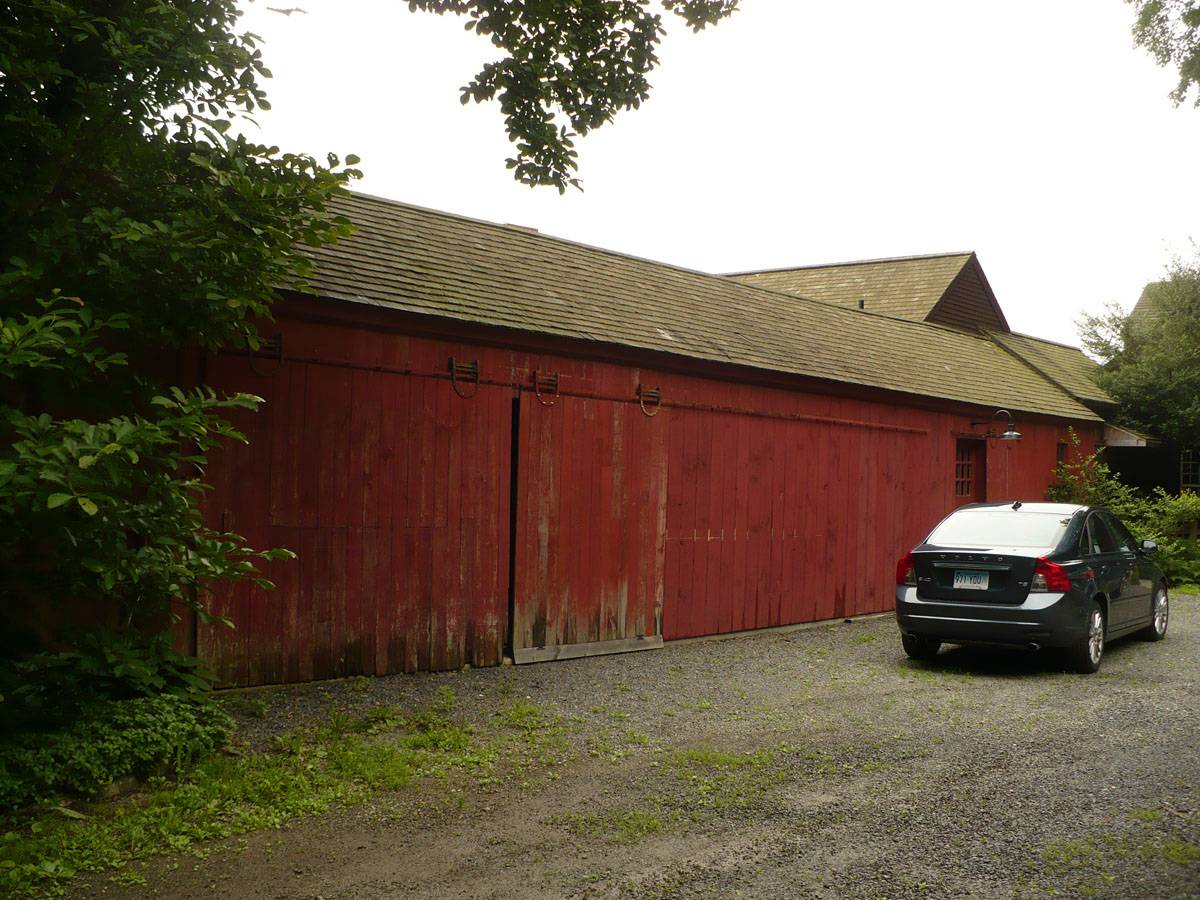
This is a 1 ½-story five-bay gable-roofed bank barn structure with its ridge-line oriented north-south. The main level entrances are two tall sliding doors in the west eave-side in the 2nd and 4th bays. The remaining bays are blank on this side. Attached on the south gable-end is a 1 ½-story gable-roofed addition also with its ridge-line oriented north-south. The west eave-side has a pair of hinged doors in the center of three bays.
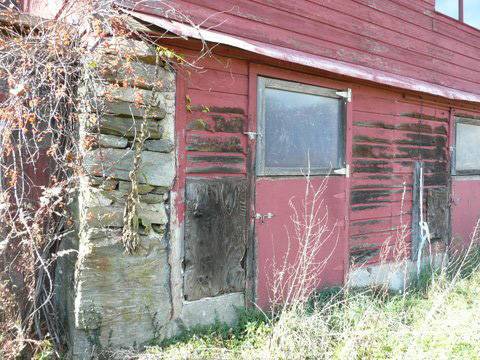
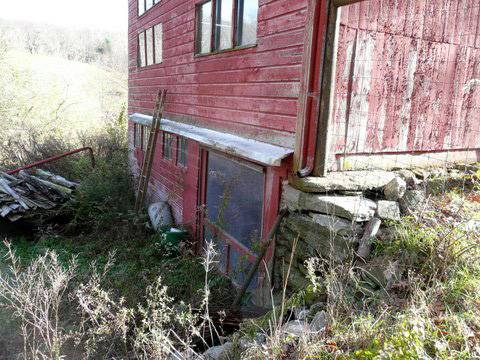
The north gable-end has at the main level two rows each with two three-panel windows. A retaining wall aligned with the west wall transitions from the upper to lower grade, allowing the north wall to be exposed at the basement level, where there are from left (east) to right, four six-pane stable windows and a sliding door.
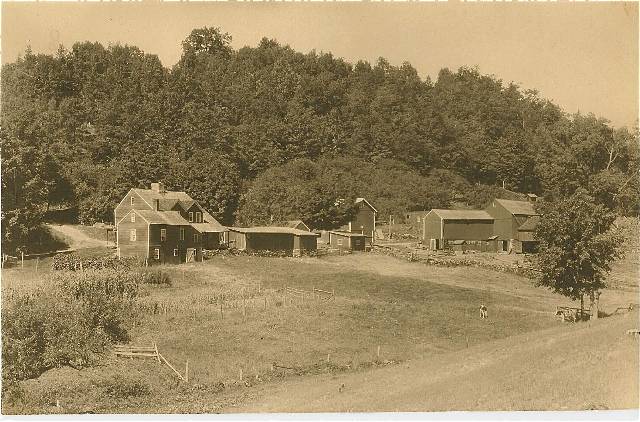
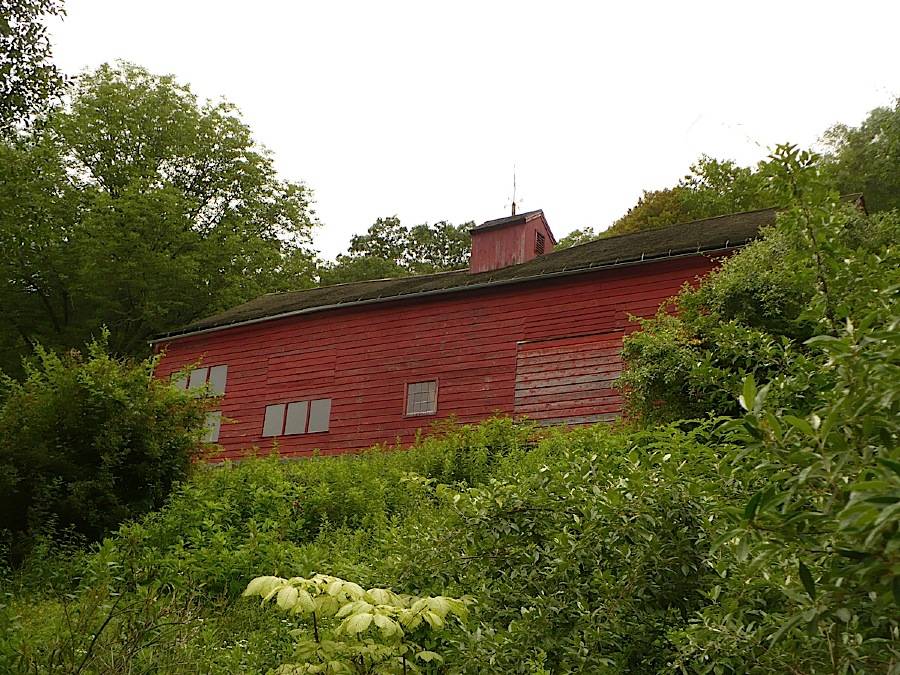
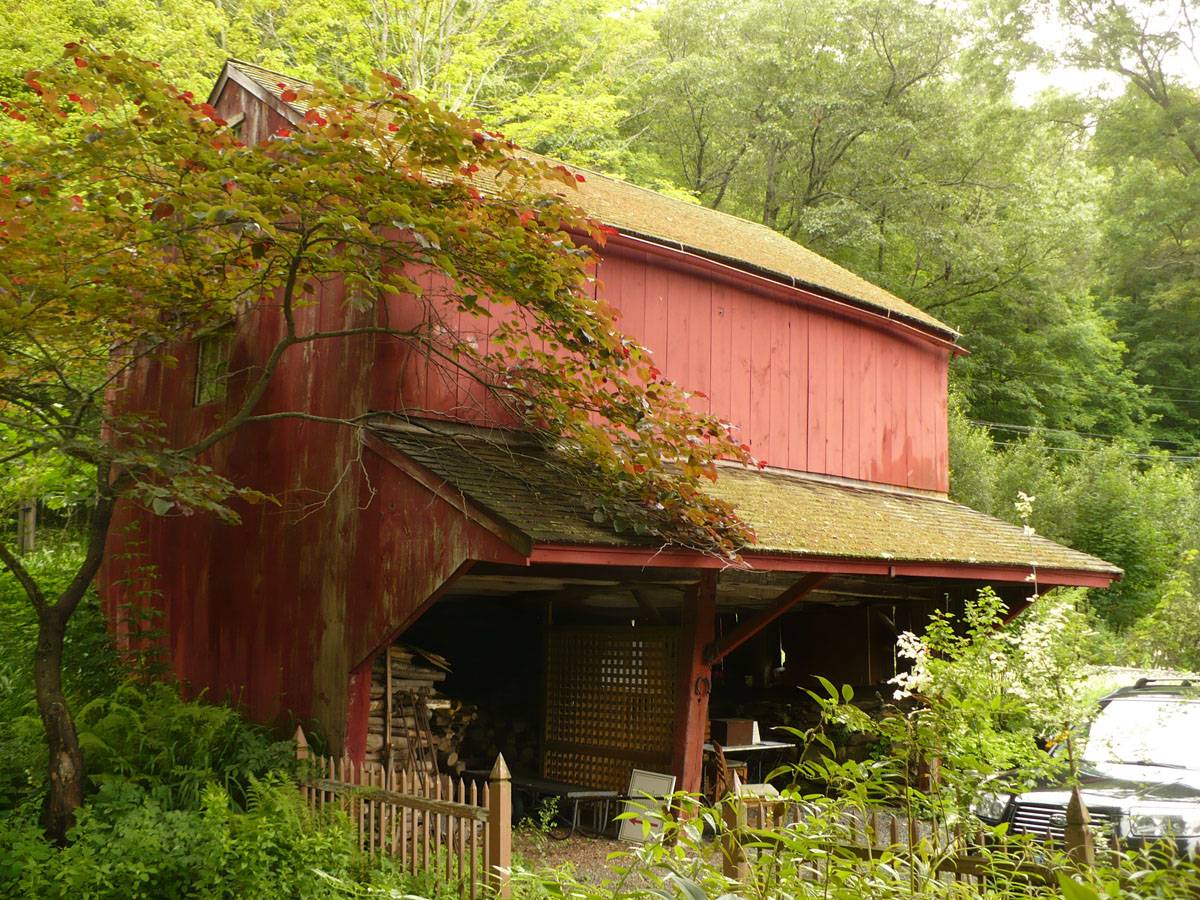
The east eave-side opens to grade at a lower level, as the site slopes down toward the east to the level of the stream. The lower level, shown open in an earlier historic photograph, is enclosed with siding and has a series of six-pane stable windows and Dutch stall doors. The main level of the east eave-side has to the left (south) a group of three windows and to the right two larger boarded-up openings. The south addition has a panel of four windows in the center of the east side.
The south gable-end of the main structure has a four-pane attic window near the peak and the attached addition covering the left (west) portion of the gable-end. The addition’s south gable-end is blank.
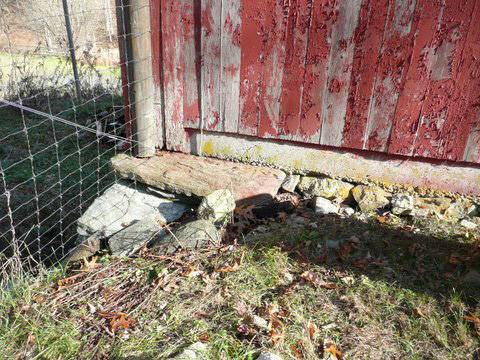
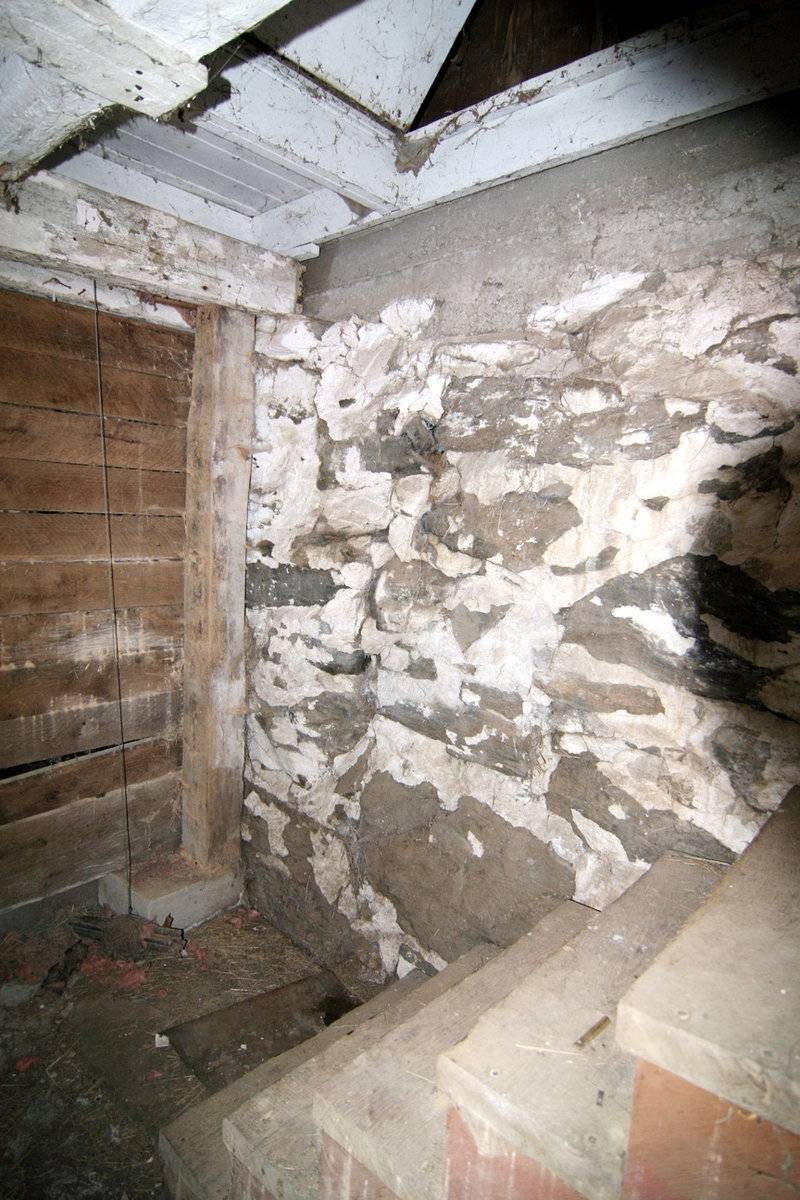
The roof of the main barn is wood shingles while the south addition has metal panels with two skylights in the west slope. A gable-roofed cupola is located on the center of the ridge-line. It has louvered openings in its north and south faces. Siding is vertical boards painted red except at the east eave-side where there is horizontal lap siding.. Un-mortared fieldstone foundations are visible at the north and south ends of the basement level on the east side.
Historical significance:
The oldest barns still found in the state are called the “English Barn,” “side-entry barn,” “eave entry,” or a 30 x 40. They are simple buildings with rectangular plan, pitched gable roof, and a door or doors located on one or both of the eave sides of the building based on the grain warehouses of the English colonists’ homeland. The name “30 by 40” originates from its size (in feet), which was large enough for 1 family and could service about 100 acres. The multi-purpose use of the English barn is reflected by the building’s construction in three distinct bays - one for each use. The middle bay was used for threshing, which is separating the seed from the stalk in wheat and oat by beating the stalks with a flail. The flanking bays would be for animals and hay storage.
The 19th century saw the introduction of a basement under the barn to allow for the easy collection and storage of a winter’s worth of manure from the animals sheltered within the building. The bank barn is characterized by the location of its main floor above grade, either through building into a hillside or by raising the building on a foundation. This innovation, aided by the introduction of windows for light and ventilation, would eventually be joined by the introduction of space to shelter more animals under the main floor of the barn.Field Notes
2011 Barns Grant recipient The specific preservation need is to protect and prevent further deterioration of this major element of the Gideon Hollister Homestead, whose historic significance is recognized by its listing on the State and National Registers. One of the most historically significant and physically prominent barns in the Town of Washington. This part of Litchfield County is blessed with numerous barns reflecting the agricultural economy of past centuries, hut most are privately owned, and many have been converted to residential use. This barn is located alongside a well-traveled roadway connecting two state highways and is a significant part of an historic property that is open to the public on a regular basis. The eventual adaptive reuse of the structure will enable the public to actually experience the physical presence of these utilitarian structures in a newly useful way. George Schoellkopf acquired this property more than thirty years ago. Over time he has developed an extensive garden inspired by many important English gardens such as Sissinghurst and Hidcote Manor. Working with the Garden Conservancy, a national organization that aims to preserve important American gardens, Mr. Schoellkopf six years ago began transferring ownership of the property to a non-profit organization that will own and operate the property.
- Use & Accessibility
Use (Historic)
Use (Present)
Exterior Visible from Public Road?
Yes
Demolished
n/a
Location Integrity
Original Site
- Environment
Related features
Environment features
Relationship to surroundings
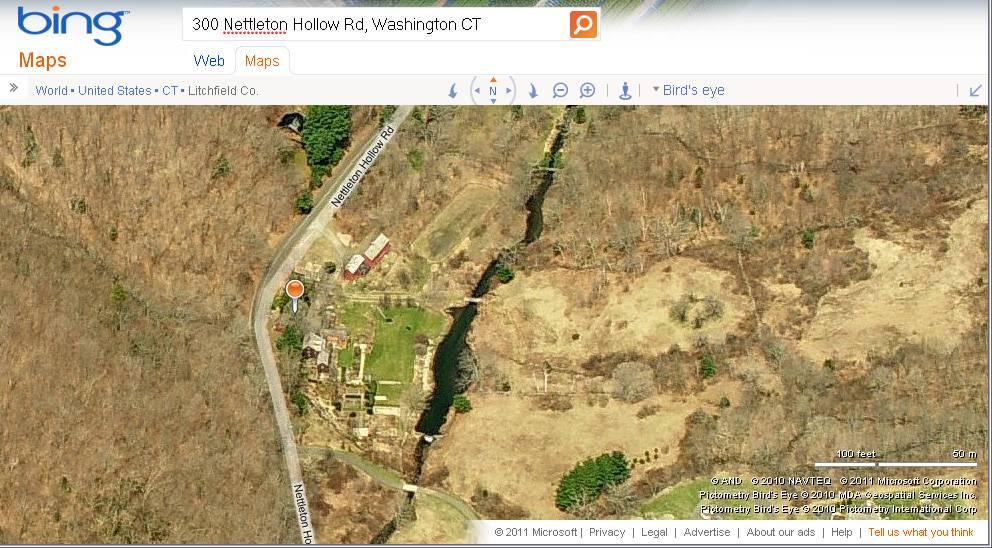
The Hollister farm is located on Nettleton Hollow Road southeast of the center of Washington, Connecticut. The 22-acre property includes land on both sides of the road. The building complex is on the east side.
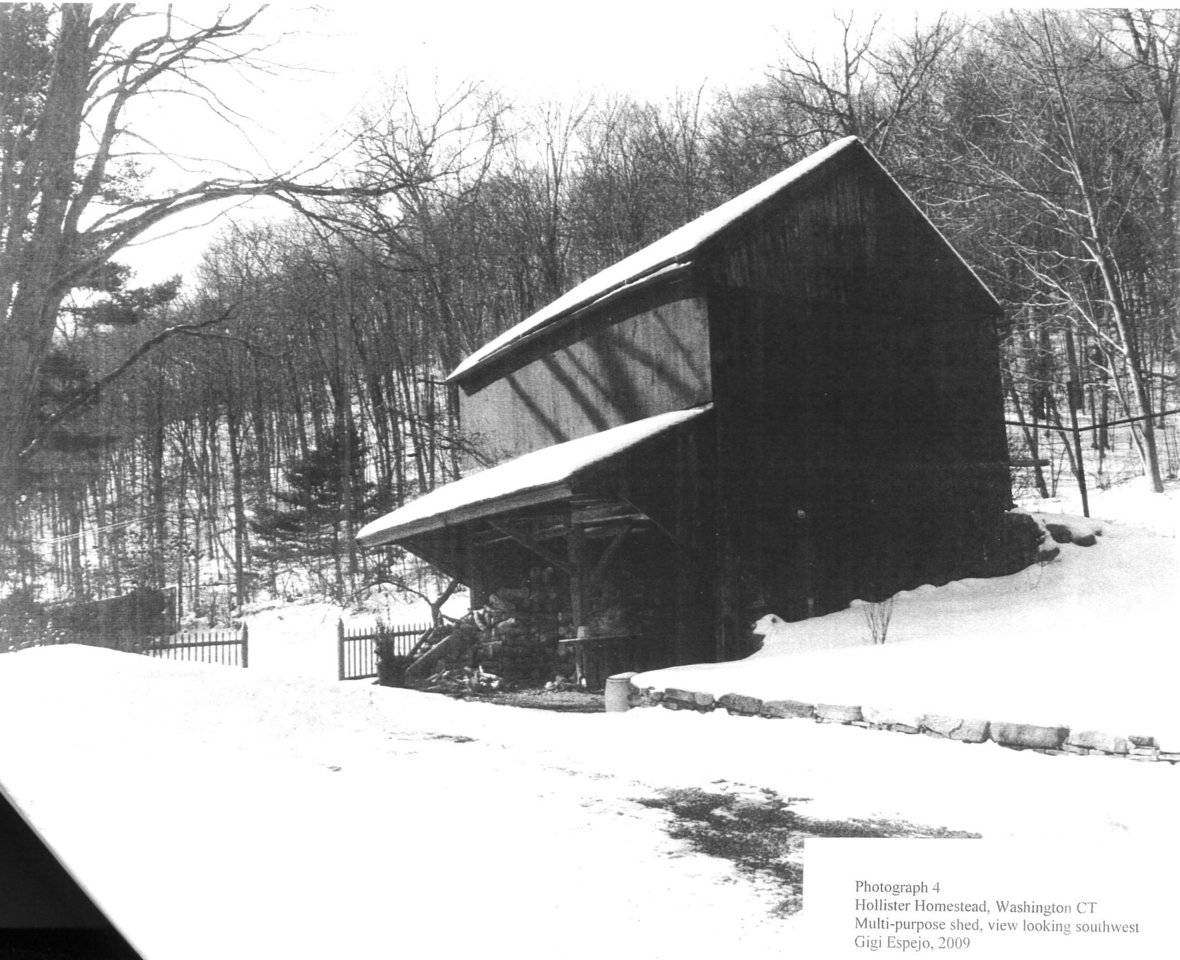
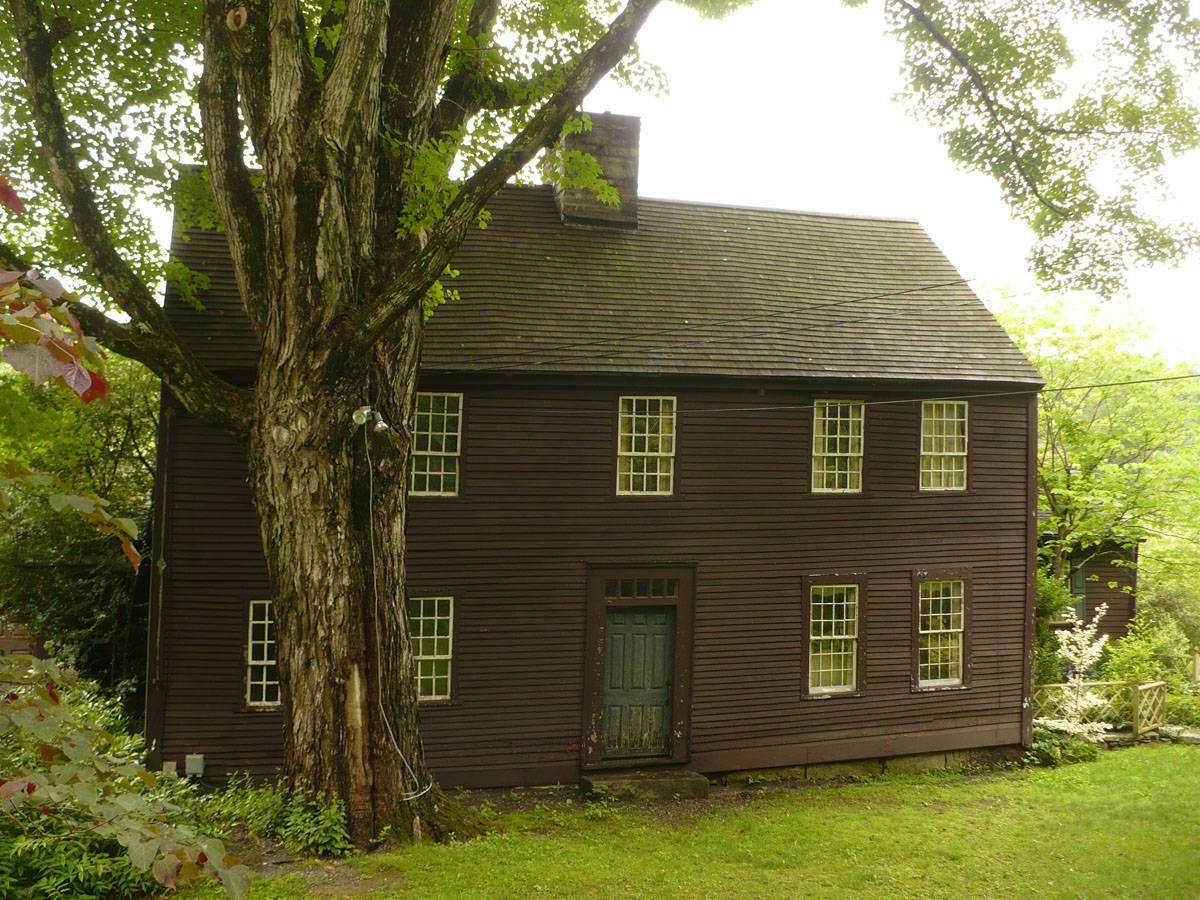
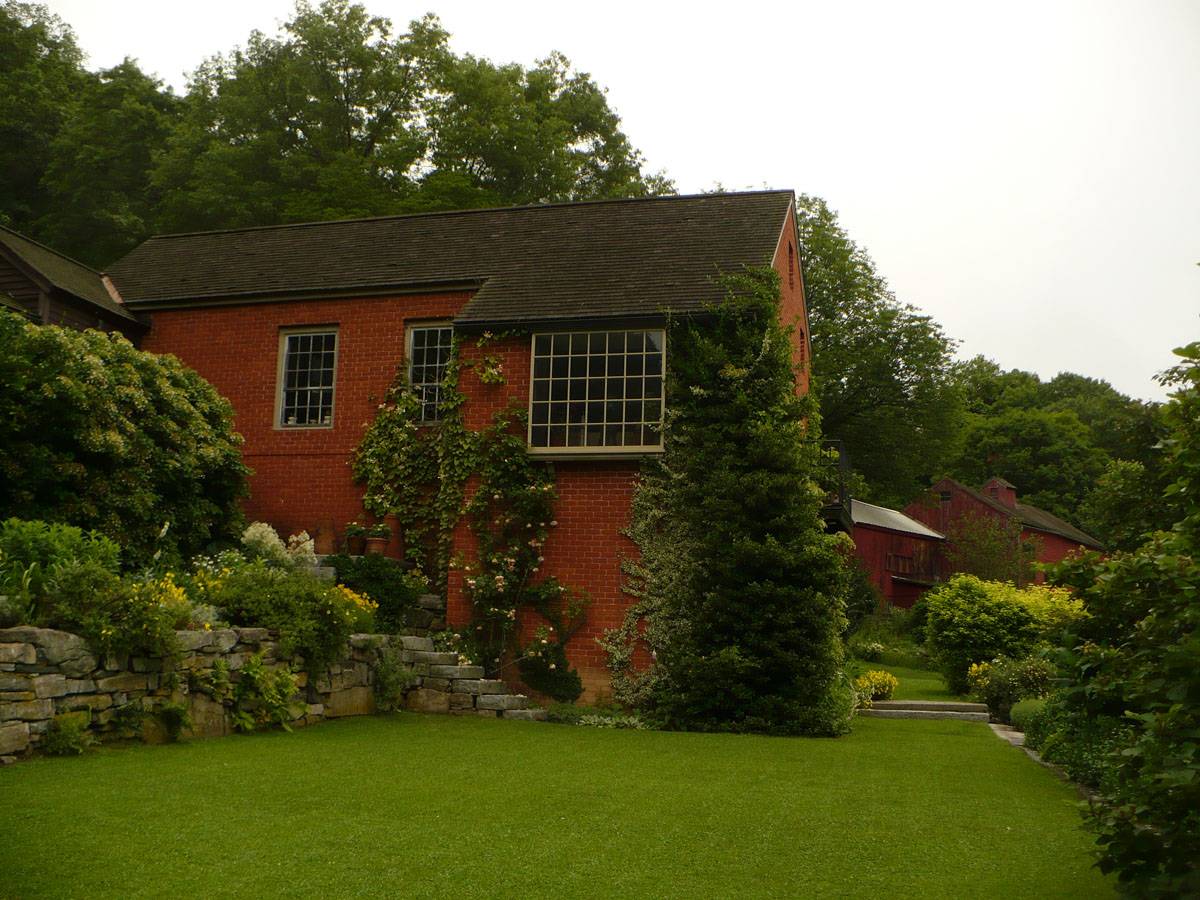
The Hollister Homestead is a 2 1/2-story, center-chimney, five-bay saltbox house built in the third quarter of the 18th century. In its 30 x 40 foot dimensions, lines, proportions and details it is typical of western Connecticut domestic vernacular architecture of its time. The house and its agricultural outbuildings stand in a roughly linear scattering slightly below and facing a narrow, curving country road. It has a 1 1/2-story, early 19th-century wing on the south end. Two dormers project from the rear slope of the roof on the second story. The rural valley setting is still pristine, open farmland which slopes down in a series of terraced gardens to a stream well behind [east of] the house. Across the stream to the east the land rises in fields and woods. To the north of the house are three utilitarian structures that relate to the early- and mid-19th-century history of the property (Photographs 4 & 5). The ca. 1757 flutter-wheel saw mill constructed by Captain Gideon Hollister (the builder of the house) and modified during the early 19th century, remains on its original site about a mile south of the Homestead.
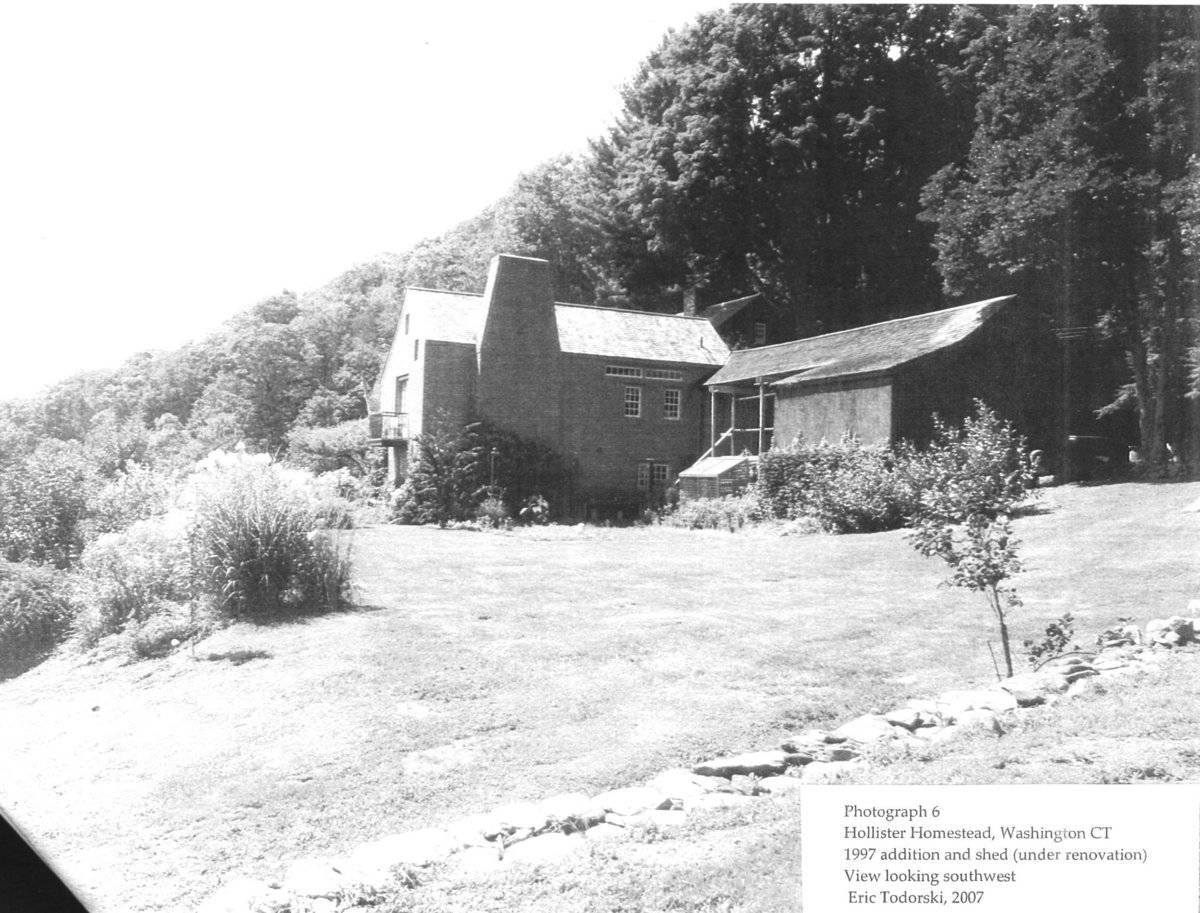
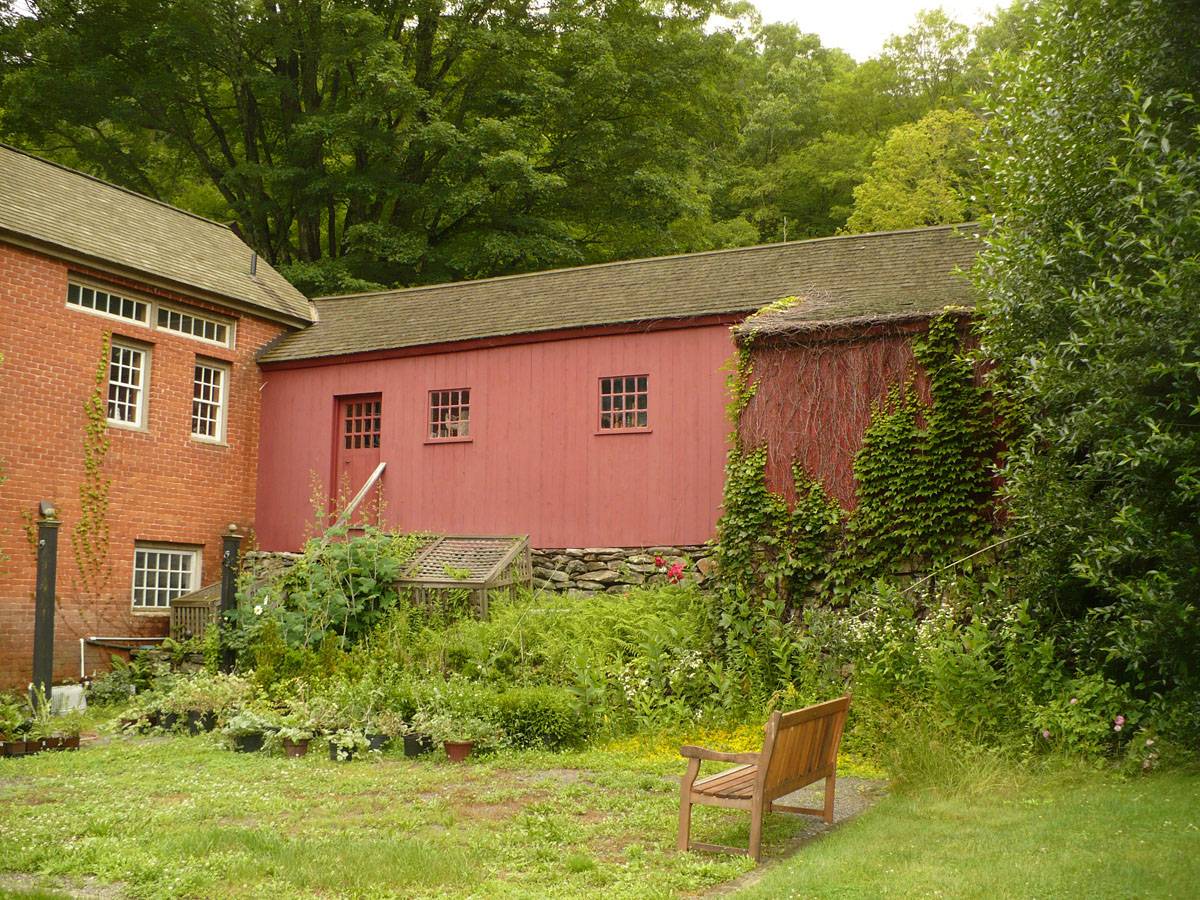
Off the north end of the house is a long, one-story, 19th-century wagon shed [Barn IV] (rear view, undergoing repair, at right in Photograph 6); see also Illustration ii) (Gilchrist, Section 7).The house is part of a highly intact larger agricultural complex that still reflects its 18th- and 19th-century past. The route of the road originally came between the front of the house and the multi-purpose shed (Photograph 4), and ran north beside the large English bank barn. The 2 ½-story shed [Barn III], which is very close to the house, has a sheltered, open (east) side facing the house and what would have been the road, for the easy parking of conveyances. Access to its second story is in the back, on grade. Inside, there is an original, pull-up ladder stair hinged into the (top) loft story, where grains and other food stuffs may have been stored. This simple, compact, but highly useful structure retains its original plan and design.
North of this is another mid- to late-19th-century barn [Barn II], banked for ground-level bays for horses and wagon storage below, and hay storage and access to grade above. It has been converted to a guest house.
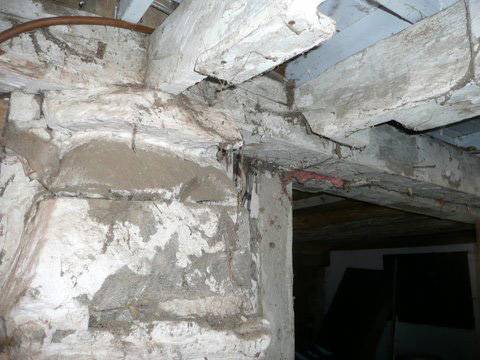
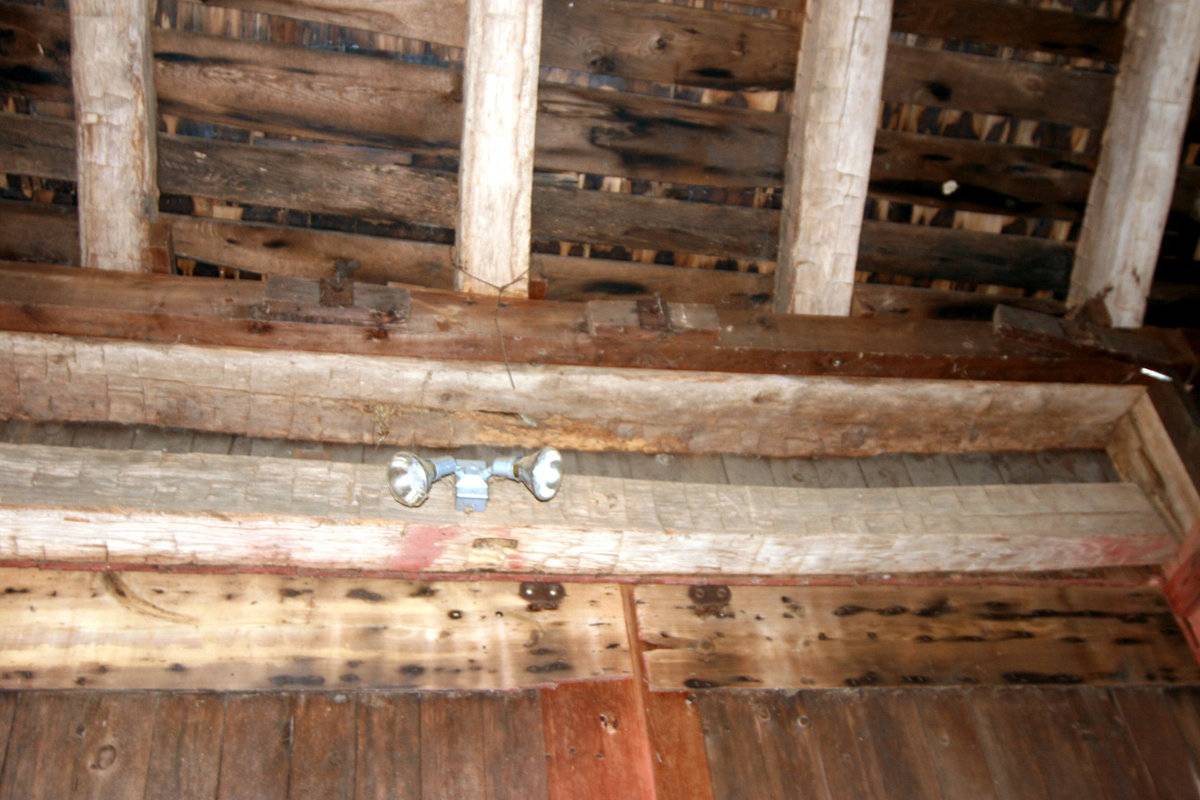
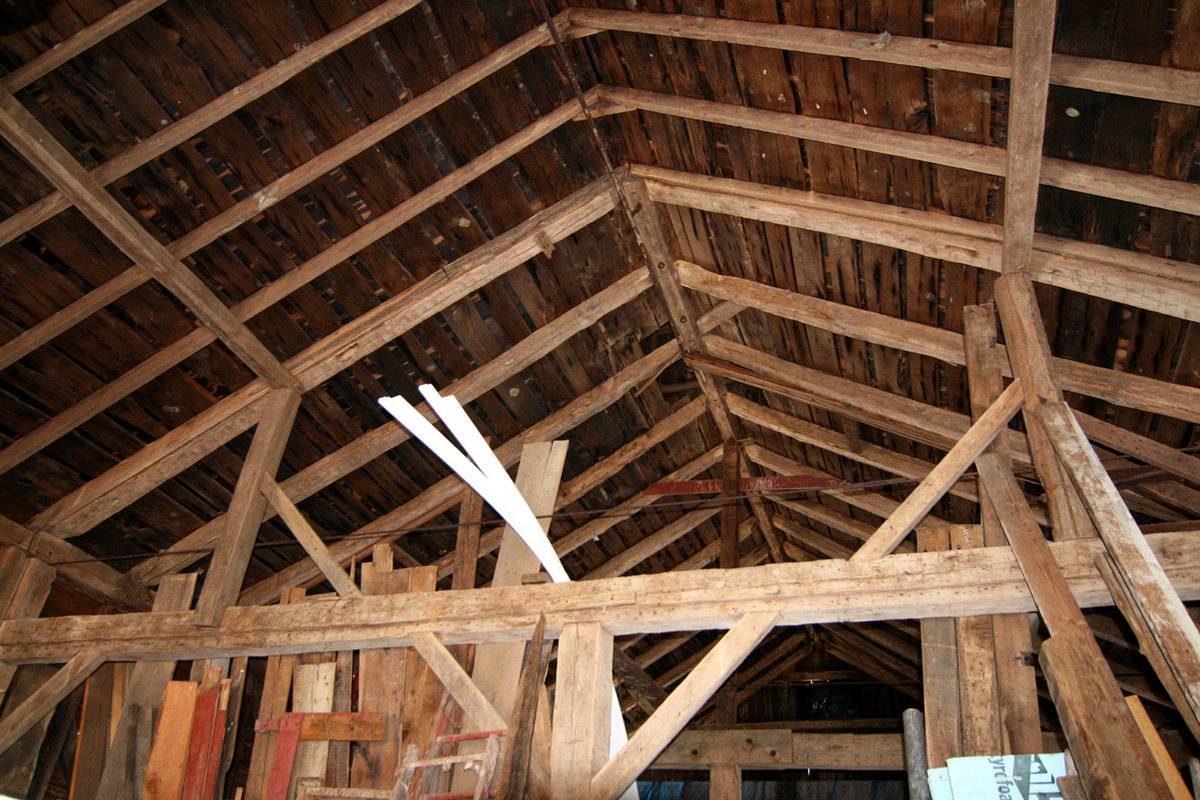
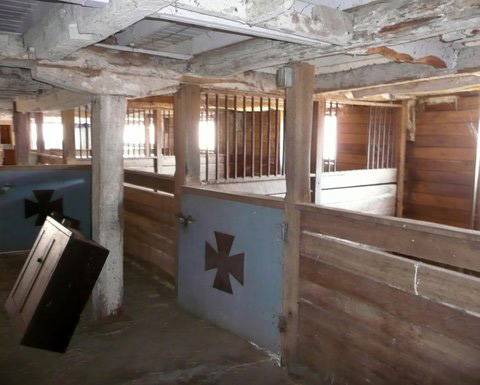
The core of the third barn [Barn I] is an essentially unchanged, mid-19th century three-bay [sic] English bank barn with additions on its north and south ends (Photograph 5). The massive framing of the central older section is circular sawn, but tenoned together. The lowest level of this section, which opens on to the fields in the back, most likely housed animals. The middle level, which opens for ox-drawn wagon access to grade on the road side, probably served also as a threshing floor and a space for hay storage (Gilchrist, Section 7).
- Typology & Materials
-
Building Typology
Materials
Structural System
Roof materials
Roof type
Approximate Dimensions
100 feet x 30 feet
- Source
-
Date Compiled
06/23/2011
Compiled By
Charlotte Hitchcock, reviewed by CT Trust
Sources
Field notes and photographs by Diana Swoyer date 5/09/2011.
Town of Washington Tax Assessor’s Record
Parcel IDs: 295 Nettleton Hollow Rd. 02-04-03,
294 & 300 Nettleton Hollow Rd. 01-04-04,
303 Nettleton Hollow Rd. 02-04-02Aerial Mapping:
http://maps.google.com
http://www.bing.com/maps accessed 6/23/2011.Gilchrist, Alison, Hollister Homestead National Register Nomination No., National Park Service, 2010.
Sexton, James, PhD, Survey Narrative of the Connecticut Barn, Connecticut Trust for Historic Preservation, Hamden, CT, 2005, http://www.connecticutbarns.org/history.
Visser, Thomas D., Field Guide to New England Barns and Farm Buildings, University Press of New England, 1997.
- PhotosClick on image to view full file
-