Barn Record Scotland
RETURN TO ‘FIND BARNS’- Building Name (Common)
- Morse Farm
- Building Name (Historic)
- Gallup Barn/Charles Manning House
- Address
- 91 Huntington Road (Rte 14), Scotland
- Typology
- Overview
-
Designations
Historic Significance
Architectural description:
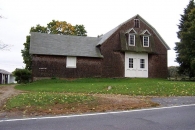
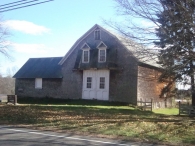
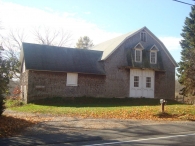
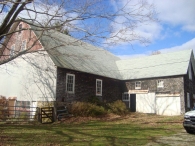
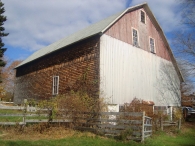
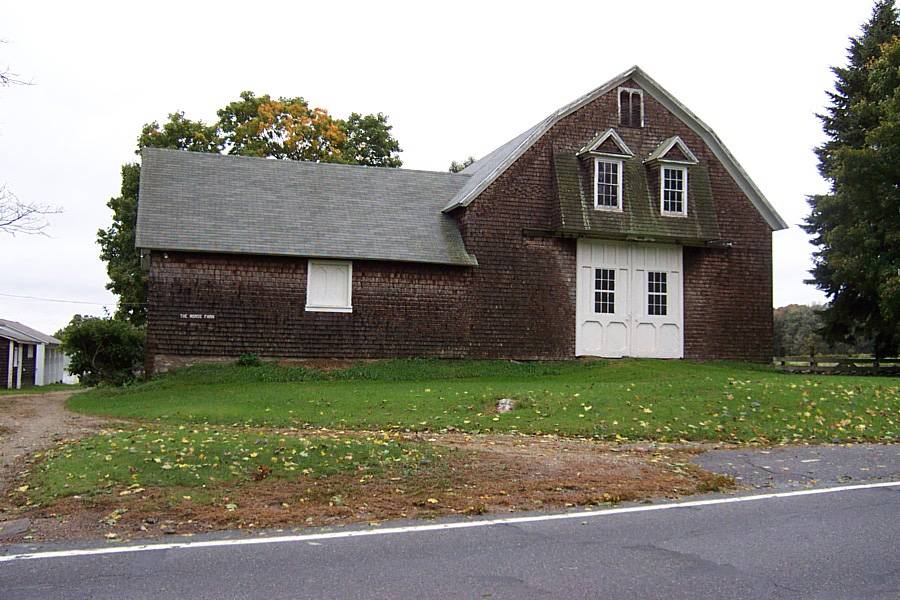
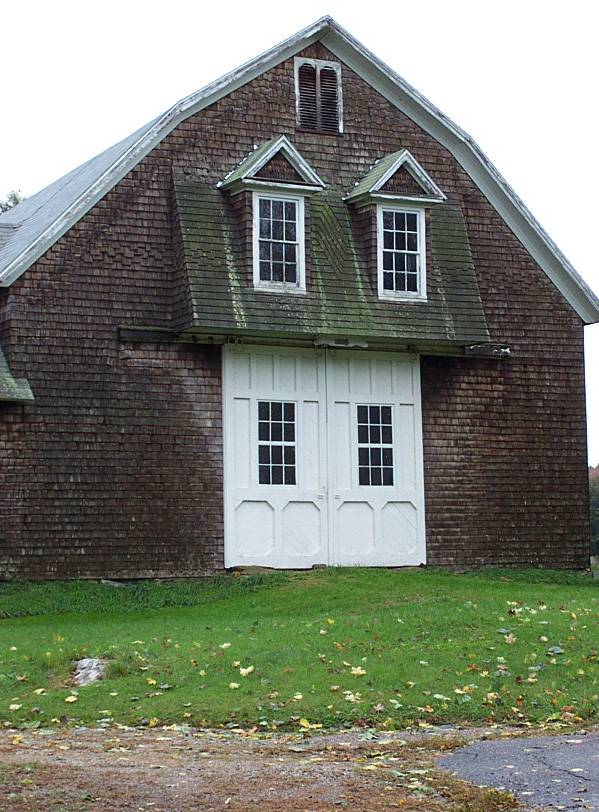
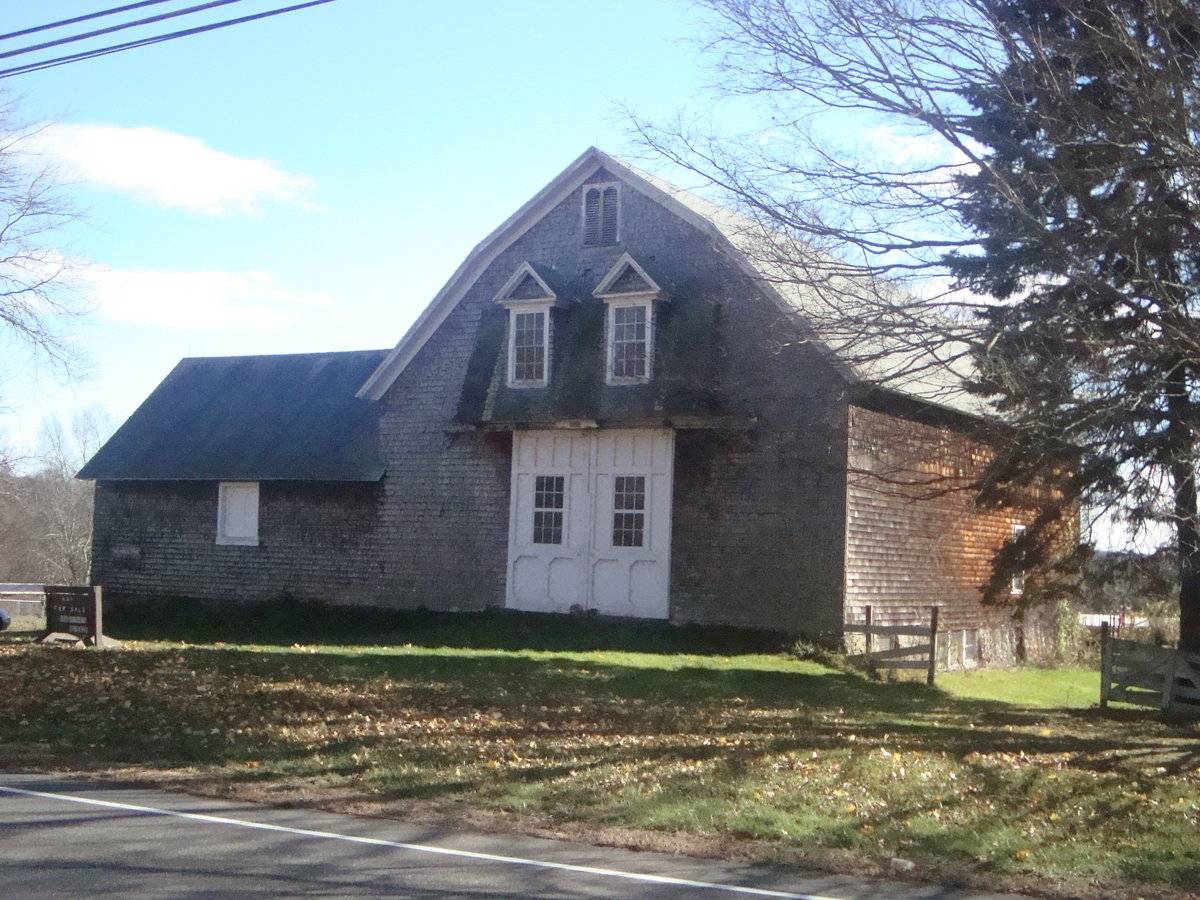
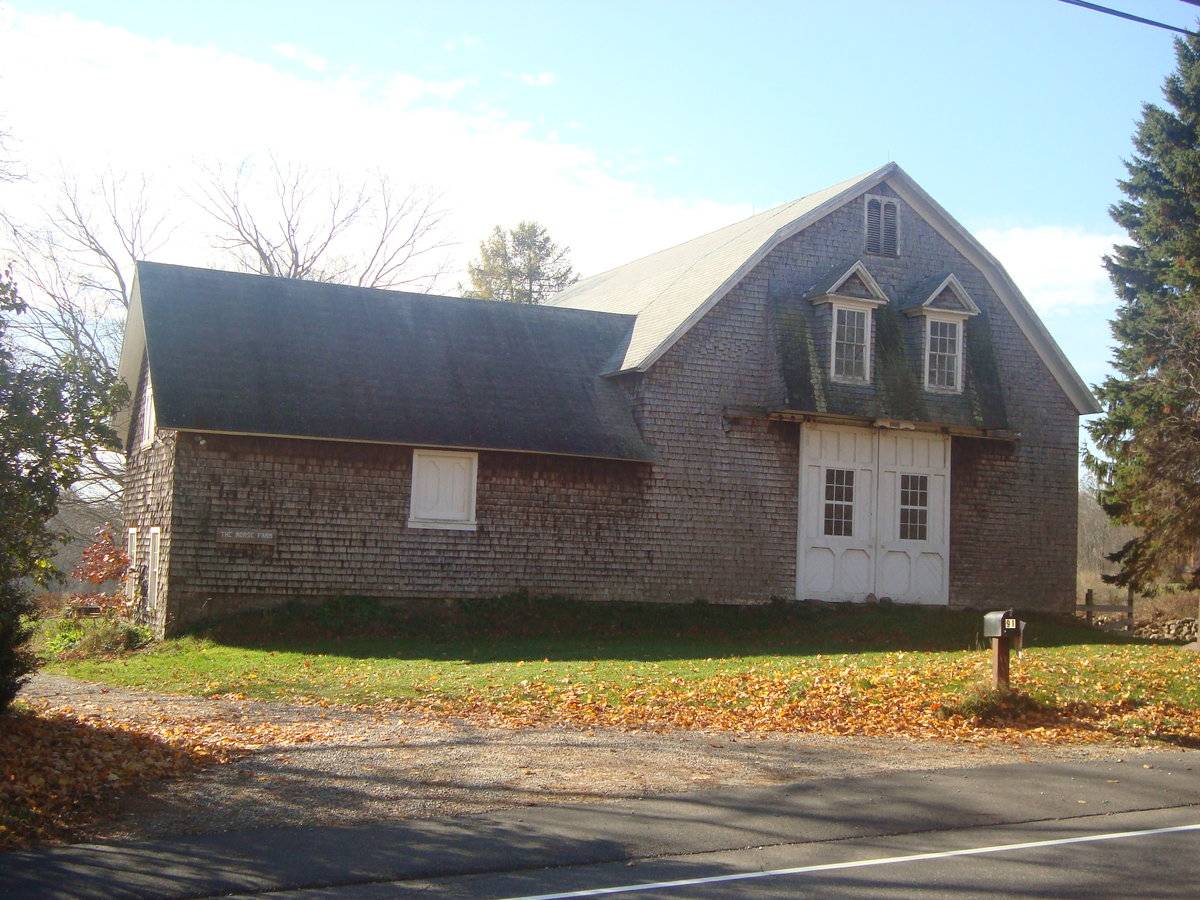
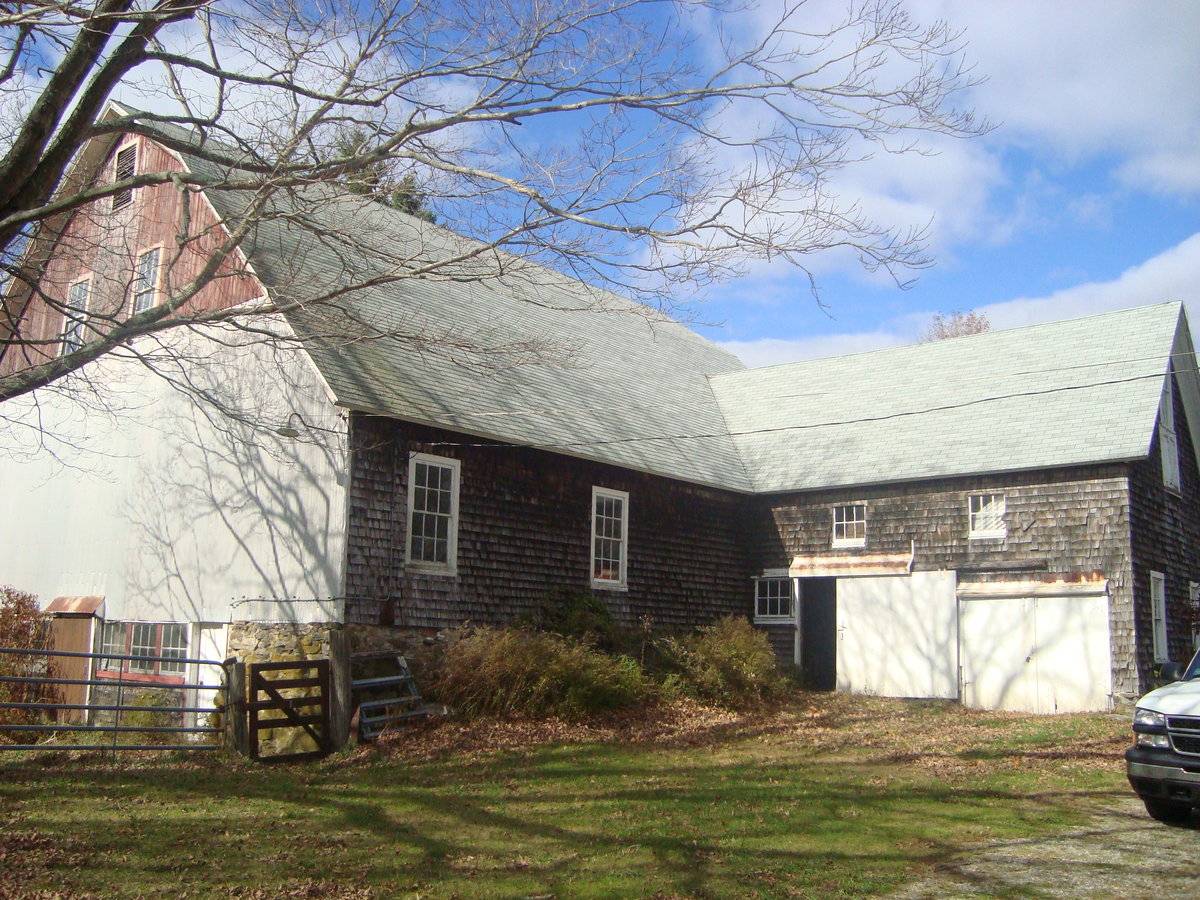
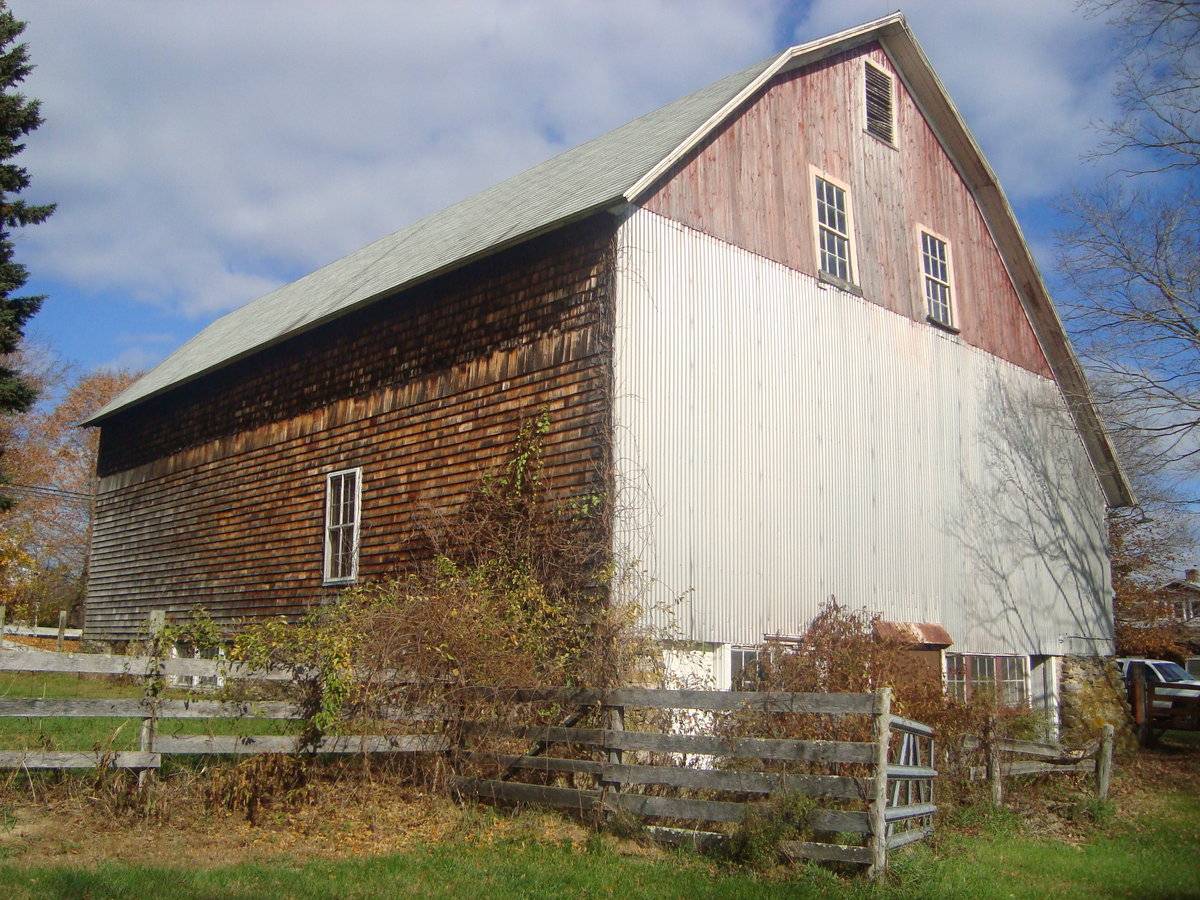
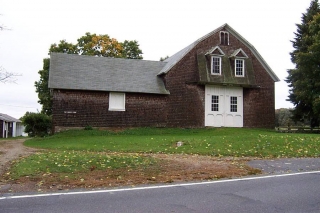
This is a 1 ½-story gable-entry carriage-house with a gambrel-roof. The main façade faces north and its ridge-line runs north-south, perpendicular to Huntington Road, which lies to the north. Along the northern half of the east eave-side of the barn is a 1 ½-story gable-roof addition with two bays. Its ridge-line runs east-west, perpendicular to that of the original structure.
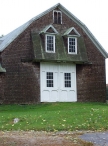
Principal entry is provided by a pair of paneled wood stable doors mounted on an external sliding track. In the center of each of the doors is a twelve-pane stable window with trim. Above the main entry is a large, flared hood featuring two pedimented gable-dormers. Each dormer features a six-over-six double-hung window with trim. Above the dormers, just below the apex of the roof are twinned arch-shaped louvers.
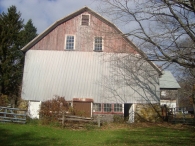
Directly below the eave in the center of the north eave-side of the gable-roof addition appears to be either a loft-door or a window opening that is now covered with a decorative wood panel. On the south eave-side of the gable-roof addition are two bays that appear to contain large overhead garage doors. On the southern half of the west eave-side of the original barn appears to be a stable window with trim.
The exterior walls of the barn are covered with stained wood shingles. The roof is covered with asphalt shingles. The foundation is constructed of mortared fieldstone.
Historical significance:Until the 1830s, the horses used for riding and driving carriages were often kept in the main barn along with the other farm animals. By the 1850s, some New England farmers built separate horse stables and carriage houses. Early carriage houses were built just to shelter a carriage and perhaps a sleigh, but no horses. The pre-cursor to the twentieth-century garage, these outbuildings are distinguished by their large hinged doors, few windows, and proximity to the dooryard. The combined horse stable and carriage house continued to be a common farm building through the second half of the nineteenth century and the first decade of the twentieth century, until automobiles became common. Elaborate carriage houses were also associated with gentlemen farms and country estates of the late 19th and early 20th centuries. Another form of carriage barn, the urban livery stable, served the needs of tradespeople.
Field Notes
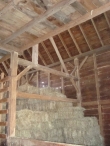
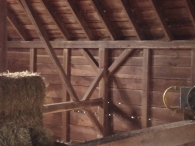
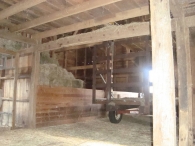
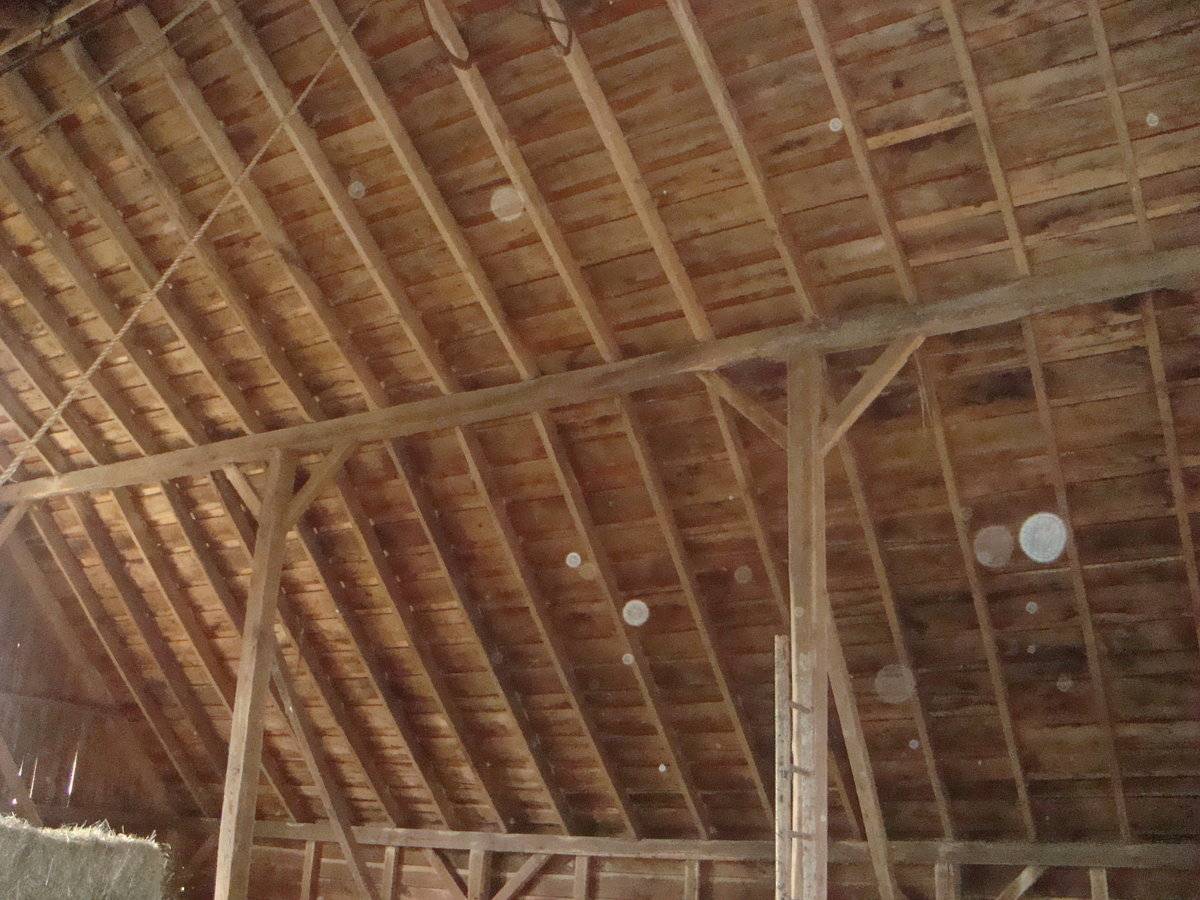
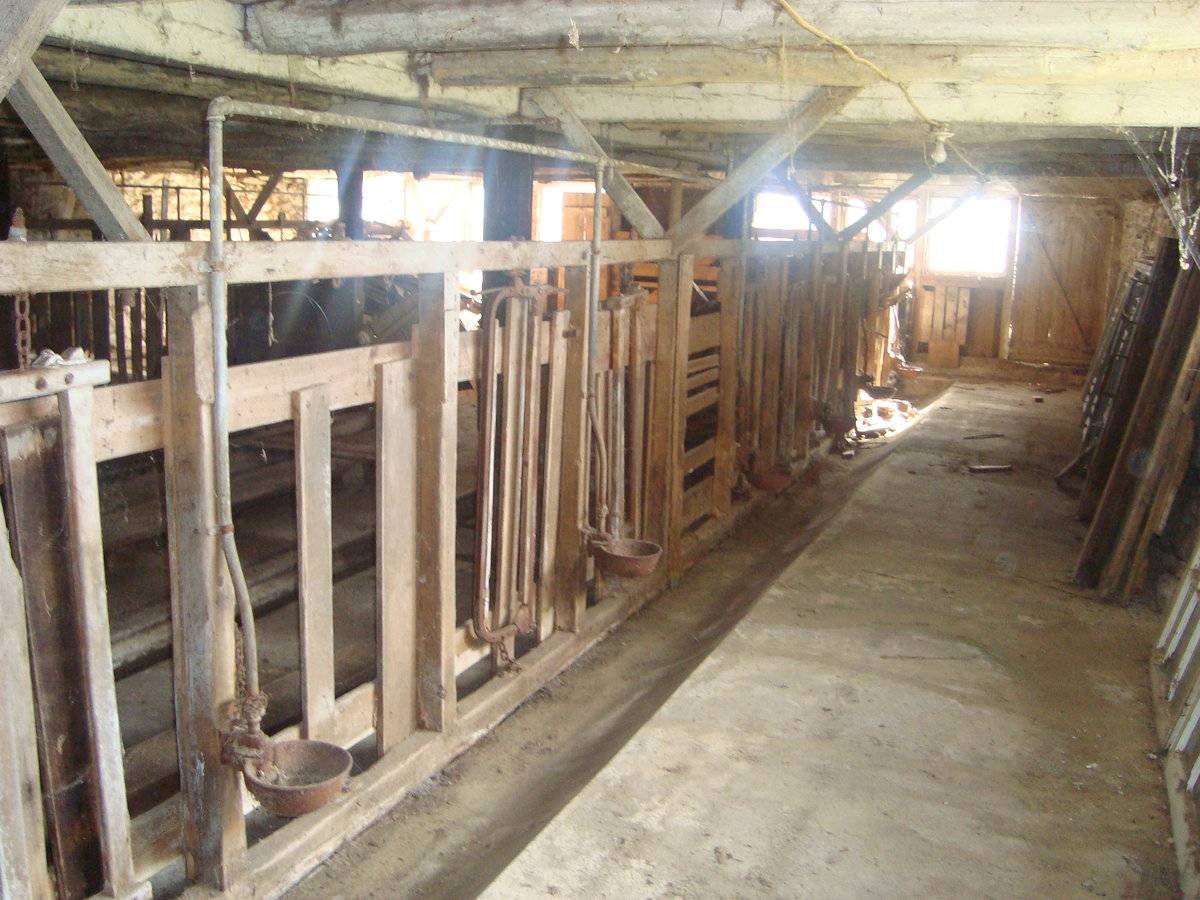
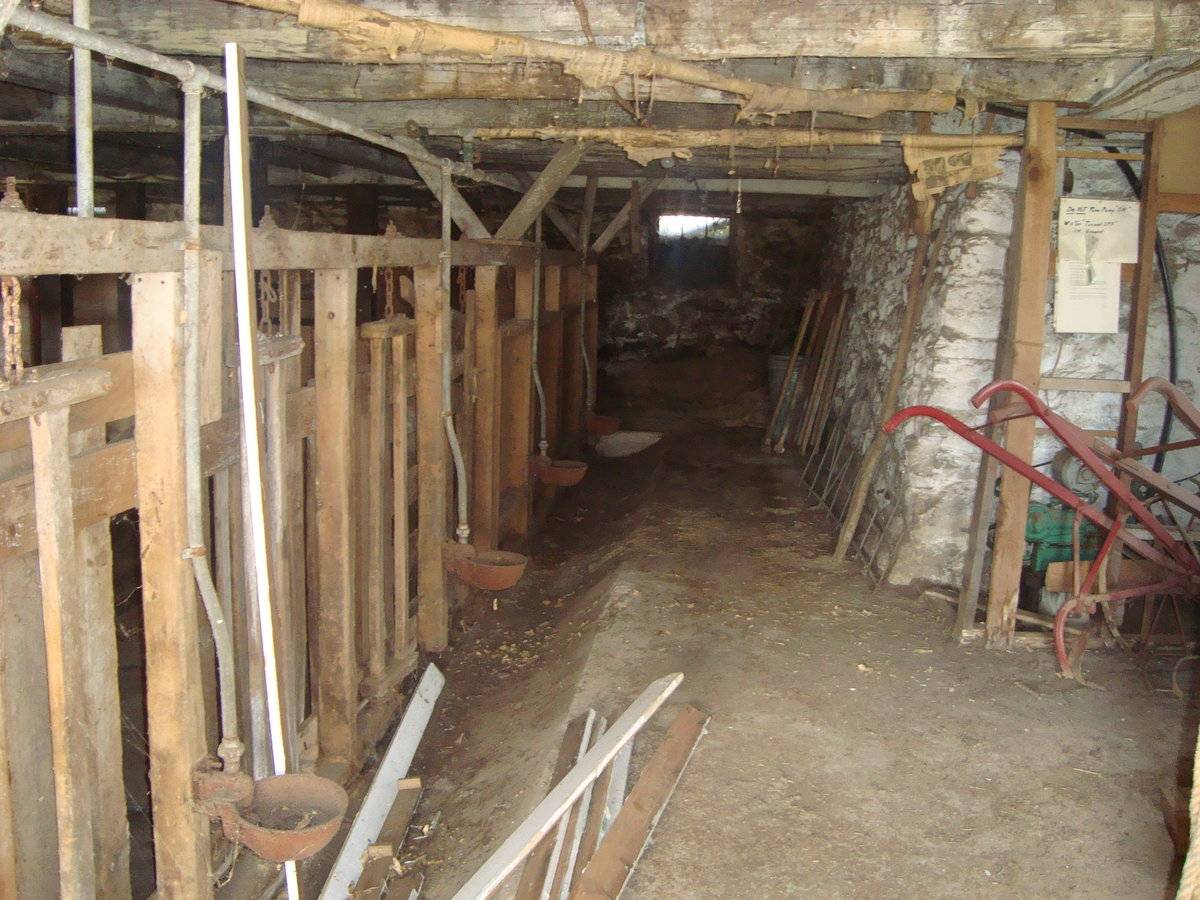
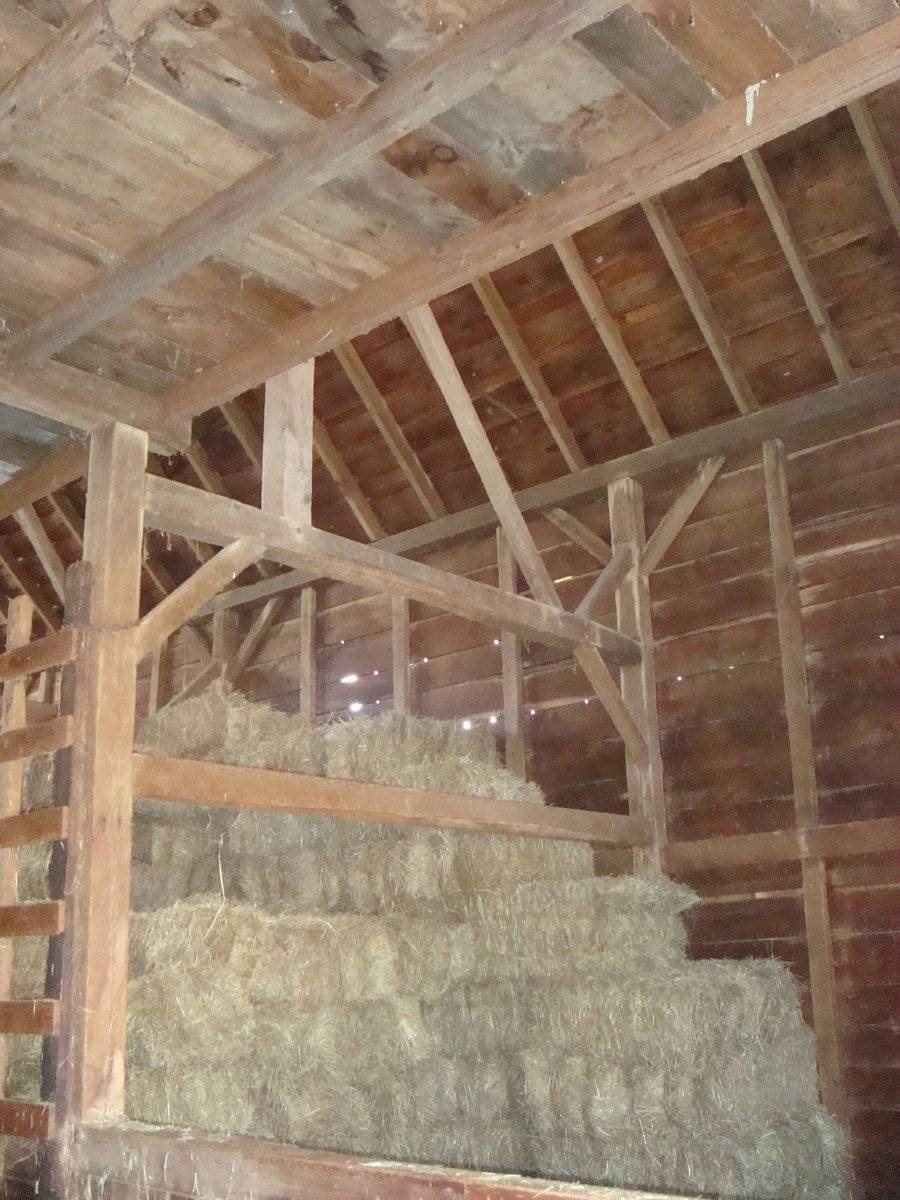
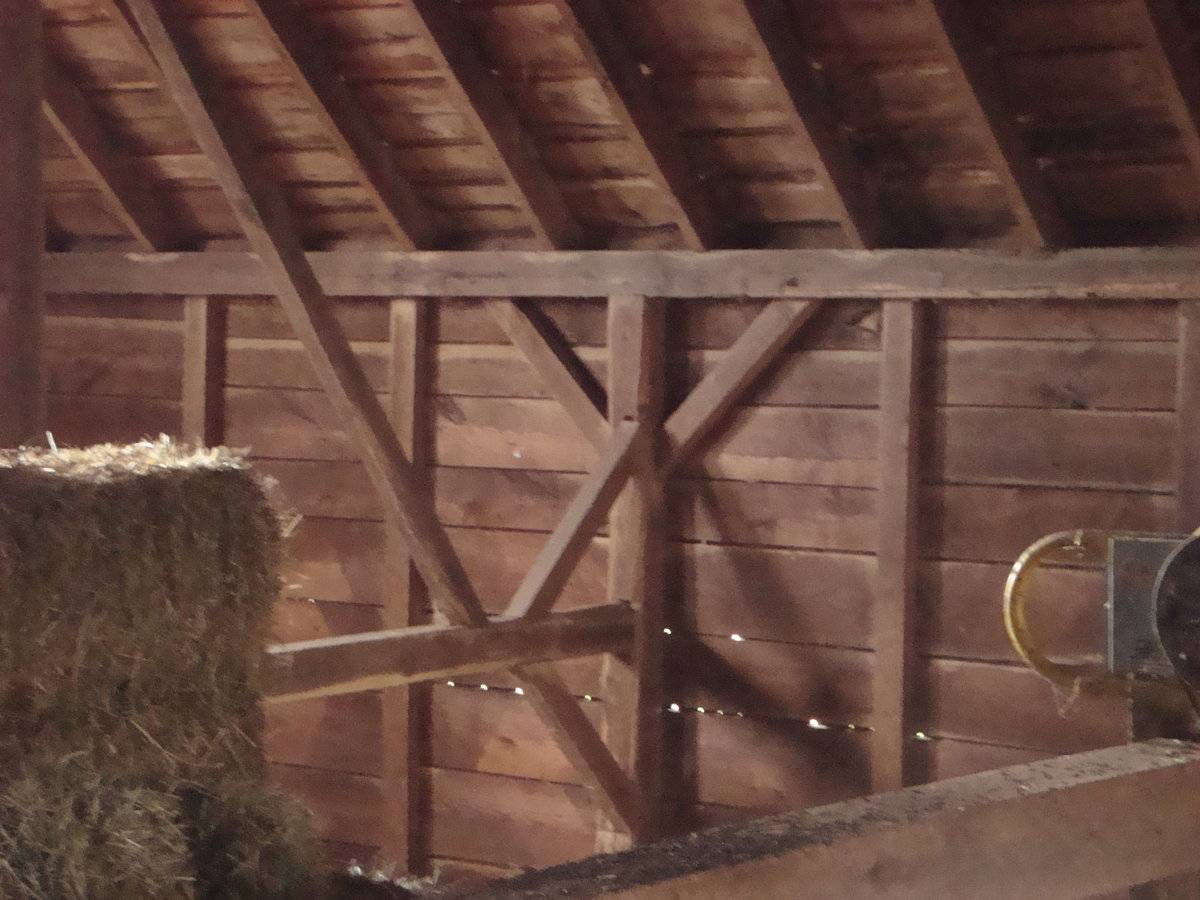
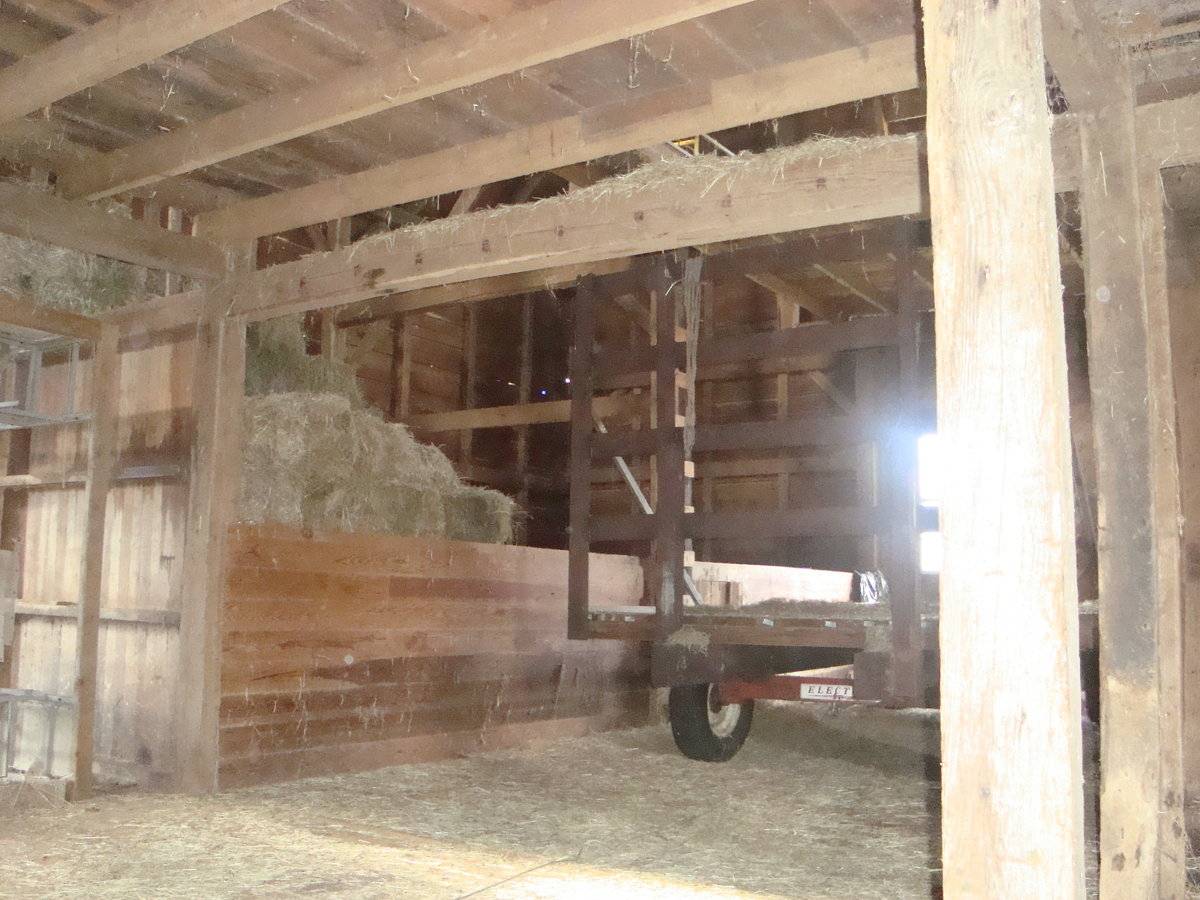
The barn was built in 1906 by Archie Gallup from timbers harvested from their property for about $1200. The Morse family purchased the farm in the early 1950's, raising Holstein heifers from day old calves until they were ready for milking and this was done until 1996. The farm is still active, selling hay which is stored in the barn and is cut from the surrounding fields. The Anson Clinton family purchased the farm recently and the barn is used to store hay cut and baled from the 32 acre farm. Located in the Scotland Center National Register Historic District.
- Use & Accessibility
Use (Historic)
Use (Present)
Exterior Visible from Public Road?
Yes
Demolished
n/a
Location Integrity
Unknown
- Environment
Related features
Environment features
Relationship to surroundings
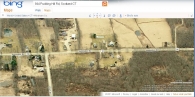
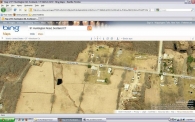
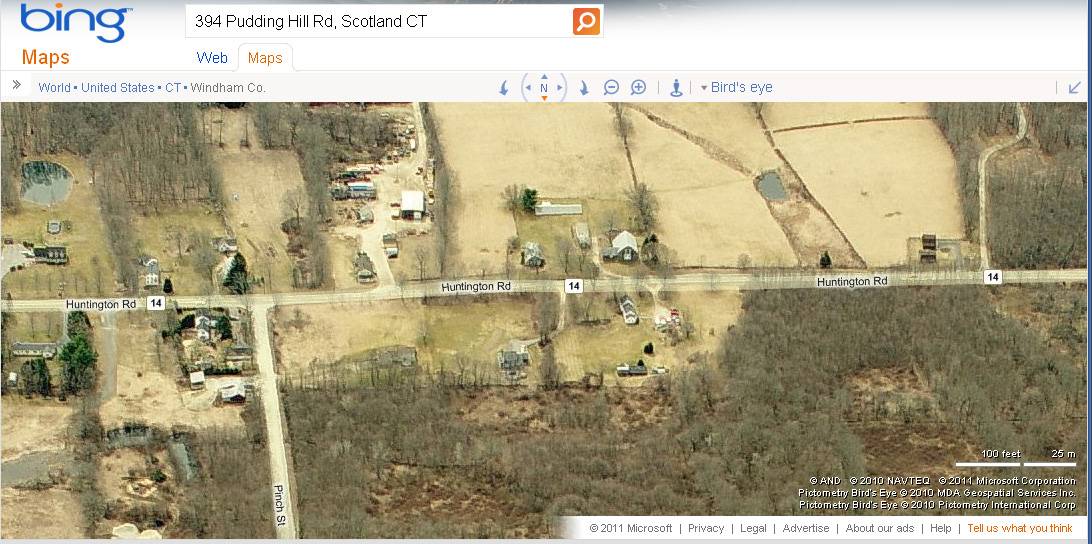
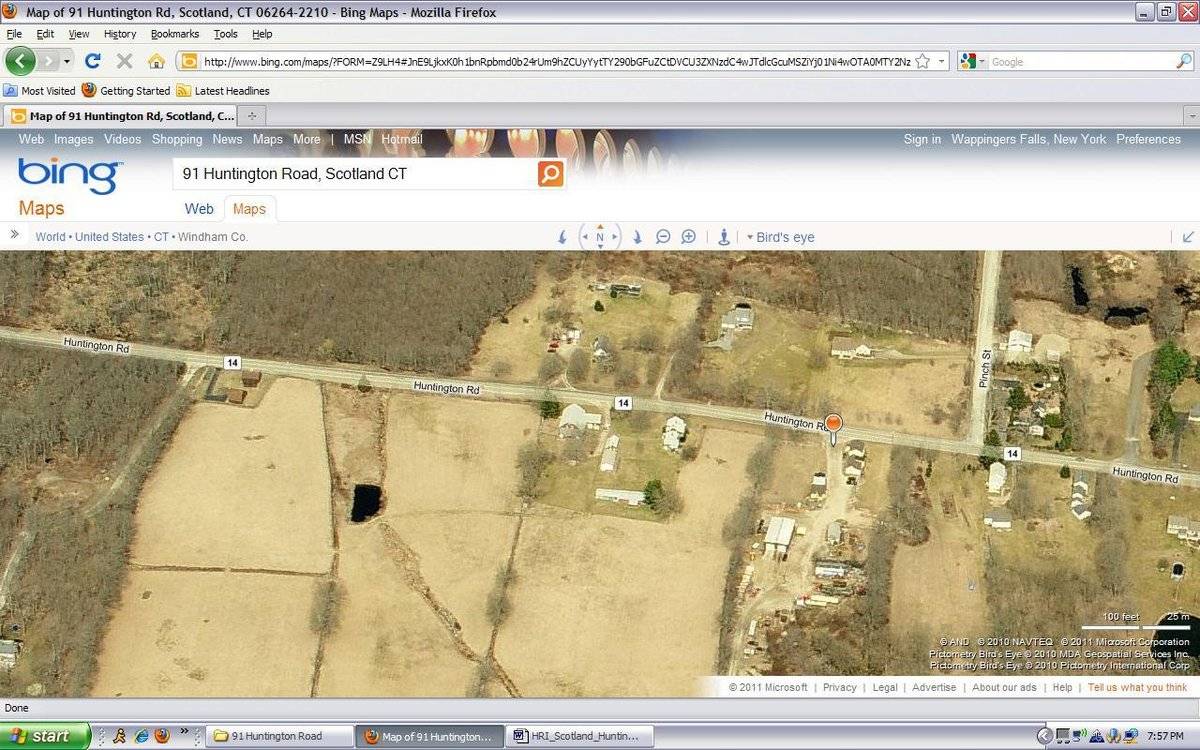
This property is located just west of the center in the Town of Scotland, in a rural residential area with a few scattered farms. The barn is located on a 32.0 -acre parcel that is bordered by Huntington Road (CT Rt. 14) to the north. In addition to the carriage house, the property also features three minor outbuildings and a c. 1875 residential structure.
To the southeast of the house are two agricultural structures. The first is a small 1 ½-story gable-roof structure with a rectangular-shaped plan and a shed-roof addition on its west eave-side. Its ridge-line runs north-south. In the center of its north gable-end is a double-hung window with trim. On its east eave-side are two window openings that appear to be covered with plywood. Directly to the south of this structure is a 1 ½-story gable-roof structure with a rectangular shaped plan. Its main façade appears to face west, and its ridge-line runs north-south. To the south of the barn is a third agricultural structure with a rectangular shape plan. This structure appears to have a gable-roof with an east-west orientation.
The c.1875 house is located to the east of the barn. This is a 1 ½-story gable-entry structure with a cross-gable roof and several additions. The main façade faces north and the ridge-line runs north-south. Principal entry is via a paneled wood pass-through door located in the western corner of the main façade. The doorway is encompassed by a decorative door- surround featuring a transom and sidelights. To the east are two double-hung windows with trim, followed by a recessed secondary door in the eastern corner of the main facade. In the center of the second story on the main façade are two double-hung windows with trim. In the eastern corner of the second story of the main façade is a small double-hung window with trim. Directly below the apex of the gable on the main façade is a small lunette-shaped window. Along the northern half of the east-eave side of the house is a single-story portico with a hip roof supported by spindlework posts. Beneath this porch is a double-hung window with trim. In the southern corner of the east eave-side of the house is a tripartite double-hung window with trim. Directly above this window on the second floor of the east eave-side of the house is a twinned double-hung window with trim. Along the west eave-side of the house are two windows with trim, one on the northern half, the other on the southern half. Above these windows in the center of the second story of the west eave-side of the house is a large gable-dormer featuring three windows with trim. Projecting from the center of the south gable-end of the house is a 1 ½-story addition with a gable-roof, its ridge-line running parallel to that of the main structure. Its east eave-side features two double-hung windows with trim. Its west eave-side is dominated by a long horizontal band of five strip windows, followed by a pass-through door on the southern corner of the east eave-side of the addition. At the south gable-end of this addition is another 1 ½-story addition with a gable-roof, its ridge-line running east-west, perpendicular to that of the original structure. Along its east gable-end are two double-hung windows with trim. Above these windows, in the center of the east-gable end just below the apex of the roof is a third, smaller window with trim. This pattern is again repeated on the west gable-end of the addition. The exterior walls of the house are covered with stained wood shingles. The roof is covered with asphalt shingles.
The landscape of the property consists mainly of agricultural fields. To the west of the carriage house, roughly in the center of the property is a small pond. The property is bordered to the east, west, and south by a narrow band of trees. The property is surrounded by woods to the west and farmland to the south.
- Typology & Materials
-
Building Typology
Materials
Structural System
Roof materials
Roof type
Approximate Dimensions
3050 square feet
- Source
-
Date Compiled
04/05/2011
Compiled By
E. Reisman & T. Levine; reviewed by CT Trust
Sources
Photographs and field notes by Kevin P. Ring, Sr, 06/13/2011.
Aerial view from Bing Maps:
http://www.bing.com/maps accessed 3/11/2011.Field notes and photographs by Todd Levine, 01/03/2008.
Town of Scotland’s GIS Viewer:
http://www.wincog-gis.org/ags_map/default.asp?town=Scotland
(Parcel ID # 21/19/7: 32.0-acres: c. 1875 house, 1,992 sq. ft.)
Aerial Mapping:
http://www.bing.com/maps accessed 04/05/2011.Sexton, James, PhD, Survey Narrative of the Connecticut Barn, Connecticut Trust for Historic Preservation, Hamden, CT, 2005, http://www.connecticutbarns.org/history.
Visser, Thomas D., Field Guide to New England Barns and Farm Buildings, University Press of New England, 1997.Cunningham, Jan, Scotland Center Historic District National Register Nomination No. 93001377, National Park Service, 1993.
- PhotosClick on image to view full file
-