Barn Record East Windsor
RETURN TO ‘FIND BARNS’- Building Name (Common)
- Applewood Farm Hay Barn
- Building Name (Historic)
- Thompson Family Farm
- Address
- 249 Melrose Road (Rte 140), East Windsor
- Typology

- Overview
-
Designations
Historic Significance
Architectural description:
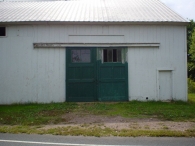
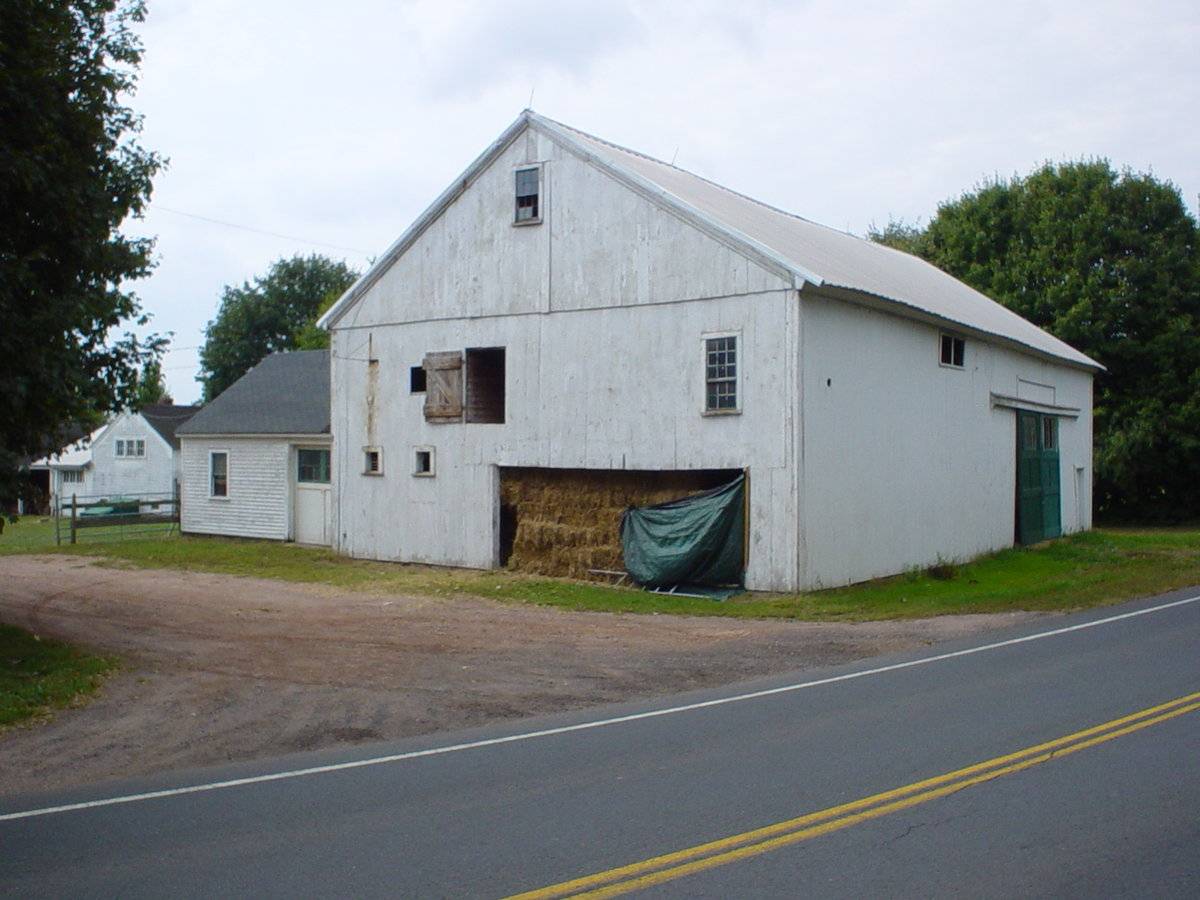
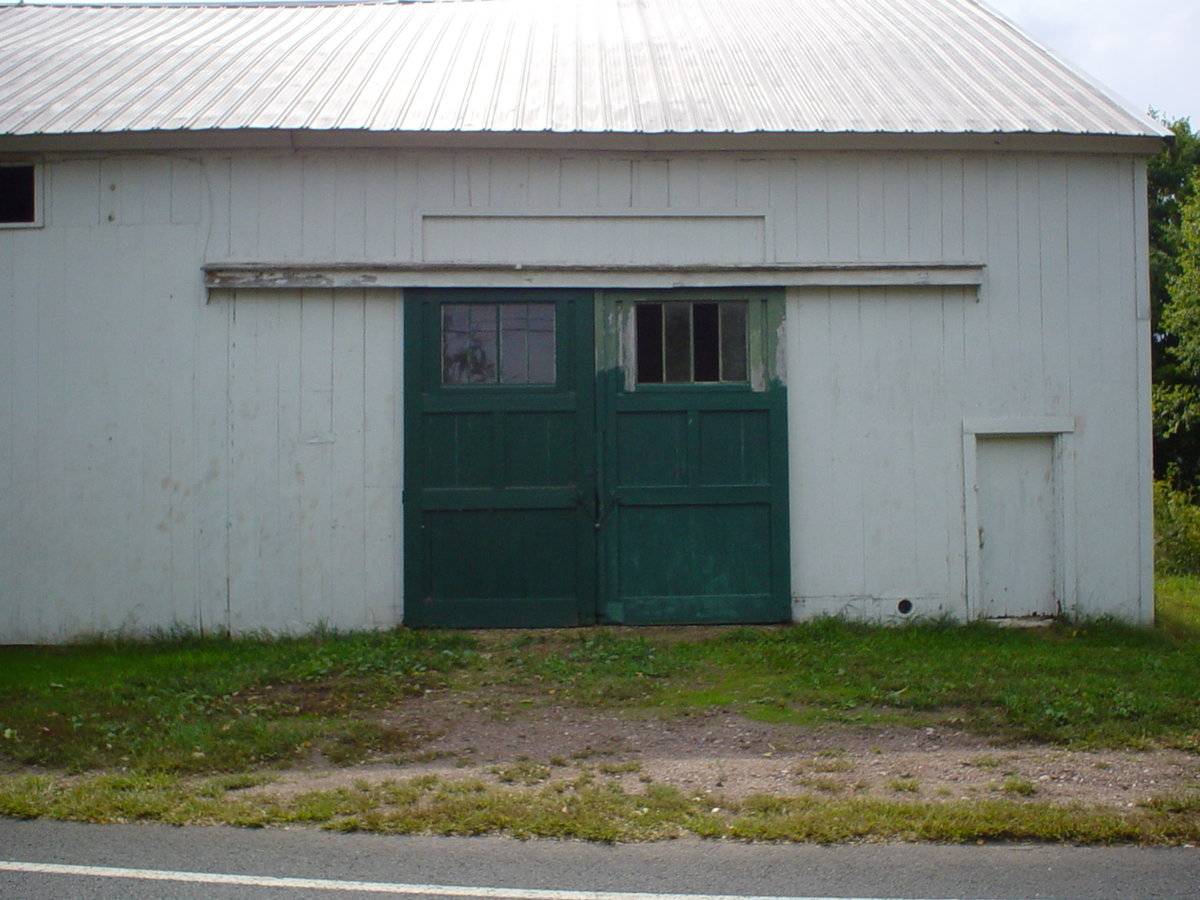
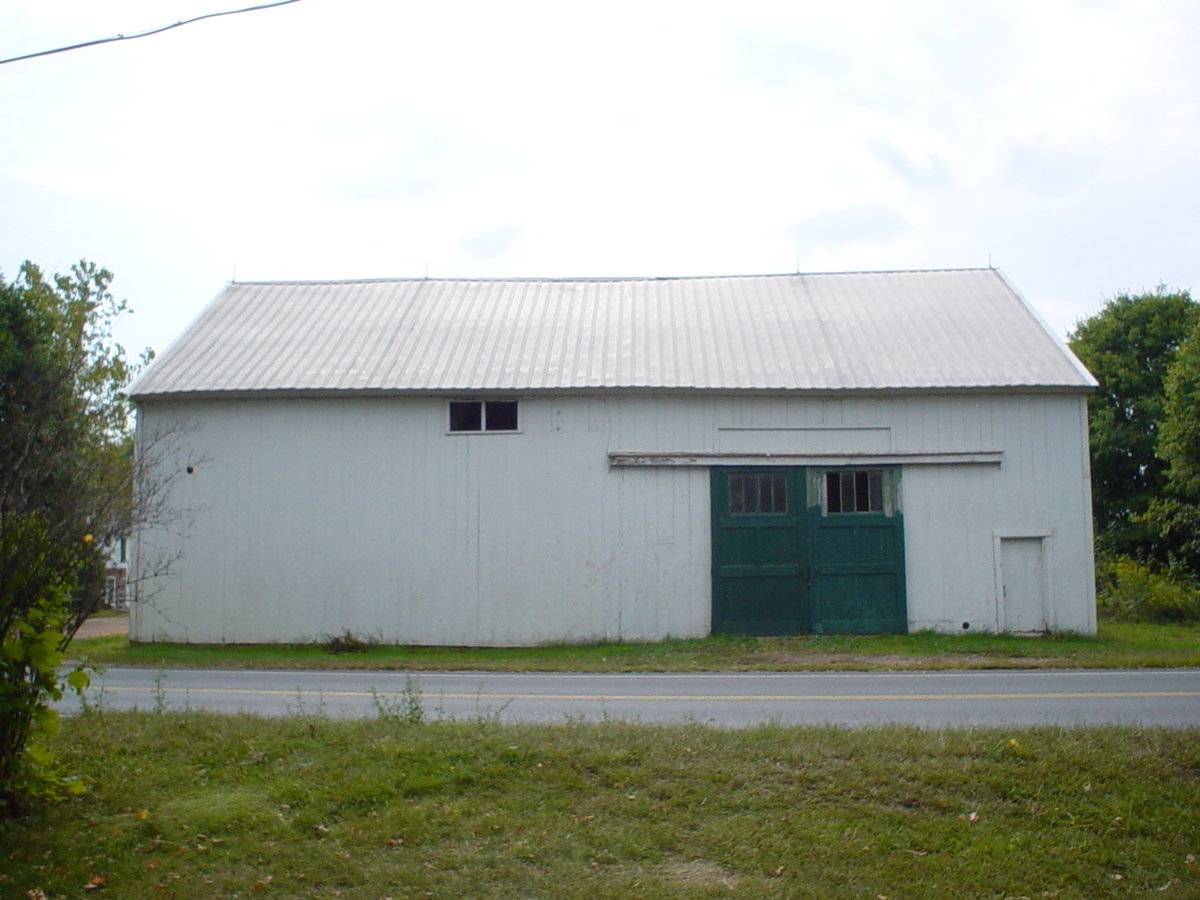
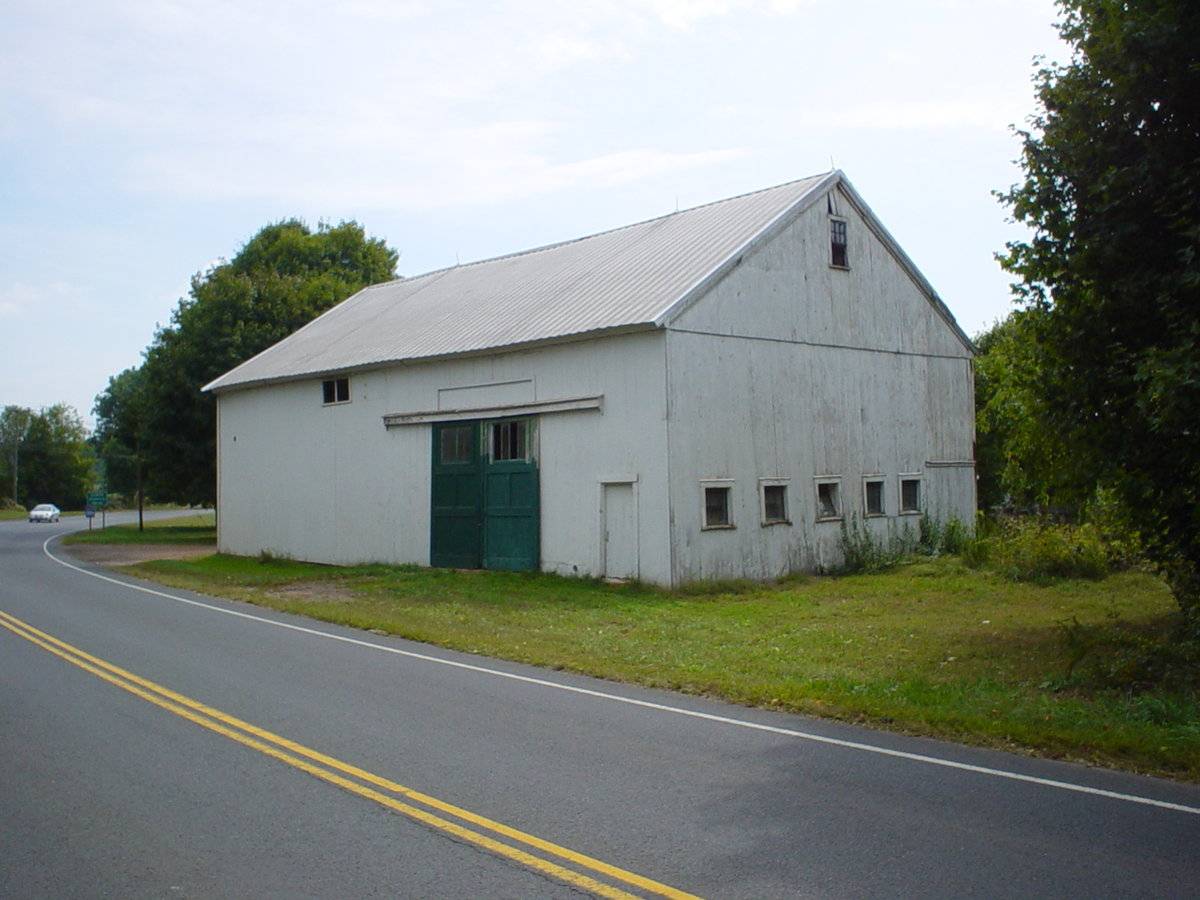
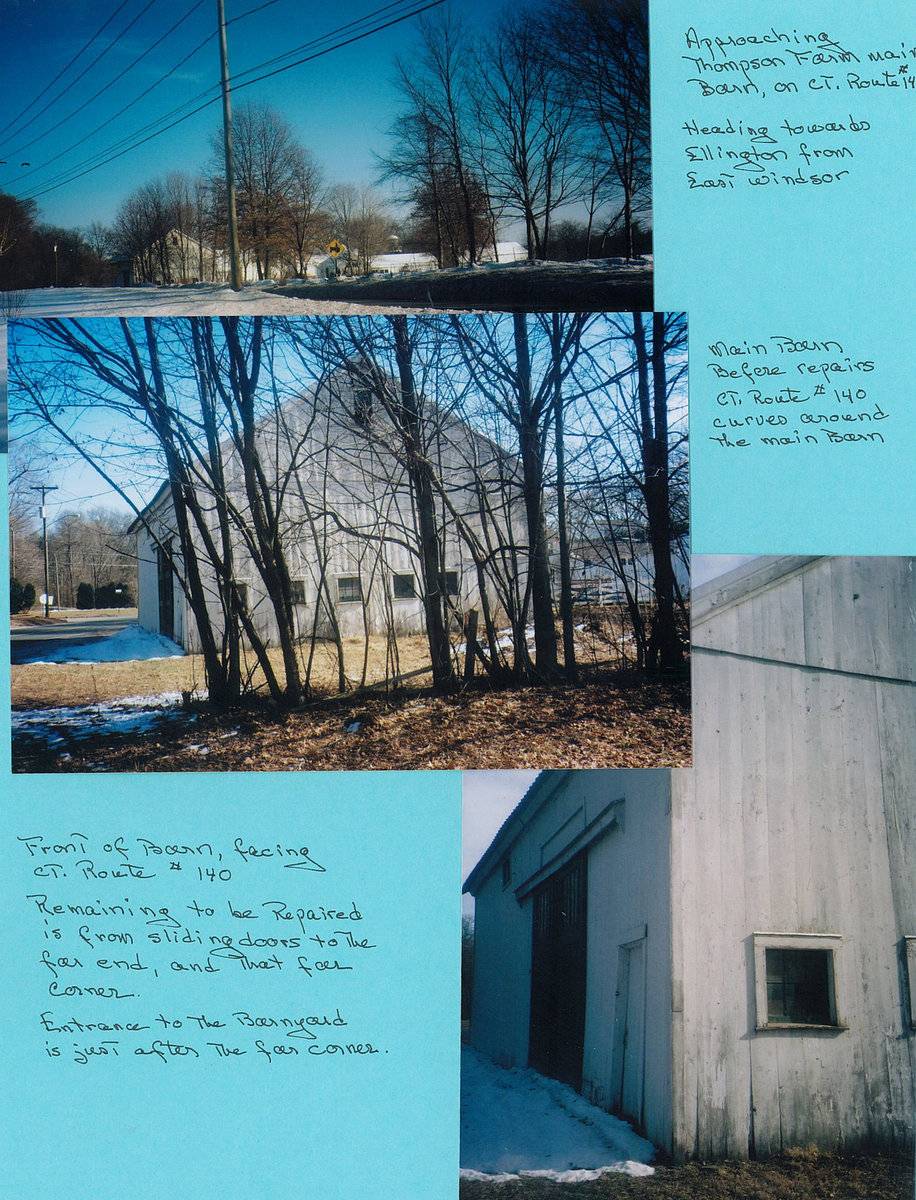
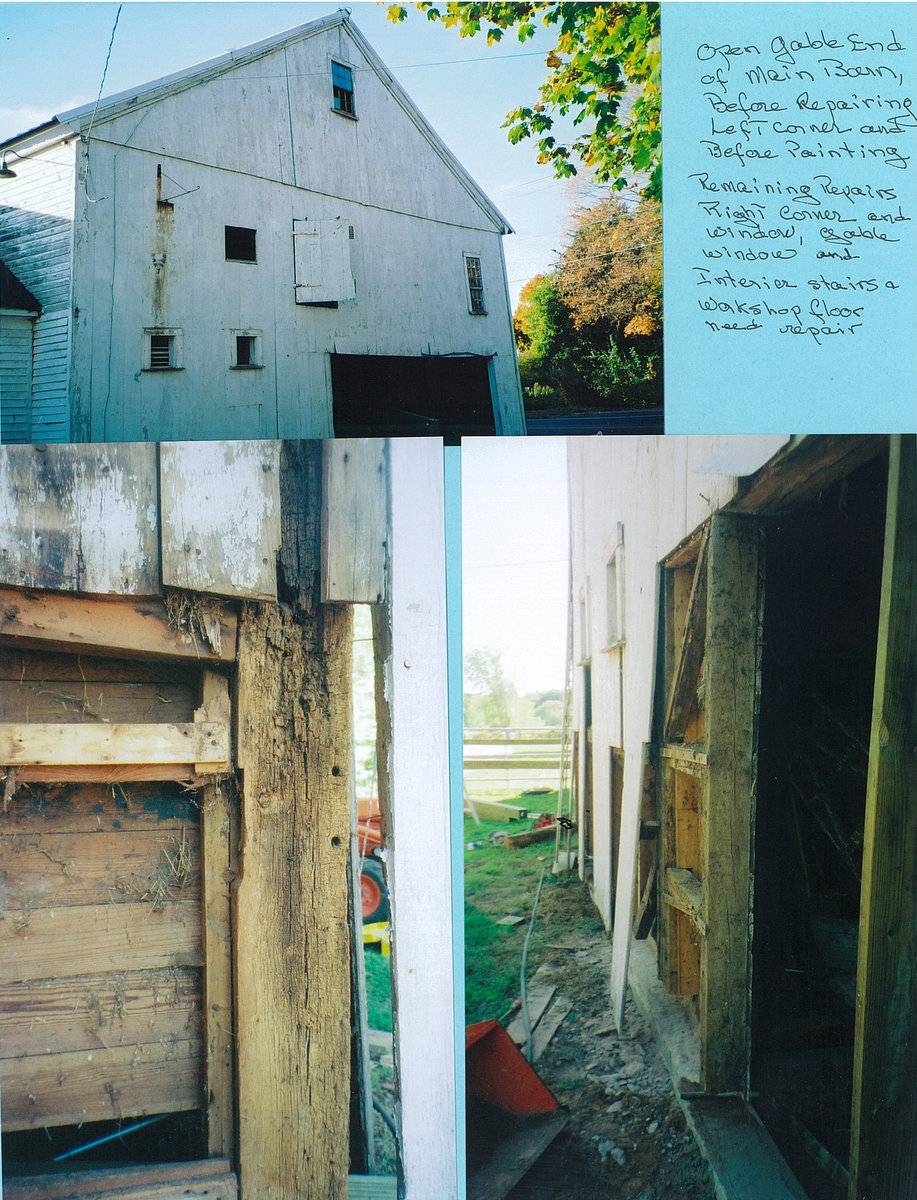
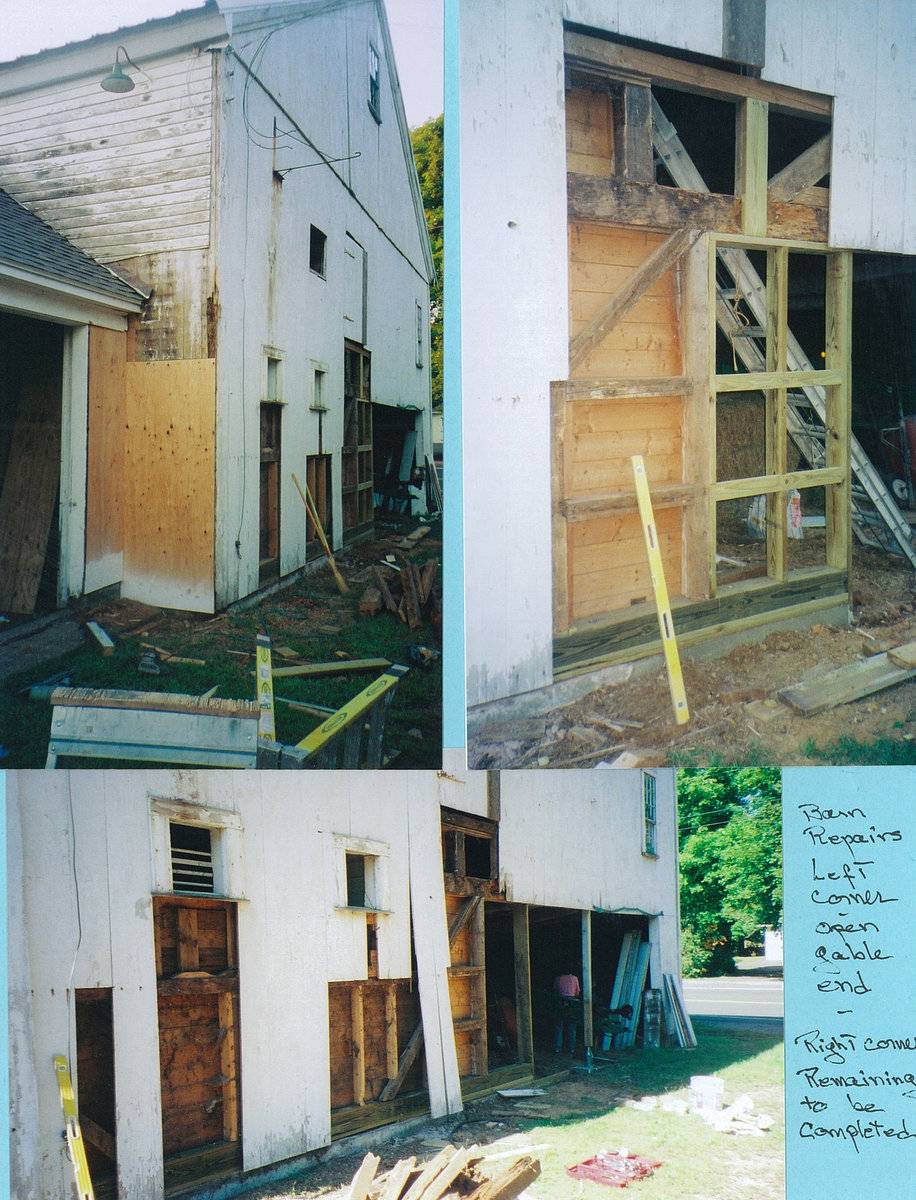
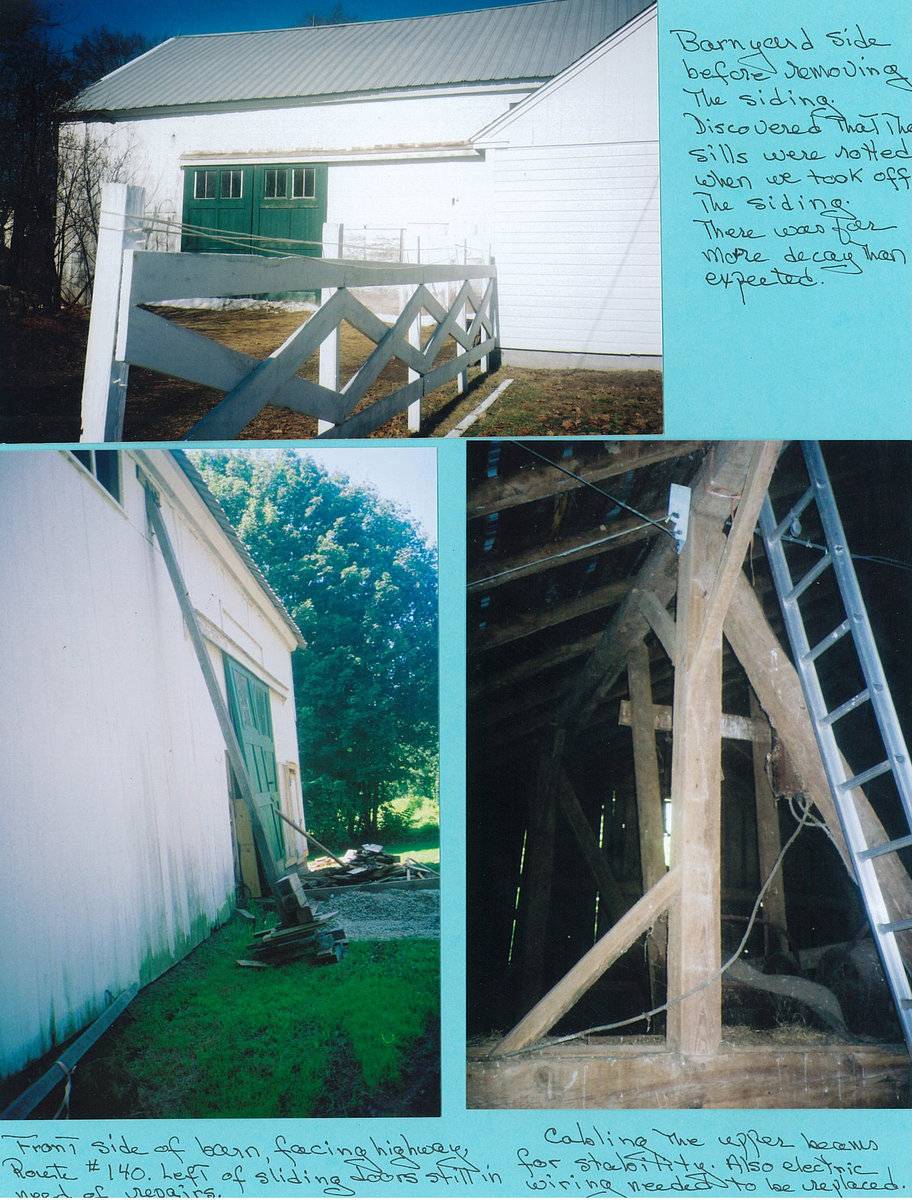
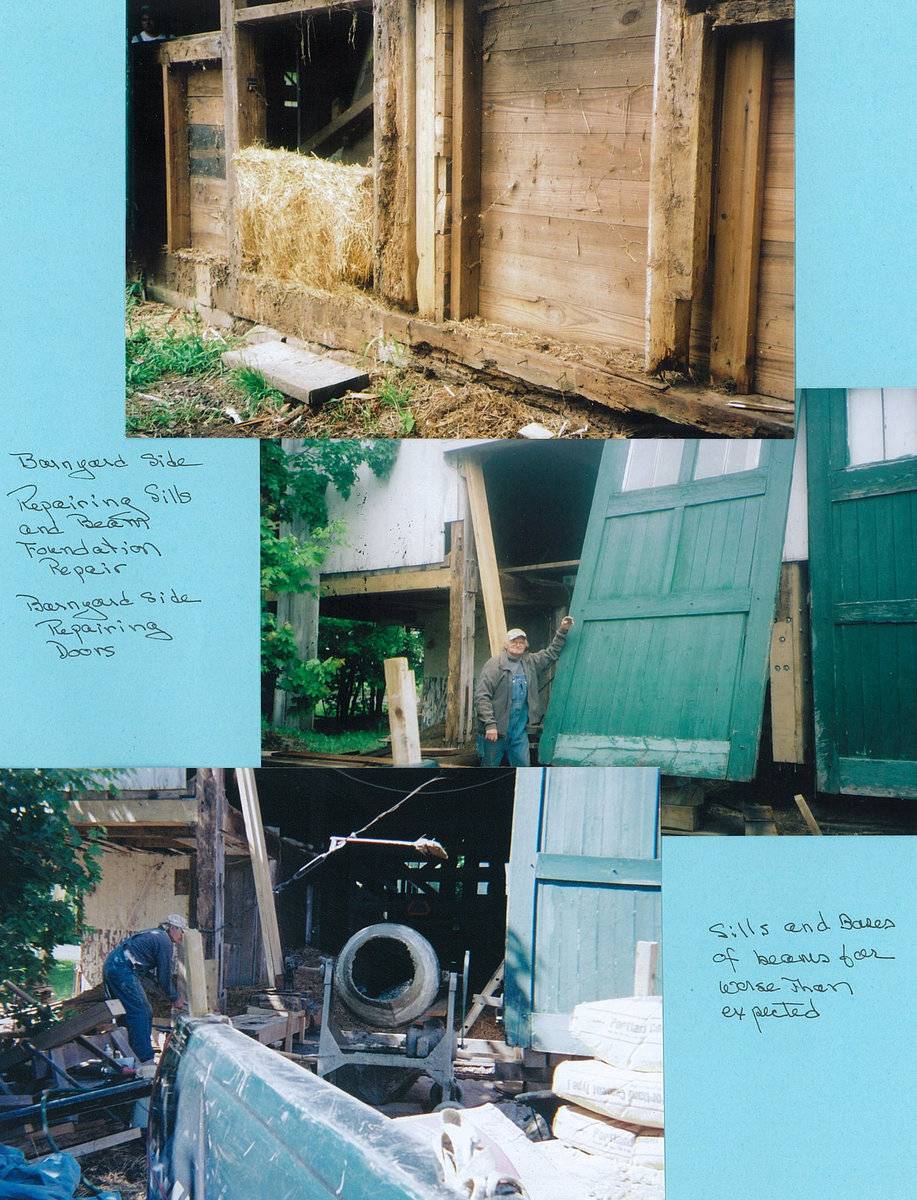
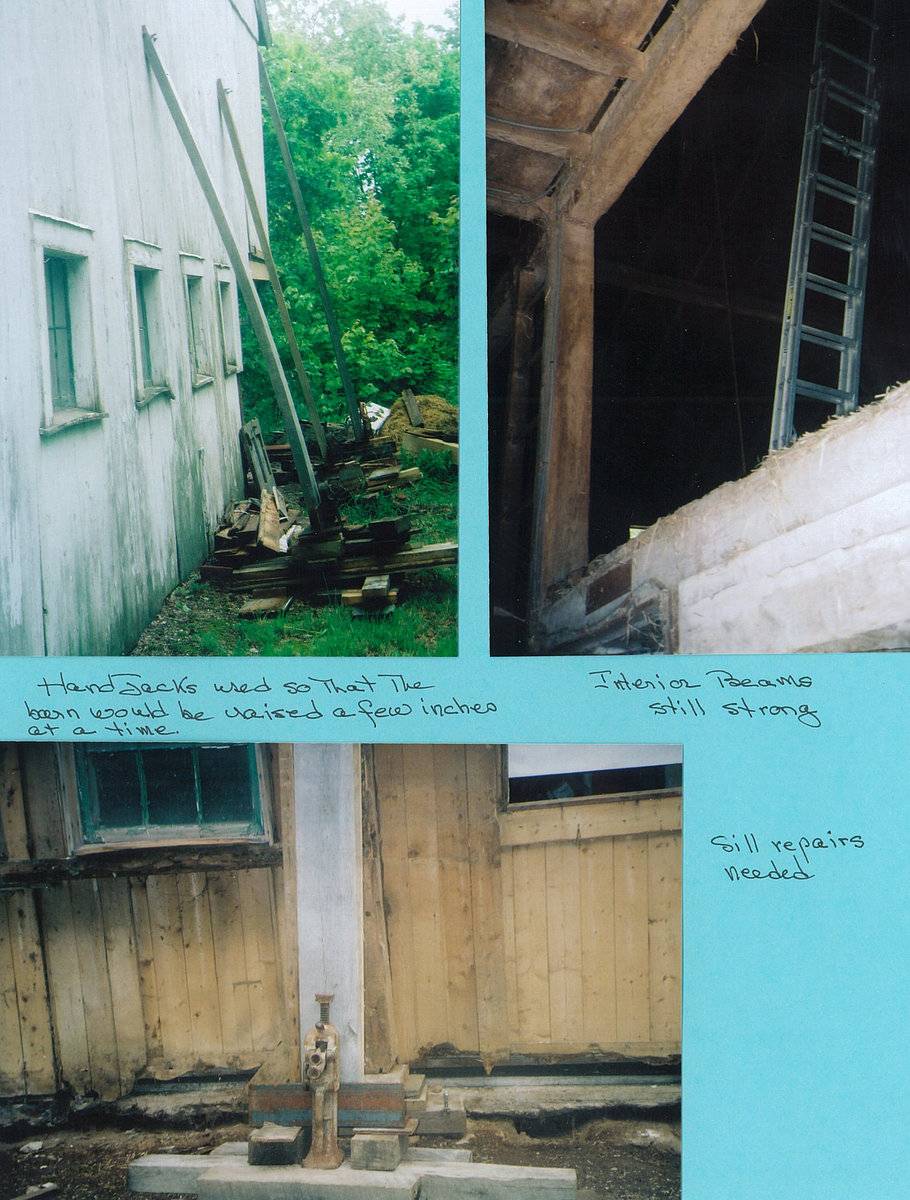
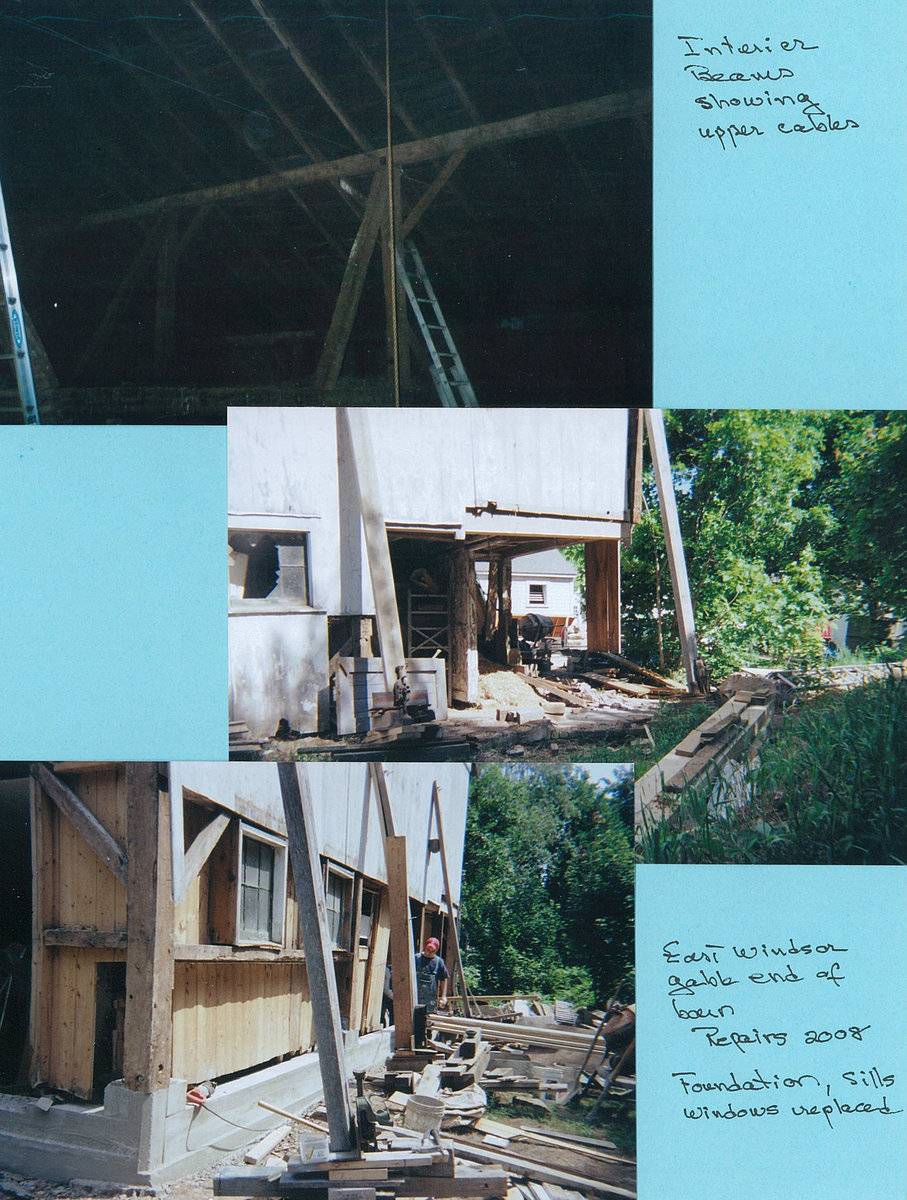
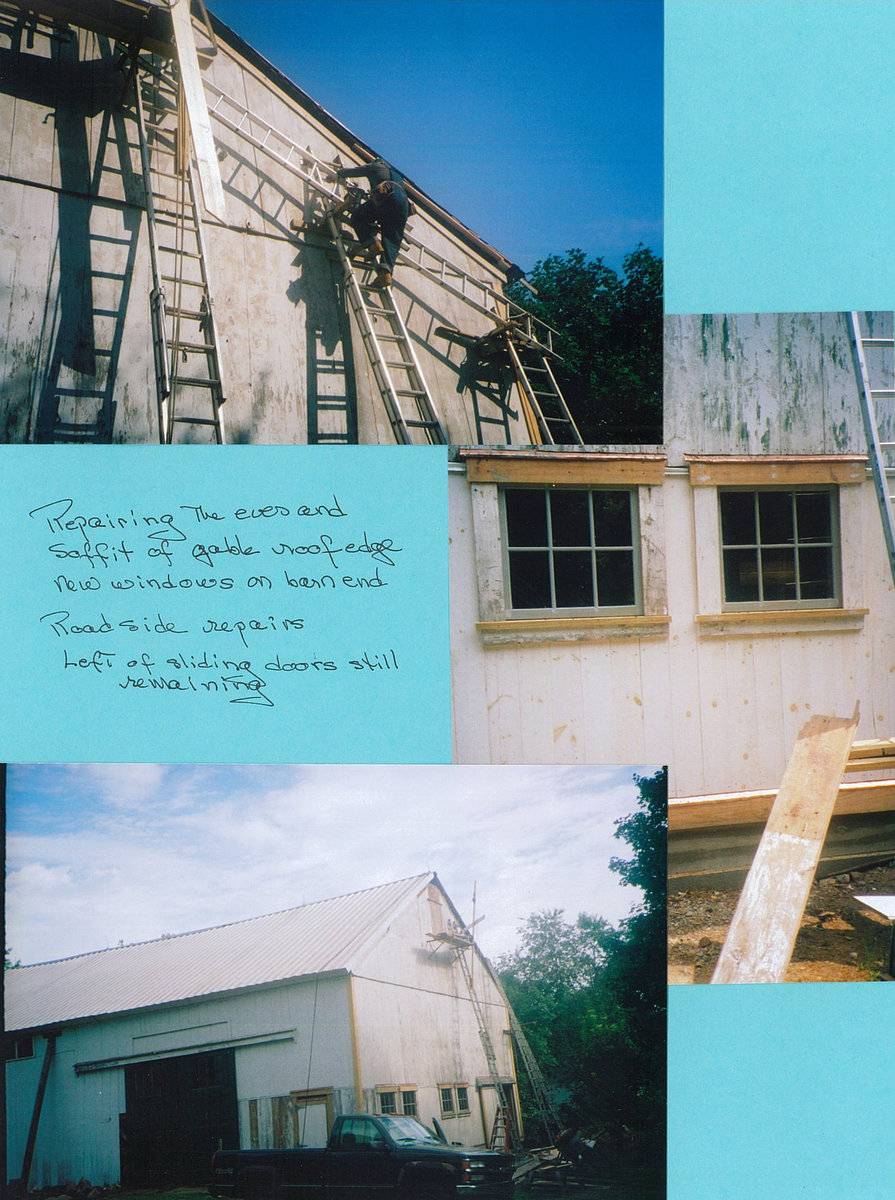
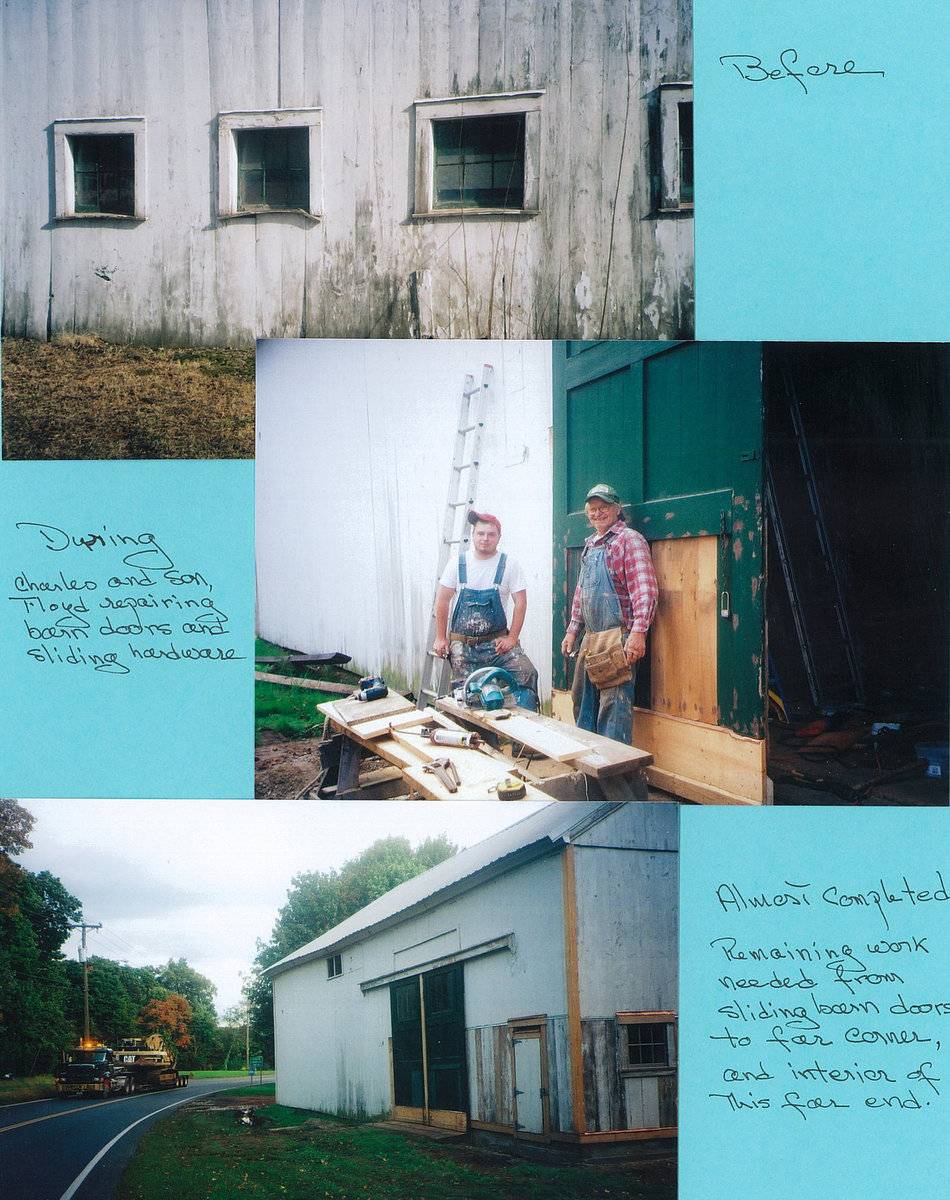
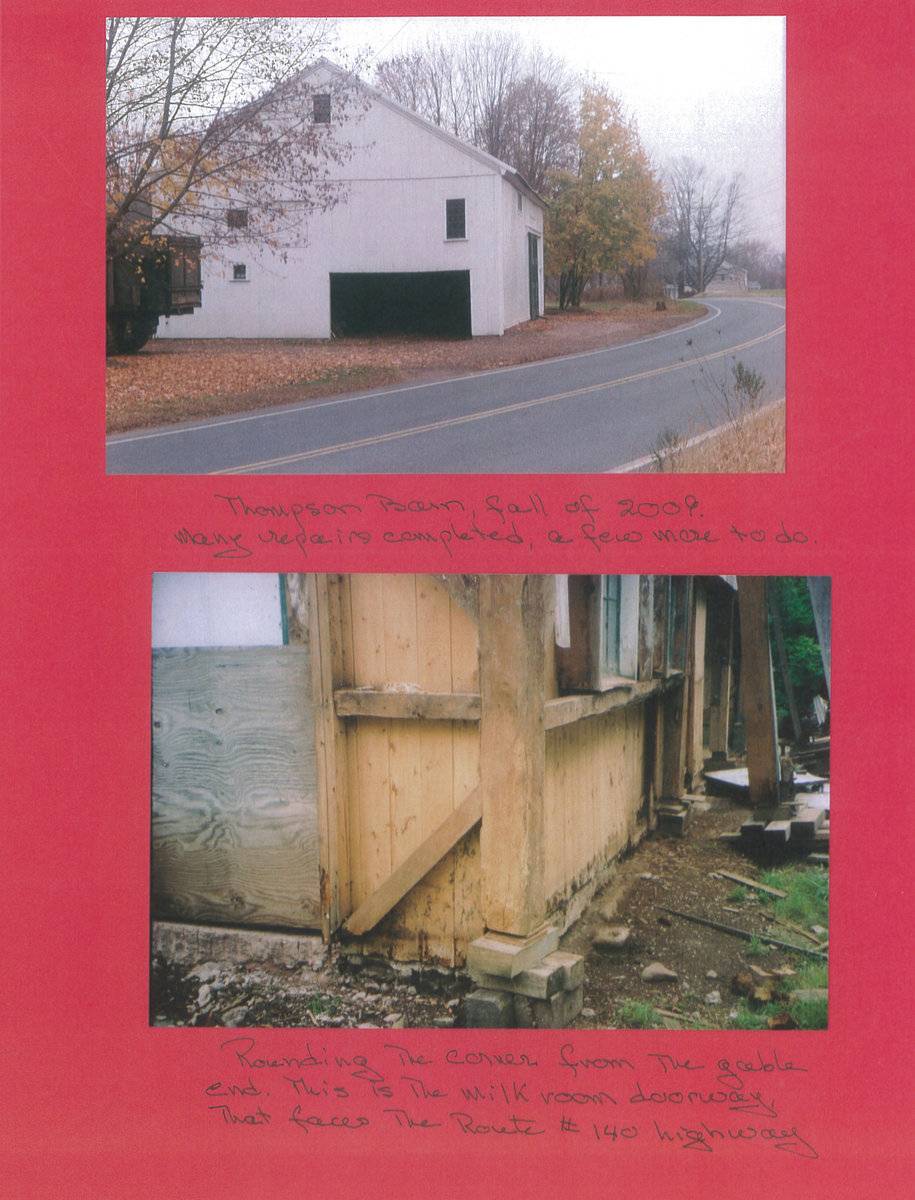
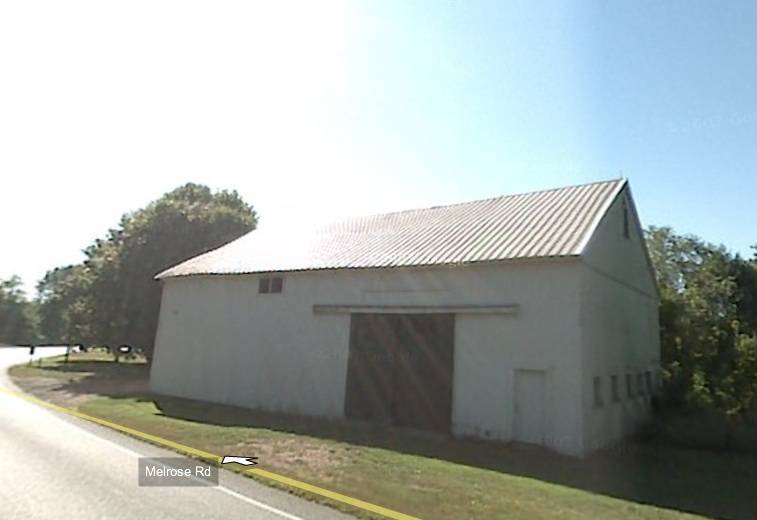
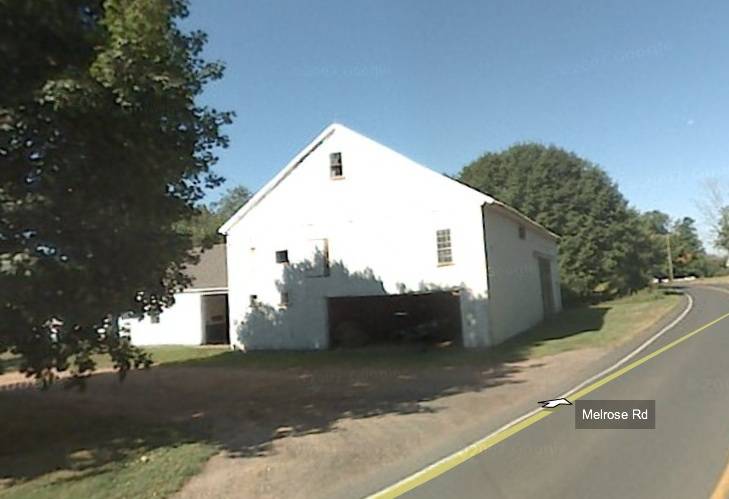
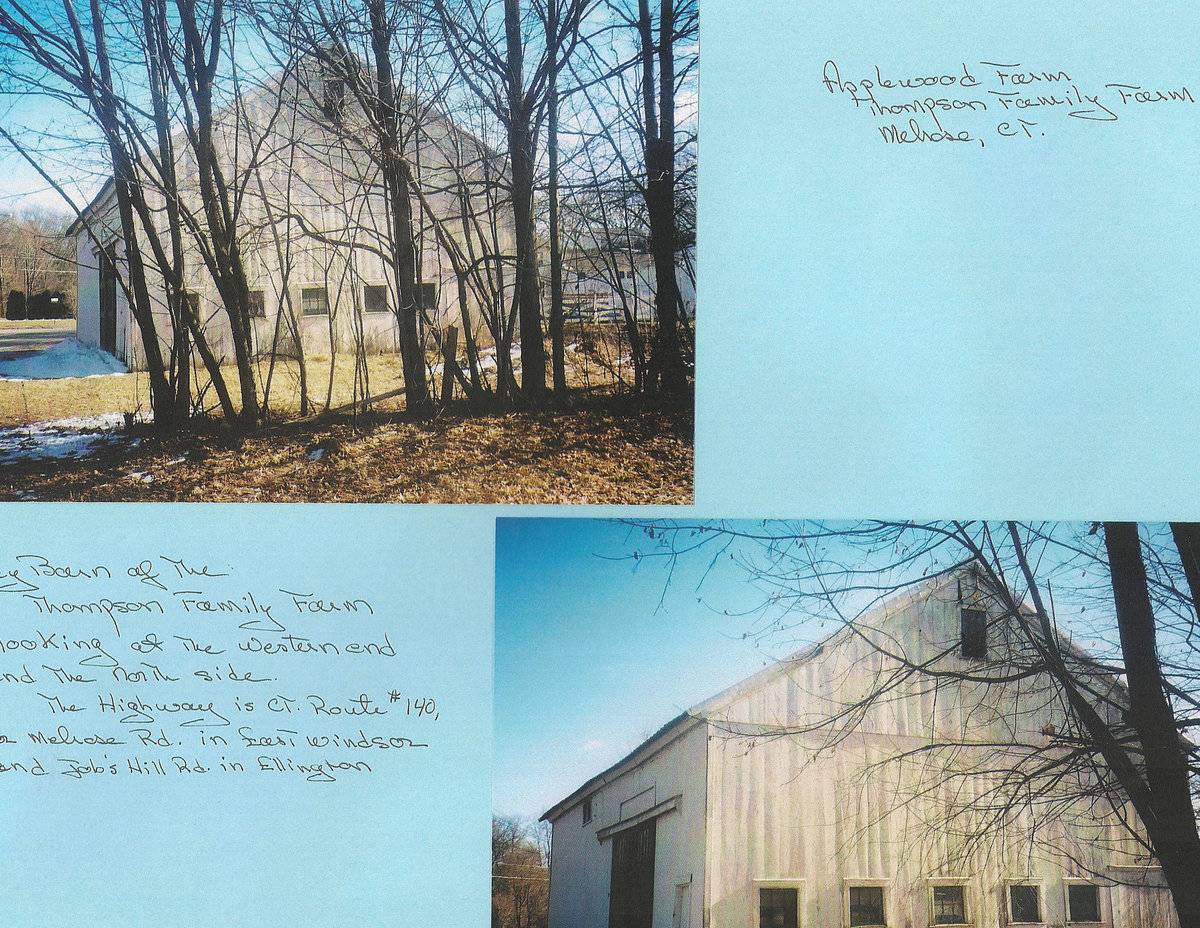
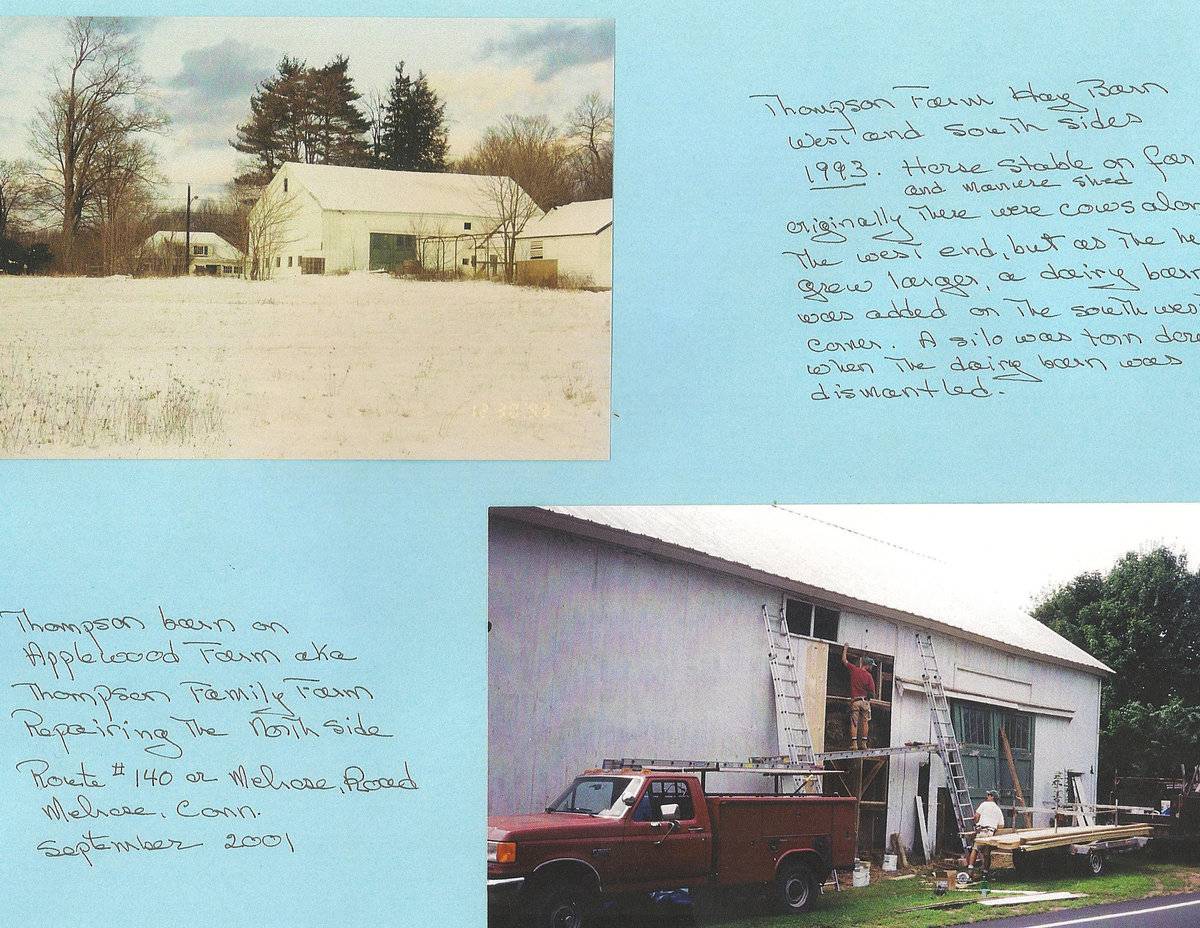
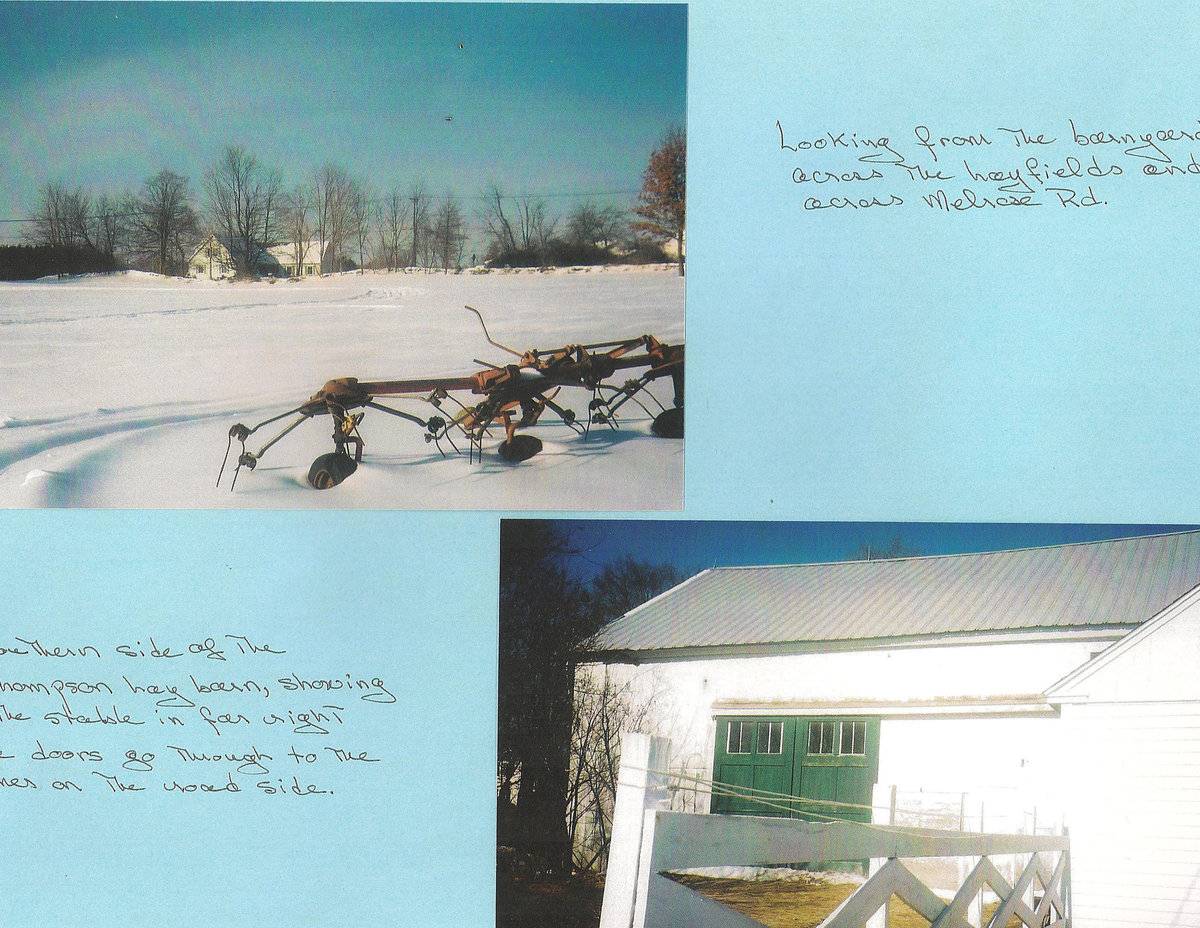
This is a 1 ½ - story eave-entry barn with a gable-roof addition on its south eave-side. The north eave-side of the barn faces Melrose Road while the ridge line runs east-west parallel to the road. The main façade of the barn is the north eave-facade with the main entrance off-centered towards the west through a pair of exterior-hung hooded sliding wagon doors. The two door leafs of the main sliding door are painted green and have a four-pane window insert each. Evidence of a transom window with trim can be seen above the main entrance. The main north eave-façade of the barn has a second entrance towards the west of the main entrance through a hinged pass-through door while a double window with two square modules can be seen towards the east just below the eave line. The west gable-side of the barn has an entrance towards the southern edge through an exterior-hung sliding wagon door. Five square framed awning windows can be seen equally spaced towards the north of the sliding door. The gable attic above is separated from the rest of the west gable-side by a distinct girt siding divide line and has a pair of six-over-six double-hung sash windows just below the apex of the roof. The south eave-side of the barn appears to have a green painted wagon door entrance towards the west and a gable-roof addition towards the east. The east gable-side of the barn has a double-span entrance towards the north with the door leaf no longer in place. A pair of six-over-six double-hung sash window can be seen above the entrance towards the north while a z-braced hinged hay door can be seen towards the south. The east gable-side of the barn has two square framed windows towards the south of the entrance and a similar window towards the south of the hay door above. The gable attic above is separated from the rest of the east gable-side by a distinct girt siding divide line and has a pair of six-over-six double-hung sash windows just below the apex of the roof. The east eave-side of the gable-roof addition on the south eave-side of the main barn can be seen flush with the east gable-side of the main barn towards the south. The east eave-side of the gable-roof addition has a hinged pass-through door towards the north and a pair of six-over-six double-hung sash window towards the south.
The wooden frame of the main barn is supported on concrete foundation and has asphalt shingle roofing. The barn has red painted clapboard siding with white corner boards.
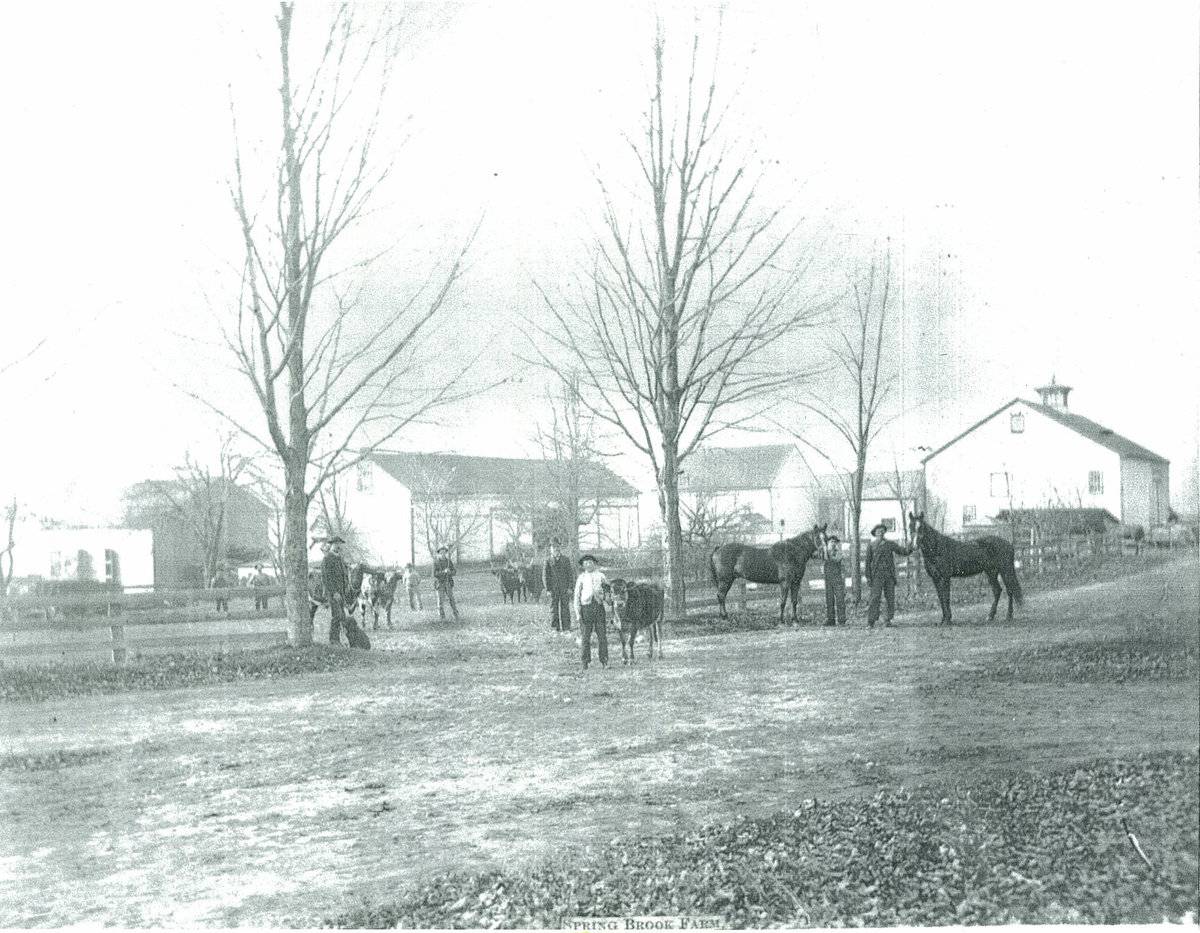
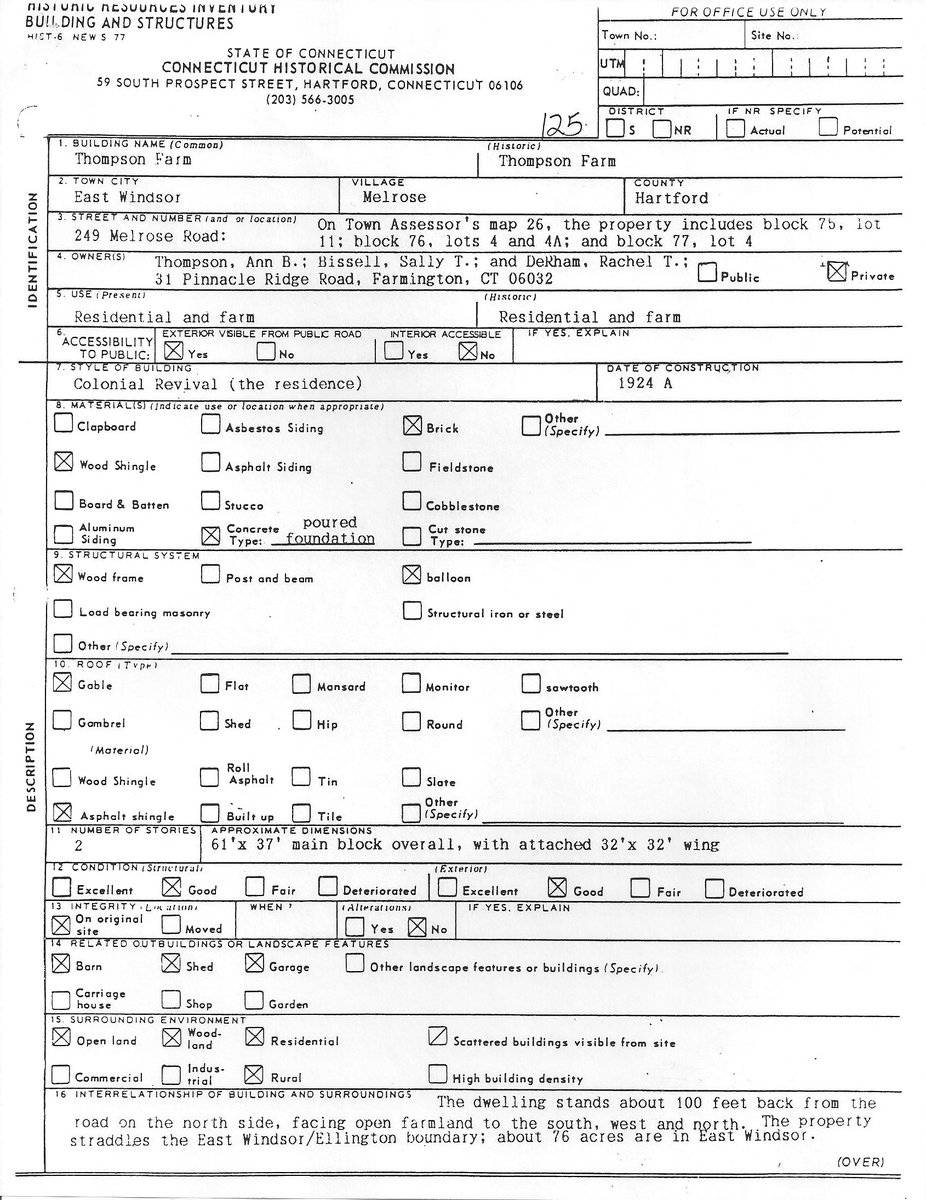
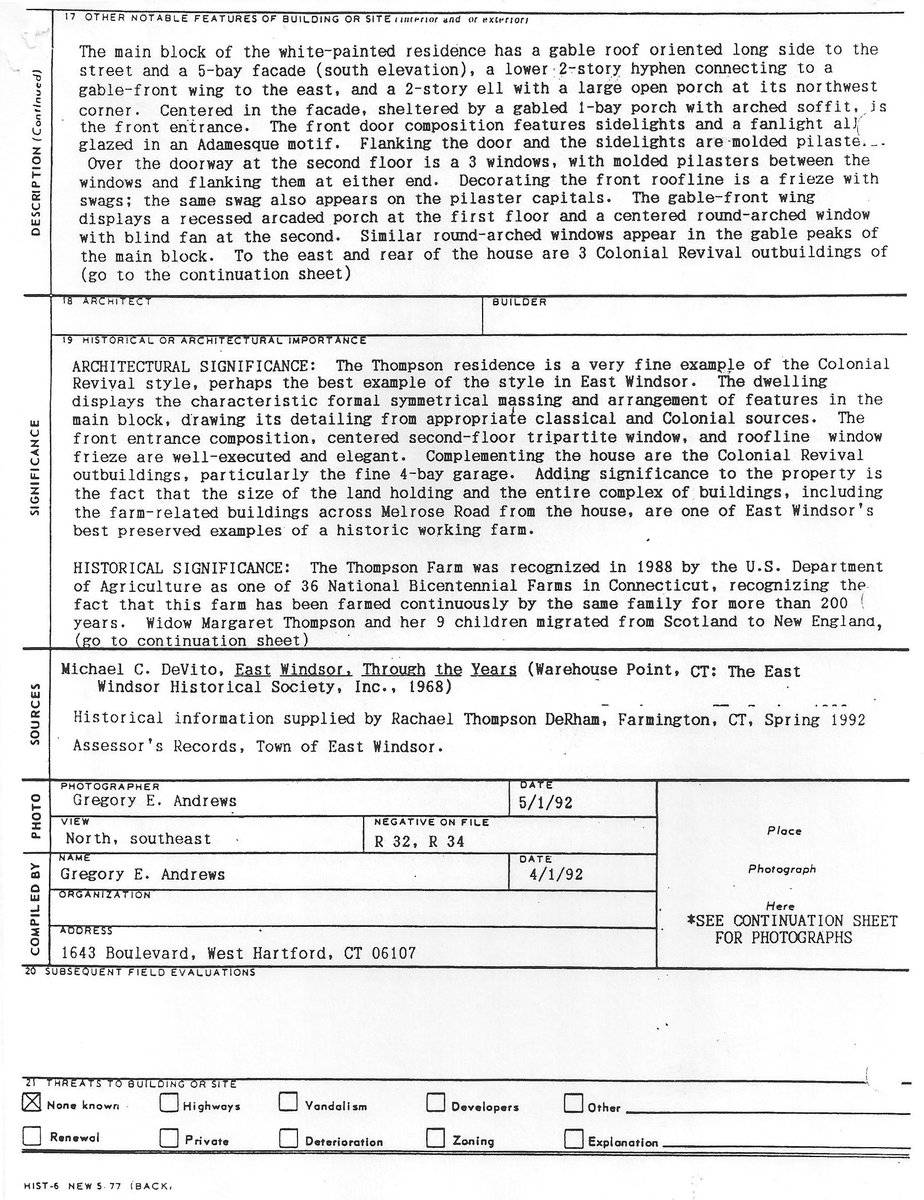
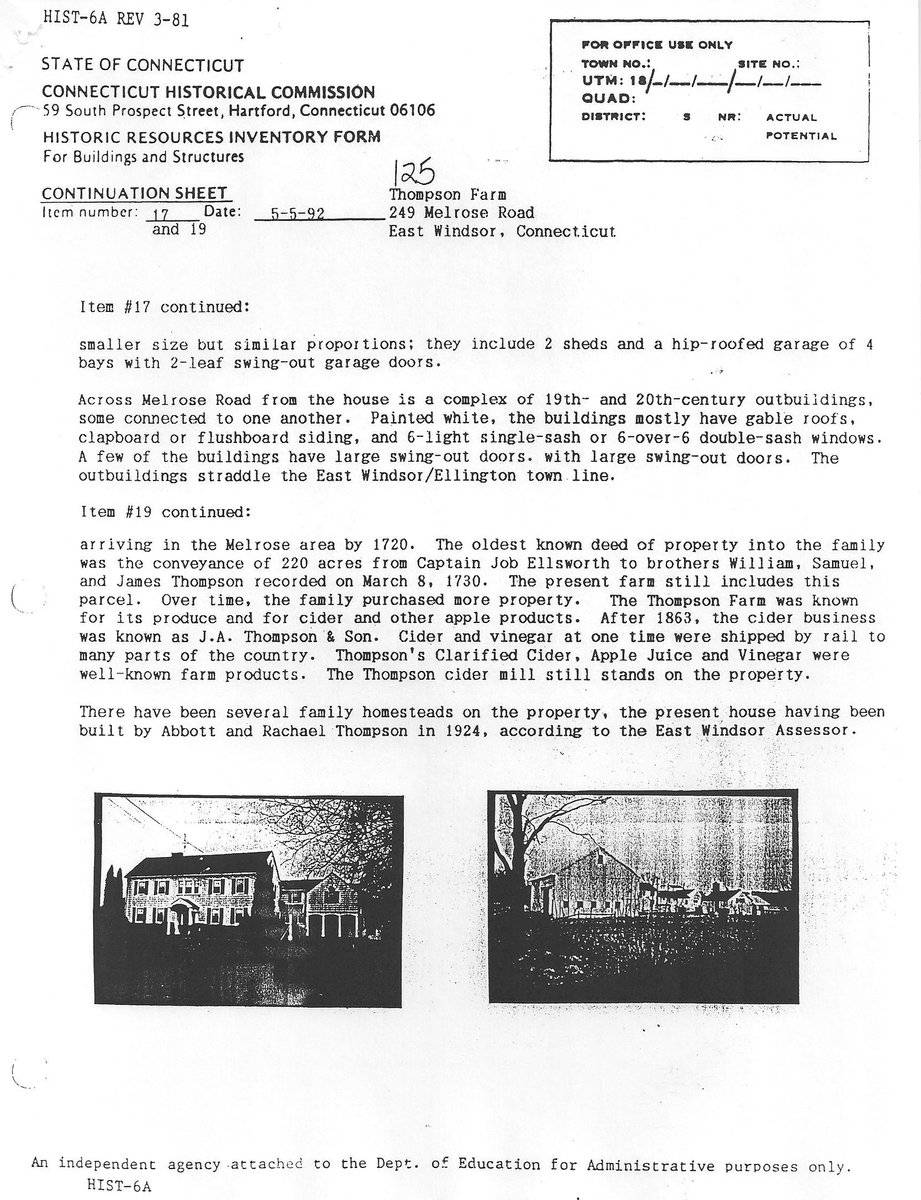
Historical significance:The Thompson Farm was recognized in 1988 by the US Department of Agriculture as one of the 36 bicentennial farms of Connecticut, recognizing the fact that this farm has been continuously farmed by the same family since the last two hundred years. [ State Register]
The oldest barns still found in the state are called the “English Barn,” “side-entry barn,” “eave entry,” or a 30 x 40. They are simple buildings with rectangular plan, pitched gable roof, and a door or doors located on one or both of the eave sides of the building based on the grain warehouses of the English colonists’ homeland. The name “30 by 40” originates from its size (in feet), which was large enough for 1 family and could service about 100 acres. The multi-purpose use of the English barn is reflected by the building’s construction in three distinct bays - one for each use. The middle bay was used for threshing, which is separating the seed from the stalk in wheat and oat by beating the stalks with a flail. The flanking bays would be for animals and hay storage.
Field Notes
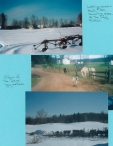
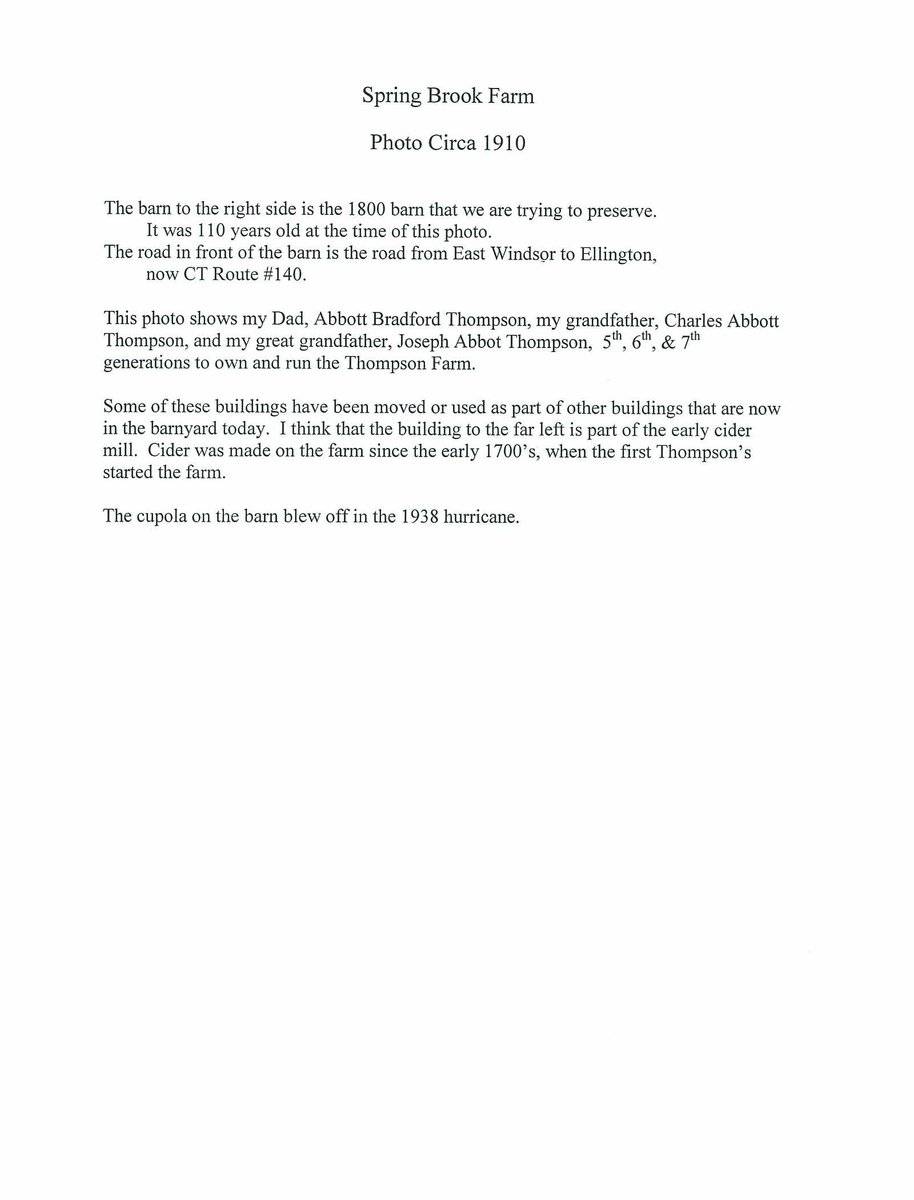
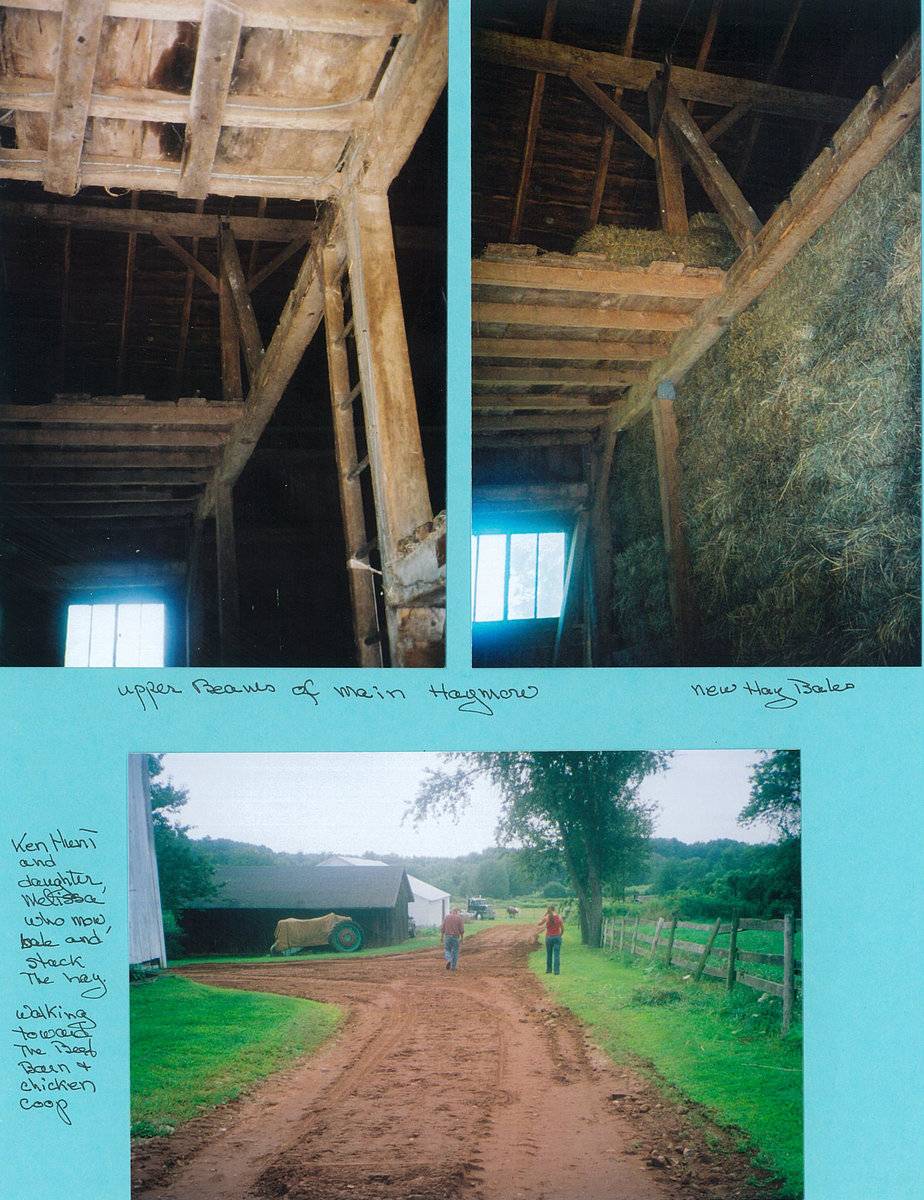
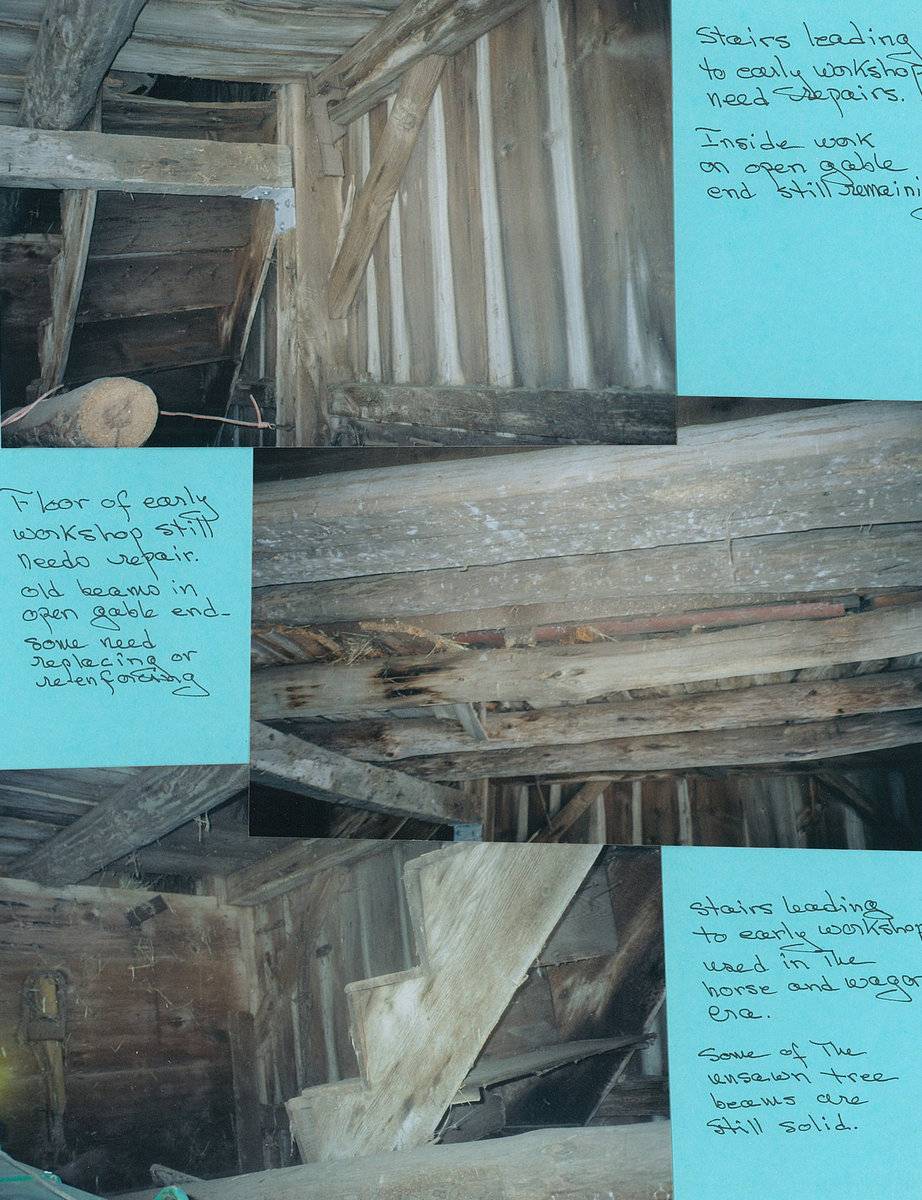
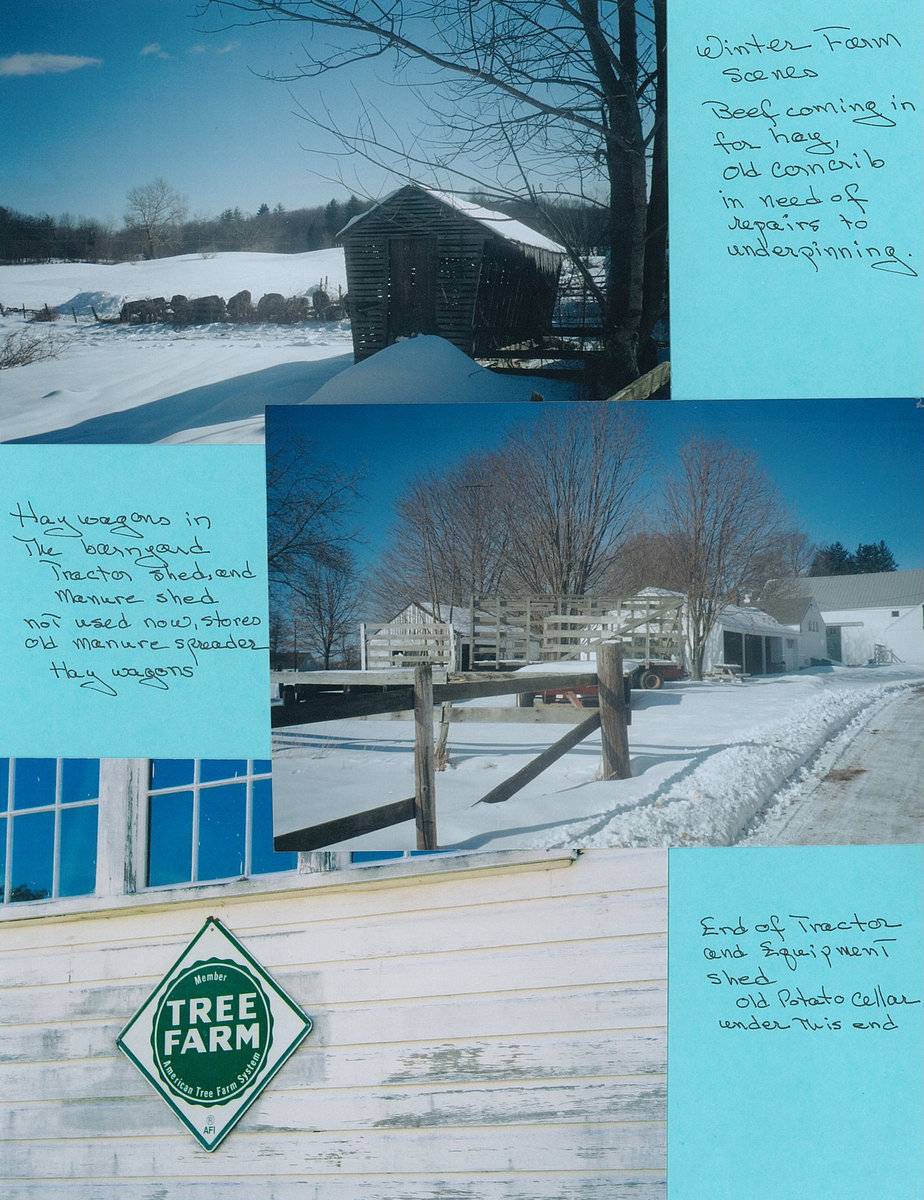
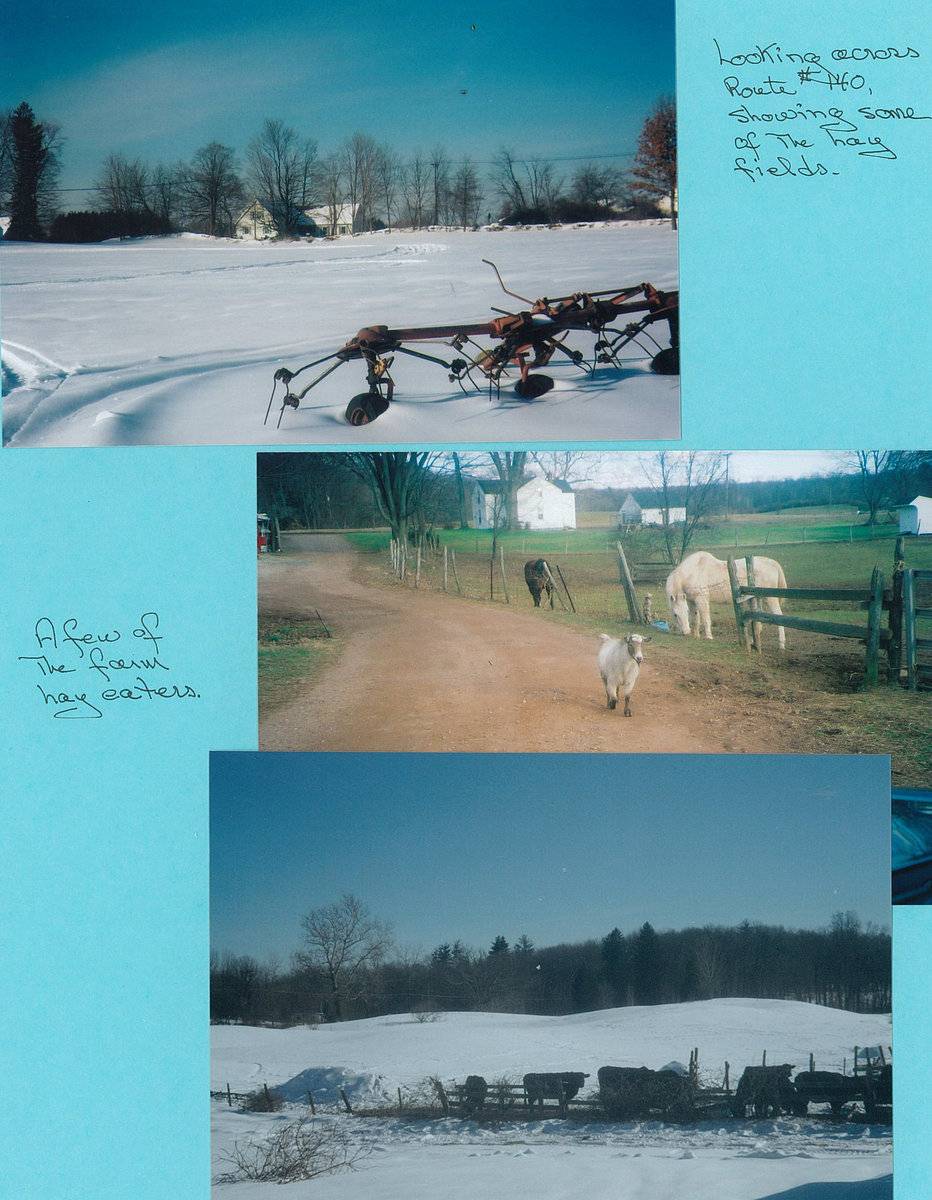
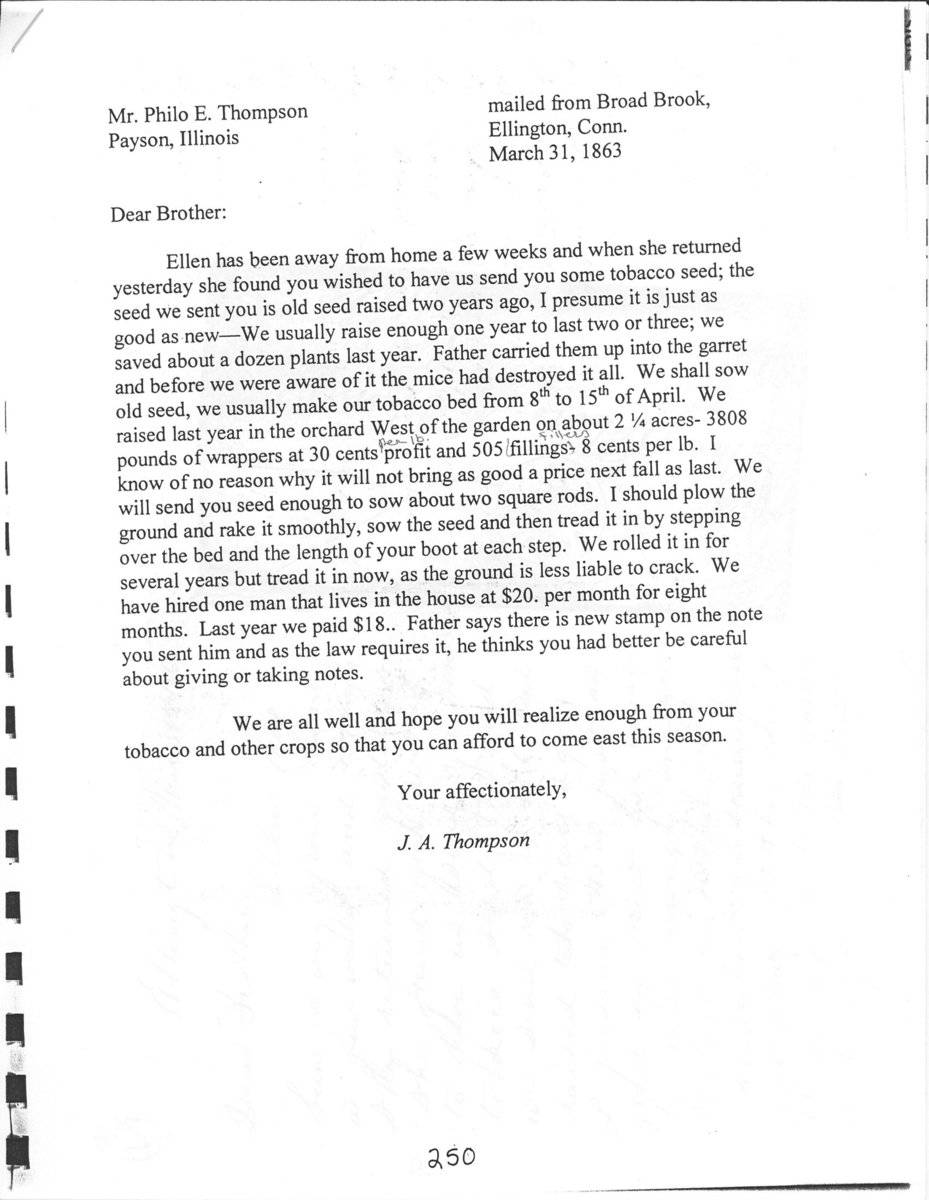
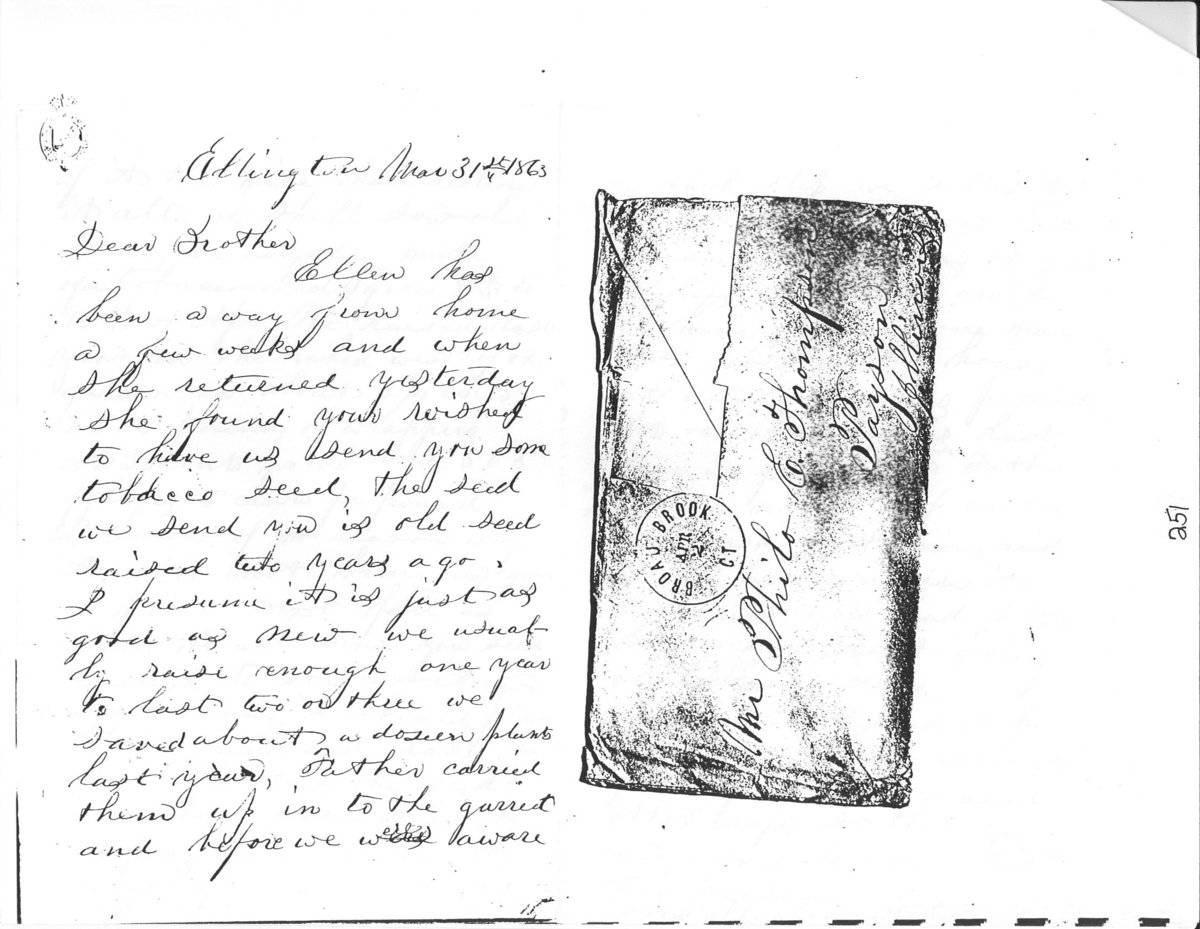
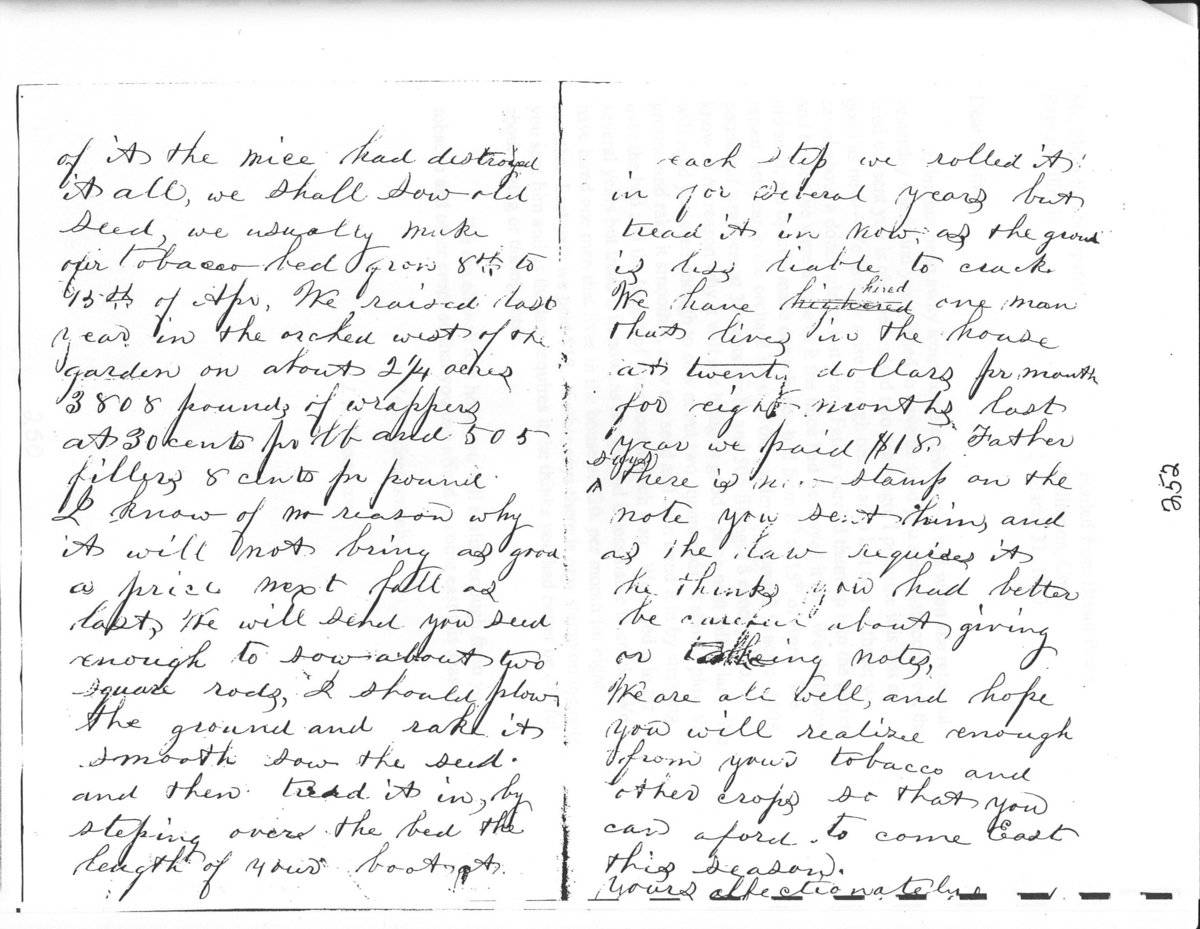
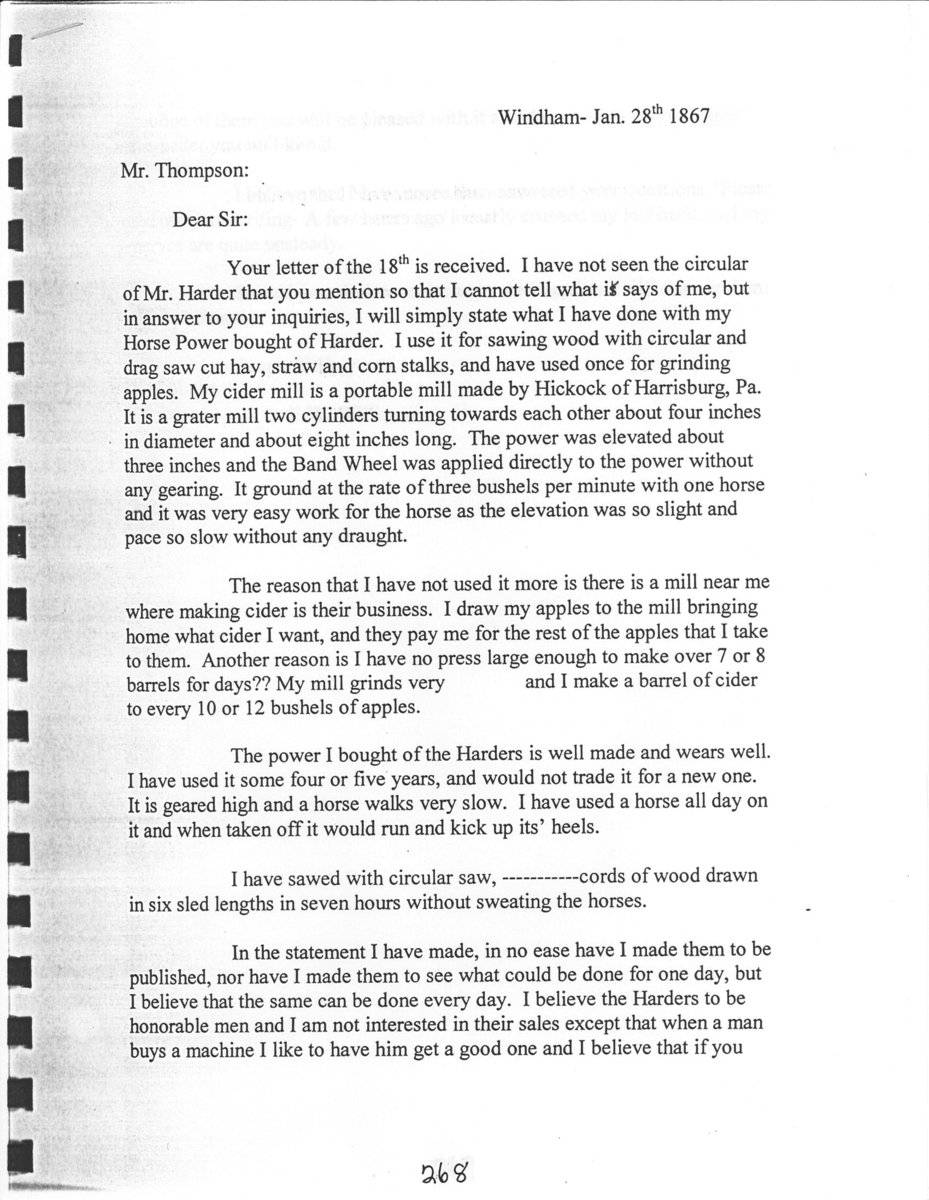
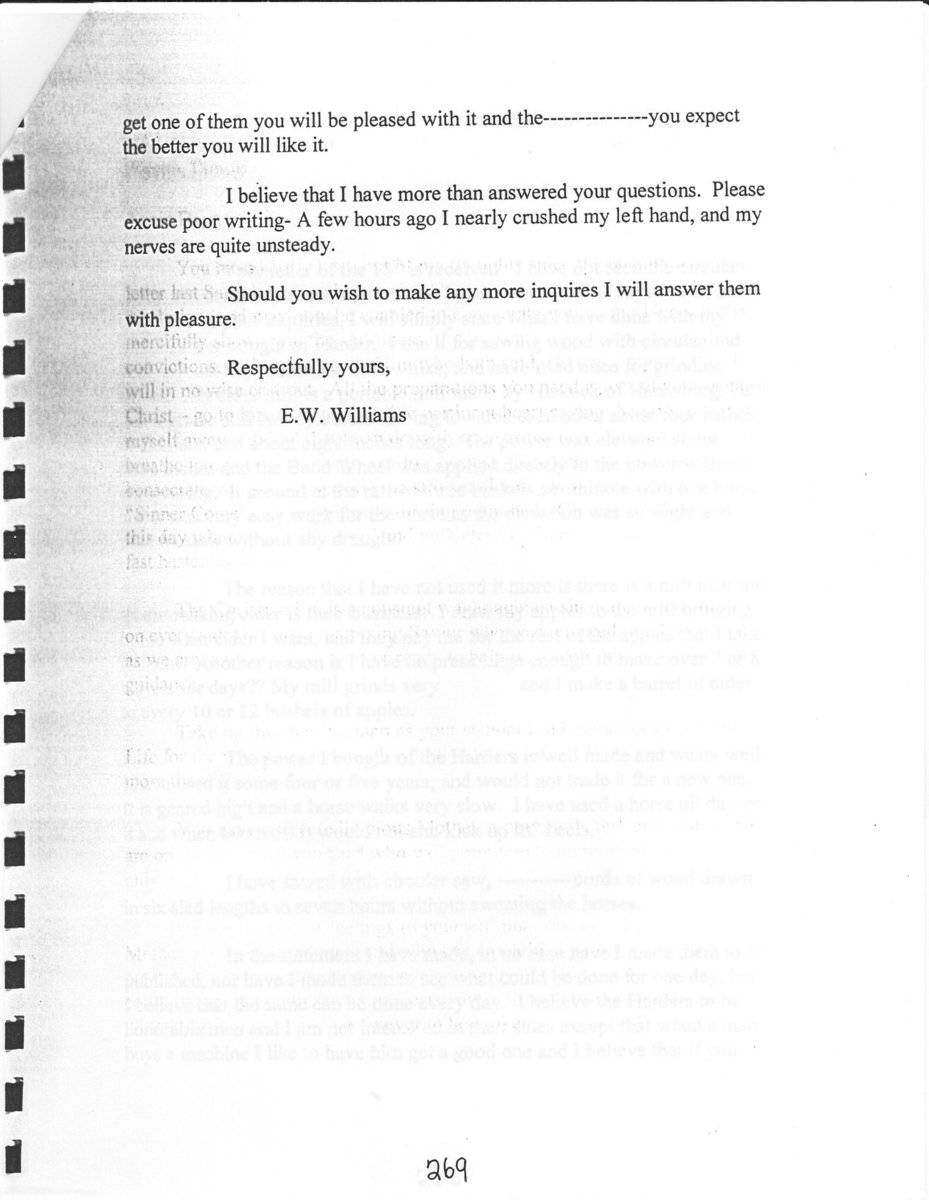
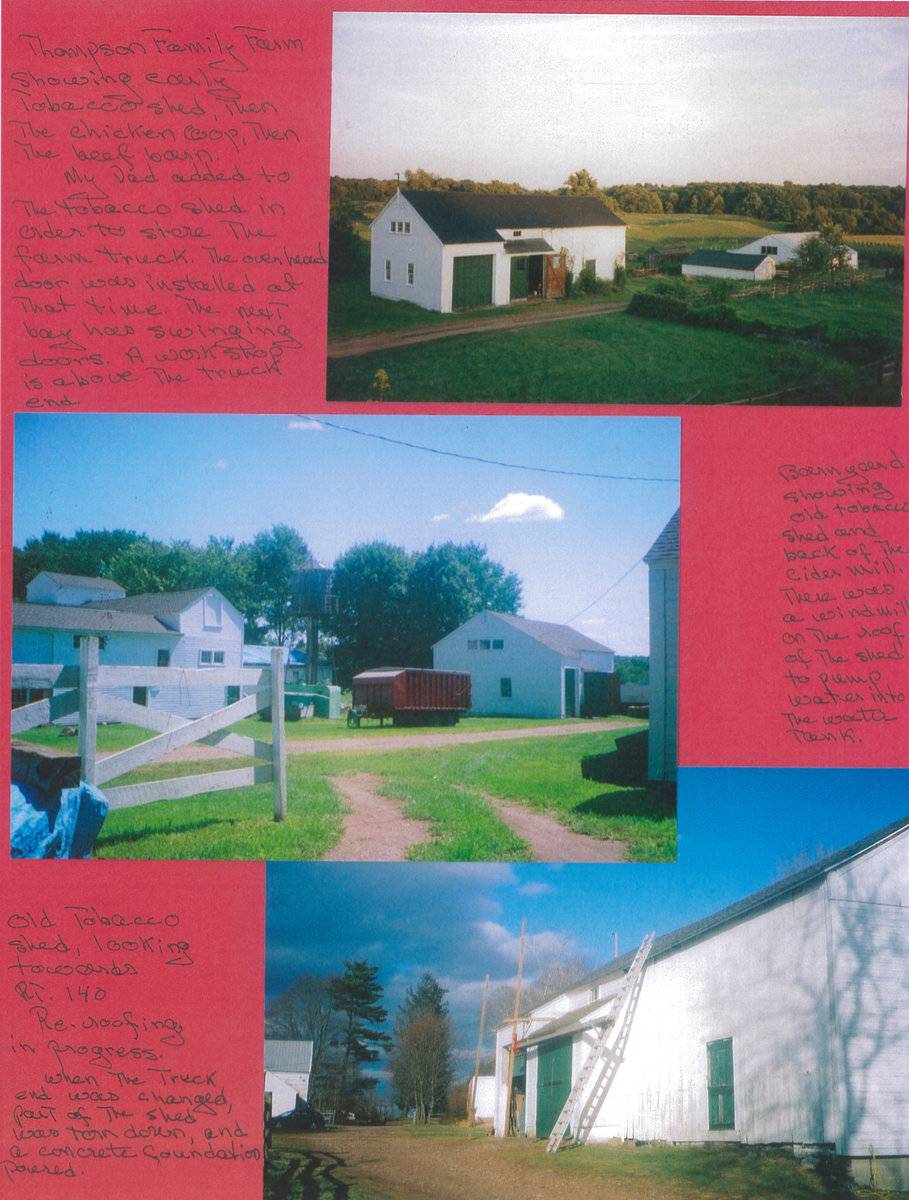
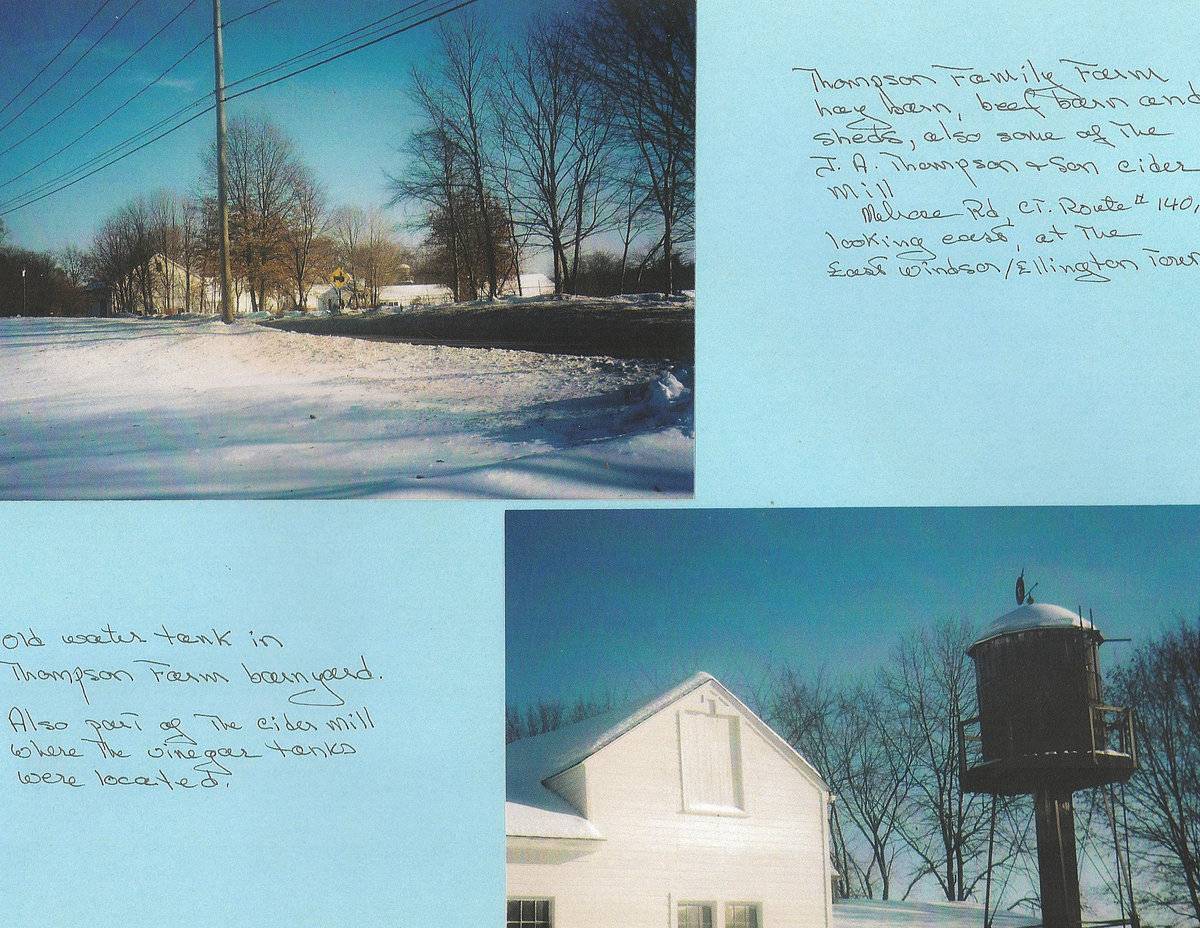
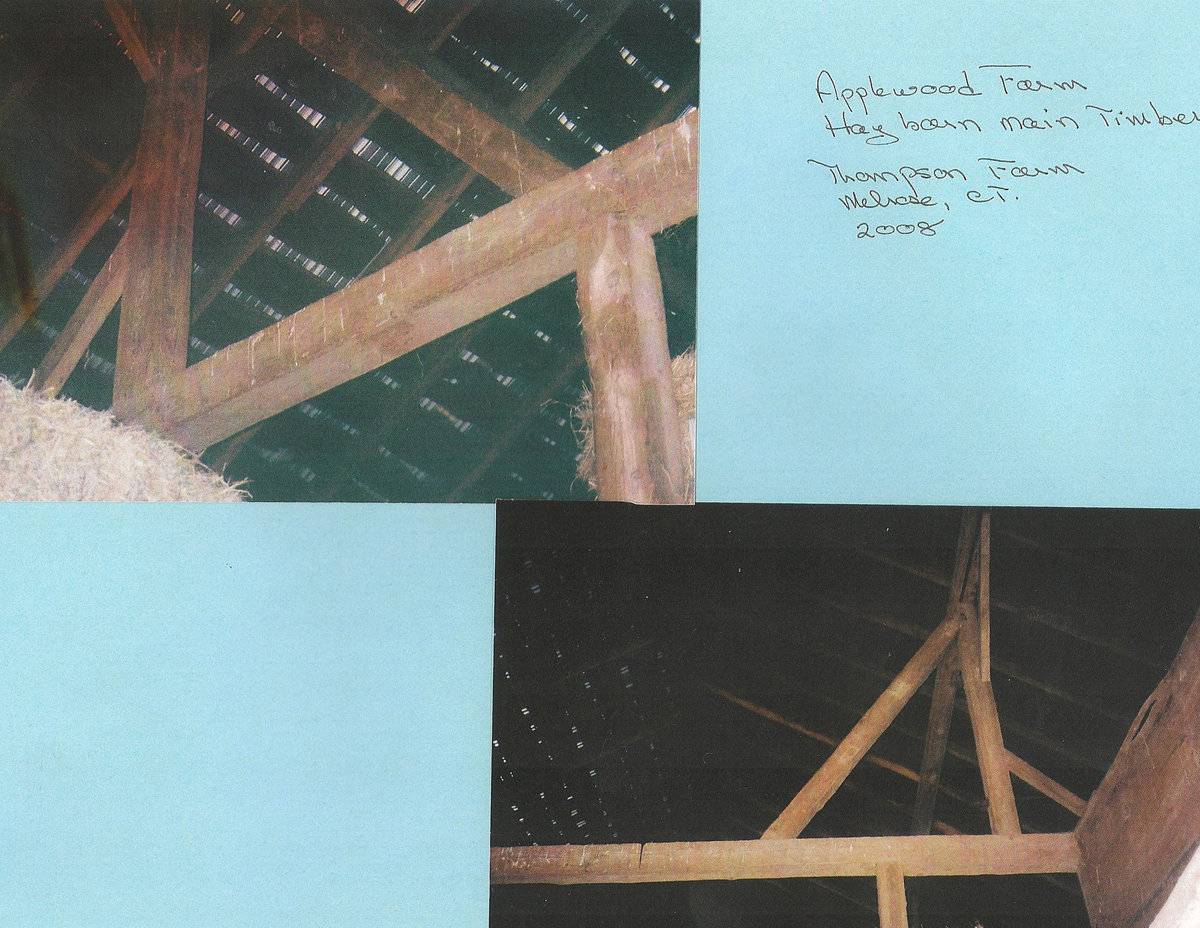
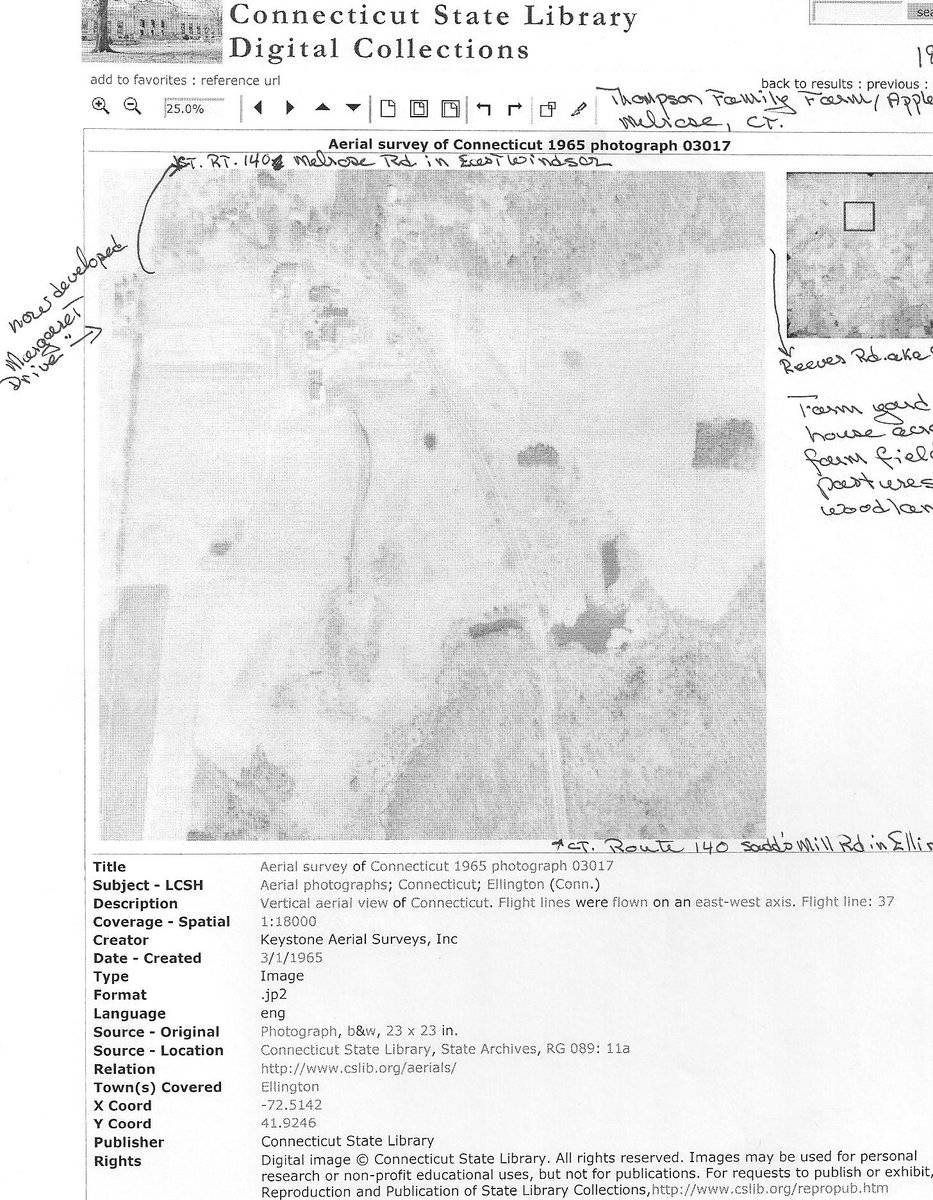
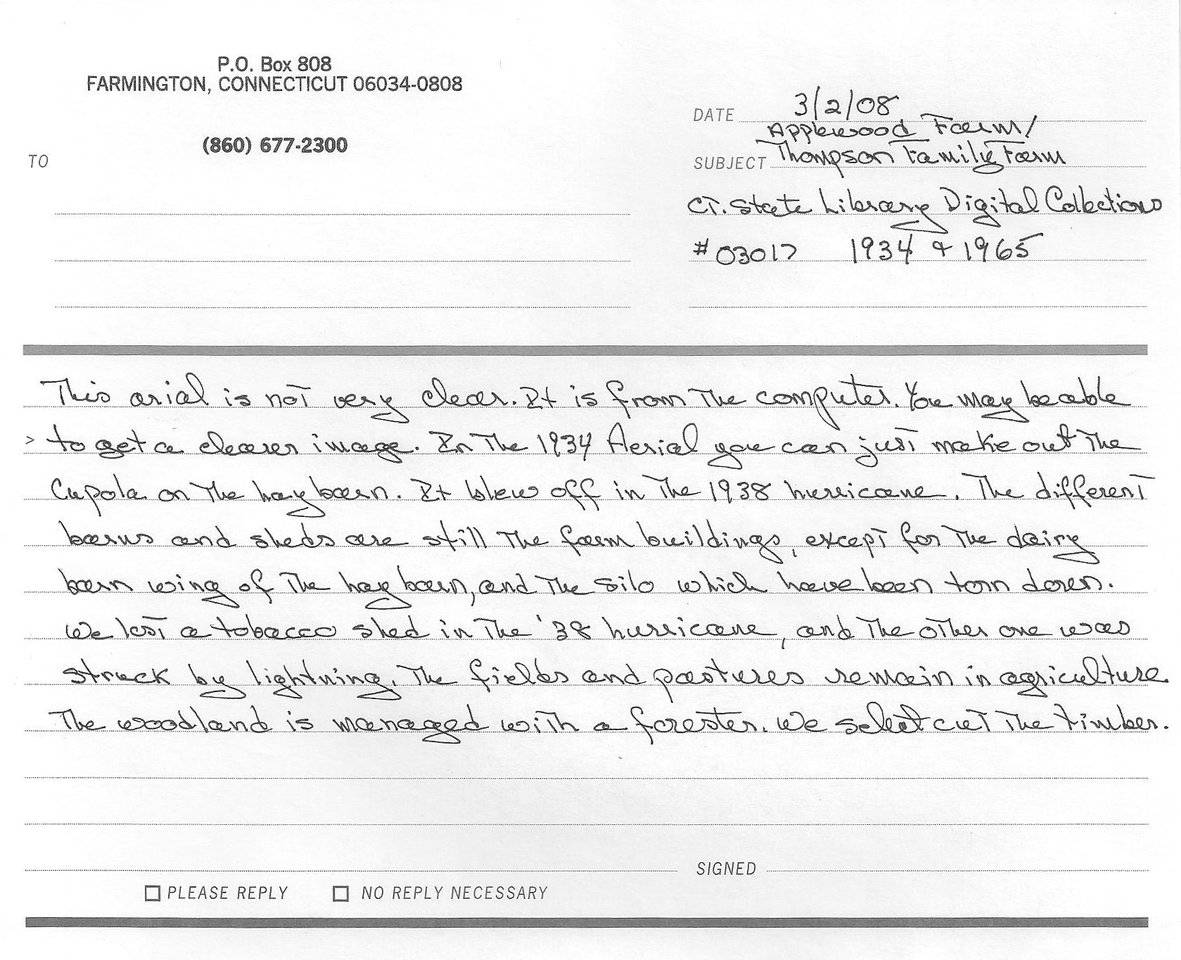
Farm dates to 18th century; current farmhouse date 1924. Also known as J. A. Thompson & Son Cider and Vinegar Mill until 1970s. Hay barn is used to store hay for animals in other structures. See HRI forms and other documentation attached. English hay barn and numerous additional structures including stables. Believed to be a transition barn, going from the smaller English barn to the larger barns of the 19th century. In 1800, the Thompson's would have been farming this land since 1730, so with more land cleared, they could have raised more hay and other grains and would have needed a larger barn for storage. It is believed the barn was built to use the large hayfork for lifting the loose hay from the wagon into the haymow and loft. The fork would have used horsepower at first, but when electricity came an electric motor lifted the loaded hayfork. I can picture my Dad running the hayfork. He sat on the upper platform, which is shown in the photo, next to the current baled hay. It was a hot, dusty job even with the help of an electric motor. We would help the men tramp down the hay and rake it into the corners of the main haymow. Also on the property is an old tobacco shed, farther down the barnyard. The siding is vertical boards, typical of tobacco sheds, even today. When the shed was later used for equipment storage, the hooks for these panels were removed, but they are still upstairs in the shed. Later two more tobacco sheds were built, but one was blown down in the 1938 hurricane, full of tobacco, and the other was struck by lightning. That ended our growing of tobacco. I have included a letter dated 1863 where my Dad's grandfather talks about the early days of growing tobacco in Connecticut. His older brother, Philo, went to Payson, Illinois to farm. We have many letters back and forth from the Payson relatives to the family at the home farm. They give many details of farm life in the 1800s. When they grew more acres of tobacco, they would start the seeds in cold frames, to protect them from late frosts. The cold frames were lined up along the sunny side of the stonewall, which offered some protection from wind and weather. The window frame tops would be propped open on warm days, and closed at night. Then when the weather was warmer, the young seedlings would be set out in the fields. A specially designed planting attachment would allow two men to ride close to the ground and set out the seedlings into shallow holes. It could be pulled by oxen, horse, mule or later by tractor. The glass cold frames are still piled in the corner of the tobacco shed. I am not well informed about tobacco growing, but the farm is in tobacco country and there are many tobacco farms in the neighboring towns. Harvesting tobacco would always interfere with the preparations for another cider making year. My Dad preferred making cider and vinegar, which had been made by the Thompson's since the 1700s. He enlarged the cider and vinegar business and the cider mill now is all along one side of the barnyard. The second letter enclosed talks about Horse Power equipment. Farming grew according to the available power, improved refrigeration and better transportation, allowing farmers to reach more distant markets. Many farmers in our area decided to specialize in one major crop, and the farms became large potato farms or tobacco farms. The crop storage buildings needed to be larger, as is seen in some of the nearby potato cellars, and tobacco sheds. Over the years, we have grown different crops, by different generations on the farm, so the specific crop storage buildings, except for the hay barn, tend to be smaller by today's standards. (Rachael Thompson de Rham)
- Use & Accessibility
Use (Historic)
Use (Present)
Exterior Visible from Public Road?
Yes
Demolished
n/a
Location Integrity
Original Site
- Environment
Related features
Environment features
Relationship to surroundings
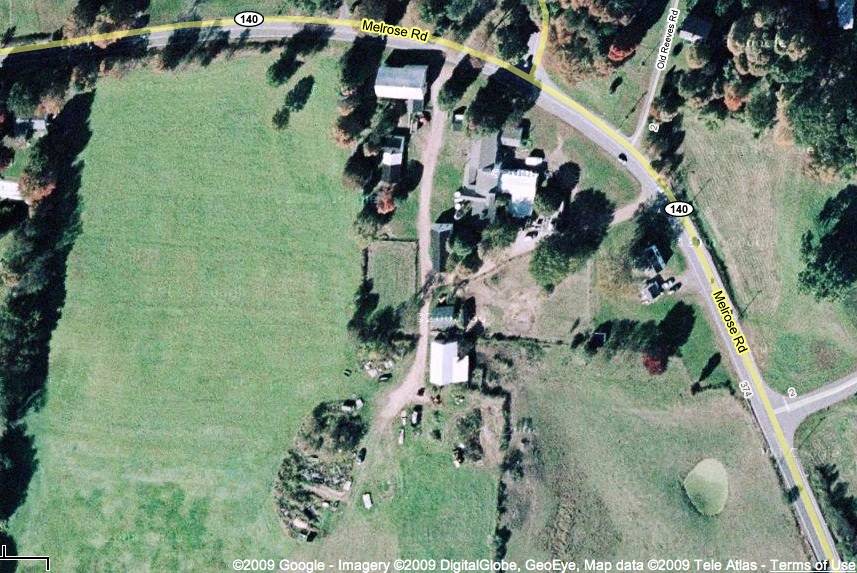
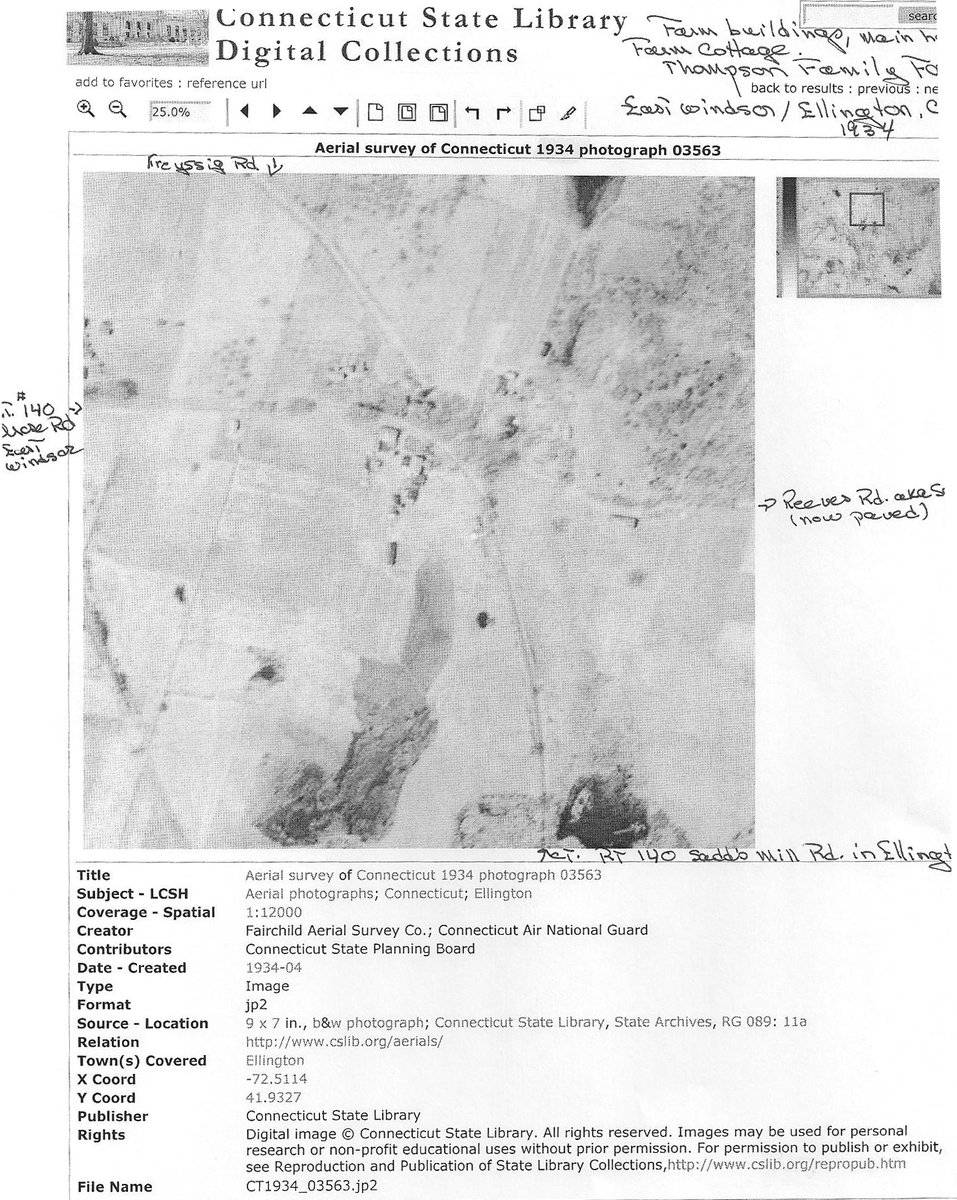
The 2.21+52.6 acres property, Map Number - 10 76 004, is a corner plot spread across both sides of Melrose Road. The property is located in a pre-dominantly residential area of rural character bordering the town line of East Windsor and Ellington. Residential plots can be seen towards the west and the north of the property while parcels of open land can be seen towards the east. The area towards the south of the property is covered by dense woodland.
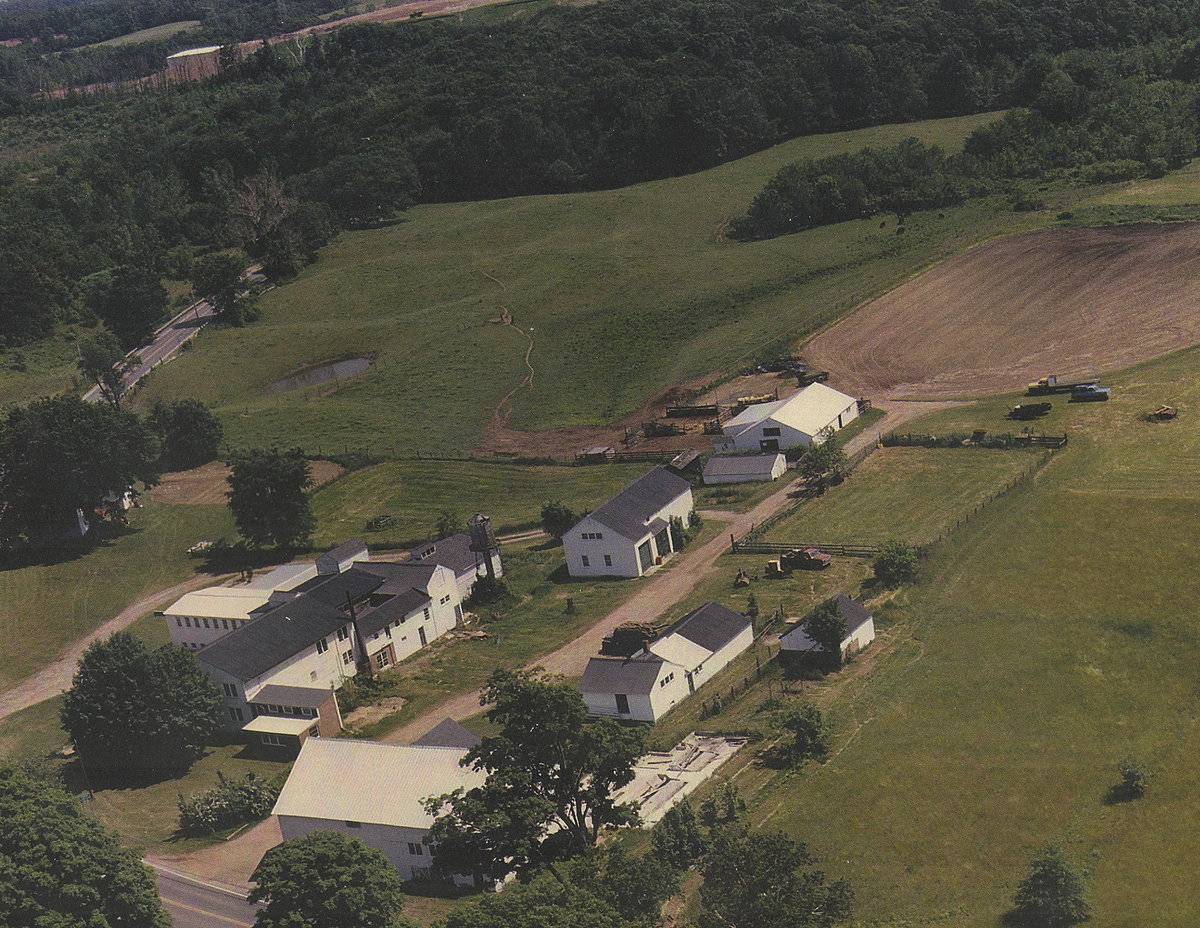
The circa 1924 colonial main residence and its associated outbuildings (a garage and two sheds) are located towards the north of Melrose Road. The barn complex is located in the north-eastern corner of the plot towards the south of Melrose Road. The property has open land towards the west and the south of the barn complex with dense woodland towards further south.
The circa 1800, 1 ½-story eave-entry hay barn is located in the north-western corner of the complex, abutting to Melrose Road. The ridge line of the main hay barn runs east-west parallel to the road. [See part ½ - http://www.connecticutbarns.org/index.cgi/4454]. The foundation of a dairy barn which was torn down in 1900 can be seen towards the south-west of the main hay barn. A 1 ½- story T-shaped barn with intersecting gable-roofs can be seen towards further south of the main hay barn. The T-shaped barn includes a workshop, tractor shed and the wagon shed. A 1 ½- story gable-roof manual shed with its ridge line running north-south can be seen immediately towards the south-west of the T-shaped barn.
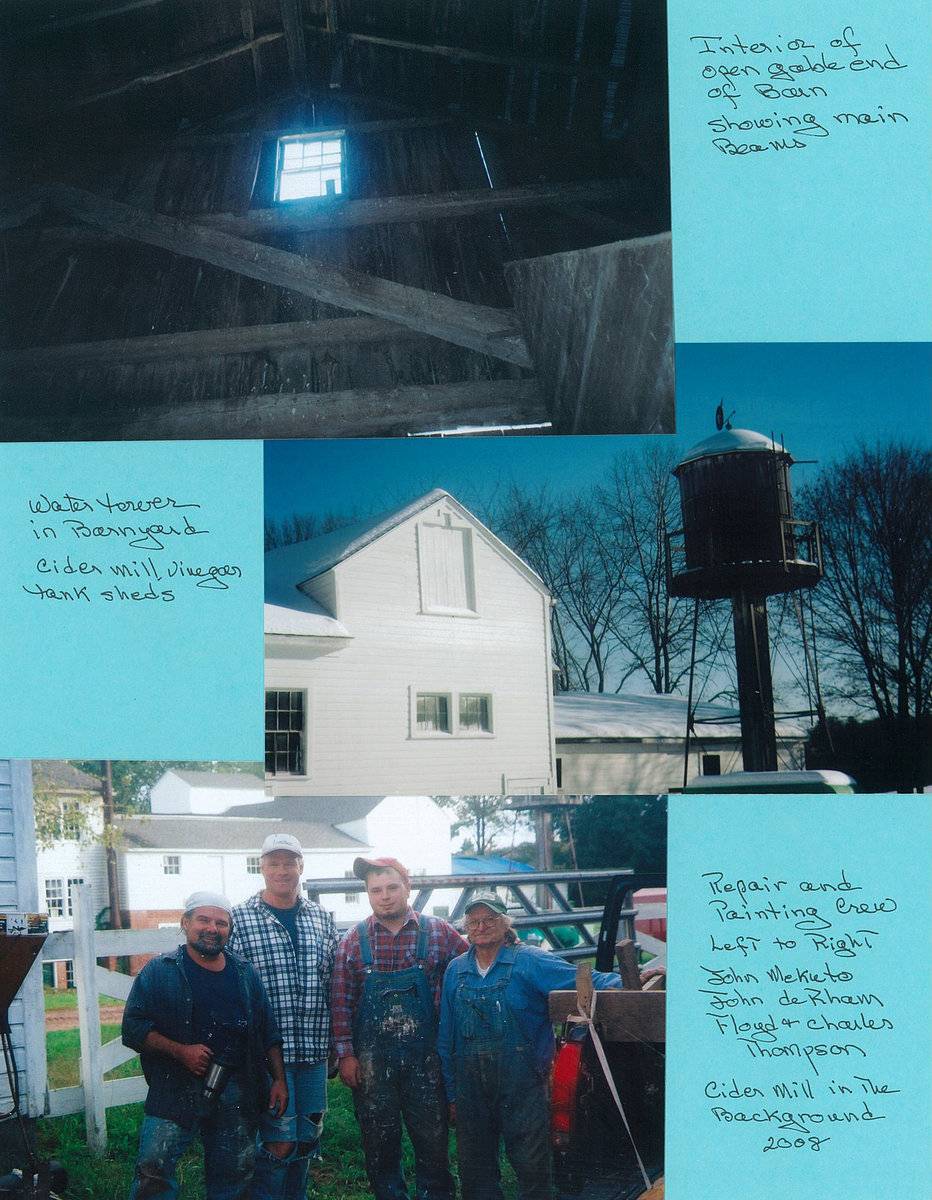
The cider mill complex is located towards the south-east of the main hay barn, on the west-side of the access road. This includes the old carriage house and the later additions towards the east. The overhead water tank is located immediately towards the south-west of the cider mill complex, abutting to the access road. A truck barn ad joint with an old tobacco shed can be seen towards further south of the cider mill. The ridge line of both the truck barn and the tobacco shed run north-south. A 1-story gable-roof chicken coop can be seen towards the south of the tobacco shed followed by a 1 ½-story beef barn. The ridge line of the chicken coop runs east-west while that of the beef barn runs north-south. An old corn crib with slanting walls can be seen towards the west of the chicken coop with its ridge line running north-south.
- Typology & Materials
-
Building Typology
Materials
Structural System
Roof materials
Roof type
Approximate Dimensions
Hay barn 65 ft x 38 ft, stable 24 ft x 20 ft
- Source
-
Date Compiled
11/19/2010
Compiled By
T. Levine and M. Patnaik, reviewed by CT Trust
Sources
Field notes and photographs provided by: Barn Grant Application (Rachael Thompson de Rham)
Assessors’ records retrieved on November 19th, 2010 from website http://www.equalitycama.com/
GIS information retrieved on November 19th, 2010 from website http://www.crcog.org/gissearch/
Andrews, Gregory E., State Register
Photograph/Information retrieved on November 19th, 2010 from website http://www.google.com
Information retrieved on November 19th, 2010 from website http://www.zillow.com
Sexton, James, PhD; Survey Narrative of the Connecticut Barn, Connecticut Trust for Historic Preservation, Hamden, CT, 2005, http://www.connecticutbarns.org/history
Visser, Thomas D.,Field Guide to New England Barns and Farm Buildings, University Press of New England, 1997.
- PhotosClick on image to view full file
-