Barn Record Hartland
RETURN TO ‘FIND BARNS’- Building Name (Common)
- n/a
- Building Name (Historic)
- n/a
- Address
- 3 West Street, Hartland
- Typology
- Overview
-
Designations
n/a
Historic Significance
Architectural description:
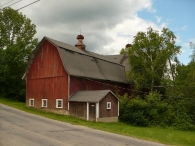
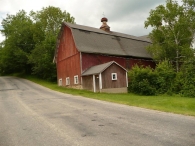
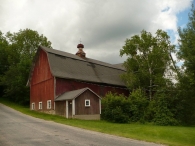
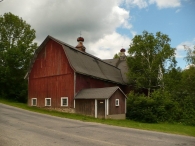
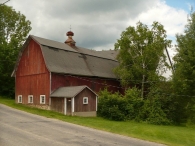
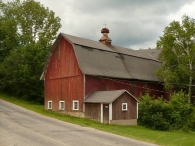
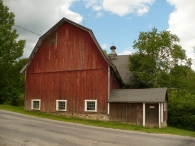
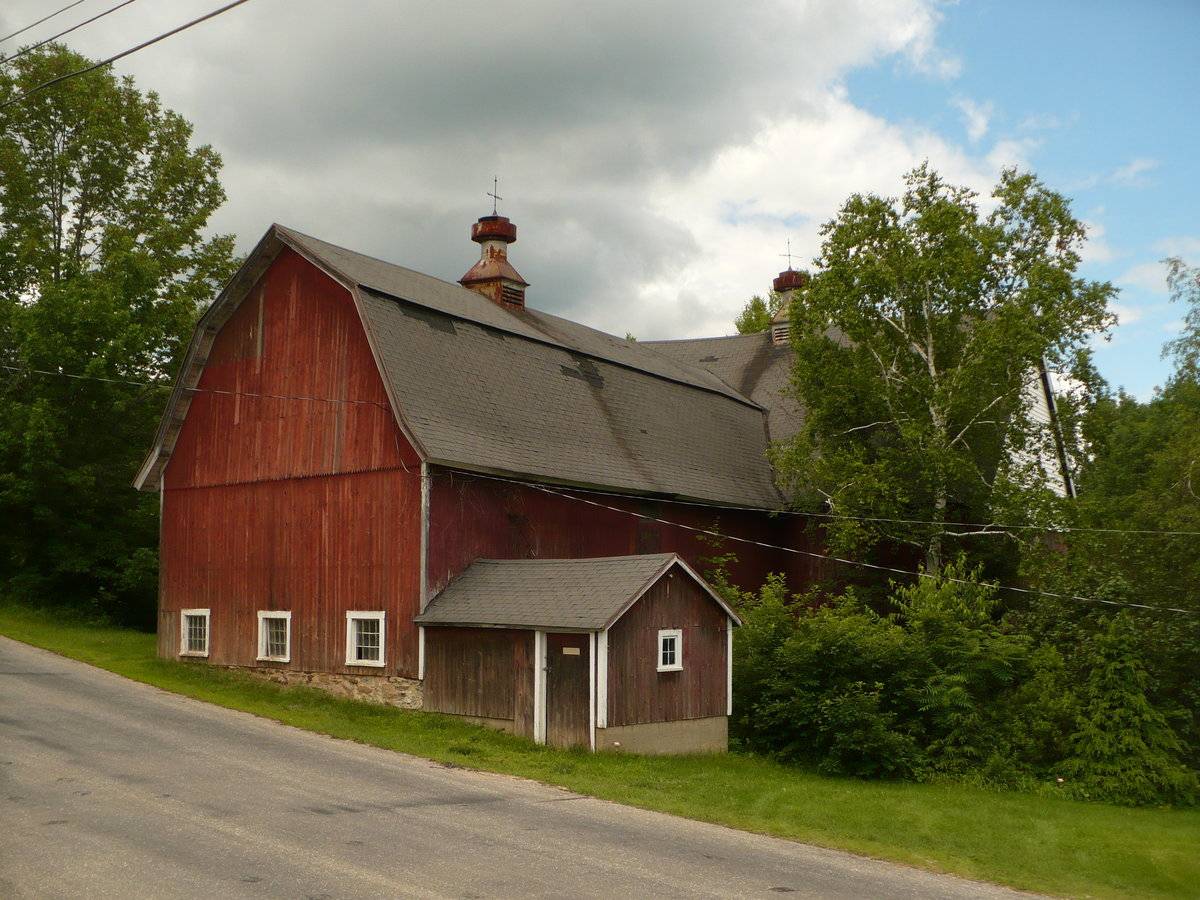
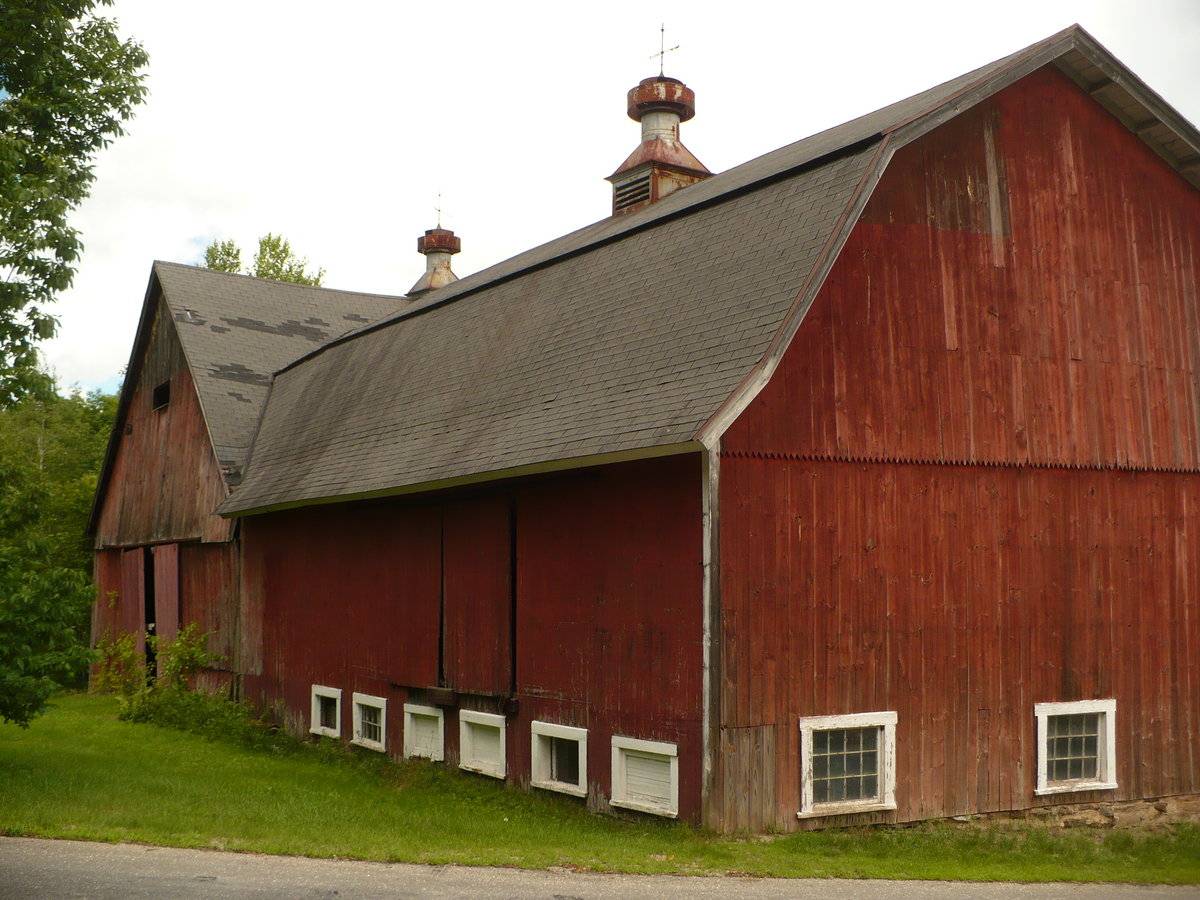
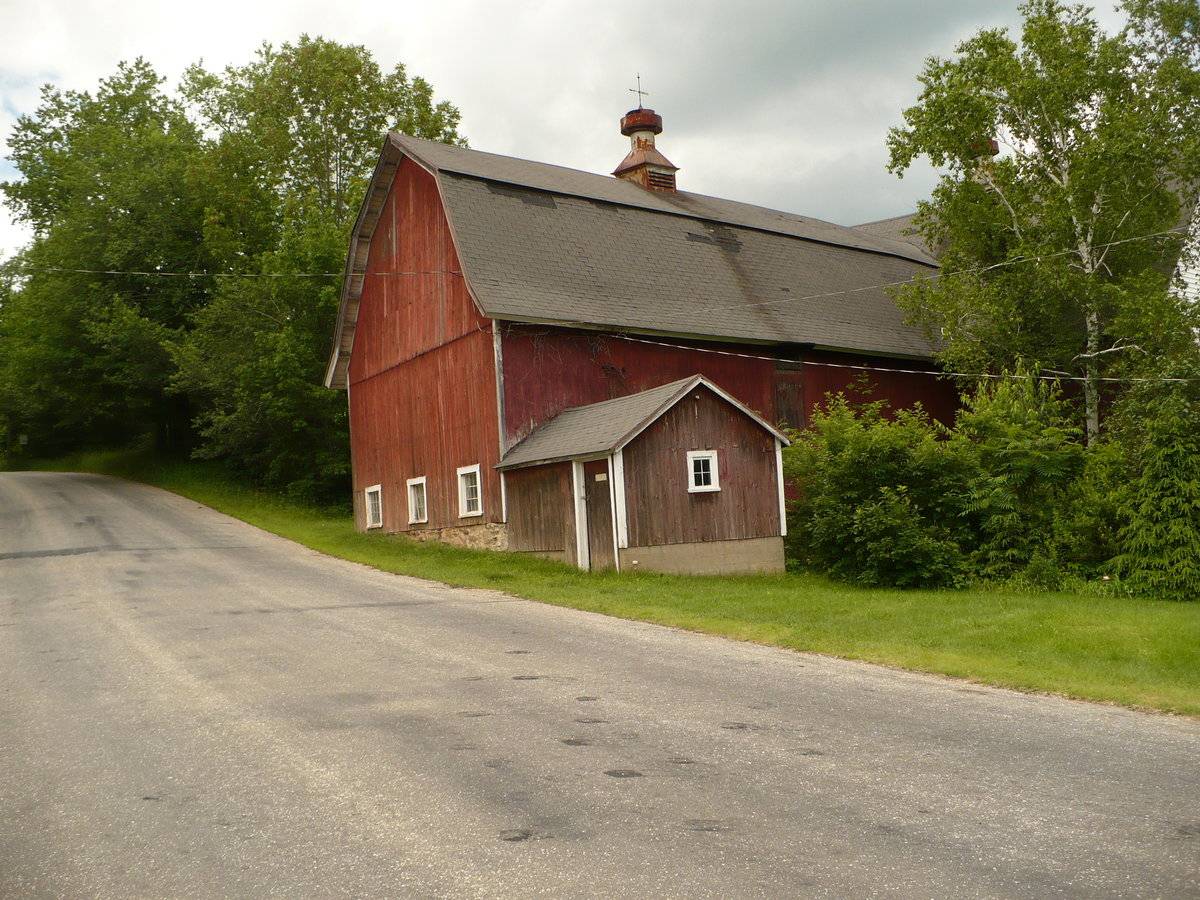
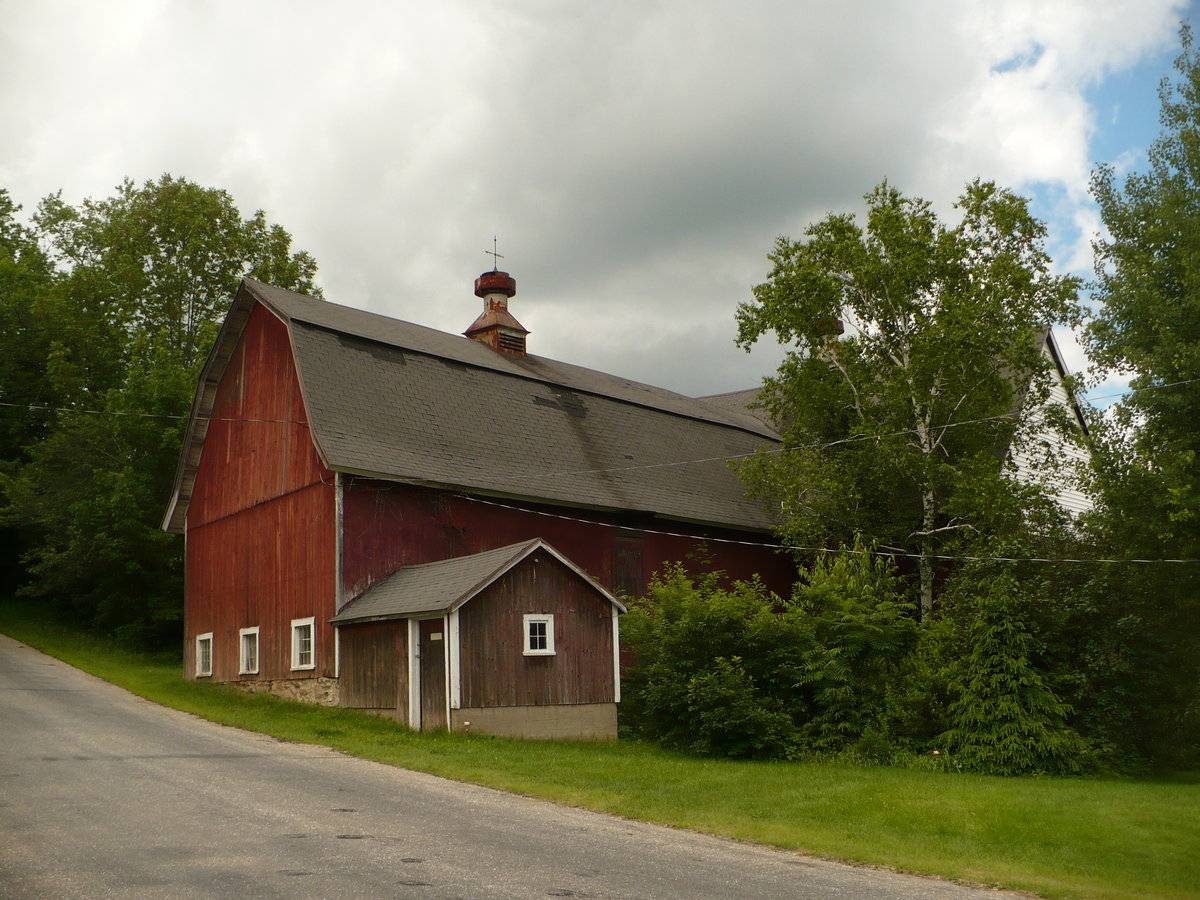
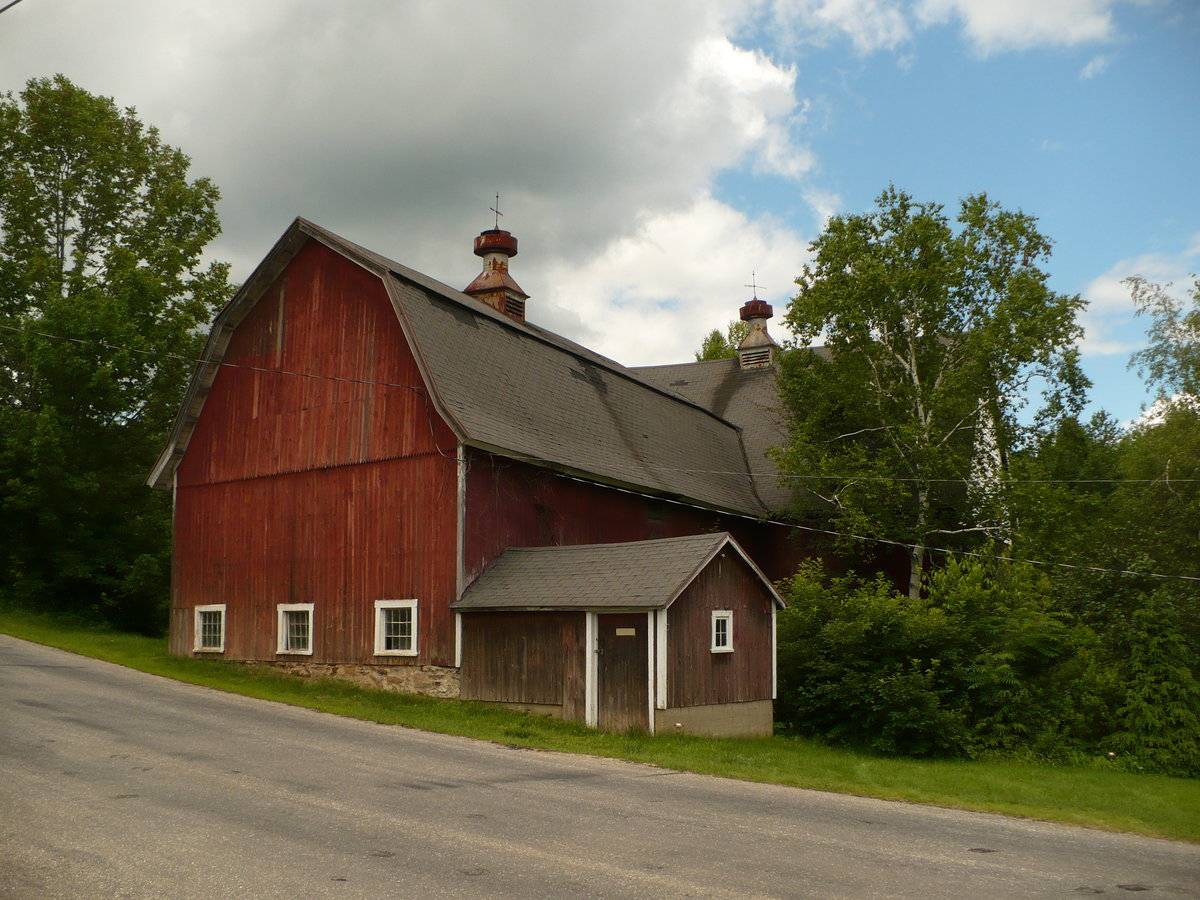
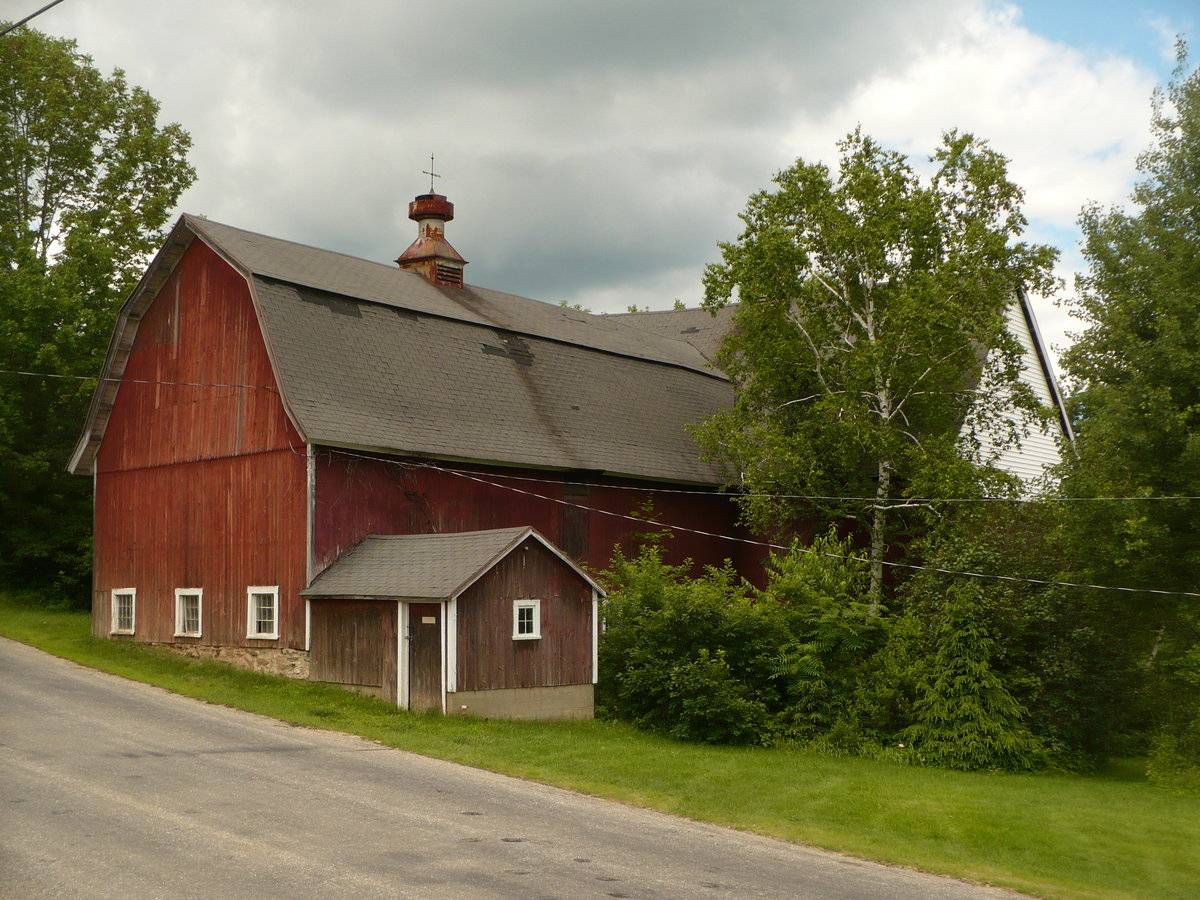
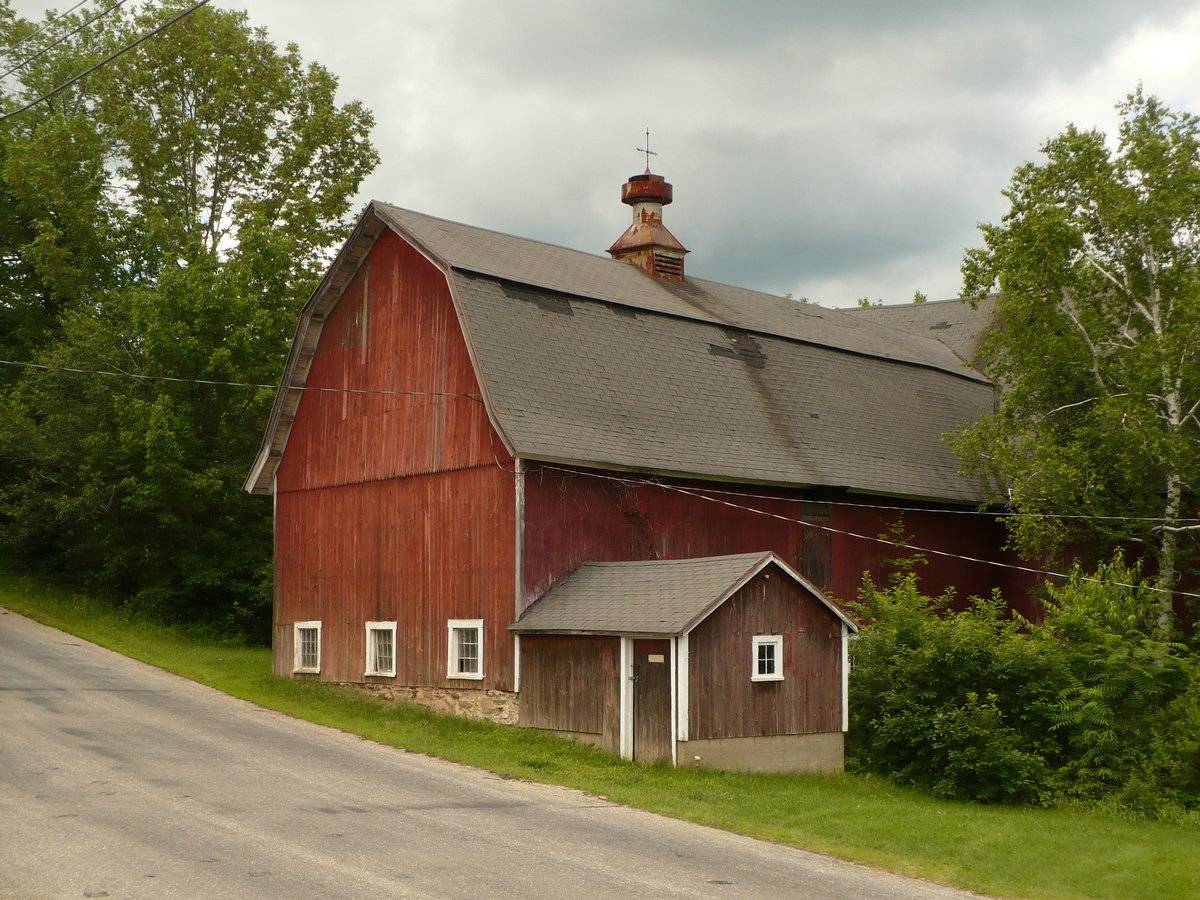
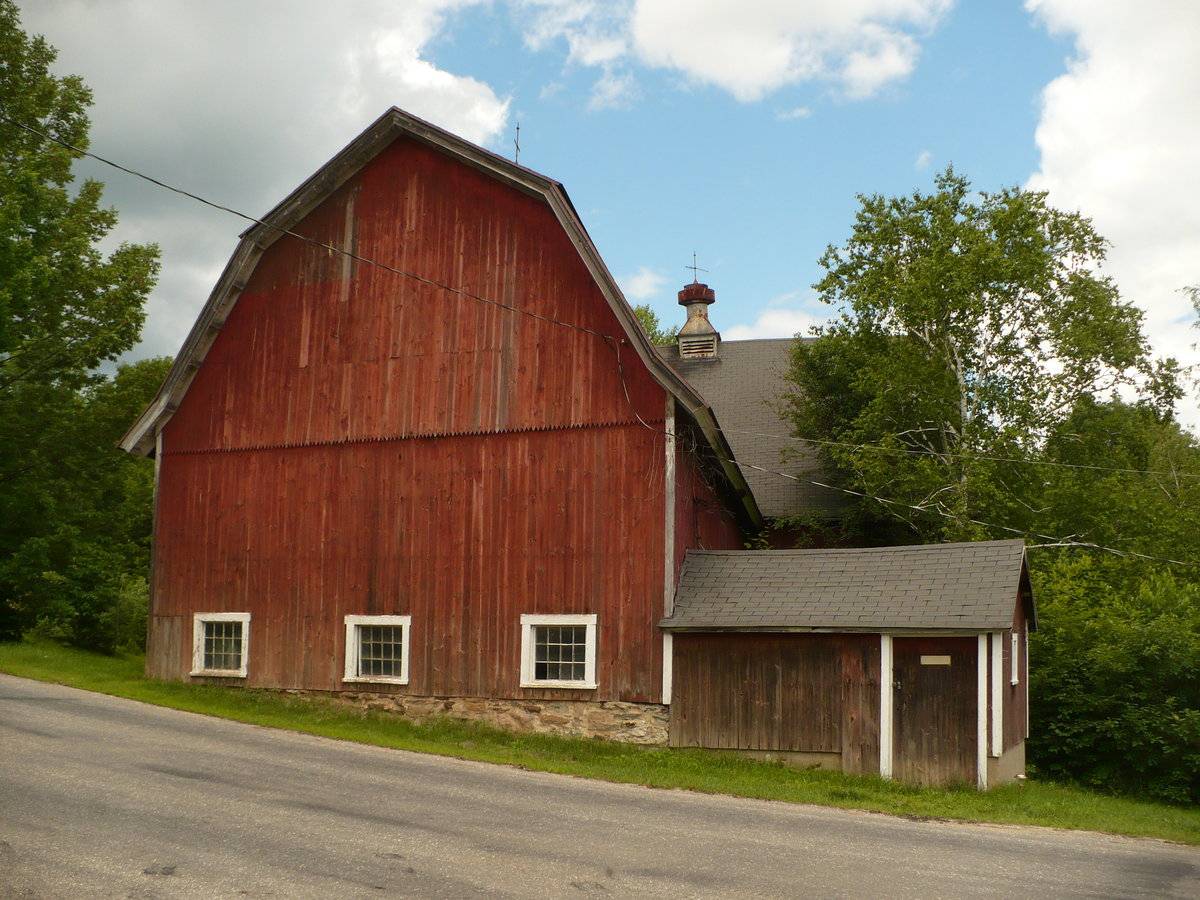
This is a large 1 ½-story L-shaped bank barn with a primary gable roof and a large gambrel roof east spanning one leg of the L. The primary façade of this barn is the west gable-end of the gable-portion. The south gable-end of the gambrel addition directly fronts West Street. West Street passes this property at an east to west angle. A small 1-story gable-roof addition projects to the east from the southeast corner of the gambrel-roof addition.
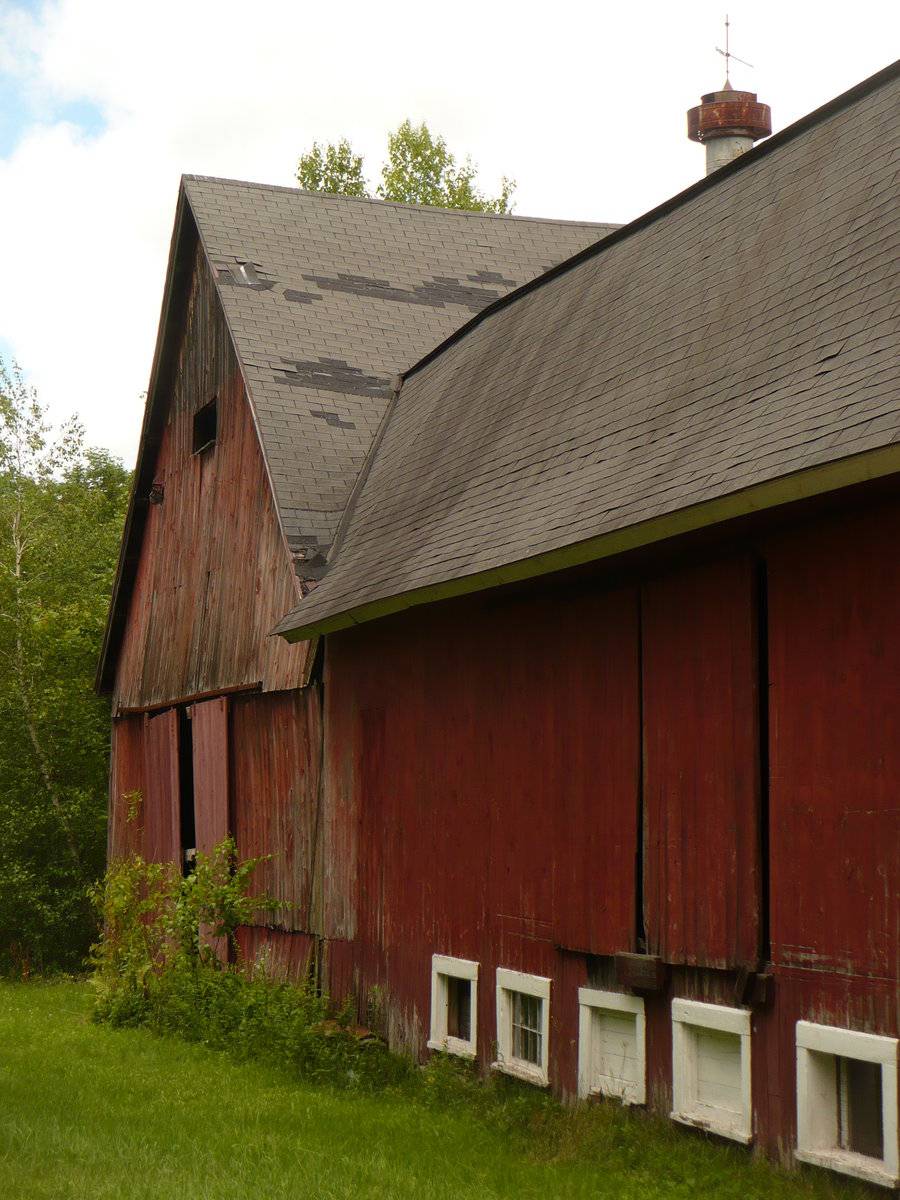
The primary façade is the west gable-end of the main gable-roof barn. The main entry on this end is a pair of oversize wooden doors, mounted to an upper track, centered. The doors rise up to the low eave line of the main barn. A small horizontal rectangular opening is centered in the gable-attic. The north eave-side of the main barn is not sufficiently visible for the purposes of an Historic Resource Inventory, however, a portion of the foundation level is visible as the ground level drops from west to east. The east gable-end of the main barn is also not fully visible, but the gable-attic portion has no window or door openings. The small portion of the south eave-side that is exposed near the southeast corner appears to be blank.
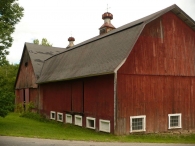
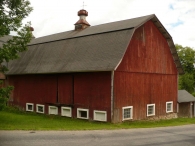
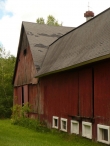
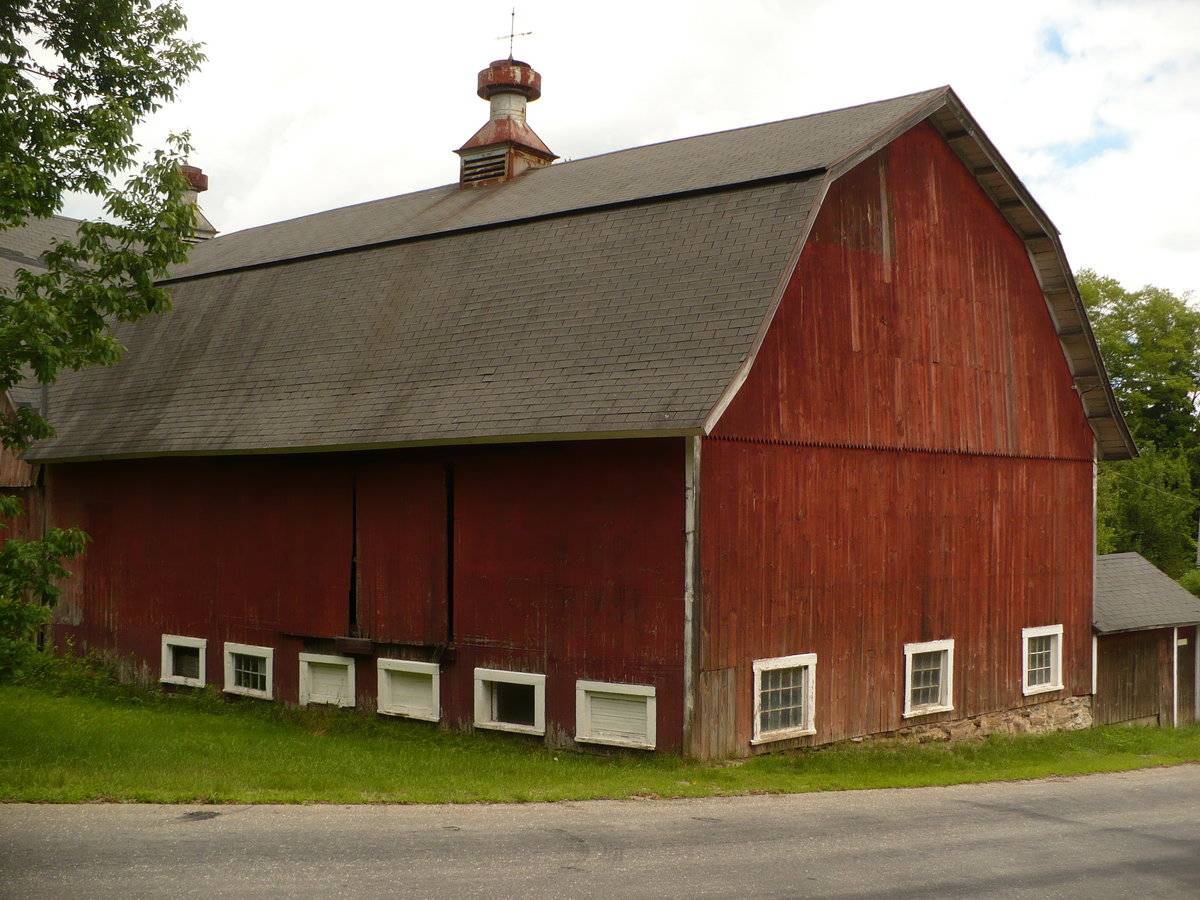
The gambrel roof bank addition projects to the south at a right-angle from the gable-roof main barn, flush along the west wall. The first-story of the gambrel roof barn is fully exposed on the east eave-side, and partially submerged on the west eave-side. Six horizontal windows in this partially-submerged first-story are visible along the grade line stretching much of the length of the west eave-side. Of these windows, three retain glass while the other three have been blanked over with lumber. The second-story is slightly raised from the grade along this side. A pair of off-center wood plank sliding doors are mounted on an overhead track on this second-story.
The south gable-end directly fronts West Street. A portion of the raised mortared fieldstone foundation is visible as the grade drops from west to east. Three first-story windows, each with sixteen panes, are evenly spaced along this side. The second-story and gable-attic are blank. The girt line along this end is of an unusual sawtooth design. The east eave-side contains a single pass-through-size wood plank door on the second-story, roughly centered. At least one window is located on the first-story level.
The small 1-story gable-roof addition projects to the east from the southeast corner of the gambrel roof barn. It sits upon a partially raised concrete foundation. A hinged wood plank pass-through door is located near the southeast corner on the south eave-side of this addition. A single window opening with four panes and trim is centered on the east gable-end of the addition. The north eave-side of the addition is not visible for the purposes of an Historic Resource Inventory.
The exterior of this barn is primarily clad in vertical wooden flush-board siding, painted red. The east gable-attic of the main gable-roof barn is clad in white clapboard siding, which appears to be aluminum. The mortared fieldstone and concrete foundations are partially exposed. All roof surfaces are covered with gray asphalt shingles. Two identical metal ventilators are centered atop the gambrel-roof and gable-roof ridgelines. Each ventilator includes a lower square portion with eave-side louvers, with a stepped circular portion above, topped by a weathervane.
Historical significance:The New England barn or gable front barn was the successor to the English barn and relied on a gable entry rather than an entry under the eaves. The gable front offered many practical advantages. Roofs drained off the side, rather than flooding the dooryard. With the main drive floor running parallel to the ridge, the size of the barn could be increased to accommodate larger herds by adding additional bays to the rear gable end. Although it was seen by many as an improvement over the earlier side-entry English Barn, the New England barn did not replace its predecessor but rather coexisted with it; both types continued to be constructed.
The 19th century also saw the introduction of a basement under the barn to allow for the easy collection and storage of a winter’s worth of manure from the animals sheltered within the building. The bank barn is characterized by the location of its main floor above grade, either through building on a hillside or by raising the building on a foundation. This innovation, aided by the introduction of windows for light and ventilation, would eventually be joined by the introduction of space to shelter more animals under the main floor of the barn.
The gambrel roof enclosed a much greater volume than a gable roof did, and its shape could be formed with trusses that did not require cross beams, which would interfere with the movement and storage of hay. Also known as the curb roof, the double slopes of the gambrel offer more volume in the hayloft without increasing the height of the side walls.
Field Notes
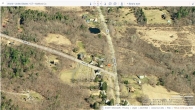
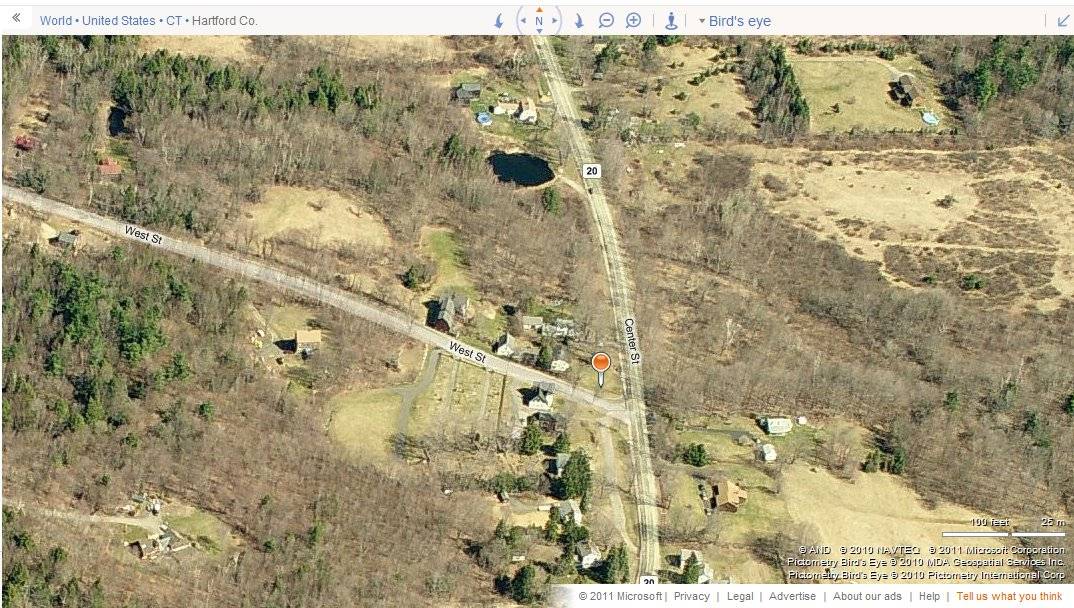
Address is an approximation, the property is located across the street from West Hartland Cemetery, and to the west of the intersection of West Street and Center Street.
- Use & Accessibility
Use (Historic)
Use (Present)
Exterior Visible from Public Road?
Yes
Demolished
n/a
Location Integrity
Unknown
- Environment
Related features
n/a
Environment features
Relationship to surroundings
This barn has a primarily L shaped footprint. The south gable-end of the gambrel-roof wing directly fronts West Street. The barn is set into an incline rising from east to west. The house associated with this barn is located to the immediate east, at the corner of West Street with Center Street. To the south across West Street is the West Hartland Cemetery. This barn is located near the very center of the village of West Hartford. A few other scattered dwellings are present in the immediate area. Most surrounding land is woodland, with occasional areas of open space. One such space is immediately to the north of this barn.
- Typology & Materials
-
Building Typology
Materials
Structural System
n/a
Roof materials
Roof type
Approximate Dimensions
n/a
- Source
-
Date Compiled
06/28/2011
Compiled By
Nathan Nietering, reviewed by the CT Trust
Sources
Photographs by Nathan Nietering.
Sexton, James, PhD; Survey Narrative of the Connecticut Barn, Connecticut Trust for Historic Preservation, Hamden, CT, 2005, http://www.connecticutbarns.org/history.
Visser, Thomas D., Field Guide to New England Barns and Farm Buildings, University Press of New England, 1997, 213 pages.
Map of West Hartland, CT, retrieved on June 29, 2011 from website www.bing.com.
- PhotosClick on image to view full file
-