Barn Record Roxbury
RETURN TO ‘FIND BARNS’- Building Name (Common)
- Orzech Farm
- Building Name (Historic)
- Weller Homestead
- Address
- 3 Botsford Hill Road, Roxbury
- Typology
- Overview
-
Designations
n/a
Historic Significance
Architectural description:
Barn I:
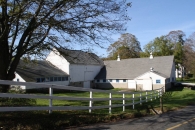
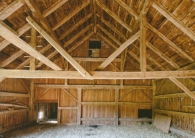
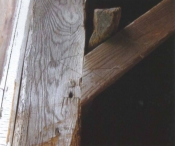
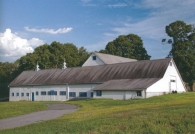
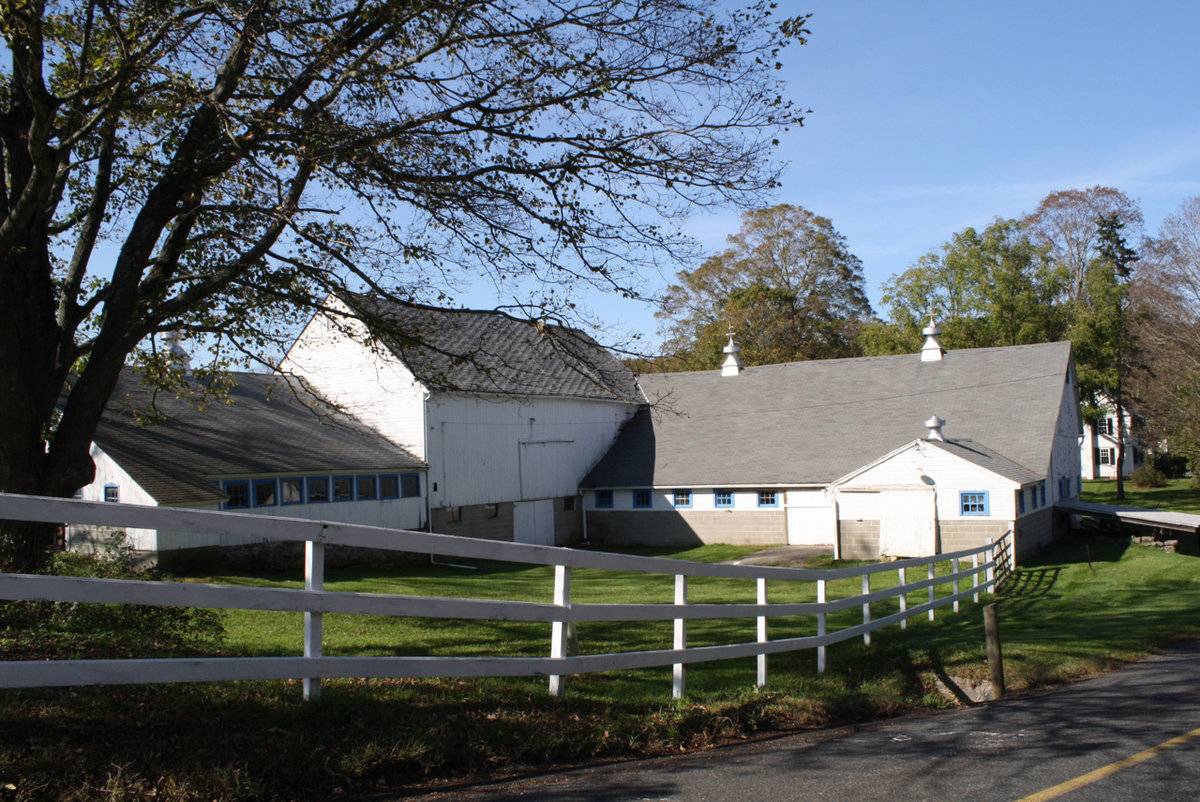
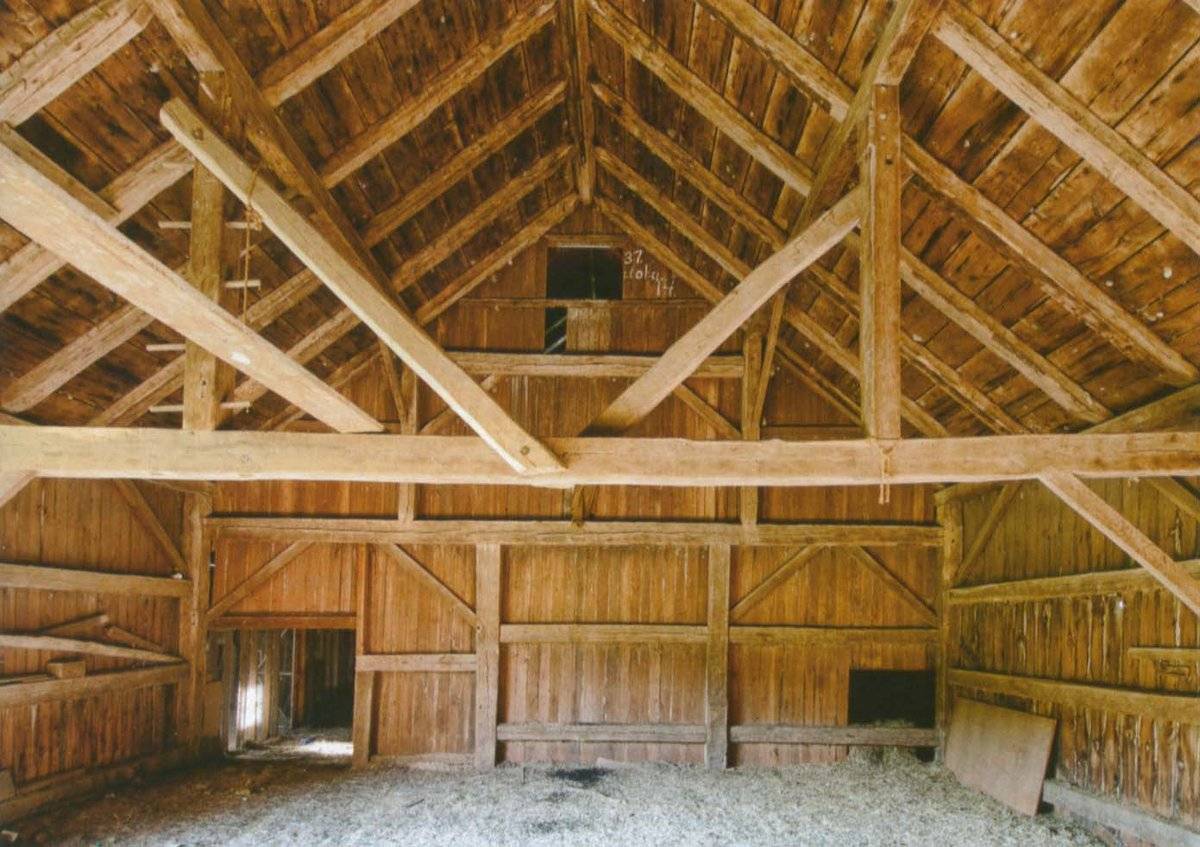
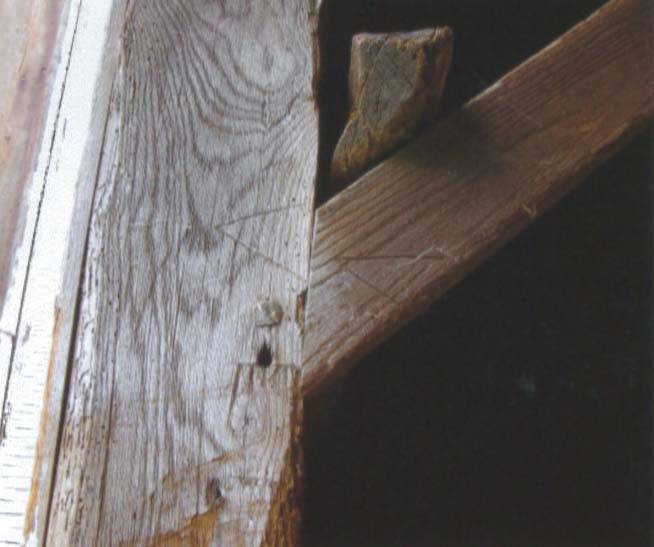
This large, rambling barn reflects an evolution over a protracted time period and through various ownerships. At the core of the complex of wings and additions is the oldest section, an English barn, with the wagon entry centered on the west elevation. This barn is particularly notable for the hand-hewn frame. It may have been built by Charles S. Trowbridge (1798-1885), who bought the farm in 1831. It is a fine and very well-preserved example of the traditional English barn type, with a distinctive queen-post gable construction and scribe marks visible on the frame. The south extension was probably added in the second half of the 1800s by Trowbridge, who raised cattle and tobacco on his 200-acre spread, and was responsible for remodeling and enlarging the buildings here. Later owner Anthony (Anton) Orzech, followed by his son, Edward Orzech, managed a herd of 135 Holsteins, sheltered and milked in this complex of attached barns. The barn continued to expand and the English barn was engulfed by the larger structure that morphed around it. To this day the old English barn is used for hay storage, and currently remains the only active section of the grouping. The long, low milking parlor was probably added in the 1920s. After the dairy business phased out, this portion of the barn housed chickens. The southeast milk house, containing a refrigerated bulk tank, was likely added in the mid 1900s.
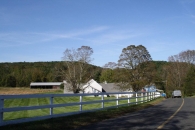
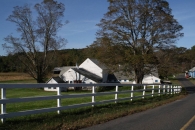
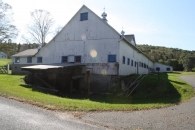
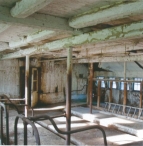
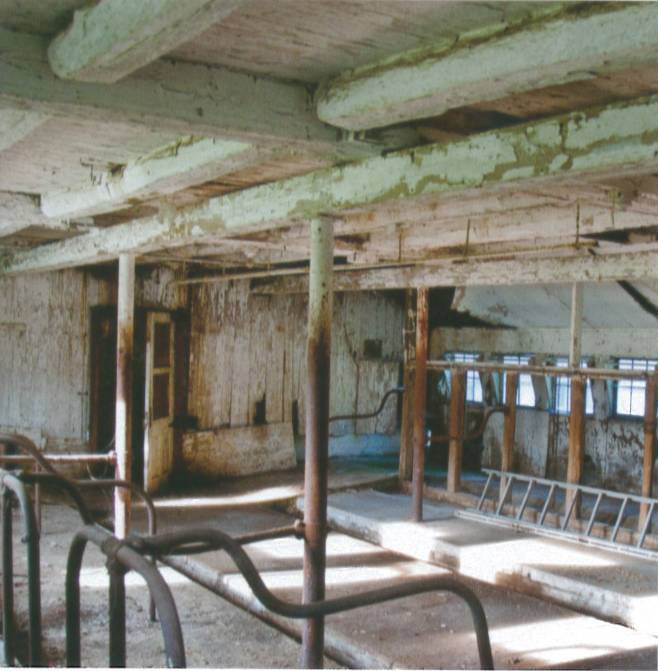
The barn stands on the west side of Botsford Hill Road; consisting of multiple sections, the longest being a low-slung section banked lightly to the west. A drive enters west off of the road, passes on the north side of the barn, then continues north behind the main house to the remainder of the complex on the west side of the road. There are fields to the west, with two concrete silo foundations at the northwest corner of the cow barn. Features include: 100’ long, various wings, English barn 30 x 20; connected barn complex consisting of multiple wings laid out in rough T-plan with the long, low cow barn set gable ends to east and west, and a timber-framed English barn intersecting on the south side with telescoping milking-parlor wing to the south; shed-roofed wing banked on concrete foundation into slope at northwest corner; one-story creamery at southeast corner; east gable end styled as open shed set on poles and topped with corrugated metal roof (to shelter manure spreader); fenestration primarily 6-light tilt windows with canted lintels; four metal cupolas, three with scalloped bases and marked “Milcot;” entire complex painted white with cobalt blue trim. Interior cow barn: main milking parlor with center aisle; concrete floor channels and metal stanchions; ten stalls on north wall. Interior English barn: three-bay layout with central, wood planked threshing floor, raised hay storage flanking; hand-hewn timbers; square rule with some marriage marks; loft; two-story gable construction with queen posts and dropped girts (tie beams); hewn rafters and ridge pole. Interior milking parlor extension: hewn post-and-beams (square rule), milled rafters; wooden stanchions.
Barn II:
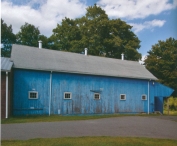
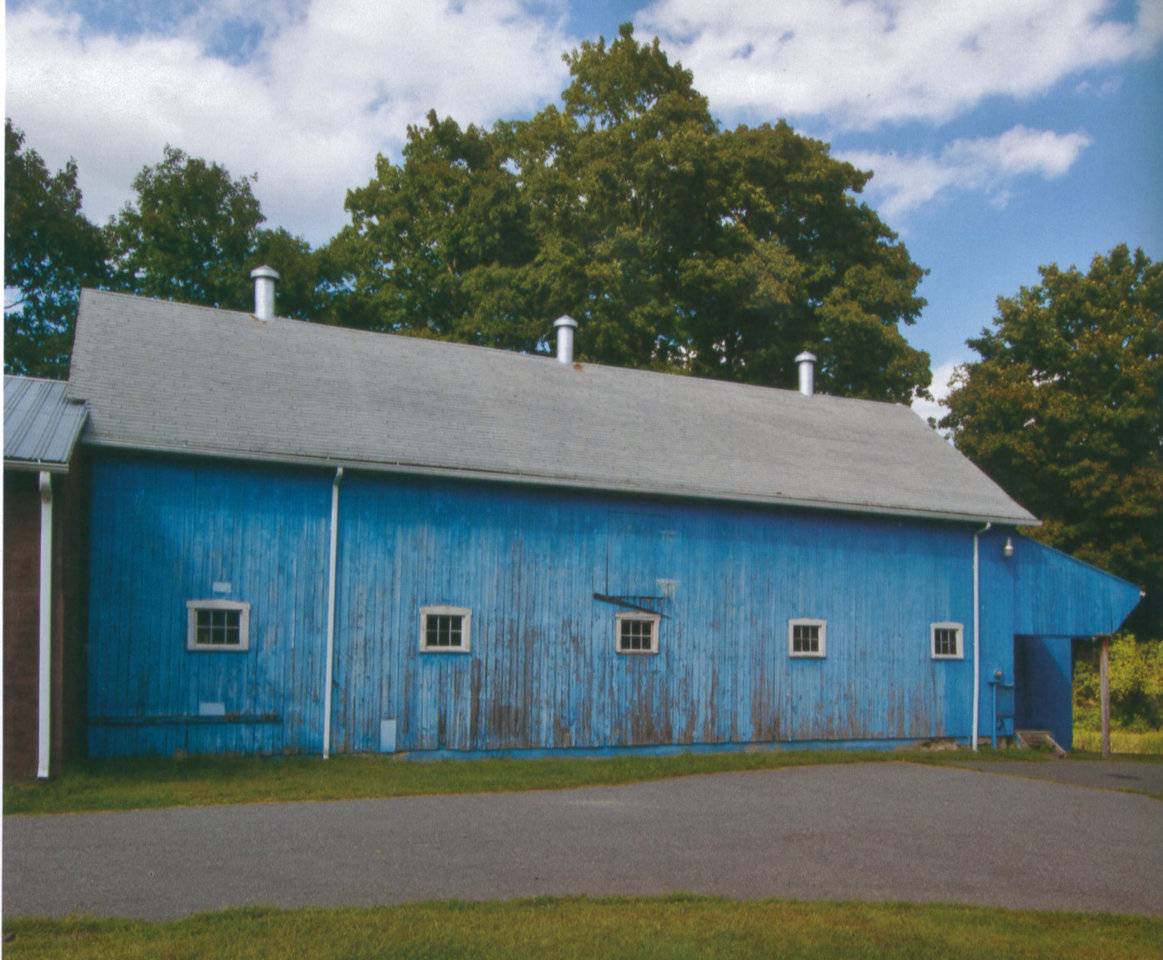
This elongated barn is one of the dominant buildings at the Orzech Farm and served as a feed store until 2009. The older post and bean section of this building originated as a tobacco barn and was likely built during the ownership of Charles Trowbridge (1798 - 1885). The barn stands on the west side of Botsford Hill Road and is approached by a driveway running west from the road. This is the northernmost building in the farmyard complex. The landscape is open to the south and wooded to the north. Features include: 15 x 170; elongated peak-roofed barn set with gable ends to the east; set back from road; building consists of two main blocks, set end to end to create a long north façade. Front (east) section (about 76’) houses office and retail area; at east gable end a shed. Roof wing incorporates a loading dock and an enclosed storage area; clad in vertical barn siding painted cobalt blue. South elevation has symmetrical arrangement of five 6-pane tilt windows with canted lintels; loft door centered above central window; three metal ventilator pipes evenly spaced on roof ridge; parts of post-and-beam framing visible inside. Western (rear) section (about 96’) is clad in plywood and stained dark brown; incorporates 6 open garage bays and one with a garage door (to the east). All have dirt or tar floors except enclosed garage, which has a concrete floor; pre-fabricated millwork trusses inside.
Barn III:
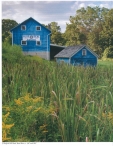
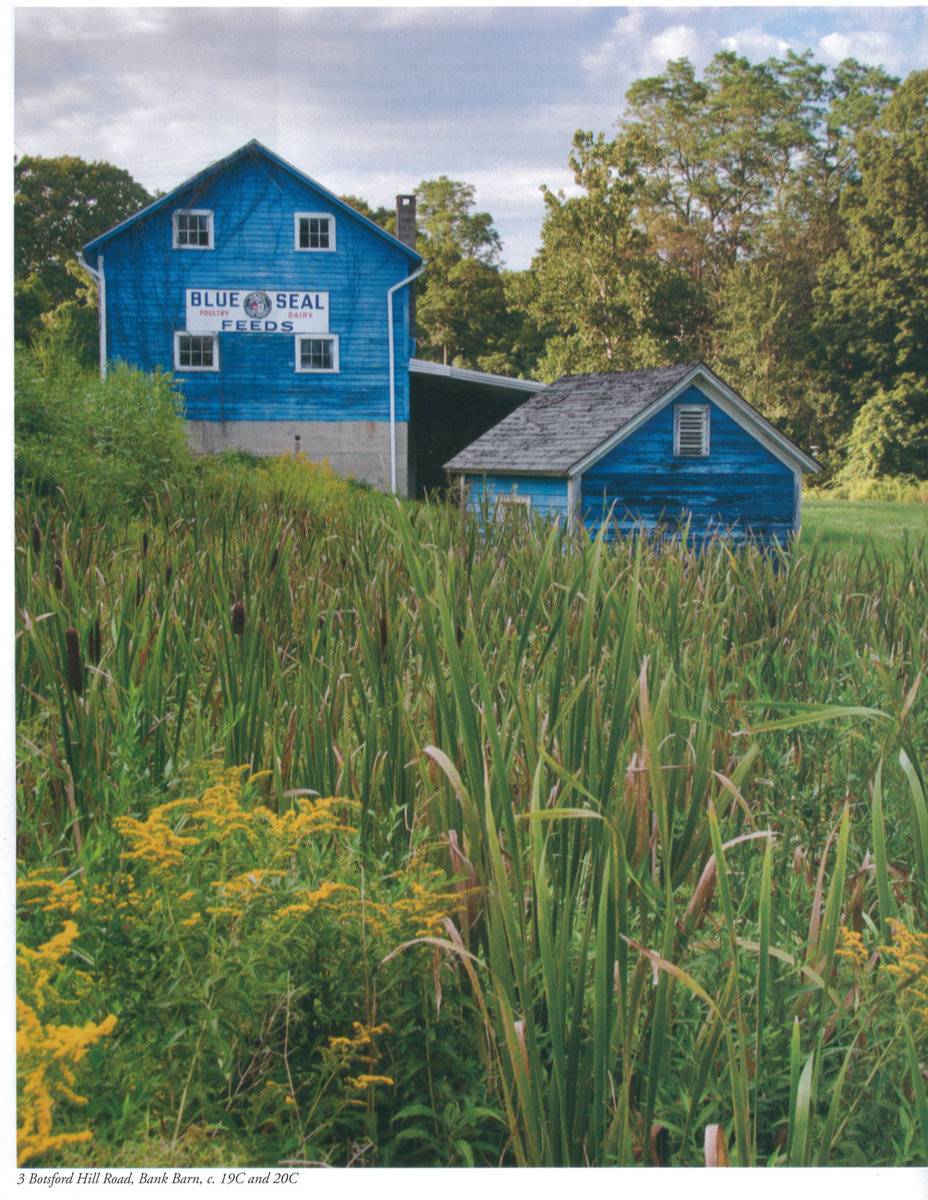
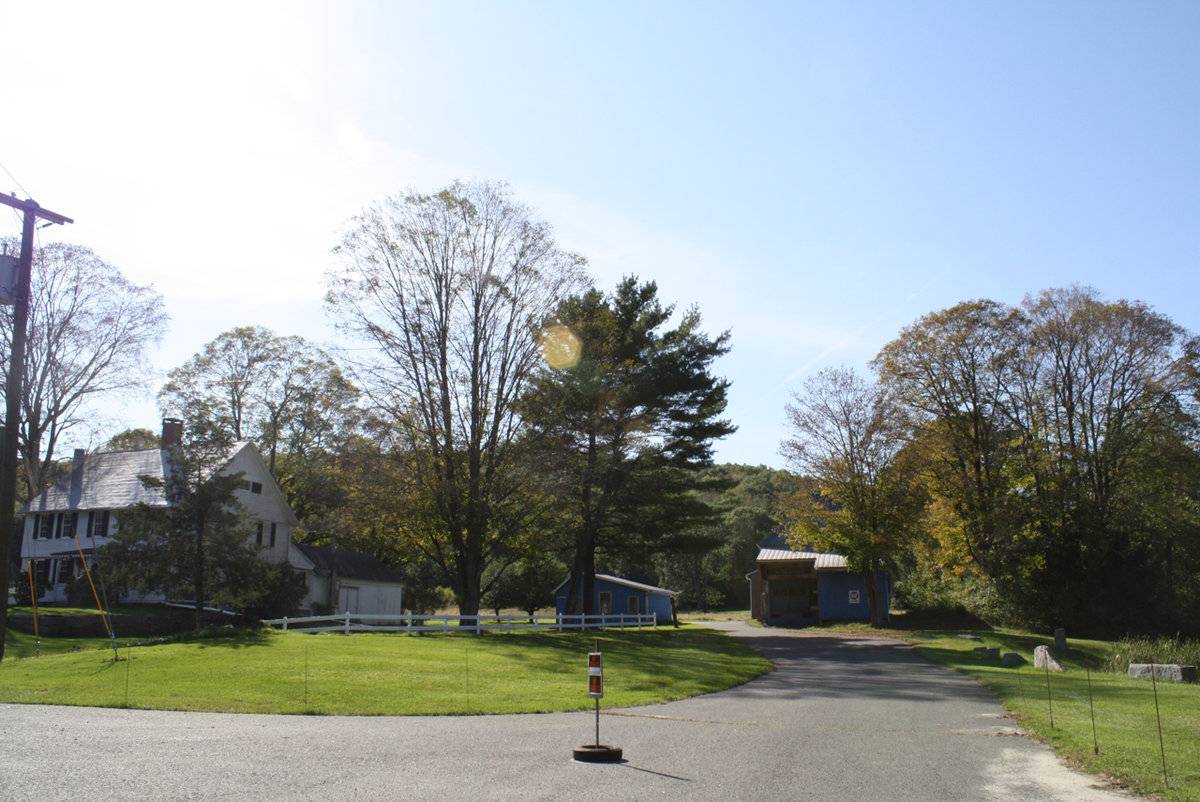
This elongated bank barn once served as the office and retail store for the Orzech family’s feed business, started in 1943. The main business in recent decades has been hay, harvested on the farm, and various kinds of animal feed, including dog and rabbit. Before it was altered for use as a garage for trucks and farm equipment and as an office, the structure, which includes a loft level, was probably a livestock and hay barn. It is possible that it pre-dates the Orzechs’ ownership of the farm. When the Orzechs moved the feed business to the other side of the road, the building became a service center for the farm, complete with its own Esso gas pump, which still stands. The cobalt blue color dates from 1989, when Eddie Orzech was required to take down the commercial signs that covered much of the building. The vibrant blue referred in part to the Blue Seal feeds he sold, but was also meant to increase visibility (and perhaps irk those who had objected to the signs).
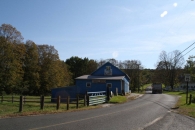
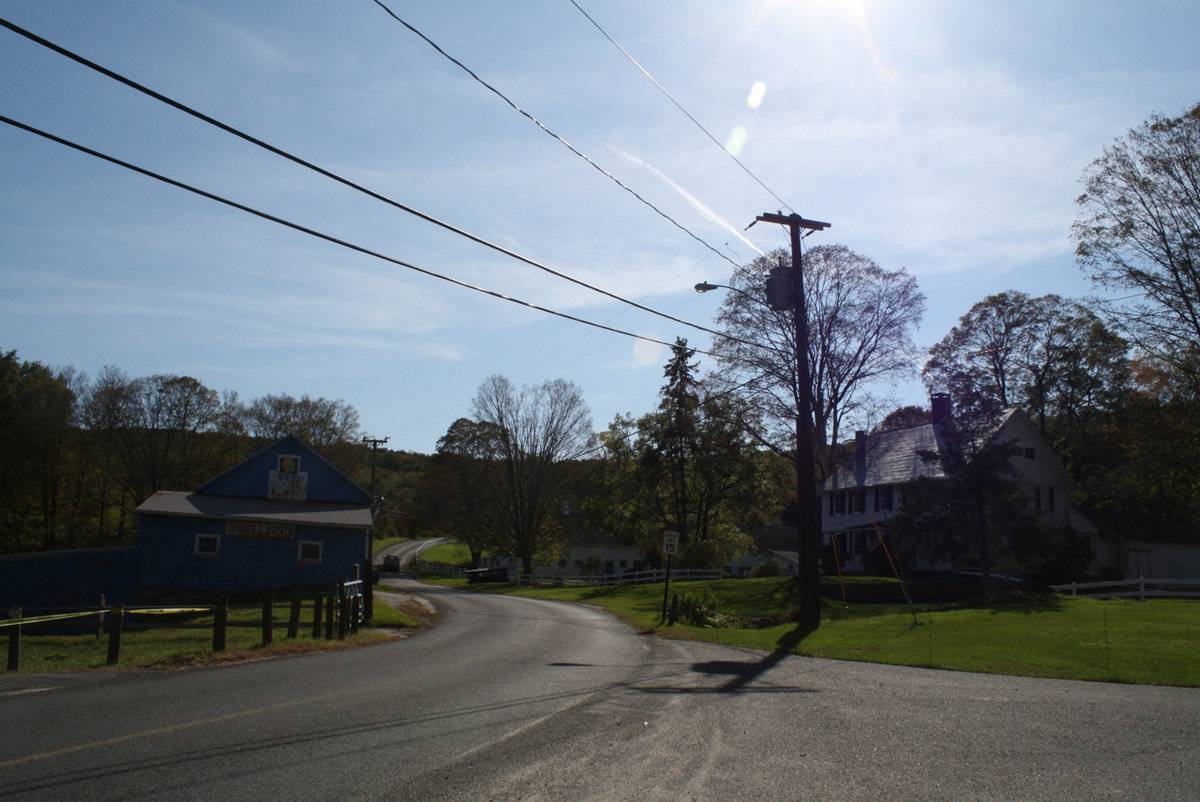
The barn stands on the east side of Botsford Hill Road opposite the main house and is banked into a slope so that it gains a story on the east side There is access to Roxbury Land Trust property to the east through a rail fence and wagon gate at road side. Features include: 60 x 20; elongated peak-roofed barn set with gable ends to the north and south and with main elevation fronting directly on the road; ; multi-pane garage door set off center on main facade; at south end, single door enters office wing clad in drop siding; one-story shed-roof truck bay (open) at north gable end (clad in drop siding), on fieldstone foundation; shed-roofed wing at lower level in rear (east), open bays face east; fenestration primarily three-pane and 6-pane tilt windows with canted lintels; painted sign (“Feed and Farm Supplies”) on north gable end; Edward F. Orzech sign mounted below; Blue Seal feed sign, south gable; entire building painted cobalt blue with white trim.
Barn IV:
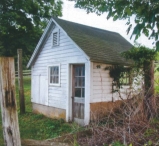
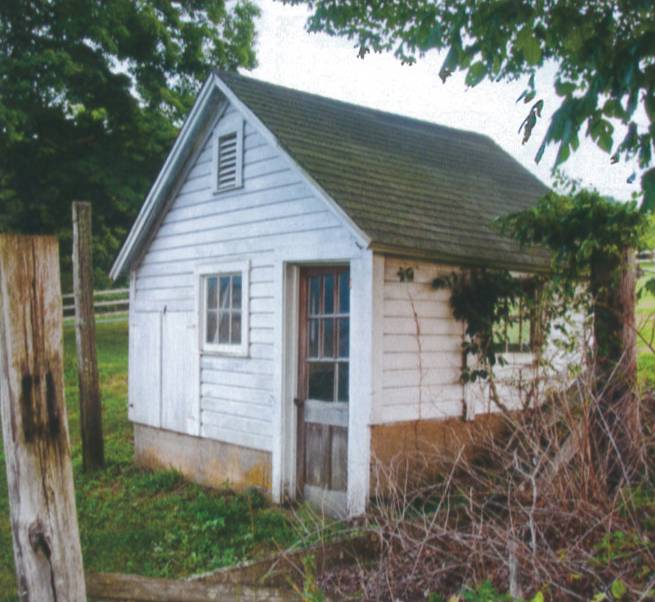
Before it was altered for use as a chicken house, this shed served as a milk house for the Orzech farm’s dairy operation. Milk cans were stored in the concrete tanks filled with cold water. When a new milk house with a refrigerated bulk tank was built onto the southeast corner of the main barn, probably in the 1940s or 1950s, this shed was no longer needed; it was later recycled as a chicken pen. The shed stands on the west side of Botsford Hill Road in a mostly open grassy area, to the south of the English barn extension, just to the north of the woodshed on the rear of the house. Features include: 8 x 12;’ small peak-roofed shed set with its gable ends to the north and south; raised concrete foundation; 6 light window sash located on north façade; door to right and pair of low hinged doors to the left; louvered vent centered in gable peak; interior concrete cooling tank dug into ground; white paint.
Milk Stand:
This small wooden structure is significant as the last surviving milk stand in Roxbury. Most Roxbury dairymen sold their milk to wholesalers. Neighboring farmers usually got together and erected crossroad stands like this one so that they could leave their milk cans for pick-up. Payment was calculated according to weight, and the cans were numbered to ensure their return to the proper owner. The blue-and-white color scheme suggest this stand was owned, or at least maintained, by Ed Orzech, whose farm is just to the south. The stand is located on the south side of Baker Road at the southeast corner of Botsford Hill Road. Features include: 8 x 6; post supports and plank platform; white and cobalt blue paint.
Barn V:
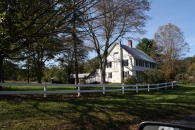
The main farmhouse is believed to date to as early as the 1770s. The scribe-rule joinery suggests that the shed is not as old as the house, but it may date to the early or mid 1800s. Although the extended lines of attached barns and backhouses common to northern New England are unusual in Connecticut, an attached woodshed was quite common. This one has been used to store both wood and coal.
The shed extends from the west (rear) elevation of the main house on open lawn with a driveway looping around to the rear. Features include: 32 x 18; peak-roofed shed with rectangular massing set with its gable ends to the east and west; east gable end intersects with the house; fieldstone foundation; main elevation fronts south; sliding door on horseshoe mounts located at west end of the façade; single door at house end; concrete block stove chimney at northeast corner; 6-pane and 9-pane windows; post-and-beam timber frame (scribe rule); painted white.
Barn VI:
This shed held chicken pens, and stands on the west side of Botsford Hill Road just to the north of the woodshed on the rear of the house. The feed store is located to the north and a driveway running west from the road passes between, then turns south passing on the west side of this building. Features include: 20 x 18; a small peak-roofed shed set with its gable ends to the east and west; saltbox profile; deep, overhanging eaves; concrete foundation; windows in 6-over-6 double-hung sash in varying sizes; main elevation fronts south; single door approached by two massive granite slabs located at the southeast corner; post-and-beam; painted cobalt blue with white trim.
Barn VII:
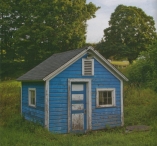
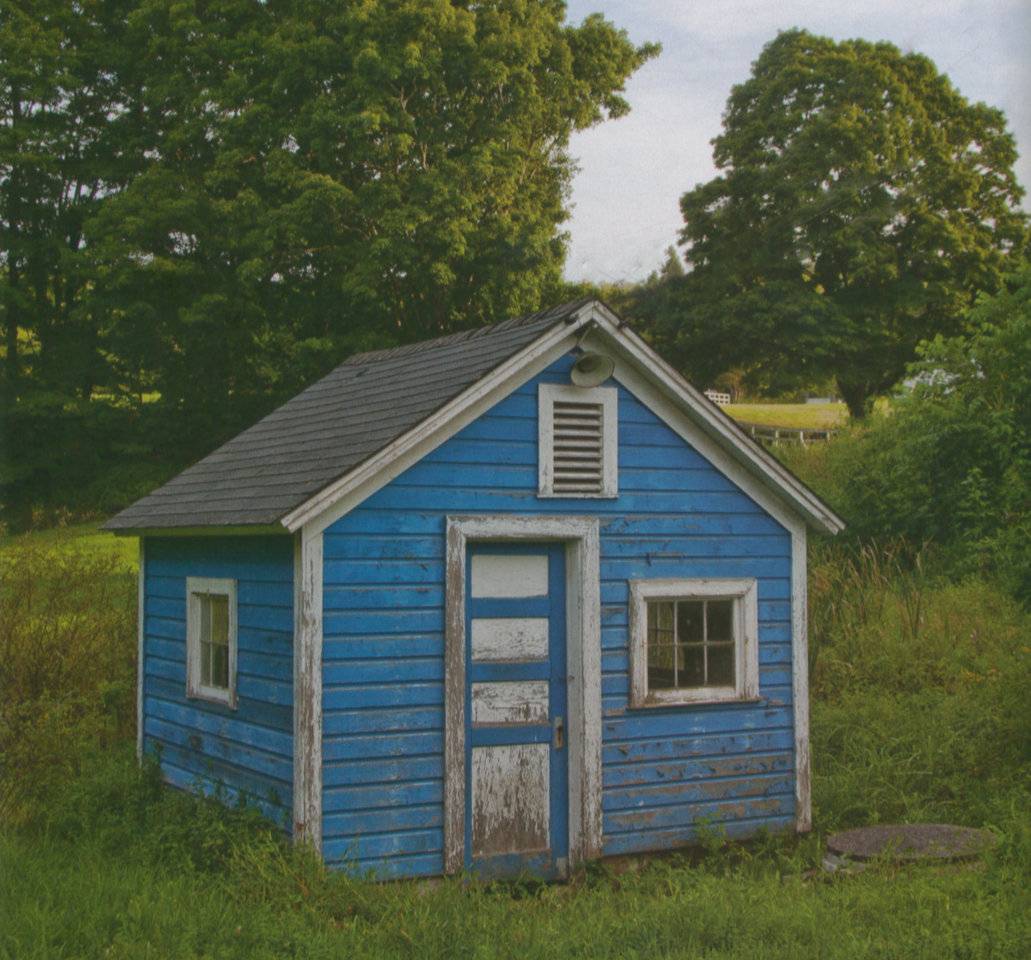
Built by Anthony Orzech, this shed is significant as a spring house or “water holer.” It holds an in-ground tank, through which flows a steady stream of water, used to cool cans of milk and keep butter for the family. The shed is no longer used in this way, but the spring still flows. This shed is located in a depression on the east side of the road and the old garage/office barn. It is surrounded by open meadows with woods to the east. Features include: 12 x 15; peak-roofed shed stands with its gable ends oriented to the north and south; simple boards at corners and under eaves; north gable end serves as main façade; paneled door set slightly off center with a 6-pane window to the right and a louvered vent above in roof peak; 6-pane window on west elevation; interior concrete cooling tank fed by running stream water; cobalt blue with white trim paint.
Historical significance:The oldest barns still found in the state are called the “English Barn,” “side-entry barn,” “eave entry,” or a 30 x 40. They are simple buildings with rectangular plan, pitched gable roof, and a door or doors located on one or both of the eave sides of the building based on the grain warehouses of the English colonists’ homeland. The name “30 by 40” originates from its size (in feet), which was large enough for 1 family and could service about 100 acres. The multi-purpose use of the English barn is reflected by the building’s construction in three distinct bays - one for each use. The middle bay was used for threshing, which is separating the seed from the stalk in wheat and oat by beating the stalks with a flail. The flanking bays would be for animals and hay storage.
By the mid-1800s many farmers saw their traditional English barn as being too small, inefficient, and old fashioned. As competition from the American West changed the economics of farming in New England, favoring larger herds and new ventures, some New England farmers ... expanded the older barns by building lean-to additions of the sides or rear of the barn. Some added basements, while others lengthened the barns by adding extra bays at the end. These extended barns often have several front doors, with one opening to the original threshing floor.
The tobacco barn, or shed as it is called in the Connecticut River Valley, is one of the most distinctive of the single-crop barns. They tend to be long, low windowless buildings with pitched roofs. They are characterized by vented sides and roofs to regulate air flow and allow harvested tobacco to cure at the appropriate rate. Derived initially from the design of the English barn, the shed is composed of a fixed skeleton consisting of two- or three-aisle bents repeated at intervals of 15 feet to the desired length. The wood-framed bents sit on piers of stone or concrete and the bents are connected by girts and diagonal braces. Typically there are one or two door openings at each end, making the shed a “drive-through,” although some sheds are accessed through doors on the sides. The interior structural framework serves a second purpose in addition to supporting the walls and roof of the building; it provides a framework for the rails used to hang the tobacco as it cures.
The oldest barns still found in the state are called the “English Barn,” “side-entry barn,” “eave entry,” or a 30 x 40. They are simple buildings with rectangular plan, pitched gable roof, and a door or doors located on one or both of the eave sides of the building based on the grain warehouses of the English colonists’ homeland. The name “30 by 40” originates from its size (in feet), which was large enough for 1 family and could service about 100 acres. The multi-purpose use of the English barn is reflected by the building’s construction in three distinct bays - one for each use. The middle bay was used for threshing, which is separating the seed from the stalk in wheat and oat by beating the stalks with a flail. The flanking bays would be for animals and hay storage. The 19th century saw the introduction of a basement under the barn to allow for the easy collection and storage of a winter’s worth of manure from the animals sheltered within the building. The bank barn is characterized by the location of its main floor above grade, either through building into a hillside or by raising the building on a foundation. This innovation, aided by the introduction of windows for light and ventilation, would eventually be joined by the introduction of space to shelter more animals under the main floor of the barn.
Before the 1880s, cheese and butter making were usually done on the farm. The milk room or dairy room was often located in an ell between the kitchen and the woodshed. Some farms had separate milk rooms and dairy rooms. In the milk room, the fresh milk was poured into shallow pans placed on shelves or racks. After the cream rose to the surface, it was skimmed off the milk and then churned to make butter. Cooperative creameries were being established throughout New England in the 1880s. Usually located next to the railroad line in villages, these creameries processed the milk of dozens of farmers, who shipped the liquid from the farm to the creamery by wagon in metal cans.
Single-story milk houses are typically attached to [20th-century] ground-level stable barns for preparation of the milk to be sent to the creamery. Designed to comply with state and local ordinances intended to minimize the potential for milk contamination, many are now fitted with large, electrically cooled stainless steel bulk storage tanks.Connected barns tied all of the functions of a farmstead - home, hearth, workplace and barn - into a series of linked buildings. This is the “big house, little house, back house, barn” of nursery rhymes.
Poultry farming grew in popularity during the second half of the 19th century, and by the early 20th century most farms had small chicken coops. These lightly-built structures often feature a gabled or shed roof and large windows on the south side. Often chicken coops have a small stove and chimney for heat to protect young chicks during cold weather. Small openings near the ground provide the fowl with access to the yard. Inside are nesting boxes for the laying hens. During the 1930s and 1940s, poultry farming was adopted by many farmers in New England as a replacement for dairy farming.
Field Notes
Information from a survey of Roxbury by Rachel Carley. This generally well-preserved historic farmstead has an important cultural history, one that illustrates the modernization of Roxbury’s colonial society. The property originated as early as 1770s as the Zaccheus Weller farm. Charles S. Trowbridge (1798-1885) bought the farm in 1831. The farm passed to his son William Trowbridge, one of Charles’ ten children, who continued to raise grain, tobacco and cattle, specializing in fine steers raised for market and teaming. In 1924 the farm sold to Anthony (Anton) Orzech, a Polish immigrant who came to Roxbury from Brooklyn, NY. The family raised chickens, Holsteins, a few pigs and devoted three acres to tobacco. Edward Orzech, son of Anthony (who retired in 1953), ran the farm until the year of his death in 2008. For years, the main focus of the operation was a herd of 135 Holsteins, sheltered and milked in this complex of attached barns. He also raised Rhode Island Reds to sell eggs. The main business in recent decades has been selling hay, harvested on the farm, and various kinds of animal feed, including dog and rabbit. The Roxbury Land Trust purchased 112 acres in 2002.
- Use & Accessibility
Use (Historic)
Use (Present)
Exterior Visible from Public Road?
Yes
Demolished
n/a
Location Integrity
Unknown
- Environment
Related features
Environment features
Relationship to surroundings
n/a
- Typology & Materials
-
Building Typology
Materials
Structural System
Roof materials
Roof type
Approximate Dimensions
Barn I: (original section) 30 x 20, Barn II: 15 x 170, Barn III: 60 x 20, Barn IV: 8 x 12, Barn V: 32 x 18, Barn VI: 20 x 18, Barn VII: 12 x 15.
- Source
-
Date Compiled
06/30/2011
Compiled By
Rachel D. Carley - CH
Sources
Carley, Rachel D., Barn Stories from Roxbury Connecticut, Roxbury Historic District Commission/Town of Roxbury/CT Commission on Culture & Tourism, 2010.
Cunningham, Jan, Roxbury, A Historic and Architectural Survey, Roxbury Historic District Commission, 1996-97.
Sexton, James, PhD; Survey Narrative of the Connecticut Barn, Connecticut Trust for Historic Preservation, Hamden, CT, 2005, http://www.connecticutbarns.org/history.
Visser, Thomas D.,Field Guide to New England Barns and Farm Buildings, University Press of New England, 1997, 213 pages.
- PhotosClick on image to view full file
-