Barn Record Roxbury
RETURN TO ‘FIND BARNS’- Building Name (Common)
- Thistledown Farm
- Building Name (Historic)
- Botsford Homestead / Golden Harvest Farm
- Address
- 119 Botsford Hill Road, Roxbury
- Typology
- Overview
-
Designations
Historic Significance
Architectural description:
Barn I:
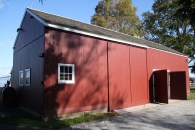
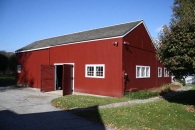
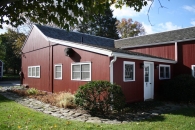
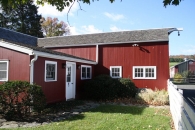
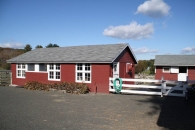
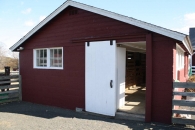
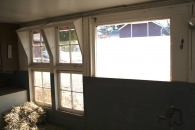
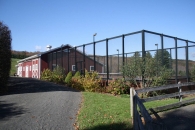
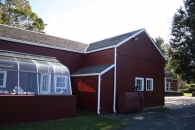
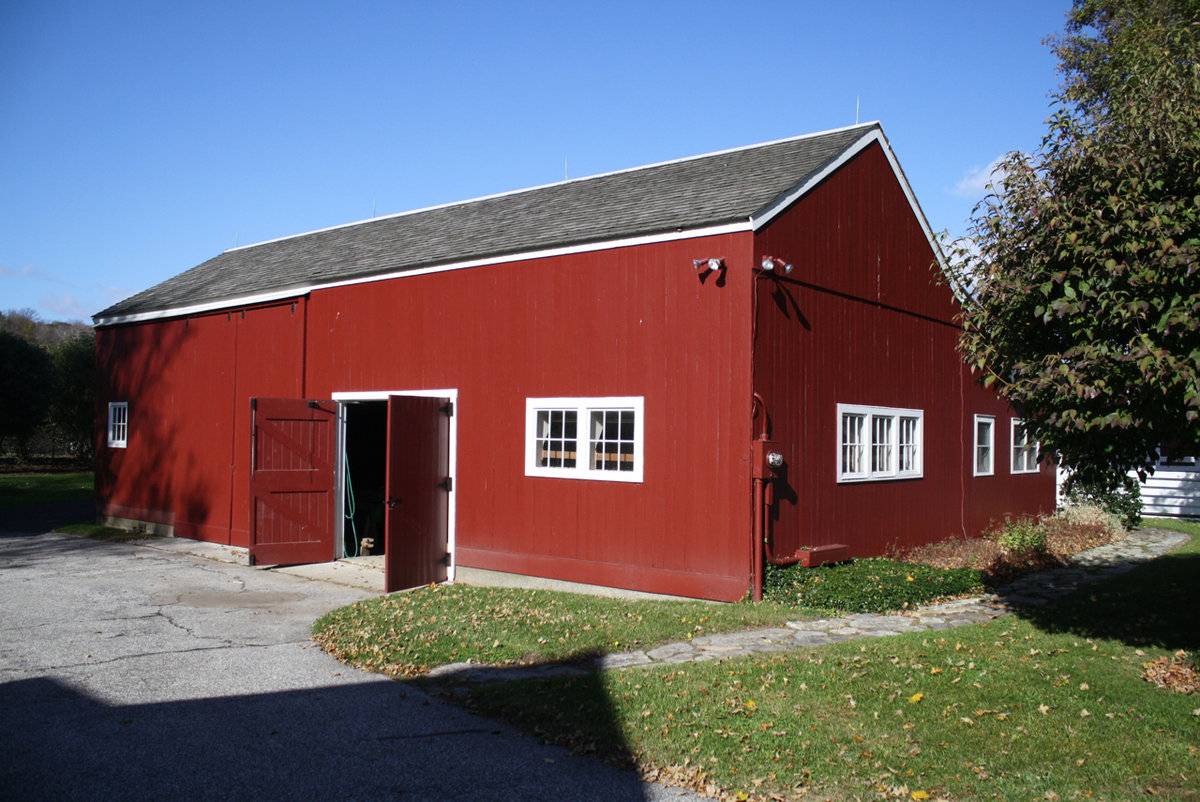
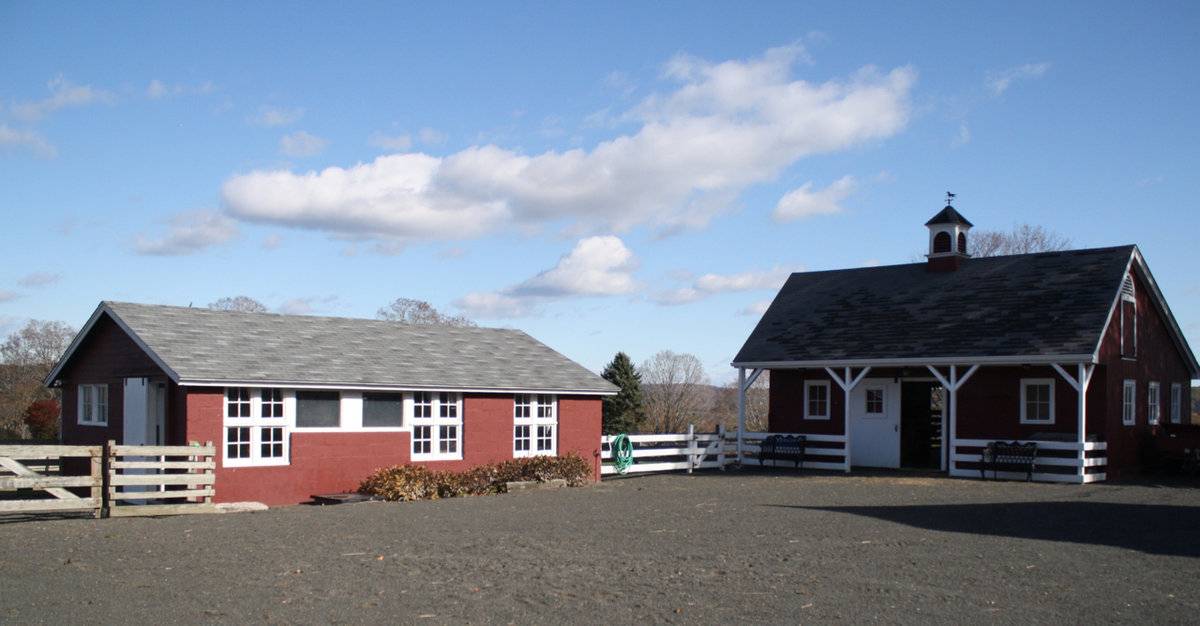
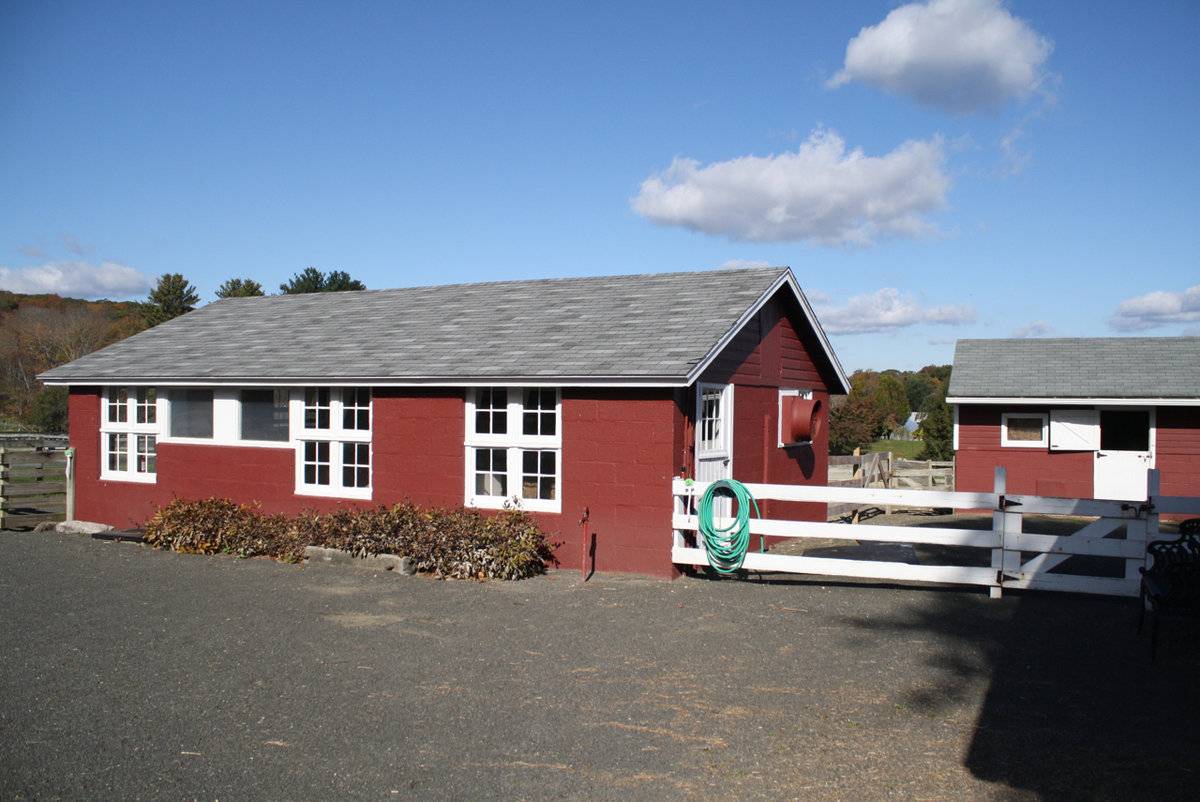
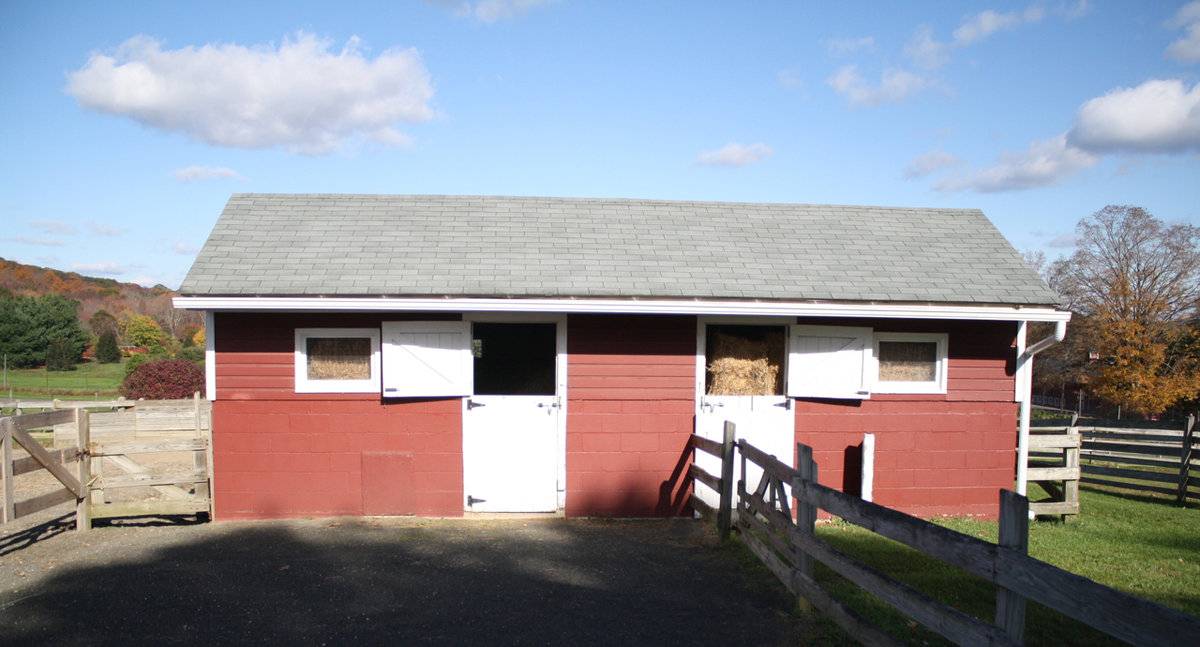
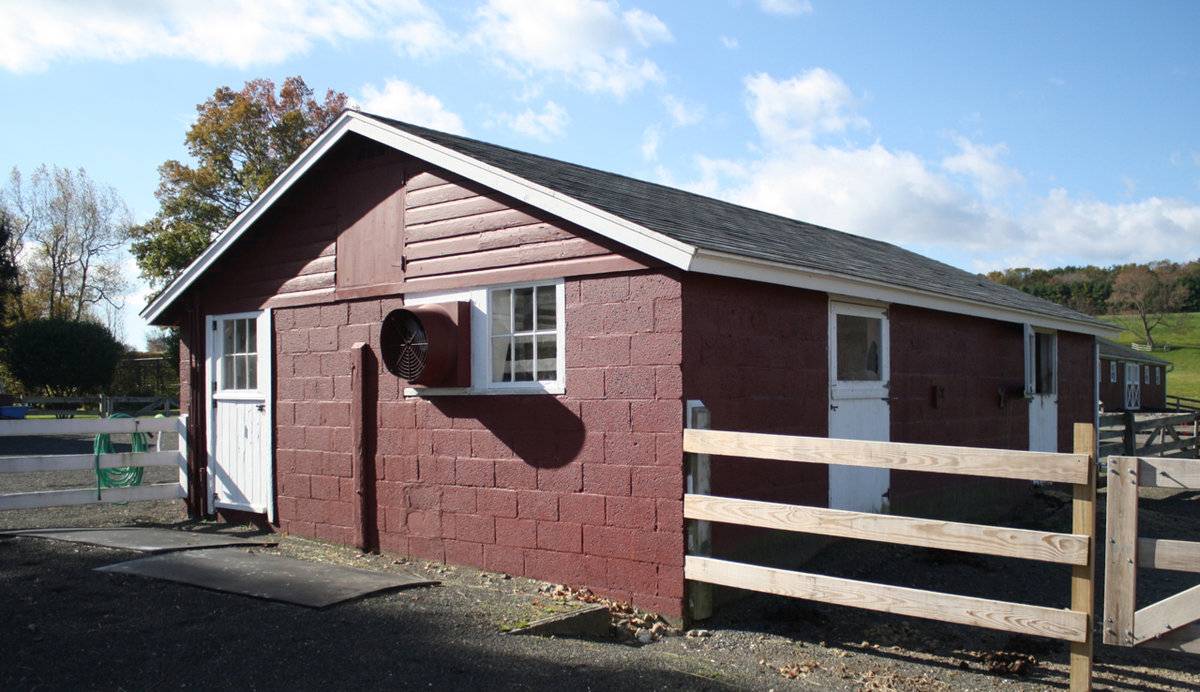
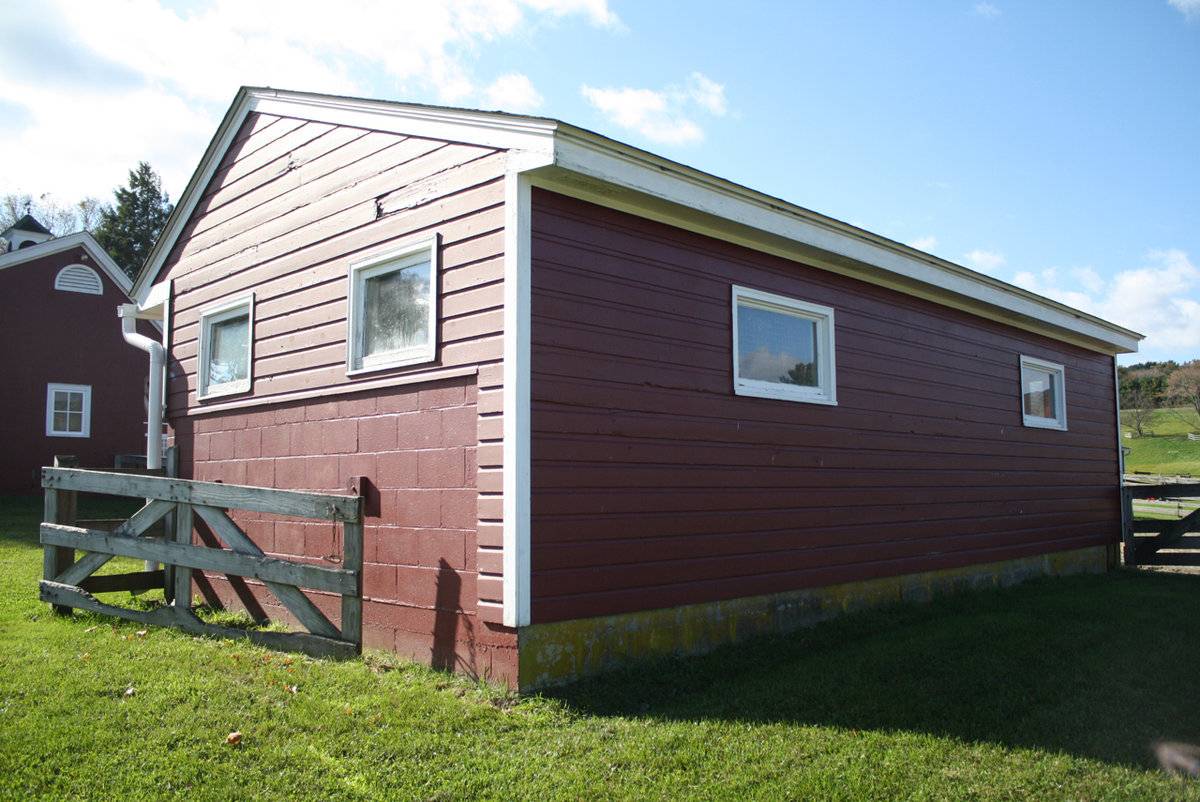
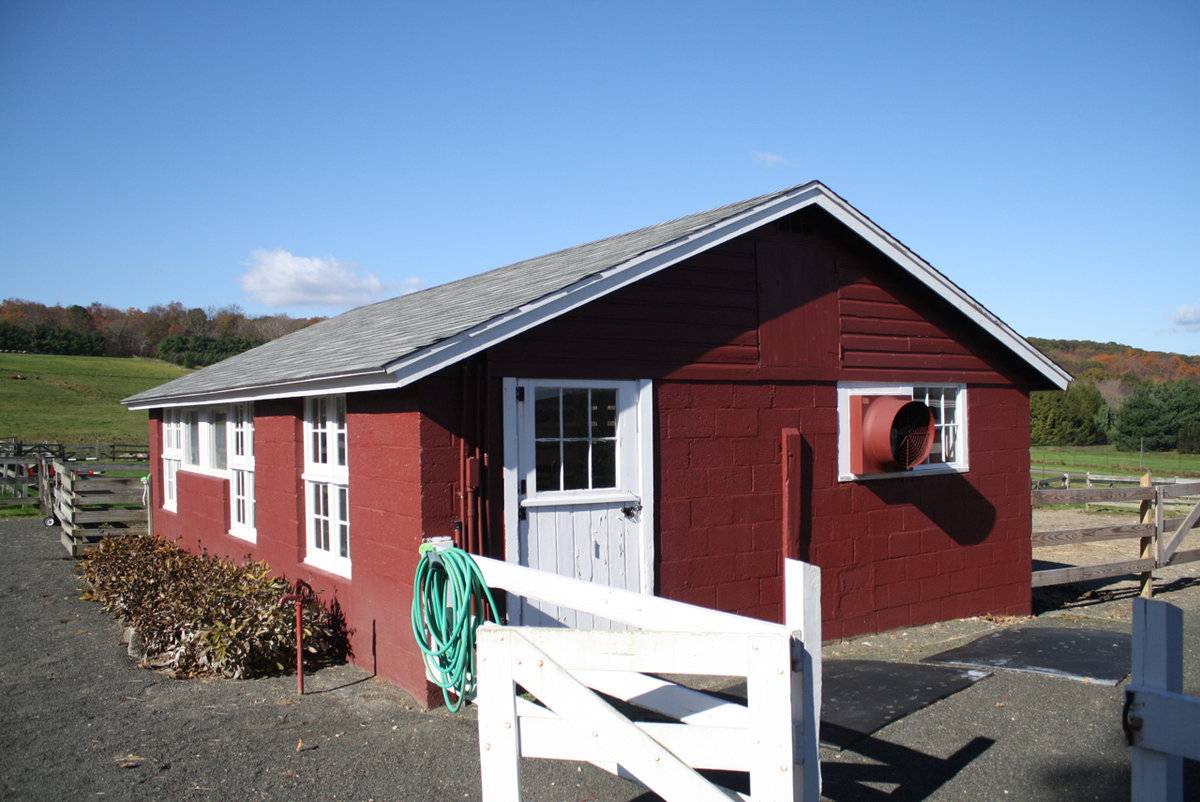
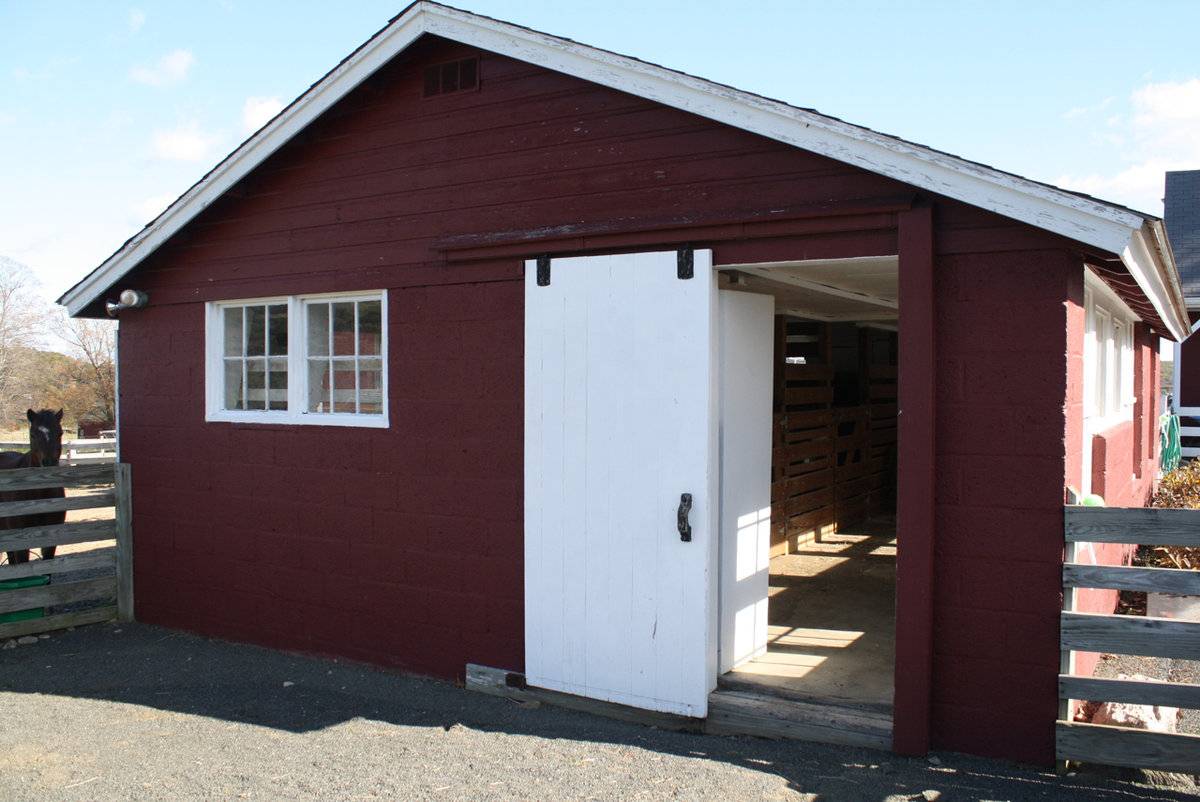
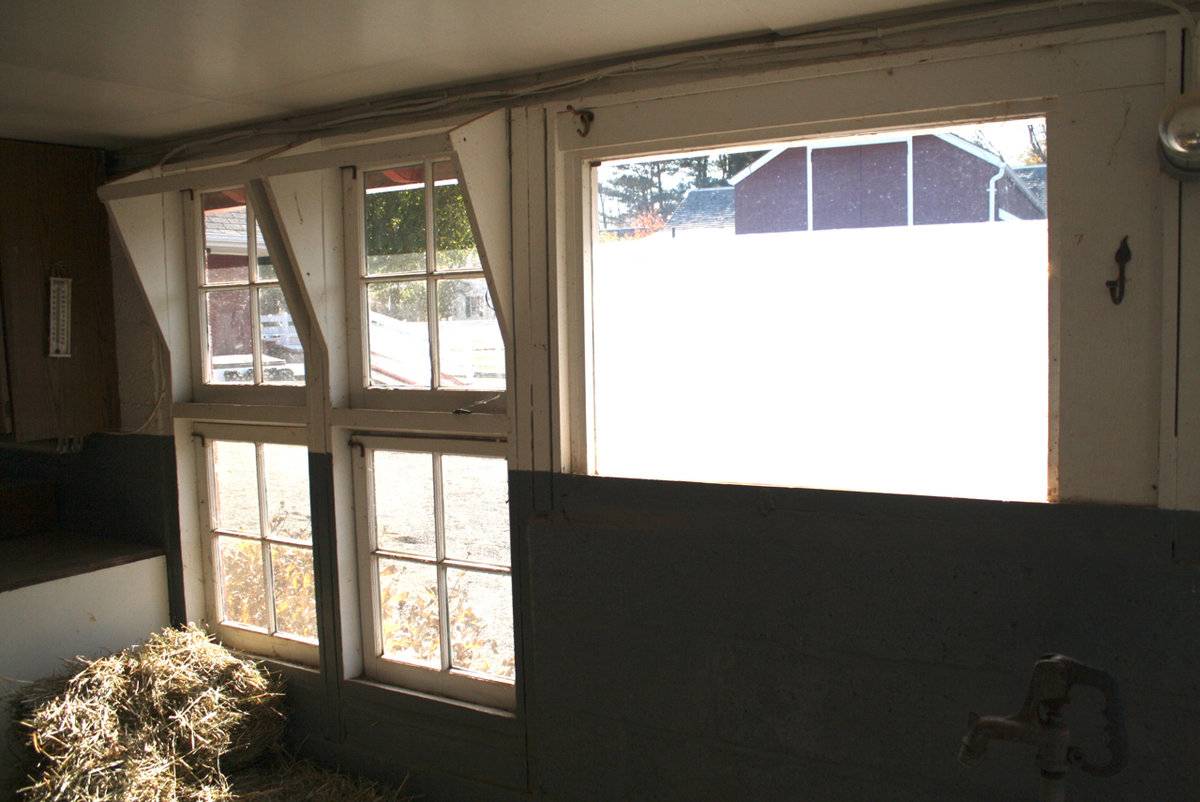
This barn is thought to have originated as a Golden Harvest bull barn, and was later altered to its present appearance; windows provide a view of the riding arena to the south. This is a long, low ride barn on the north side of the riding area opposite the main barn. A stable is located on the east side of the same arena with a paddock to the north. Features include:(no dimension listed); peak-roofed with gable ends to the east and west; primary south elevation asymmetrically massed with three quadrants of 4-pane windows and two small picture windows; single door at west gable end; wood frame; red paint with white trim.
Barn II: (Built 1985)
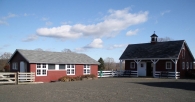
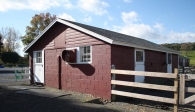
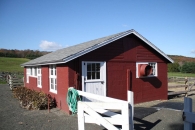
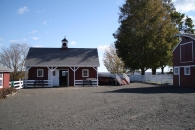
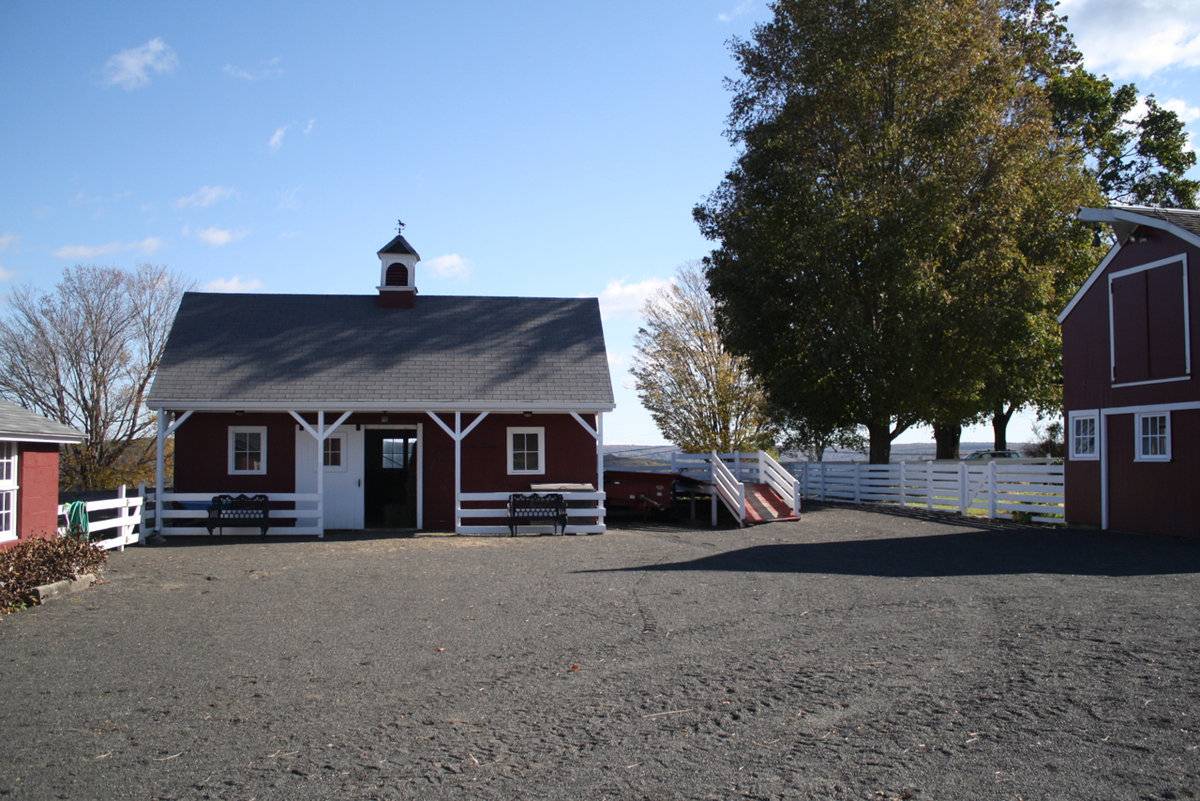
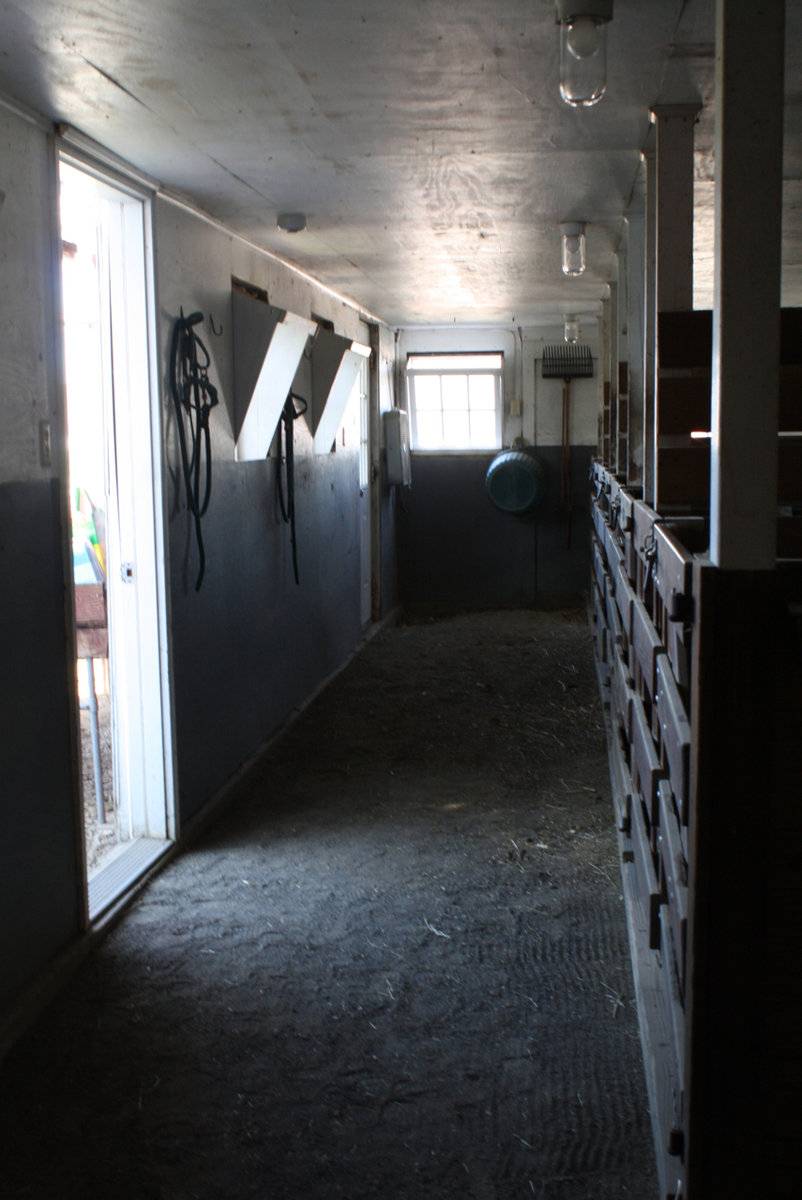
This stable was built by Franklin McCann, present owner of Thistledown, for miniature horses. The stable is located to the northeast of the main barn, and stands on the east side of a riding arena that opens off the north end of the main barn. The banked shed is located behind, to the east. Features include: 20 x 14; peak-roofed barn with gable ends to the north and south; long sloping roof creates saltbox profile to the east; primary elevation faces west; overhanging porch eaves supported on four bracketed posts; central door flanked by 4-pane windows; south gable end has three 4-pane windows; loft door topped by arched vent located at roof peak; central cupola with four-sided pagoda roof and arched louvers to vent; small horse weathervane; vertical tongue and groove barn board; red paint with white trim.
Barn III: (Built 1980)
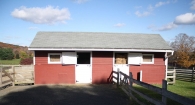
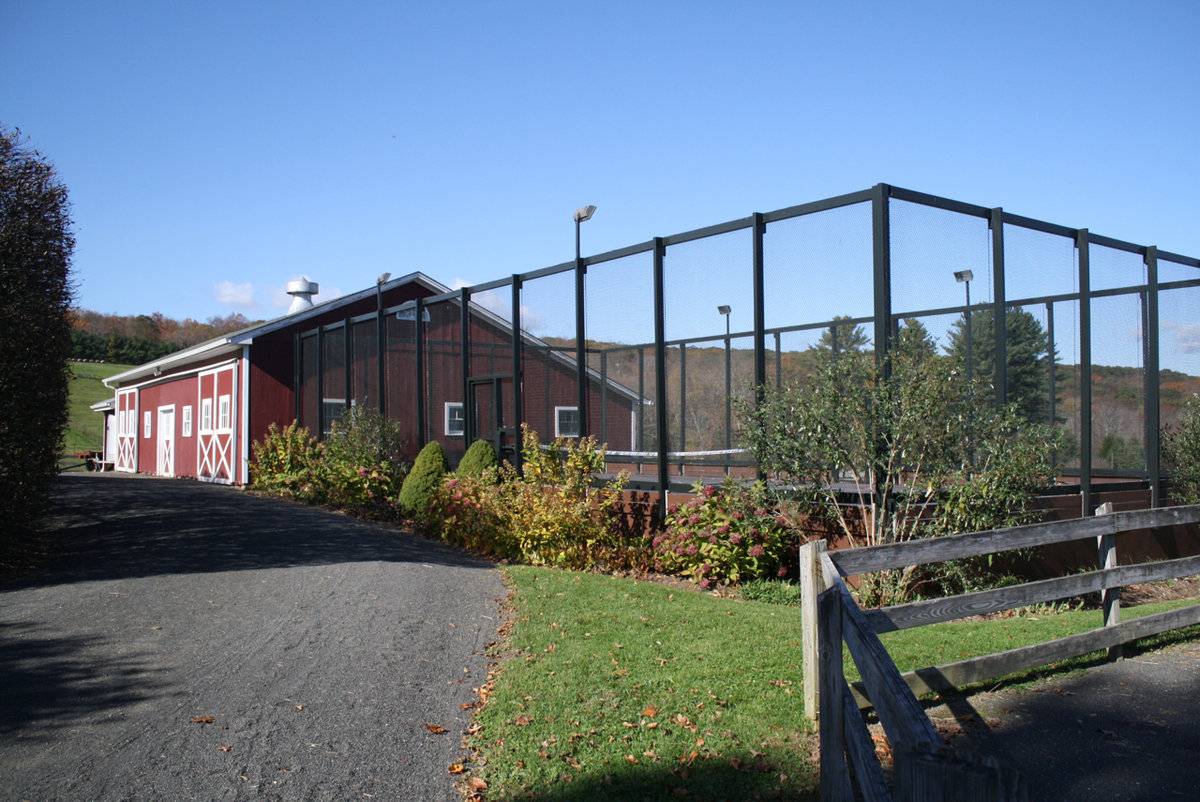
This barn, one of the more recent buildings in the complex, houses tractors and other farm equipment. It is located to the northwest of the main barn and to the immediate west of the paddle tennis court. Pastures unfold up a hill to the west. Features include: 56 x 42; peak-roofed barn stands with its gable ends to the west and east; primary elevation faces south; symmetrical composition: paired central doors (6 lights over cross-stile panels); flanking pairs of gull-height hinged doors (inset windows centered over cross-stile panels); open shed with standing seam roof at west gable end; dirt floor; pre-fabricated trusses; vertical tongue-and-groove barn board; red paint with white trim.
Barn IV:
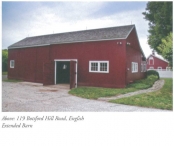
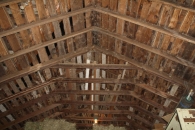
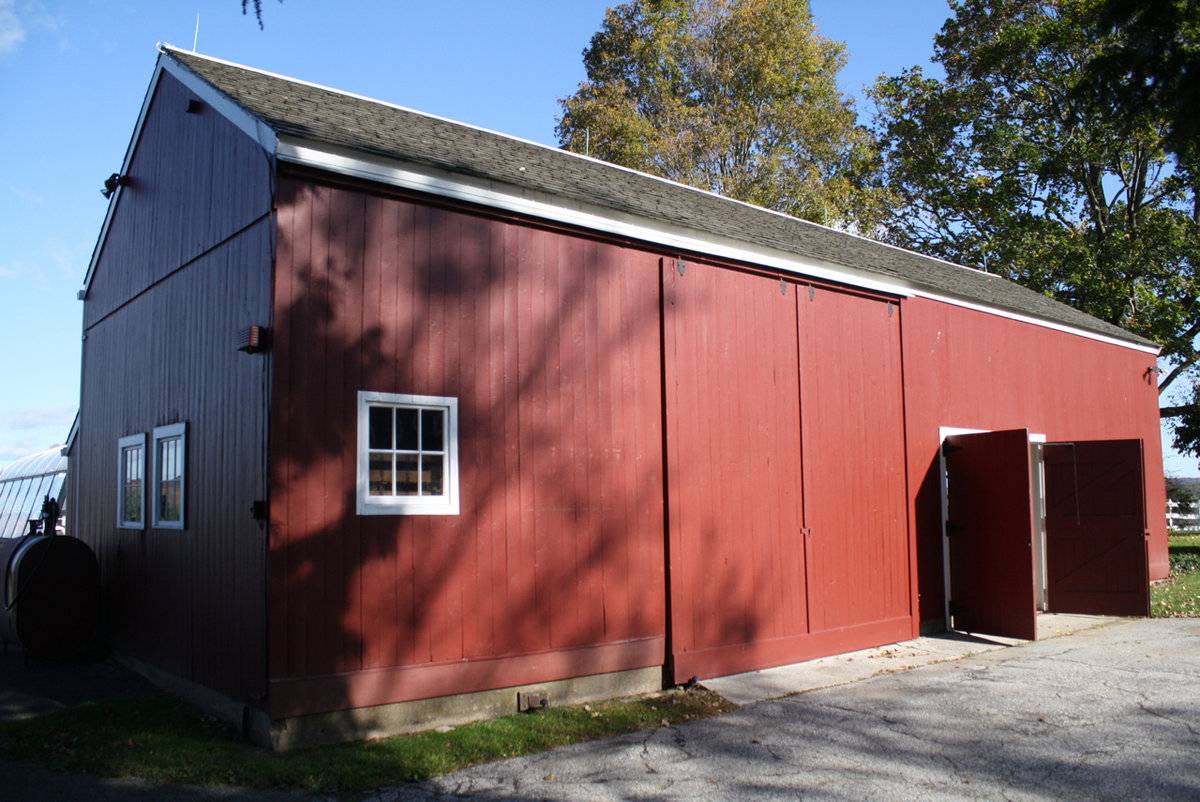
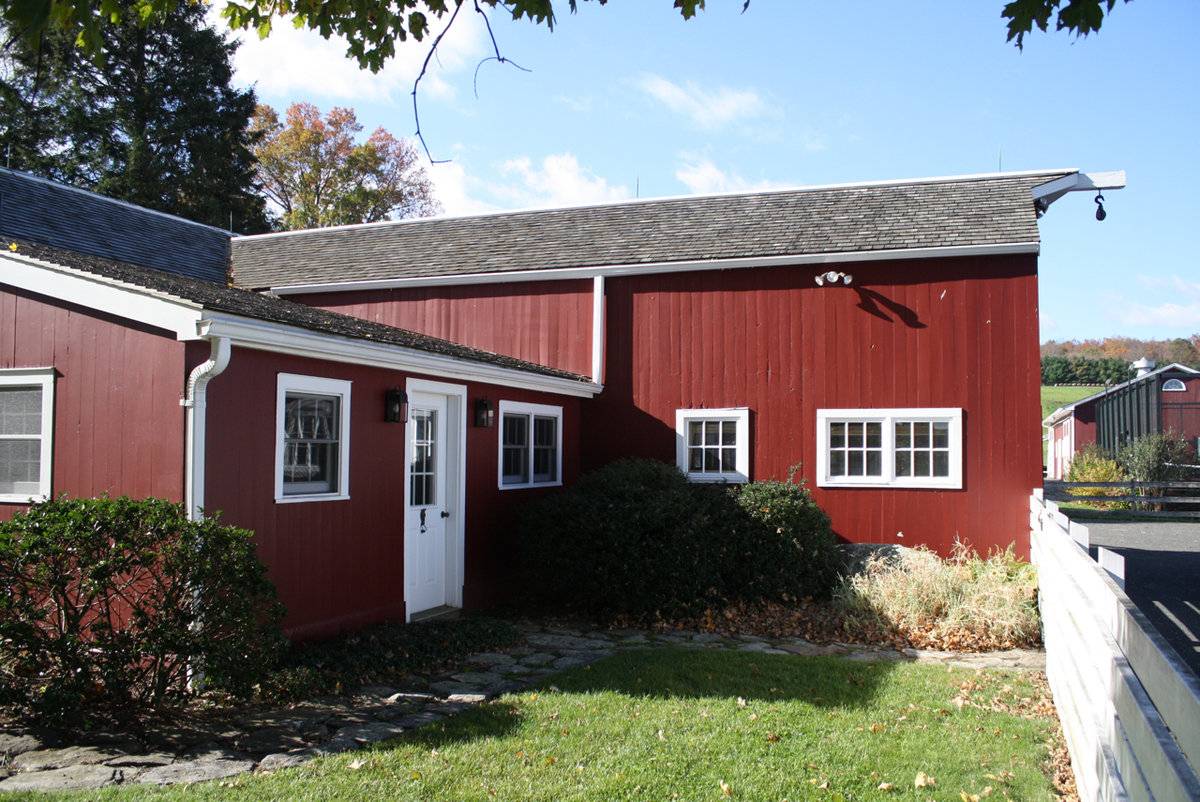
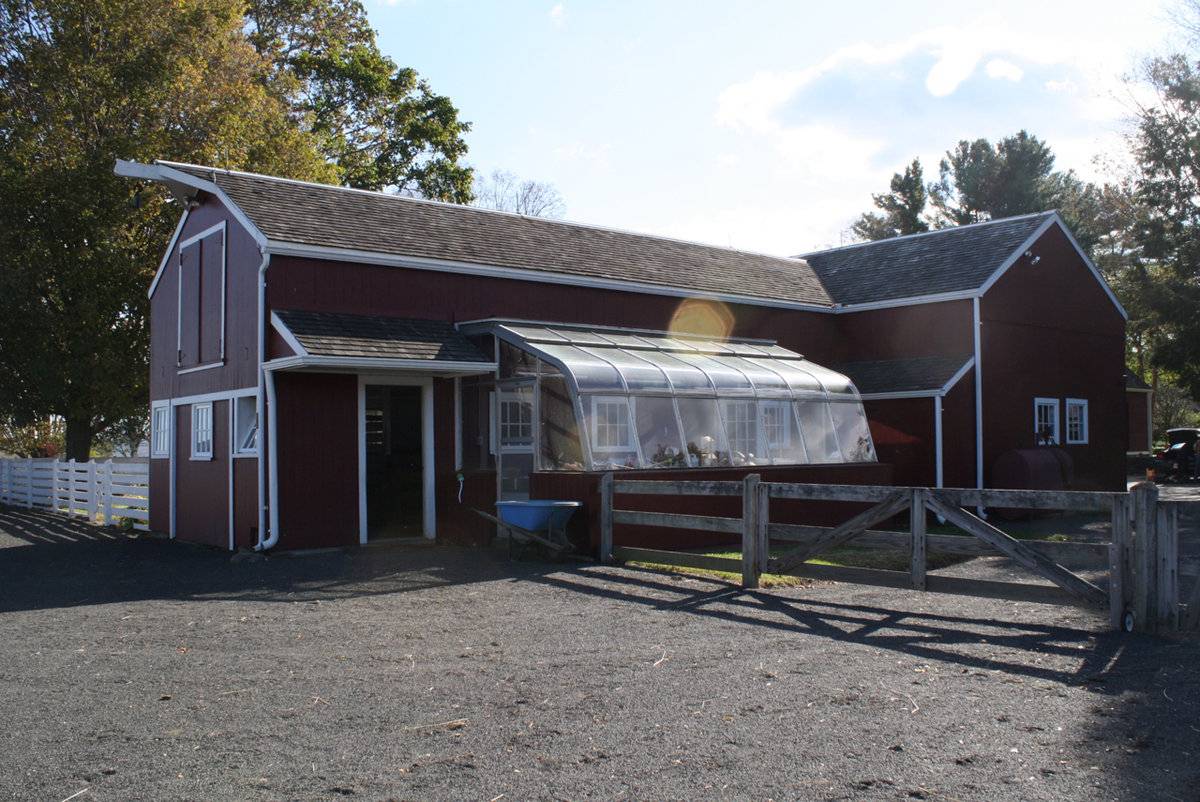
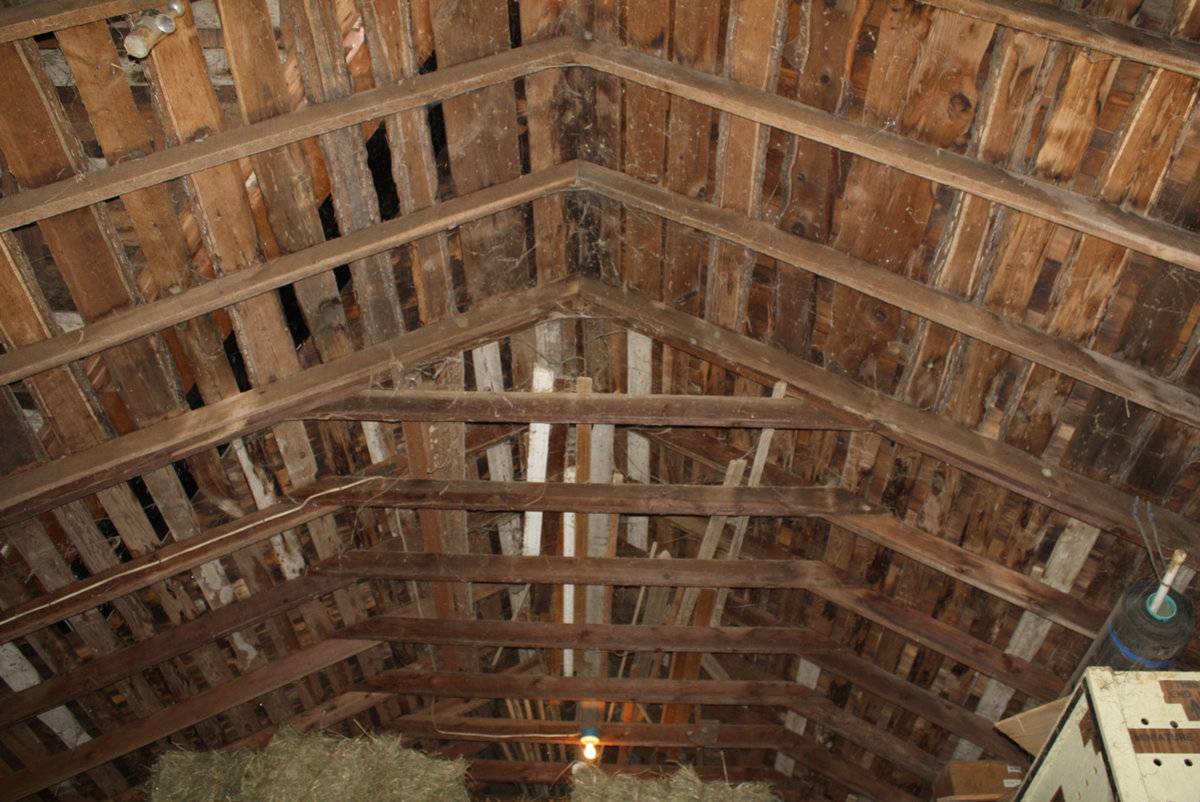
This handsome barn almost certainly originated in the 1800s as a traditional three-bay English barn with a central threshing floor, and then was extended by one bay to the east in the 20th century. The circular saw marks on the timber framing suggest a possible date of 1850-70. During that period the farmstead belonged to the Glover Botsford family. Before the eastern section was built, the wagon door that is now located to the west of center on the main, south elevation of the barn was a centrally located door, providing access to the threshing bay. The long north wing to the rear was added as a center-aisle milking parlor, possibly around 1920, when a subsequent owner, Charles Palmer, ran a dairy farm here.
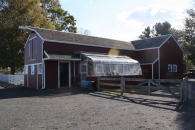
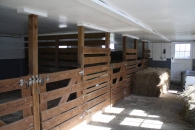
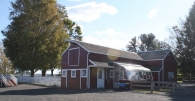
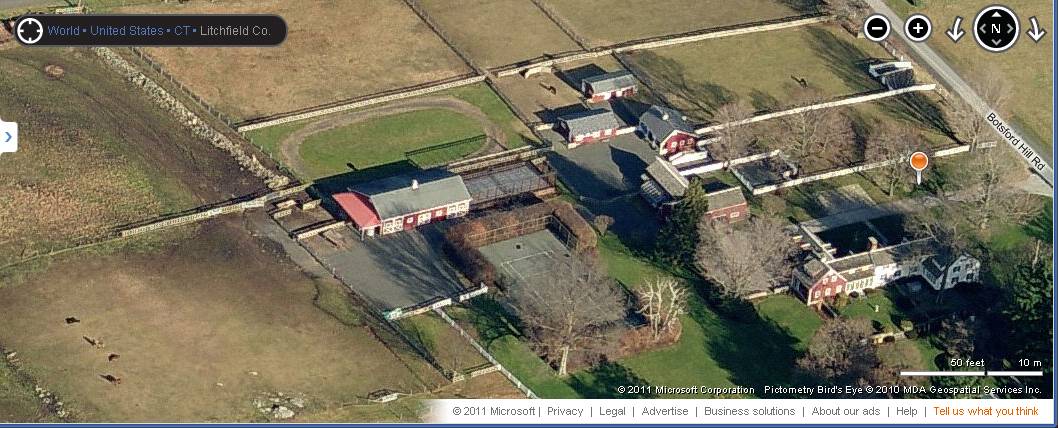
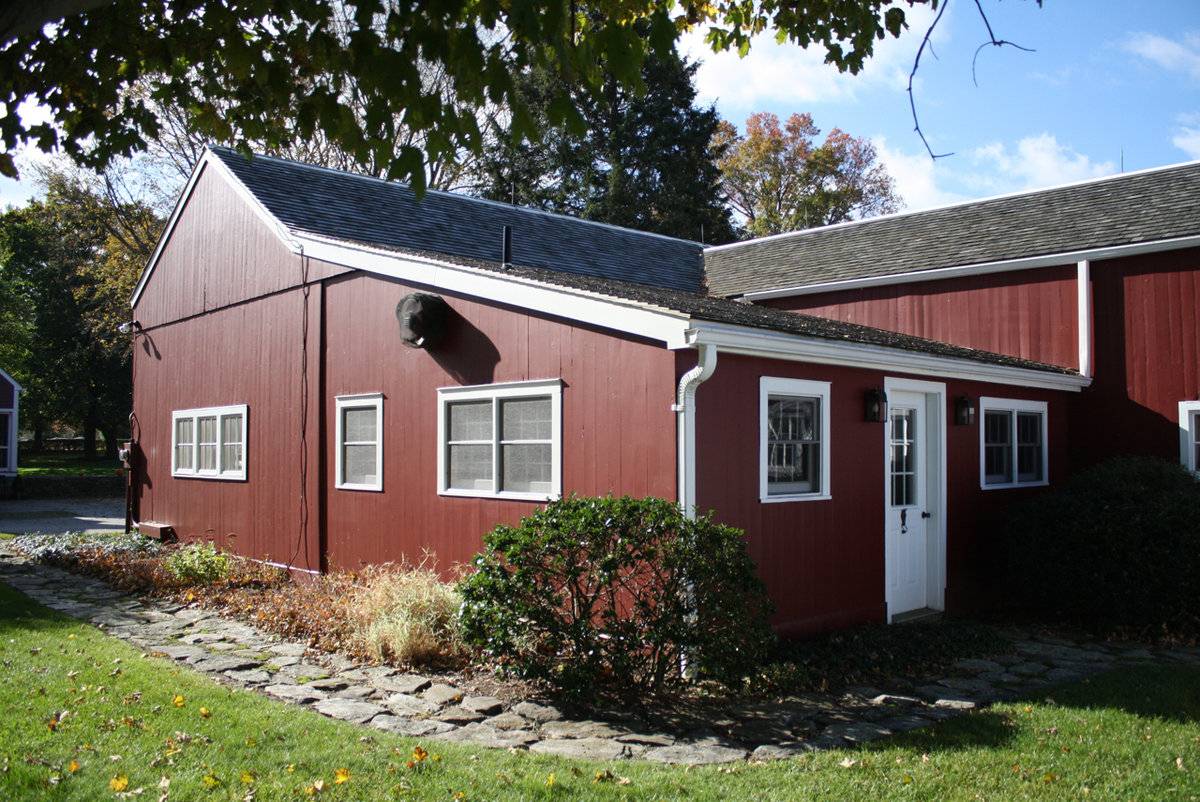
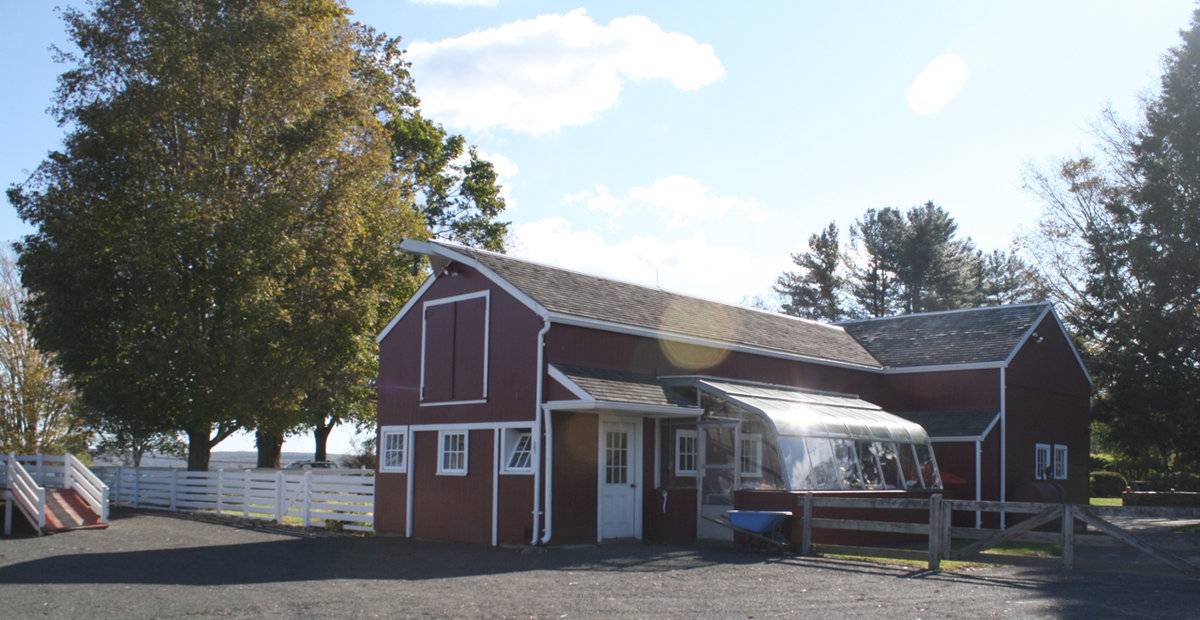
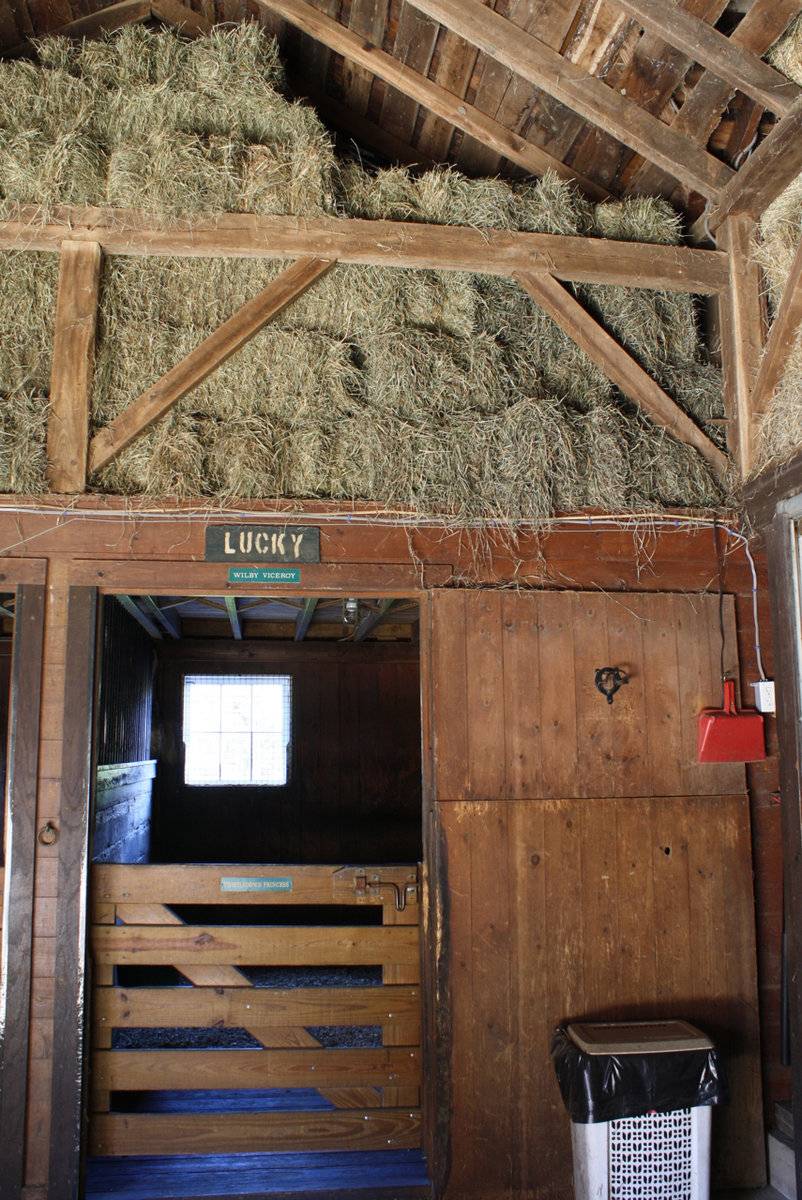
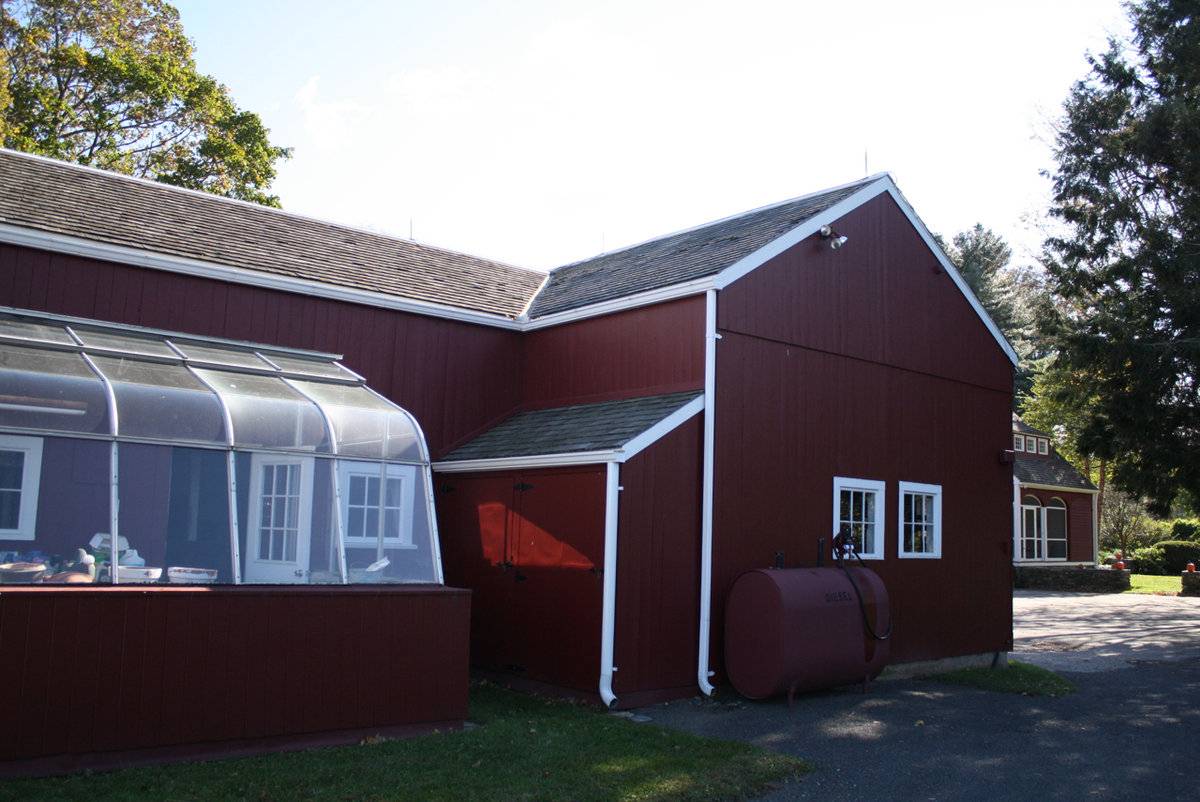
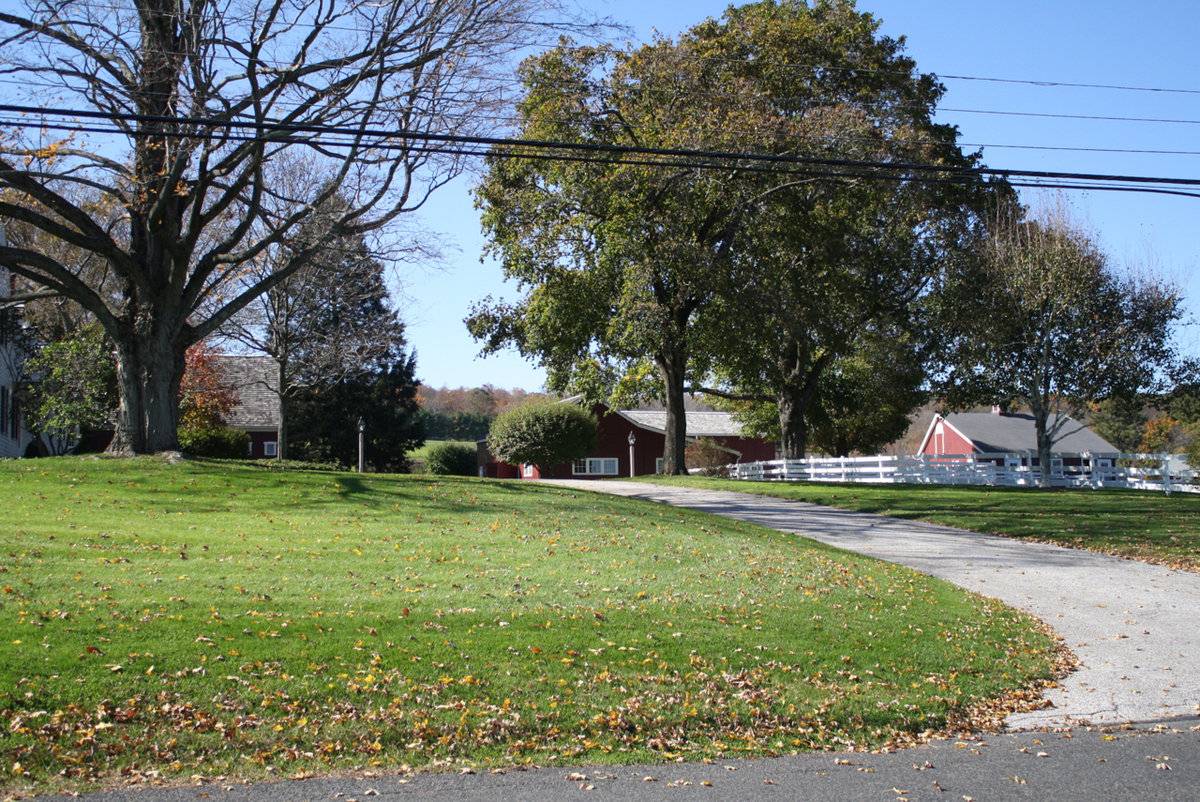
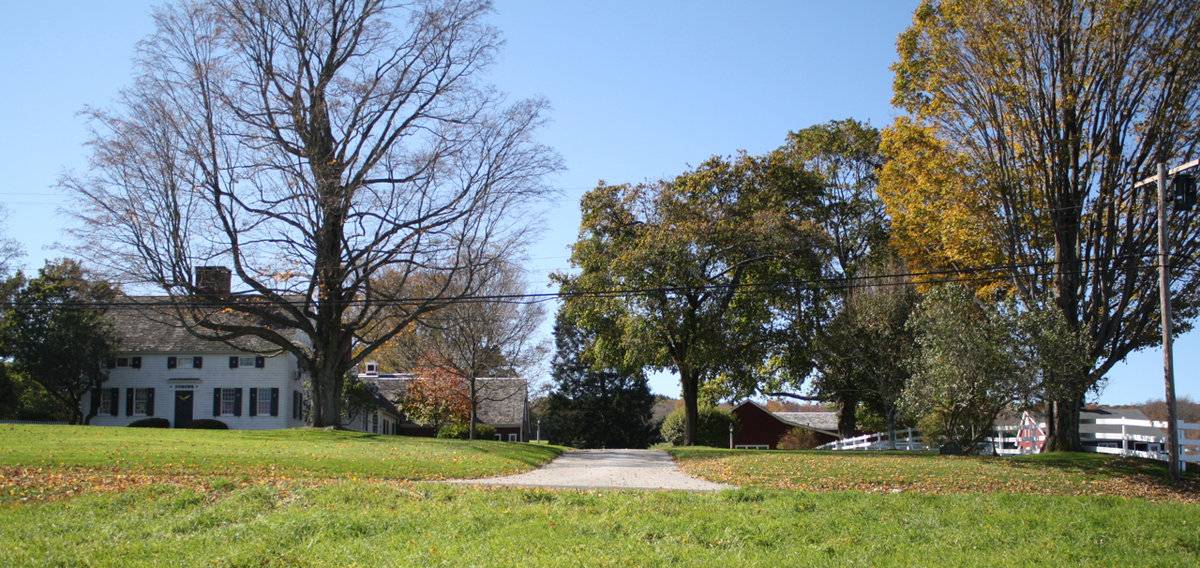
This is the main barn in a complex on the west side of the road. The driveway passes on the south side of the house and continues west to run on the north side of this building. Paddocks are located to the north with distant views to the east, and open lawn and scattered gardens. There are tennis court to the west and paddle tennis court to the northwest. Features include: 44 x 32, plus 36’-long north wing; asymmetrically massed barn consists of a peak-roofed barn standing with its gable ends to the east and west and a long, north wing intersecting to form a T-plan; shed-roofed office wing at east intersection; small shed at west intersection; main elevation faces south; rolling barn doors located off center to west; hinged doors to east; greenhouse on west elevation of rear wing; triangular hood at north gable end; 6-pane tilt windows; milled post-and-beam frame; concrete foundation and floor; box stalls; vertical tongue-and-groove barn board; red paint with white trim.
Barn V: (Root Cellar)
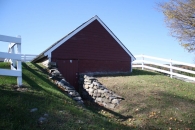
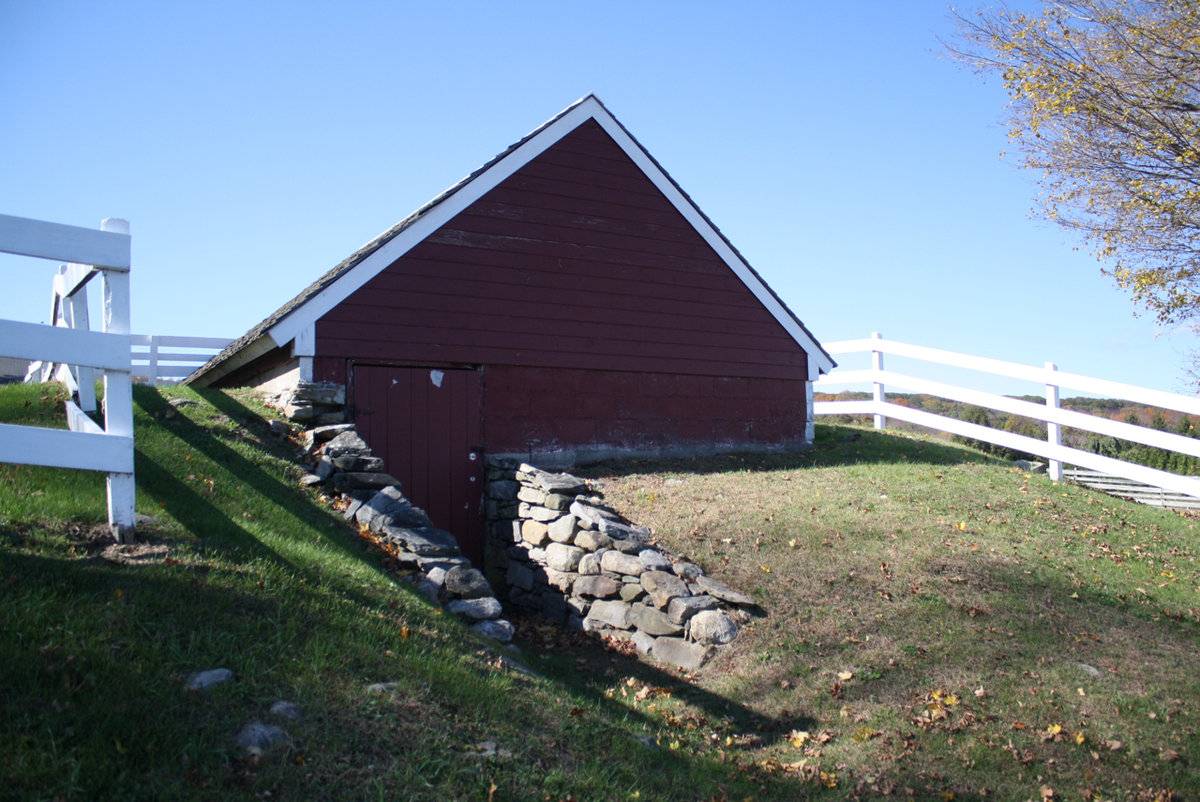
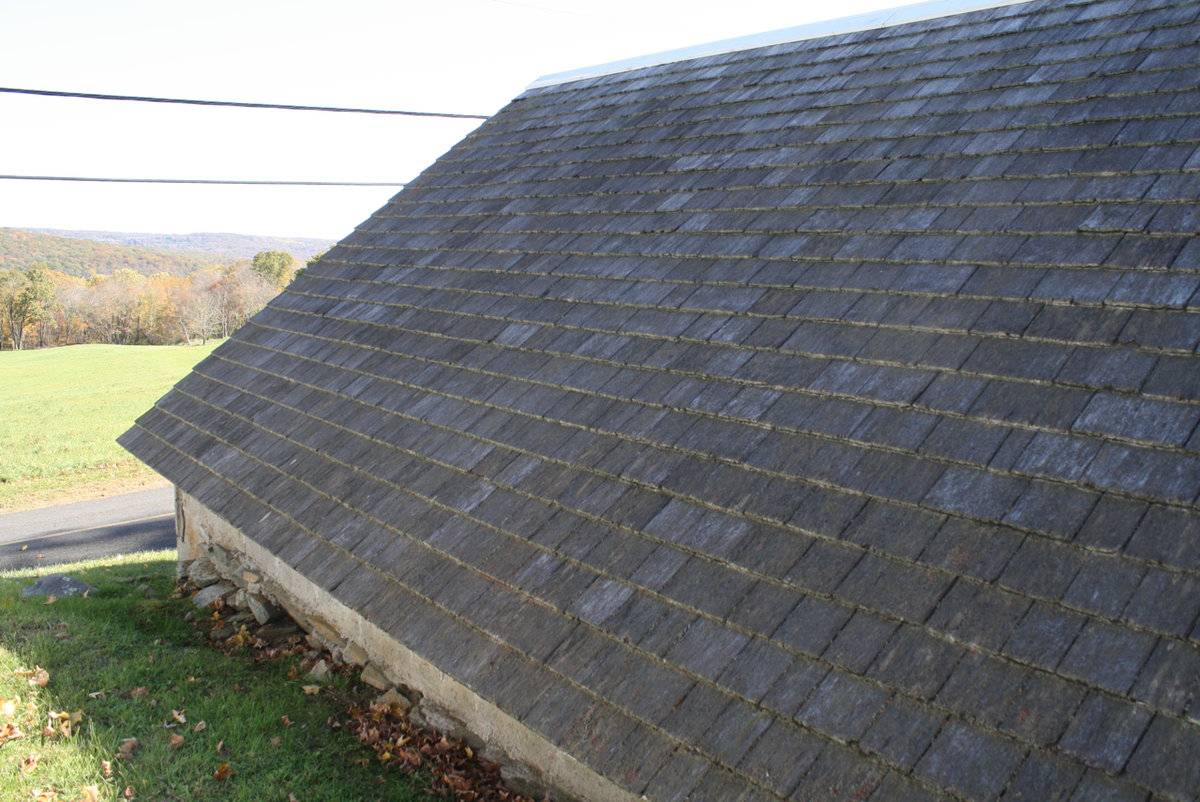
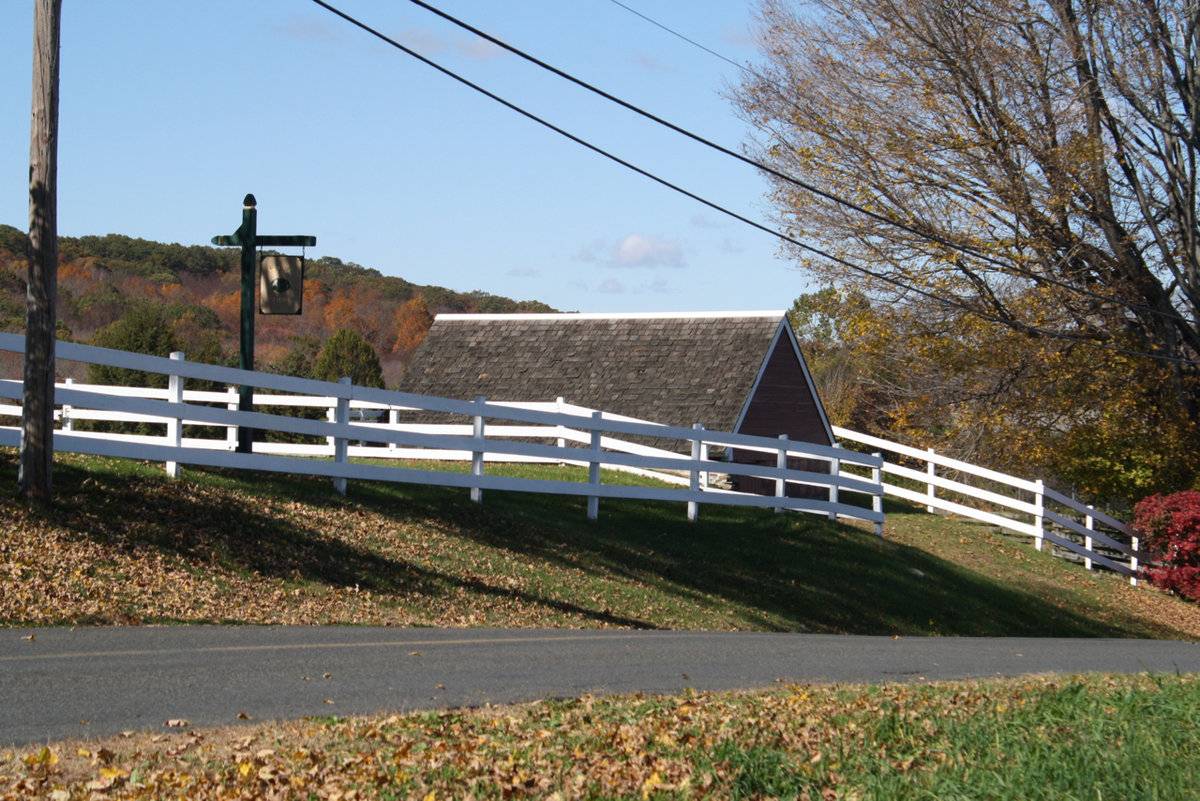
This deeply banked building s significant for its history as a root cellar. It is one of the older buildings constructed under the McCanns’ ownership, probably in the 1930s, and is unusual for having a true, framed roof rather than an earthen covering. The building was used to store apples and potatoes. It is located on a steep, grassy slope on the west side of the road. The house is located to the north, with the paddock and barn complex located to the west. Distant views are seen to the east. Features include:18 x 22; peak-roofed shed is banked almost fully into hillside; oriented with gable ends to the east and west; ground rises to eaves on north and south sides; stone retaining walls channel pathway to hinged door on left side of the east gable; loft-type door opens to paddock at the west gable; red paint with white trim.
Barn VI: (Built 1960)
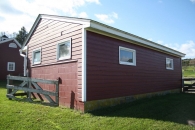
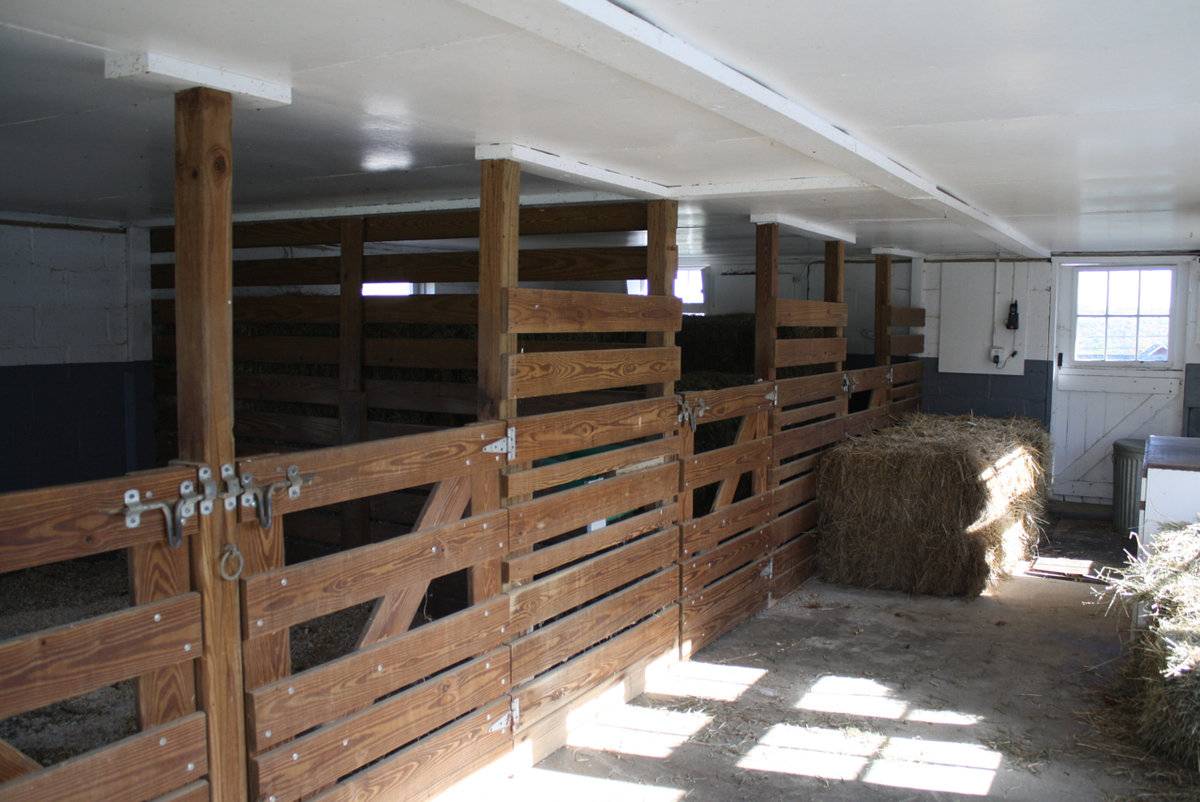
This stable was built by Franklin McCann, present owner of Thistledown, in the 1960s. It is located to the northeast of the small barn on the north side of the riding arena, surrounded by paddocks and turnouts. Features include: 10 x 12; peak-roofed stable stands with its gable ends to the west and east; saltbox profile; primary elevation faces south; pair of divided stable doors set under overhanging eaves; single door located in west gable end; red paint with white trim.
Historical significance:The New England barn or gable-front barn was the successor to the English barn and relies on a gable entry rather than an entry under the eaves. The gable front offers many practical advantages. Roofs drain off the sides, rather than flooding the dooryard. With the main drive floor running parallel to the ridge, the size of the barn could be increased to accommodate larger herds by adding additional bays to the rear gable end. Although it was seen by many as an improvement over the earlier side-entry English Barn, the New England barn did not replace its predecessor but rather coexisted with it, as both types continued to be built.
The oldest barns still found in the state are called the “English Barn,” “side-entry barn,” “eave entry,” or a 30 x 40. They are simple buildings with rectangular plan, pitched gable roof, and a door or doors located on one or both of the eave sides of the building based on the grain warehouses of the English colonists’ homeland. The name “30 by 40” originates from its size (in feet), which was large enough for 1 family and could service about 100 acres. The multi-purpose use of the English barn is reflected by the building’s construction in three distinct bays - one for each use. The middle bay was used for threshing, which is separating the seed from the stalk in wheat and oat by beating the stalks with a flail. The flanking bays would be for animals and hay storage.
By the mid-1800s many farmers saw their traditional English barn as being too small, inefficient, and old fashioned. As competition from the American West changed the economics of farming in New England, favoring larger herds and new ventures, some New England farmers ... expanded the older barns by building lean-to additions of the sides or rear of the barn. Some added basements, while others lengthened the barns by adding extra bays at the end. These extended barns often have several front doors, with one opening to the original threshing floor.
The term dairy barn is used as early as the 18th century (along with “cow house”). Modern dairy barns are characterized by their interior arrangements of stanchions and gutters to facilitate milking and the removal of manure. In some cases this is just a few stalls in the corner of a barn, in others it can be a large barn dedicated to that single purpose.
A frost-free subterranean room for storing vegetables through the winter, located in a barn basement or in a free-standing structure consisting of a below-grade cellar with roof.
Field Notes
Listed on the State Register of Historic Places 3/06/2013 Information from a survey of Roxbury by Rachel Carley. This farmstead belonged to the Glover Botsford family in the late 1800s. The Botsfords were local farmers for whom this road is named. A subsequent owner, Charles Palmer, ran a dairy farm here. By the mid-1930s the property was owned by Frasier McCann, the grandson of Frank Winfield Woolworth, founder of the F.W. Woolworth five-and-dime empire. McCann, a gentleman farmer, began assembling parcels of land around 1936 to create Golden Harvest Farm, where he maintained a herd of about 100 head of Golden Guernsey cattle. In the 1970s McCann switched to the higher-yielding Holsteins and also raised shorthorn steers for beef. He later sold much of Golden Harvest to a three-man partnership, which subdivided the land in the mid-1980s. Some of the property is part of the Roxbury Land Trust, and 50 acres here is now Thistledown Farm, still owned by the McCann family and now home to a number of horses. "I’m the estate manager here (Thistledown Farm, 119 Botsford Hill Road, the former Golden Harvest Farm’s main house with 50 acres). We breed Dartmoor and Welsh ponies. I train them to drive and ride. We have 10 horses and 10 beef cows. We went to England and bought 5 horses. I have one stallion." — Jim Conway
- Use & Accessibility
Use (Historic)
Use (Present)
Exterior Visible from Public Road?
Yes
Demolished
n/a
Location Integrity
Unknown
- Environment
Related features
Environment features
Relationship to surroundings
n/a
- Typology & Materials
-
Building Typology
Materials
Structural System
Roof materials
Roof type
Approximate Dimensions
Barn I: no dimensions, Barn II: 20 x 14, Barn III: 56 x 42, Barn IV: 44 x 32, Barn V: 18 x 22, Barn VI: 10 x 12.
- Source
-
Date Compiled
06/30/2011
Compiled By
Rachel D. Carley - CH
Sources
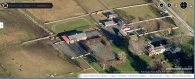
Aerial views from:
http://maps.google.com/
http://www.bing.com/maps/ accessed 9/30/2011.Carley, Rachel D., Barn Stories from Roxbury Connecticut, Roxbury Historic District Commission/Town of Roxbury/CT Commission on Culture & Tourism, 2010.
Cunningham, Jan, Roxbury, A Historic and Architectural Survey, Roxbury Historic District Commission, 1996-97.
Sexton, James, PhD; Survey Narrative of the Connecticut Barn, Connecticut Trust for Historic Preservation, Hamden, CT, 2005, http://www.connecticutbarns.org/history.
Visser, Thomas D.,Field Guide to New England Barns and Farm Buildings, University Press of New England, 1997, 213 pages.
- PhotosClick on image to view full file
-