Barn Record Lyme
RETURN TO ‘FIND BARNS’- Building Name (Common)
- n/a
- Building Name (Historic)
- n/a
- Address
- 34 Hamburg Road (Rte 156), Lyme
- Typology
- Overview
-
Designations
n/a
Historic Significance
Architectural description:
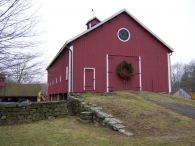
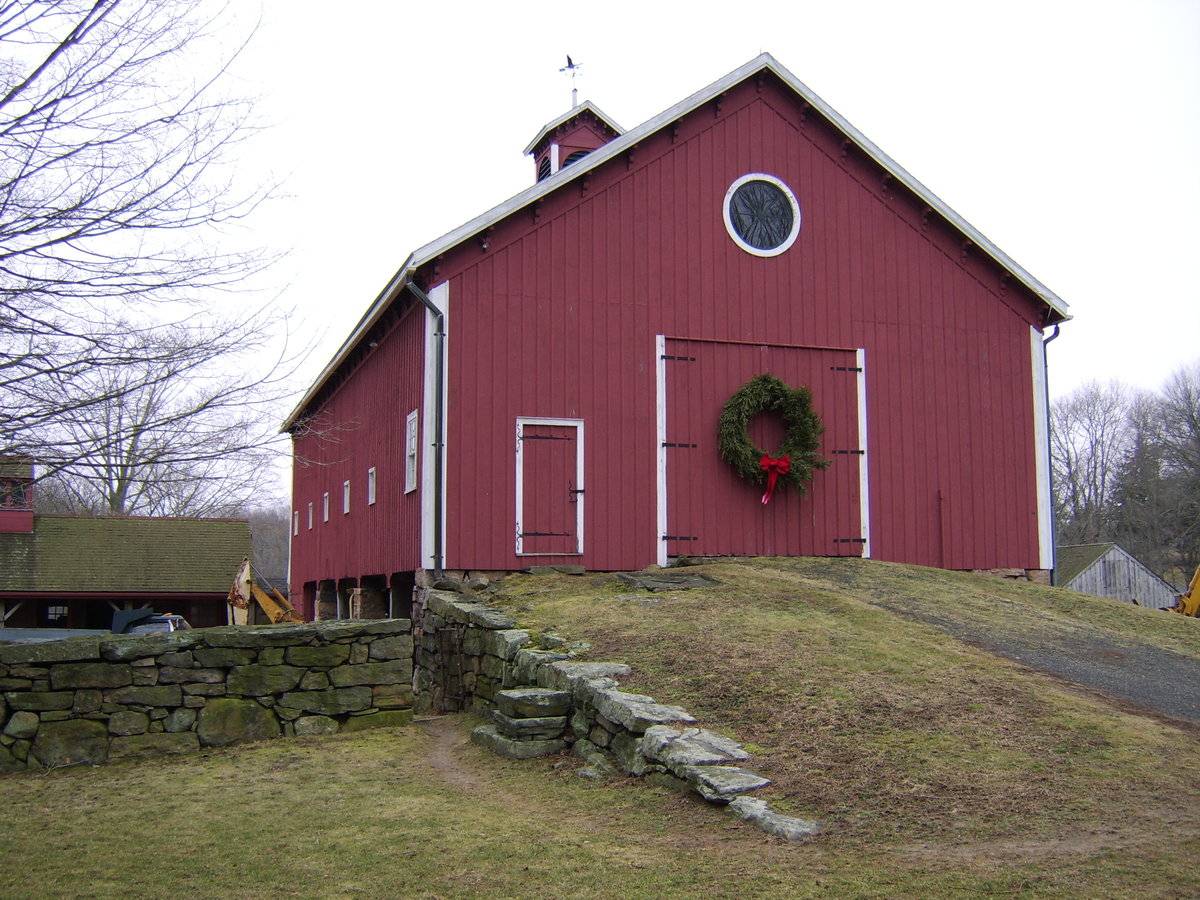
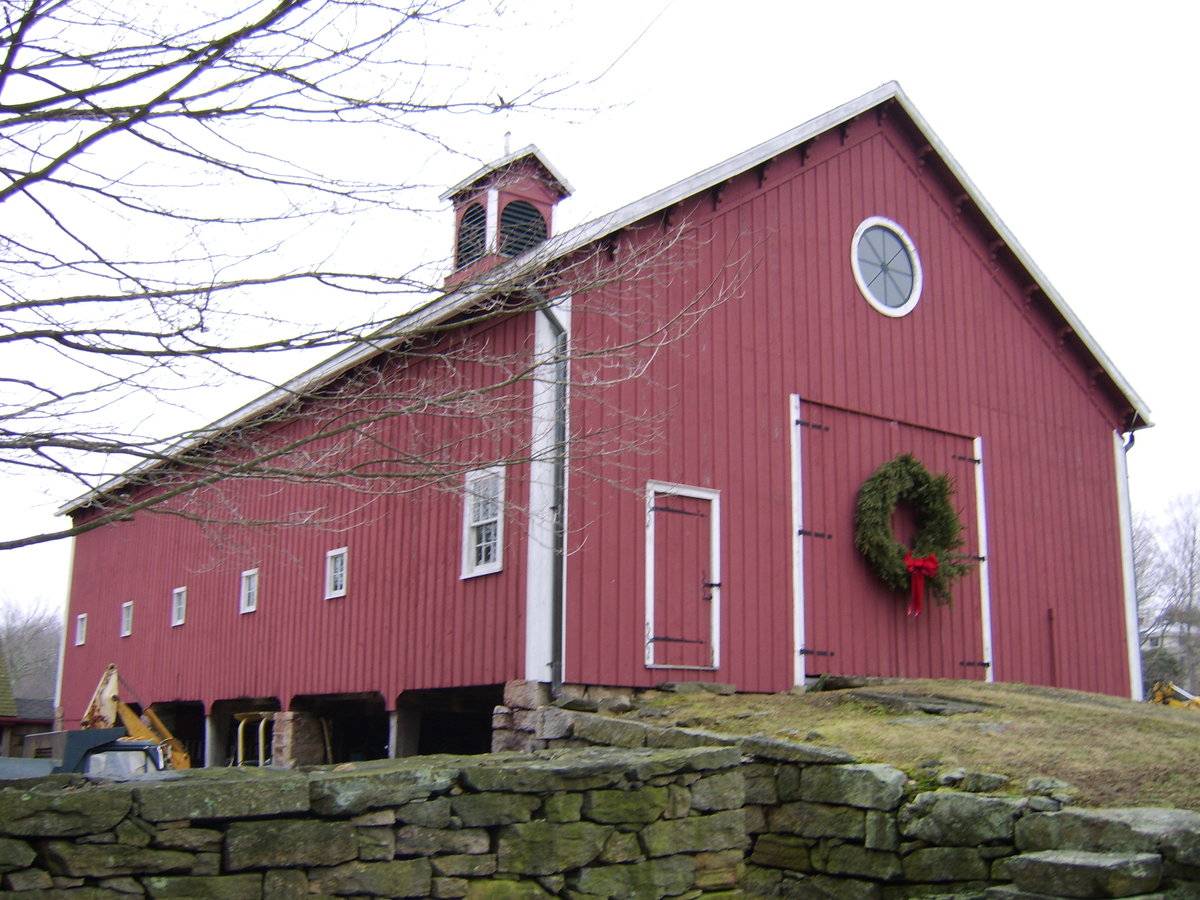
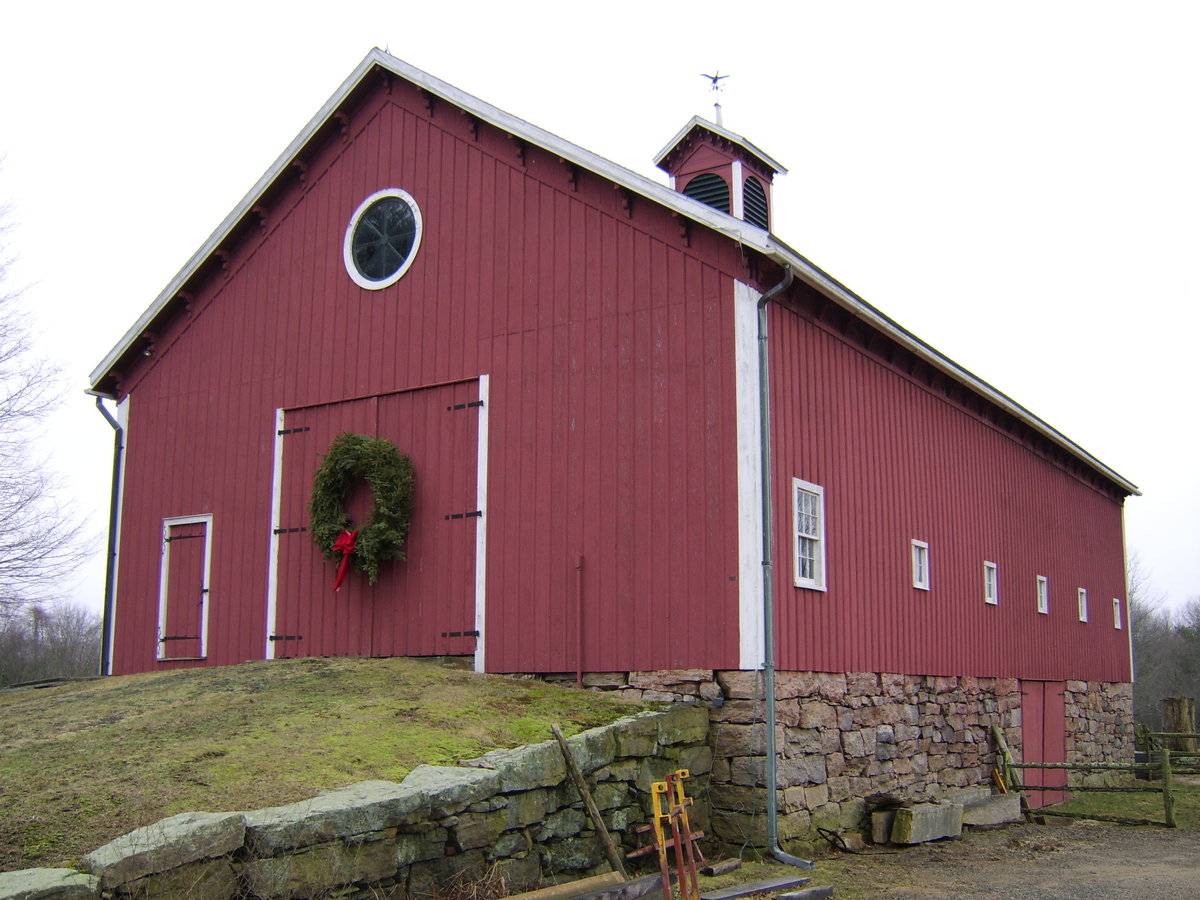
This is a 1 1/2-story, gable-entry, six-bay, bank barn with a high-drive. The main facade faces east towards Hamburg Road, which runs approximately north-south. The main entry is a pair of swinging hinged doors in the center of the east-gable facade. South of the main entry is a pass-through door with ornate hinges. Above in the attic of the gable is a round fanlight. The whole facade is accessed by an earthen ramp with un-mortared field-stone ends.
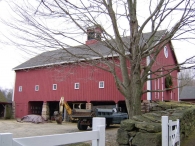
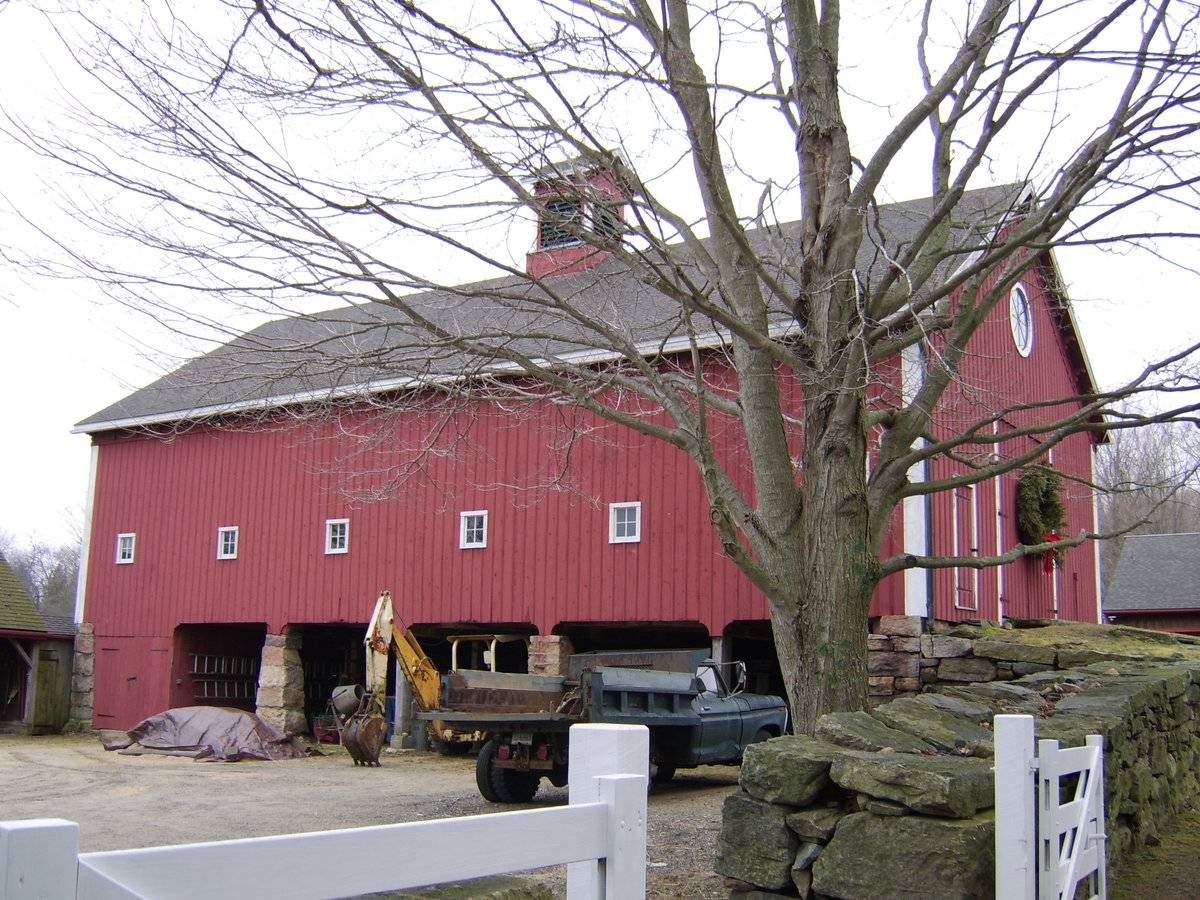
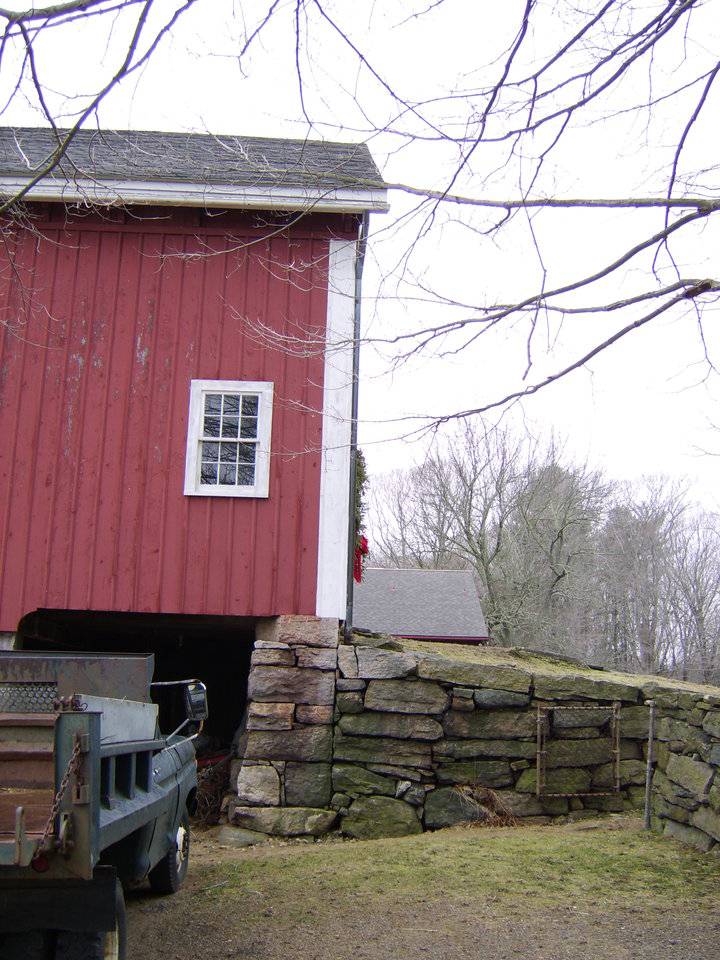
The south eave-facade grade drops away revealing the basement level below. The basement level is comprised of a series five open bays in all but the westernmost bay, which has a pair of swinging hinged doors. Above in the main level is a series of four-pane windows with trim, each centered in a bay, except for the easternmost bay, which has a six-over-six double-hung window.
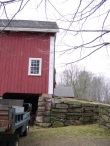
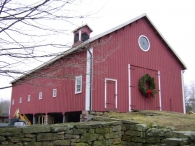
The north eave-facade in the main level is identical to the south facade; a series of four-pane windows with trim, each centered in a bay, except for the easternmost bay, which has a six-over-six double hung window. The basement level of the north eave-facade is un-mortared field-stone, except for the fourth bay from the east, which has a pair of swinging hinged doors. The west gable-facade is identical to the east gable-facade except there is no pass-through door.
The roof has a projecting overhang with brackets over fascia. A bracketed gable cupola is centered on top of the ridge-line of the roof, which has asphalt shingles. The barn is sheathed in board-and-batten siding painted red with white trim.
Historical significance:
The New England barn or gable front barn was the successor to the English barn and relies on a gable entry rather than an entry under the eaves. The gable front offers many practical advantages. Roofs drain off the side, rather than flooding the dooryard. With the main drive floor running parallel to the ridge, the size of the barn could be increased to accommodate larger herds by adding additional bays to the rear gable end. Although it was seen by many as an improvement over the earlier side-entry English Barn, the New England barn did not replace its predecessor but rather coexisted with it.
The main innovation the high-drive, three- or four-story design was to provide access near the top of the haymow so that loads could be dumped from wagons rather than hoisted into a loft above. The top main door on High-drives usually extends above the level of the eaves on the sides and often had ramps.
Field Notes
n/a
- Use & Accessibility
Use (Historic)
Use (Present)
Exterior Visible from Public Road?
Yes
Demolished
n/a
Location Integrity
Unknown
- Environment
Related features
Environment features
Relationship to surroundings
This barn is at the heart of a farming complex. East of the barn, along the street, is the house that is associated with the barn, with its ridge-line running parallel with Hamburg Road. Between the house and the barn is a two-bay garage. To the north of the barn is smaller three-bay barn. Northwest of the barn is a pole barn. Further north of the two barns is a long tract of open space that runs east-west and is boarded by a stone wall. Perpendicular to the barn is a gable-roofed shed. West of the barn is an open tract of land that runs east-west. South of the complex is another open tract of land that runs east-west that is bordered by stone walls and Lord Hill Road. The total size of the site is 115.6 acres. The area surrounding the site is residential, active agriculture, open space and woodland.
- Typology & Materials
-
Building Typology
Materials
Structural System
Roof materials
Roof type
Approximate Dimensions
n/a
- Source
-
Date Compiled
07/20/2010
Compiled By
Todd Levine, reviewed by the Connecticut Trust
Sources
Photographs by Todd Levine.
Sexton, James, PhD; Survey Narrative of the Connecticut Barn, Connecticut Trust for Historic Preservation, Hamden, CT, 2005, http://www.connecticutbarns.org/history.
Visser, Thomas D.,Field Guide to New England Barns and Farm Buildings, University Press of New England, 1997.
Map of the Lyme, CT, retrieved on July 20, 2010 from website www.zillow.com.
Town of Lyme assessors office, Town Hall, 480 Hamburg Road, Lyme, CT.
- PhotosClick on image to view full file
-