Barn Record Bridgeport
RETURN TO ‘FIND BARNS’- Building Name (Common)
- Beardsley Park Trolley Barn
- Building Name (Historic)
- Beardsley Park Trolley Barn
- Address
- 1875 Noble Avenue, Bridgeport
- Typology

- Overview
-
Designations
Historic Significance
Architectural description:
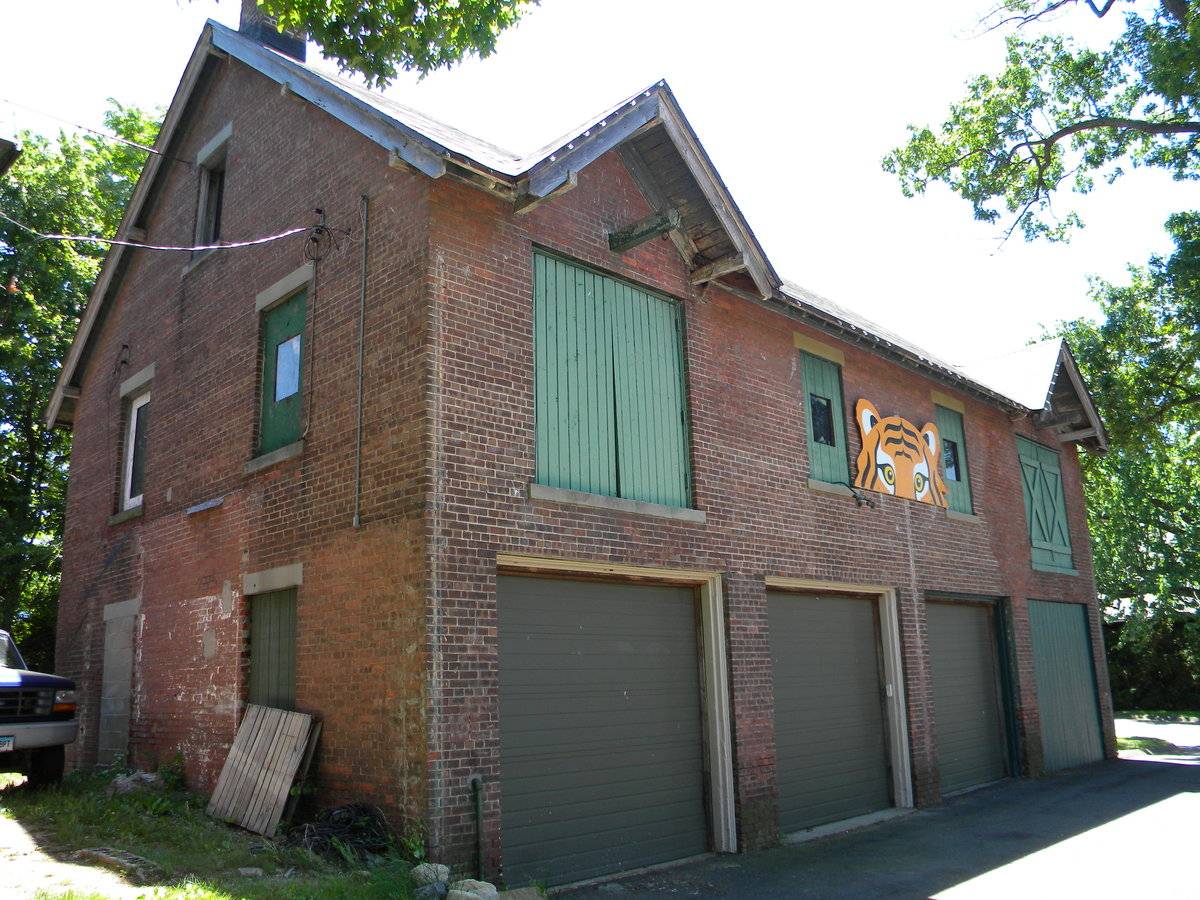
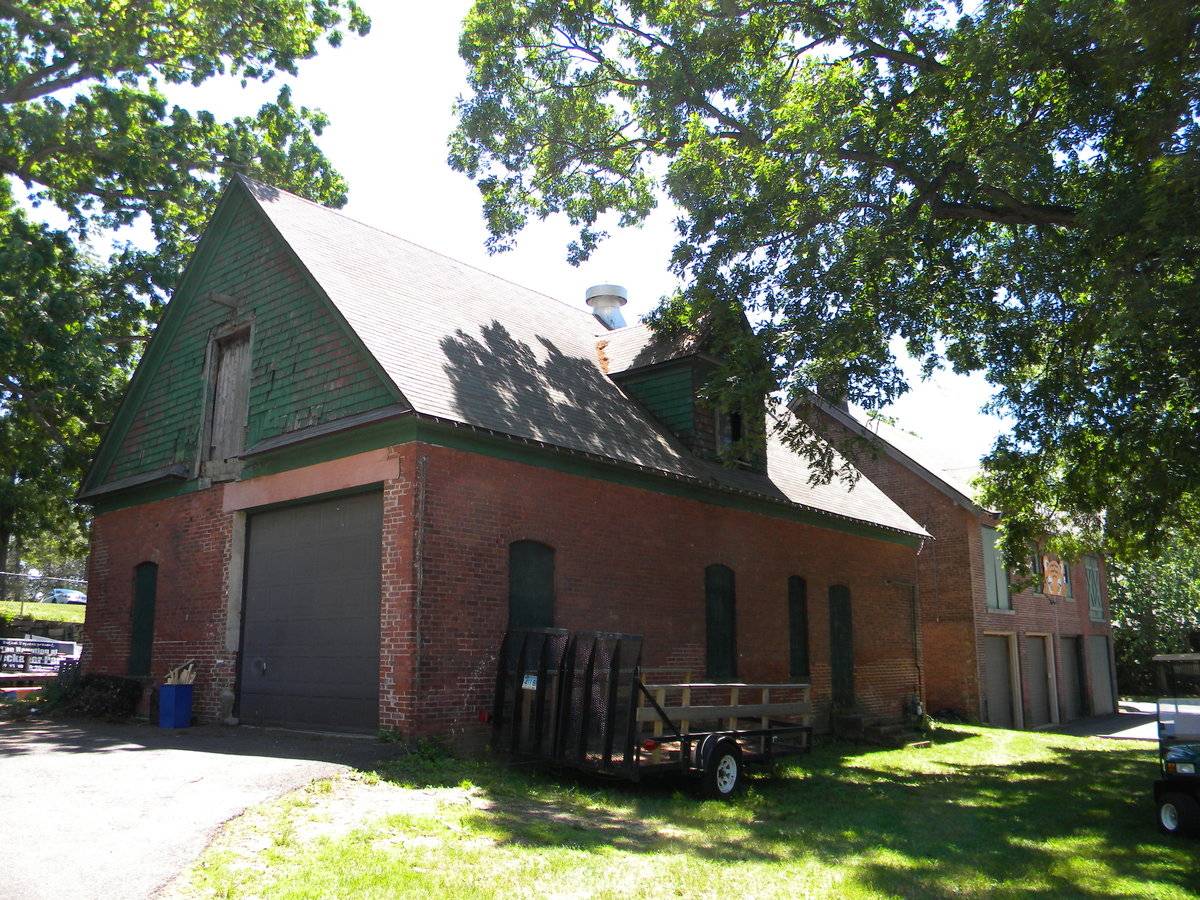
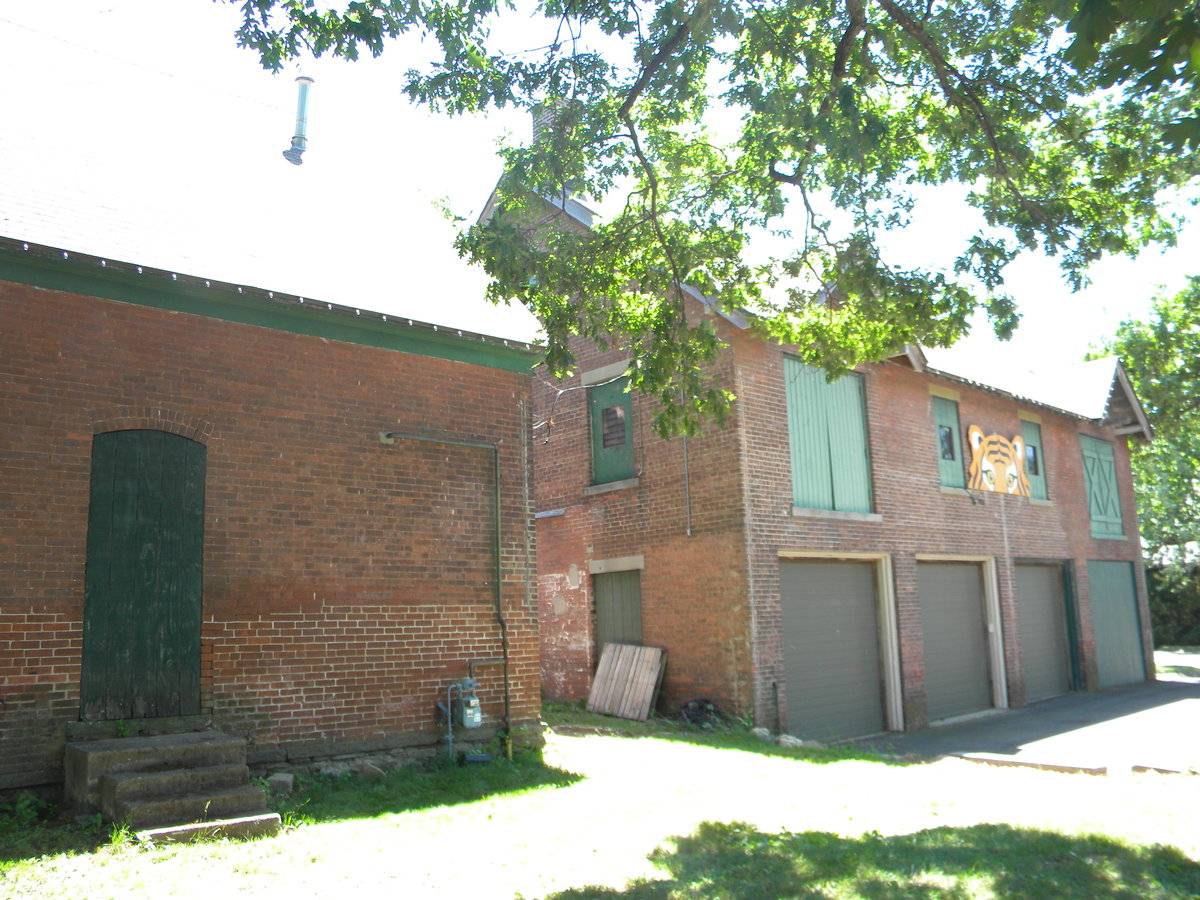
Excerpt from Ransom, Section 7: ca.1900 Brick Barns. Face west toward roadway and pond. South barn: 1 1/2 stories high, under slate gabled roof. First floor of front elevation filled by four overhead doors. Second floor has two central flat-arched windows flanked by loading doors. Small peaked cross gable over each loading door. Single plain chimney in front of ridge line at north wall. North barn: 1-story building under asphalt-shingled gable roof. In front elevation, single window to north and group of three to south, southernmost of which has been made into a door. Windows are segmental-arched and have stone sills. Central cross gable has gable end treated as a pediment and wood-shingled sides. In south elevation, row of four small segmental-arched windows high up, perhaps for horse stalls. Rear roof slope deteriorated. {Photograph 6)
Field Notes
Enclosed are pictures of Beardsley Park Trolley Barn. Note that the Barn to the left has a stone foundation opposed to the barn on the right. The third building to the right is the Casino at Beardsley Park. National Register Nomination No. 98000357
- Use & Accessibility
Use (Historic)
Use (Present)
Exterior Visible from Public Road?
Yes
Demolished
n/a
Location Integrity
Unknown
- Environment
Related features
Environment features
Relationship to surroundings
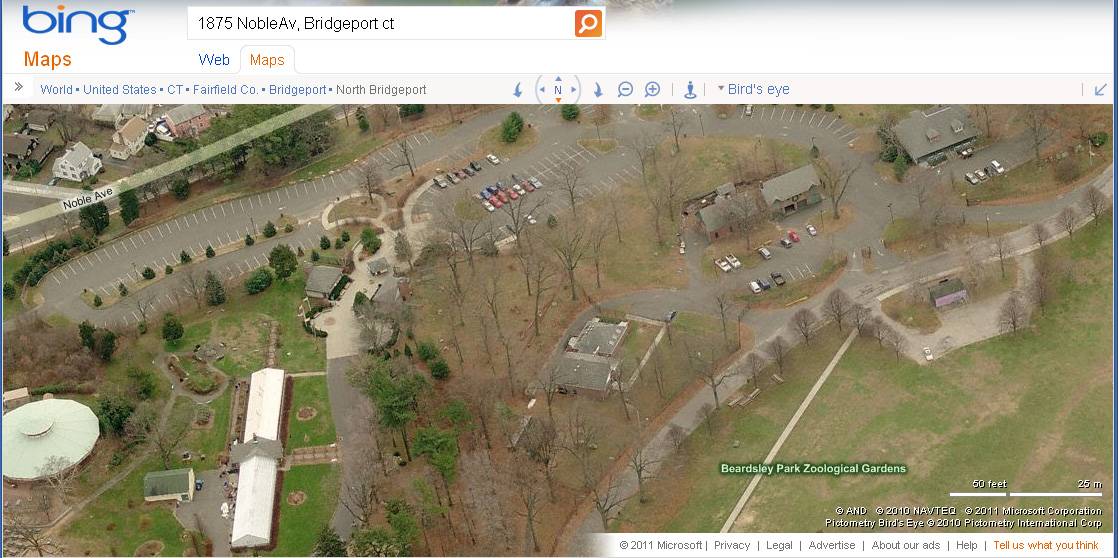
Beardsley Park was designed by the Frederick Law Olmsted office as a rural park, emphasizing gently rolling landscapes, naturalistic planting, curving roadways, and few intrusions. It was created as open space for passive use.
The main entrance of the park at its southeast corner is opposite 1850 Noble Avenue.
Inside the park, the road turns right, to the northeast, with Bunnell’s Pond, which is within the park’s boundary, on the left (northwest) and park buildings and the zoo on the right (northeast). Vegetation in this section of the park consists of a dense grove of beech, oak, and hemlock trees east of the road and a wide greensward to the west. The greensward, approximately 250 feet long, slopes down to Bunnell’s Pond, a city reservoir.
The first building in the park, called the Casino because of alleged resemblance to frame casinos in general, is on the east side of the roadway. The Casino’s dominating architectural feature is its tall enveloping hipped roof which is truncated at the top and flares out at the eaves on all four sides. The design is supported by the turned balusters and sawn brackets of its wraparound porch in the Queen Anne style, as well as
the imbricated shingles on the south side elevation. The overall effect is Rustic. This is the oldest building in the park, dating from 1884. ... Recently renovated, the Casino now serves as offices for the
Connecticut Zoological Society and the Beardsley Zoological Gardens (Photograph 4).
Up the hill behind the Casino, to the east, stands another frame resource, called the P.A.L. Building ... The vertical wooden siding and slender
bargeboards, while probably not original, give the building the look of the late 19th or early 20th century, as did the heavy wooden shingles which were recently replaced due to severe deterioration (Photograph 5).Next on the main roadway are two gable-roofed brick barns whose ages are not
documented, but whose loading doors, segmental-arched windows, and stone sills suggest a date of ca.1900. The barns continue in use as garage and storage space.Although the zoo has been in existence in its present location since 1922, most of its present buildings and structures are less than 50 years old. ... An exception to this general statement is presented by the greenhouses,
which are older. Their complex consists of a central small 1-story brick building used as a headhouse (Photograph 13), flanked by apparently identical glass houses (Photograph 12).
The brick building, 1897, predates the zoo and is thought to have served as a potting shed for horticultural activities of the park. Its half-timbered gable ends and roof overhang qualify it for the Queen Anne style. The south greenhouse was erected in 1922 at the time the zoo was started, although the function of the greenhouse v/as not zoological. It has the appearance typical of Lord & Burnham greenhouses, and is confirmed by the archivist of
Lord & Burnham records to have been made by that firm (New York Botanical Garden letter, August 1, 1997). The greenhouse’s structural members are cypress and steel. Corrosion has caused extensive deterioration of the metal components, perhaps putting the building beyond repair. In contrast, the north glasshouse, 1968, is aluminum construction and in good condition. A nameplate inside identifies the maker as “Ickes-Braun Glasshouses, San
Jose, Calif., Chicago, 111, and Ontario, Canada.” (Ransom, Section 7)- Typology & Materials
-
Building Typology
Materials
Structural System
Roof materials
Roof type
Approximate Dimensions
n/a
- Source
-
Date Compiled
06/05/2011
Compiled By
Alicia Labrador - CH
Sources
Ransom, David F., National Register Nomination No. 98000357, National Park Service, 1998.
- PhotosClick on image to view full file
-