Barn Record East Lyme
RETURN TO ‘FIND BARNS’- Building Name (Common)
- Gorton, William, Farmstead
- Building Name (Historic)
- Gorton, William, Farmstead
- Address
- 14 West Lane, East Lyme
- Typology

- Overview
-
Designations
Historic Significance
Exceprts from NR nomination,
Description, Section 7:
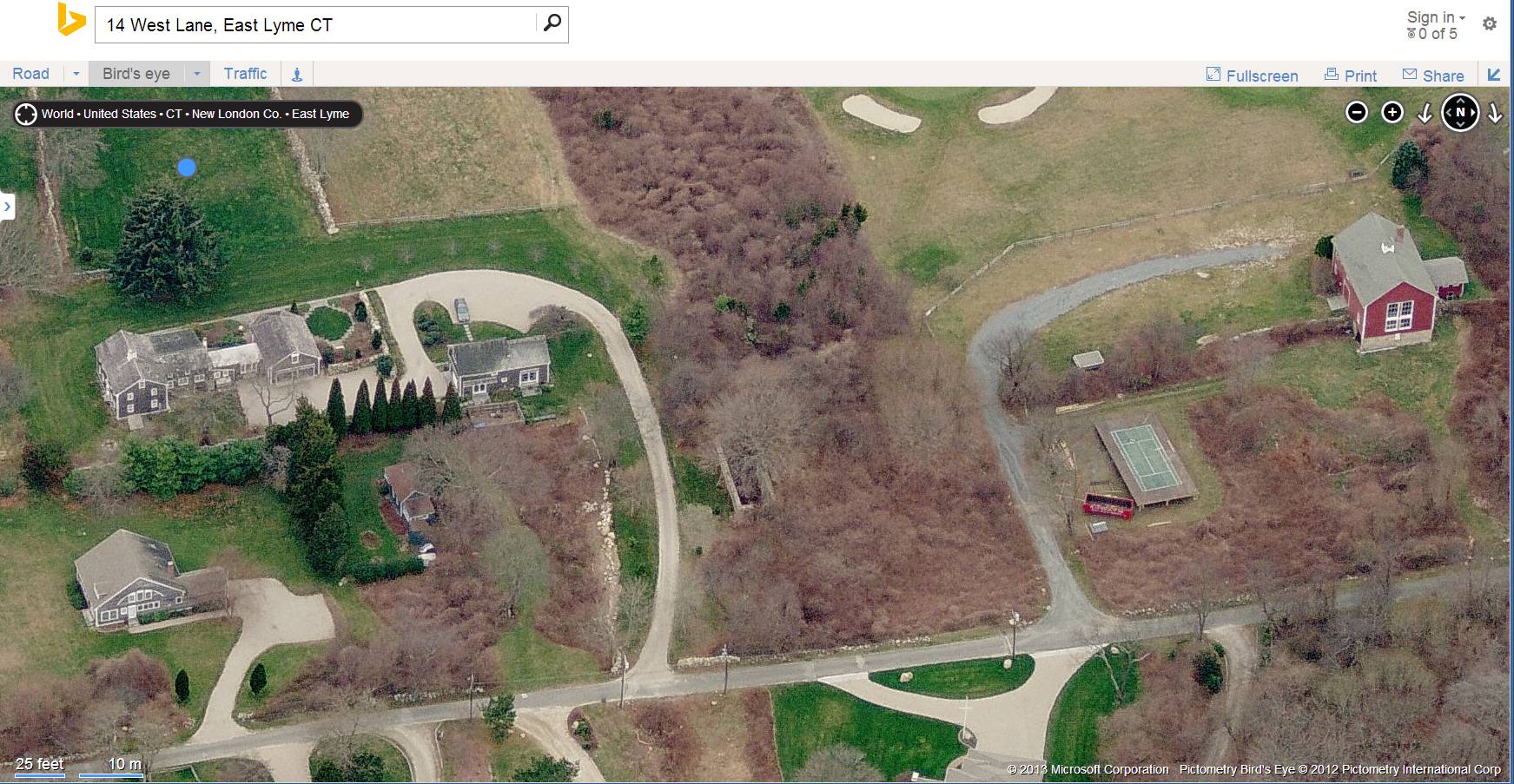
The William Gorton Farm is a complex consisting of a farmhouse and associated
outbuildings and other remains located on Black Point in East Lyme, Connecticut.
The farmhouse faces southwards towards the end of Black Point on a gentle
slope. Associated with it are two barns, a blacksmith shop, the stone foundation
of an icehouse, and the remains of a dock on the eastern side of Black
Point. All structures are frame and range in date from the 18th century
to the late 19th century. The farmhouse, of late 18th-century date, is 2 1/2
stories in height with a two-story ell which may be of somewhat earlier date.
Gable roofs and a large center chimney distinguish this building. The barns
are two stories in height with gable roofs. The blacksmith shop is a small one~
story building with shed-like additions on either end. All buildings are to
the rear and northeast of the main house. To the east of the house is West
Lane, from which a driveway passes between the icehouse foundation and the
nearest barn. An earlier driveway can still be discerned by a break in the
fence on West Lane and stone gateposts near the blacksmith shop. To the east
of the farmhouse, across West Lane, are the remains of a dock built in 1858
(Plan 1)....
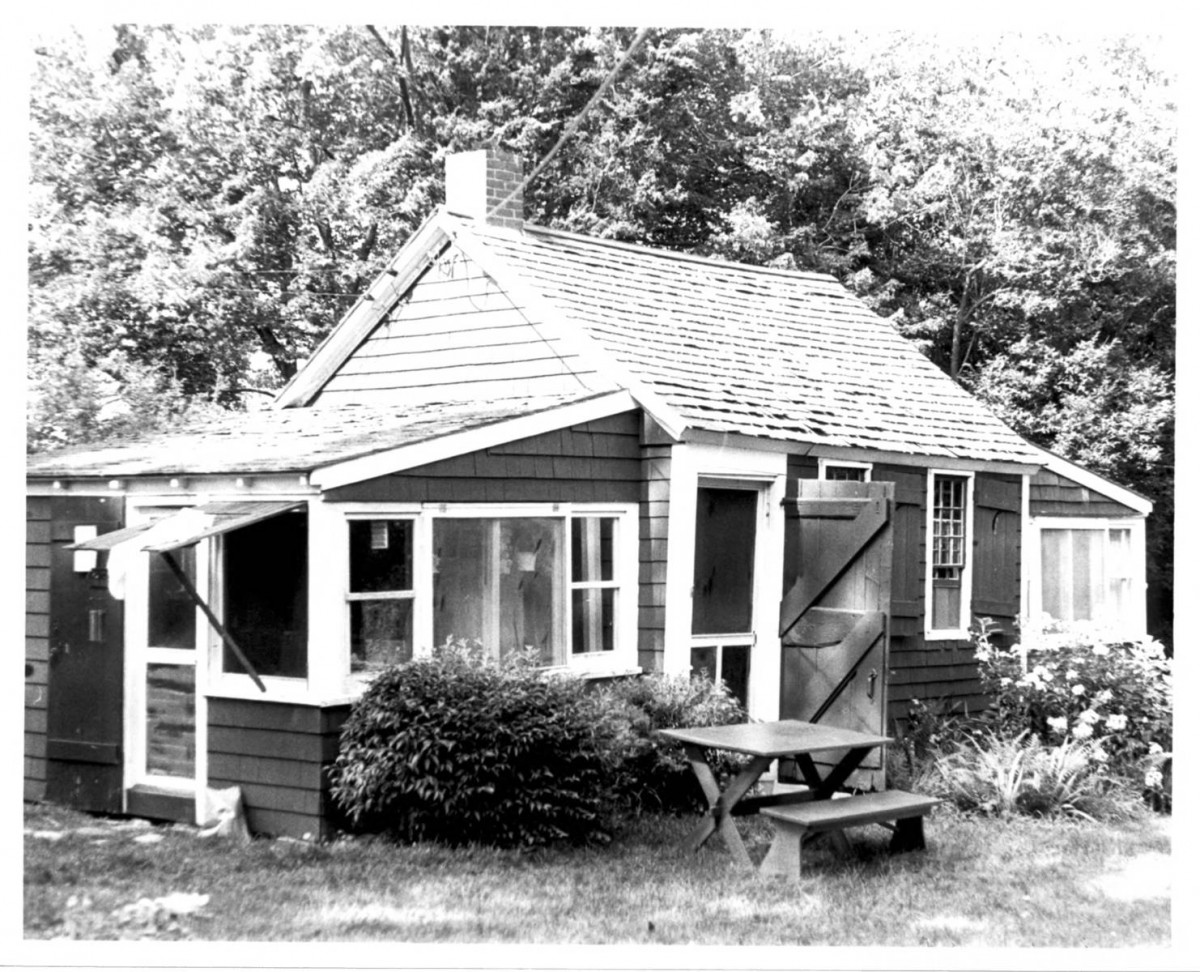
The blacksmith shop, of mid- 19th-century date, was converted in the 1920s
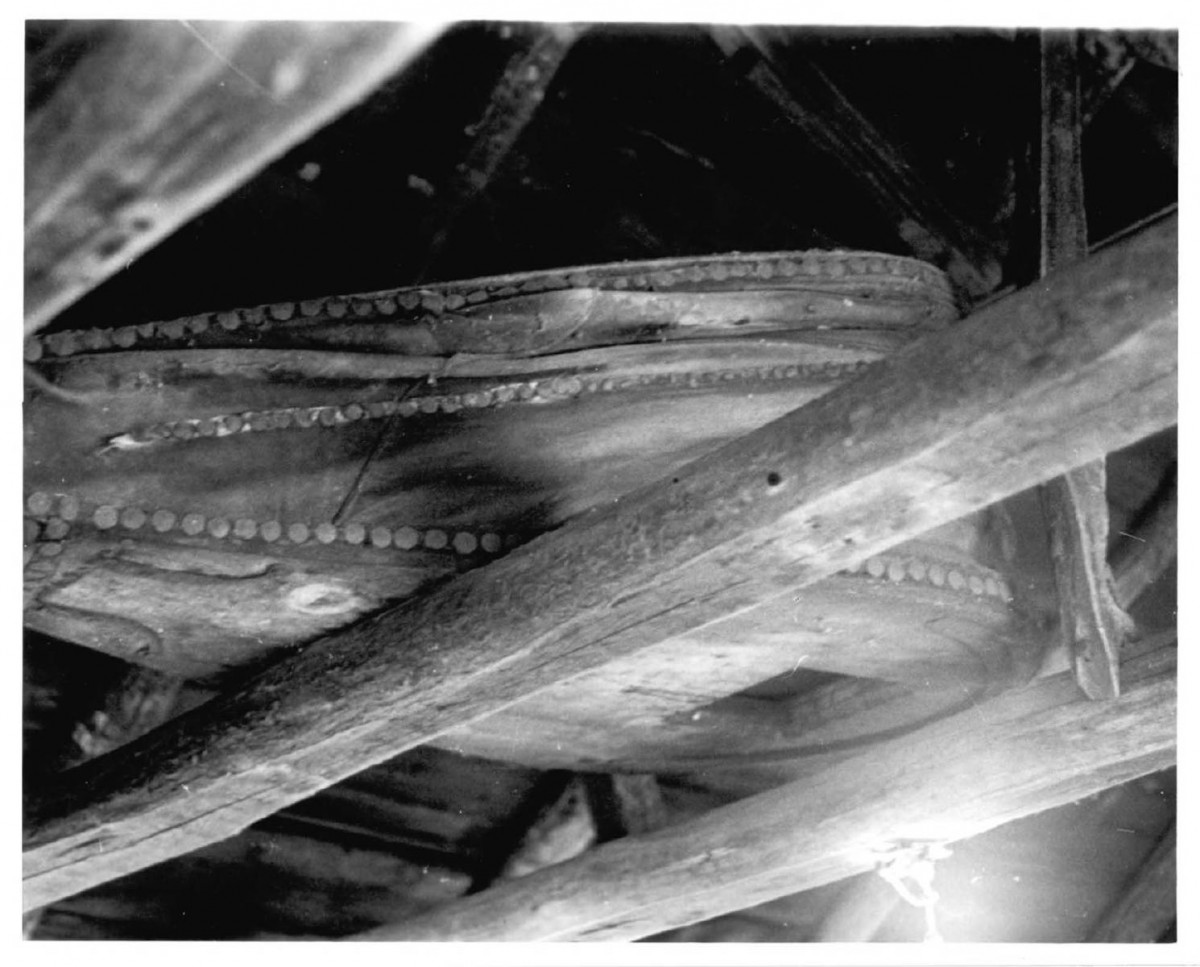
to a summer cottage with the addition of two 10’ by 12’ wings (Photograph
7). The central portion, however, retains the original bellows in situ
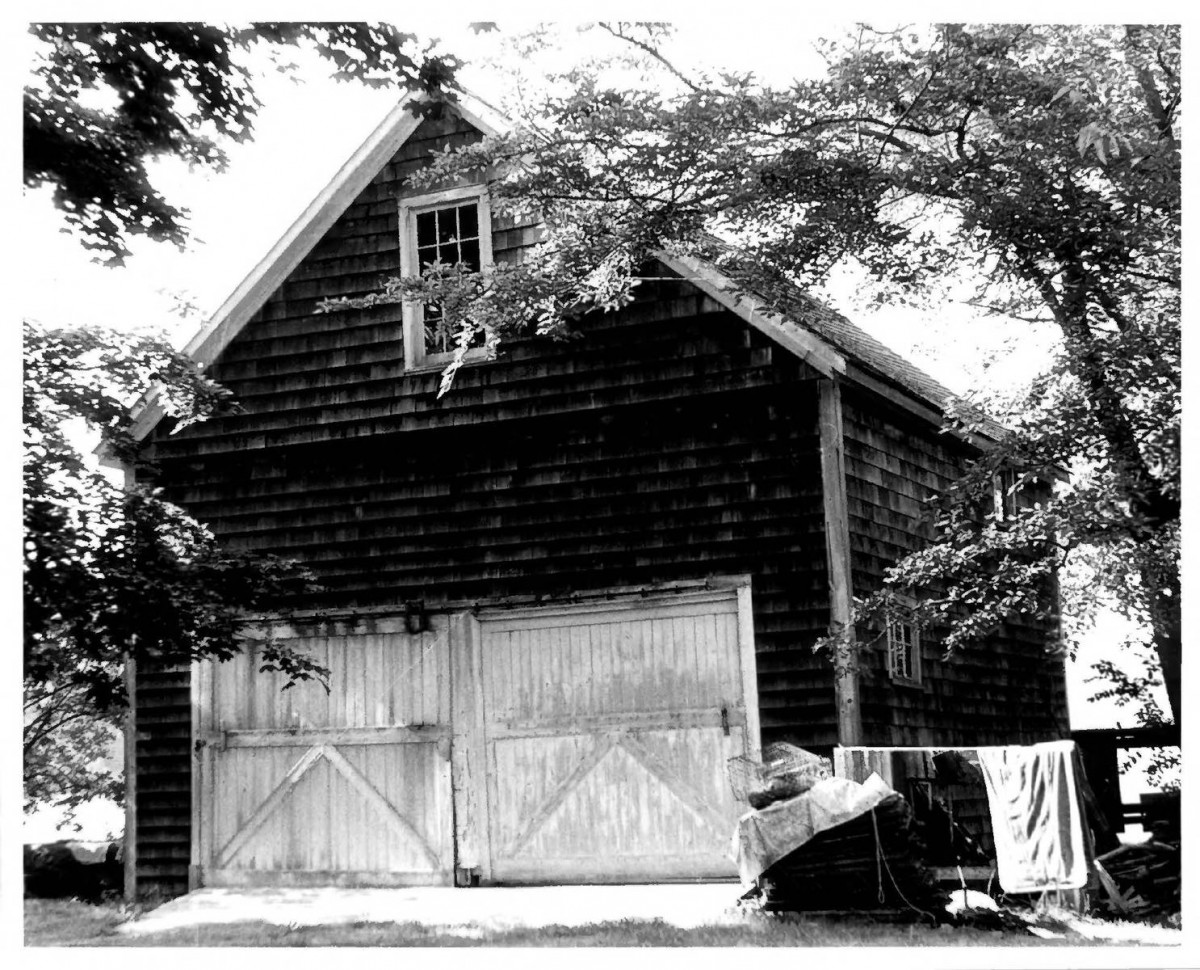
(Photograph 8). The horse barn nearby has accomodations for horses on the
first floor, with hay storage on the second floor (Photograph 9). Across
the driveway from this barn are the foundations of an icehouse. Further to
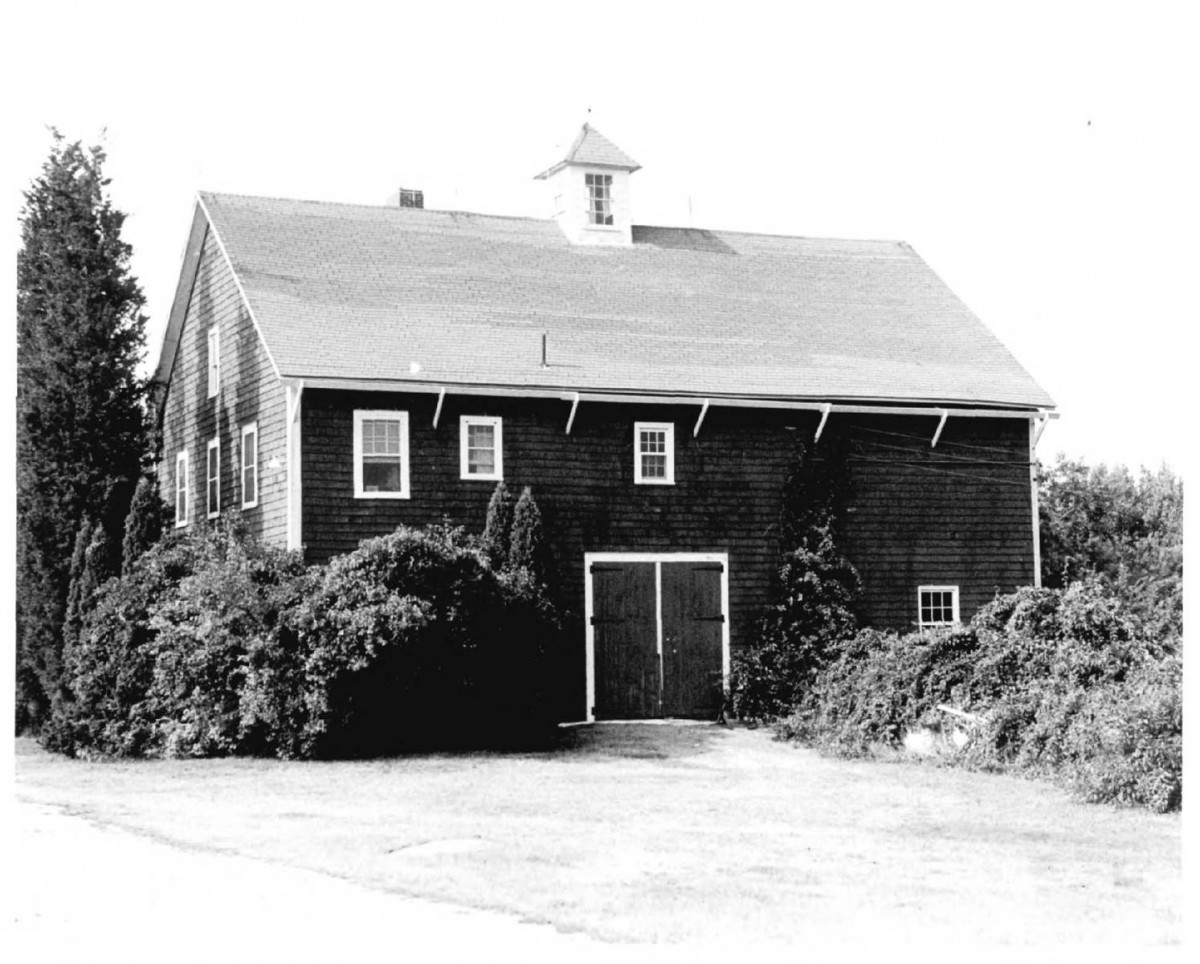
the north, at the end of a cleared field, stands a red two-story barn built
in 1869 for commercial purposes (Photograph 10). The gable roof features a
cupola. A one-story addition to the north side of the barn is not visible
from the remainder of the farmstead. The interior, despite conversion to a
community center, displays many original features, including built-in ladders
and sheaves.
Across West Lane, on the east side of Black Point, is the remnant of the dock
built in 1858. This was a wooden pier with an extension at a right angle on
the end. It is clearly visible in aerial photographs of the area. Some pilings
and underwater remains exist. Nearby, in the late 19th or early 20th century,
was a windmill, probably intended to pump water for domestic use. Because of
the clear interrelationship between the sites, it is felt necessary to define
the boundaries of the National Register site to include all relevant outbuildings
and other physical remains.Significance, from Section 8:
The site of the William Gorton Farm was in continuous use for agricultural
purposes from the late 17th century to the early 20th century. In the mid
19th century, while owned by William Gorton, farm products were exploited
for trade with the West Indies. The facilities required for this operation
are still extant and illustrate and important link between agriculture and
commerce. Evidence suggests that earlier owners of the property also engaged
in the West Indian trade, utilizing agricultural products such as
livestock. In the late 19th and early 20th centuries, the Bond family created
a fashionable summer resort, known as Old Black Point, from the farm.
Improved transportation facilities along the coast made the project feasible.
Wealthy New Yorkers formed the bulk of this summer colony. Farm products
supplied the summer residents with dairy goods. This shift in land use reflects
a continuing trend in the State of Connecticut. (Criterion C) The
farmhouse, dating from the late 18th century, preserves many distinctive
elements of the period. The main house is a relatively intact example of
the Georgian style of architecture. Outbuildings are representative of
19th-century rural architecture.Field Notes
National Register of Historic Places Nomination No. 84001166.
- Use & Accessibility
Use (Historic)
Use (Present)
Exterior Visible from Public Road?
Yes
Demolished
n/a
Location Integrity
Original Site
- Environment
Related features
n/a
Environment features
Relationship to surroundings
n/a
- Typology & Materials
-
Building Typology
Materials
Structural System
n/a
Roof materials
Roof type
Approximate Dimensions
n/a
- Source
-
Date Compiled
11/08/2013
Compiled By
Charlotte Hitchcock
Sources
Aerial view from http://www.bing.com/maps/ access 11/08/2013.
Plummer, Dale, William Gorton Farm National Register Nomination No. 84001166, National Park Service, 1984.
- PhotosClick on image to view full file
-