Barn Record Brookfield
RETURN TO ‘FIND BARNS’- Building Name (Common)
- Brookfield Craft Center
- Building Name (Historic)
- Brookfield Grist Mill
- Address
- 290 Whisconier Road, Brookfield
- Typology

- Overview
-
Designations
Historic Significance
Architectural description:
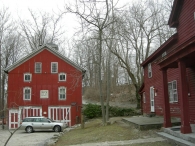
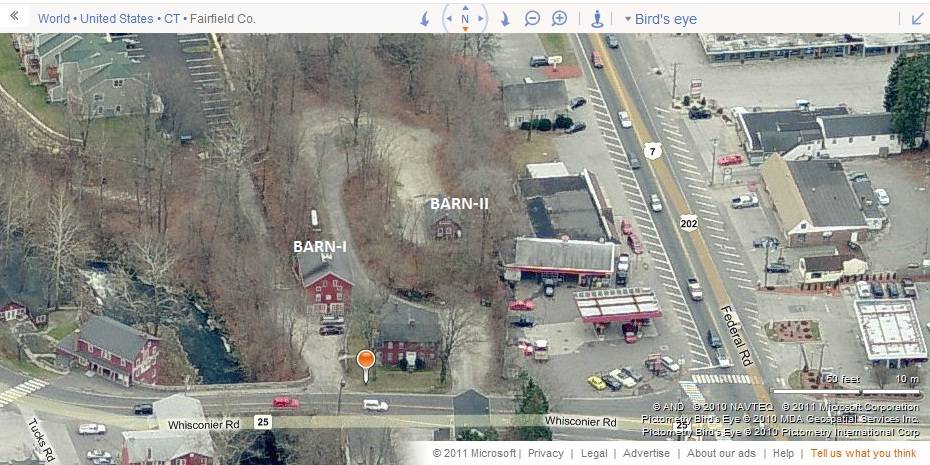
This is a two barn complex towards the south of Whisconier Road with Barn-I towards the east and Barn-II towards its southwest. The ridge lines of both the barns run north-south parallel to each other but perpendicular to this portion of the road.
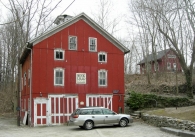
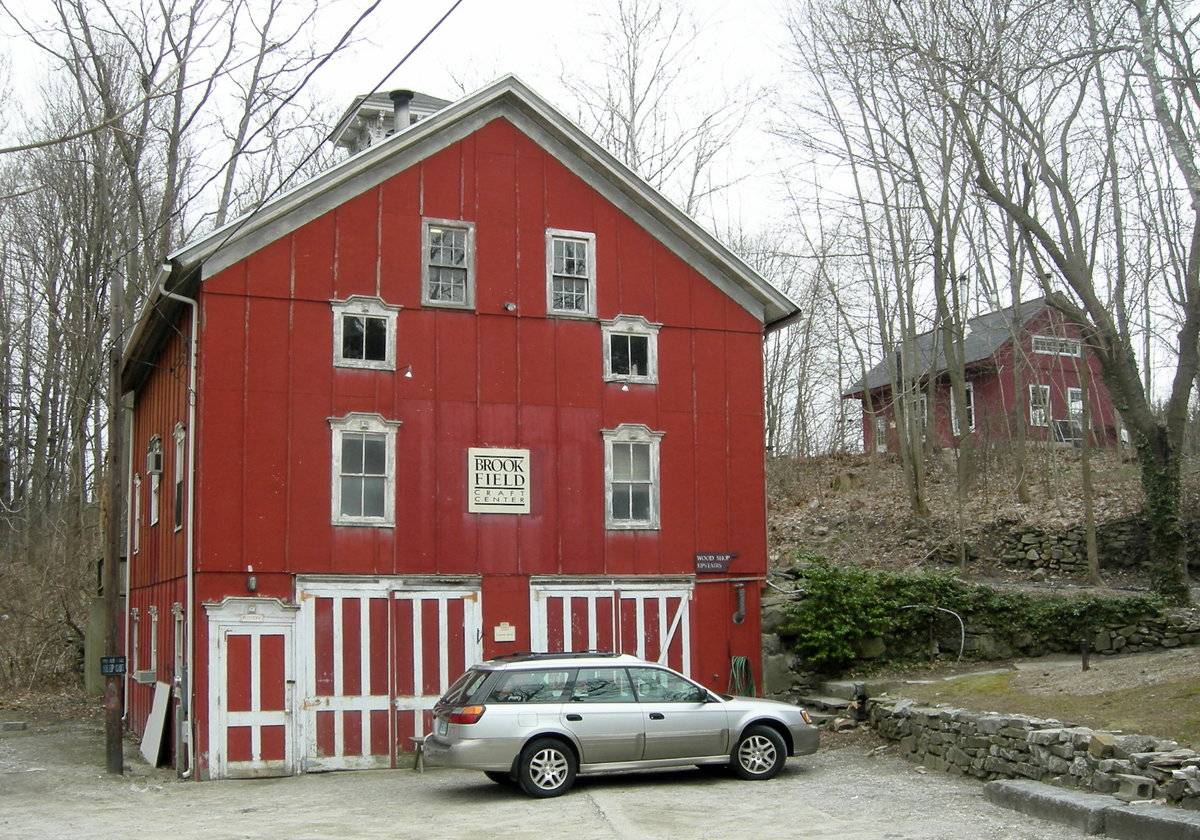
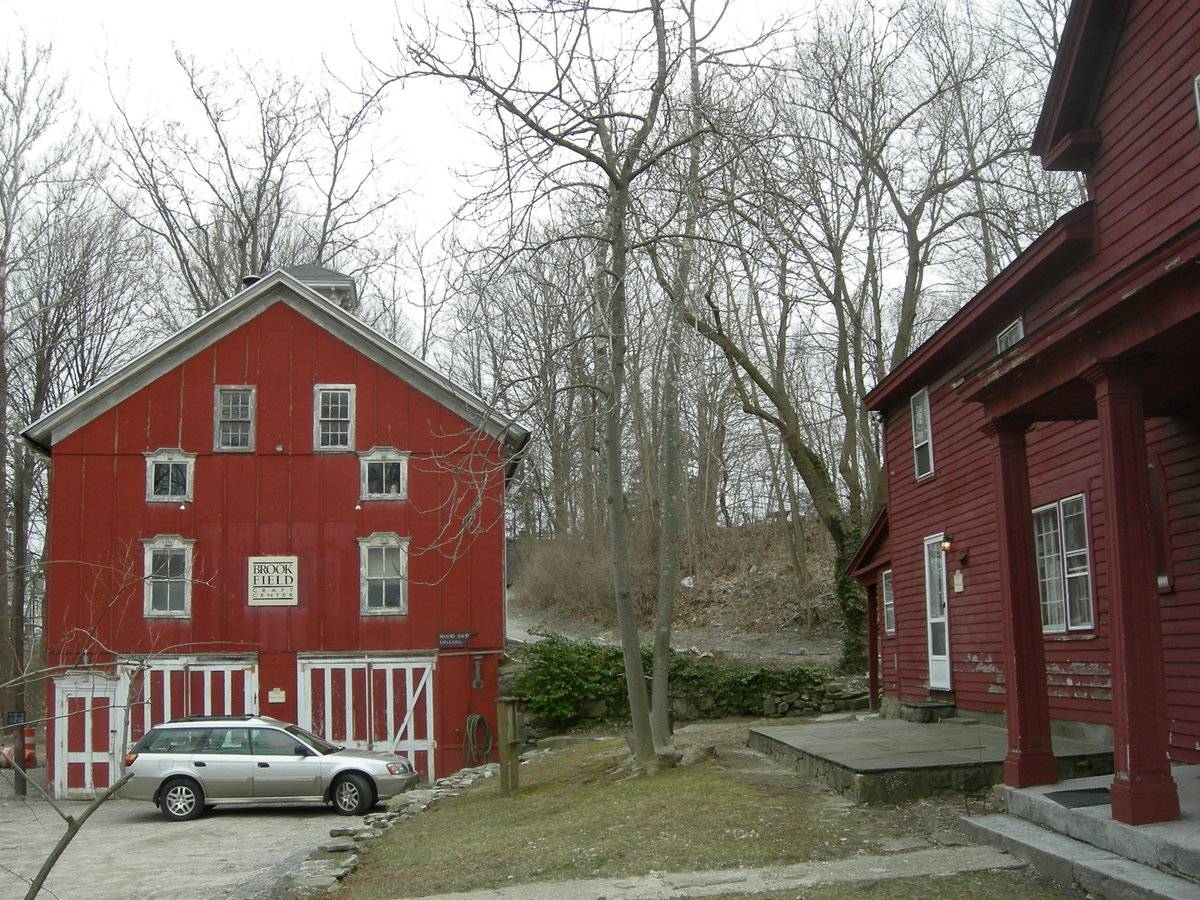
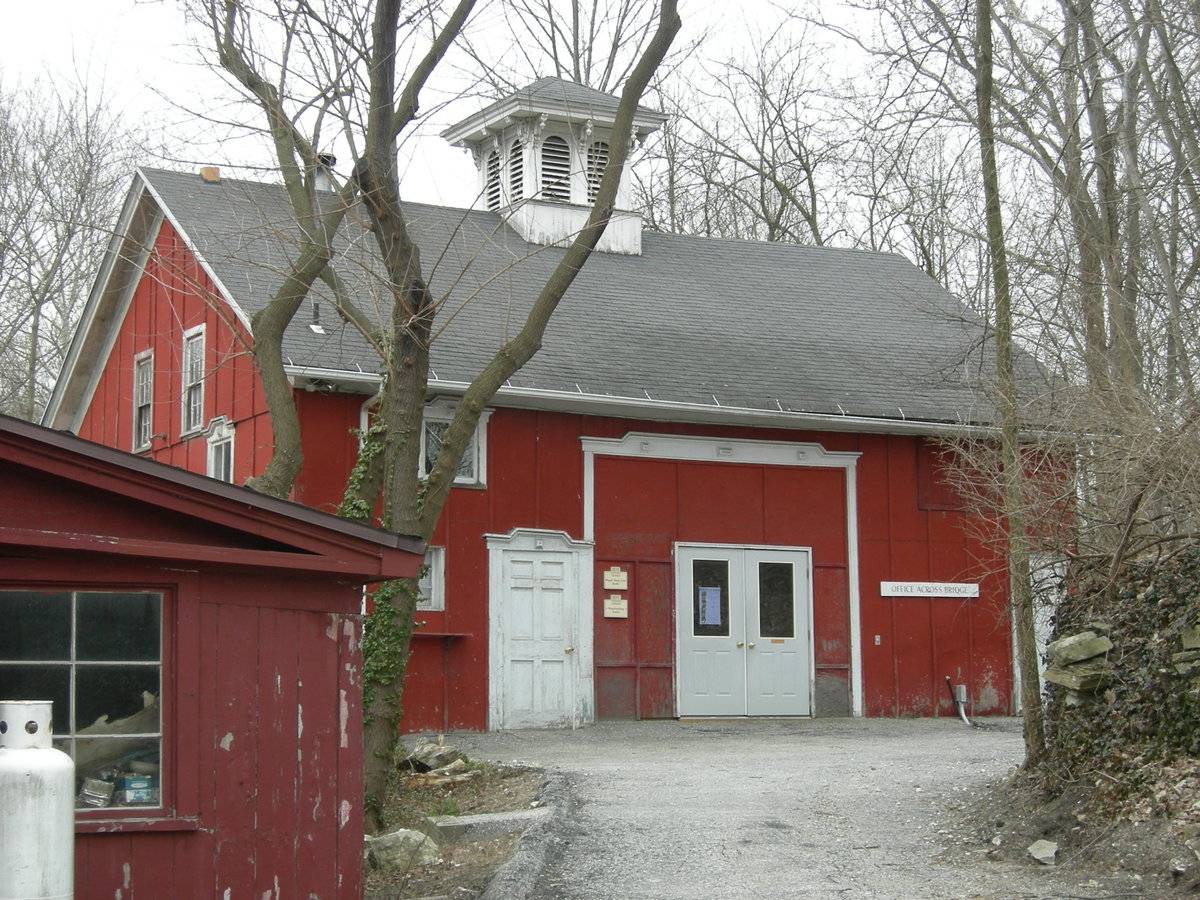
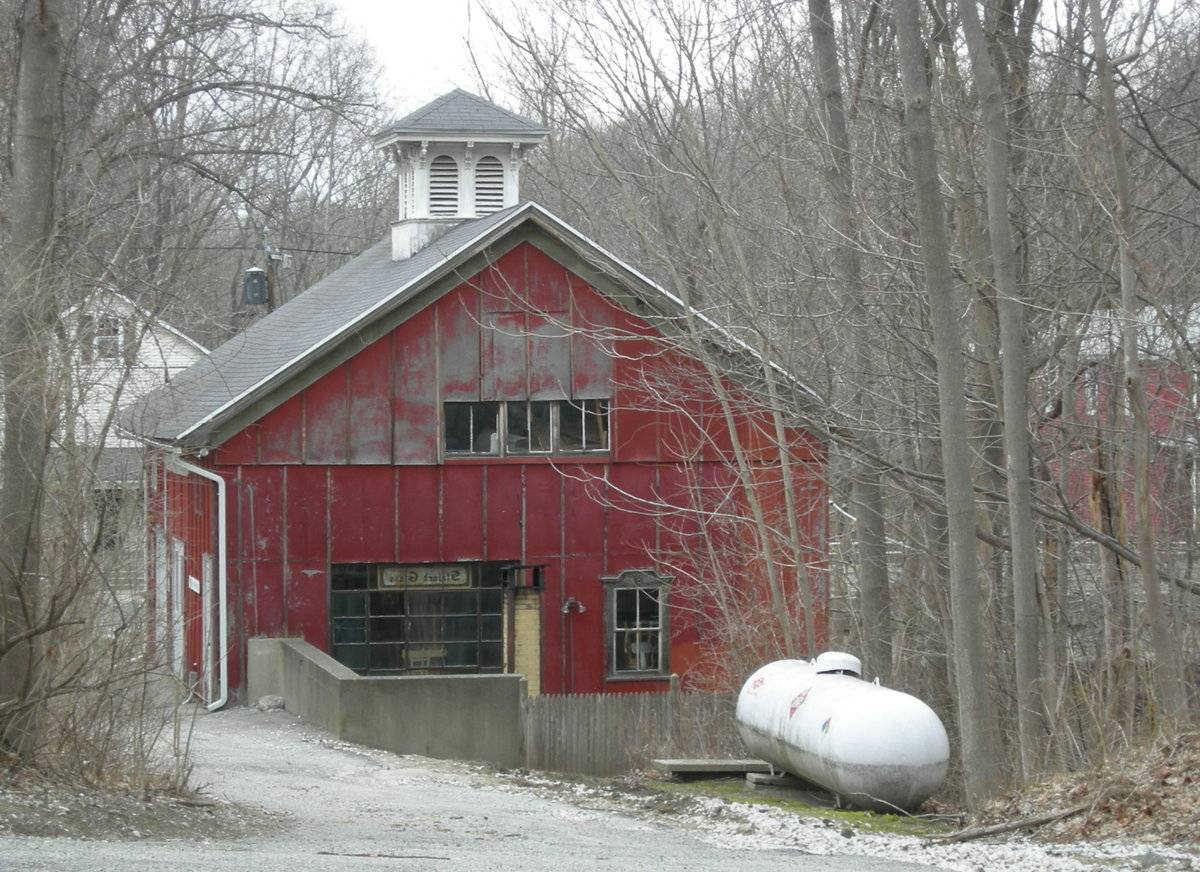
Barn-I: This is a 2 ½ - story three-bay barn with entries from both the eave-side and the gable-end. The three-bay west eave-side of the barn is the main façade with the main entrance centered in the middle bay through a pair of hinged pass-through paneled door inserts in a double-height door frame with ornate cornice detail. The original main entrance to the barn may have been through a double-height wagon door entrance as evident from the double-height door frame. The first bay from the north of the facade has a second entrance towards the south through a hinged pass-through door with ornate cornice and a window towards the north. Another window can be seen above this entrance off-centered towards the north while the first bay from the south has a hay door at the center, just below the eave-level. The north gable-end of the barn facing Whisconier Road has two entrances through two pairs of paneled hinged wagon doors and a third entrance towards the extreme east through a hinged pass-through door with ornate cornice detail. The second floor level is separated by a continuous siding divide line and has two four-pane windows with similar cornice detail. The two windows are separated by a signboard at the center displaying ‘Brookfield- Craft Center’ while two two-pane windows can be seen above them. The gable attic lined by cornice board has two pairs of six-over-six double-hung sash windows just above a distinct dropped girt siding divide line. The south gable-end of the barn has lower grade level with loose earth retained by cement plastered masonry wall. The south gable-end has a multi-pane window towards the west and a four-pane window with ornate cornice detail towards the east. The gable attic lined by deep cornice board has three closely spaced two-pane windows just above a distinct dropped girt siding divide line. The gable-roof of the barn an elaborate cupola at the center with two louvered arches on each side and ornate brackets supporting its hip-roof.
The wooden frame of the barn has asphalt shingle roofing and board-and-batten siding walls with wide boards.
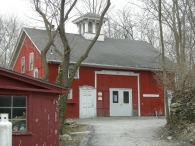
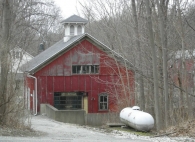
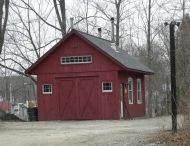
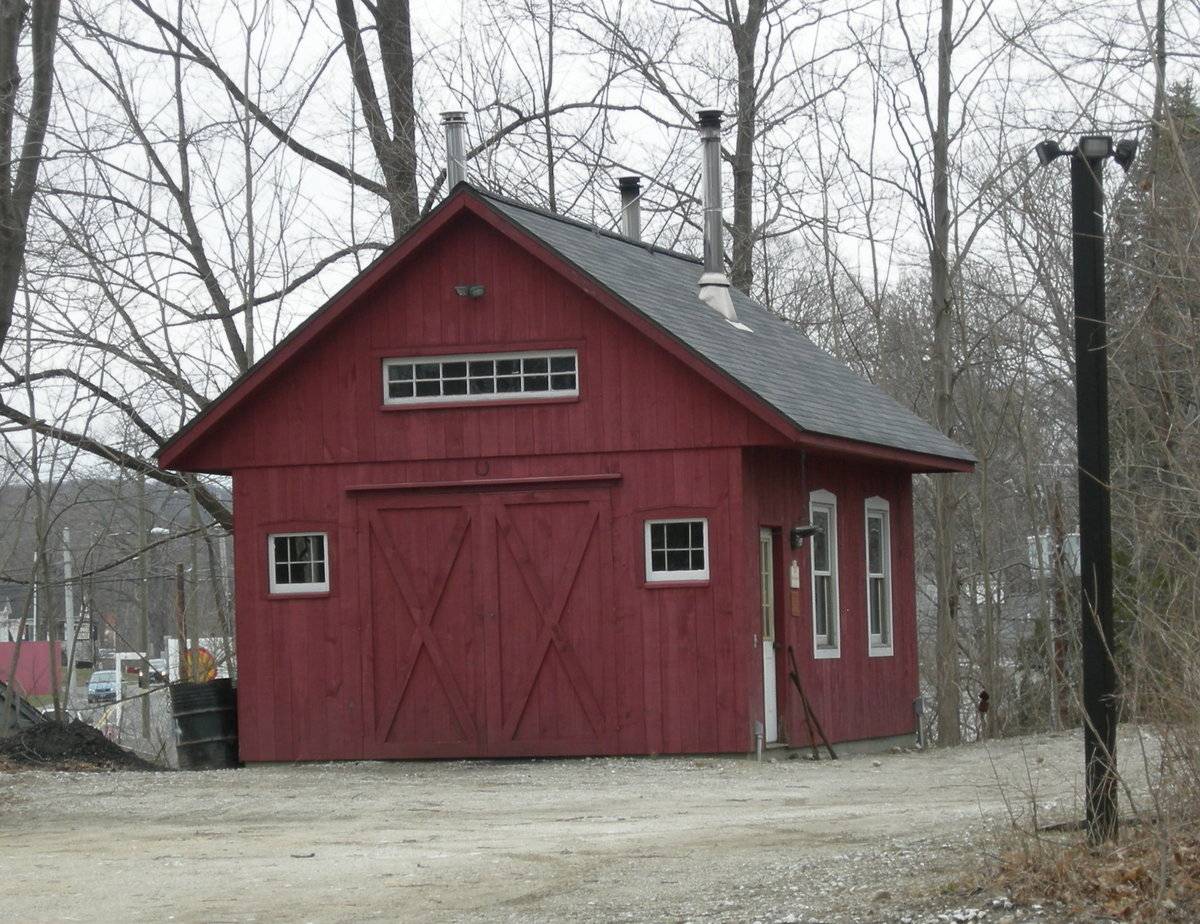
Barn-II: This is a 1 1/2 – story gable-entry barn with its ridge line running north-south. The north gable-end of the barn facing the road is the main façade with the main entrance at the center through a pair of double-height X-braced hinged wagon doors with lintel trim. The main entrance is flanked by a six-pane framed square window on either side while the gable attic is separated by a distinct dropped girt siding divide line. The gable attic lined by deep soffit has a fourteen-pane horizontal window at the center. The south eave-side of the barn has a hinged pass-through door towards north and appears to have two double-hung sash windows towards the south. The south eave-side of the barn has a metal chimney rising at the center while the north eave-side of the barn has two metal chimneys.
The wooden frame of the barn is supported on cement plastered masonry foundation. The barn has asphalt shingle roofing and red painted vertical siding walls.
Historical significance:The oldest barns still found in the state are called the “English Barn,” “side-entry barn,” “eave entry,” or a 30 x 40. They are simple buildings with rectangular plan, pitched gable roof, and a door or doors located on one or both of the “eave” sides of the building based on the grain warehouses of the English colonists’ homeland. The New England barn or gable front barn was the successor to the English barn and relies on a gable entry rather than an entry under the eaves. The gable front offers many practical advantages. Roofs drain off the side, rather than flooding the dooryard. Although it was seen by many as an improvement over the earlier side entry English Barn, the New England barn did not replace its predecessor but rather coexisted with it. It this case, both an eave entry and a gable entry are used.
Field Notes
Barn construction date: 1830 Brookfield Craft Center is located ten miles north of Danbury on the banks of the Still River. It contains four vintage buildings on two and a half acres. The campus contains administrative offices, teaching studios, an exhibition gallery, sales shop, housing for visiting faculty, and picnic areas. BCC's vintage, multipurpose Barn houses several studios: Ceramics, Paper & Book Arts, and Wood Shop. In a new rustic style building built in 1999, the Good Forge's idyllic hilltop setting inspires creativity in blacksmithing, bladesmithing, and forging hot metal. The Faculty House is home to our many visiting artists. Built in 1780, the former Brookfield Grist Mill now houses the administrative offices of Brookfield Craft Center. Source: http://www.brookfieldcraftcenter.org/about.html
- Use & Accessibility
Use (Historic)
Use (Present)
Exterior Visible from Public Road?
1
Demolished
n/a
Location Integrity
Unknown
- Environment
Related features
Environment features
Relationship to surroundings
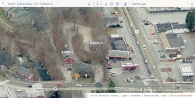
The .99 acres property, Account number – 70250000 and Map and lot number - D07/ / 032/ /, is located towards the south of Whisconier Road with its edges demarcated by woodland. The property is situated in a mixed land-use area with individual plots separated by woodland. Residential plots can be seen towards the south and the north of the property across the road while commercial and retails units can be seen towards further west along Federal Road.
Barn-I is located along the eastern edge of the property with its ridge line running north-south, perpendicular to the road. The circa 1830 main residence is located towards its northwest abutting to the road. The second barn, Barn-II is located towards the southwest of Barn-I with its ridge line also running north-south. The property is accessed by a driveway towards the east of the main residence that continues south to approach the barns. The topography of the land gradually slopes downwards towards the north with the loose earth along the driveway retained by stone walls.
- Typology & Materials
-
Building Typology
Materials
Structural System
Roof materials
Roof type
Approximate Dimensions
Barn: 1008 SqFt; Circa 1830; Barn: 416 SqFt; Circa 1830;
- Source
-
Date Compiled
05/11/2011
Compiled By
T. Levine and M. Patnaik, reviewed by CT Trust
Sources
Field notes and photographs provided by: Charlotte Hitchcock, 05/07/2008.
Assessors’ information retrieved on May 11th, 2011 from website http://data.visionappraisal.com/BrookfieldCT/
Photograph/Information retrieved on May 11th, 2011 from website http://www.google.com
Photograph/Information retrieved on May 11th, 2011 from website http://www.bing.com.
Photograph/Information retrieved on May 11th, 2011 from website http://www.zillow.com.
Sexton, James, PhD; Survey Narrative of the Connecticut Barn, Connecticut Trust for Historic Preservation, Hamden, CT, 2005, http://www.connecticutbarns.org/history.
Visser, Thomas D.,Field Guide to New England Barns and Farm Buildings, University Press of New England, 1997.
- PhotosClick on image to view full file
-