Barn Record Woodbury
RETURN TO ‘FIND BARNS’
- Overview
-
Designations
Historic Significance
Architectural description:
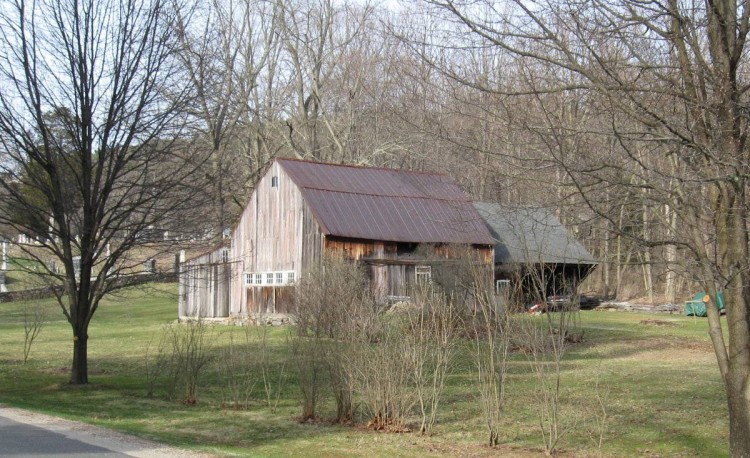
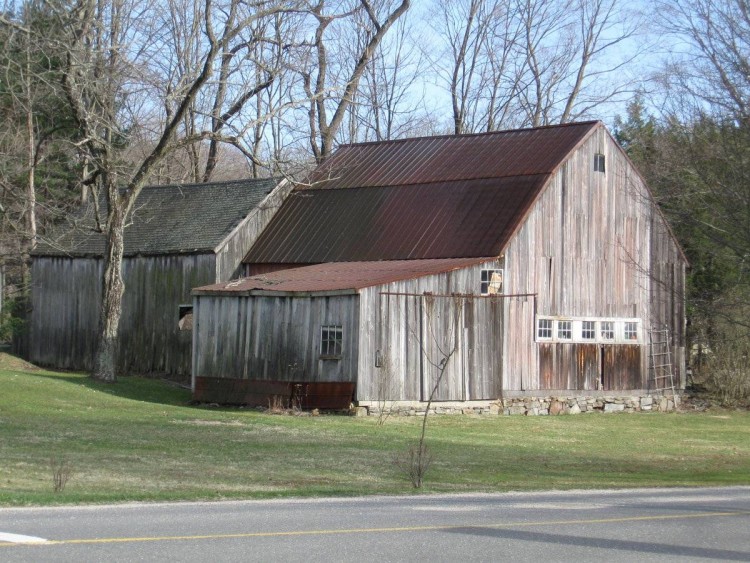
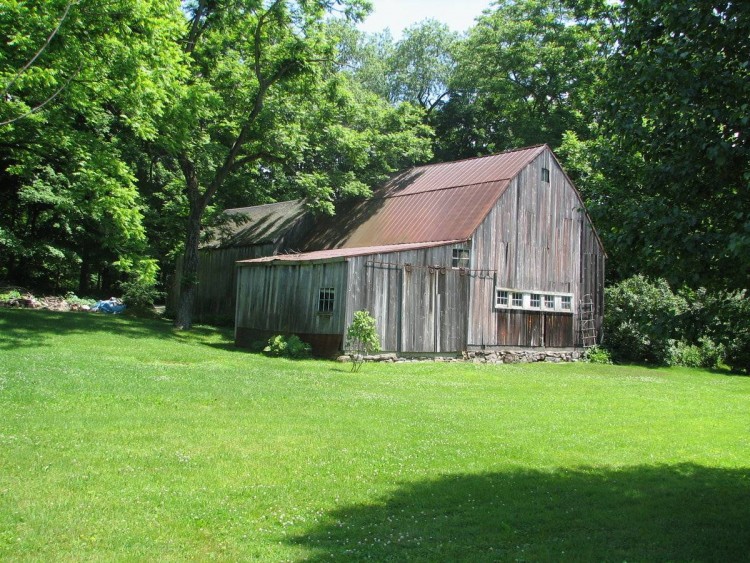
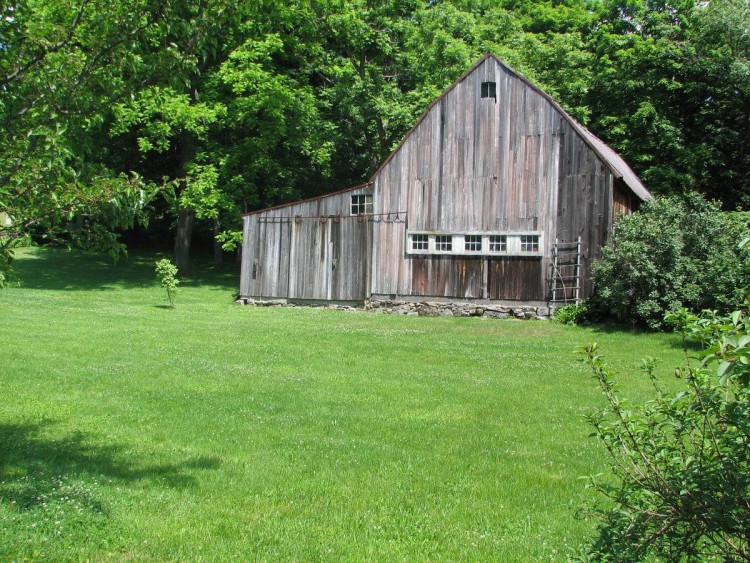
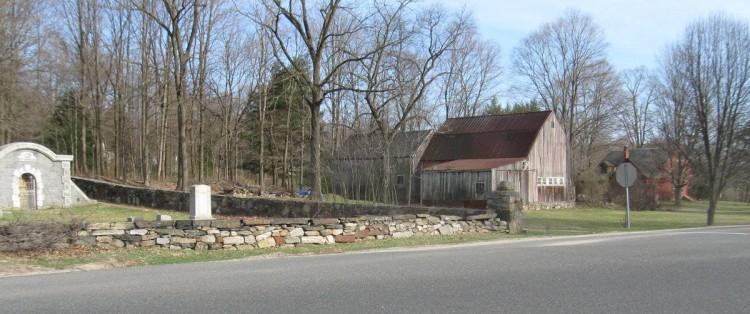
This is a 1-½ story eave-entry gambrel-roof barn with 3-bays and a shed-roof addition to the north and a gable-roof addition with 3-bays to the east. The main façade faces south and its ridgeline runs east-west, parallel to Hollow Road which lies to the south. From west to east along the main façade, there is an eight-pane stable window with trim and a horizontal light above the window, now boarded up. Above this window is a large horizontal crown that appears to be covering what was once an external sliding-track. Above the crown there appears to have once been a transom light. Proceeding to the gable addition, there are two six-pane stable windows with trim followed by two open bays. Along the west gable-end are a series of five, six-pane stable windows with trim and a two-pane stable window below the apex of the gable. On the shed addition to the north there appears to be a pair of sliding doors constructed of vertical wood-boards mounted on an external sliding track, above which is a six-pane stable window. Along the north eave-side is a six-pane stable window on the shed-roof addition, and a window opening covered with plywood on the gable-roof addition to east. The walls are covered with unpainted vertical-board siding. The foundation is un-mortared fieldstone. The gambrel-roof barn and its shed-roof addition are covered with a flat-seam metal roof. The gable-roof addition features an asphalt-shingle roof.
Historical significance:The oldest barns still found in the state are called the “English Barn,” “side-entry barn,” “eave entry,” or a 30 x 40. They are simple buildings with rectangular plan, pitched gable roof, and a door or doors located on one or both of the eave sides of the building based on the grain warehouses of the English colonists’ homeland. The name “30 by 40” originates from its size (in feet), which was large enough for 1 family and could service about 100 acres. The multi-purpose use of the English barn is reflected by the building’s construction in three distinct bays - one for each use. The middle bay was used for threshing, which is separating the seed from the stalk in wheat and oat by beating the stalks with a flail. The flanking bays would be for animals and hay storage.
The gambrel roof design was universally accepted for ground-level stable barns as it enclosed a much greater volume than a gable roof did, and its shape could be formed with trusses that did not require cross beams, which would interfere with the movement and storage of hay. Also known as the curb roof, the double slopes of the gambrel offer more volume in the hayloft without increasing the height of the side walls.
Historical background:“The Woodbury Historic District is a residential community bounded by open fields and woods. It has a variety of Colonial and Federal houses within it and includes a number of Greek Revival and Victorian buildings as well.
The Woodbury Historic district is significant because its architecture and historic sites embody the history of the area since the seventeenth century. Nearly every type of house from the time of settlement to 1828 can be found in the area and it has some interesting Victorian houses as well.”
Field Notes
Date of house: 1674. Located in Woodbury North Historic District No. 1. Source: “Woodbury: a Townscape,” Tony Wrenn, 1975, Preservation Press, Washington, D.C. Main barn is gambrel, with an attached gable-roofed addition at end.
- Use & Accessibility
Use (Historic)
Use (Present)
Exterior Visible from Public Road?
Yes
Demolished
No
Location Integrity
Unknown
- Environment
Related features
n/a
Environment features
Relationship to surroundings
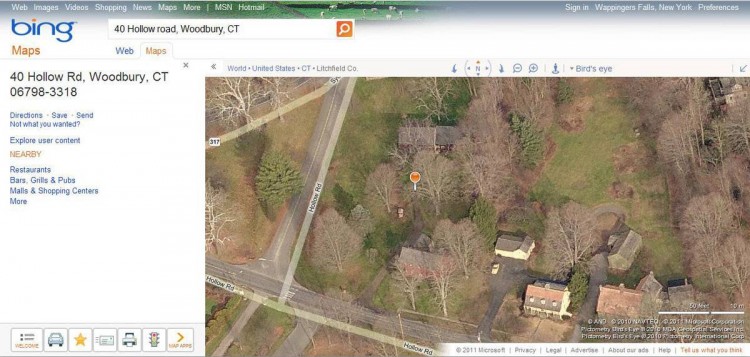
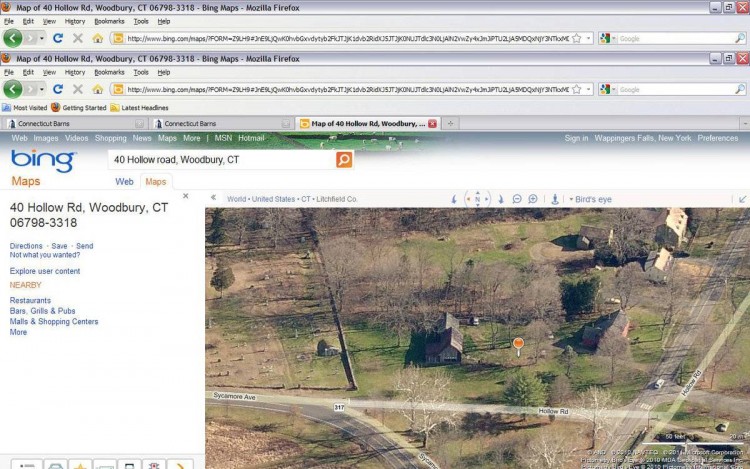
This property is located on Hollow Road in the Town of Woodbury in a historic residential and commercial area that has been nationally recognized for its significance. The barn is located on a 1.07-acre parcel that also includes a c. 1674 house.
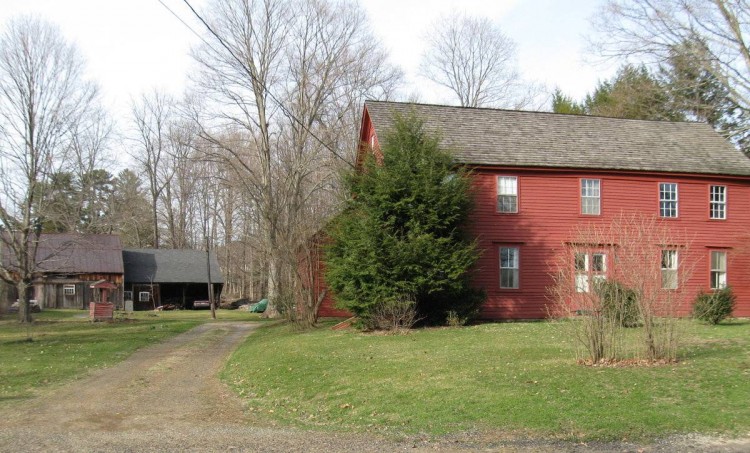
The main c. 1674 house is located to the south of the barn. It is a 2-½ story, eave-entry structure with 5-bays, a rectangular plan and a gable-roof. Its ridgeline runs east-west, parallel to Hollow Road and the main façade faces south. The main entry consists of two doors with two lights each in the center bay. The entryway is flanked by four 2/2 double-hung sash windows. On the second story there are five 6/6 double-hung sash windows. The house is covered with painted clapboard siding, and the roof is covered with wood shingles. Along the north eave-side there is a single-story addition with a shed and gable roof.
To the north of the property is South Cemetery. To the south of the property is Hollow Park.
- Typology & Materials
-
Building Typology
Materials
Structural System
Roof materials
Roof type
Approximate Dimensions
n/a
- Source
-
Date Compiled
02/27/2011
Compiled By
E. Reisman & T. Levine; reviewed by CT Trust
Sources
Field notes and photographs by Charlotte R. Hitchcock and Melissa Antonelli - 1/19/2009.
Town of Woodbury GIS Viewer: http://www.cogcnvgis.com/woodbury/AGS_MAP/
(Parcel ID: 104-006: 1.07 acres: c. 1674 house, 2,558 sq. ft.)
Aerial Mapping:
http://www.bing.com/maps accessed 02/27/2011.Luyster, Constance, Woodbury North National Register District Nomination No. 71000908, National Park Service, 1971.
Sexton, James, PhD, Survey Narrative of the Connecticut Barn, Connecticut Trust for Historic Preservation, Hamden, CT, 2005, http://www.connecticutbarns.org/history.
Visser, Thomas D., Field Guide to New England Barns and Farm Buildings, University Press of New England, 1997.
- PhotosClick on image to view full file
-