Barn Record Woodbury
RETURN TO ‘FIND BARNS’- Building Name (Common)
- Monique Shay Antiques
- Building Name (Historic)
- n/a
- Address
- 920 Main Street South (Rte 6), Woodbury
- Typology
- Overview
-
Designations
Historic Significance
Architectural description:
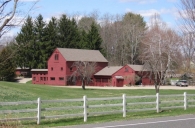
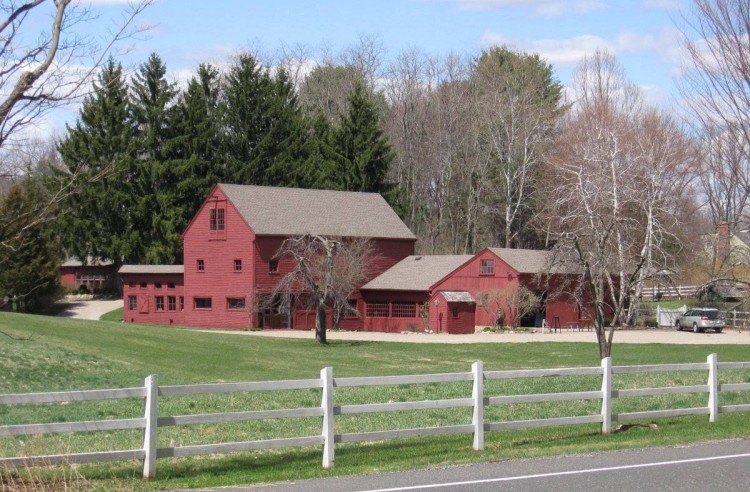
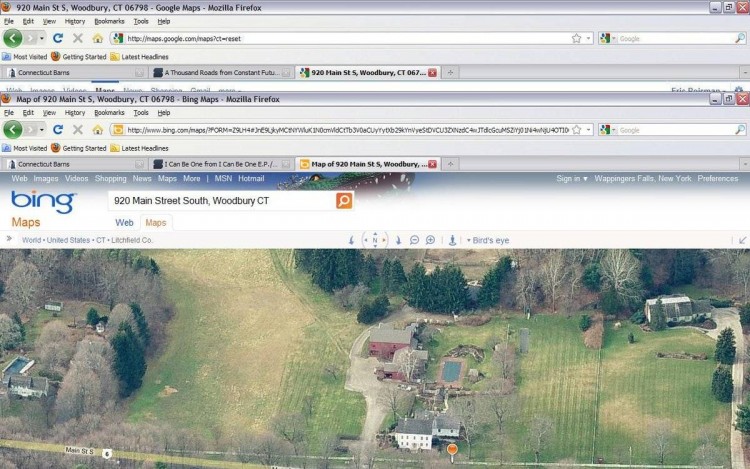
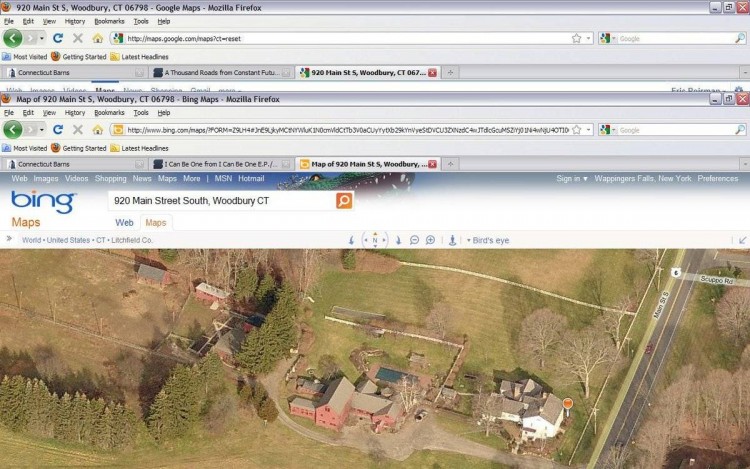
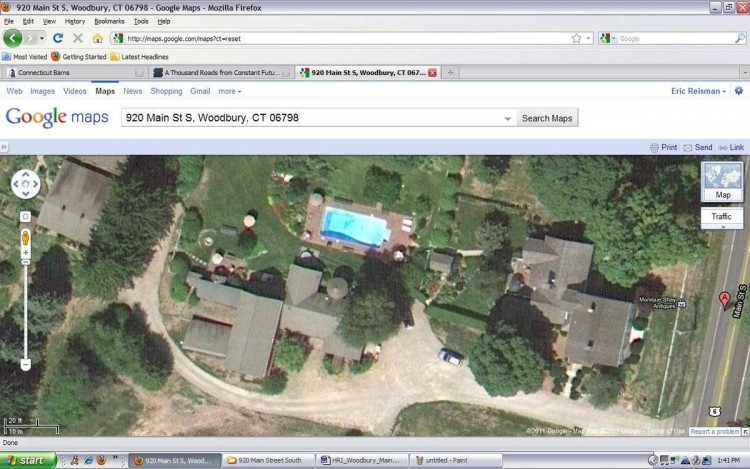
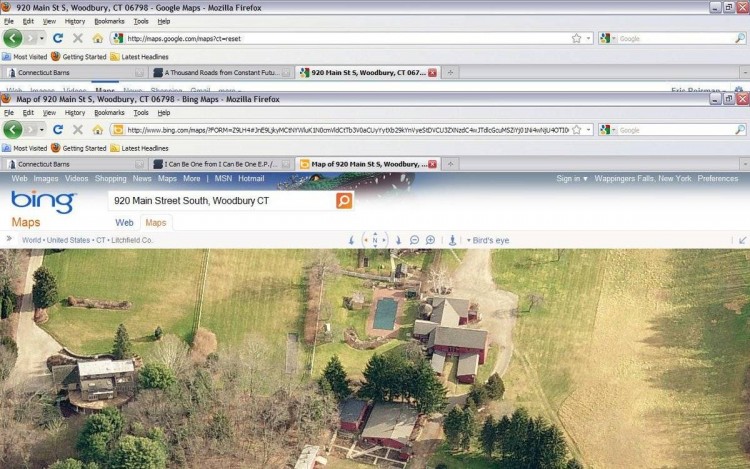
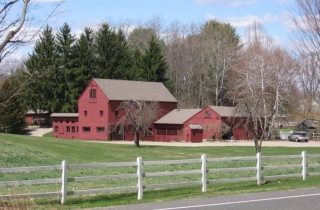
This is a barn complex made up of seven interconnected barns. The main barn is a 2-½ story gable-roof structure. Its main façade faces east, and its ridgeline runs north-south, parallel to Main Street South which lies to the east.
Extending east from the center of the main façade is addition I, a 1-½ story gable-roof barn, its ridgeline running east-west, perpendicular to that of the original structure.
Addition II, extends outward from the north eave-side of addition I. This is a 1-½ story gable-roof barn, its ridgeline running north-south.
Addition III extends outward from the east gable-end of Addition I. This is a 1-½ story saltbox-roof barn, its ridgeline running north south.
Addition IV is located on the south gable-end of addition III. This is a small shed with a gable-roof, its ridgeline running north-south, parallel to that of addition III.
Addition V is located at the southern corner of the west eave-side of the original story. This is a 1-½ story barn with a shed roof.
Addition VI is located at the northern corner of the west eave-side of the original structure. This is a single story barn with a shed roof.
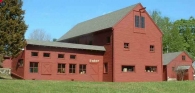
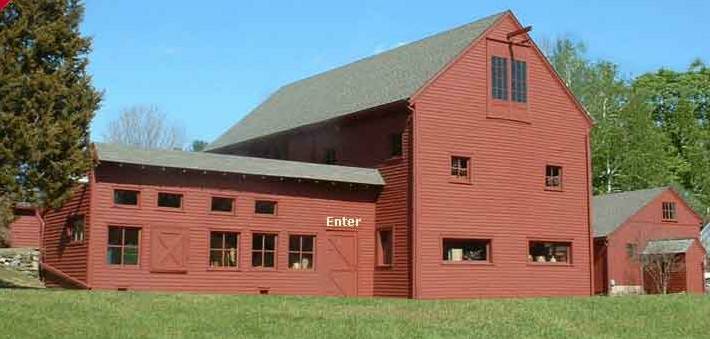
When read in its entirety, the main façade appears to face east. Along the main façade of the saltbox-roof structure (addition III), there appears to be a sliding door mounted on an external track and a stable window. On the main façade of the gable-roof shed (addition IV) there appears to be a pass-through door and a four-pane stable window. Further west, along the main façade of the original gable-roof barn, there appears to be a pass-through door, a sliding door mounted on an external track, two four-pane stable windows, and what appears to be two additional windows.
Along the south side of the barn complex, from east to west, beginning with the saltbox-roof barn to the east (addition III), are two four-pane stable windows and what appears to be an eight-pane stable window below the apex of the gable. Further west on the 1-½ story gable-roof structure (addition I) there are three multi-paned windows. Proceeding to the original 2-½ story gable-roof barn, there are two windows on the first story, two four-pane stable windows on the second story, and twined twelve-pane windows below the apex of the gable, in what was once the hay-loft door. On the first-story of the shed-roof structure to the west (addition V), there is a pass-through door followed by three four-pane windows, a hinged-door, and another four-pane window. There are four windows on the second story of addition V.
The exterior walls are covered with vertical board and clapboard siding painted red. The roofs are covered with asphalt shingles.
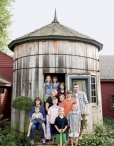
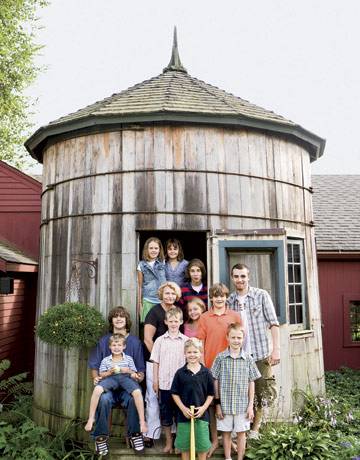
To the north of the structure there is a water-tower constructed of wooden-staves with a conical roof covered with wood shingles. This structure is now used as dining pavilion, and entry is provided by a pass-through door facing north. There is a twelve-pane window with trim to its west.
Historical significance:The oldest barns still found in the state are called the “English Barn,” “side-entry barn,” “eave entry,” or a 30 x 40. They are simple buildings with rectangular plan, pitched gable roof, and a door or doors located on one or both of the “eave” sides of the building based on the grain warehouses of
the English colonists’ homeland. The New England barn or gable front barn was the successor to the English barn and relies on a gable entry rather than an entry under the eaves. The gable front offers many practical advantages. Roofs drain off the side, rather than flooding the dooryard. Although it was seen by many as an improvement over the earlier side entry English Barn, the New England barn did not replace its predecessor but rather coexisted with it. It this case, both an eave entry and a gable entry are used.
Historical background:“The Woodbury Historic District is a residential area, bounded by open fields and woods. Its southern, boundary line is the town line of Woodbury and Southbury, where Southbury’s Historic District begins, creating an unbroken stretch of three miles along U.S. Route 6 where houses built before 1828 predominate. Some of Woodbury’s finest old homes lie in the one-mile district between the town line and the commercial area, the District’s northern boundary.
The Woodbury Historic District #2 is a continuation of Southbury’s Historic District and extends north to the commercial area, beyond which lies Woodbury Historic District #1. The second Historic District is important because if s architecture and historic sites embody the history of the area since the seventeenth, century.”
Field Notes
Located in Woodbury South Historic District. No. 2. Transitional Federal-Greek Revival.
- Use & Accessibility
Use (Historic)
Use (Present)
Exterior Visible from Public Road?
No
Demolished
No
Location Integrity
Unknown
- Environment
Related features
Environment features
Relationship to surroundings
This property is located on South Main Street to the south of the Town of Woodbury in a historic residential and commercial area that has been nationally recognized for its significance. The barn is located on a 1.61-acre parcel that also includes a c.1814 house with Greek Revival modifications. To the north, west, and south the property is an adjoining 16.70-acre parcel that consists largely of open fields and woods, and contains several agricultural structures.
To the west of the main barn complex are several agricultural structures. From east to west there is a large, 1-½ story structure with a low-pitched gable-roof, its ridgeline running east-west. A small shed with a shed-roof lies to the north. Further west there is single-story shed with a rectangular plan, and a 1 ½ story gable-roof structure with a rectangular plan, its ridgeline running east-west.
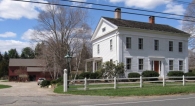
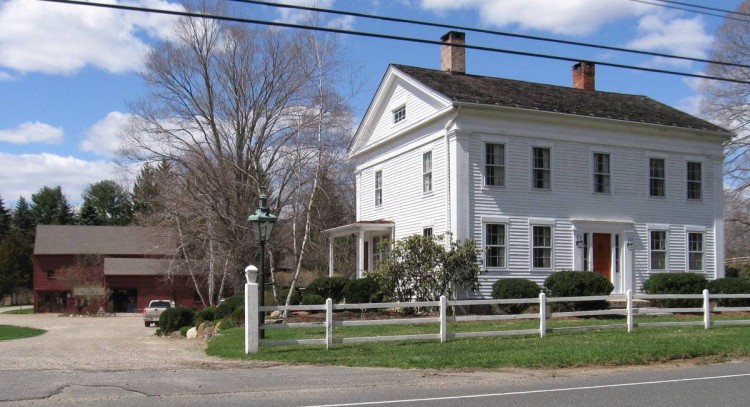
The c. 1814 house, is located to the east of the barn. It is a 2-½ story, 5-bay structure with a rectangular plan and a gable-roof. Its ridgeline runs north-south, parallel to the road and the main façade faces east. Principle entry is provided by a paneled door in the central bay. The door is flanked by three-pane sidelights and a door-surround consisting of Doric pilasters supporting an unadorned entablature. On either side of the main entry are two 6/6 double-hung sash windows with trim. There are five identical windows on the second story of the main façade. On the south gable-end there are three 6/6 double-hung sash windows with trim and a pass-through door with a projecting portico at the western corner, and an additional window below the apex of the gable. On the north gable-end there are four 6/6 double-hung sash windows with trim and an additional window below the apex of the gable. The walls of the house are covered in painted clapboard siding. There are prominent Doric pilasters at each corner. There is a large unadorned cornice, and at both gable ends, there is a large band of trim within the gable, forming a triangular shaped pediment. The roof appears to be covered with wood shingles and features two brick chimneys with corbelling. There are several additions, including a 1-½ story gable- roof addition to the west, its ridgeline running perpendicular to the main structure. To the north of this addition, there is a second 1-½ story addition with a north-facing cross-gable, its ridgeline running parallel to that of the main structure.
- Typology & Materials
-
Building Typology
Materials
Structural System
Roof materials
Roof type
Approximate Dimensions
5,073 sq. ft.
- Source
-
Date Compiled
03/15/2011
Compiled By
Eric Reisman & Todd Levine, reviewed by CT Trust
Sources
Field notes and photographs by Charlotte R. Hitchcock.
Town of Woodbury, Connecticut GIS Viewer http://www.cogcnvgis.com/woodbury/AGS_MAP (Parcel ID: 034-001D/A: 1.61-acres: c. 1814 house, 4,416 sq. ft.; barn, 5,073 sq. ft.)
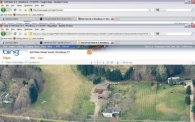
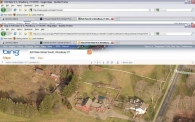
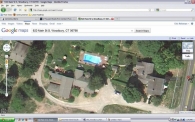
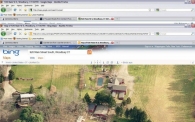
Aerial Mapping:
http://maps.google.com accessed 03/08/2011
http://www.bing.com/maps accessed 03/08/2011.http://moniqueshay.com/index.html
Babbitt, Susan, Woodbury South National Register District Nomination No. 72001326, National Park Service, 1972.
Libenson, Bess. “On The Trail of Antiques and Collectibles.” New York Times. 8 October, 2000. Web, 7 March 2011.
Sexton, James, PhD, Survey Narrative of the Connecticut Barn, Connecticut Trust for Historic Preservation, Hamden, CT, 2005, http://www.connecticutbarns.org/history.Visser, Thomas D., Field Guide to New England Barns and Farm Buildings, University Press of New England, 1997.
“Woodbury: a Townscape,” Tony Wrenn, 1975, Preservation Press, Washington, D.C.
Local Historic District - Woodbury Historic District #2.
- PhotosClick on image to view full file
-