Barn Record Guilford
RETURN TO ‘FIND BARNS’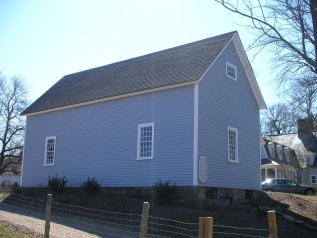
- Overview
-
Designations
Historic Significance
Architectural description:
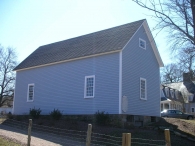
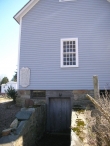
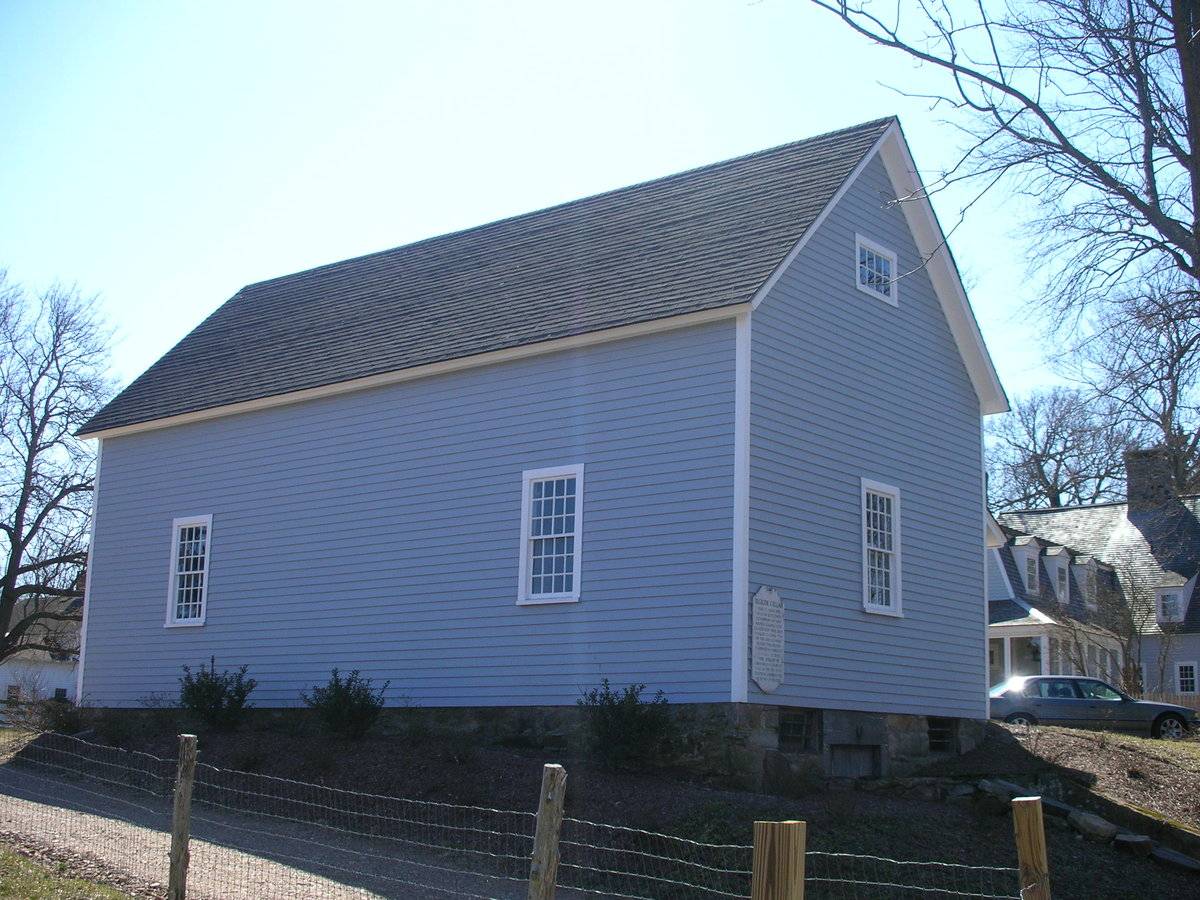
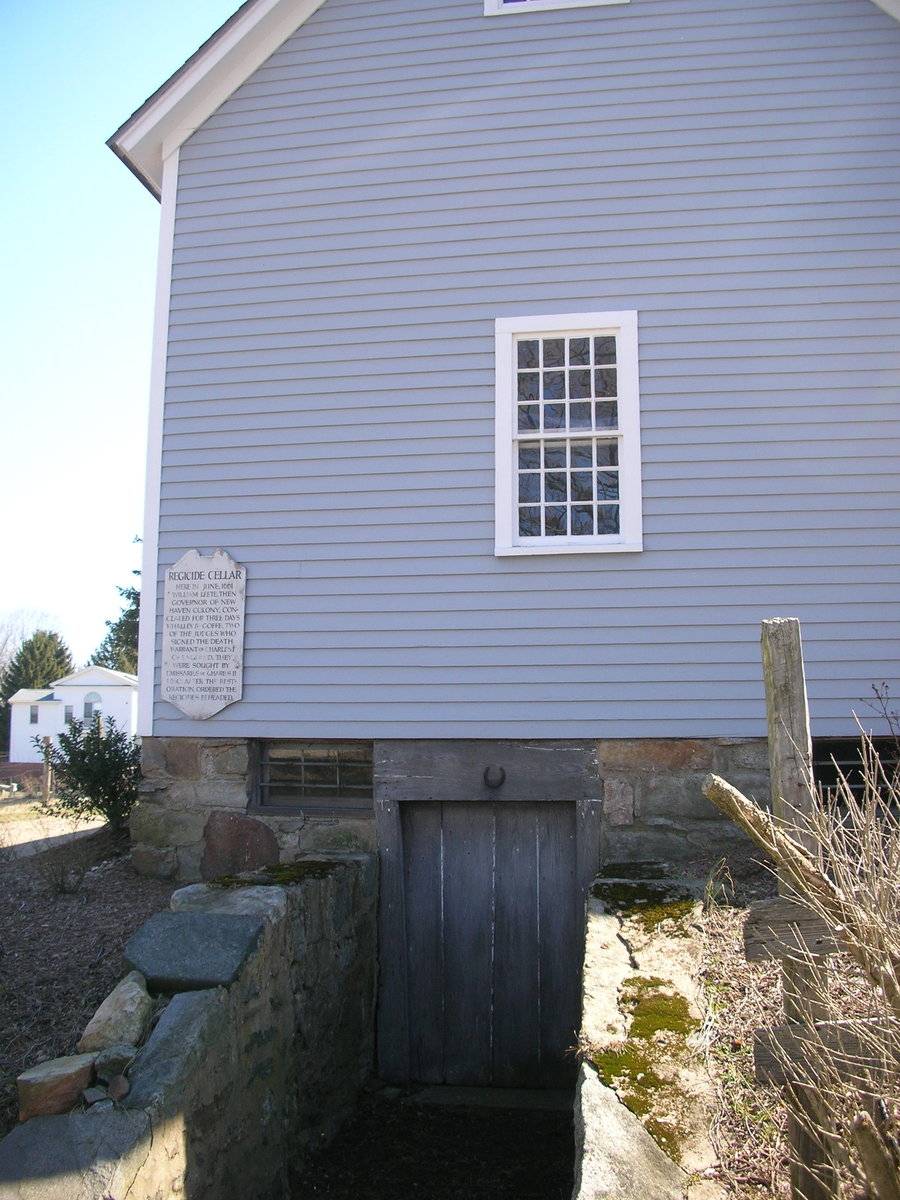
This is a 1 1/2-story eave-entry barn with a gable roof, with its ridge line running east-west. The barn is on a hillock. The grade declines from east to west, exposing a cut stone foundation. The main façade faces south with two side hinged doors that extend from the west edge to the center. The doors appear to have windows. Just east of the doors is a pass-through door. On the east half of the main façade is a window. The doors are protected by what appears to be a pent roof. The east gable-end has a cellar door towards the southeast corner and a centered basement window in the basement level. A window is on the gable attic, which mirrors a 4 by 2 pane window with trim on the west gable-end. The north eave-side has two offset and symmetrically spaced, twelve-over-twelve double-hung windows with wide muntins and trim. The grade declines sharply at the west gable-end. In the basement level is a door flanked by two windows. A wood framed batten is offset from the center to the north. One thin cellar window with trim is set next to the cellar ceiling and the door frame and protected by a screen of thin iron bars. The second window is similar to the first and is centered between the door and the southern edge of the gable end. However, the second window has only horizontal bar protection and no glass. Centered on the first floor is a twelve-over-twelve double-hung window with wide muntins and trim. Centered in the gable attic is an eight-pane height window with wide muntins and trim.
The walls are gray painted clapboard siding set on a cut stone cellar foundation. The gable roof is covered with asphalt shingles.
Historical significance:The oldest barns still found in the state are called the “English Barn,” “side-entry barn,” “eave entry,” or a 30 x 40. They are simple buildings with rectangular plan, pitched gable roof, and a door or doors located on one or both of the eave sides of the building based on the grain warehouses of the English colonists’ homeland. The name “30 by 40” originates from its size (in feet), which was large enough for 1 family and could service about 100 acres. The multi-purpose use of the English barn is reflected by the building’s construction in three distinct bays - one for each use. The middle bay was used for threshing, which is separating the seed from the stalk in wheat and oat by beating the stalks with a flail. The flanking bays would be for animals and hay storage.
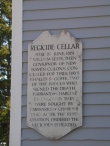
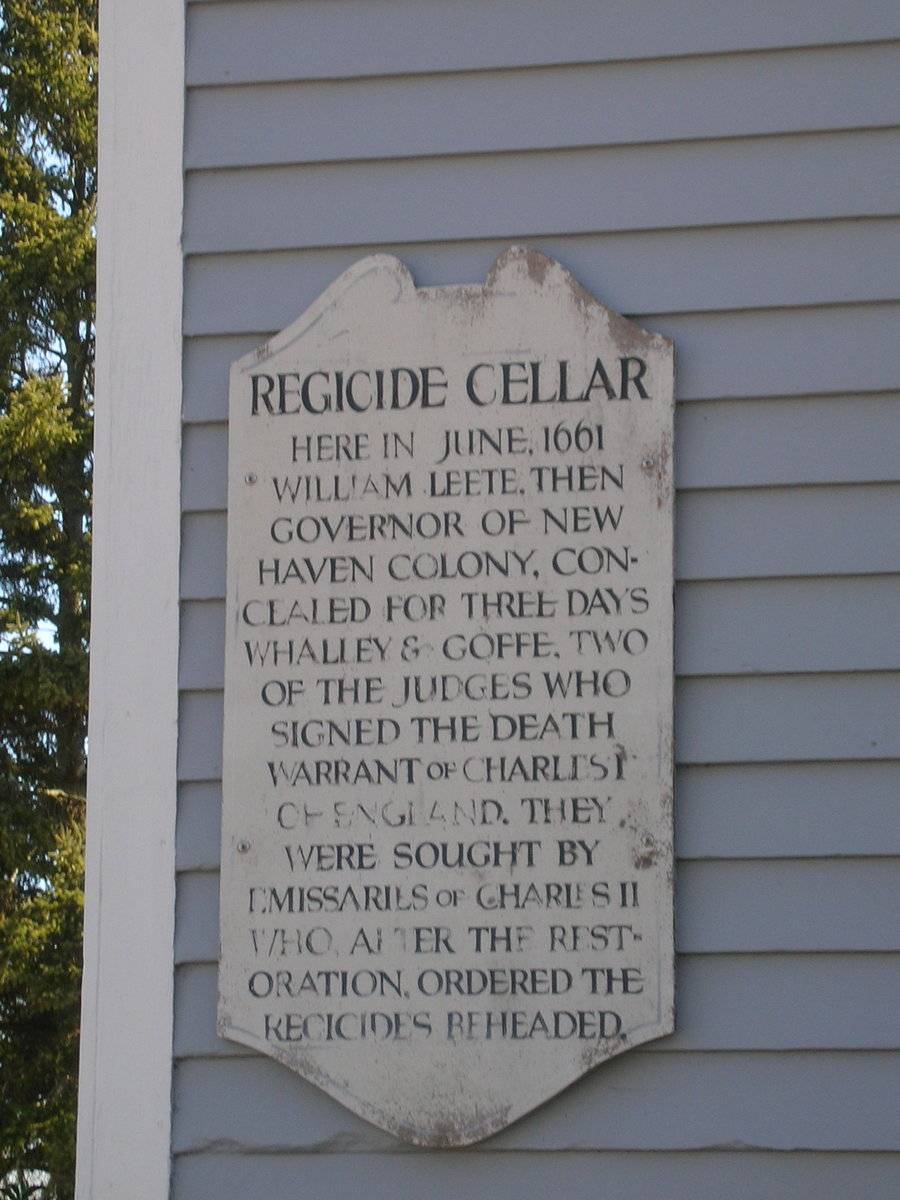
Historical background:The barn was erected in 1749. Unconfirmed Plaque: here in June, 1661 William Leete, then governor of the New Haven colony, concealed for three days Whalley & Goffe, two of the judges who signed the death warrant of Charles I of England. They were sought by emissaries of Charles II who after the restoration, ordered the regicides beheaded.
Field Notes
Grey Barn with Clapboard siding and an Asphalt Roof and stone foundation. Said to be built in 1749 (DF). Located in Guilford Town Center Historic District, and appears to be a contributing resource within the district.
- Use & Accessibility
Use (Historic)
Use (Present)
Exterior Visible from Public Road?
Yes
Demolished
n/a
Location Integrity
Unknown
- Environment
Related features
Environment features
Relationship to surroundings
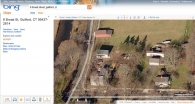
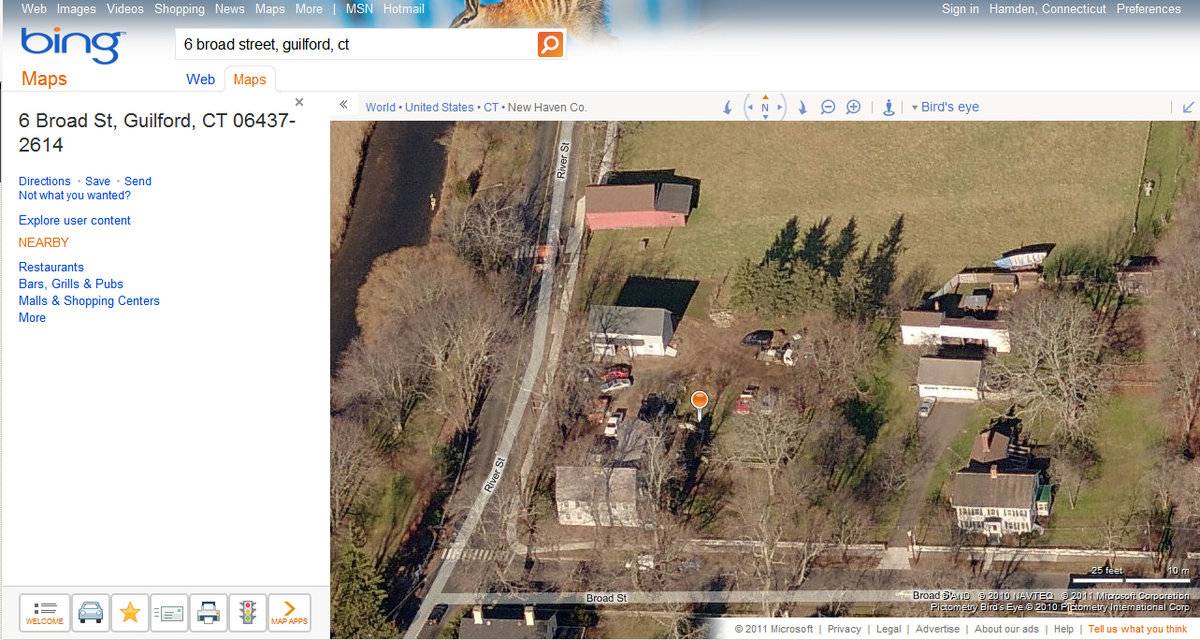
The barn is on the northwest corner of an open pasture of unusually large size for its location in the heart of Guilford’s village historic district, south of an apple barn of 22 Broad Street. The west gable-end of the barn faces River Street. The barn is behind and to the north of the main house it is associated with. The main ridge-line of the house is parallel to the ridge-line of the barn. The house is situated on the southwest corner of the property. Open land separates the house from Broad Street. West of the barn and house is a fence that runs north-south along the property border with River Street. Another fence encloses the southeast, east, and northeast perimeter of an open land house lawn. A foot path protected by flanking cut stone walls starts from River Street and runs east to the barn’s west gable end door. A driveway north of the barn starts from River street and then encircles the barn’s north and east to end at an open parking area between the house lawn and barn. North of the barn is open land pasture with a fence outlining the border with the 22 Broad Street property. Northeast of the barns is a stand of trees. East of the barn is an open land parking area. Southeast of the barn is a partly fenced off area that appears to be a garden. Beyond the garden, fencing outlines the south and east border of the property. The area around the site is residential, suburban, rural, and woodland.
- Typology & Materials
-
Building Typology
Materials
Structural System
Roof materials
Roof type
Approximate Dimensions
n/a
- Source
-
Date Compiled
02/24/2011
Compiled By
J. Toner & T. Levine, reviewed by CT Trust
Sources
Field notes and photographs by Dempsey Fitton on 08/10/2008.
Town of Guilford Assessor’s Record and GIS Viewer:
http://www.guilfordgis.com
Parcel ID: 039014Aerial Mapping:
http://www.bing.com/maps accessed 02/24/2011.McAlester, Virginia and Lee. A Field Guide to American Houses, Alfred A. Knopf, 1984.
Raiche, Stephen, Guilford Historic Town Center National Register District Nomination No. 76001988, National Park Service, 1976.
Sexton, James, PhD, Survey Narrative of the Connecticut Barn, Connecticut Trust for Historic Preservation, Hamden, CT, 2005, http://www.connecticutbarns.org/history.
Visser, Thomas D., Field Guide to New England Barns and Farm Buildings, University Press of New England, 1997. - PhotosClick on image to view full file
-