Barn Record Stonington
RETURN TO ‘FIND BARNS’- Building Name (Common)
- Anguilla Brook Farm and Garden
- Building Name (Historic)
- Anguilla Brook Farm/Old Banker Barn
- Address
- 24 Anguilla Brook Road, Stonington
- Typology
- Overview
-
Designations
Historic Significance
Architectural description:
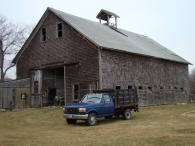
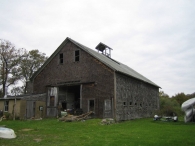
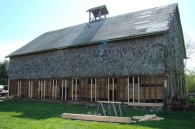
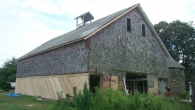
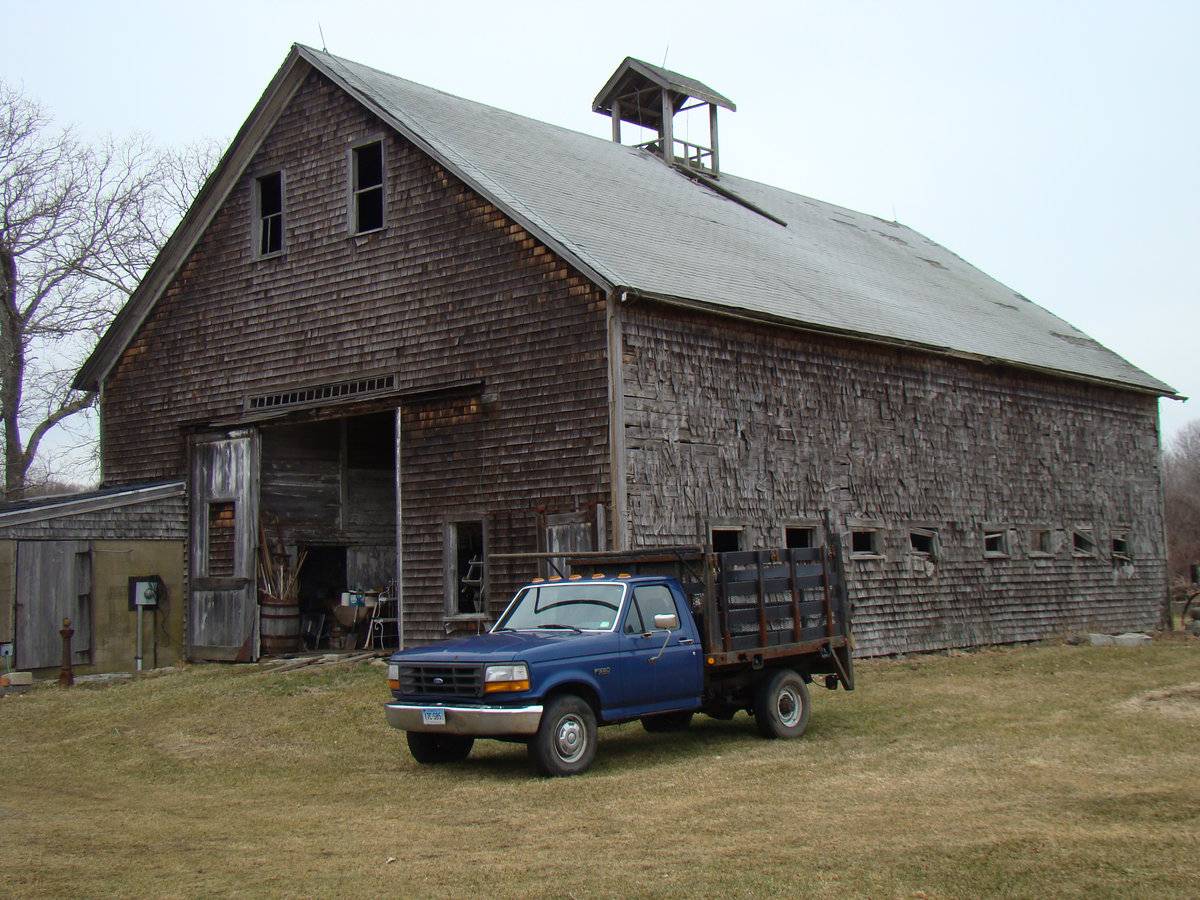
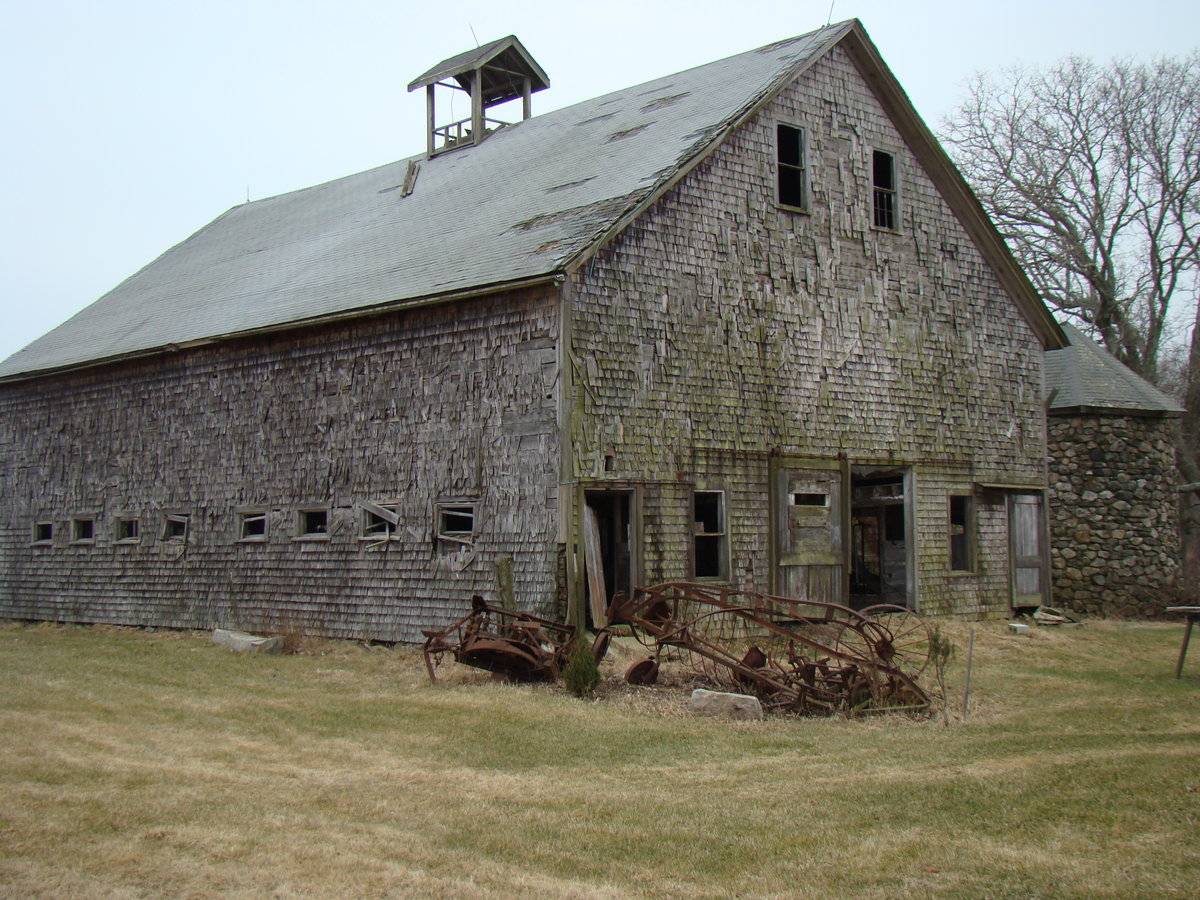
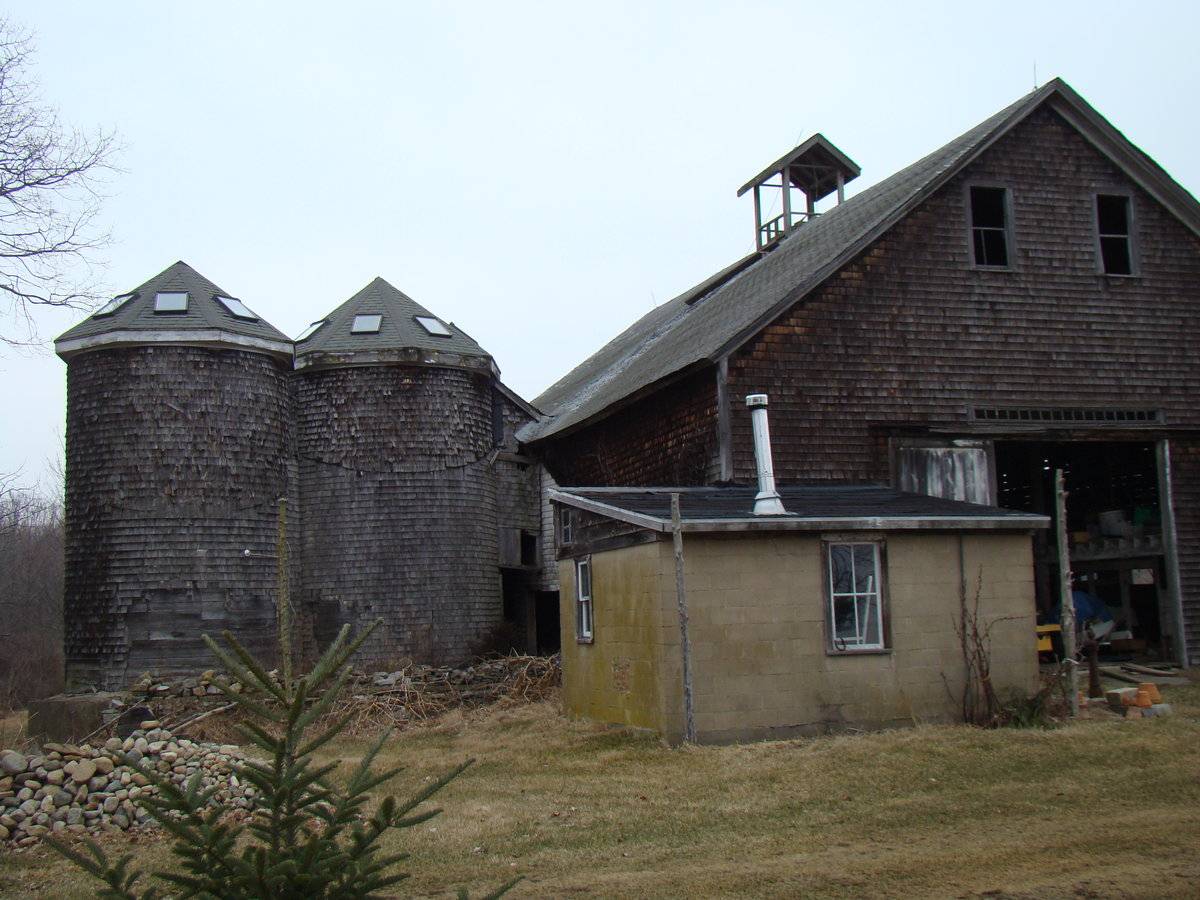
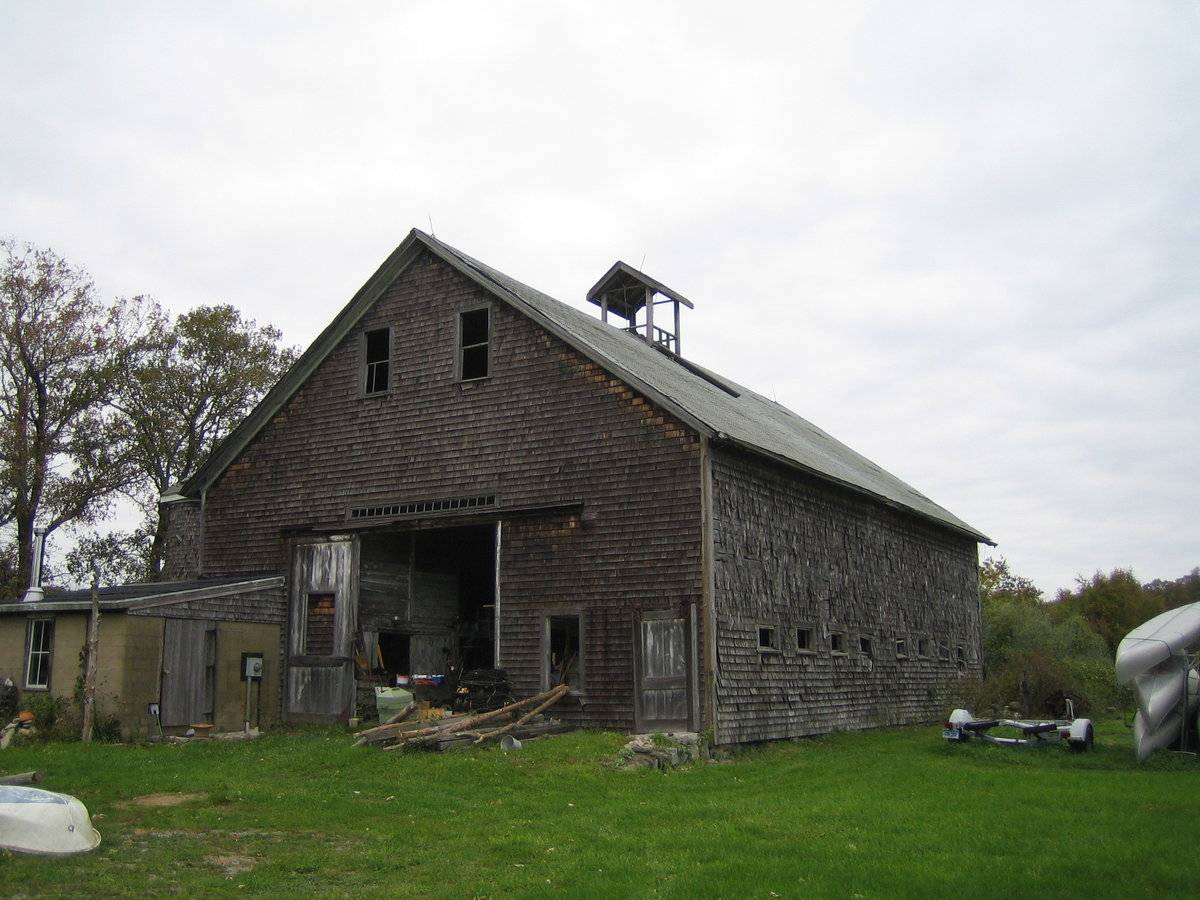
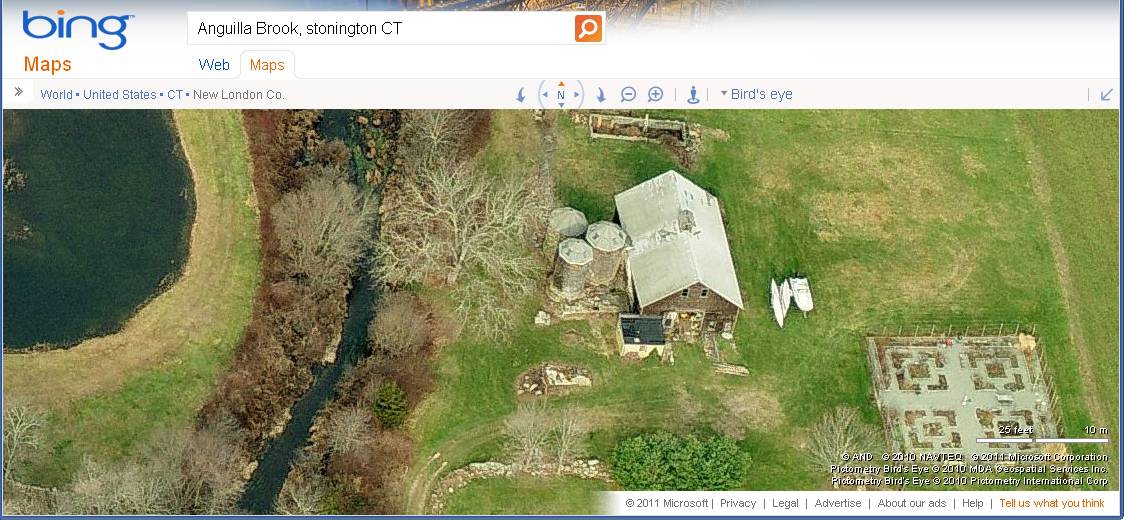
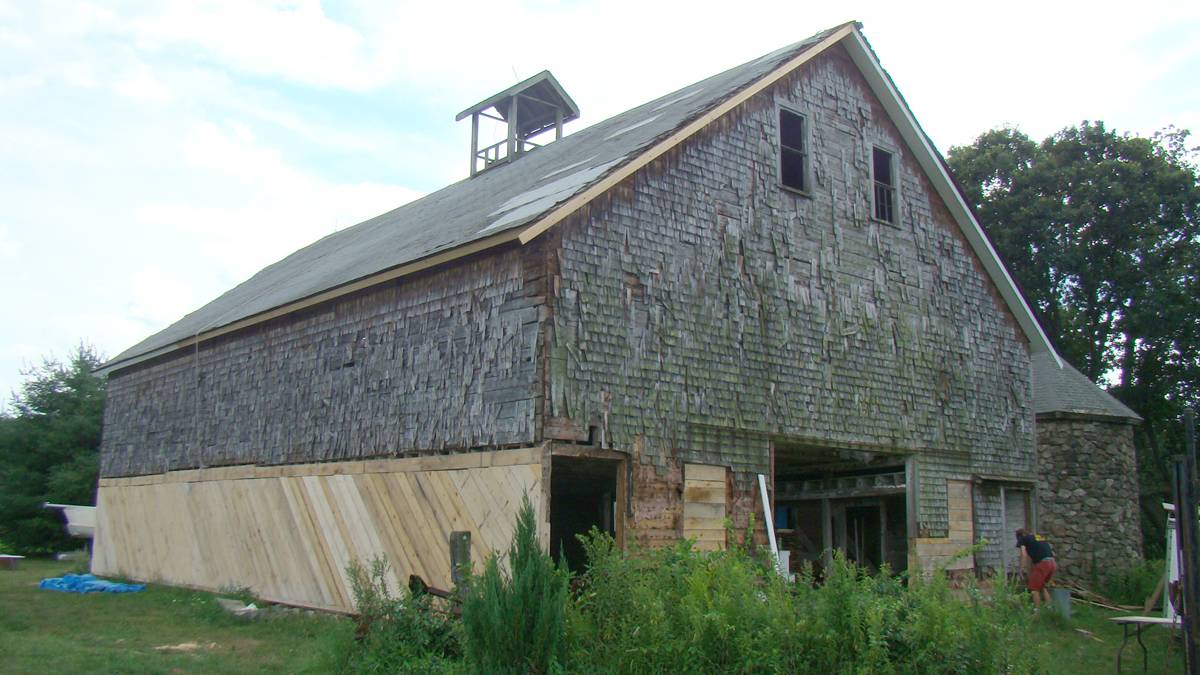
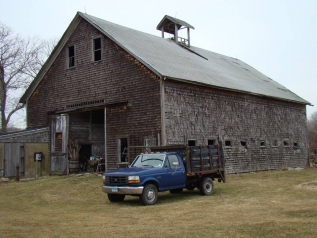
This is a 1 ½-story gable-roofed structure with its ridge-line oriented north-south. The main entry is a pair of exterior sliding barn doors in the south gable-end. A 17-pane horizontal transom is above the door track hardware. To the left (west) of the door opening is a small shed-roofed addition (milk room) with concrete block masonry walls; it projects beyond the southwest corner of the barn. The addition has a door in its east wall, a two-over-two double-hung window in its south wall, and a small one-over-one double-hung window in its west wall. To the right (east) of the door opening there is a window opening without sash and a pass-through door. In the attic gable there are two double-hung windows which are missing their glazing.
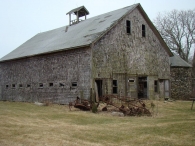
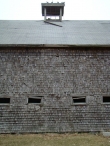
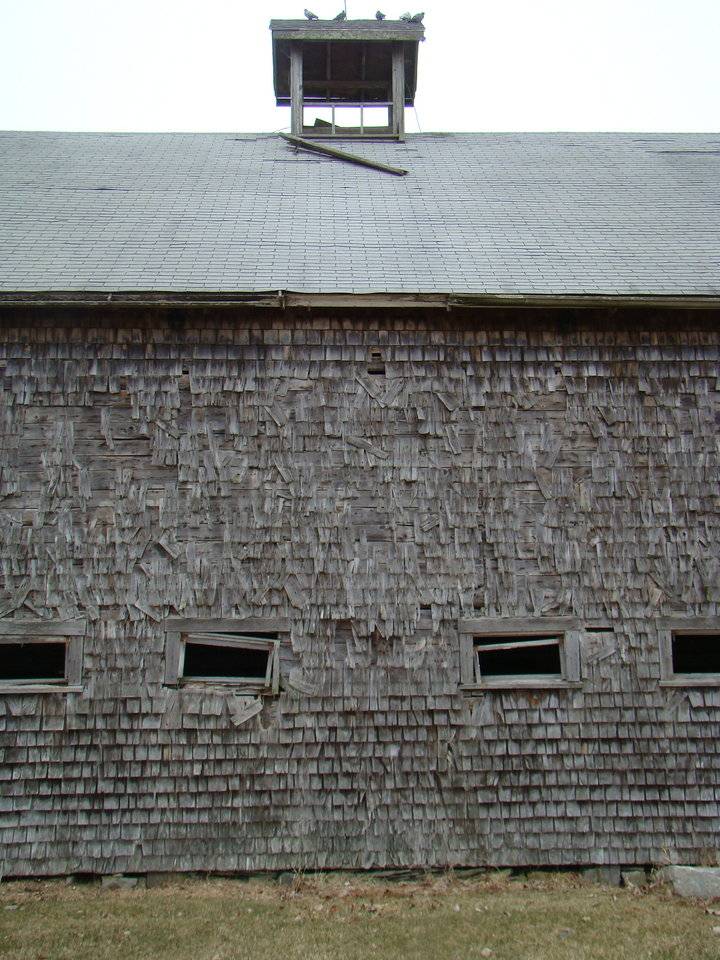
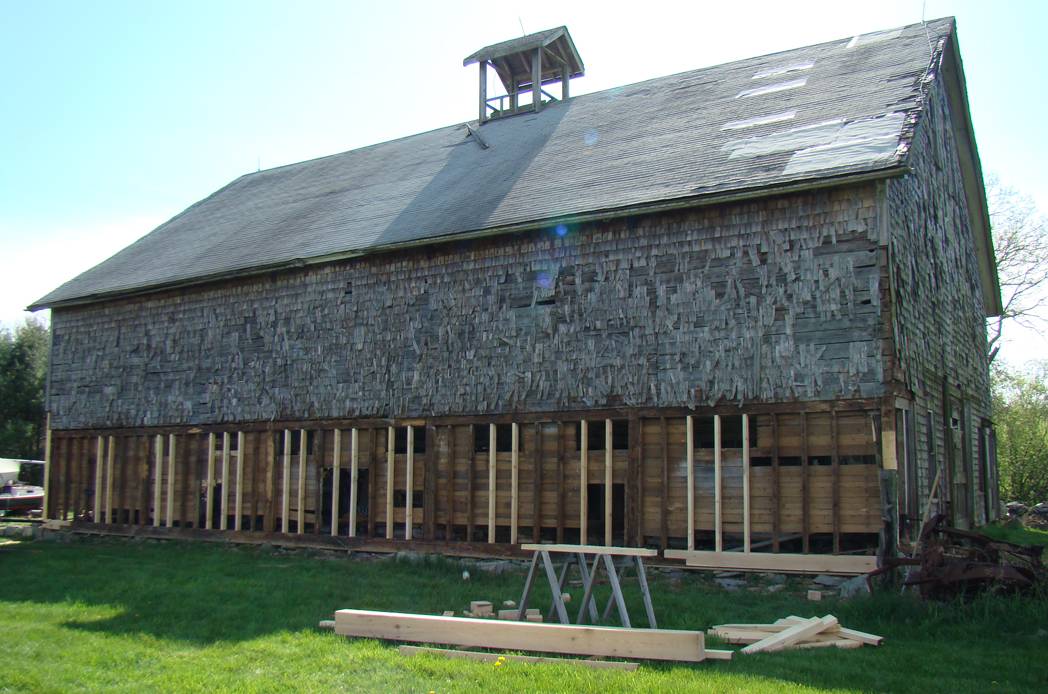
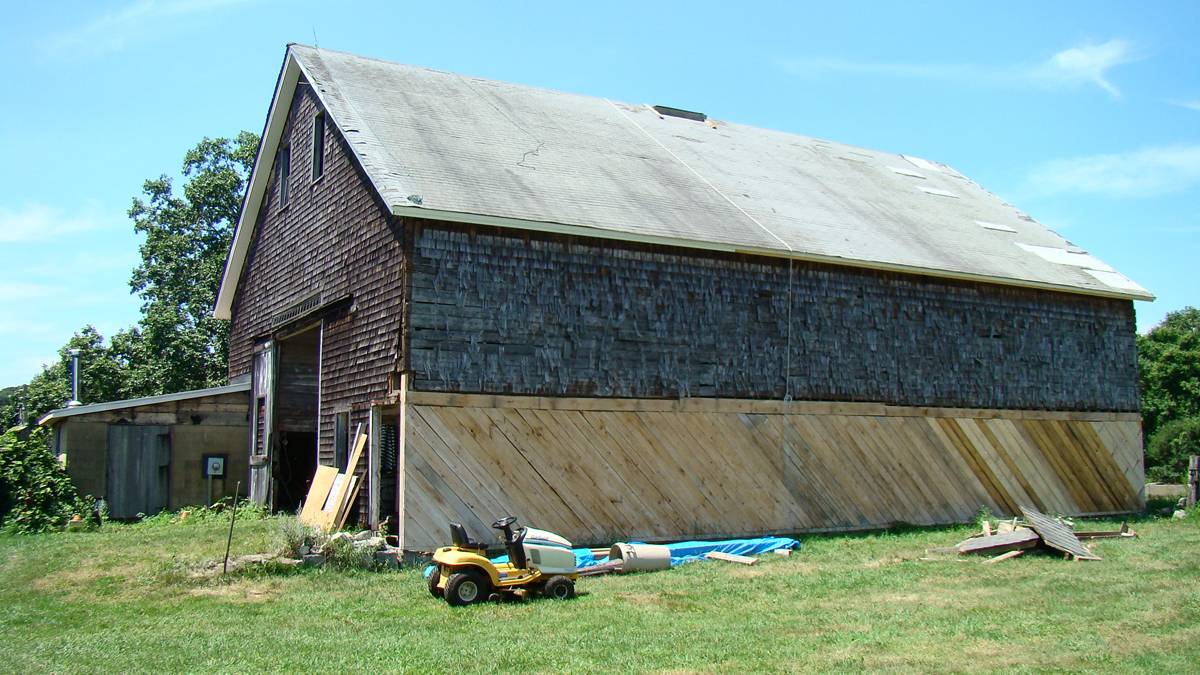
The east eave-side had a row of 8 stable windows without glazing; these have been replaced by a solid wall surface during restoration work in 2010. The north gable-end has from left (east) to right, a sliding pass-through door close to the corner, a double-hung window (missing its glazing) a pair of sliding doors, a double-hung window (missing its glazing) and a sliding pass-through door at the right (west) corner. In the attic gable near the peak are two double-hung windows missing their glazing.
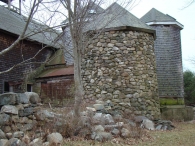
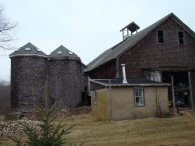
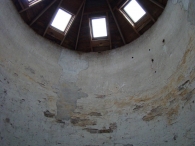
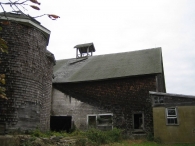
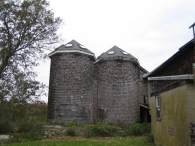
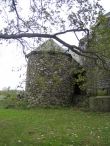
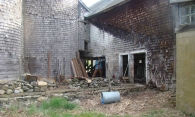
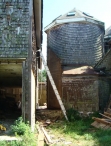
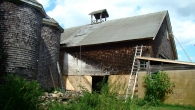
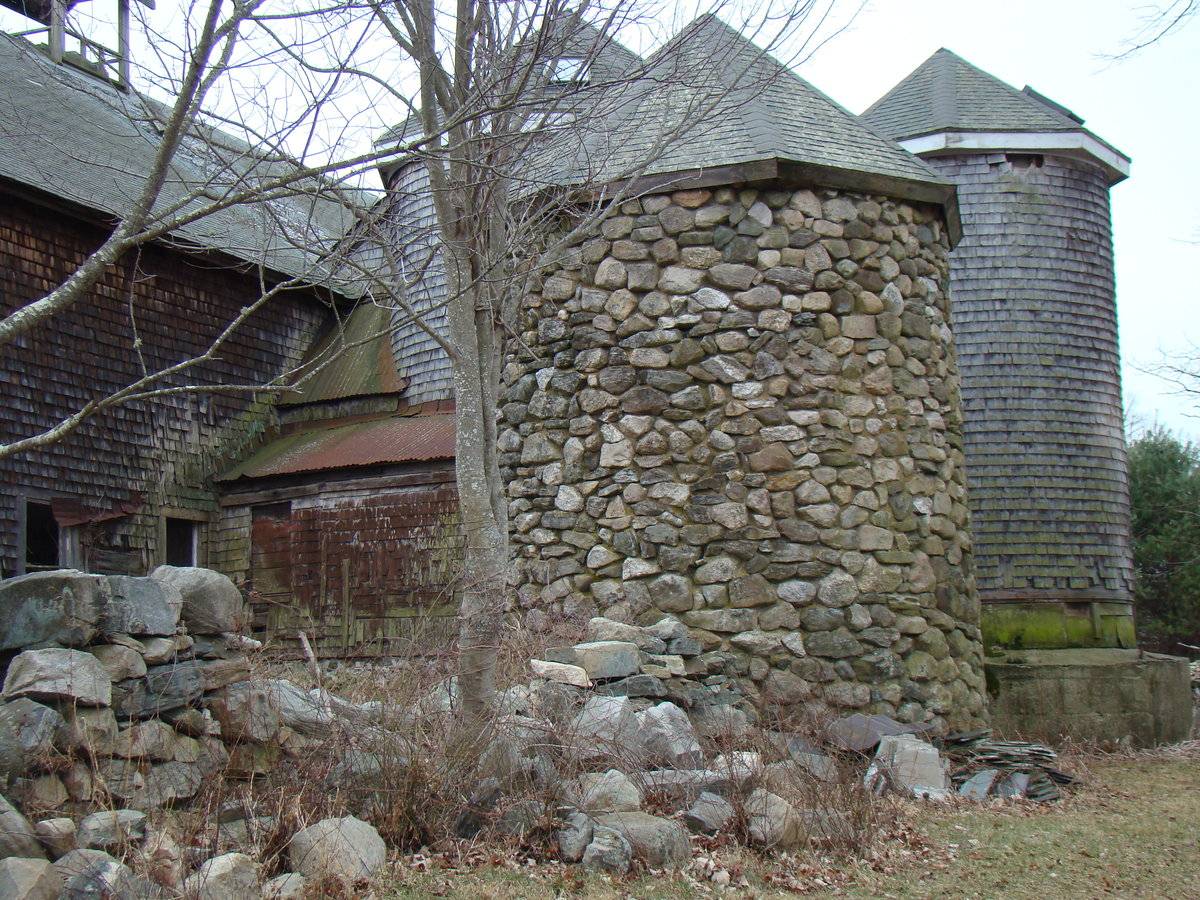
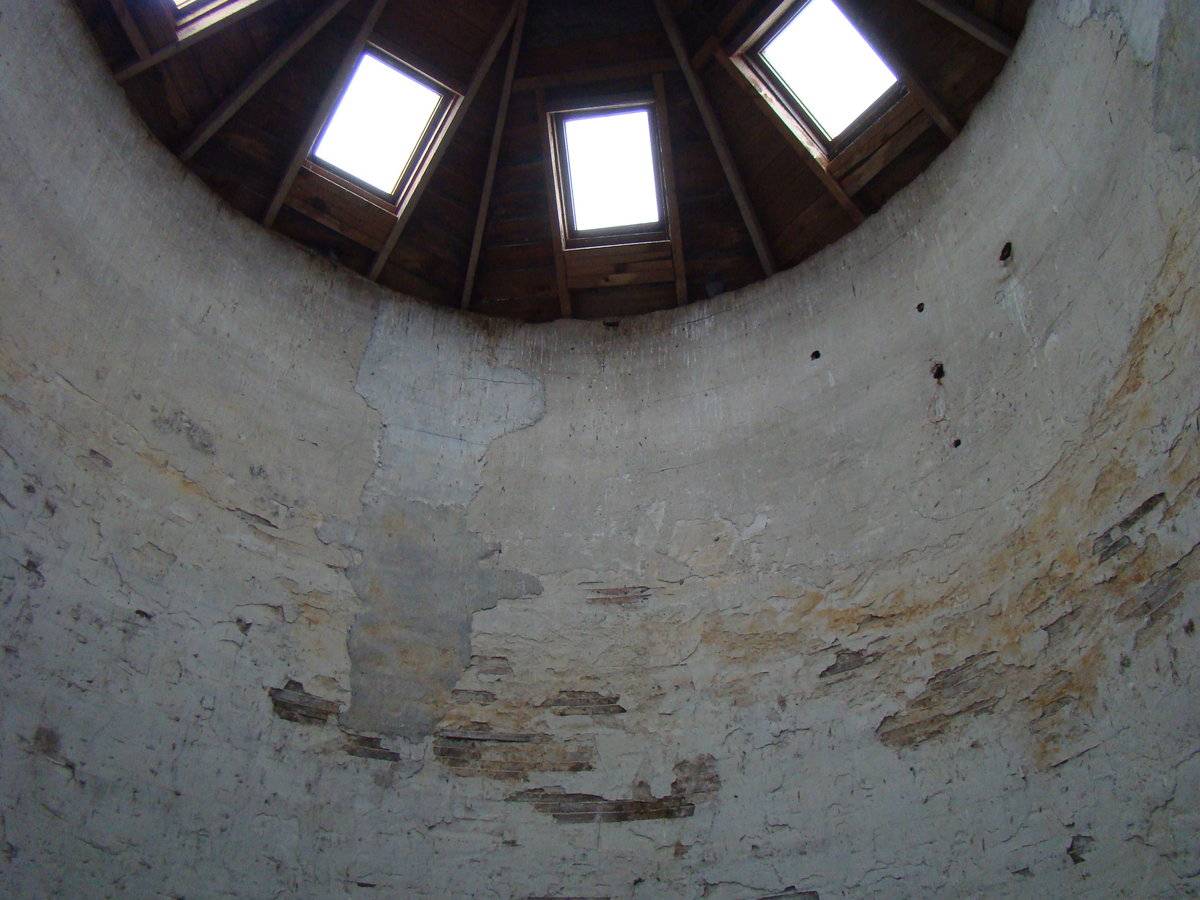
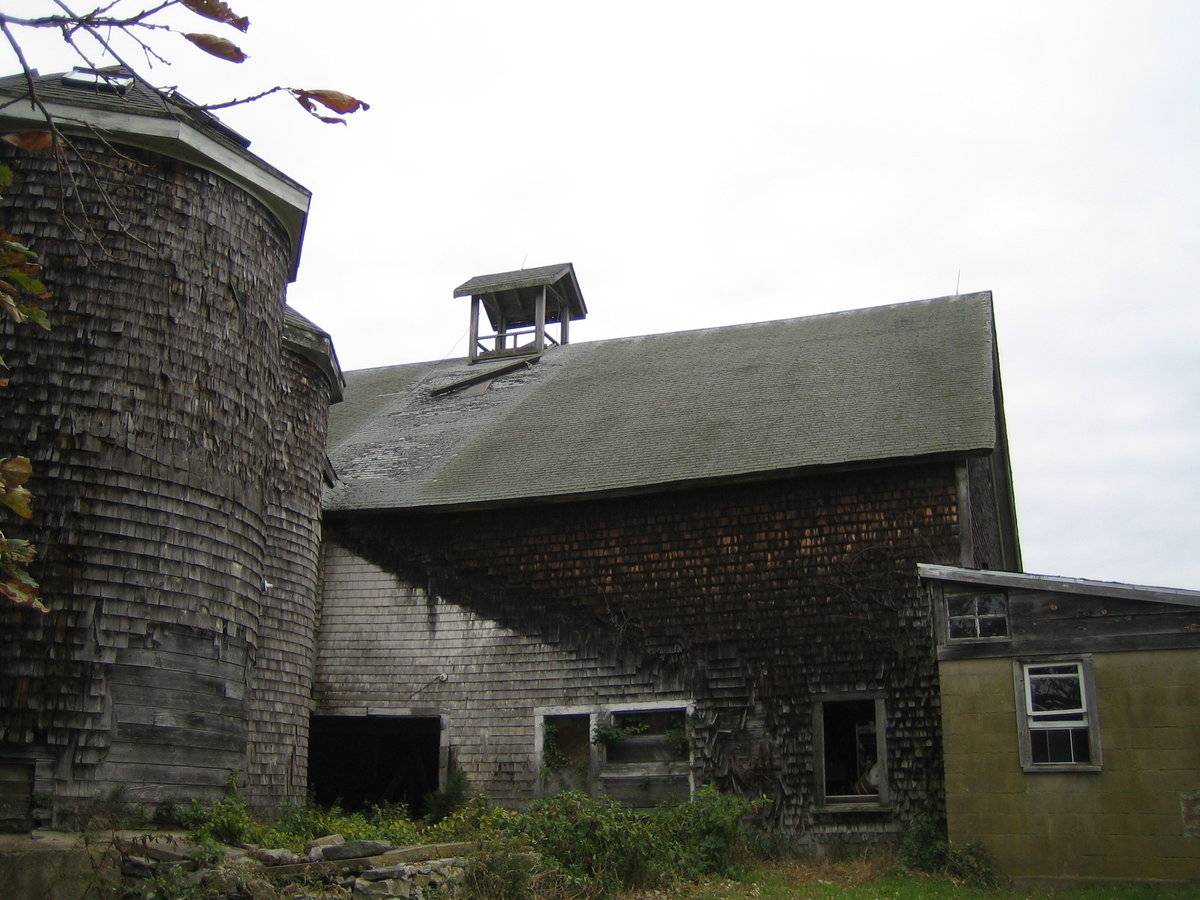
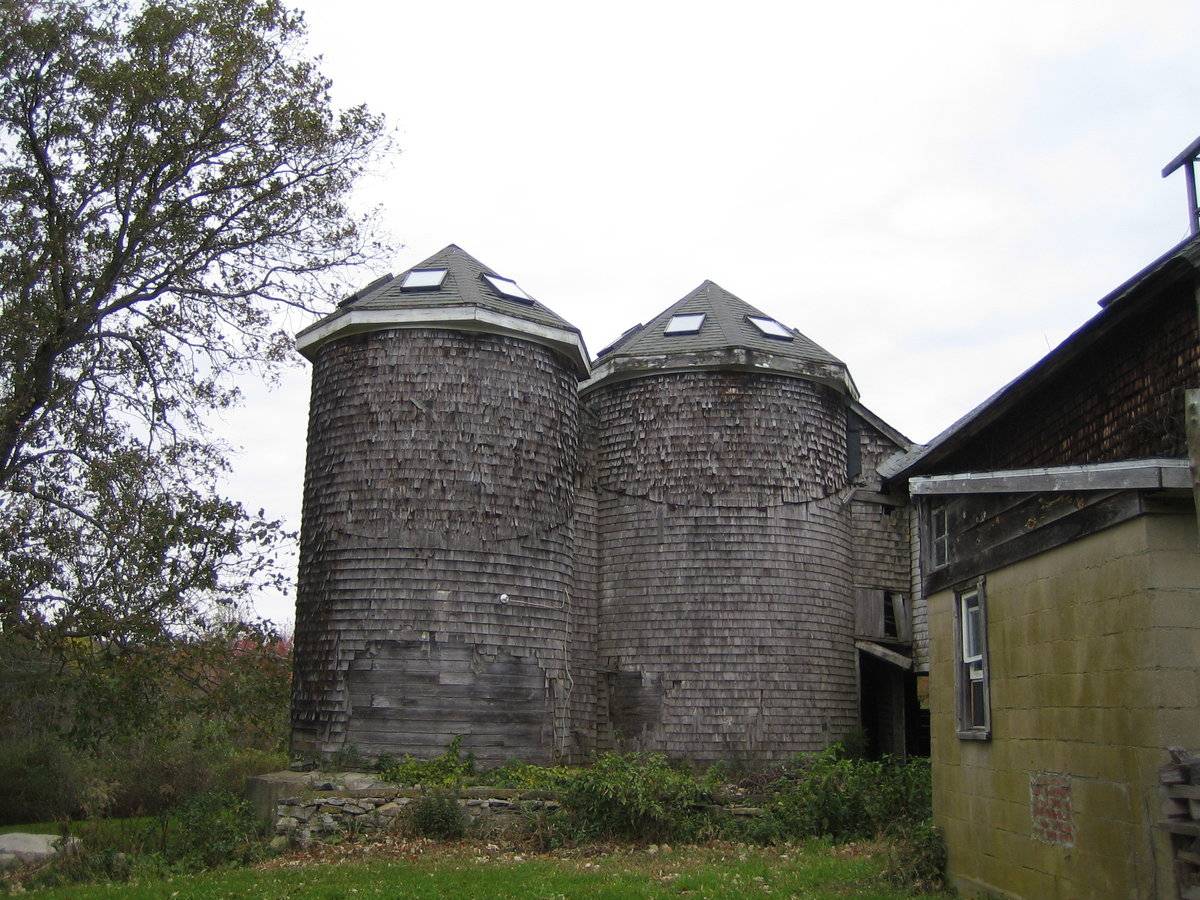
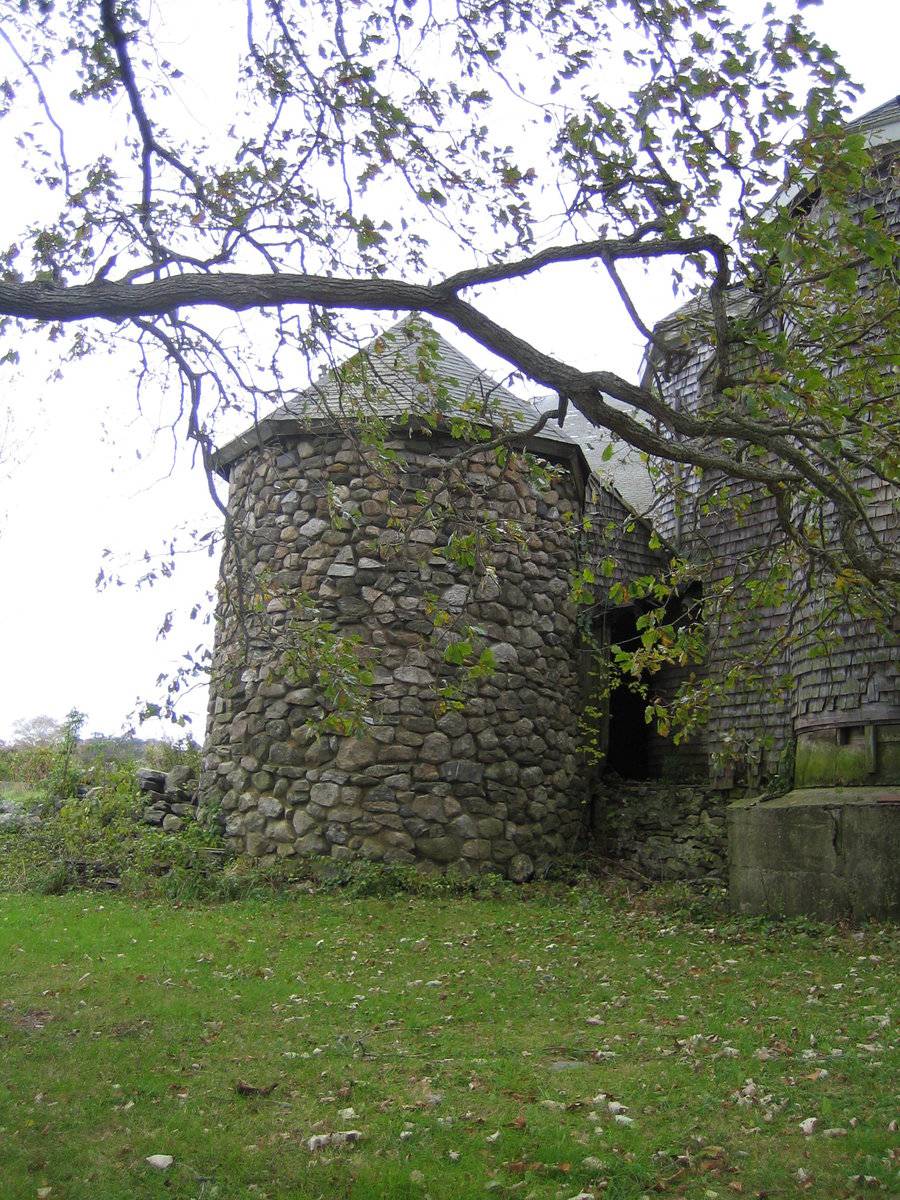
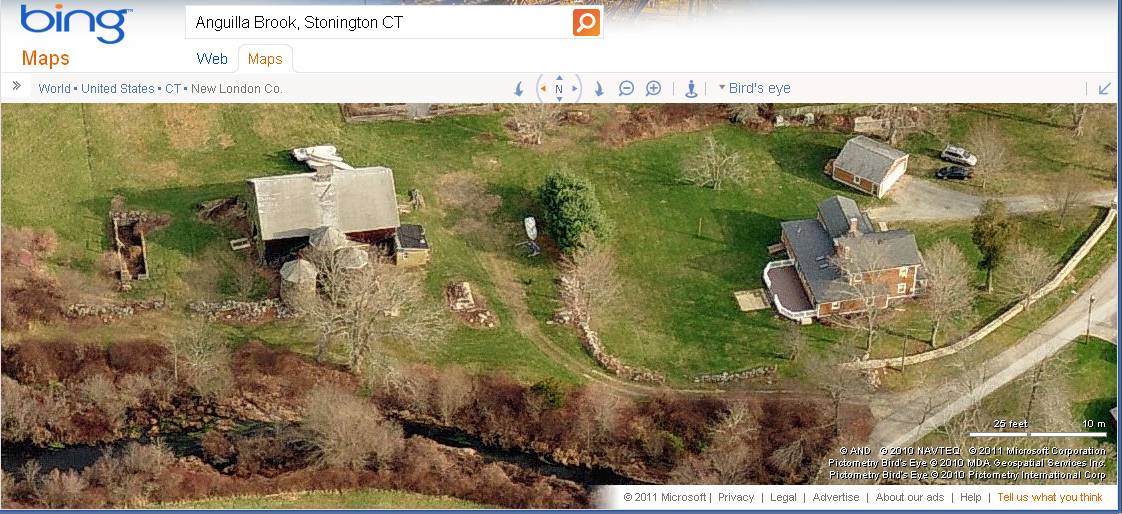
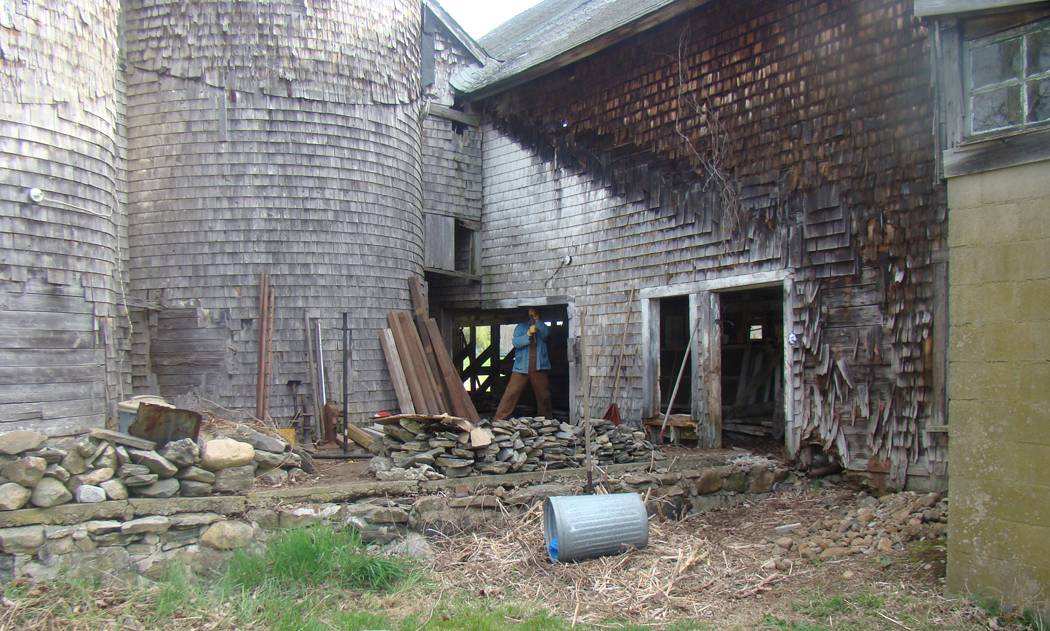
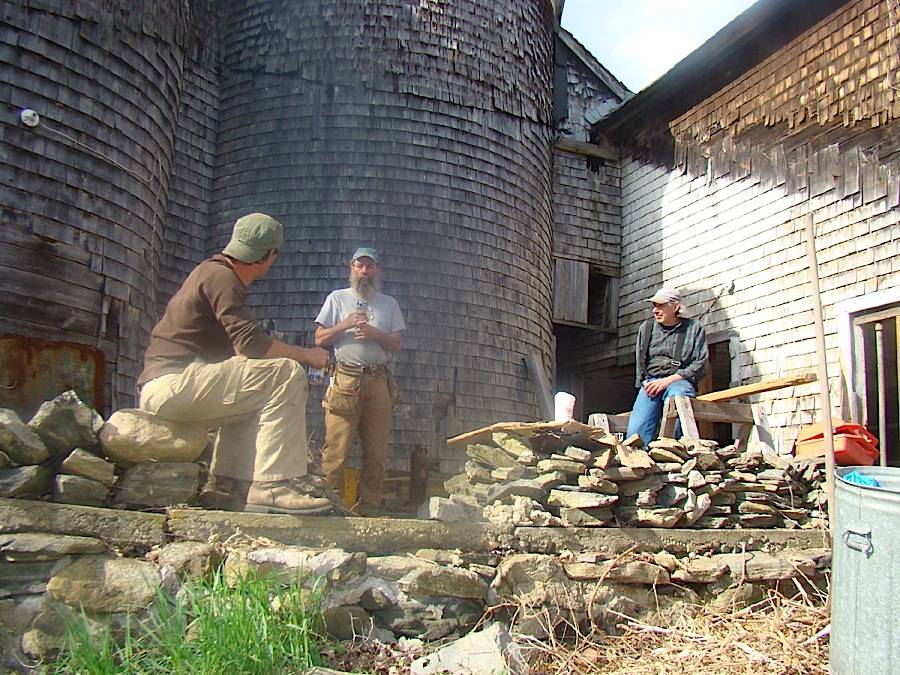
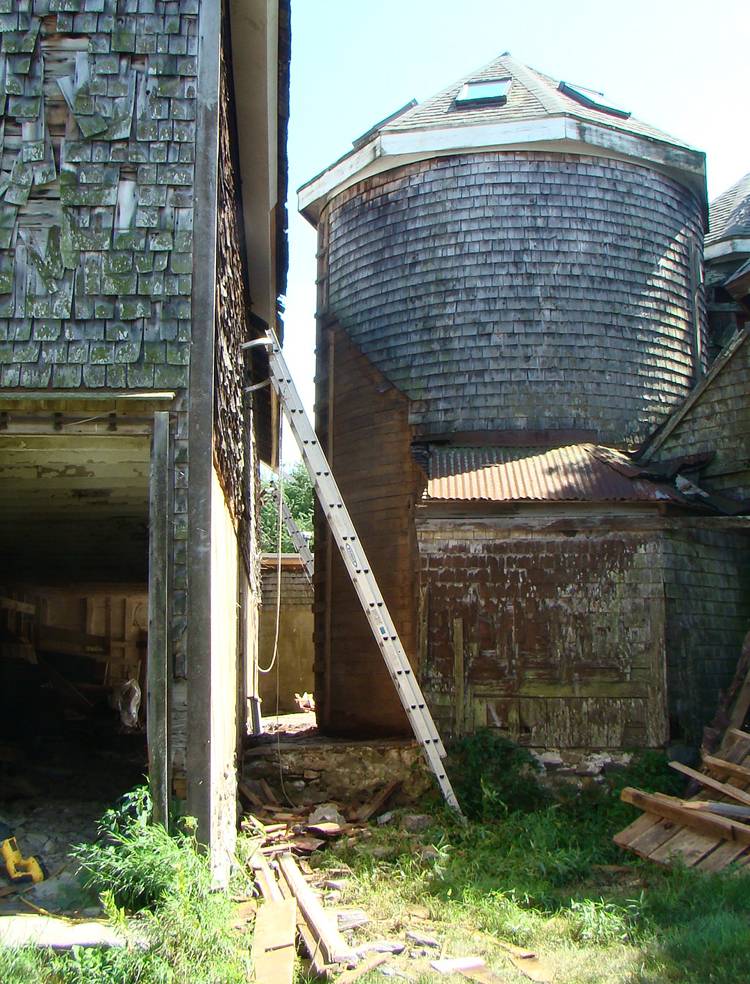
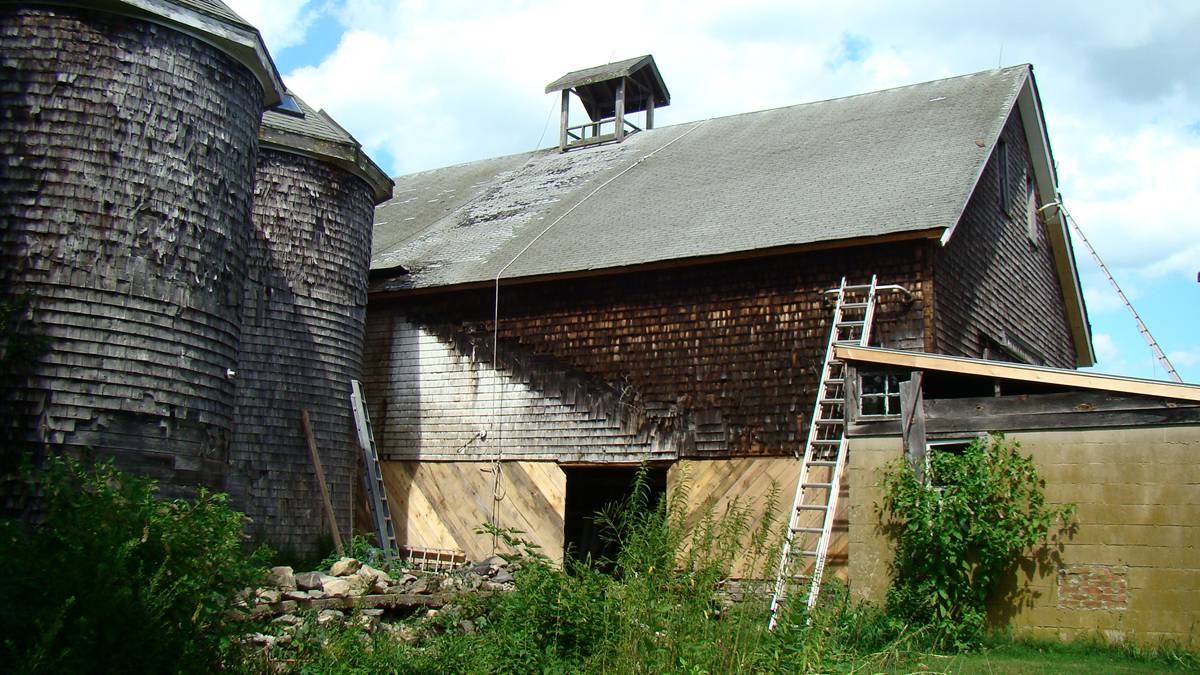
West of the barn are three silos. Two silos are of bent wood construction with plastered interiors and are on elevated concrete foundations. One silo is of cobblestone masonry. All three are relatively short compared with typical silos, and have octagonal prismatic-shaped roofs coming to a point at the peak. The silos have been connected to the west eave-side of the barn by several shed-roofed additions, some of which have been removed during restoration work in 2010. There are several window and door openings in the west side north and south of the silos.
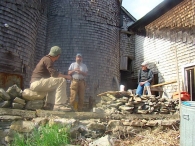
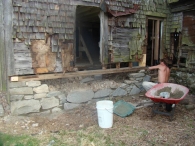
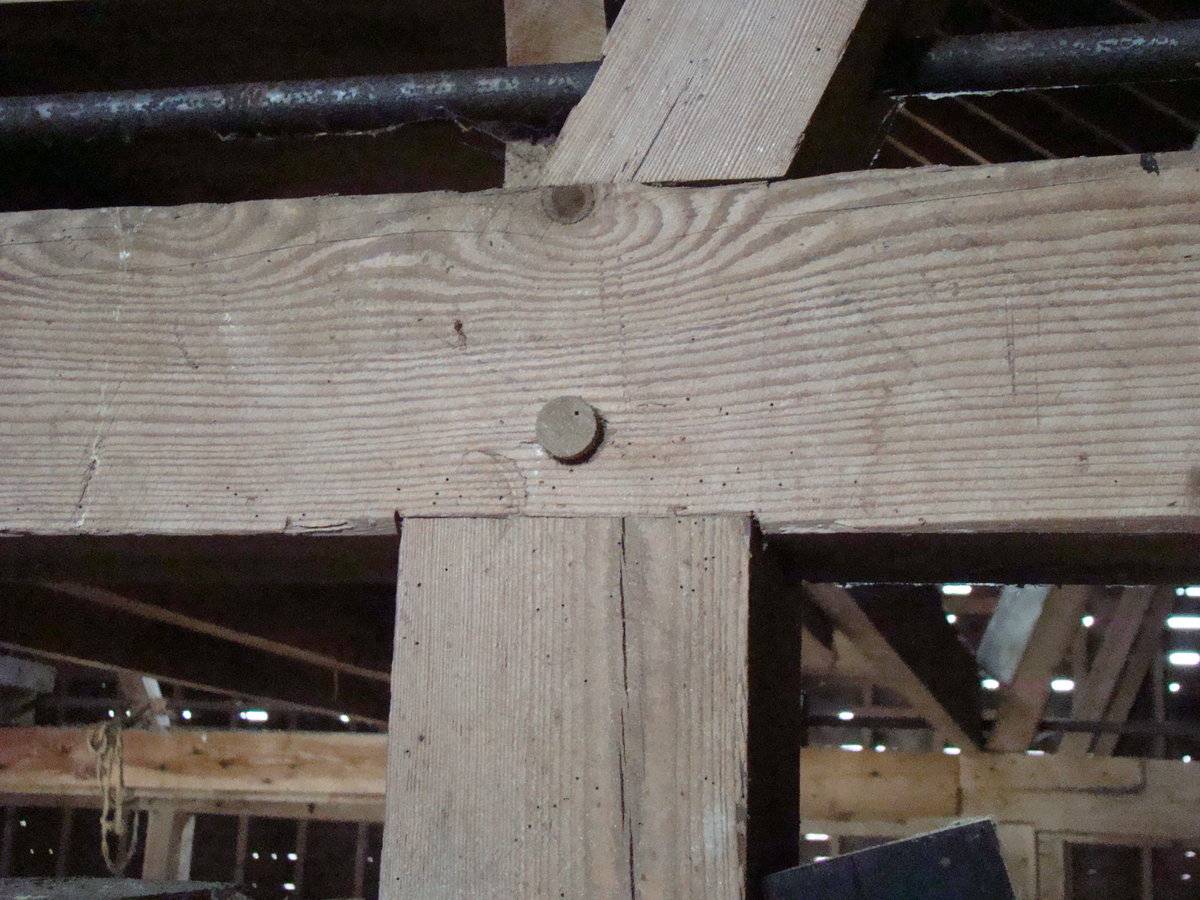
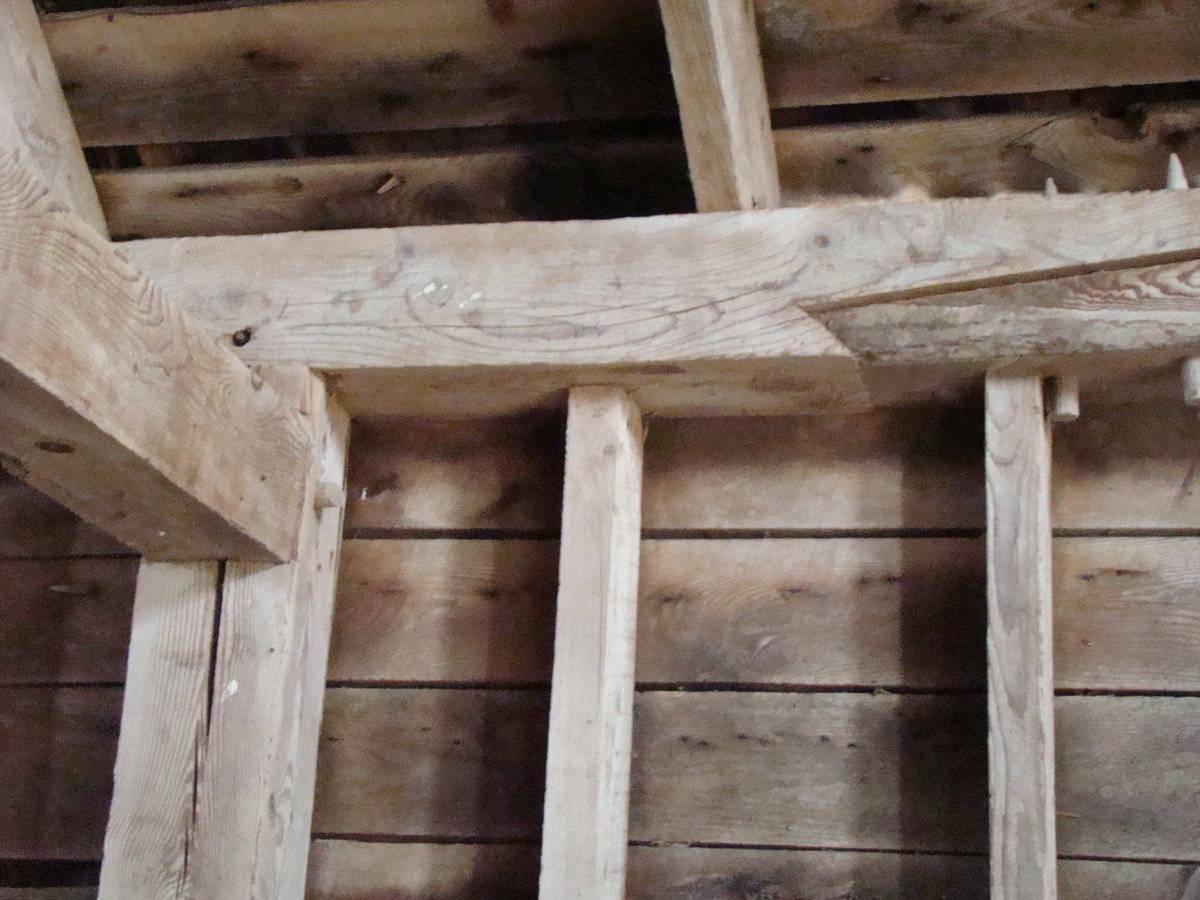
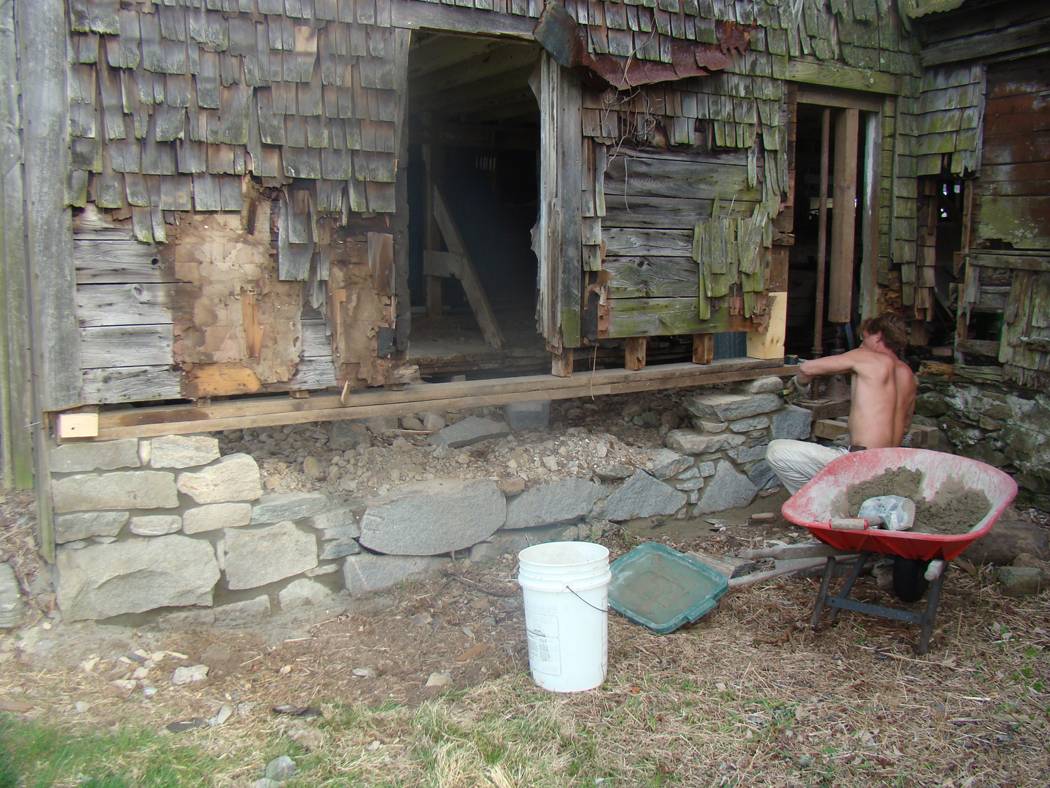
Repair work has been performed during the 2010 restoration work, including replacement of fieldstone foundation wall along the west side and partial sill replacement on the west and east sides.
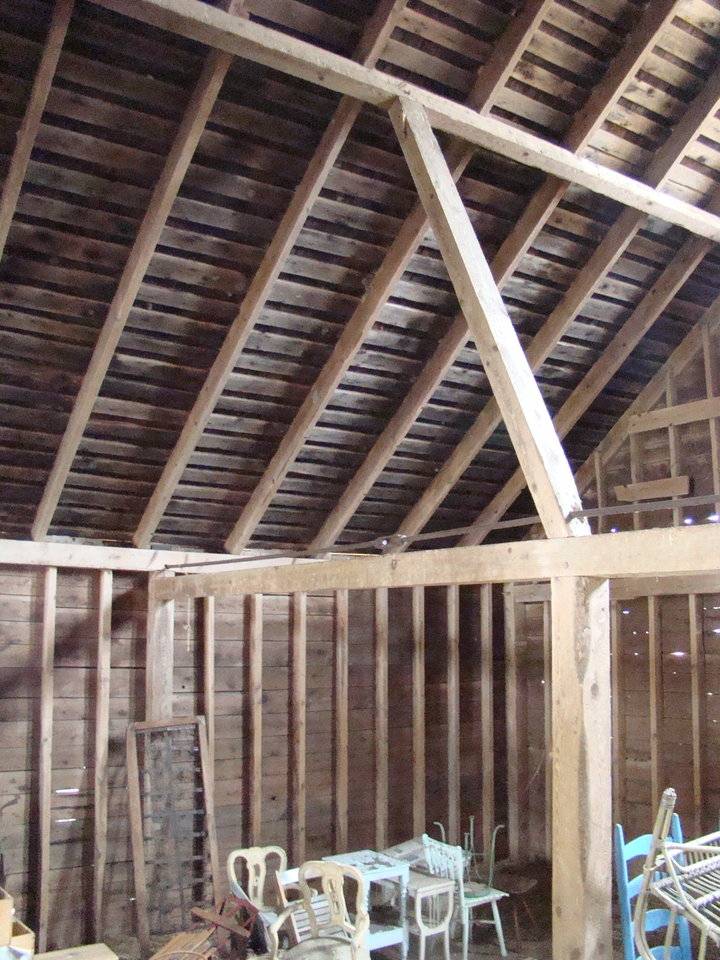
Siding is wood shingles over horizontal sheathing; the lower half of the east side has been repaired with diagonal board sheathing during the work in 2010. Roofing is asphalt shingles. There is a cupola on the center of the ridge-line, which is an open frame with a gable roof aligned north-south parallel to the main roof.
Historical significance:
The New England barn or gable front barn was the successor to the English barn and relies on a gable entry rather than an entry under the eaves. The gable front offers many practical advantages. Roofs drain off the side, rather than flooding the dooryard. With the main drive floor running parallel to the ridge, the size of the barn could be increased to accommodate larger herds by adding additional bays to the rear gable end. Although it was seen by many as an improvement over the earlier side-entry English Barn, the New England barn did not replace its predecessor but rather coexisted with it, as both types continued to be built.
Milk room:
Before the 1880s, cheese and butter making were usually done on the farm. The milk room or dairy room was often located in an ell between the kitchen and the woodshed. Some farms had separate milk rooms and dairy rooms. In the milk room, the fresh milk was poured into shallow pans placed on shelves or racks. After the cream rose to the surface, it was skimmed off the milk and then churned to make butter. Cooperative creameries were being established throughout New England in the 1880s. Usually located next to the railroad line in villages, these creameries processed the milk of dozens of farmers, who shipped the liquid from the farm to the creamery by wagon in metal cans.
Single-story milk houses are typically attached to [20th-century] ground-level stable barns for preparation of the milk to be sent to the creamery. Designed to comply with state and local ordinances intended to minimize the potential for milk contamination, many are now fitted with large, electrically cooled stainless steel bulk storage tanks.Silos:
When chopped cornstalks are compressed to prevent their exposure to the air, the silage ferments instead of spoiling, providing nutritious food for the dairy herd and allowing them to produce milk through the winter. Early silos were built inside the barns, but by the 1890s free-standing silos were being built outside dairy barns. Conical roofs are most common, usually covered with composition sheet roofing and topped with a metal ventilator.
These silos are unusual, being constructed with none of the typical materials, which included wooden staves with metal hoops, concrete, or porcelain enameled steel.
Field Notes
Listed on the State Register of Historic Places 6/04/2014. Located on Anguilla Brook which is the continuation of South Anguilla Road to the north of Pequot Trail. Location: 41.384207,-71.874463 2009 Barns Grant Recipient; first phase of restoration work in 2010. Former dairy, now owners grow flowers and produce for sale at local farmers market.
- Use & Accessibility
Use (Historic)
Use (Present)
Exterior Visible from Public Road?
Yes
Demolished
n/a
Location Integrity
Unknown
- Environment
Related features
Environment features
Relationship to surroundings
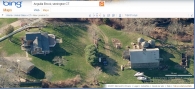
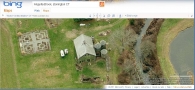
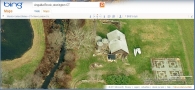
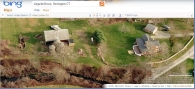
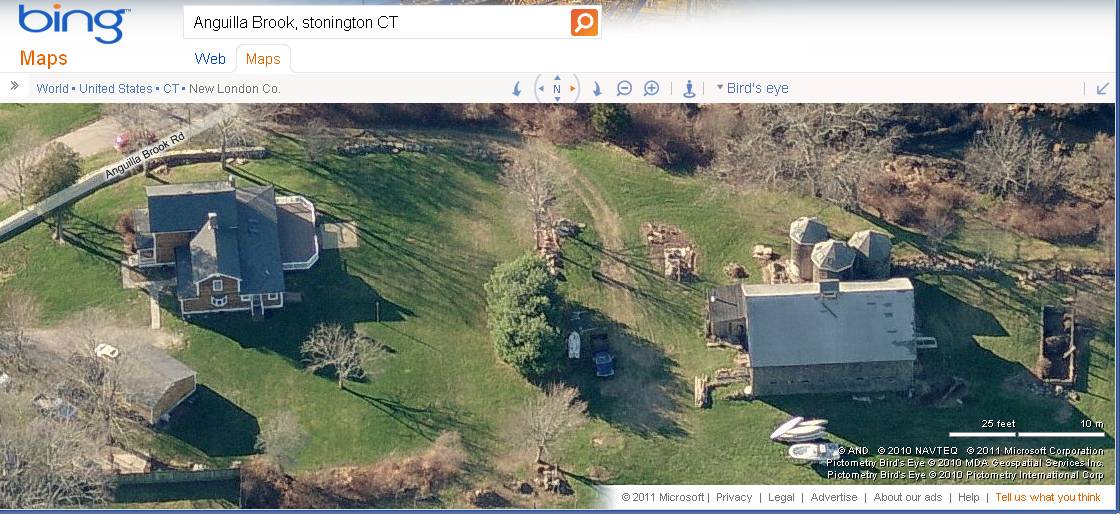
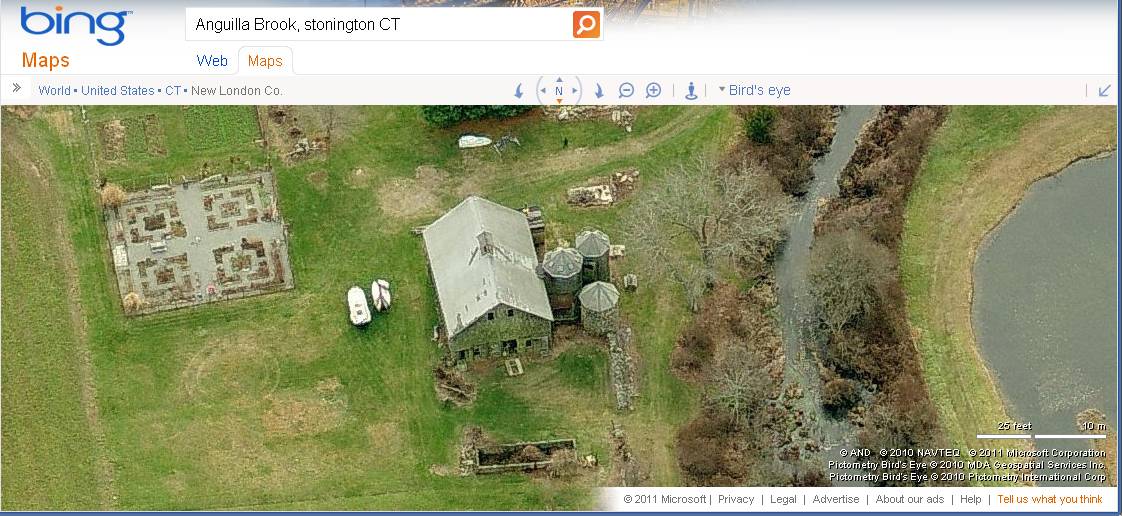
This barn is located on a property in the eastern part of Stonington close to the Rhode Island border. The area, inland from the coast, is a mix of open fields, woodlands, and residential subdivisions. Some of the open fields are now equestrian properties or golf courses. Anguilla Brook Road is a dead-end road running northwest from Pequot Trail (Route 234). A scattered group of homes sits among mowed fields. A chain of small ponds is located on the adjacent property to the west, with Anguilla Brook running south from the pond outlet. The barn and three silos are sited on a 2-acre property. To the south on the adjacent property is a c. 1853 house which was previously associated with this barn. This 2 ½-story house, like the barn, has its ridge-line oriented north-south, roughly perpendicular to the road. The gable-end faces the street and has a full-width porch across the ground floor front. A 2-story wing projects eastward from the east side, and has a 1-story porch along its south eave-side. Additions wrap around the north (rear) and west sides. The house has wood clapboard siding and Italianate-style brackets under the eaves and rake of the main block.
- Typology & Materials
-
Building Typology
Materials
Structural System
Roof materials
Roof type
Approximate Dimensions
Unusual stone silos - 3 each 14 feet diameter - barn 60 x 36 feet
- Source
-
Date Compiled
06/14/2011
Compiled By
Charlotte Hitchcock, reviewed by CT Trust
Sources
Grant Recipient 2009, field notes from Grant Application by Sylvia Lynch, 02/22/2009 .
Town of Stonington Assessor’s GIS Viewer: http://gis.stonington-ct.gov/mapxpress/
Parcel ID: 47-1-3A 2400 sf barn w/ loft 44 x 62 ft, 3 silos 14’ diameter
Acres : 2.11Aerial views from:
http://www.bing.com/maps/ accessed 6/11/2011.Sexton, James, PhD; Survey Narrative of the Connecticut Barn, Connecticut Trust for Historic Preservation, Hamden, CT, 2005, http://www.connecticutbarns.org/history.
Visser, Thomas D.,Field Guide to New England Barns and Farm Buildings, University Press of New England, 1997, 213 pages.
- PhotosClick on image to view full file
-